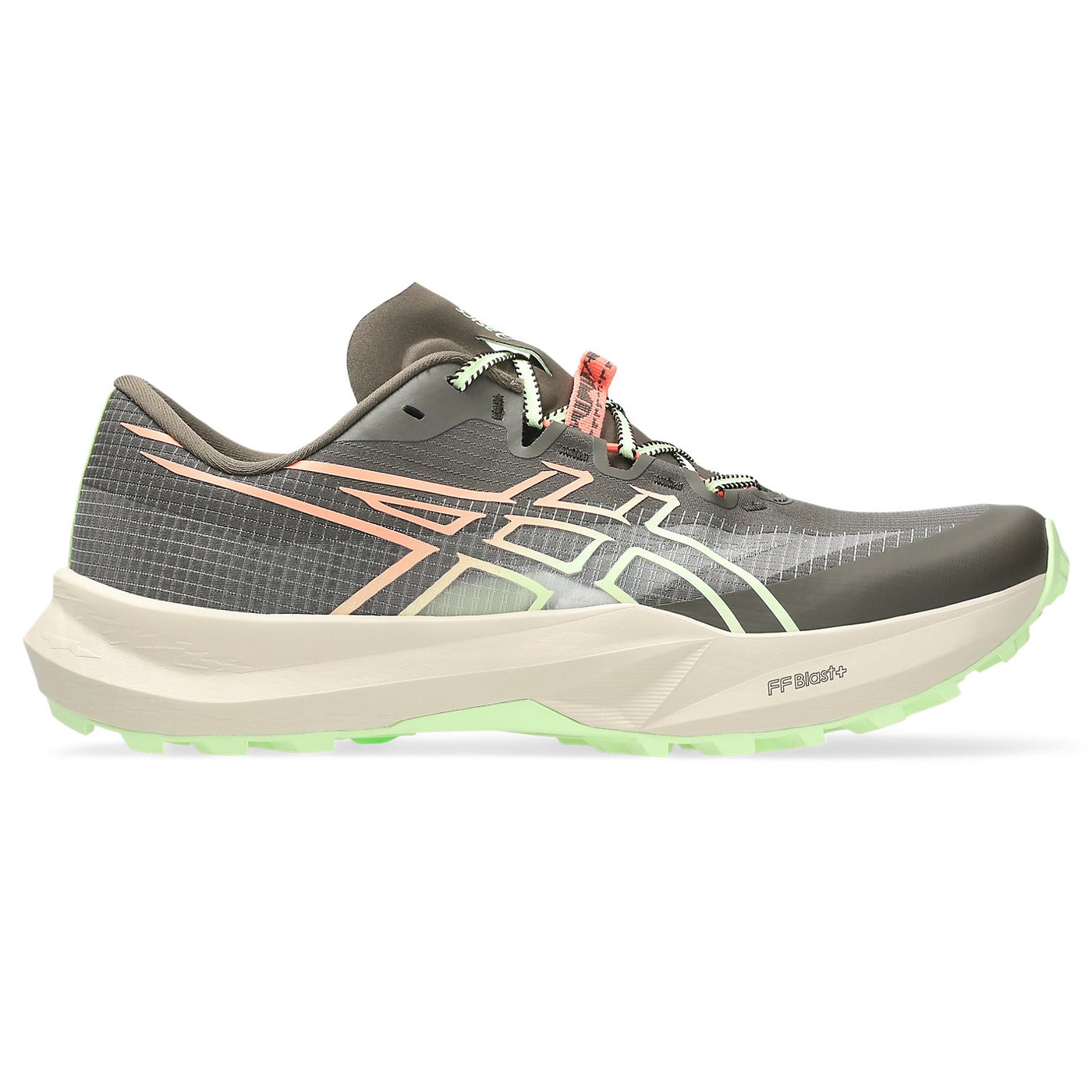
The Asics Fuji Lite 7 lands in June 2026 at 140 euros with a simple promise: stay a light, agile trail shoe without sacrificing upper durability, the weak spot of previous versions. This review checks whether the new woven construction and the Tongue Wing deliver on that promise and, above all, whether the missing rock plate, already flagged by several testers in the field, is a real problem day to day. Weight, grip, cushioning, protection: here's what the Fuji Lite 7 is really made of.
Fuji Lite 7: context and key numbers
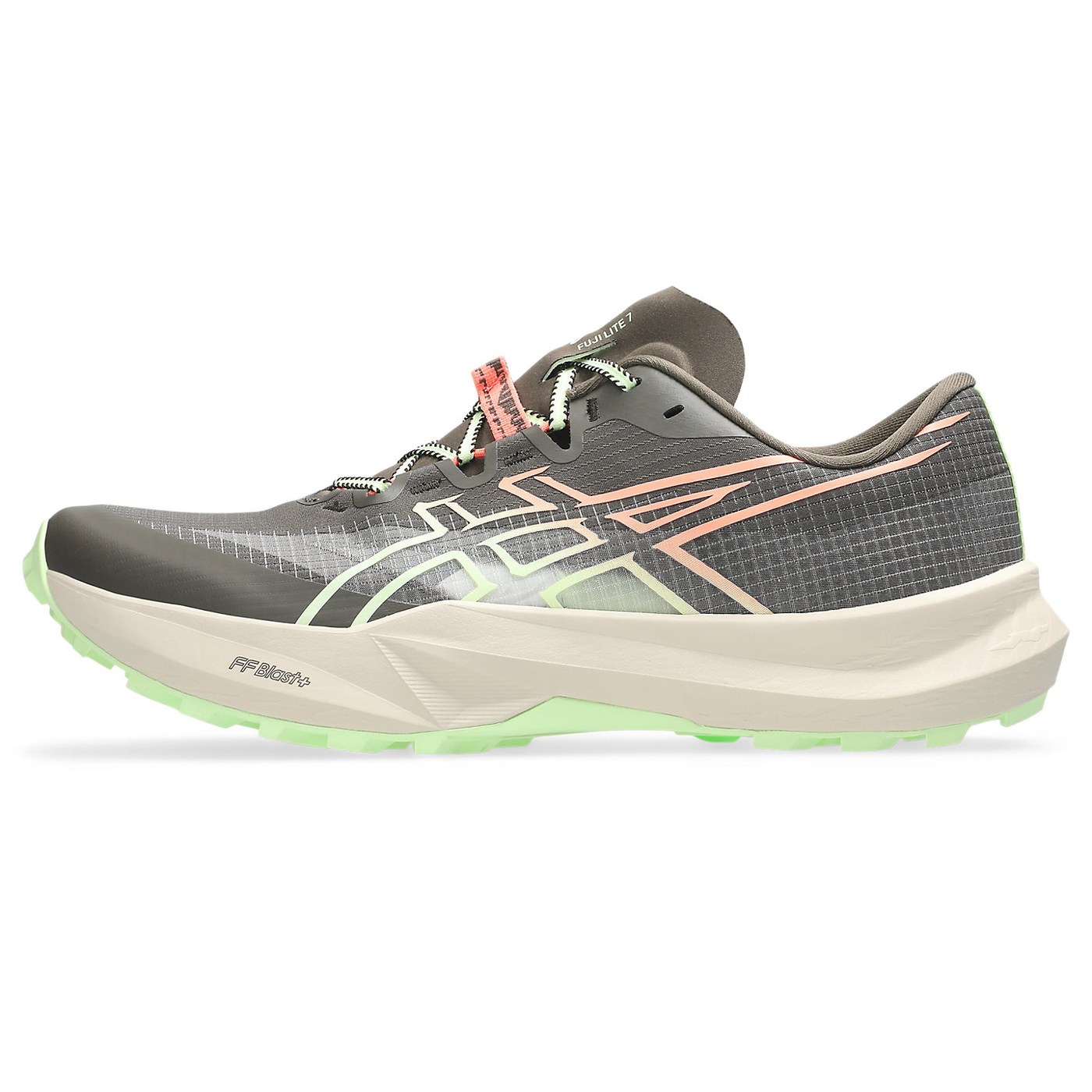
The Fuji Lite 7 follows a sixth generation that was well liked for its versatility but criticized for a mesh upper considered fragile on technical terrain. This seventh edition switches upper material and reworks midfoot hold, while keeping the FF Blast Plus midsole architecture that made the line a success. Available since June 2026 in three colorways (Rose Dust/Sun Coral, Kuriiro Brown/Illuminate Yellow and Ocean Haze/Foggy Teal), it clearly targets the lightweight trail segment under 150 euros.
| Price | 140 euros |
|---|
| Weight | 241 g claimed (men's US9); tested pairs in larger sizes climb to 263-279 g |
|---|
| Drop | 4 mm |
|---|
| Stack height | 32 mm heel / 28 mm forefoot |
|---|
| Midsole | FF Blast Plus, no rock plate |
|---|
| Outsole | ASICSGRIP, 4 mm lugs |
|---|
| Upper | Engineered woven mesh with Tongue Wing construction |
|---|
| Use | Light trail, forest trails, gravel running, mid-distance |
|---|
| Availability | Since June 2026, men's and women's |
|---|
Woven upper and Tongue Wing: the real upgrade
The most visible change in this seventh generation is the upper. Asics drops the classic engineered mesh of the Fuji Lite 6 for a denser weave, designed to better withstand scuffs from rocks and branches on technical trails. It inspires confidence straight out of the box: clean finishing, neat stitching and precise lacing that almost never loosens mid-run.
The Tongue Wing construction, which extends the tongue into side wings stitched to the upper, noticeably improves instep hold compared with the previous version. The fit stays true to Asics form: medium width, a roomy forefoot that never feels sloppy.
On flowing trails and gravel, the shoe feels light almost instantly: every footstrike stays precise and your cadence picks up naturally, without ever feeling like you're running on a thick platform.
To compare with the previous generation and see what really changed in the upper and the fit, head to our full Asics Fuji Lite 6 review.
The real weak spot: no rock plate. Asics made this choice deliberately to keep the shoe flexible and featherlight, but you pay for it on rocky ground.
The flaw to know before you buy
Be honest with yourself before you fall for this pair: the Fuji Lite 7 has no rock plate, and you feel it. On rocky trails like those of the Odenwald in Germany, testers reported repeated painful impacts under the forefoot, caused by sharp-edged stones pushing straight through the 28 mm stack. This isn't marketing hype blown out of proportion. It's a deliberate design choice that clearly limits the shoe on technical and alpine terrain.
Second thing to watch: heel hold. On a 27 kilometer long run, one tester had to retie his laces mid-run (heel-lock lacing) after about two hours of effort, as rearfoot hold became noticeably looser with fatigue. On a short or easy run, you won't notice. On a long, demanding run, it comes back.
Third limitation, more predictable for this kind of outsole: the 4 mm ASICSGRIP lugs, very effective on dry ground, gravel and roots, hit their limits in deep mud or very soft ground. Nothing unusual for a versatile lightweight trail shoe, but it's clearly not the tool for a mud race in the dead of winter.
On the trail: how it really performs
On flowing forest paths and twisty singletrack, the Fuji Lite 7 delivers. The flexible forefoot allows a natural roll-through, the light fit quickly disappears on your foot, and tight turns come easily thanks to good midfoot hold. It's exactly the kind of shoe that makes you want to push the pace on a ridgeline or a moderately technical descent.
On road and hardpacked gravel, the transition is seamless: the lugs never get in the way, and the shoe stays comfortable over several kilometers of pavement before you hit the trail. On a long run of more than 25 kilometers mixing forest paths, gravel and moderately technical sections, the FF Blast Plus cushioning goes the distance without bottoming out, with a ride that stays surprisingly comfortable right to the end.
The limits show mostly when the terrain gets harder: sharp rocks, steep off-camber sections, quick changes of direction on slopes. The missing protection plate and a heel hold that could be better make themselves felt, especially once fatigue sets in. This shoe demands an active running form and good technique. It won't bail out a sloppy stride.
Fuji Lite 7 vs Trabuco Max 5: two opposite philosophies
Comparing the Fuji Lite 7 with the Asics Trabuco Max 5 means putting two very different visions of trail running from the same brand side by side. The Trabuco Max 5 bets on max cushioning and ultra endurance, the Fuji Lite 7 on lightness and ground feel. The right choice depends entirely on your profile and your terrain.
| Asics Fuji Lite 7 | Asics Trabuco Max 5 |
|---|
| Price | 140 euros | Higher, max-cushion segment |
| Weight | 241 g | Much heavier |
| Stack | 32/28 mm | Much higher |
| Rock plate | No | Reinforced protection |
| Target use | Light trail, mid-distance | Ultra distance |
For long runs and ultras where protection beats agility, our full Asics Trabuco Max 5 review explains why that model remains the brand's benchmark on that terrain.
Pros
- Featherlight and genuinely agile on flowing trails
- Woven upper more durable than the previous generation
- Precise lacing that doesn't loosen
- Reliable ASICSGRIP grip on dry ground, gravel and roots
- Competitive price at 140 euros for the build quality
Cons
- No rock plate: painful impacts on sharp rocks
- Heel hold loosens after about two hours of effort
- 4 mm lugs struggle in deep mud
- Not suited to highly technical alpine terrain
- Real weight climbs noticeably in larger sizes
Our field verdict in brief
The Fuji Lite 7 wins you over on its home turf: forest trails, gravel running and mid-distance runs where agility comes first. It disappoints as soon as the terrain gets rough, for lack of underfoot protection. If you're still unsure which model truly fits your running and your pace, personal guidance can settle it faster than an online comparison.
RunMorph verdict
The Asics Fuji Lite 7 delivers on its promise of a light, agile trail shoe, with an upper that finally lives up to the brand's reputation for durability. But it's no miracle worker: without a rock plate, it causes real discomfort on rocky terrain, and its heel hold shows its limits on long, demanding runs. At 140 euros, it's an excellent shoe if you stick to moderate trails and gravel, not a sensible pick for technical mountain terrain or ultras.
Key takeaways
- RunMorph score: 7.5/10, a good shoe but clearly specialized
- The real weak spot: no rock plate, possible pain on rocks
- Woven upper much more durable than the Fuji Lite 6
- Ideal for forest trails, gravel running and mid-distance
- Avoid for technical high mountain terrain and long ultras