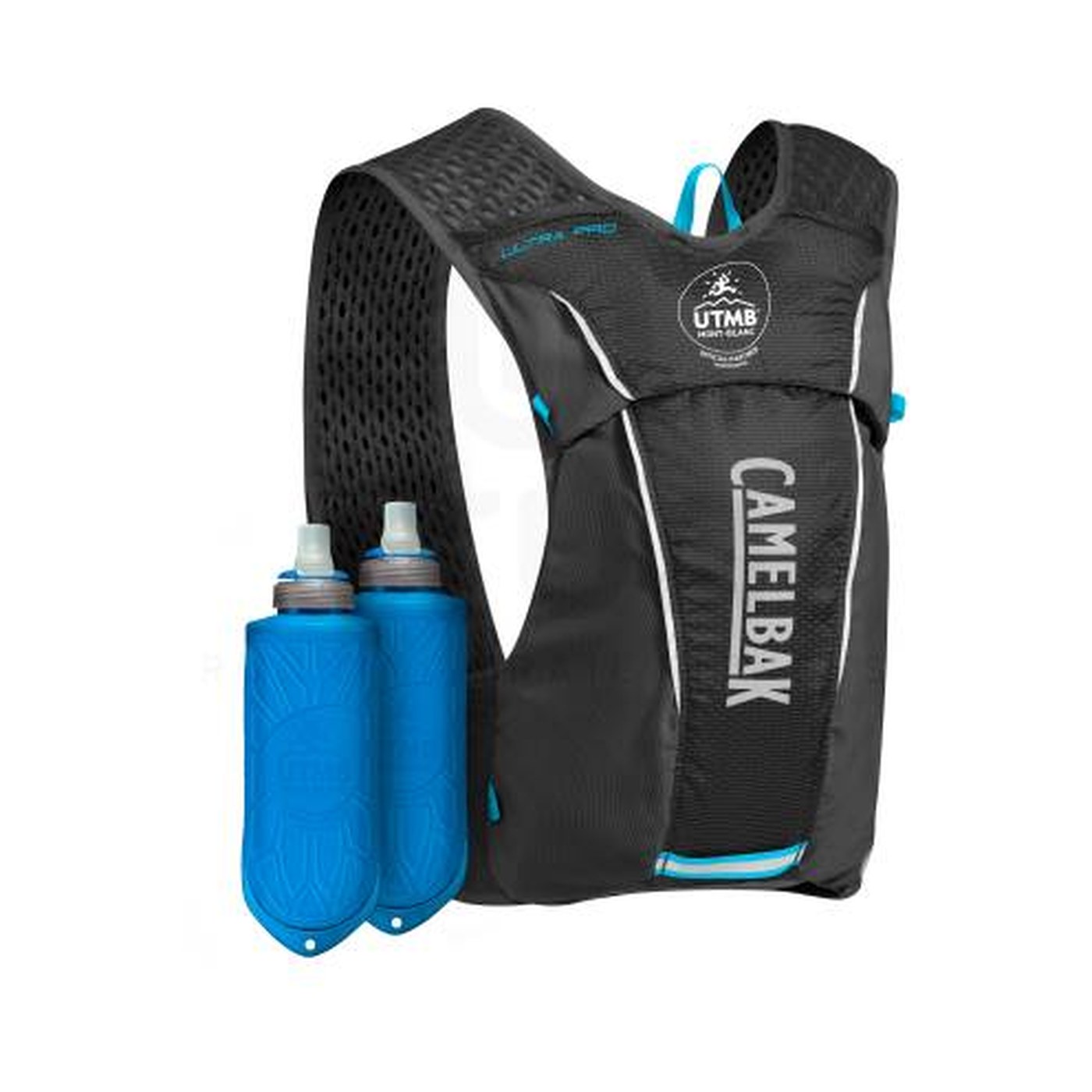
CamelBak is already in the RunMorph catalog with the Trail Run Vest, but the Ultra Pro Vest fills a different slot: it's built for running rather than fast hiking, with 13 pockets and two soft flasks included. At RunMorph, we cross-checked two independent American field tests, run separately on the men's and women's versions over several seasons, to see whether this 120-dollar vest holds up against the benchmarks already in our catalog.
© CamelBak, official photo used for editorial purposes
CamelBak Ultra Pro Vest: the brand's 2nd model in our catalog, aimed at running
CamelBak, the historic pioneer of hands-free hydration, is already in the RunMorph catalog with the Trail Run Vest. The Ultra Pro Vest complements it: it's designed specifically for running and racing rather than fast hiking. It uses 3D Micro Mesh across the entire vest, lighter than the previous generation, and a reworked pocket layout that maximizes storage without adding bulk. The vest sells for 120 dollars in the US. In Europe, it's offered as a "1L UTMB" edition, found at some retailers for around €85 on sale (€143 MSRP). That's a difference in name and packaging between markets, worth knowing before you buy, not a different product.
CamelBak Ultra Pro Vest specs
| Feature | Value |
|---|
| Brand | CamelBak (USA) |
| Storage capacity | 6 L / 360 cubic inches |
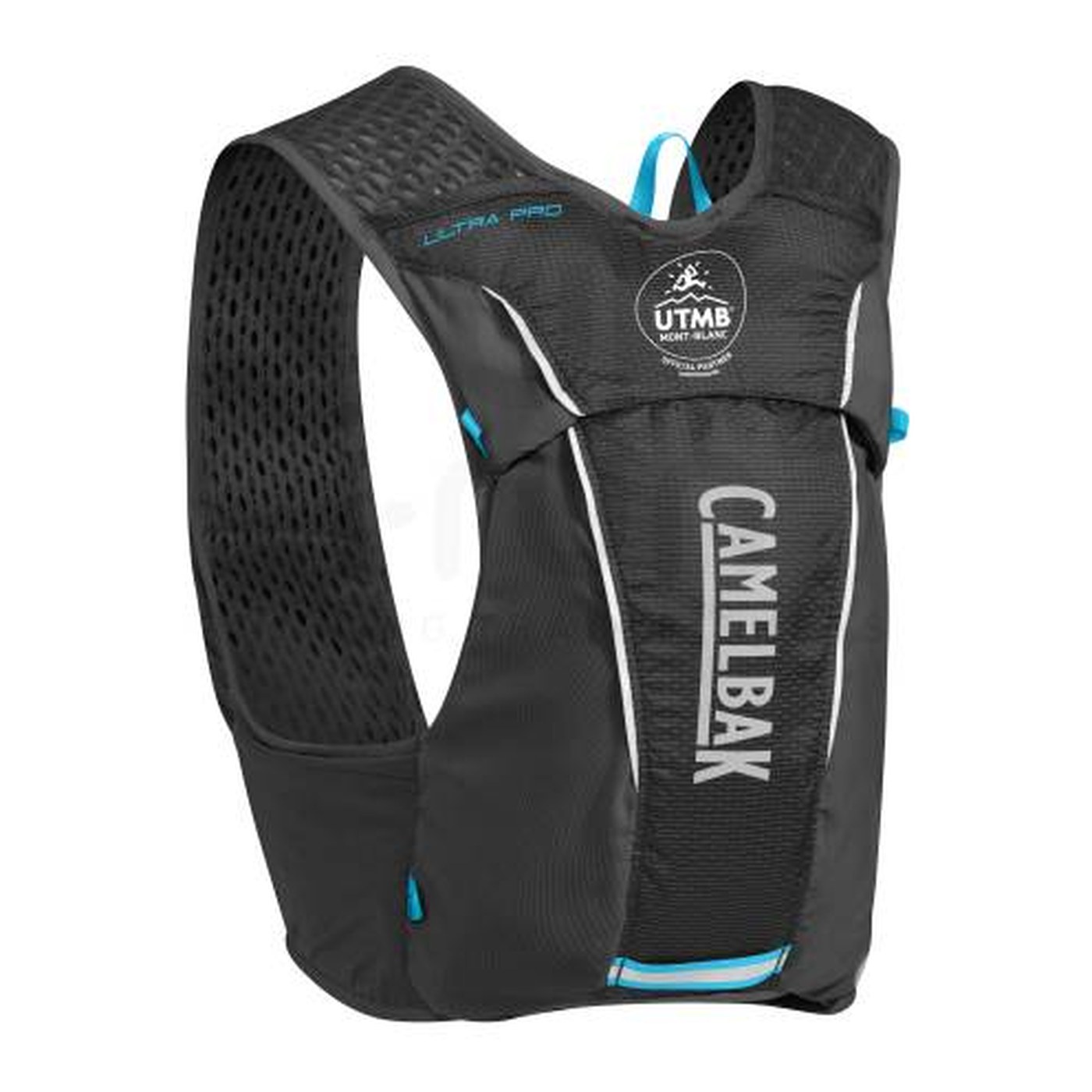
| Hydration included | 2 Quick Stow 500 ml soft flasks |
| Bladder compatibility | Up to 1.5 L (not included) |
| Weight | ~140 g (5 oz), 150 g women's version / 160 g men's version |
| Pockets | 13 in total (including a zippered phone pocket and a rear stash pocket) |
| Material | 3D Micro Mesh throughout |
| Sizes | XS to L (women's), S to L (men's) |
| Other | Removable safety whistle, reflective strips, bungee pole-carry system |
| Price | 120 dollars (US) / ~€85-143 (Europe, 1L UTMB edition) |
On paper, the vest's big strength is storage density: 13 pockets in total. That includes two pairs of deep pockets on the front straps, each able to hold an extra flask, two stretchy quick-access pockets on the sides, and a rear stash pocket that lets you pull out or stow a jacket without a zipper and without taking the vest off. The main back compartment, on the other hand, fills up quickly once you add a bladder, a classic trade-off on compact vests like this one.
3D Micro Mesh and strap system: everyday comfort
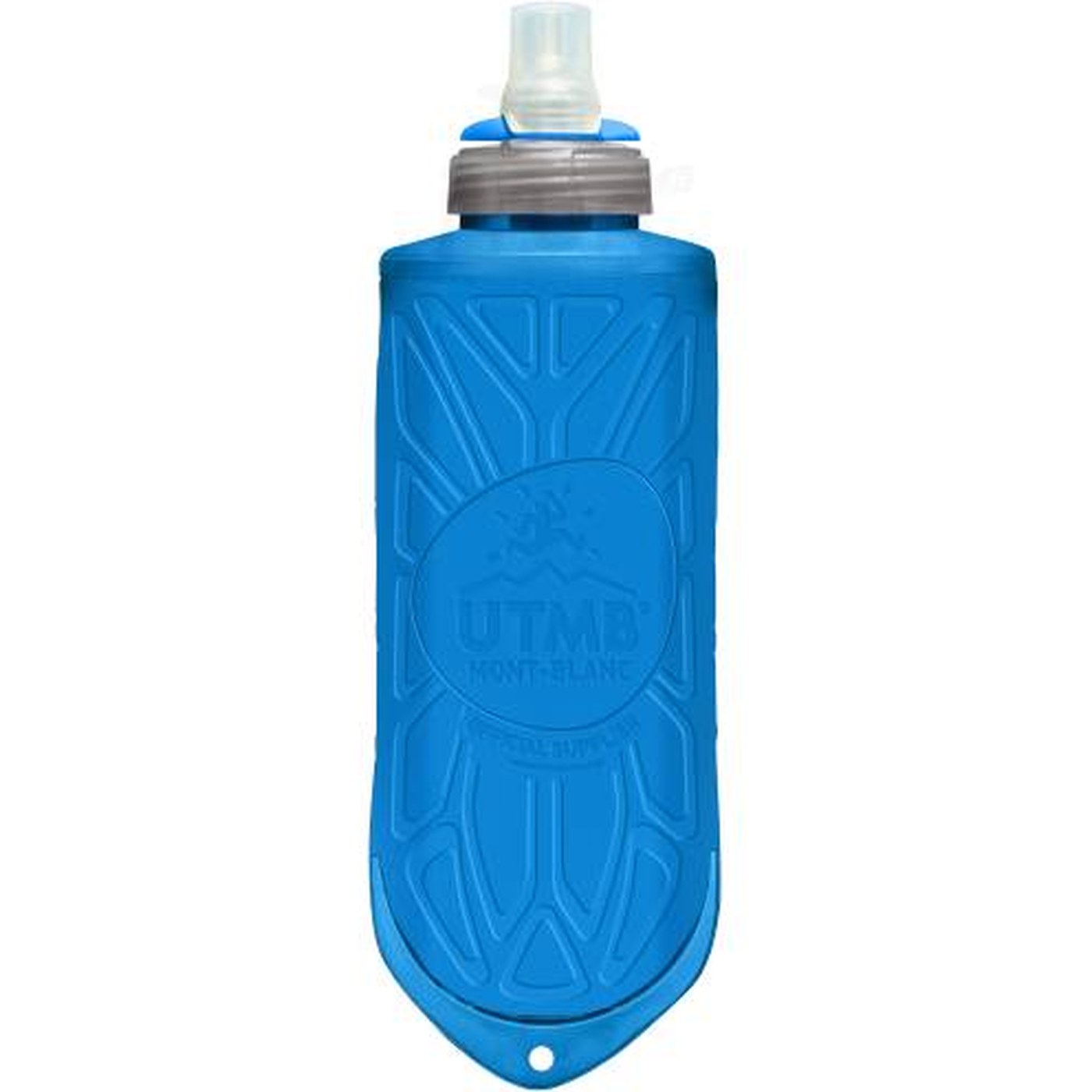
The 3D Micro Mesh used across the whole vest has two goals: maximum breathability and enough padding once the vest is loaded. Both field tests confirm it breathes well, with one shared reservation about the texture: the mesh can feel slightly abrasive against bare skin, something to keep in mind if you run shirtless in summer.
Adjustment relies solely on the two side-release sternum straps, with no other adjustment point on the vest. Both reviews praise how easy the system is to use, even with cold fingers in winter, a real practical edge over more complicated setups. The flip side, flagged independently by both testers: the vest runs slightly large. Both recommend sizing down if you're between two sizes, especially if you'll wear it over light summer clothing.
© CamelBak, official photo used for editorial purposes
RunMorph tip: if you're between two sizes on this model, always go with the smaller one, especially if you plan to wear it against bare skin in summer. Both field reviews we cross-checked agree on this point.
Field test: two converging American reviews over several seasons of use
Cross-checked reviews and transparency disclosure: for this article, RunMorph drew on two independent, detailed field tests covering different versions of the product (an English-language review by a female tester on the women's version, aqua sea/silver colorway, used over three seasons; another English-language review by a male tester on the men's version). We found no dedicated French field test despite several targeted searches, and we say so openly rather than filling the gap with an off-topic test.
The two sources strongly agree on the essentials: "premium" construction that holds up over time, a strap system that works even in the cold, and a pocket density that's much appreciated for self-sufficiency on the run. After several seasons of use, the women's version tester sums it up: "I currently own seven different running vests, and I reach for the CamelBak Ultra Pro Vest more often than not." The men's version tester confirms the quality of the rear stash pocket, "a great place to stash bulky items like gloves or a jacket."
Two reservations, also shared by both sources, are reported without being glossed over. First, the front phone pocket, which both testers found too narrow for large smartphones (an iPhone X in a standard case barely fits, according to the men's version review). Second, the fit runs slightly large, something to anticipate before you buy rather than discover when the package arrives. Neither review reports any manufacturing defect or leaks from the included flasks, which both sources describe as reliable over time.
© CamelBak, official photo used for editorial purposes
CamelBak Ultra Pro Vest vs Trail Run Vest vs Salomon ADV Skin 5: head-to-head
| Product | Capacity | Hydration included | Positioning | Weight |
|---|
| CamelBak Ultra Pro Vest | 6 L | 2 x 500 ml flasks | Running, racing | ~140-160 g |
| CamelBak Trail Run Vest | Different range | Varies by version | Trail, fast hiking | Varies |
| Salomon ADV Skin 5 | 5 L | Depends on version | Short/mid-distance racing | Light |
Against the CamelBak Trail Run Vest, already reviewed in our catalog, the difference comes down to intended use: the Trail Run Vest leans toward fast hiking and exploring, while the Ultra Pro Vest is squarely a running and racing vest, with its pocket density and included flasks. Against the Salomon ADV Skin 5, the benchmark for short and mid-distance racing, the gap is in storage philosophy. The ADV Skin goes for a snug second-skin fit with minimal pockets. The Ultra Pro Vest takes the opposite, storage-heavy approach, at the cost of a less precise fit according to both reviews.
Pros
- 13 pockets in total, storage density rarely seen at this price
- Two Quick Stow 500 ml flasks included, reliable and leak-free according to both reviews
- Simple, fast sternum strap system, even with cold hands
- Handy rear stash pocket for stowing a jacket without taking the vest off
- Durable construction, rated "premium" by both testers over several seasons
Cons
- Runs slightly large, so plan to size down
- Front phone pocket too narrow for large recent smartphones
- Mesh feels slightly abrasive against bare skin
- Main back compartment gets cramped once a bladder is installed
- No dedicated French field test found, reviews based on two American sources
Our verdict from the field: who is the Ultra Pro Vest for?
The regular runner who wants a versatile vest for training and long runs
This is the target profile confirmed by both tests. Its storage density and proven reliability over several seasons make it a solid choice for frequent use, from easy runs to self-supported long runs.
The runner who carries a large smartphone in the chest pocket
Plan ahead. Both tests found the front phone pocket too narrow for a standard iPhone in a case, so you'll need another place to carry a large recent smartphone.
The racer looking for a skin-tight, second-skin fit
With caveats. Both reviews agree the vest runs slightly large: size down, or look at a snugger model like the Salomon ADV Skin 5 for pure racing.
For your training: a well-chosen running vest doesn't replace a hydration strategy planned before you head out, especially on long runs where your needs change with heat and duration. Structure your training weeks with a plan built around your goal: explore the RunMorph training plans.
RunMorph verdict
Based on two independent, converging American field tests carried out over several seasons, the CamelBak Ultra Pro Vest lives up to its reputation as a versatile, reliable vest for regular training. Storage density and build quality are its strongest points, tempered by a fit that runs slightly large and a phone pocket that could be better. The lack of a dedicated French field test remains a sourcing limitation we openly acknowledge for this article. A smart pick if you value self-sufficiency and versatility over a skin-tight fit. 7.7/10.