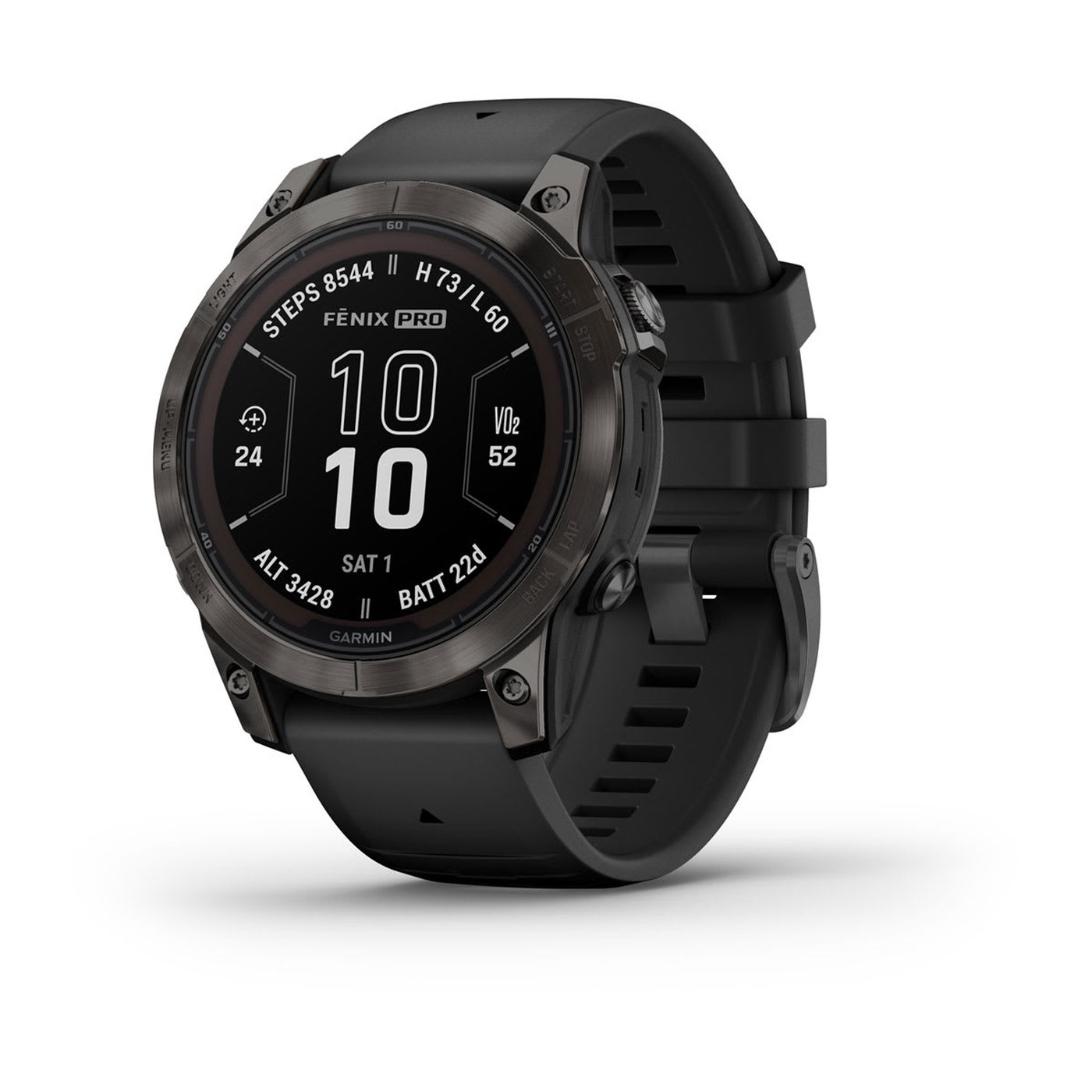
For years Garmin has sold the word "Pro" as a redesign. On the fenix 7 Pro, it mostly covers a lineup cleanup: a newer heart rate sensor, a flashlight on every case size, and a battery figure that doesn't hold up on your wrist the way it does on the spec sheet. Three years after launch, the watch is still one of the most complete on the outdoor market. The question is what it's really worth once it leaves the marketing lab.
© Garmin, official photo used for editorial purposes
A "Pro" that simplifies the lineup more than it reinvents it
When Garmin launched the fenix 7 Pro in May 2023, it didn't promise a new generation. It mainly fixed a commercial readability problem: the fenix 7 then came in a dozen combinations, with single or dual-frequency GPS depending on the edition, maps as an option on some models and a flashlight reserved for the 7X case alone. The Pro version folds all that into a lineup with two choices, edition and case size, where every model now packs multi-band GPS, 32 GB of storage, preloaded maps and the LED flashlight.
The problem flagged by several French reviews lies in the gap between the name on this watch and what actually changed. One French-language review points out that most of the Pro's software additions (endurance and hill scores, new sport profiles) later reached the original fenix 7 through an update, which makes the Pro hard to justify if you already own the standard model. That's the angle of this review: a watch that looks excellent on paper, where you need to pin down exactly what "Pro" really adds, and what it merely repackages.
fenix 7 Pro: what Garmin claims vs what was measured
The sharpest gap between the spec sheet and real-world use is battery life. Garmin quotes a theoretical figure obtained under near-ideal sun exposure. A French-language field test run over several weeks documents a big gap once the watch is used normally, workouts and notifications included.
| Metric | Claimed by Garmin | Measured in real use |
|---|
| Smartwatch battery | 18 days (+4 days solar), up to 22 days combined | 15 to 17 days, with five to eight workouts per week |
| Solar gain | 22% to 37% extra battery life | Marginal gain in everyday use: requires 3 hours a day at 50,000 lux, rarely reached outside summer |
| Multi-band GPS battery | 23 hours (+3 hours solar), 26 hours combined | Real-world drain close to the claim, but well below the 57 hours of GPS-only mode highlighted elsewhere on the spec sheet |
| Data fields displayed | Not specified by Garmin in its marketing | Capped at 6 fields per screen, versus 8 on the Forerunner 255 at under 300 € |
The detail that shapes this field test comes from an independent French-language measurement: with regular training, the watch lasts fifteen to seventeen days, an honest number but a long way from the twenty-two days Garmin pushes, which assumes daily sun exposure that's hard to get outside summer.
Multi-band GPS and ECG sensor: what the tech really changes
© Garmin, official photo used for editorial purposes
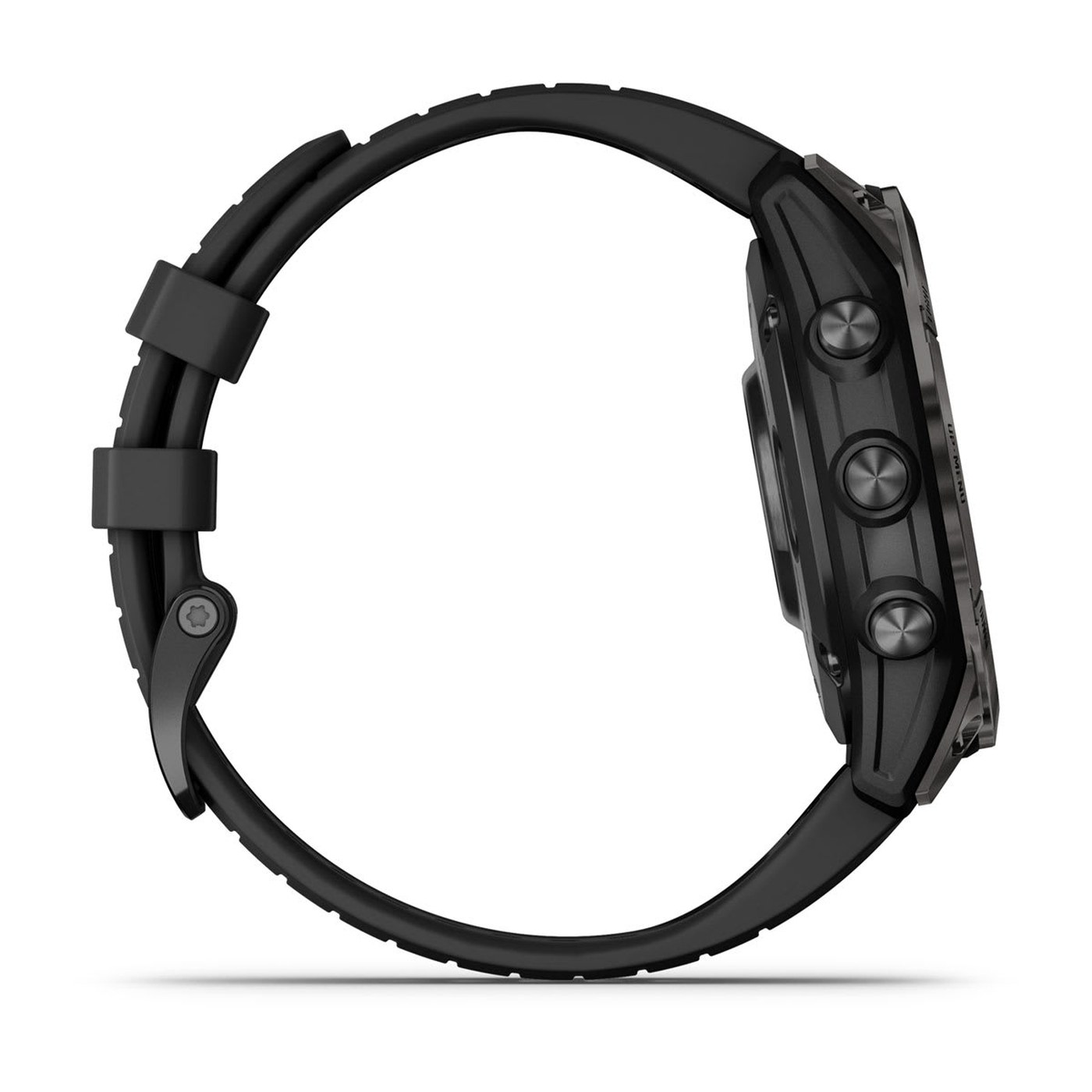
Dual-frequency GPS, already available on some editions of the standard fenix 7, becomes standard across the whole Pro lineup. The watch offers six reception modes, from GPS only to full multi-band, and SatIQ mode automatically picks the accuracy-battery trade-off based on your surroundings. On a reference route in a dense urban area, an independent test compares the fenix 7 Pro's track with those of a Forerunner 965 and a single-frequency Forerunner 55: the two multi-band watches produce almost overlapping tracks, while the single-frequency one clearly drifts in narrow streets.
The new Elevate V5 optical heart rate sensor goes from two to six LEDs, with orange diodes meant to improve readings on darker skin. It also integrates four metal plates for a future ECG sensor, physically present on the watch but still disabled in France for lack of local certification at the time of writing. In practice, the feature adds zero value today, despite being physically on the case.
RunMorph tip: before buying the 47 mm out of habit, check your wrist circumference. The 47 mm case fits most wearers, but on a slim wrist, the Garmin Instinct 2 or a 7S Pro stay more comfortable day to day.
The field test: from dense city streets to forest trails
© Garmin, official photo used for editorial purposes
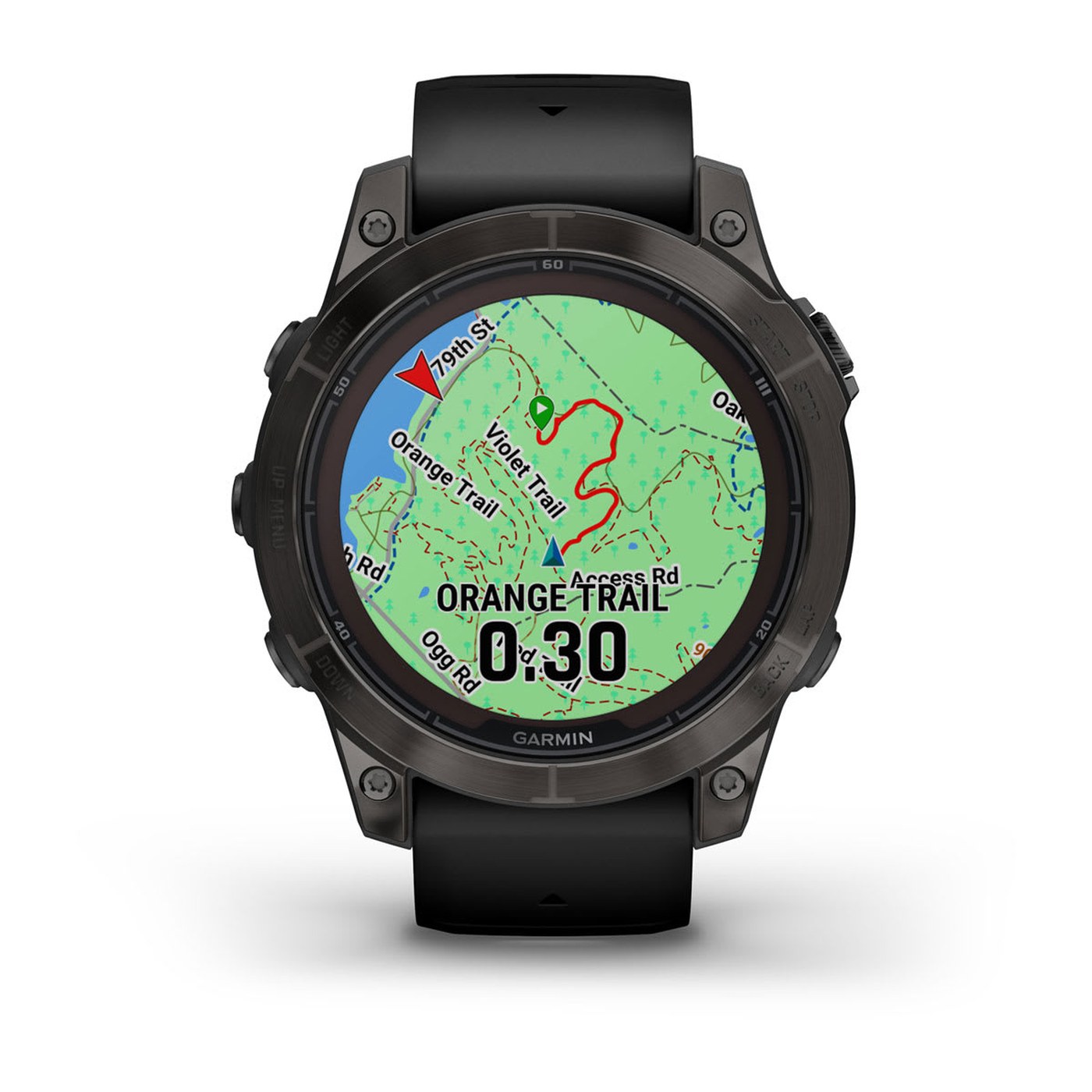
Three independent French-language reviews, read in full for this article, agree on the essentials and split on one specific point. One test run over more than three months calls the fenix 7 Pro the most complete sports watch on the market alongside its AMOLED twin, the Epix Pro: routable global maps, dual-frequency GPS judged ultra-accurate in a head-to-head with a Suunto Vertical and a Polar Vantage V3, and reliable optical heart rate on bike rides checked against a chest strap. A second review, published a few months after launch, stresses the comfort of the titanium case (73 g for this mid-size model) and how easy it is to live with day to day, while noting that the theoretical twenty-two days of battery drop to fifteen or seventeen as soon as the watch actually tracks five to eight workouts a week. A third review, more critical on novelty versus price, argues that the Pro's main additions, the flashlight on every size and the new heart rate sensor, don't justify the price gap over a standard fenix 7 on their own, since most of its software features were later ported over via update.
The split is about the screen. The most technical review calls the MIP panel "perfectly readable in sunlight" and better than an AMOLED screen for that specific use, while the more mainstream review finds it dated next to the AMOLED competition that Garmin itself now uses across the board, notably on the fenix 8 already reviewed on RunMorph. At RunMorph, we don't settle this by averaging: it comes down to how you use it. In full sun and on long outings, the transflective panel holds its own and uses far less battery. Indoors or worn all day, the rendering gap with AMOLED is obvious.
The real weak spot: battery life that doesn't deliver on the solar promise
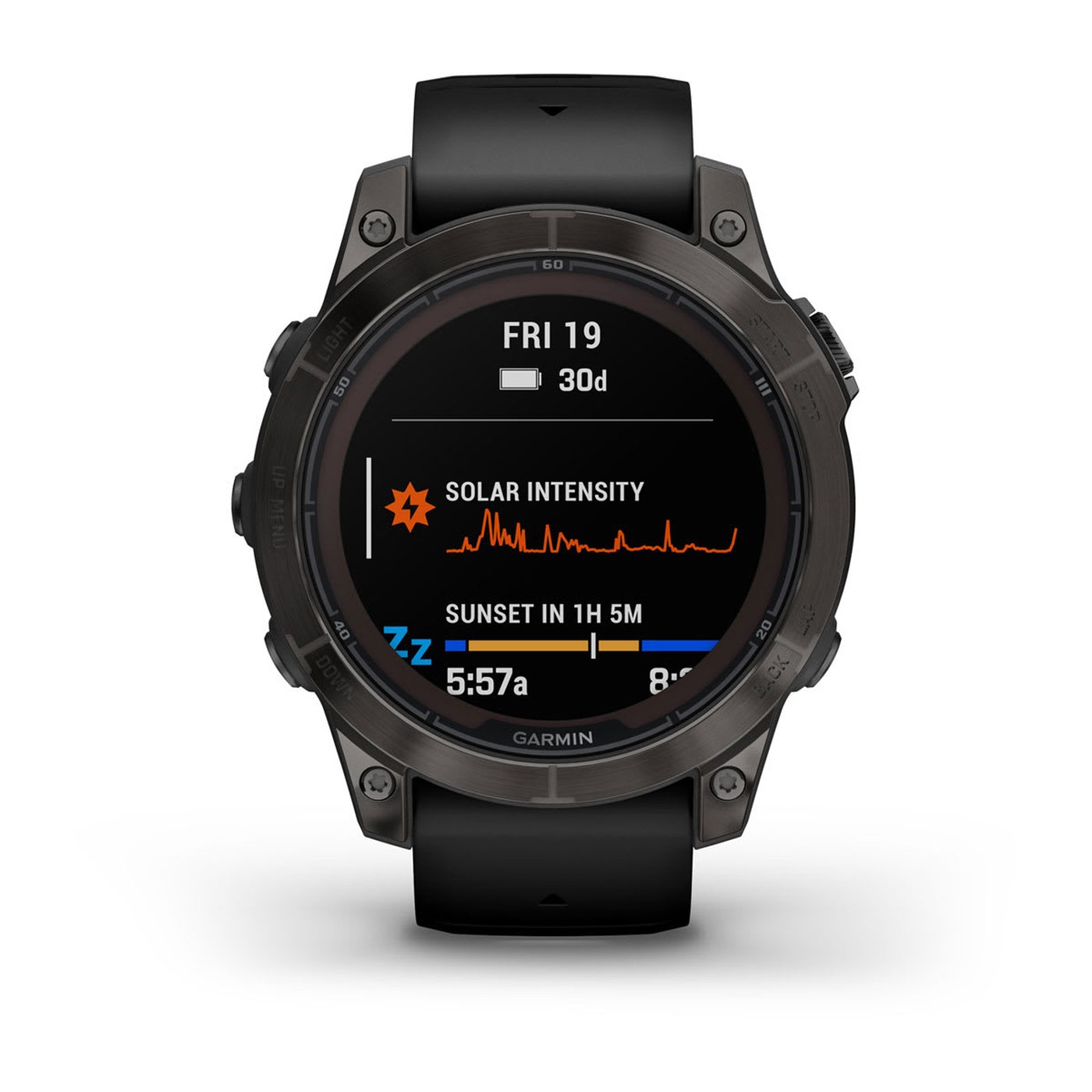
The watch was built around a strong sales pitch: solar charging that would push back how often you need the charger. In reality, that gain stays theoretical for the vast majority of wearers. You need to expose the watch to 50,000 lux for three hours a day outside of workouts, or continuously during activity, to get the maximum advertised gain. A test run over several weeks calls the result "still just as uninteresting" as on previous generations of Garmin solar watches, because the sunlight conditions just aren't there in everyday use, especially outside summer. The practical upshot: a runner who trains five times a week in the forest or in the evening shouldn't count on solar to go much beyond the fifteen to seventeen days measured in real use, a far cry from the twenty-two days on the spec sheet.
The second structural flaw: six data fields on a 950-euro watch
On the 7S Pro and 7 Pro sizes, the screen tops out at six data fields per page during workouts. That cap is all the more surprising a year after a software update let the Forerunner 255, sold for under 300 euros, show up to eight fields on a screen with the same resolution (260 x 260 px). So the limit isn't a hardware constraint but a software choice by Garmin, which keeps eight fields for larger-screen watches like the 7X Pro or the Epix and Forerunner 955/965 models. For a triathlete who wants pace, heart rate, power and distance on a single screen, this six-field cap means flipping through pages mid-effort.
fenix 7 Pro vs fenix 8: should you upgrade?
| Spec | fenix 7 Pro 47 mm | fenix 8 47 mm AMOLED |
|---|
| Display | Transflective MIP, 260 x 260 px | AMOLED, 454 x 454 px, up to 2000 nits |
| Weight | 73 g (titanium) | 75 g |
| Multi-band GPS battery | 23 h (+3 h solar) | 30 h, no solar on the standard model |
| Smartwatch battery | 18 days (+4 days solar) | 16 days |
| Storage | 32 GB | 64 GB |
| Launch price | 849 to 1049 € | 999.99 € |
| Street price in 2026 | From 569 € | Around 999 €, few discounts |
The short version: if you already own a fenix 7 Pro and mainly want brightness and a more modern screen, move to the fenix 8, even if it means losing solar on the standard model and some raw battery life. If you're buying for the first time and prioritize battery, a price now nearly halved at some retailers and a screen readable in full sun, you can reasonably stick with the fenix 7 Pro instead of paying full price for a fenix 8.
fenix 7 Pro vs Suunto Vertical 2 and Polar Vantage V3: the comparison
| Spec | Garmin fenix 7 Pro | Suunto Vertical 2 | Polar Vantage V3 |
|---|
| Display | Transflective MIP, 260 x 260 px | Extra-wide AMOLED, 49 mm | AMOLED |
| Multi-band GPS battery | 23 h (+3 h solar) | 65 h (multi-band), up to 250 h in extended mode | 53 h with wrist heart rate on |
| Maps | Routable, preloaded, terrain layers | Offline, very detailed, not routable | OpenStreetMap, 2 preloaded regions (Europe, North America) |
| ECG | Sensor present, disabled in France | No | Yes, active |
| Price | From 569 € to 1049 € depending on edition | 599 € to 699 € | 599 € |
The short version: for the most polished routable maps, the fenix 7 Pro stays ahead. For raw battery life in ultra-endurance, the Suunto Vertical 2 beats it by a wide margin thanks to its bigger screen and extended modes. For advanced physiological heart rate tracking with ECG already active, the Polar Vantage V3 goes further than the fenix 7 Pro on that specific point, at almost the same price.
Pros and cons
© Garmin, official photo used for editorial purposes
Pros
- Dual-frequency GPS rated ultra-accurate by several independent tests, including head-to-heads with rival multi-band watches
- Routable global maps preloaded, an area where Garmin stays ahead of Suunto and Polar
- Tough titanium case (MIL-STD-810), water-rated to 100 m, LED flashlight now on every size
- Now affordable as a nearly new used watch or on sale, up to 40% below launch price
Cons
- Real battery life measured at fifteen to seventeen days, far from the twenty-two claimed, with regular training
- Only six data fields on the 7S and 7 Pro sizes, versus eight on a much cheaper Forerunner 255
- ECG sensor present but disabled in France, with no announced activation date
- MIP screen looks dated next to the AMOLED panels now everywhere, including on the same brand's fenix 8
Our field verdict: who does the fenix 7 Pro make sense for in 2026?
For a hiker or trail runner who favors long outings in full sun, with a real need for offline maps, the fenix 7 Pro is still a smart pick, especially since its price has melted since 2023. For a road runner who mostly wants a bright screen and quick data reads in town or at the gym, a newer AMOLED watch, including within Garmin's own family, fits the job better.
Whether you're preparing a demanding trail race or a city marathon, the fenix 7 Pro pairs well with high-volume weeks: its battery covers a full week of long runs without charging, and its maps spare you from checking your phone mid-effort. Pair it with a
RunMorph training plan built for your goal to turn that battery life into useful kilometers rather than just a marketing claim.
RunMorph Coach verdict
The fenix 7 Pro deserves its reputation as the most complete outdoor watch of its generation: reliable multi-band GPS, routable global maps and above-average toughness. But the "Pro" name sells a breakthrough the numbers don't fully back up, between solar battery life that stays theoretical in real use and a six-field cap that's hard to justify at this price. 7.8/10: a very good adventure watch, as long as you buy it discounted rather than at launch price, and don't expect the screen or the twenty-two days printed on the box.
FAQ
Is the Garmin fenix 7 Pro a good fit for beginners?
It's overkill for a first watch: a Garmin Forerunner 55 at under 200 euros covers the essentials of running tracking without the maps or the 73 grams on your wrist.
What real battery life can you expect from the fenix 7 Pro?
Count on 15 to 17 days with regular training (5 to 8 workouts a week), far from the claimed 22 days, which assume daily sun exposure that's hard to get outside summer.
Is the fenix 7 Pro still worth it against the fenix 8?
At launch price, no: the fenix 8 costs 999.99 euros with a much more modern AMOLED screen. Discounted to 600 to 700 euros or less, the fenix 7 Pro becomes competitive again, especially if you care more about battery life and maps than screen brightness.
Does the fenix 7 Pro ECG sensor work in France?
No: the sensor is physically there (4 metal plates around the optical heart rate sensor) but remains disabled in France for lack of local certification at the time of writing.