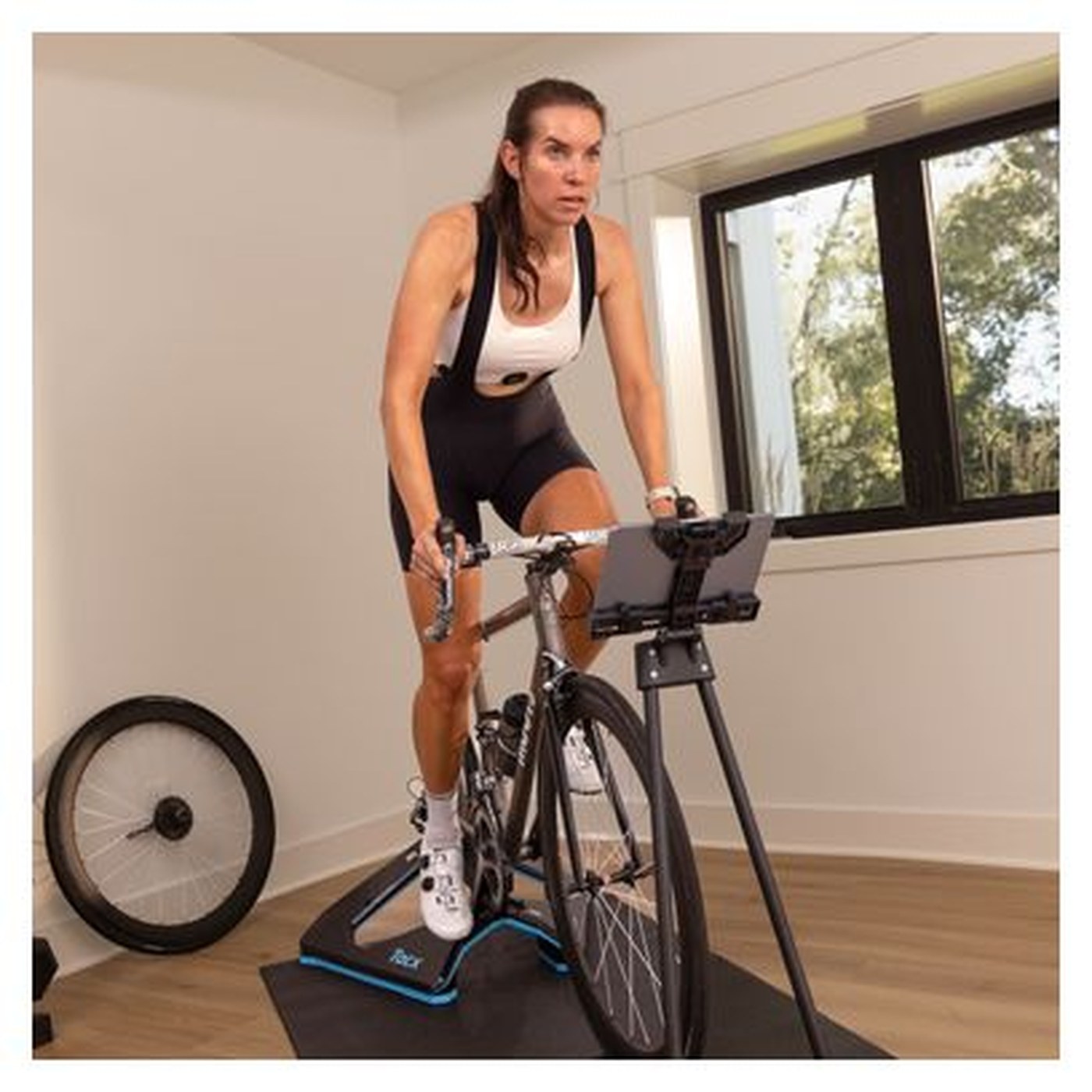
Garmin rethought its heart rate sensor for women: instead of strapping it around the chest, you clip it straight onto your sports bra. On paper, the idea is appealing. Out on the road, opinions split sharply on one question: does this new approach really justify its price?
Garmin HRM-Fit Review: The Heart Rate Sensor for Your Sports Bra
7/10
The essentials in 3 sentences
The HRM-Fit clips directly onto a medium- or high-support sports bra and carries over the advanced features of the HRM-Pro Plus: Running Dynamics, offline storage and up to 12 months of battery life. Nobody disputes its comfort or accuracy, with zero slipping reported even while running, doing CrossFit or lifting hard. But at €159, roughly 50% more than an equivalent standard chest strap, several testers openly question whether the added comfort is worth the price gap.
7
A technically flawless sensor, but for many women its real added value has yet to be proven.
Garmin rethinks the heart rate strap for women
The starting point isn't new. A traditional chest strap is accurate, but plenty of women find it a hassle: chafing, extra bulk under the chest, a feeling of constriction. Garmin's answer with the HRM-Fit is radical. The sensor no longer wraps around your torso; it clips directly onto your sports bra with three snaps.
It inherits the features of the HRM-Pro line: Running Dynamics, indoor cadence and distance transmission, offline storage of strength or HIIT sessions, and step and calorie tracking even with no watch on your wrist. On paper, it's a high-end sensor in a new format.
Specs
| Feature | Garmin HRM-Fit |
|---|---|
| Weight | 53 to 54 g |
| Attachment | 3 snaps, clips directly onto a medium/high-support sports bra |
| Battery life | Up to 12 months, CR2032 coin cell replaceable without tools |
| Water resistance | 3 ATM |
| Connectivity | ANT+ (unlimited) and Bluetooth (3 simultaneous connections) |
| Features | Running Dynamics, HRV, offline storage, steps/calories/intensity minutes tracking |
| Made in | Taiwan |
| Price | €159 |
Clipping it on: a constraint to plan for
The number one thing to watch isn't the sensor itself but the bra you attach it to. Garmin explicitly recommends medium to high support, no zipper, and a band snug enough to keep the sensor sitting just below the chest. The most basic, no-frills bras work best. If the sensor lifts off your skin mid-workout, your bra isn't tight enough.
Once that condition is met, setup is simple: two outer clips and one central clip above the sensor, which stays in direct contact with your skin while the snaps sit on the outer layer of fabric.
Field test
On pure tech, everyone agrees. The sensor doesn't move, even during hard intervals, rugby or heavy lifting. Its accuracy is rated on par with the HRM-Pro Plus, Garmin's high-end benchmark. On comfort, testers unanimously welcome the absence of a tight band around the torso, with noticeably less chafing than a standard chest strap.
But real doubt creeps in once you judge the product as a whole. One tester, technically savvy and used to Garmin's high-end straps, sums up a disappointment echoed in other feedback. The sensor works perfectly, with no slipping or comfort issues at all, but she simply doesn't see what it adds over a standard strap, for a roughly 50% premium. Her only real practical complaint is removing the sensor: a fiddly move that wears down your nails over time.
More technical feedback reinforces that doubt. It points to no tangible accuracy advantage over a traditional chest strap or even an optical armband, and argues the product adds complexity and cost without solving a real problem for every woman. On the other side, other testers stress the comfort they regained across varied activities (rugby, cycling, strength training) with no discomfort or slipping, and see the trade-off as a clear win. The split seems to come down mainly to the person: women who genuinely suffered with a standard strap get a real benefit, the others far less.
For comparable accuracy without depending on your choice of bra, the Garmin HRM-600 remains a classic chest strap alternative with the same Running Dynamics features.
Garmin HRM-Fit vs Garmin HRM-600: which sensor should you choose?
| Criterion | Garmin HRM-Fit | Garmin HRM-600 |
|---|---|---|
| Format | Clips onto a sports bra | Classic chest strap |
| Comfort | Excellent with the right bra | Good, depends on strap tension |
| Compatibility | Requires a medium/high-support bra with no zipper | Universal, works with any clothing |
| Features | Running Dynamics, HRV, offline storage | Running Dynamics, HRV, rechargeable battery |
| Price | €159 | See our dedicated review |
You'll find the full HRM-600 breakdown in our dedicated review. Choosing between the two mostly comes down to one factor: how uncomfortable a standard strap actually feels to you.
Pros
- Far more comfortable than a chest strap for women bothered by the usual chafing
- Accuracy rated on par with the HRM-Pro Plus by every tester
- Generous battery life, up to 12 months on a simple coin cell
- Handles hard efforts without flinching: strength training, intervals, contact sports
Cons
- Absolutely requires a medium/high-support bra with no zipper, or accuracy suffers
- High price, about 50% above an equivalent standard strap
- Several testers see limited real added value, with no tangible accuracy benefit
- Removing the sensor can be fiddly, and the snaps get tedious with repeated use
Our field verdict: who is it for?
The runner bothered by standard straps
If chafing and the constricting feel of a chest strap regularly bother you, the HRM-Fit tackles that problem head-on, and testers unanimously praise it on exactly this point.
The multisport athlete: cycling, strength, HIIT
If you switch between several disciplines and want one solution that stays put whatever the effort, this is a strength confirmed by every piece of feedback we reviewed.
The woman who's never had a problem with a standard strap
If a standard chest strap has never given you comfort issues, the HRM-Fit's premium will be hard to justify. To structure your training with reliable heart rate data, check out our RunMorph training plans.
RunMorph Coach's verdict: 7/10
The HRM-Fit delivers on every technical promise: comfort, accuracy, battery life. But its high price and reliance on a specific type of bra make it a purchase best reserved for women who genuinely suffer with a standard strap. For everyone else, the real benefit has yet to be proven.
Key takeaways for your training
- Check that your sports bras offer medium to high support with no zipper before investing in this sensor.
- A sensor that lifts off your skin during a workout means your bra isn't snug enough, not that the product is faulty.
- Chest-based heart rate accuracy still beats an optical wrist sensor, whether you pick a strap or a clip.
- Take advantage of the long battery life and stop thinking about charging for an entire training season.
- If comfort isn't an issue with your current strap, put your budget toward other gear instead.