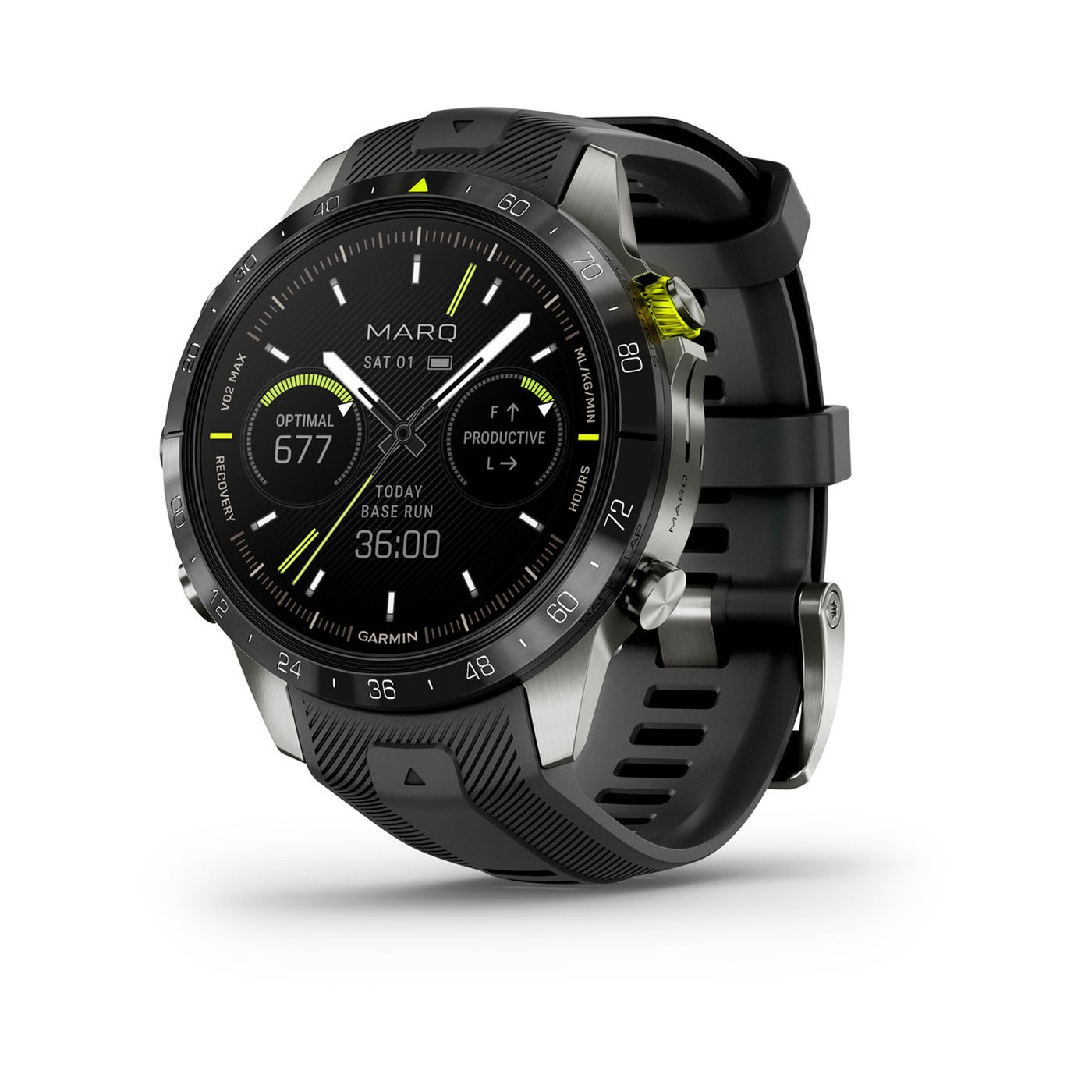
A €1950 sports watch? Only Garmin would dare. With the MARQ Athlete (Gen 2), the brand wraps fenix electronics in a grade 5 titanium case with sapphire glass, then bills the difference at the price of a collector's watch. Three years after launch, authorized dealers have already cut the price by more than 20 %. At RunMorph, we looked under the hood to find out whether a runner or triathlete should pay that premium, or keep the money for something else.
© Garmin, official photo used for editorial purposes
Garmin goes luxury watchmaking: why a €1950 sports watch
Garmin launched the MARQ line in 2019 to reach buyers who would never pick up a regular fenix, with five versions (Athlete, Adventurer, Captain, Aviator, Golfer) sharing the same technical base in cases designed as collector's watches. The second generation, released in 2022, keeps that idea for the Athlete: the stated target is the runner or triathlete, but the watch aims just as much at a collector's wrist as at an athlete's in race week. That double purpose runs through the whole review.
RunMorph's advice: if you're torn between a MARQ budget and a more affordable model, start by comparing the specs of the Garmin fenix 7 Pro and the Garmin fenix 9 Pro: both share most of the MARQ Athlete's sports features for a fraction of the price.
€1950 at launch, €1501 today: the gap Garmin doesn't advertise
| Data | Claimed at launch | Observed in 2026 |
|---|
| Retail price | €1950 | €1501.50 at Lepage, an authorized Garmin dealer, about 23 % less |
| Smartwatch battery life | 16 days | 15 days measured in real-world use, always-on display (independent French source) |
| GPS battery, all systems | 32 hours | Not contradicted by the reviews we read, but never independently timed by a French source |
| Core tech vs the fenix 7 Pro (€849 to €1049 at launch) | Pitched as a step up | Multi-band GPS, SatIQ, sensors and mapping almost identical according to cross-checked reviews of the previous generation |
The first figure speaks for itself: a discount of about 23 % at an authorized dealer, three years after launch, on a product that hasn't had a single hardware update since. The second is quieter but just as telling: Garmin claims 16 days of battery in smartwatch mode, while real-world measurements with the always-on display drop to 15 days. The gap is small, but it's there, and it runs the opposite way to the marketing promise.
GPS accuracy and heart rate sensor: fenix tech in a luxury case
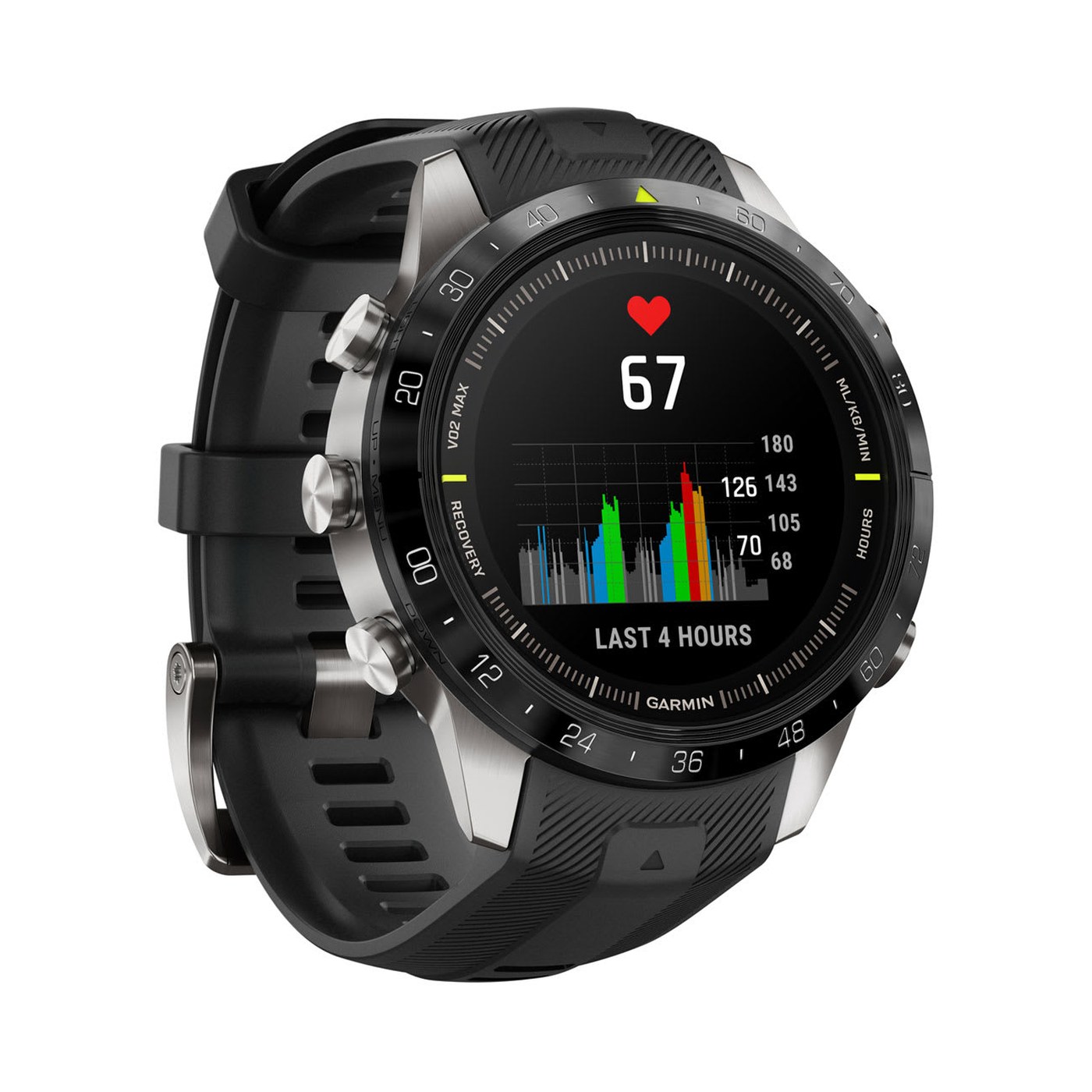
The MARQ Athlete Gen 2's GPS combines the L1 and L5 frequencies, backed by GLONASS and Galileo, with Garmin's SatIQ technology, which switches configurations automatically to save battery without sacrificing accuracy. It's the same architecture as the fenix 7 Pro and fenix 9 Pro RunMorph has already reviewed. The Gen 2 reviews we read for this article report clean tracks in the city and on trails, without the occasional dropouts some entry-level models suffer under dense forest cover.
© Garmin, official photo used for editorial purposes
On top of that, the optical heart rate sensor measures SpO2, heart rate variability and respiration rate. None of the sources we read reports any notable gap against a chest strap during standard running or cycling sessions, which fits the technical continuity between the MARQ and the rest of Garmin's high-end range.
Mapping and multisport navigation: the watch's strongest argument
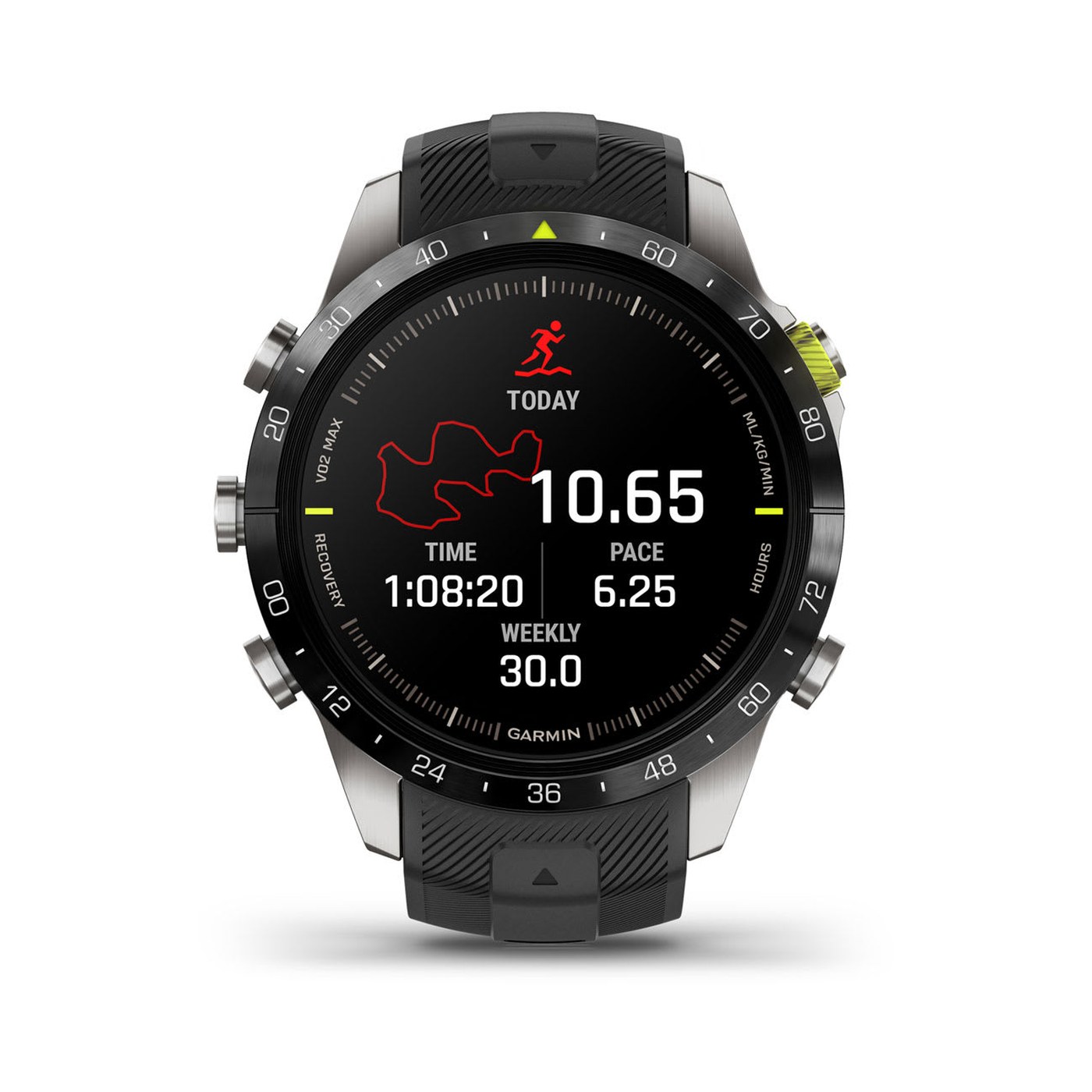
This is where the MARQ Athlete Gen 2 goes beyond a rebadged fenix. Besides the preloaded worldwide topo maps, useful for trail running and hiking alike, it carries 42,000 golf courses, marine charts and ski runs, a package Garmin usually saves for activity-specific watches. For a triathlete who also plays golf or sails at weekends, that versatility makes real sense. For a runner who only wants to train for a marathon or an ultra, it's more marketing pitch than genuine need.
© Garmin, official photo used for editorial purposes
Major flaw: five buttons and an interface that takes real getting used to
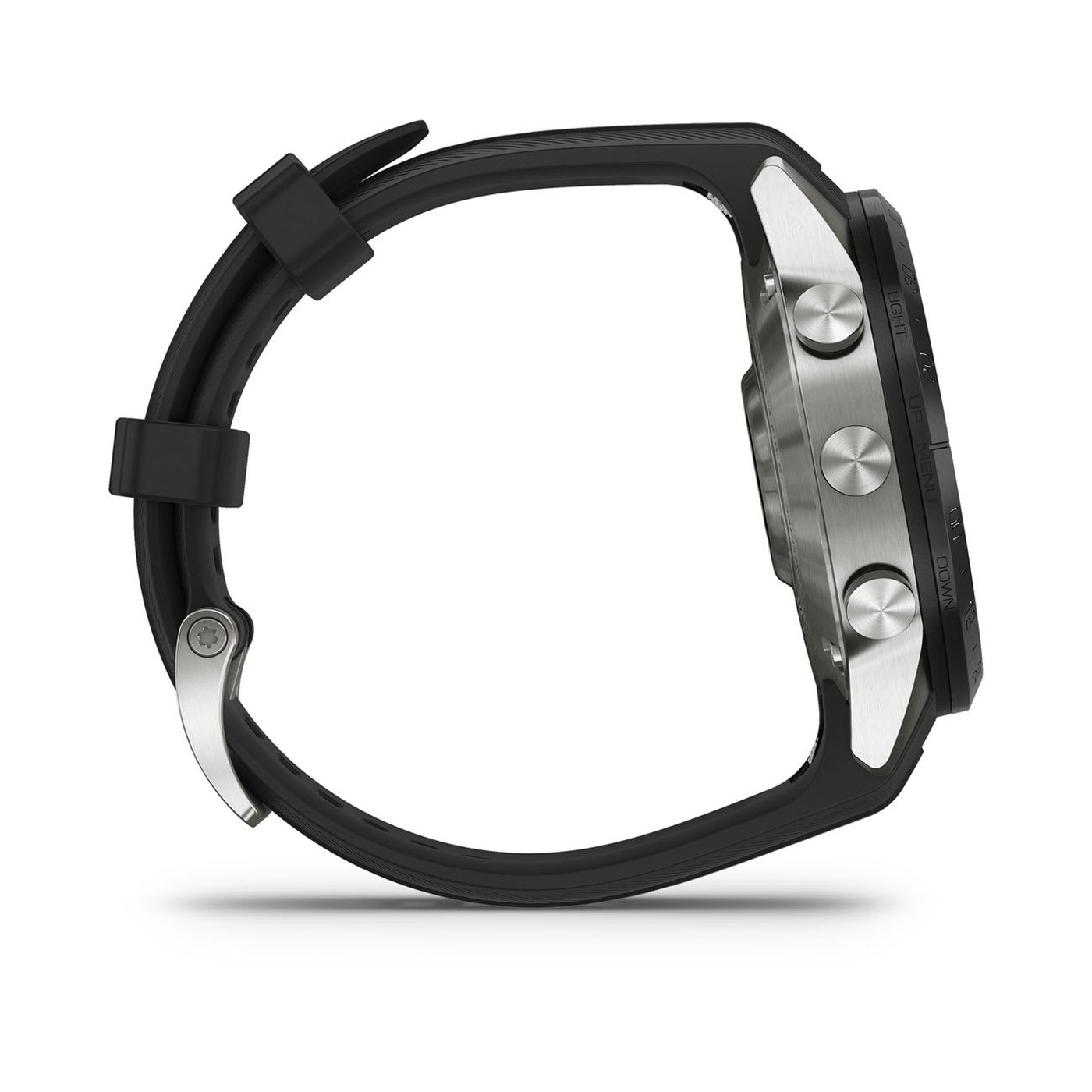
The MARQ Athlete Gen 2 pairs a touchscreen with five physical buttons, each triggered by a short or long press, which means around ten functions to memorize before you can navigate without thinking. French reviews that wore it for several weeks describe an adjustment period of several days, the time it takes to remember which button opens music, which one opens settings, and which one starts an activity. Once those reflexes are in place, navigation gets quick, but that learning curve doesn't exist on a watch built around touch, or on most direct rivals at this price.
© Garmin, official photo used for editorial purposes
Major flaw: the problem isn't the tech, it's the price
As early as the first generation of the MARQ line, the French press was already pointing out that the MARQ Athlete brought nothing functional that a cheaper fenix didn't already offer, titanium and sapphire aside. Six years later, that verdict still holds for the second generation: multi-band GPS, SatIQ, recovery sensors and worldwide mapping are almost identical on a fenix 7 Pro now selling from €569, nearly three times cheaper than the MARQ Athlete Gen 2 at its launch price. The difference comes down to finish, case and exclusivity, not to what the watch measures during your session.
Real-world battery life: 15 days measured, one of the best figures on the market
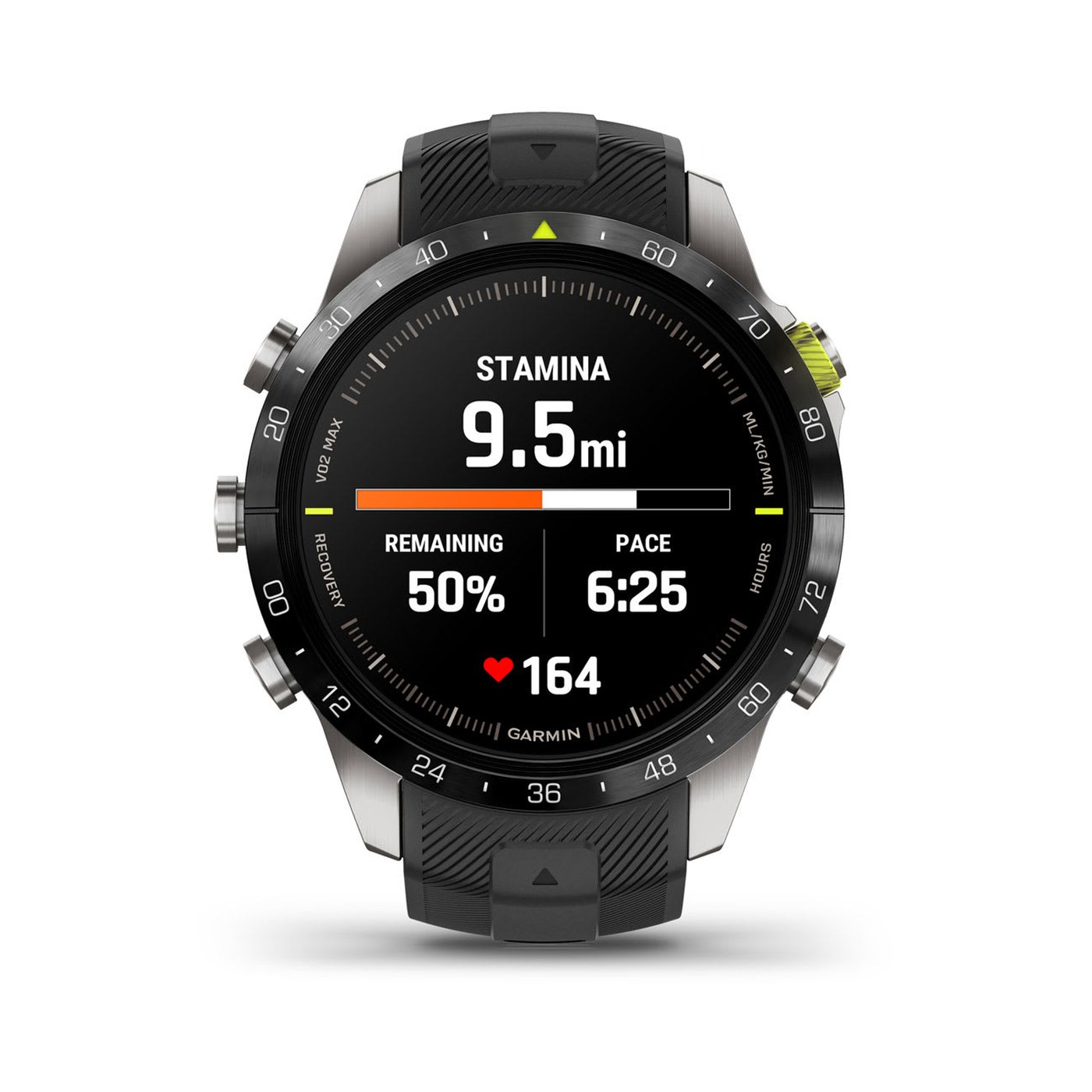
Here, the MARQ Athlete Gen 2 almost fully delivers. The 15 days measured in real-world use with the always-on display are among the best results on the market for an AMOLED watch, far ahead of mainstream smartwatches that struggle to last beyond two days in the same conditions. In GPS mode, claimed battery life climbs to 42 hours in standard use and 32 hours with all satellite systems active, enough to cover an ultra without a top-up.
© Garmin, official photo used for editorial purposes
Garmin MARQ Athlete (Gen 2) vs Garmin fenix 7 Pro: head to head
| Criterion | MARQ Athlete (Gen 2) | fenix 7 Pro |
|---|
| Case | 46 mm, grade 5 titanium, sapphire glass | 47 mm, titanium, transflective MIP display |
| Weight | 85 g | 73 g |
| GNSS | Multi-band L1 + L5, SatIQ | Multi-band, SatIQ |
| Smartwatch battery life | 16 days claimed, 15 measured | 22 days claimed (solar), 15 to 17 measured |
| Price | €1950 at launch, €1501.50 observed | €849 to €1049 at launch, from €569 observed |
The short version: out on the road or trail, the two watches are equals. The fenix 7 Pro is cheaper to buy, even wins on claimed battery life thanks to solar charging, and only loses on finish and case. Unless you specifically want grade 5 titanium, sapphire glass and an AMOLED display, the fenix 7 Pro remains the smarter choice for your gear budget.
Garmin MARQ Athlete (Gen 2) vs Apple Watch Ultra 4: head to head
| Criterion | MARQ Athlete (Gen 2) | Apple Watch Ultra 4 |
|---|
| Case | 46 mm, grade 5 titanium | 49 mm, titanium |
| Weight | 85 g | 63 g without strap |
| GNSS | Multi-band L1 + L5, GLONASS included | Multi-band L1 + L5, GLONASS dropped |
| Full sports battery life | 32 to 42 hours in GPS | 25 hours in full use, 45 hours in low-power mode |
| Ecosystem | iOS and Android compatible | iPhone required |
| Price | €1950 at launch, €1501.50 observed | €899 |
The short version: the MARQ Athlete Gen 2 lasts much longer than the Apple Watch Ultra 4 in full sports use, and works just as well with Android as with an iPhone. The Apple Watch Ultra 4 stays lighter and half the price. For a triathlete already on Android or committed to the Garmin Connect ecosystem, the MARQ Athlete Gen 2 wins on battery; for an iPhone user who mainly wants a complete smartwatch, the price gap weighs more.
How to fit it into your RunMorph training plan
The MARQ Athlete Gen 2 slots easily into a marathon, half marathon or long-distance triathlon build: its GPS battery covers a long outing of more than a day without recharging, and its recovery metrics help you dose your loading weeks. At RunMorph, we recommend pairing this watch with a plan that actually uses that recovery data, rather than keeping it as a plain stopwatch.
RunMorph's advice: for a marathon or long-distance trail build, pair the MARQ Athlete Gen 2 with one of the RunMorph training plans. Its recovery and training load data come into their own over a cycle of several months.
The RunMorph Coach's verdict
The MARQ Athlete Gen 2 is a beautiful watch in every sense: the titanium and sapphire finish has nothing to envy a classic timepiece, the battery delivers on its promise to within a day, and the multi-band GPS never disappoints in the field. But at RunMorph, we judge a sports tool on what it brings to your training, not on what it says about you on your wrist. And on that precise point, the MARQ Athlete Gen 2 brings nothing the fenix 7 Pro or fenix 9 Pro don't already offer, for two to three times less. 7.4/10: an excellent object, marked down by a value for money that only makes sense if you also want a collector's watch.
FAQ
Is the Garmin MARQ Athlete Gen 2 worth €1950?
For the sports tech alone, no: a fenix 7 Pro at €569 offers near-identical GPS and sensors. The premium pays for grade 5 titanium, sapphire glass and the exclusivity of the MARQ line.
What real-world battery life can you expect from the MARQ Athlete Gen 2?
Fifteen days in normal use with the always-on display, against the 16 days Garmin claims, and up to 42 hours of continuous GPS.
Is the MARQ Athlete Gen 2 suitable for a long-distance triathlon?
Yes: 32 to 42 hours of GPS battery easily covers an Ironman, and multisport tracking (swim, bike, run) is complete.
Should you pick the fenix 7 Pro over the MARQ Athlete Gen 2?
On a tight budget, yes: at €569 versus €1501.50, the fenix 7 Pro covers most of the same sports features.
Is golf and sailing mapping any use to a regular runner?
Rarely: those 42,000 golf courses and marine charts only matter to a minority of users who do those sports on top of running.