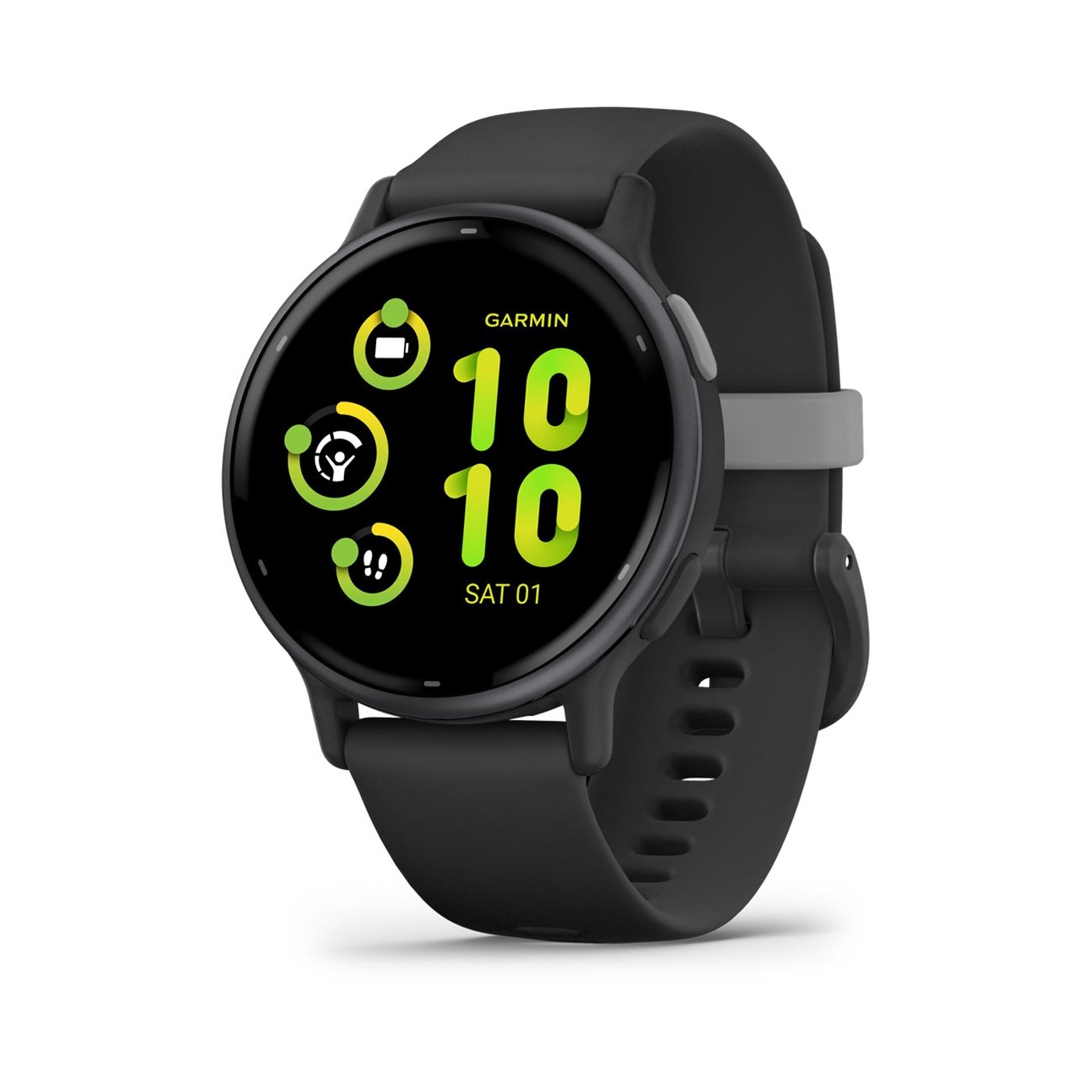
Not every Garmin watch is built for ultra-trail or pro triathlon. The Vivoactive 5 owns a different role: the all-round smartwatch, as comfortable in the gym as at the office, with an AMOLED screen, 36 grams on the wrist and full health tracking. The question is what Garmin had to give up to keep the price under 230 euros.
© Garmin, official photo used for editorial purposes
Garmin Vivoactive 5: the smartwatch that bets on versatility over pure performance
In a Garmin lineup dominated by performance-focused Forerunner models and extreme-outdoor fenix watches, the Vivoactive 5 has held its own slot since 2023: the general-purpose smartwatch, built for people who want to track their health and play several sports without becoming competitive athletes. A 42 mm reinforced polymer case, anodized aluminum bezel and Corning Gorilla Glass 3: the build stays serious despite the accessible price point.
At about 229 euros at launch, and often under 200 euros on sale, it goes straight after the Apple Watch SE and the Samsung Galaxy Watch 6 with one killer argument: far better battery life, thanks to its optimized AMOLED screen and the absence of power-hungry features like always-on multi-band GPS.
RunMorph tip: if you're torn between the Vivoactive 5 and a Garmin Forerunner 265, ask yourself what your real goal is. For recreational multisport and health tracking, the Vivoactive 5 is more than enough and costs much less. If you're training for a specific finish time, the Forerunner is still the better fit.
Who is the Vivoactive 5 for?
The all-round athlete aged 35-55
With 30+ sport profiles ranging from running to yoga, via swimming and HIIT, the Vivoactive 5 targets active people who switch between sports without chasing pure performance but still want serious physiological data.
The occasional city runner
If you mostly train in the city or in parks, the lack of mapping and multi-band GPS barely matters. Multi-GNSS GPS stays reliable on this kind of terrain, with a very small measured distance error on short runs.
Health tracking first
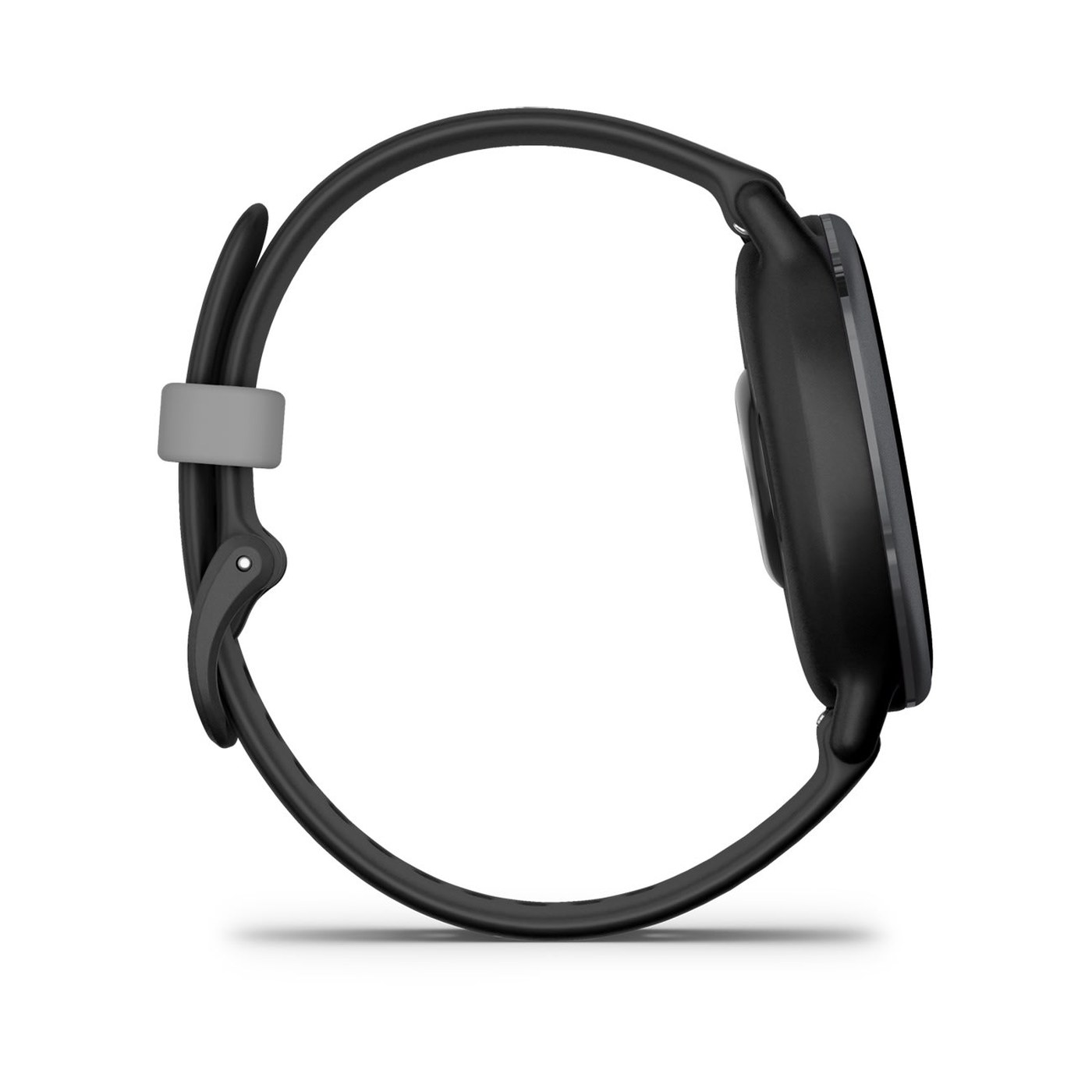
Body Battery, overnight HRV, sleep score, stress tracking, fitness age: the Vivoactive 5 offers a wellness suite as complete as far pricier watches, which makes it a smart entry point if you're new to quantified fitness tracking.
© Garmin, official photo used for editorial purposes
The field test: GPS accuracy, heart rate and deliberate limits
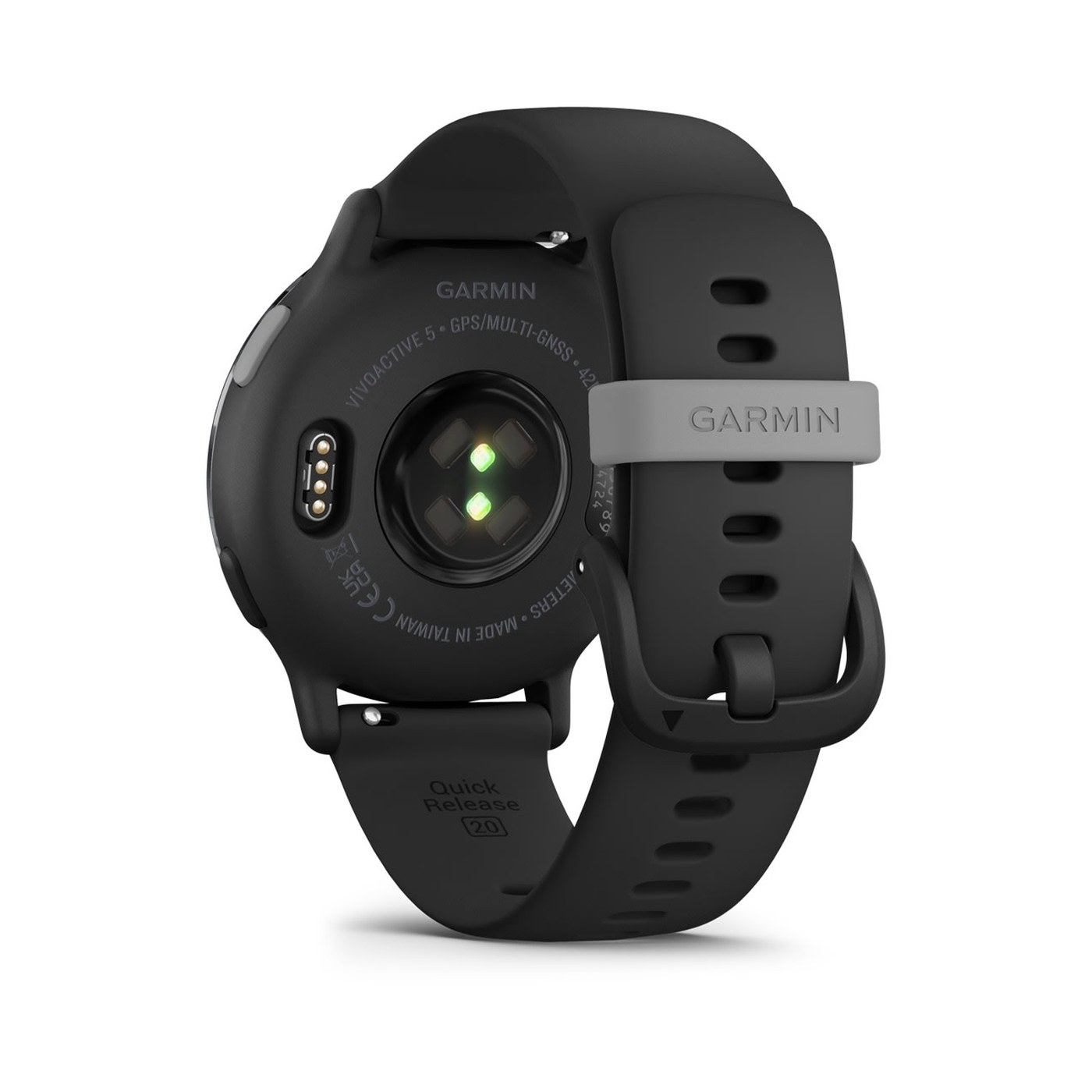
Independent reviews agree on the reliability of the Elevate Gen 4 heart rate sensor. One independent measurement against a chest strap found an average gap of just 1 to 2 beats per minute, even during interval sessions with rapid swings. That's a very good result for an optical sensor at this price. The multi-GNSS GPS locks on quickly and shows a measured distance drift under 0.05 km over 5 km runs in the city.
The limits show up in trickier environments. Without multi-band GPS, an independent field test rates accuracy in dense forest or urban canyons as leaving room for improvement, though not truly unreliable. That's a deliberate consequence of the price point: multi-band stays reserved for the pricier Forerunner and fenix lines. On battery life, the 11-day claim in smartwatch mode holds up in real-world use, with a recharge needed after about a week of mixed use including several GPS runs and all-day wear.
Two gaps come up in every independent review: no barometric altimeter, which rules out accurate elevation tracking in the mountains, and no ECG despite the watch's health focus. The Garmin Connect app, while complete, is also described as dense for first-time users, with a real learning curve before you can make full use of all the data it collects.
© Garmin, official photo used for editorial purposes
Garmin Vivoactive 5 vs Forerunner 265 vs Polar Pacer Pro: head to head
| Criterion | Garmin Vivoactive 5 | Garmin Forerunner 265 | Polar Pacer Pro |
|---|
| Price | €229 | ~€450 | €299.90 at launch |
| Weight | 36 g | ~47 g | 41 g |
| GPS | Single-frequency multi-GNSS | Dual-frequency multi-band | Single-frequency |
| Mapping | No | No (breadcrumb trail) | No (breadcrumb trail) |
| Music | Yes, 4 GB | Yes | No |
| Health tracking | Very complete | Complete | Very complete (Polar Flow) |
Against the Forerunner 265, the Vivoactive 5 loses multi-band GPS and the advanced daily workout suggestions, but costs about half as much and weighs less. Against the Polar Pacer Pro, it's a closer call: Polar bets on a very deep physiological suite with no onboard music, while Garmin offers more everyday smart features (Garmin Pay, music, richer notifications). Within the Garmin ecosystem, the Venu 4 is the natural alternative if you want a bigger screen and extra premium features, for a higher budget.
How to fit it into your RunMorph training plan
Paired with a RunMorph training plan, the Vivoactive 5 is ideal for tracking your runs, strength work and recovery day to day, with Body Battery helping you decide whether you're ready for a hard session or should ease off. If you have a specific running goal with lots of trail or mountain runs, though, plan on adding a watch with an altimeter and multi-band GPS.
RunMorph verdict
The Garmin Vivoactive 5 delivers on its promise of a versatile, affordable smartwatch. The optical heart rate is reliable, the battery lives up to its claims, and the wellness suite holds its own against far pricier watches. At 229 euros, it's one of the best feature-to-price ratios in the Garmin lineup for general use.
The gaps are known and owned by the brand: no mapping, no altimeter, no ECG, no multi-band GPS. These aren't design flaws but positioning choices that make the Vivoactive 5 a watch for city running and recreational multisport, not for demanding trail running or high-level time-goal training.
8/10: a complete, very well-balanced smartwatch if you want health tracking and multisport without paying outdoor-watch prices.