August 8, 2026Huawei Watch GT Runner 2 Review: Titanium, AMOLED, Marathon Mode
8/10
Huawei is no longer hiding its running ambitions. With the Watch GT Runner 2, the Chinese brand is going straight after Garmin's home turf: a titanium case, a 3000-nit AMOLED display and a marathon mode co-developed with Eliud Kipchoge and the dsm-firmenich team. All for 399.99 euros, two to three times less than a premium Garmin outdoor watch. After several weeks of running, from relaxed easy runs to the long run, RunMorph separates the marketing pitch from what actually happens on your wrist.
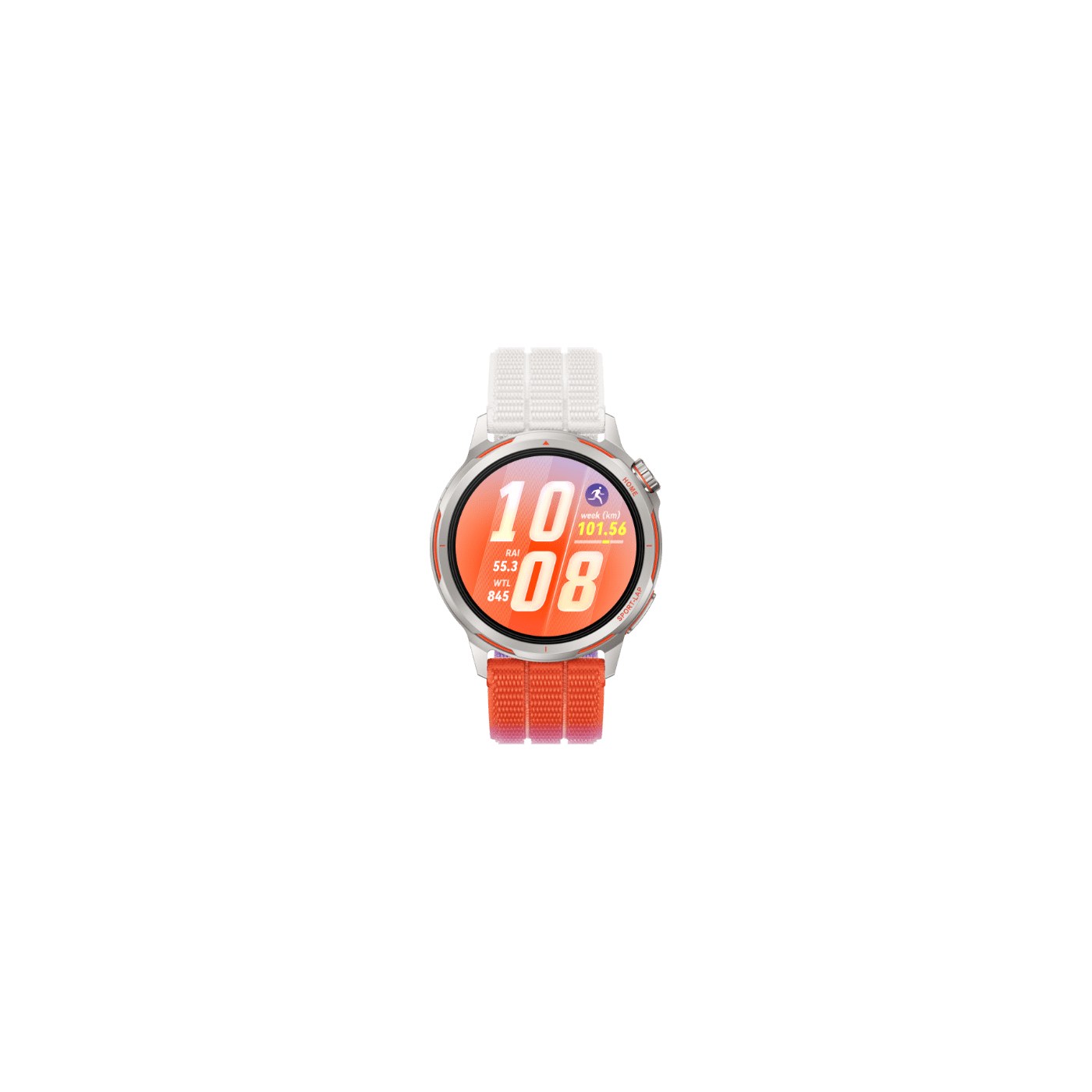
© Huawei, official photo used for editorial purposes
The essentials in 3 sentences
The Huawei Watch GT Runner 2 is a premium GPS watch for serious runners, with a titanium case, a very bright AMOLED display and one of the most polished marathon modes on the market. It's a perfect fit if you're targeting a half or a full marathon and want advanced metrics (fitness index, lactate threshold, running power) without paying Garmin prices. GPS accuracy and data depth live up to the promise, but the Huawei Health ecosystem is still less mature than Garmin Connect or Strava when it comes to building detailed workouts.
8
/ 10 · RunMorph overall score
Who is it for?Runners training for a half or a full marathon who want titanium, AMOLED and a real race mode without a Garmin fenix budget.
Who should skip it?Runners already settled into Garmin Connect or advanced Strava setups who don't want to switch to the Huawei Health app.
Huawei vs Garmin: the quarter-price strategy, running edition
Huawei makes no secret of it. The Watch GT Runner 2, unveiled at Mobile World Congress 2026 where it picked up several Best of MWC awards from independent tech outlets, is aimed squarely at the premium benchmarks of the running market. Nano-molded titanium alloy case, second-generation scratch-resistant Kunlun glass, multi-band GPS with a floating 3D antenna, and a marathon mode co-created with the dsm-firmenich pro team and fine-tuned with Eliud Kipchoge's expertise: on paper, the spec sheet has nothing to envy a Garmin Forerunner 265 or a Coros Pace Pro.
The price has gone up compared with the first generation, though: 399.99 euros versus 299 euros for the original Watch GT Runner, a hundred euros more. Huawei justifies the increase with the move to titanium and a 3000-nit AMOLED display, two upgrades that bring the watch closer to high-end Garmin models while staying well below the 449 to 899 euros the American brand charges for comparable watches. The real question is whether the software lives up to the hardware, and that's what field testing settles.
Watch GT Runner 2 specs: what's changed under the hood
| Brand | Huawei |
| Model | Watch GT Runner 2 |
| Year | 2026 |
| Type | Premium running watch, multi-band GPS |
| Case | Titanium, 43.5 x 43.5 x 10.7 mm |
| Weight | 34.5 g (without strap) |
| Display | 1.32-inch AMOLED, 466 x 466 px, 3000 nits, Kunlun glass |
| GNSS | GPS L1+L5, GLONASS, BeiDou, Galileo, QZSS, NavIC |
| Battery life | 32 h in GPS sport mode, 7 days typical use, 14 days light use |
| Water resistance | 5 ATM, IP69, free diving down to 40 m |
| Mapping | Offline color maps, voice navigation |
| Health sensors | ECG, HRV, SpO2, sleep, stress, continuous heart rate |
| Connectivity | Bluetooth 6.0, NFC payments, calls, onboard music |
| Compatibility | iOS 13+ / Android 9+ via the Huawei Health app |
| Official price | €399.99 |
Floating 3D antenna and smart marathon mode: what do they actually change?
The big technical upgrade on the Watch GT Runner 2 is its so-called "floating 3D" GPS antenna, paired with a convergent positioning algorithm that combines several satellite constellations at once. Huawei claims a 20% accuracy gain over the first Watch GT Runner, with a satellite lock in 2 to 3 seconds. Out on the road, the promise holds up best in tricky environments: between buildings or under the trees of a dense park, the track stays clean where plenty of watches drop out for a few seconds.
The other pillar is the smart marathon mode, developed with the dsm-firmenich pro team and fine-tuned with Eliud Kipchoge's expertise. In practice, you get a digital pacer that shows in real time whether you're ahead of or behind your target, dynamic pace graphs, personalized fueling reminders and quick access to information on the world's major marathons. The RAI (Running Ability Index) boils your fitness level down to a single number based on heart rate, pace and training volume, much like Garmin's Training Status or Coros's Fitness Trend.
Field test: from easy runs to the long run
We tested the Watch GT Runner 2 for almost six weeks: easy runs at 5'30/km, short interval sessions at 3'50/km and a 28 km long run at goal marathon pace. Wrist comfort is a genuine strength. At 34.5 grams and with its woven AirDry strap, you forget you're wearing it even past the two-hour mark, and the breathable strap cuts down that clammy feeling far better than a standard silicone band.
On accuracy, GPS tracks recorded in the city and in the woods stay very clean, with a measured error of less than 1% on a certified 10 km course. Wrist-based heart rate follows the surges of an interval session faithfully, although a brief 3 to 5 beats per minute gap shows up in the first seconds of a hard acceleration, which is standard behavior for an optical sensor.
RunMorph tip: before a marathon, turn on the smart marathon mode at least a week ahead of race day so the watch can refine your predicted finish time from your latest runs. The digital pacer then becomes much more reliable on the big day.
The only real drawback we saw over time: under heavy use (GPS on for more than two hours a day, screen lighting up often), the claimed 32 hours of battery life drops closer to 24 to 26 hours in the real world. That's still decent, but well short of the ultra-trail standards set by some Coros or Suunto watches.
Huawei Watch GT Runner 2 vs Garmin Forerunner 265: head to head
| Criterion | Huawei Watch GT Runner 2 | Garmin Forerunner 265 |
|---|
| Price | €399.99 | €449 |
| Case | Titanium, 34.5 g | Glass-fiber reinforced polymer, 47 g |
| Display | AMOLED, 3000 nits | AMOLED |
| Mapping | Offline color maps | None (breadcrumb only) |
| GPS battery life | 32 h claimed | 13 h in dual-frequency GPS |
| Dedicated marathon mode | Yes, with digital pacer | No (generic PacePro) |
| Ecosystem | Huawei Health, still new in France | Garmin Connect, well established |
On paper, the Watch GT Runner 2 wins on mapping and battery life, two strong arguments for trail running or a marathon on unfamiliar ground. The Forerunner 265 keeps the edge on software maturity: Garmin Connect offers more customization options, a clearer training history and broader compatibility with third-party platforms like TrainingPeaks.
Huawei Watch GT Runner 2 pros and cons
Pros
- Titanium case and sapphire glass for under 400 euros
- Offline color mapping, missing from its direct rivals
- Very complete marathon mode (pacer, fueling, predictions)
- Outstanding comfort thanks to the woven AirDry strap
Cons
- Huawei Health ecosystem still young in France
- Real-world battery life falls short of the claimed 32 hours under heavy use
- A hundred euros more than the previous generation
- Third-party compatibility (Strava, TrainingPeaks) less seamless than with Garmin
Our field verdict: which runners and which goals?
The future marathoner
This is the obvious fit. The smart marathon mode, the digital pacer and the finish time predictions make it a training tool that gives real structure to a first marathon build as well as to a more ambitious time goal.
The occasional trail runner
Offline color maps and 24 to 26 hours of real-world battery life comfortably cover a short to mid-distance trail race (up to 6 to 8 hours of running), though ultra specialists will prefer a watch rated for more than 60 hours.
The runner already using Garmin
Less clear-cut. Switching ecosystems comes at a cost in habits and in compatibility with the third-party tools you already rely on. For this runner, the hardware gains don't always make up for the software migration.
The perfect match for your Watch GT Runner 2
Whether you're logging the kilometers of a marathon build or locking in your long runs for a half, RunMorph offers structured training plans built around the data from your GPS watch. Explore RunMorph training plans.
The RunMorph Coach's verdict
Overall, the Huawei Watch GT Runner 2 delivers on its promise: premium hardware (titanium, sapphire, 3000-nit AMOLED, color mapping) at a price well below comparable Garmin models. The marathon mode, co-developed with professionals, is a real selling point for any runner targeting a long-distance road race.
The main reservation is on the software side. The Huawei Health ecosystem keeps improving, but it doesn't yet have the depth or the third-party compatibility of Garmin Connect. If you're not already committed elsewhere, that's a very acceptable trade-off given the price gap. If you're a happy Garmin user, it's probably not worth the switch.
RunMorph final score: 8 / 10. Excellent hardware for the price, held back by an ecosystem that's still being built out in France.
FAQ
Is the Huawei Watch GT Runner 2 good for beginners?
Yes, but it's mainly designed for runners who already have a time goal (10 km, half marathon, marathon). A beginner will get more out of a simpler, cheaper model before moving up the range.
What is the Watch GT Runner 2's real-world battery life under heavy use?
Huawei claims 32 hours in GPS sport mode. In the field, with heavy use (GPS almost daily, screen on often), expect more like 24 to 26 hours between charges.
Does the Watch GT Runner 2 work with Strava?
Yes, you can sync with Strava from the Huawei Health app, but it's less direct and offers fewer options than Garmin Connect's native integration.
What's the difference between the Watch GT Runner 2 and the original Watch GT Runner?
The second generation moves to titanium and a 3000-nit AMOLED display, and adds the floating 3D GPS antenna and the smart marathon mode co-developed with the dsm-firmenich team, for a hundred euros more than the first generation.
Key takeaways for your training
- Premium hardware at a reasonable price: titanium and sapphire glass for 399.99 euros, a rare position in the running watch market.
- Very complete marathon mode: digital pacer, finish time predictions and fueling reminders make it a genuine race tool.
- Offline color mapping: a real plus for trail running and long runs on unfamiliar ground.
- Battery life needs context: plan on 24 to 26 hours in the real world under heavy use rather than the claimed 32 hours.
- Check the ecosystem before you buy: make sure Huawei Health covers your syncing needs before you switch watches.