The Komperdell FXP Composite Trail bets on a folding system that deploys on its own and on careful Austrian craftsmanship, not on shaving grams. Two field tests agree on its toughness and how fast it snaps into place, but also on a deliberate trade-off: heavier than claimed once it hits the scale, and a fixed length you can't adjust mid-run.
© Komperdell, official photo used for editorial purposes
Komperdell FXP Composite Trail: the Austrian brand bets on durability over grams
Komperdell has been making poles in Austria for more than a century, and the FXP Composite Trail sums up a clear philosophy in the brand's trail range: go for a 16 mm tube, thicker than most ultralight folding poles, and win back in toughness what you give up in pure lightness. The FXP system behind the model's name is a three-section folding mechanism that deploys by itself as soon as you let it go, with no need to set each section one by one.
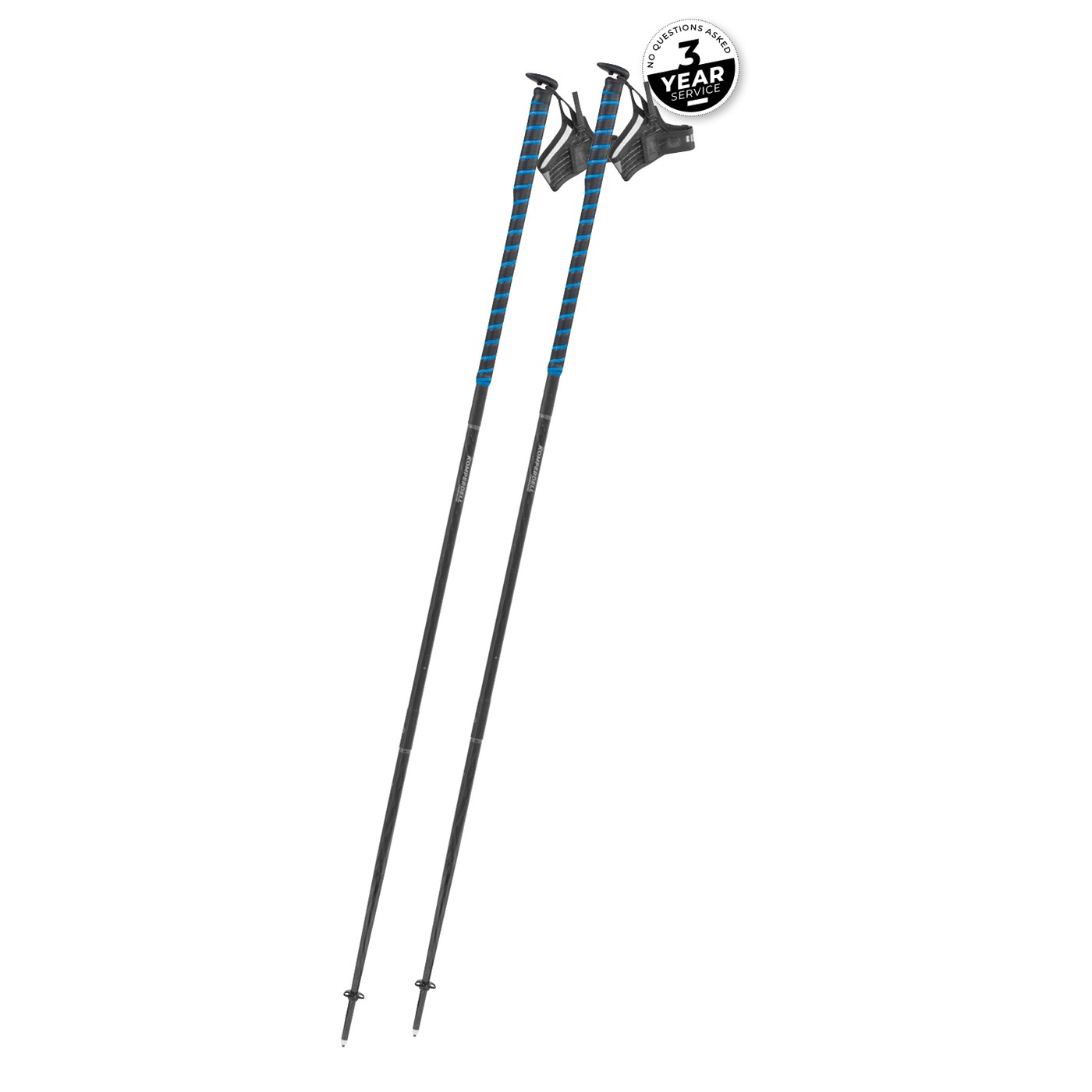
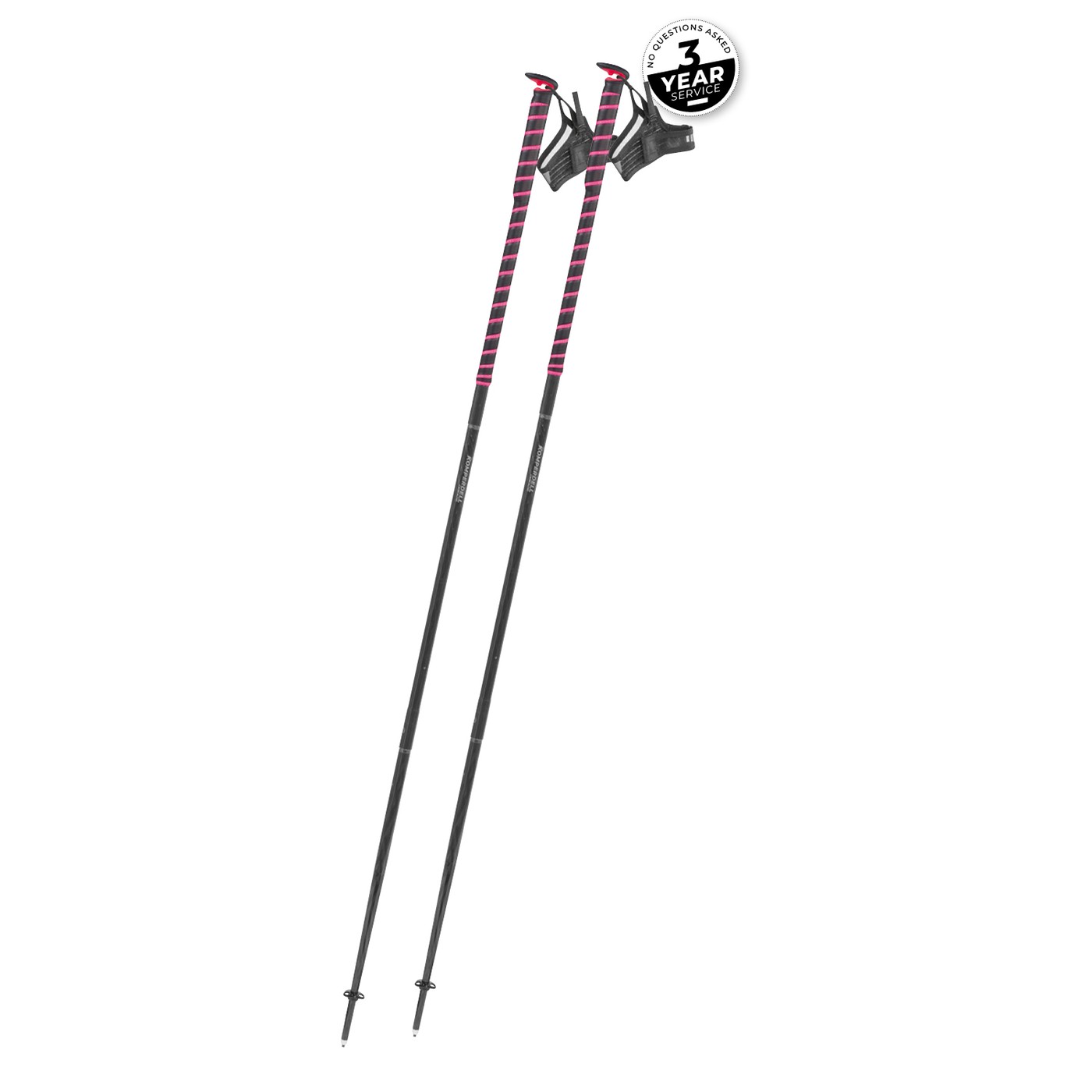
The pole comes in several fixed lengths (105, 115, 125 and 135 cm) and colors (blue, pink, green). You pick the length based on your height when you buy, not on the trail.
RunMorph's tip: within Komperdell's own lineup, the FX Lite Carbon Summit Compact is the one to look at if you want a folding pole geared more toward lightness, with an adjustable-length Vario locking system.
Claimed vs. measured weight: a clear gap, but a deliberate one
Komperdell claims 199 grams per pole for the 125 cm length. On the Test 4 Outside scale, the pole comes in at 210 grams, nearly 5.5% over the spec sheet. It's not a one-off: both tests explicitly link the extra weight to the 16 mm tube diameter, noticeably thicker than ultralight benchmarks like the Black Diamond Distance Carbon Z. The Test 4 Outside tester sums up the design choice: the brand "went for the durability/lightness balance" rather than chasing grams.
| Data | Claimed (Komperdell spec sheet) | Measured (Test 4 Outside) |
|---|
| Weight per pole (125 cm) | 199 g | 210 g (+5.5%) |
| Tube diameter | 16 mm | Confirmed, thicker than the ultralight segment average |
| Folded size | 45 cm | Confirmed by both tests |
© Komperdell, official photo used for editorial purposes
On the trail: fast deployment, solid push, less precision
Both tests agree on the FXP Composite Trail's big strength: the section-locking system "oozes solidity" and deployment is almost effortless as soon as the pole comes out of its holster, a real time-saver on a timed outing or in a race. On the push, the carbon tubes offer good flex in the lower section, which helps comfort and energy return, but the "whip" is described as less snappy than on a pair of thinner poles, with less precise placement on technical ground. On the flip side, testers are far less worried about jamming the pole between two rocks, and that toughness vs. precision trade-off shows up every time you use it.
The Trail Pro Tape grip, wrapped along its full height like a bike handlebar, feels nice in a bare hand but slightly less comfortable with thin gloves. The removable Fly Sport textile strap needs setting up beforehand if you plan to run with gloves: putting it on isn't instant, especially in the dark by headlamp, a detail Test 4 Outside flags explicitly after extended use.
Watch-out #1: you can't adjust the length mid-run
Unlike a twist-lock or Vario pole, the FXP Composite Trail is sold in a fixed length (105, 115, 125 or 135 cm). So there's no shortening or lengthening the pole for climbs or descents: you choose the length once, when you buy, and monbatondemarche.fr explicitly lists this among the product's limits.
Watch-out #2: measured weight above spec, in line with the durability choice
210 g on the scale vs. 199 g claimed: the gap is small in absolute terms but puts the FXP Composite Trail above ultralight rivals with thinner tubes. A deliberate call by Komperdell in favor of durability, worth knowing if carried weight is a deal-breaker for your long outings.
© Komperdell, official photo used for editorial purposes
The FXP system in action: near-automatic deployment
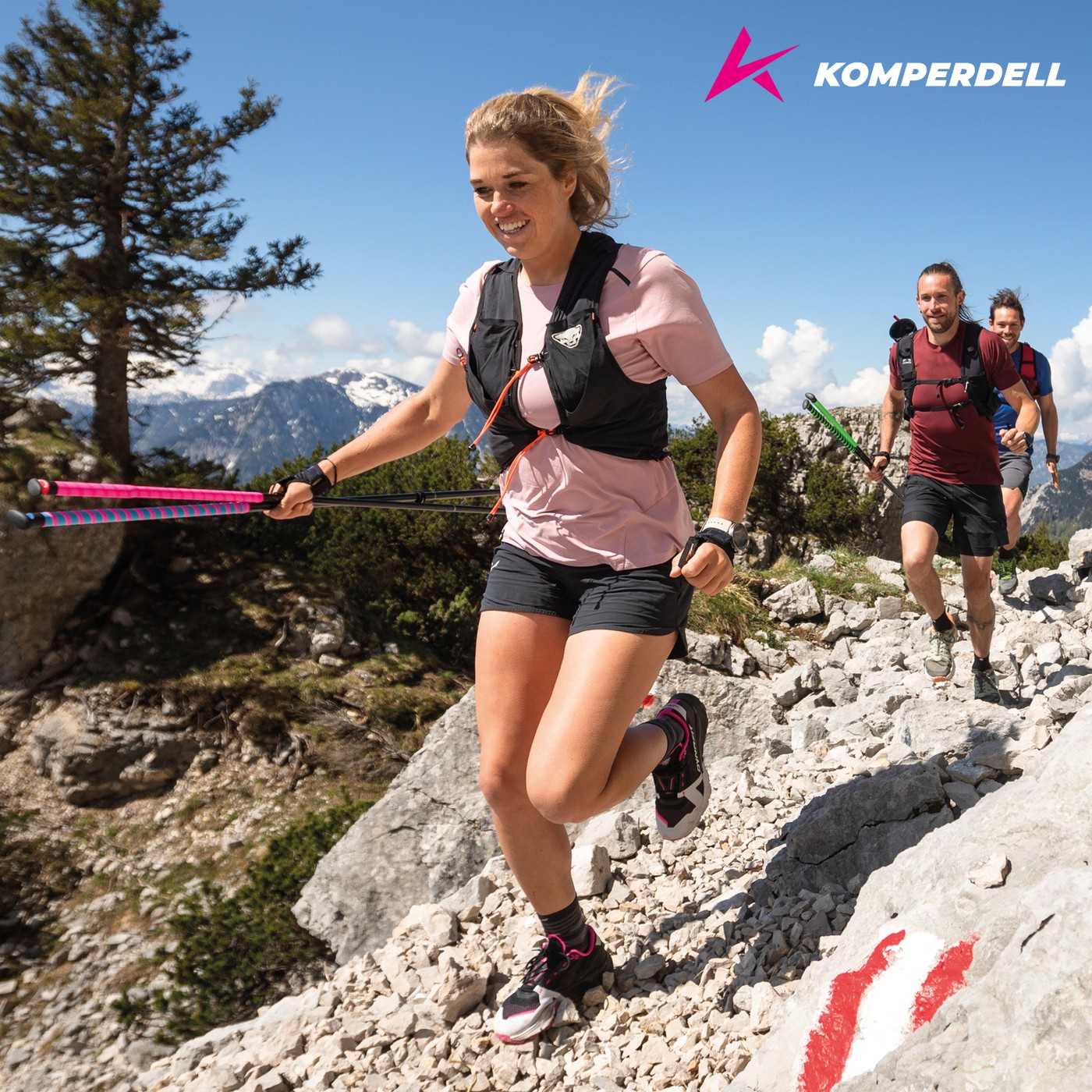
This is the product's real selling point: just hold the pole by the grip and let it drop, and the three sections line up and lock by themselves, with none of the section-by-section fiddling of a classic folding pole. On the trail, this detail really changes how you use it: pulling the poles out at the top of a technical climb or stowing them before a technical descent takes a few seconds, versus a longer routine with classic lever systems.
Where it works, where it falls short
Trail running and fast hiking on rocky ground: its home turf, confirmed by both tests, where the toughness of the 16 mm tube gives you confidence when the pole gets wedged between rocks.
Outings where you stow your poles often: the near-automatic FXP deployment is a real time-saver, confirmed by both tests.
Ultralight and minimalism: trail runners counting every gram should look at thinner tubes like the Black Diamond Distance Carbon Z.
Highly variable elevation in one outing: the fixed length limits adjustment on the go, unlike an adjustable Vario system.
Use with thin gloves: the grip stays decent but is slightly less pleasant than bare-handed, according to Test 4 Outside.
Komperdell FXP Composite Trail vs. the competition
Against the Black Diamond Distance Carbon Z, it comes down to priorities: lightness and a slimmer tube on the Black Diamond side, toughness and near-automatic FXP deployment on the Komperdell side.
Against the Leki Ultratrail FX.One Superlite, which sits in a similarly priced ultralight segment, the Komperdell wins on perceived solidity and deployment speed, but loses on carried weight and placement precision on technical ground.
Within its own lineup, the Komperdell FX Lite Carbon Summit Compact is the alternative if you want an adjustable-length Vario system rather than a fixed-size folding pole.
Pros
- FXP folding system that deploys almost automatically, confirmed by both tests
- High perceived toughness, 16 mm tube inspires confidence on rocky ground
- Careful Austrian build, finish praised by both sources
- Good flex in the lower tube for comfort and energy return
- Trail Pro Tape grip feels good bare-handed, spare roll included
Cons
- Measured weight above spec (210 g vs. 199 g, +5.5%)
- Fixed length, not adjustable mid-run
- Less precise placement than thinner-tube poles
- Strap needs presetting, fiddly to put on at night
- Price considered fairly high by monbatondemarche.fr
Find the training plan that fits your runs on RunMorph →
The RunMorph verdict: 7.3 / 10
The Komperdell FXP Composite Trail makes a clear choice: toughness and near-automatic deployment over chasing grams. Both French tests we reviewed confirm the bet pays off on the trail, with a careful build and an FXP system that saves you time on every outing. The price of that solidity is paid in grams (210 g on the scale vs. 199 g claimed) and in placement precision, slightly behind thinner-tube poles. For a trail runner who wants a pole that takes the hits without breaking, the equation works; if you're after every gram or want to adjust length mid-run, Komperdell's Vario range or the ultralight competition are worth a look.
Key takeaways
The Komperdell FXP Composite Trail is a three-section carbon composite folding pole at 169.90 €, sold in fixed lengths from 105 to 135 cm. Two French tests agree on its near-automatic FXP folding system and its toughness, the hallmark of Komperdell's Austrian production. Its documented limits: a measured weight of 210 g per pole vs. 199 g claimed, a length you can't adjust mid-run, and less precise placement than thinner-tube poles like the Black Diamond Distance Carbon Z.
FAQ about the Komperdell FXP Composite Trail
Is the Komperdell FXP Composite Trail adjustable in length?
No, it's a fixed-length folding pole. It comes in four sizes (105, 115, 125, 135 cm) that you choose at purchase based on your height, with no adjustment possible mid-run.
What does the Komperdell FXP Composite Trail actually weigh?
Komperdell claims 199 g per pole for the 125 cm length. Weighed by Test 4 Outside, the pole comes in at 210 g, about 5.5% more than claimed.
Is the FXP folding system reliable over time?
Both tests describe it as solid and quick to use. Test 4 Outside says it wants to check how the locking system holds up long term, but saw no failure during the test period.
Does the FXP Composite Trail work with gloves?
The grip is fine with thin gloves but slightly less pleasant than bare-handed. The Fly Sport strap should be set up beforehand if you plan to wear gloves.
What's the difference between Komperdell's FXP Composite Trail and FX Lite Carbon Summit Compact?
The FX Lite Carbon Summit Compact uses an adjustable-length Vario system, geared more toward versatility. The FXP Composite Trail goes for near-automatic deployment and the toughness of a thicker tube, at the cost of a fixed length.