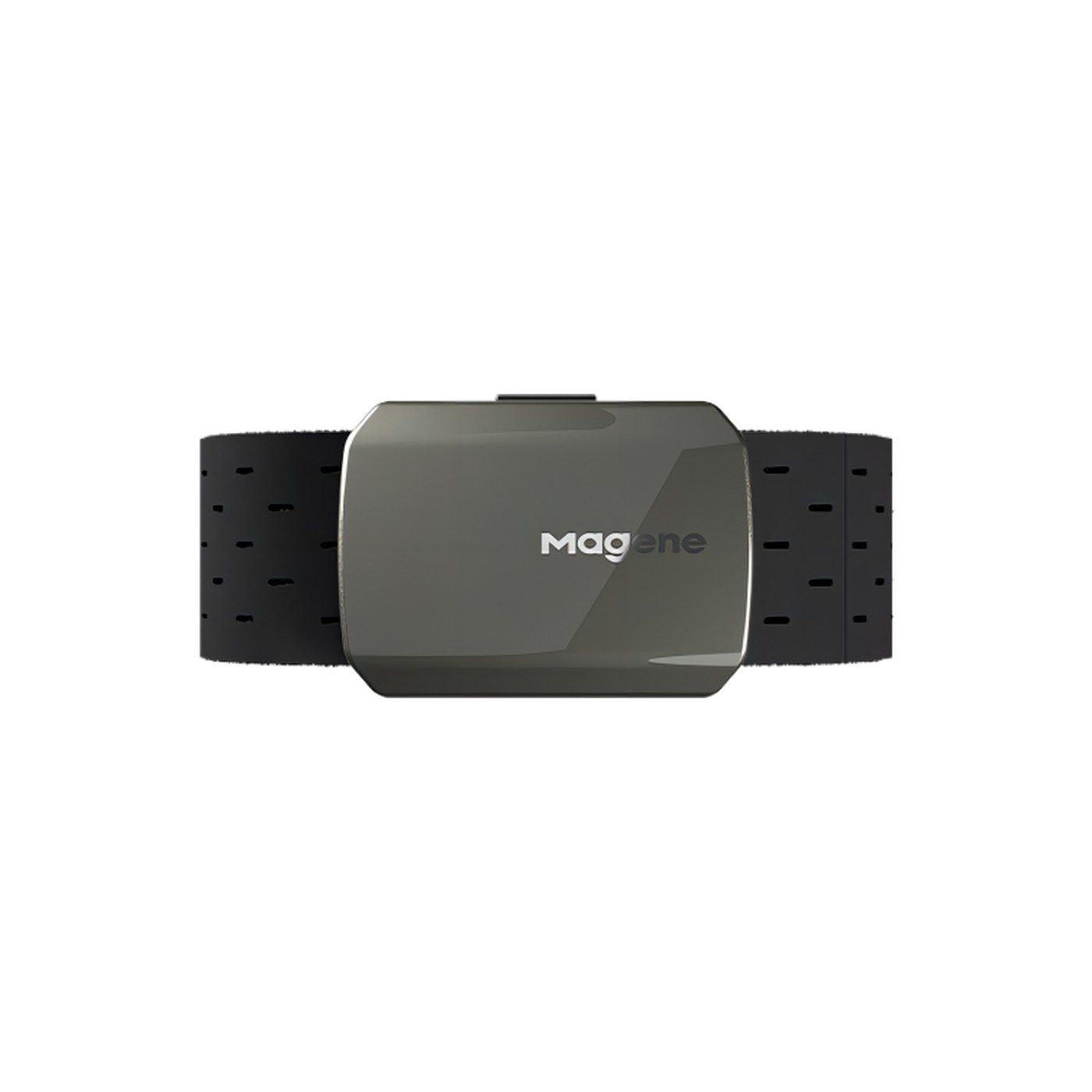
In the heart rate sensor market, Magene is still a little-known name in France, far from the profile of Garmin, Polar, Coros or Wahoo. Yet the Chinese brand has built real technical credibility in cycling, with GPS bike computers and power meters trusted by the most demanding riders. With the H803, it goes straight after optical heart rate armbands, a segment dominated until now by the Polar Verity Sense and the Coros HR Monitor, with one hard-to-beat argument: half the price.
© Magene, official photo used for editorial purposes
Magene H803: a Chinese heart rate armband that plays the price card
Magene has spent about ten years building its name in connected cycling, with GPS bike computers (the C606 line) and pedal-based power meters used by demanding riders who want the best accuracy for the money. The H803 applies the same recipe to the running heart rate sensor market: take a technology that's already widely validated (the optical armband worn on the forearm) and sell it for far less than the category leaders, without giving up the features a serious runner expects.
On paper, the H803 ticks every box: dual optical beams to limit measurement artifacts, dual ANT+ and Bluetooth connectivity, magnetic charging, a wear-resistant IML housing, and a claimed 45 hours of battery life, more than most optical armbands on the market. All for 49.99 euros, when a Coros HR Monitor sells for around 89 euros and a Polar Verity Sense for around 99.90 euros. The name carries less weight, though, and the near-total lack of published independent reviews of this specific model remains the real question mark over a tempting spec sheet.
RunMorph tip: before buying a heart rate sensor from a brand that hasn't been widely tested, always check ANT+/Bluetooth compatibility with your current watch. If you want accuracy already well documented by multiple independent reviews, the Polar Verity Sense or the Coros HR Monitor are safer bets, at a noticeably higher price.
Dual-beam technology: what difference does it make on your arm?
© Magene, official photo used for editorial purposes
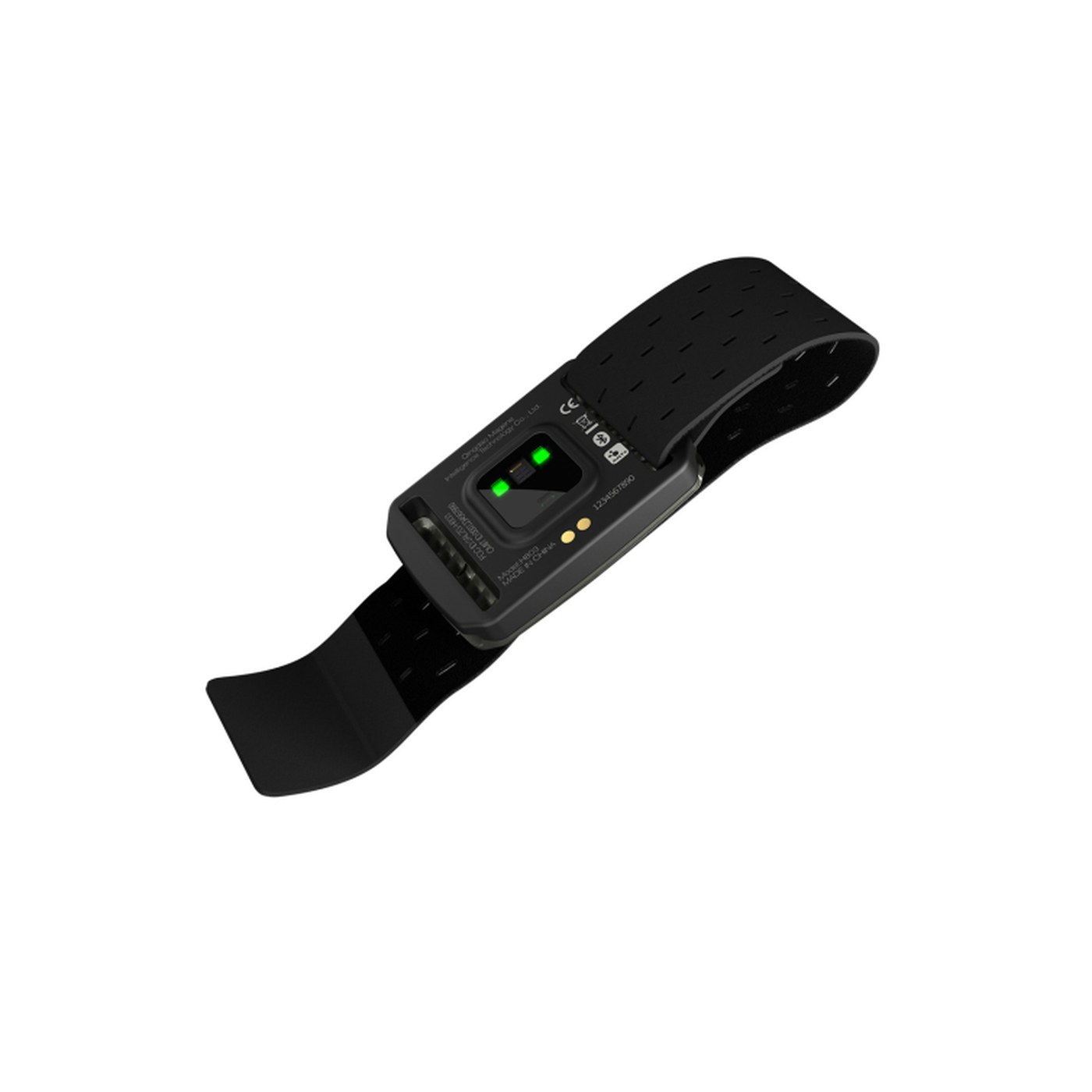
Like most recent heart rate armbands, the H803 measures heart rate by photoplethysmography (PPG): LEDs light up the skin, and a photodiode picks up variations in the light reflected by blood flow under the skin to work out each beat. The difference lies in the dual optical beam. Two separate beams collect the variation data, which lets Magene's algorithm cross-check the signals and filter out some of the artifacts caused by arm movement, a classic problem with entry-level optical sensors.
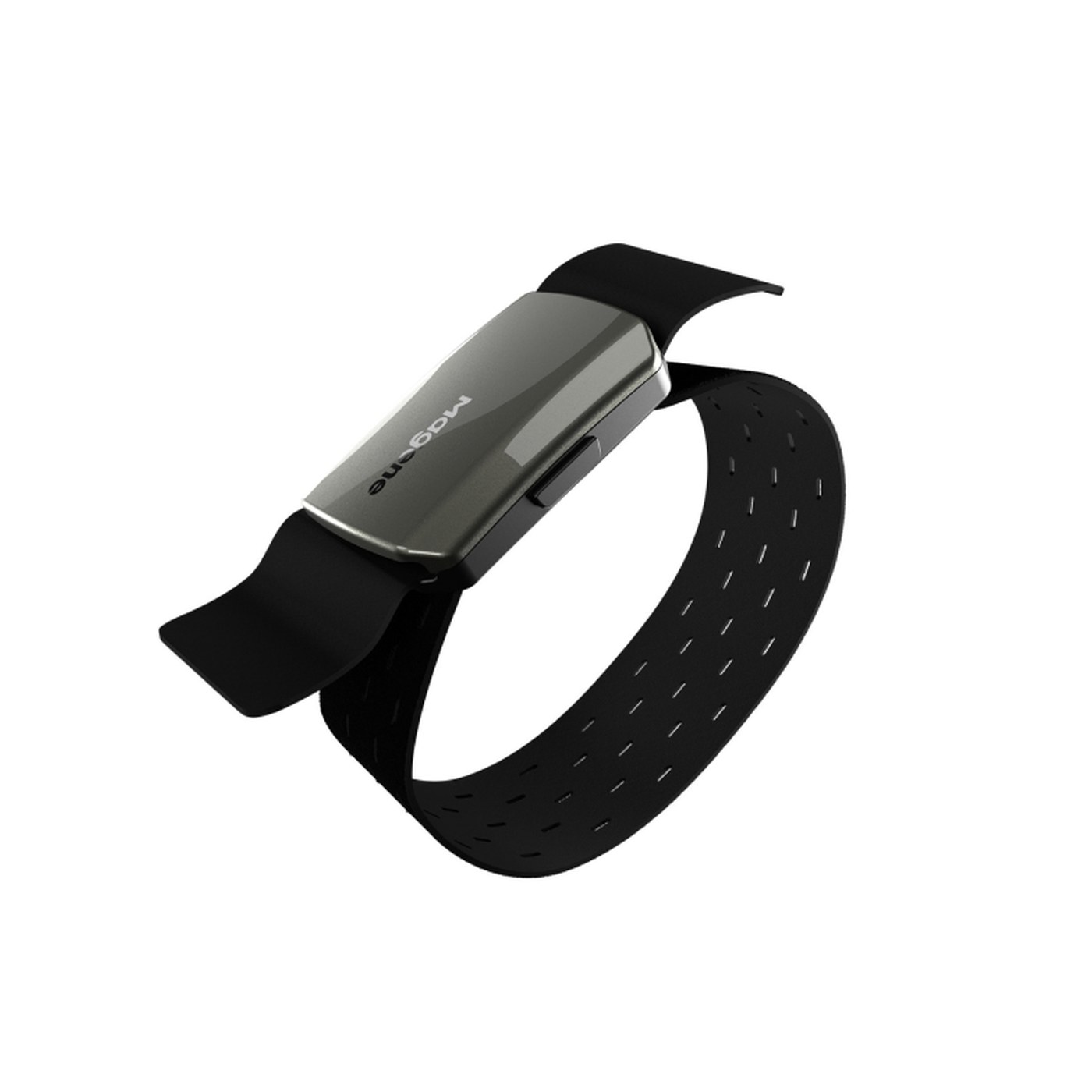
Worn on the forearm rather than the wrist, the sensor benefits from thinner skin and more consistent blood flow than on the back of the hand, which mechanically cuts some of the artifacts caused by gripping poles or swinging your arms while running. It's the same principle the Polar Verity Sense and the Coros HR Monitor use. The housing also has a configurable vibration alert: when your heart rate crosses a preset threshold, the H803 buzzes right on your arm, which is harder to ignore than a simple light signal on the housing.
Field test: how good are the H803's readings really?
© Magene, official photo used for editorial purposes
Let's be clear: the H803 still lacks published, independent field testing, unlike benchmarks such as the Polar H10 or the Coros HR Monitor, which have years of cross-checked feedback behind them. Since Magene is still little known in France in the running segment, the available material comes down to three things. A French comparison of heart rate armbands that mentions the H803 without a full dedicated review, a detailed hands-on published by an English-speaking tester who specializes in heart rate sensors, and buyer reviews on online retail platforms. RunMorph would rather say so honestly than invent a consensus that doesn't exist yet.
VeloPlayer credits the H803 with accurate, reliable readings, good resistance to water and sweat, and very strong value against rivals that cost twice as much. An independent hands-on available online points the same way: a stable, near-instant Bluetooth connection and responsive readings during sprints and intervals, with less lag than a typical watch optical sensor. Two concrete caveats, though: you turn it on and off manually with the side button, with no automatic detection, and occasional signal dropouts were noted when the armband wasn't tight enough. French buyer reviews agree on comfort: several users say they forget the armband after a few minutes of adjustment, with readings judged consistent over about ten hours of cumulative use.
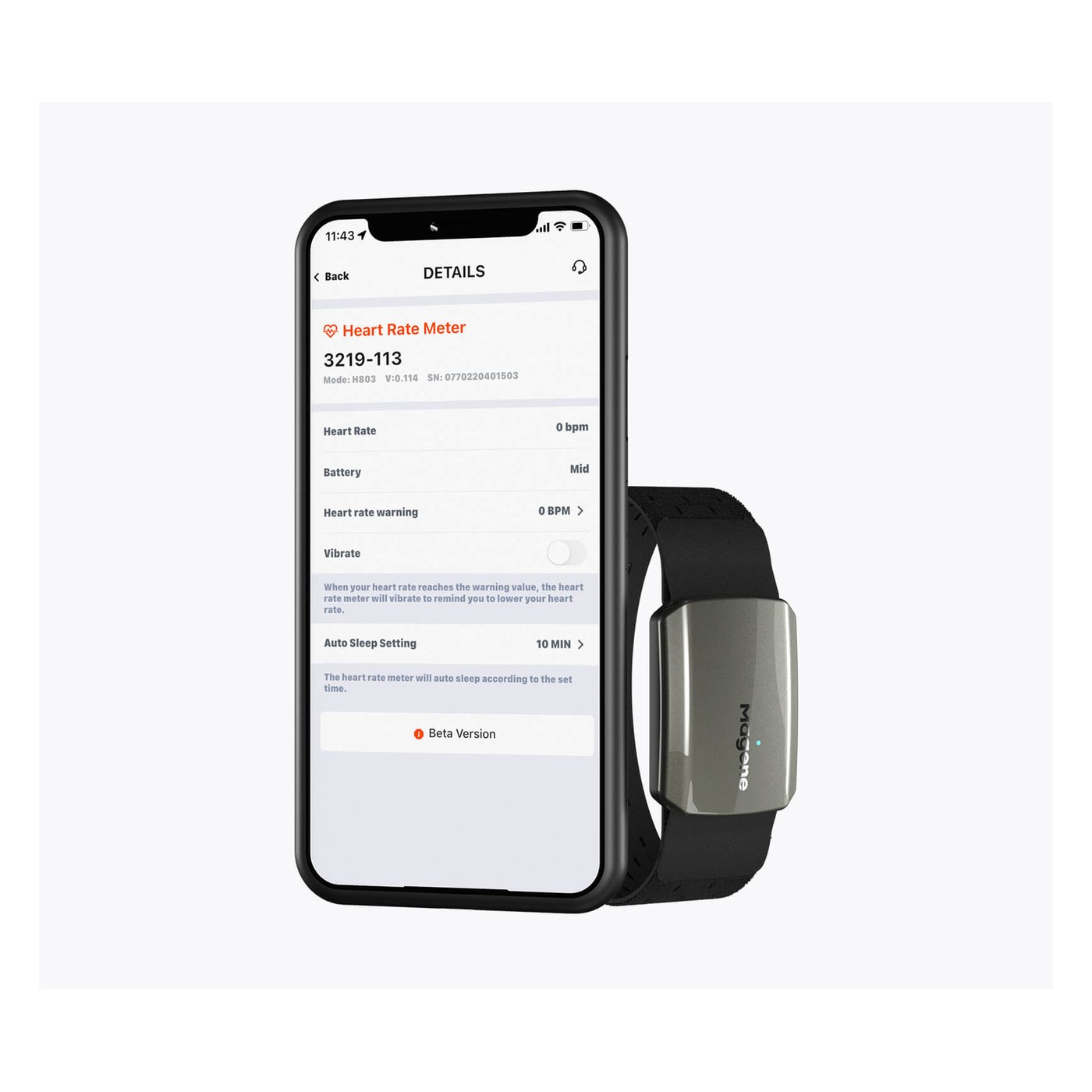
One detail is worth flagging, taken straight from the official visuals of the Magene Utility companion app: the sensor details screen still shows a Beta Version banner. The hardware looks mature, but the software behind it is clearly less polished than Garmin Connect or Polar Flow, which have been refined for years. That's a concrete point to watch rather than a vague reservation.
RunMorph tip: the H803 is a reasonable bet for easy aerobic running and threshold work, where its readings have time to settle. For very short, explosive intervals (200-400 m), where every second of lag counts, a better-documented option like the Polar H10 remains the safest choice.
Magene H803 vs Polar Verity Sense: head to head
The H803 and the Polar Verity Sense target the same use, an optical armband worn on the forearm to replace the chest strap, but with a big price gap. Here's how they compare, with the Coros HR Monitor, the segment's other benchmark, added for reference.
| Criterion | Magene H803 | Polar Verity Sense | Coros HR Monitor |
|---|
| Measurement type | Optical dual-beam (arm) | Optical (arm) | Optical multi-LED (arm) |
| Independent test history | Very limited | Extensive | Extensive |
| Battery life | 45 h | 30 h | ~30 to 38 h |
| Connectivity | ANT+ and Bluetooth | Dual-channel Bluetooth and ANT+ | Bluetooth (multi-connection) |
| Swimming | Not claimed (IP67) | Yes (goggle clip, WR50) | No |
| Weight | 21 g with strap | 19 g with strap | ~20 g |
| Price | €49.99 | €99.90 | €89 |
On raw specs, the H803 holds its own against both rivals and even has the best battery life of the three. What the Polar Verity Sense and the Coros HR Monitor keep is a reliability record proven by many independent reviews, plus validated swimming use for the Verity Sense. Those two arguments carry real weight for an athlete who needs reliable data with no margin of doubt, especially on race day.
Pros and cons
© Magene, official photo used for editorial purposes
Pros
- Half the price of the Polar Verity Sense and Coros HR Monitor
- Claimed 45 hours of battery life, the best in this head-to-head
- Simultaneous dual ANT+ and Bluetooth connectivity
- Dual optical beam designed to limit motion artifacts
- Light (21 g with strap) with convenient magnetic charging
Cons
- Very few published independent reviews of this specific model
- Manual on/off, with no automatic wear detection
- Occasional signal dropouts reported when the armband isn't tight enough
- Companion app still labeled Beta Version by Magene
- Swimming not promoted, unlike the Polar Verity Sense
Our field verdict: who is it for?
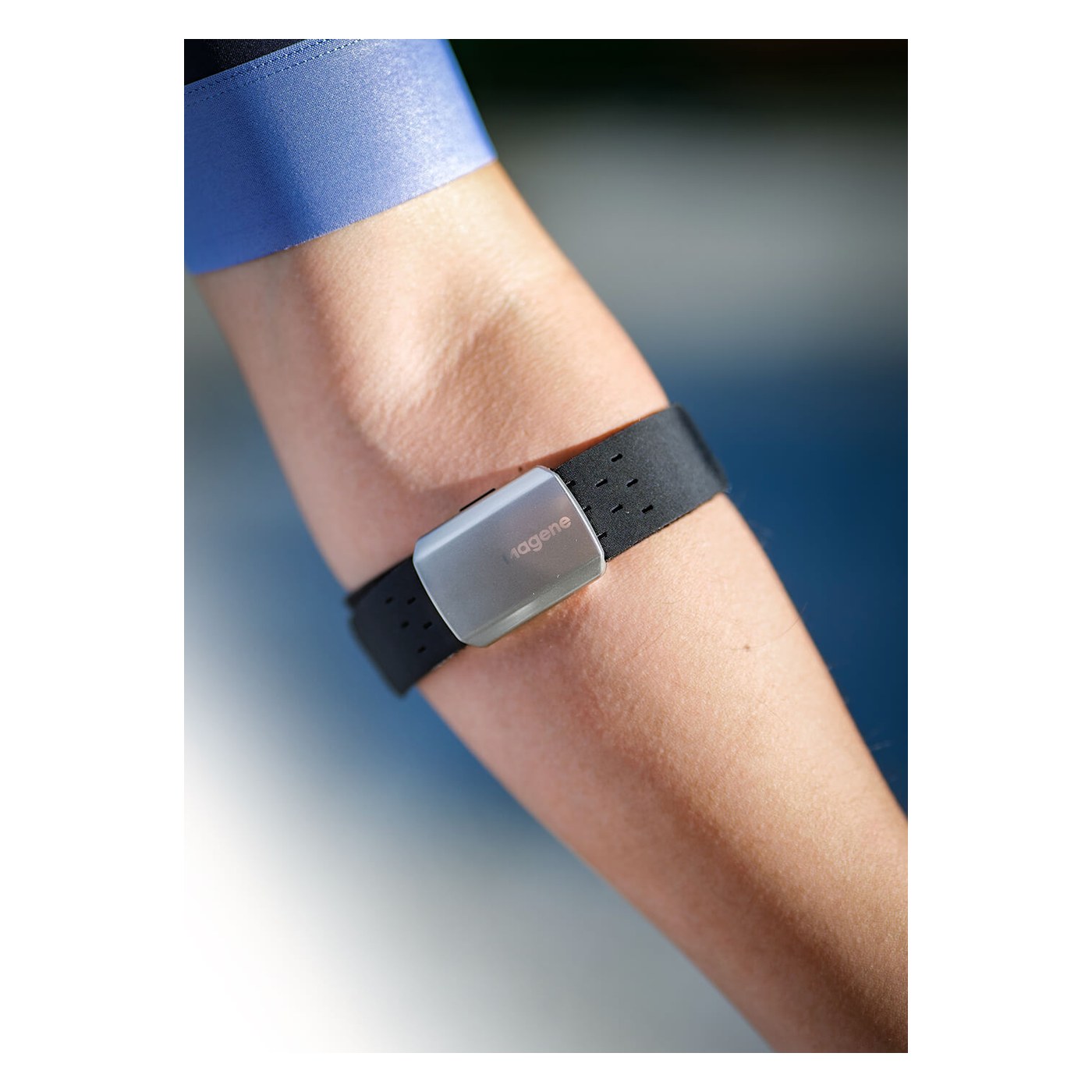
© Magene, official photo used for editorial purposes
The runner who wants to ditch the strap without breaking the bank
If a chest strap bothers you but you don't have the budget for a Polar or a Coros, the H803 is the most affordable dual-beam optical armband on the market. At 49.99 euros, it's one of the cheapest ways to get rid of the strap today.
The easy-pace and threshold runner
At steady paces (easy runs, aerobic base work, threshold), the readings have time to settle and the few reviews available are fairly reassuring. That's the use that best matches the product's current level of evidence.
The racer who needs documented accuracy
For an athlete who builds very short high-intensity interval sessions or is preparing for a race where every data point counts, the lack of extensive independent testing on the H803 is a real drawback. A sensor with a better-documented track record remains the better choice until Magene has built up more field feedback.
To structure your sessions with reliable heart rate data, whether easy aerobic runs, threshold or intervals, the H803 fits right into a RunMorph training plan: pair it with your watch or phone to track your heart rate zones on every run, from getting back in shape to preparing your first half marathon.
RunMorph Coach's verdict
On paper, the Magene H803 looks like a great deal: dual optical beams, dual connectivity, 45 hours of battery life and half the price of its direct rivals. The few reviews available confirm a comfortable product that's reliable overall on steady efforts. But the lack of extensive independent testing, the manual power-on with no automatic detection and an app still in Beta Version call for a cautious score rather than unreserved praise. 7.6/10: excellent value for money if you're willing to be among the first users to properly document this sensor.