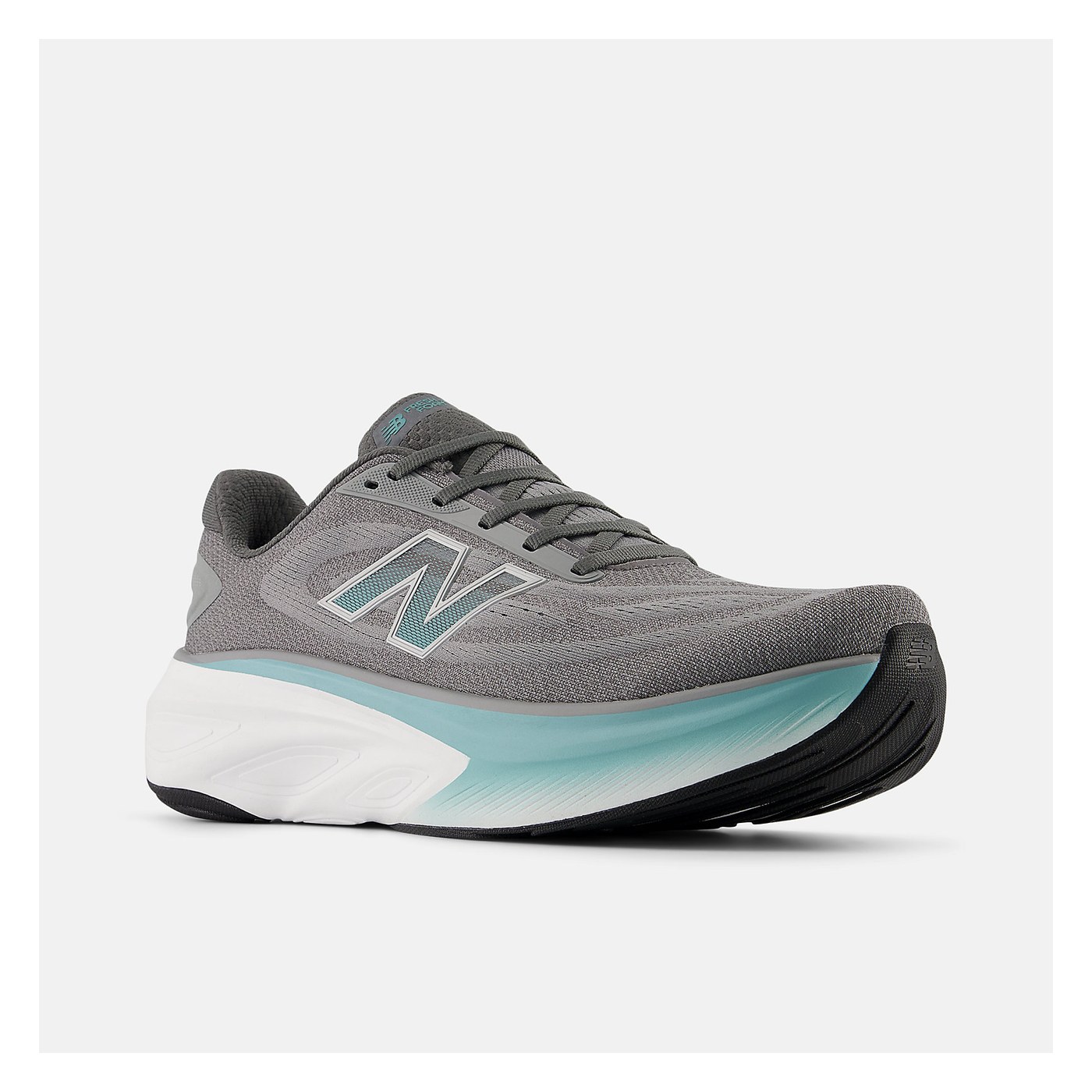
The Fresh Foam X More v6 lives up to its name: more foam, more stack, more comfort. New Balance struggled for years to tame this maximalist line, often criticized as mushy and vague. Version 6 changes the game with a retuned foam density and a redesigned upper, to the point where it now goes toe to toe with the best max-cushion shoes on the market.
New Balance Fresh Foam X More v6 Review: Plush and Stable
8.4/10
- Cushioning among the highest ever measured on a running shoe, confirmed by several independent reviews
- Much better stability than the previous version despite the tall stack
- Very durable Ndurance outsole, good grip even on hard-packed trails
- 306 g weight holds it back at faster paces
The essentials in 3 sentences
The Fresh Foam X More v6 is a neutral, max-cushioned running shoe built for long runs, active recovery and everyday running at a moderate pace. A denser foam and a more structured upper make it more stable and more secure than its predecessor, without losing its signature comfort. It targets runners who put protection ahead of speed, on roads and hard-packed trails alike.
8.4
/ 10 · RunMorph overall score
Who is it for?Runners looking for maximum comfort on long runs, recovery days and everyday running at a moderate pace, including beginners and heavier runners.
Who should skip it?Runners who want a light, responsive shoe for intervals or fast running, and anyone with particularly wide feet.
New Balance Fresh Foam X More v6: the maximalist shoe that finally found its balance
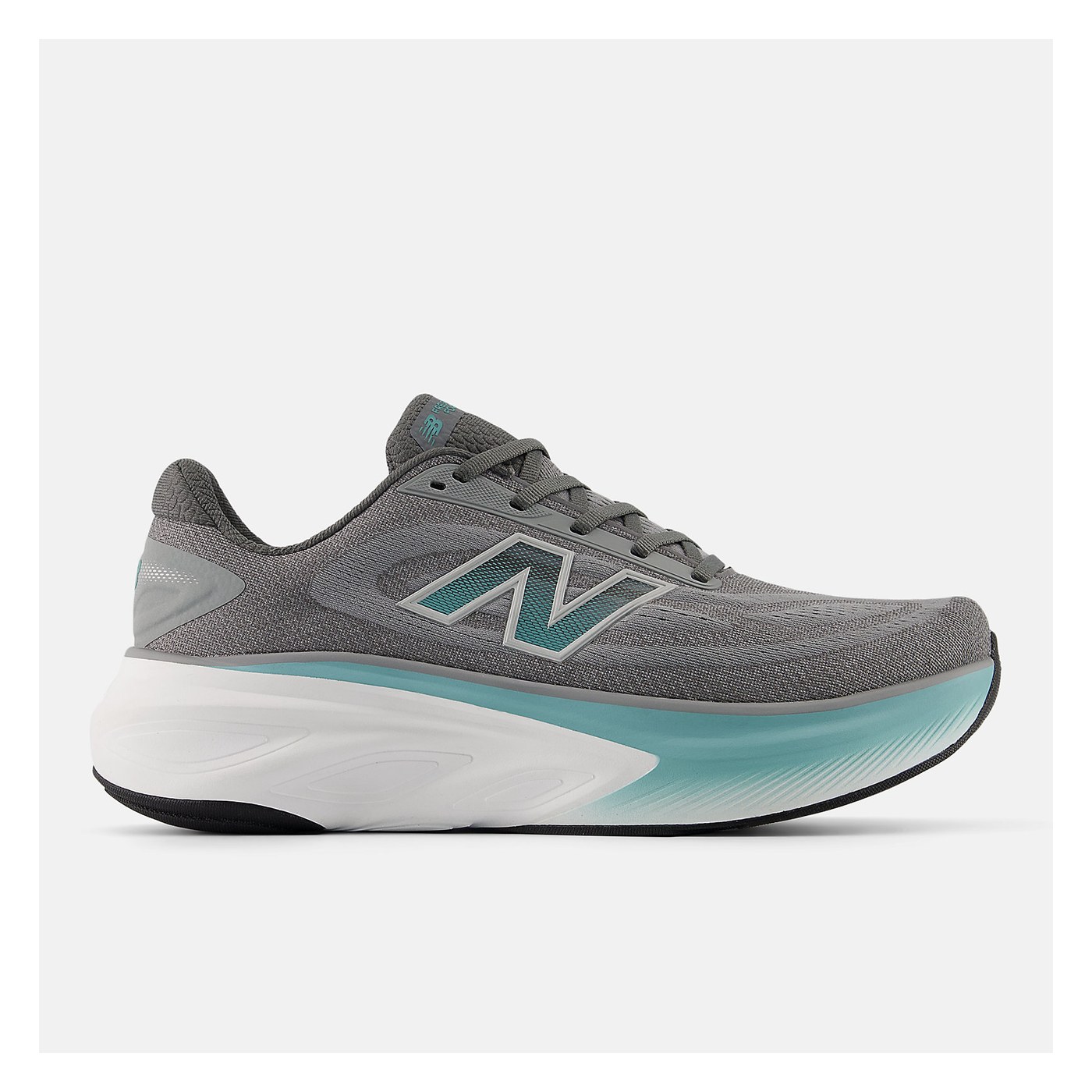
Released on August 1, 2025 at 170 euros, the Fresh Foam X More v6 remains the most cushioned shoe in the New Balance lineup. The Boston brand focused on two specific fixes. First, a higher-density Fresh Foam X to curb the bottomless sinking feeling that plagued earlier versions. Second, a redesigned upper with a stiffer heel and a gusseted tongue to lock the foot down on such a tall platform.
It goes up against max-cushion benchmarks like the Asics Gel-Nimbus 28 and the Brooks Glycerin Max 2, with one clear differentiator: the highest forefoot cushioning ever measured on any running shoe tested to date.
RunMorph tip: if your recovery runs often end with heavy legs, the Fresh Foam X More v6 soaks up slow kilometers better than a Hoka Bondi 9, while staying more stable than an On Cloudmonster 3 on runs that drag on.
© New Balance, official photo used for editorial purposes
Objective specs
| Brand | New Balance |
| Model | Fresh Foam X More v6 |
| Release | August 1, 2025 |
| Type | Road, daily trainer, max cushioning |
| Drop | 4 mm |
| Stack height (forefoot / heel) | 40 mm / 44 mm |
| Weight (men's, size 42-43) | 306 g |
| Weight (women's) | 241 g |
| Foam | Fresh Foam X, higher density |
| Carbon plate | No |
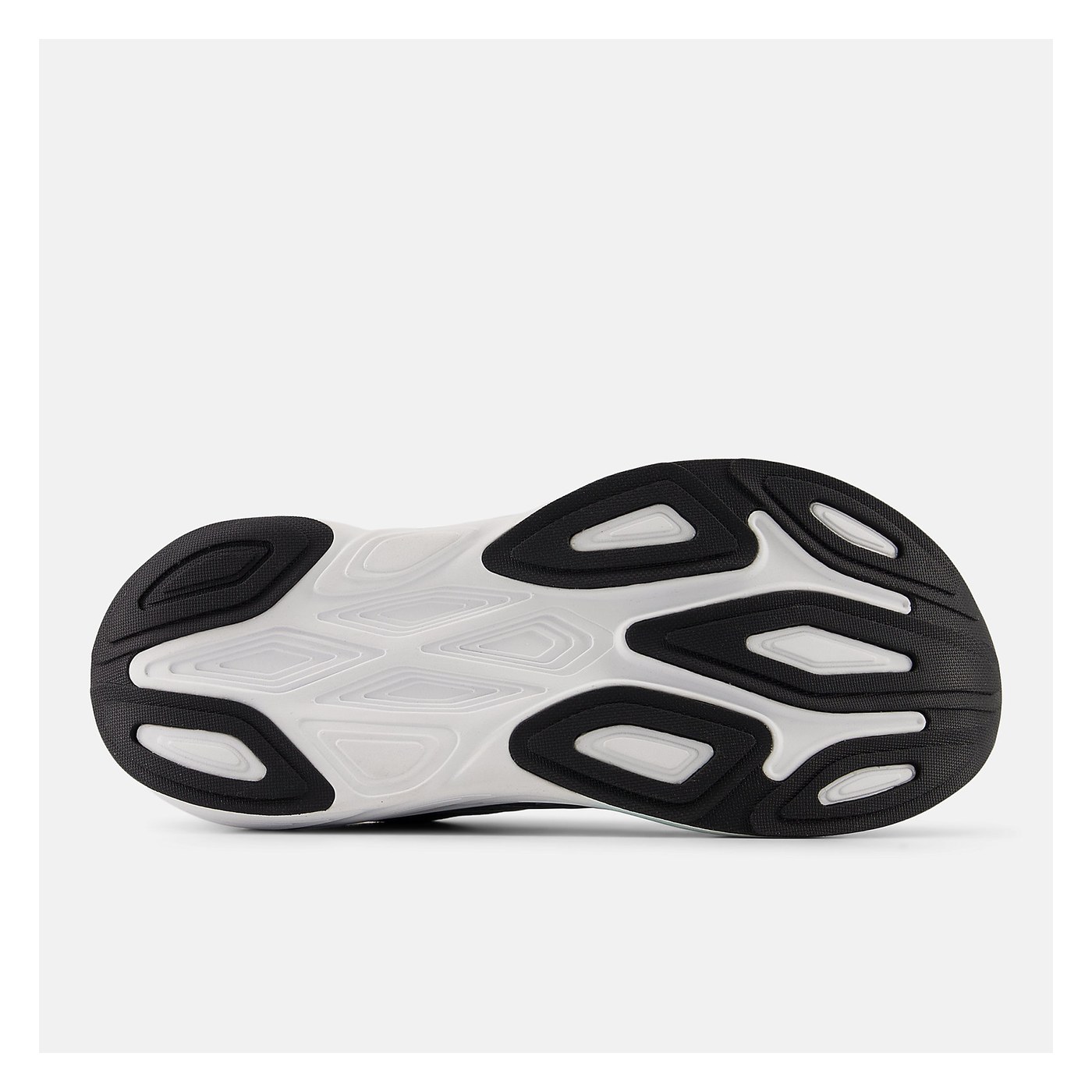
| Outsole | High-abrasion Ndurance rubber |
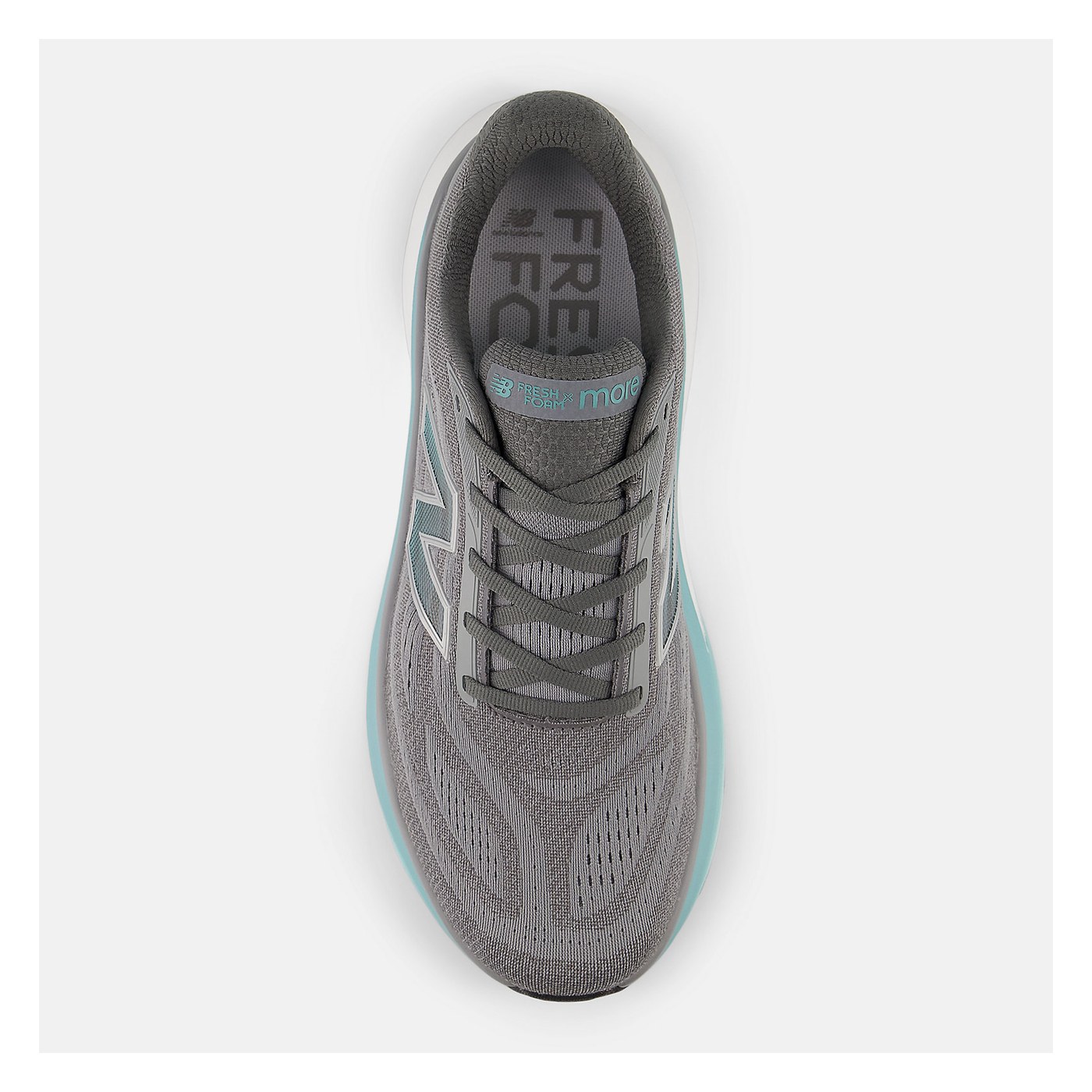
| Upper | Thick engineered mesh, gusseted tongue |
| Available widths | Standard and wide |
| Recommended distance | Long runs, half marathon, marathon at a moderate pace |
| Official price | €170 |
Denser Fresh Foam X: why the shoe no longer bottoms out
The big change in this sixth generation happens underfoot. New Balance increased the density of its Fresh Foam X to cut the floaty feeling reported on the previous version. Independent lab measurements confirm the shift. The shoe posts one of the best forefoot cushioning scores ever recorded on a running shoe tested to date, with energy return above 58% in the forefoot and 60% in the heel. That's a high figure for a non-plated EVA foam.
The added density doesn't kill the plushness: the midsole still compresses slightly without letting your foot sink endlessly. Paired with a wide base and high sidewalls, it delivers a level of stability few maximalist shoes reach at this amount of cushioning, a point every independent review we consulted praised.
© New Balance, official photo used for editorial purposes
Who is the Fresh Foam X More v6 for?
Runners who prioritize recovery and long runs
This is the shoe's core audience. The pronounced rocker and the 4 mm drop promote a smooth heel-to-toe transition whatever your foot strike, so you can rack up slow kilometers without tiring early.
Heavier runners and anyone seeking maximum protection
The wide platform and generous cushioning make it a smart pick for medium to heavy runners who want to reduce impact on their joints, even over distances up to the marathon at a moderate pace.
Runners looking for a fast, responsive shoe
This isn't the shoe for you. Energy return stays below average at faster paces, and the 306 g weight holds back any attempt at intervals. If that's your profile, look at a lighter model in the New Balance lineup.
On the road: from long runs to everyday walking
Independent reviews agree on one point: this shoe excels at slow paces. One 150-kilometer test describes a shoe that has gained maturity and character and now sits among the max-cushion benchmarks, with a clear leap in cushioning quality and a smooth heel-to-forefoot transition. The same test highlights improved stability compared to the previous version, once criticized as too soft and unbalanced.
Opinions on the upper are split. Several testers confirm a close fit, with a thick, breathable mesh that stays narrow in the forefoot: if you have wide feet, try the wide version available in stores. One triathlete tester, who uses the pair specifically for active recovery after long-distance sessions, reports reassuring stability on tired legs and no excessive heaviness underfoot despite the towering stack.
On durability, the Ndurance rubber outsole, placed strategically at the heel and forefoot, earns real praise: good wear resistance and grip that holds on dry roads, wet roads and hard-packed dirt paths alike. It's one of the arguments that sets this shoe apart from more fragile rivals at this level of cushioning.
© New Balance, official photo used for editorial purposes
Fresh Foam X More v6 vs the competition: the comparison to help you choose
| Model | Weight | Drop | Price | Positioning |
|---|---|---|---|---|
| New Balance Fresh Foam X More v6 | 306 g | 4 mm | €170 | Max cushioning, unusual stability for the category |
| Asics Gel-Nimbus 28 | 272 g | 8 mm | €170 | Lighter, higher drop, more traditional comfort |
| Brooks Glycerin Max 2 | 318 g | 6 mm | €180 | Comparable cushioning, slightly heavier |
| On Cloudmonster 3 | 295 g | 6 mm | €180 | More responsive, less stable over long distances |
Against the Gel-Nimbus 28, the Fresh Foam X More v6 bets on a lower drop and a taller stack, at the cost of roughly thirty extra grams. It comes down to feel: a foot that rolls smoothly thanks to the low drop on the New Balance side, or a more traditional footstrike on the Asics side. For runners who log lots of slow kilometers, the stability and the durable Ndurance outsole give the edge to the New Balance.
Pros
- Cushioning among the highest ever measured on a running shoe, confirmed by several independent reviews
- Much better stability than the previous version despite the tall stack
- Very durable Ndurance outsole, good grip even on hard-packed trails
- Available in standard and wide widths
Cons
- 306 g weight holds it back at faster paces
- Narrow forefoot won't suit wide feet in the standard version
- Below-average energy return for fast running
- Bulky volume that can feel disorienting when you switch shoes in your rotation
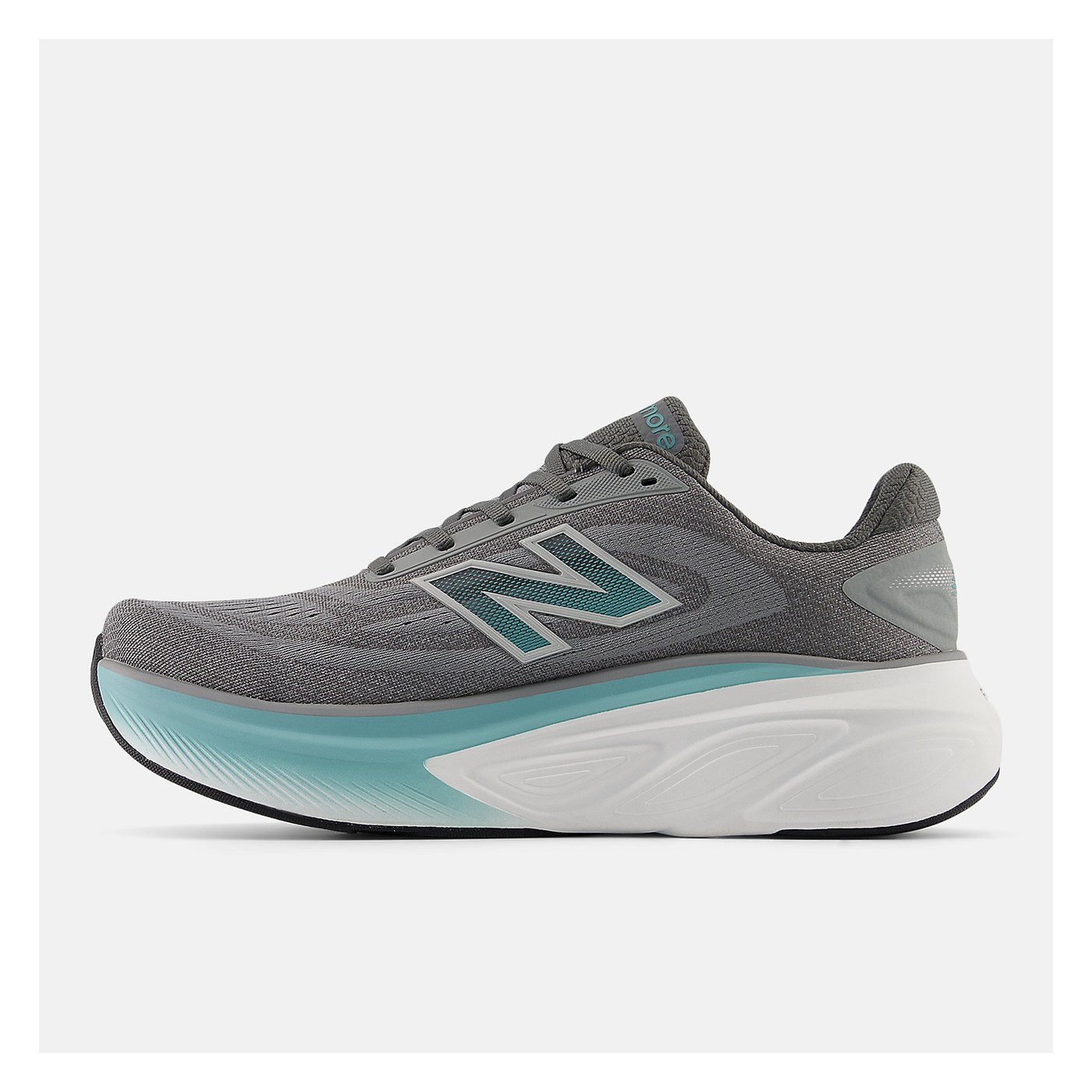
© New Balance, official photo used for editorial purposes
How to fit the Fresh Foam X More v6 into your RunMorph training plan
This shoe naturally belongs on easy-paced long runs and recovery runs, two types of sessions where cushioning matters more than responsiveness. It also works very well on double-session days when you walk a lot between workouts, because its comfort extends well beyond running itself.
In your RunMorph training plan, log this pair as your recovery and volume shoe. The plan can then separate your quality sessions, best done in a more responsive pair, from your aerobic base runs, where joint protection matters more than speed.
RunMorph Coach verdict
The Fresh Foam X More v6 fixes the main flaw of its lineage: it stays plush without turning unstable. New Balance struck a real balance between extreme comfort and foot lockdown, which was no given on such a tall midsole. The trade-off is what you'd expect from this type of shoe: a hefty weight and an energy return that limits it to slow and moderate paces. For a runner whose top priority is protecting their legs through high volume, it's one of the best maximalist options on the market today.
RunMorph score: 8.4/10
Key takeaways for your training
- Keep it for slow to moderate paces: the energy return doesn't favor fast sessions
- Try the wide version if you have wide feet: the forefoot of the standard version stays narrow
- Make the most of its durability: the Ndurance outsole handles high volume well, ideal for logging your aerobic base kilometers
- Use it for active recovery: its comfort goes beyond running, walking included
- Rotate it with a more responsive pair: keep a snappy shoe for your quality sessions and fast runs