Nike let the Structure sit on the shelf for years before bringing it back in July 2025 with a simple promise: keep the stability that has defined it since 1991, but lose the stiffness people used to complain about. On paper, the change comes down to one word, ReactX, the foam that replaces the Cushlon 3.0 plus Zoom Air combo of version 25. Out on the road, two French testers get different stack numbers for the same 10 mm drop, and a third reports forefoot wear that swings hard depending on how you strike. The Structure 26 delivers on comfort. On durability, the answer depends on who's running in it.
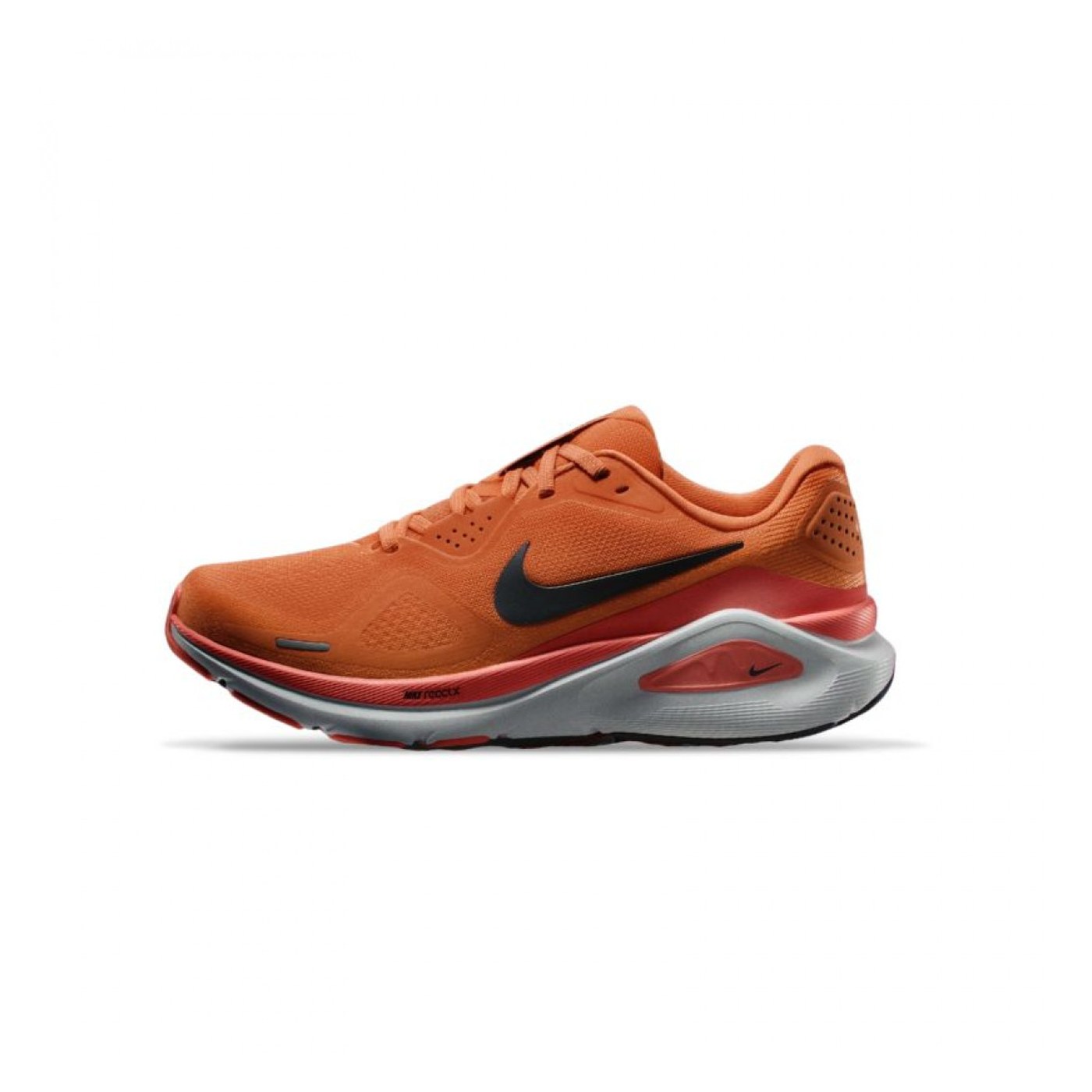
© Nike, official photo used for editorial purposes
Nike Structure 26: a stability icon returns, with a new foam
The Structure turns 30 in 2025, and Nike is using the occasion to reposition it in a lineup rebuilt around three pillars: Pegasus for responsiveness, Vomero for max cushioning, Structure for stability. Each line now comes in standard, Plus and Premium versions, and the 26 takes on the role of Nike's stability flagship, up against established rivals like the Brooks Adrenaline GTS and the Asics GT-2000.
The big technical change comes down to one word: ReactX. This foam replaces the Cushlon 3.0 plus forefoot Zoom Air unit setup of the Structure 25, with Nike claiming 13 % more energy return than classic React foam. The Midfoot Support System remains the line's signature: a triangular architecture of denser foams on the medial midfoot and lateral heel, backed by a heel clip, designed to slow ankle eversion without forcing your foot down a rigid path.
RunMorph's advice: if you want firmer, more traditional stability through the transition, look at the Brooks Adrenaline GTS 24 instead. If you want to keep some pop for your uptempo runs while still getting a bit of support, the Asics GT-2000 13 nails that compromise better than the Structure 26.
Nike Structure 26: what Nike claims vs. what independent tests measure
On stack height, Nike gives a 10 mm drop but doesn't publish absolute heights at the heel and forefoot. Two French sources that tested the shoe report different numbers: 21RUN puts it at 37 mm heel and 28 mm forefoot, while Run Évasion, after a 400 km test, measures closer to 36 mm and 26 mm. The drop holds up in both cases, but the 1 to 2 mm gap depending on the zone shows that stack measurements vary from one tester to the next, even with a serious protocol.
| Metric | Claimed / lab measurements | Measured in the field (independent sources) |
|---|
| Heel / forefoot stack | 10 mm drop (Nike) | 37 mm / 28 mm (21RUN) vs. 36 mm / 26 mm (Run Évasion) |
| Forefoot abrasion | Minimal material loss in instrumented lab tests | Faster wear reported by several testers with a hard forefoot strike |
| Weight (men's) | 320 g (specs) | 321-322 g across cross-checked spec sheets, a minor gap |
The most concrete issue is forefoot durability, and it deserves more than a one-liner: RunMorph gives it a full section further down.
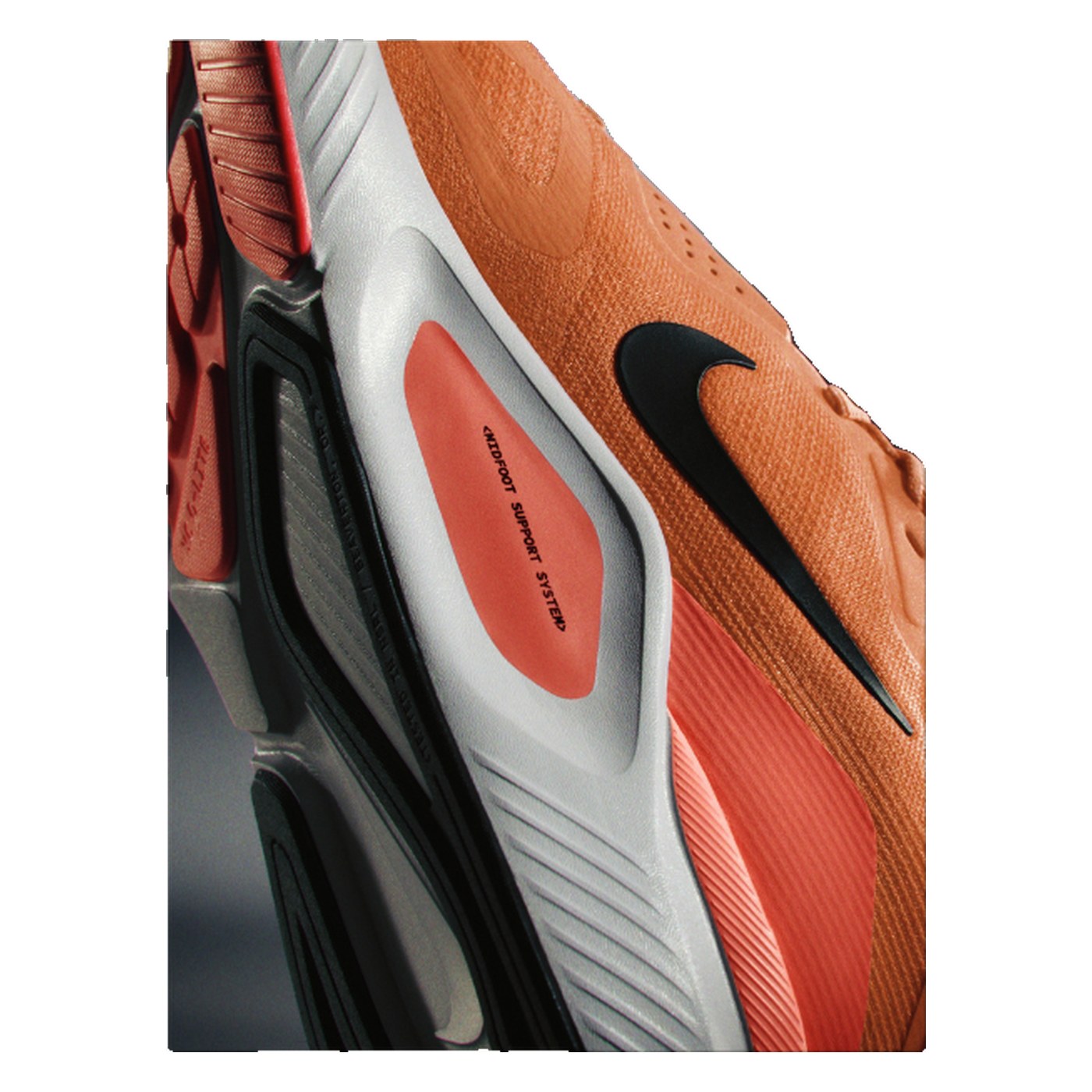
© Nike, official photo used for editorial purposes
Fit: roomy overall, a more measured toe box
Step in and the engineered mesh upper wraps your foot without any pressure points, with a padded collar and a semi-gusseted tongue that keep lateral slipping in check. Forefoot width sits around 72 mm in a EU 43, which points to moderate volume rather than generous: a foot that spreads after 40 minutes of effort will eventually feel the limit, though the shoe never turns uncomfortable. Sizing follows the usual Nike standards, so the same size you wear in a Pegasus or Vomero works for most feet.
Two tweaks help dial in the feel: don't overtighten the first eyelet, which would squeeze the toe box and increase friction, and go half a size up for long runs when your feet swell. For wide feet, Nike offers Wide and Extra Wide versions, something direct competitors don't always offer in as many widths.
On the road: from easy jogs to long runs, backed by 400 km
The most thorough protocol available on the Structure 26 comes from Run Évasion: 8 weeks of testing, over 400 km logged, by a 75 kg runner with mild overpronation, intermediate level, running 40 to 50 km a week. The runs covered recovery jogs, long runs up to 25 km and a few tempo sessions, on road, track and packed trails, in the rain, in full heat and on dry ground.
The medial support is unnoticeable at easy paces and becomes more present after 15 km, when fatigue starts to break down your stride: that's when the heel clip and the dense Midfoot Support System inserts keep your joints aligned. In corners and direction changes at a solid pace, the shoe's wide platform inspires confidence and never tips over too far.
On wet ground, Run Évasion rates the grip as satisfactory thanks to the high-abrasion rubber zones at the heel. Chaussure Marathon also confirms reliable traction as long as you avoid painted lines and polished paving stones, where grip drops off like it does with most road outsoles. On this specific point, both French sources agree: the Structure 26 is nothing special in the rain, but it doesn't cause any particular problem in normal road use.
Which paces it handles, and where it falls off
Easy runs and base endurance (5:30 to 6:00/km): the shoe's home turf. The ReactX cushioning is noticeable right away, softer than the old Cushlon setup, without turning mushy.
Long runs (15 km and up): this is where testers recommend the Structure 26 most often. The support stays effective all the way through and the cushioning holds its properties over time.
All-day wear (walking, standing): both French sources note a real benefit for people who stand at work or walk around town, thanks to the arch support.
Tempo runs (4:30 to 5:00/km): the shoe stays pleasant but shows its limits. The 320 g starts to weigh on you and the rebound lacks punch, according to both Chaussure Marathon and Run Évasion.
VO2max work and short intervals: clearly out of its element. Both sources flat out recommend a different pair for this kind of session.
Flaw #1: forefoot durability that depends heavily on your strike pattern
The instrumented lab measurements cited by Chaussure Marathon show low abrasion and above-average resistance. In the field, the picture gets a lot more nuanced: several independent testers report faster wear of the blown rubber under the toes for runners who push hard and often off the forefoot. Run Évasion, with a heel-striking tester, only found minor signs after 400 km, nothing alarming. The two readings don't really contradict each other: they simply describe two different strike patterns. RunMorph's take: a runner with a strong forefoot push-off and high mileage should plan on rotating pairs, while a classic heel striker can expect 700 to 800 km of life.
Flaw #2: weight and drop that date the shoe at faster paces
At a claimed 320 g with a 10 mm drop, the Structure 26 goes against the current trend toward lighter stability shoes with 6 to 8 mm drops, like the Asics GT-2000 13. On quality sessions, Chaussure Marathon and Run Évasion both describe a lack of punch and responsiveness that stays average without ever surprising. It's not a dealbreaker for what the shoe is built for, but if you regularly mix easy runs and fast sessions, you'll need a second, livelier pair for the fast stuff.
Nike Structure 26 vs. its predecessor: the Structure 25
Moving from the Cushlon 3.0 plus Zoom Air pairing to full-length ReactX foam changes the nature of the transition: smoother, less segmented between heel and forefoot, with a continuous-stride feel that version 25 never had. Dropping the forefoot Zoom Air unit costs a bit of pop under the toes, but gains consistency across the whole gait cycle, which mostly benefits runners whose form breaks down late in a run.
Weight goes up slightly, by around 15 g according to Run Évasion, which Nike offsets by claiming roughly 30 % more comfort. The 10 mm drop is unchanged between the two generations, and so is the price positioning. The upgrade makes sense if you want more comfort and a softer underfoot feel over long distances; runners who liked the firmer support and more direct ground feel of version 25 have every reason to stick with it.
Nike Structure 26 vs. the direct competition
Against the Brooks Adrenaline GTS 24, the Structure 26 is softer at the heel and less assertive in its guidance. The Brooks GuideRails system offers more holistic motion control and a firmer feel, likely more durable over time. The Nike wins on step-in comfort and looks, the Brooks on structure and consistent support.
Against the Asics GT-2000 13, the gap comes down to how modern the spec sheet is: an 8 mm drop more in line with current trends, a build about 30 g lighter, more responsiveness and versatility across varied paces. The Structure 26 keeps the edge on max cushioning for long runs, where the GT-2000 goes for a more balanced mix of speed and support.
Against the Hoka Arahi 9, the Structure 26 feels more traditional in its transition, with a high drop that naturally tips you forward. The Arahi's geometry-based guidance holds the foot without forcing it and comes alive better at high cadence, but it can throw off runners looking for firmer heel cushioning. On long easy stretches, the Nike is easier on your calves; on higher-cadence sessions, the Hoka stays livelier up front.
Pros
- Comfortable ReactX cushioning, protective without being mushy
- Smoother, more consistent transition than the Structure 25
- Effective medial support, discreet at easy paces, there when fatigue sets in
- Robust build, held up well over 400 km of field testing
- Wide and Extra Wide versions available
Cons
- 320 g and a 10 mm drop look dated next to recent competitors
- Lacks punch once the pace drops below 5:00/km
- Uncertain forefoot durability for hard midfoot/forefoot strikers
- Moderate toe box, not ideal for wide forefeet in the standard version
Find the training plan that fits your shoes on RunMorph →
RunMorph verdict: 7.2 / 10
The Nike Structure 26 delivers on its promise to modernize stability without making it rigid. The ReactX foam and Midfoot Support System do a coherent job on easy runs and long runs, and the build takes the 400 km of the most thorough test available in French in stride. The shoe stumbles on two specific, documented points: a weight and drop that leave it behind current category standards, and forefoot durability that varies noticeably with the runner's strike pattern. For a consistent heel striker looking for a stable daily trainer, the score naturally goes up. For a runner who pushes hard off the forefoot or wants some snap in fast sessions, read it lower.
Key takeaways
The Nike Structure 26 is a 140 € road stability shoe with a 10 mm drop and a claimed weight of 320 g, built for mild to moderate overpronators. It shines on easy runs and long runs up to 90 minutes, backed by discreet medial support and protective ReactX cushioning. Its forefoot durability depends on your strike pattern: a heel striker can expect 700 to 800 km, while a runner with a strong forefoot push-off will need to keep a closer eye on wear. It lacks punch below 5:00/km and isn't designed for speed work.
Nike Structure 26 FAQ
How much does the Nike Structure 26 weigh?
The claimed weight for the men's version is between 320 and 322 g across cross-checked spec sheets, about 15 g more than the Structure 25.
What is the Nike Structure 26 drop?
10 mm, a high figure compared to the 6 to 8 mm now common on rival stability shoes like the Asics GT-2000 13.
How many kilometers does the Nike Structure 26 last?
Run Évasion's 400 km test found minimal wear at 200 km and minor signs at 400 km on the impact zones, for an estimated lifespan of 700 to 800 km for a heel striker. Runners with a strong forefoot push-off should expect faster wear.
Does the Nike Structure 26 work for wide feet?
Yes, through the Wide and Extra Wide versions Nike offers. In the standard version, the forefoot width measured around 72 mm in a EU 43 is moderate.
How much does the Nike Structure 26 cost?
The recommended retail price is 140 €, with occasional deals bringing it under 90 € at some retailers in 2026.