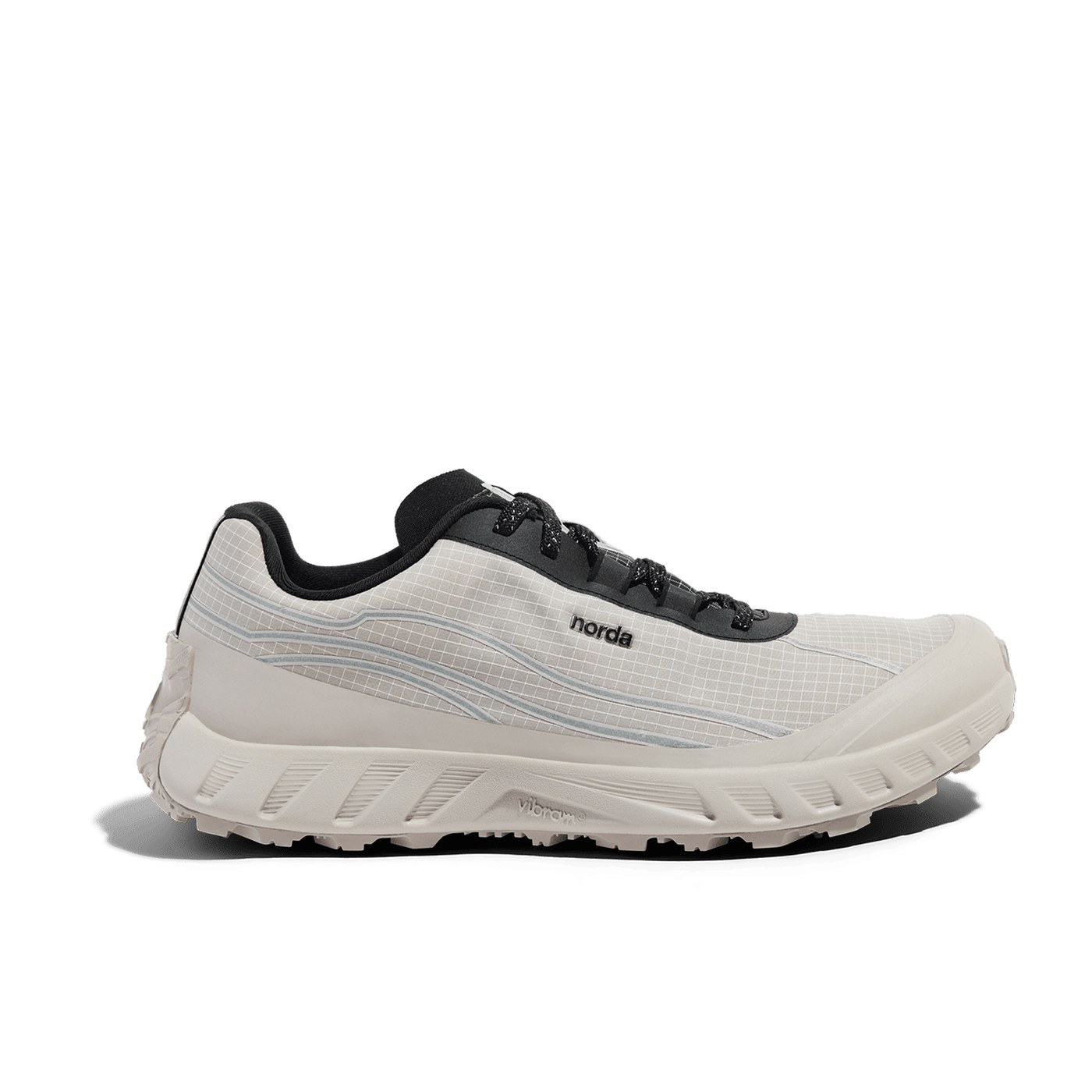
Two hundred and forty-eight grams, a seamless bio-based Dyneema upper and a €280 price tag. The Norda 002 isn't trying to please everyone. Barely known three years ago, the Canadian brand has become the benchmark for premium technical trail shoes by betting on a single argument: the extreme durability of a material fifteen times stronger than steel, weight for weight. The question is whether that promise holds up beyond the marketing.
© Norda, official photo used for editorial purposes
Norda 002: precision as a philosophy
Premium technical trail has long been ruled by Salomon, Hoka and La Sportiva. Norda, a Canadian brand founded in 2020, shook up that order with a radical proposition: a one-piece, seamless bio-based Dyneema upper designed never to tear. The 002 takes that philosophy further than the 001, dropping the stack height from 26 to 19 mm and cutting the drop to 4 mm. The goal is clear: maximum ground connection for runners who want precision rather than the plush comfort that has become the norm elsewhere. Norda isn't a household name yet, but the brand already has a strong following among demanding technical trail runners, much like NNormal shook up the vest market.
RunMorph tip: if you want a more protective option for long runs, check out the Hoka Speedgoat 7 or the Inov-8 Trailfly Max V2, both reviewed on RunMorph, before you commit to the Norda investment.
Dyneema technology: what does it change underfoot?
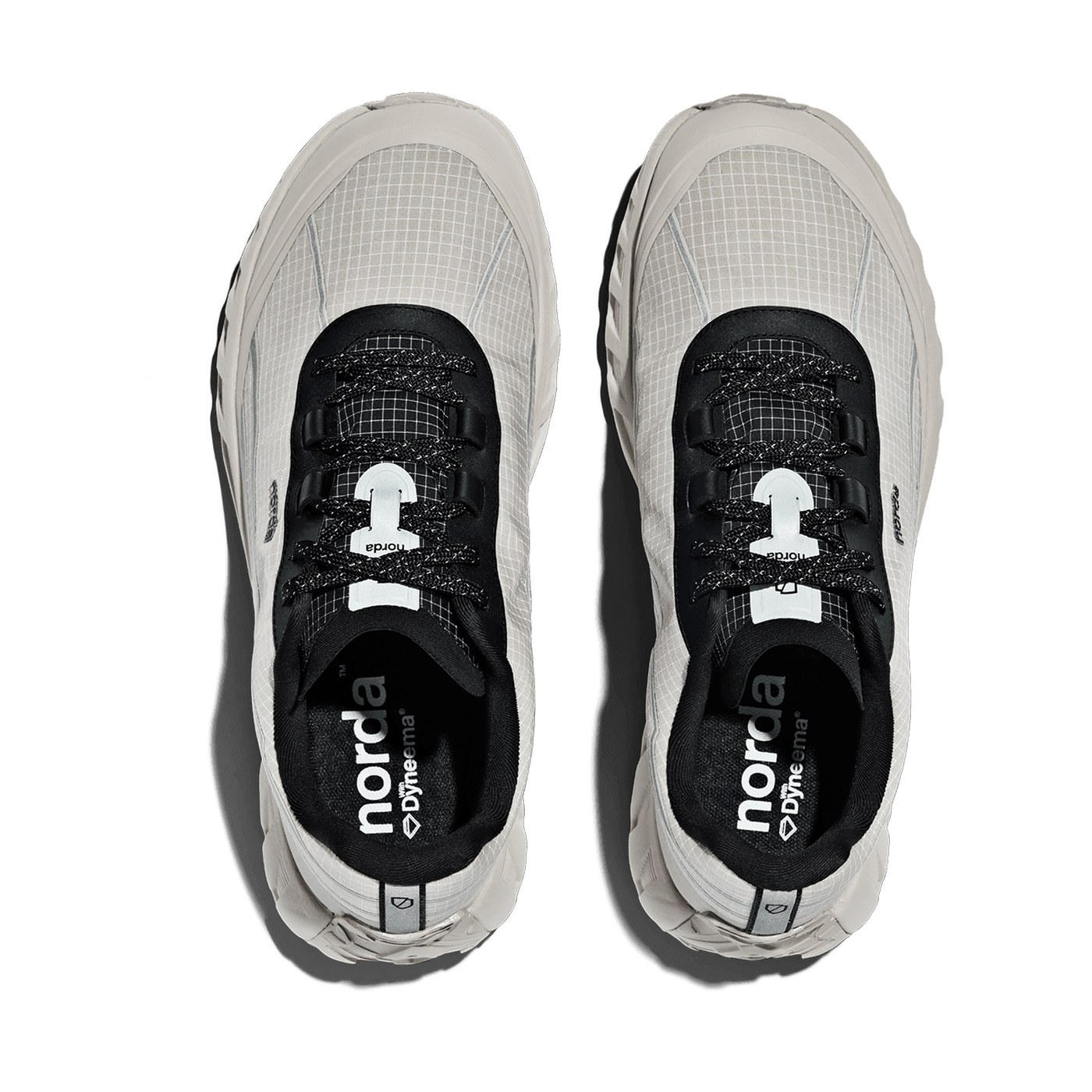
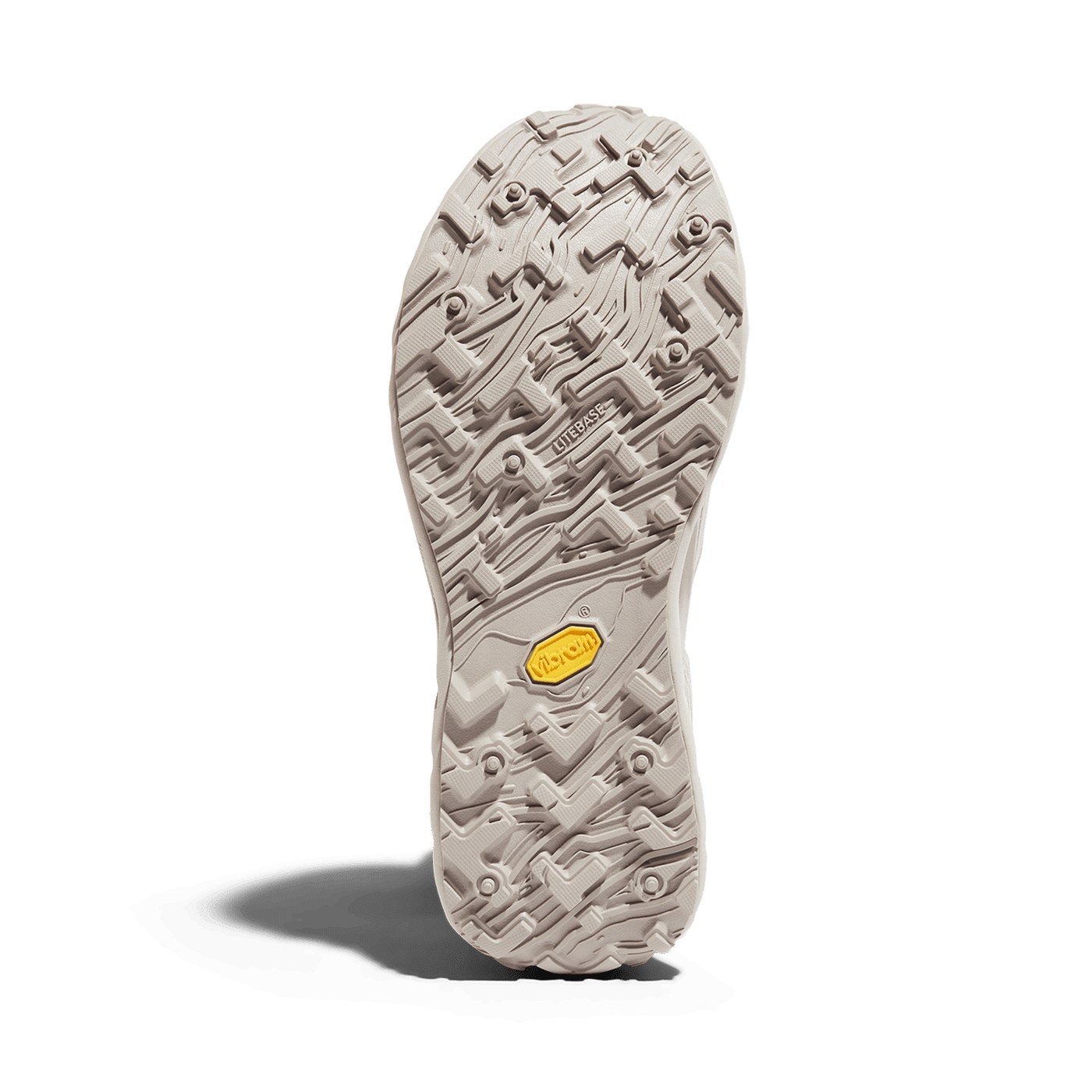
Dyneema is a synthetic fibre known for its mechanical strength, fifteen times that of steel, weight for weight. Where a conventional mesh starts to fatigue and tear at flex points after 300 to 400 km, the one-piece upper of the Norda 002 shows, according to independent tests, no sign of wear after several hundred kilometres of repeated abrasion on rough rock. The Litebase process applied to the Vibram outsole also cuts rubber weight by nearly 30 % compared with a standard Vibram outsole, without sacrificing lug depth. The result: a shoe under 250 g that keeps the grip and protection of a much heavier model.
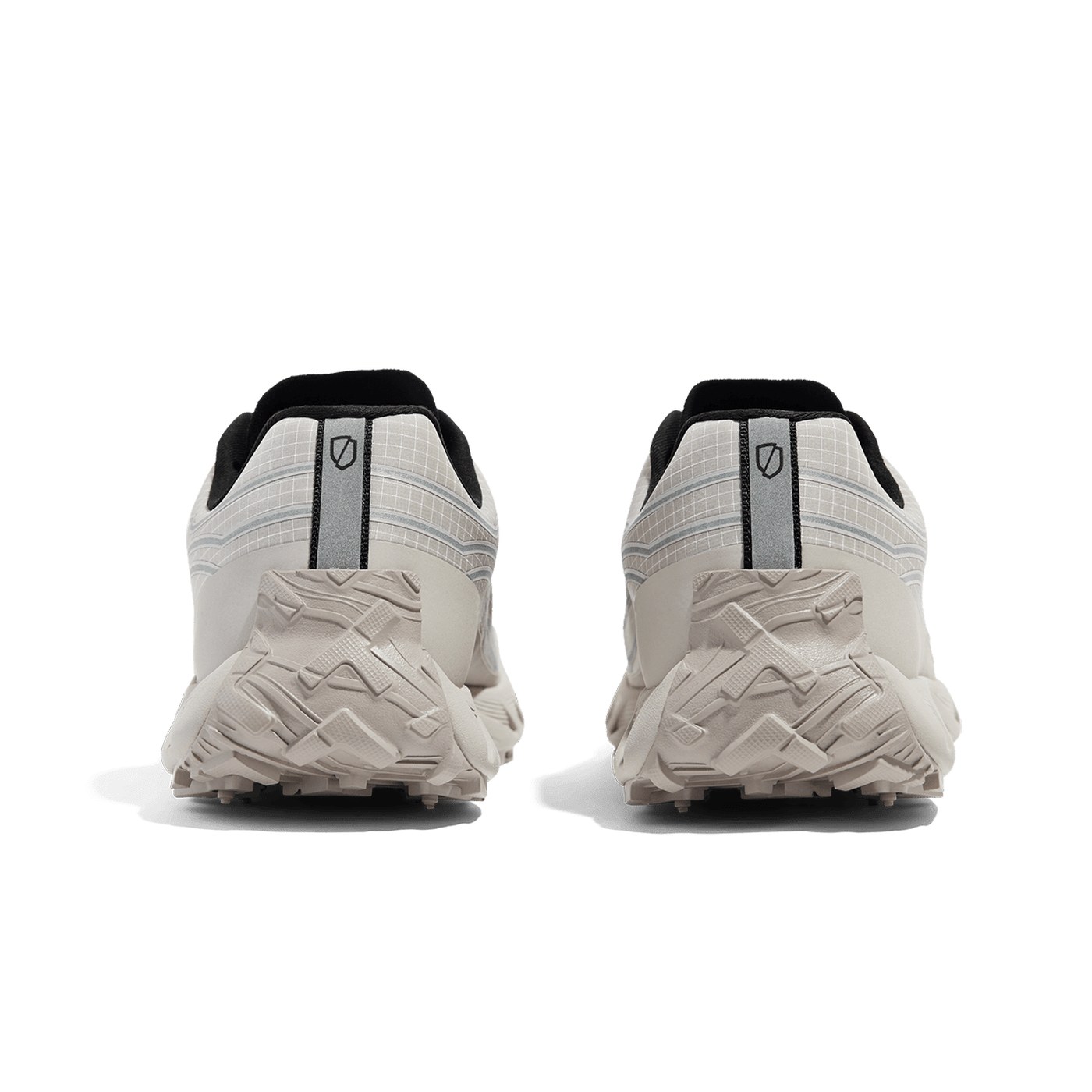
The price of this pursuit of lightness and precision is paid in immediate comfort. The fit is deliberately snug at the heel and ankle, with little padding, to maximise lateral hold. It's a deliberate technical choice, not a manufacturing flaw, but it takes some adapting to if you're coming from more enveloping shoes.
© Norda, official photo used for editorial purposes
The field test: from rooty singletrack to loose scree
A detailed French field test, run over several outings including rooty singletrack and unstable scree, confirms remarkable stability: your foot doesn't move a millimetre inside the shoe, and the lateral hold of the Dyneema upper ranks among the best on the market today. Independent lab measurements, carried out over several weeks of intensive testing in snow, mud and on rock slabs, back up that impression with a score of 84/100, describing the Norda 002 as one of the best rubber and tread pattern combinations these specialist testers have ever assessed.
On cushioning, the verdict is consistent: the Vibram SLE midsole feels firm and lively, far from the cloud-like softness of a max-cushion shoe, but it returns energy efficiently with every stride. An independent assessment based on eleven head-to-head comparisons with other premium models highlights that the Norda 002 shines on rocky sections and fast ridgelines, with a clear caveat on muddy or very soft ground where it shows its limits more. Sizing is also a point of agreement across sources: the Norda 002 runs small, and going up half a size is unanimously recommended.
On durability, the one area where sources still lack long-term perspective because the shoe hadn't been used long enough at the time of testing, the trend is unanimously positive: no source reported any sign of Dyneema fatigue after several hundred kilometres. That confirms the original marketing promise, without yet validating it over the product's full lifespan.
© Norda, official photo used for editorial purposes
Norda 002 vs Norda 001: the comparison
| Model | Stack | Drop | Weight | Use |
|---|
| Norda 002 | 19 mm / 15 mm | 4 mm | 248 g | Technical, precision, short to medium distances |
| Norda 001 | 26 mm | 5 mm | 268 g | Versatility, comfort, long distances |
The Norda 001 remains the versatile model in the range, with more generous cushioning that better isolates you from the terrain and suits long runs better. The 002 takes the opposite approach: by lowering the stack height by 7 mm, it becomes a surgical steering tool, more stable laterally but more demanding over time. Choosing between the two depends less on your level than on your priority: comfort and versatility with the 001, precision and lightness with the 002.
Our field verdict: who is it for?
The Norda 002 targets a specific profile: the experienced technical trail runner who values precision and control on rocky trails over the protective comfort of long outings. From 15 km to trail marathon distance, it's formidable. Beyond that, on a fully self-supported ultra, its low stack and firm cushioning become more demanding for bodies less used to that kind of feel.
To build the stride technique this kind of minimalist shoe demands, pairing the Norda 002 with a trail-focused RunMorph training plan lets you progress safely towards more technical runs without skipping the adaptation phases.
© Norda, official photo used for editorial purposes
The RunMorph Coach verdict
The Norda 002 delivers on the promise that defines it: Dyneema durability is a real argument, not a marketing gimmick, and the Vibram Megagrip Litebase grip ranks among the best we've seen so far. At RunMorph, we see it as an unapologetic niche shoe that doesn't try to please everyone: immediate comfort is sacrificed on the altar of precision, and the €280 price remains a real obstacle for many runners. A smart choice only if you know exactly what you're after. 8.4/10.