Oura sells its fifth ring as a complete health sensor: sleep, recovery, stress, temperature and continuous heart rate, with fifty advertised metrics packed into a titanium band just 2.28 mm thick. At RunMorph, the question is narrower: what happens to that promise once your shoes are laced and the pace goes up? Independent measurements taken during exercise give a clear answer, and it doesn't fully match the spec sheet.
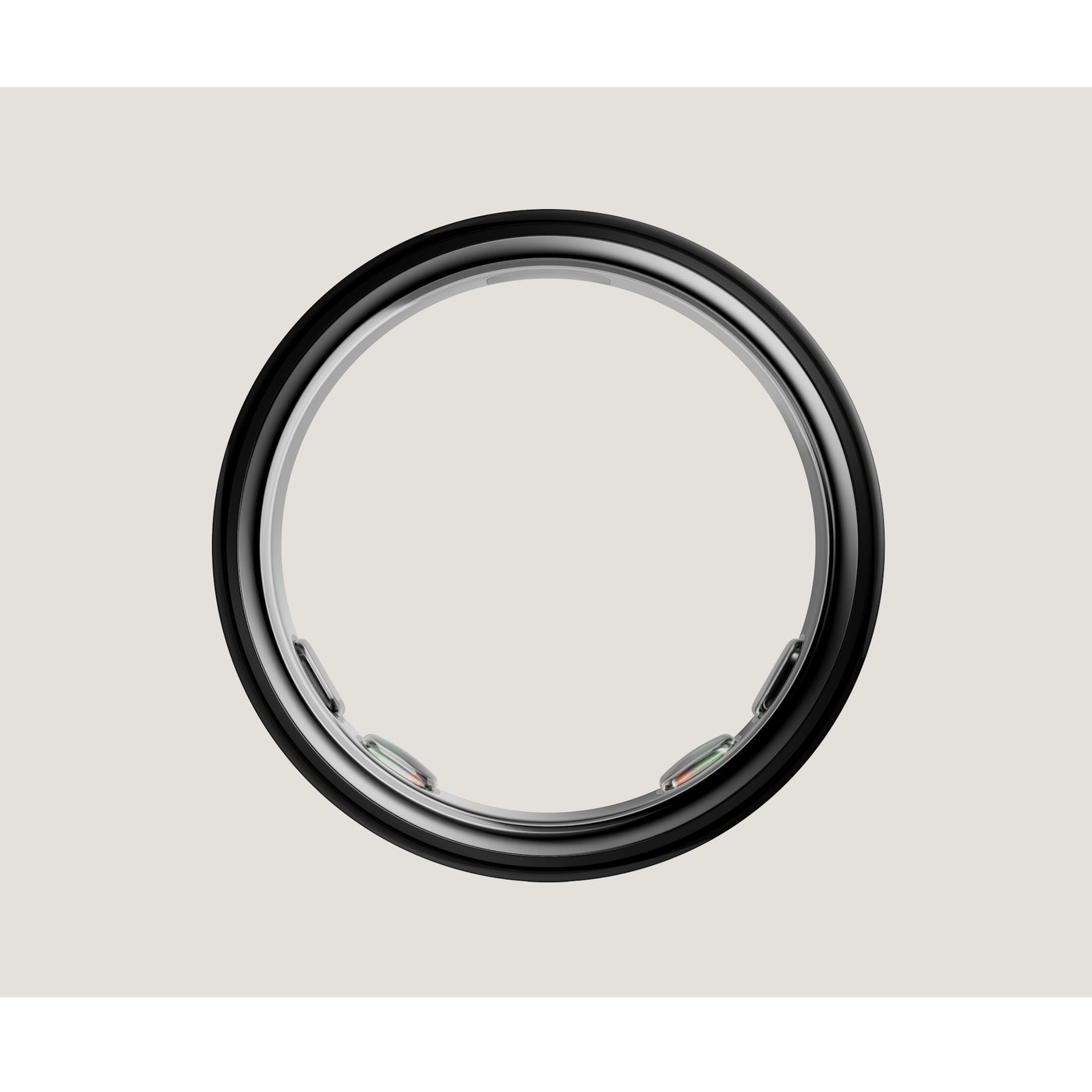
© Oura, official photo used for editorial purposes
Oura Ring 5: a ring sold as a complete health sensor, tested as a training tool
Oura has dominated the smart ring market since 2018, well before Samsung, Ultrahuman or Amazfit launched their own models. The Ring 5, released on 28 May 2026, drops below 2.3 mm in thickness, 40% thinner than the Ring 4, with an advertised weight starting at 2 grams. For a runner who refuses to wear a watch at night but still wants an HRV number on waking, that's a hard argument to beat.
RunMorph's sensor catalogue already includes ECG chest straps such as the Polar H10 and the Garmin HRM 600, plus a screenless band, the Garmin Cirqa. The Oura Ring 5 belongs to neither family, and the format changes the question this test asks. The point is no longer whether it measures accurately at rest (most recent sensors do that well) but whether it keeps its promise once the pace climbs above easy endurance.
RunMorph's advice: to track live heart rate during an interval session, the Garmin HRM 600 and the Polar H10 remain the benchmarks. The Oura Ring 5 answers a different question: recovery between two sessions.
Oura Ring 5 specifications
| Brand | Oura (Oura Health Oy, Finland) |
| Model | Ring 5 |
| Launch | 28 May 2026 |
| Material | Titanium |
| Width / thickness | 6.09 mm / 2.28 mm |
| Weight | From 2 g depending on size |
| Available sizes | 6 to 13 |
| Water resistance | 100 m, IP68 |
| Optical sensors | 12 light paths, LEDs 4 times more powerful than on the Ring 4 |
| Connectivity | Bluetooth Low Energy only, no ANT+, no GPS |
| Storage without syncing | 3 days (7 days on the Ring 4) |
| Claimed / measured battery life | 6 to 9 days claimed, 6 to 7 days measured over 4 weeks |
| Full charge | About 80 minutes |
| Subscription | €5.99 per month or €69.99 per year |
| Price in France | €429 in Silver and Black, premium finishes at $499 in the United States (French price not announced) |
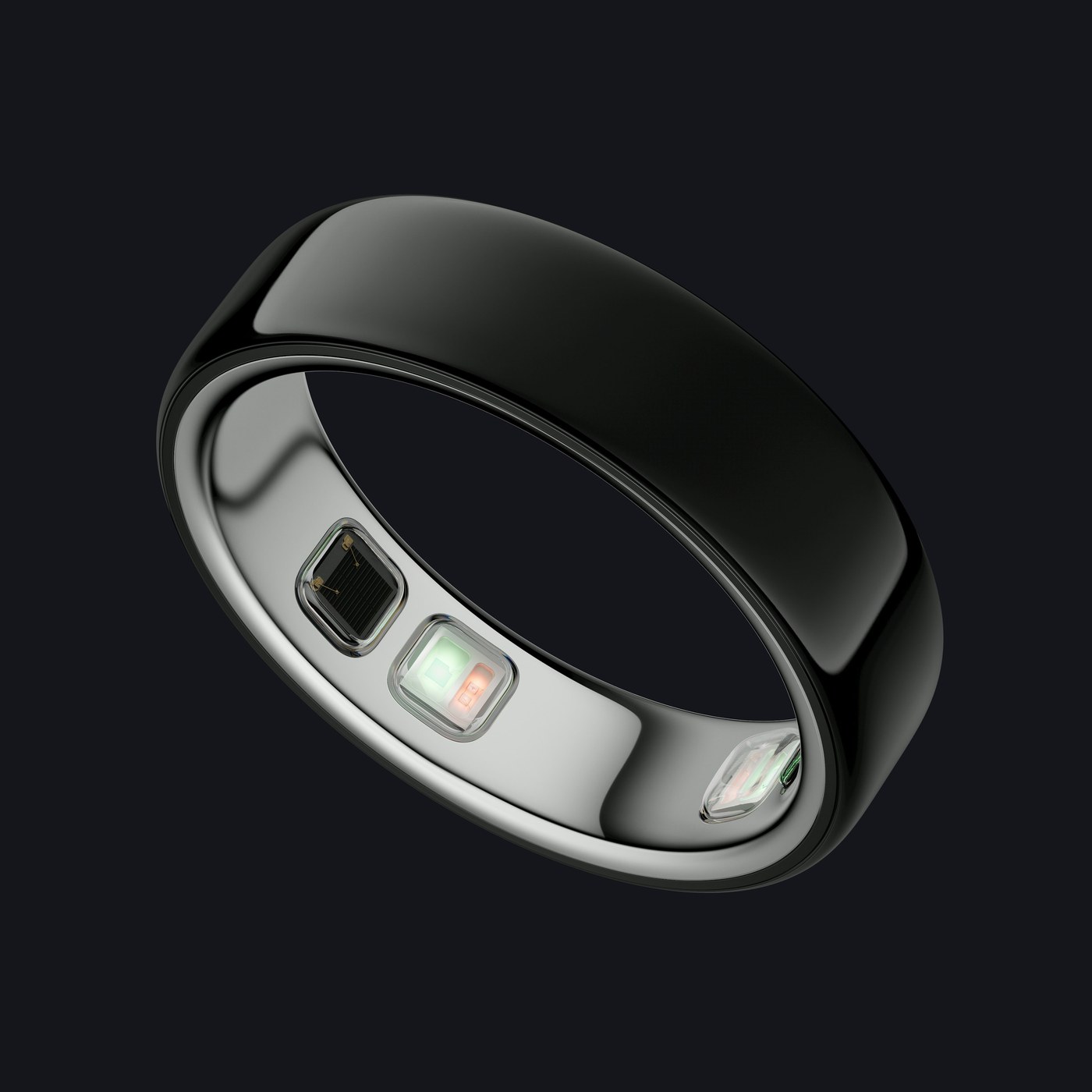
© Oura, official photo used for editorial purposes
Sleep, HRV and recovery: the ring's real strength
On this front, the sources we consulted agree. A French test run over two months found better wear resistance than the previous generation and a form factor that genuinely disappears on the finger, a prerequisite for getting consistent sleep data over several weeks. A user training for an Ironman, who wears the ring alongside an older Garmin watch with fewer overnight metrics, describes a similar use: the ring fills the gaps left by a watch she doesn't wear at night, and the recovery score helps her choose between a hard session and an easy run.
An independent month-long test puts the Oura Ring 5's bedtime and wake-up times within 15 minutes of five other devices worn at the same time, including a Whoop 5.0 and a high-end Garmin. The feature that comes up most often across all three sources is the physiological strain detector: by cross-referencing resting heart rate, HRV and temperature, the ring flagged unusual strain the day before symptoms appeared, in several consistent accounts. Oura presents it as a trend alert, never as a diagnosis.
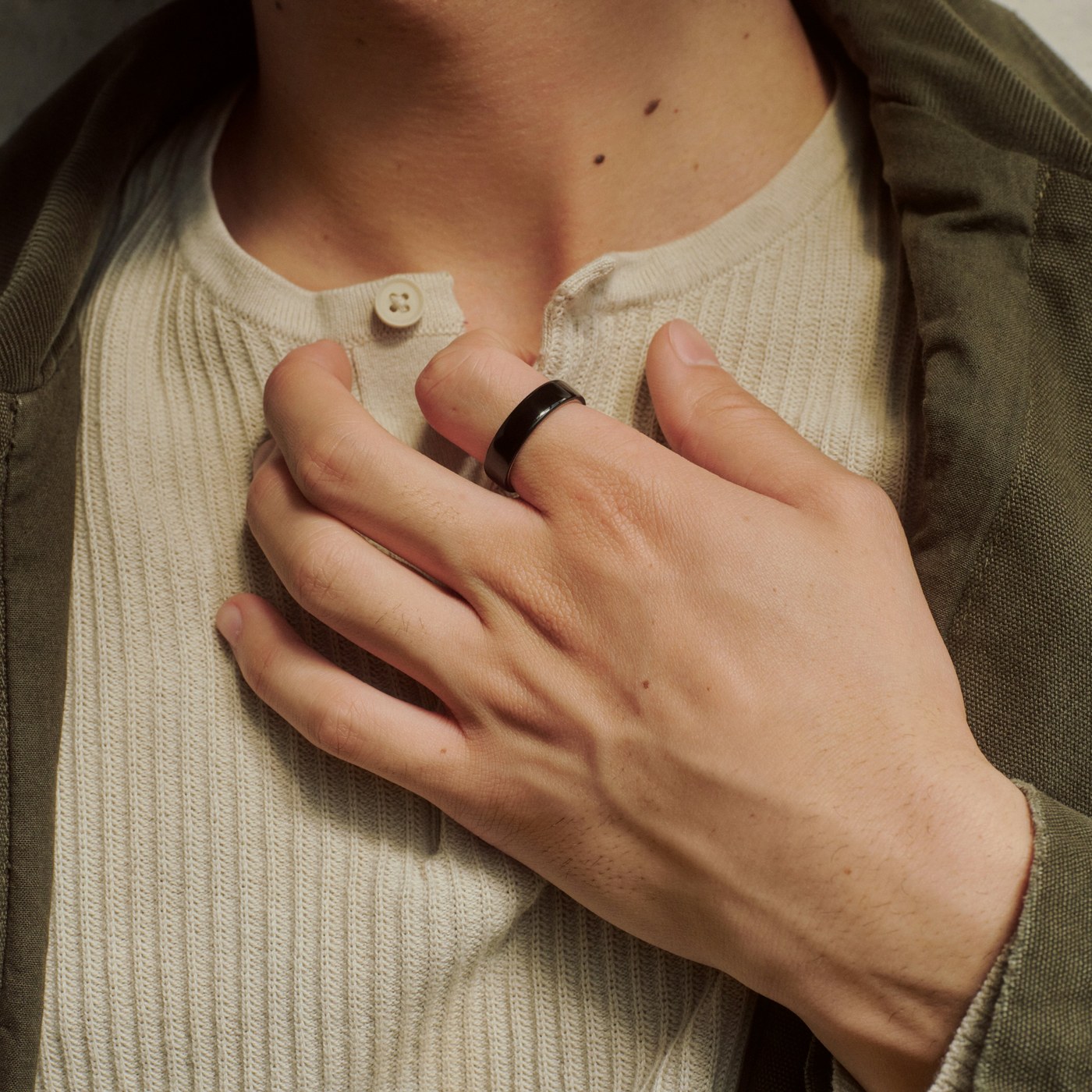
© Oura, official photo used for editorial purposes
Heart rate tracking during exercise: the limit you need to know before buying
An independent test covering five disciplines (swimming, cycling, running, strength training and trail) documents the problem precisely. Without a paired external sensor, the Oura Ring 5's activity screen only shows pace and distance calculated by the phone: no live heart rate, no map, no intensity zones. To see your heart rate during exercise, you have to connect a chest strap or third-party sensor, which means paying 429 euros for a ring that displays another device's data. Even paired with an external sensor, the Oura Ring 5 then sends no heart rate data to Strava, and the full activity file disappears if a third-party sensor was used during the recording.
In the field, the ring on its own stays reasonably accurate at steady effort, on the road or on the bike, a few beats per minute off a reference chest strap. It degrades sharply on technical trail descents, where finger movement disrupts the optical reading, a phenomenon already documented on wrist-based optical sensors. During an indoor interval workout, a one-off gap of 24 beats per minute was recorded on one of the steps. Another notable gap: a VO2max estimate of 38, against 56 to 58 confirmed elsewhere for the same user, a difference of about twenty points that is reason enough to ignore this particular metric.
RunMorph's advice: for interval or threshold sessions built around precise heart rate zones, a dedicated sensor such as the Garmin HRM-Pro Plus remains the most reliable option during exercise. The Oura Ring 5 takes over after the session, on recovery.
Three days of storage and a mandatory subscription: the downside of the ring format
Miniaturisation comes at a cost: local storage cut to 3 days, versus 7 days on the Ring 4. A weekend or a trip of several days without opening the app is enough to lose sleep data, a gap noted in a French test that found a hole in the data for the Sunday after returning from a trip. Accessing detailed data also requires a subscription of 5.99 euros per month or 69.99 euros per year, with only the first month free. Without it, the app only shows the three daily scores. The model mirrors that of the Whoop 5.0, where the subscription also gates access to data, and contrasts with the Garmin Cirqa, a screenless band sold for 199.99 euros with no mandatory subscription for a similar use: continuous recovery tracking, without GPS.
Oura Ring 5 vs Oura Ring 4: should you upgrade?
| Criterion | Oura Ring 4 | Oura Ring 5 |
|---|
| Thickness | 2.88 mm | 2.28 mm |
| Weight | 3.3 to 5.2 g | From 2 g |
| Sizes | 4 to 15 | 6 to 13 |
| Storage without sync | 7 days | 3 days |
| Claimed battery life | 5 to 8 days | 6 to 9 days |
| Base price | $349 | $399 / €429 |
The switch is justified mainly by comfort: a ring twice as thin genuinely changes how it feels on the finger and at night. The accuracy gain claimed by the brand is hard to feel day to day, as sleep measurements from both generations remain close. If you already own a Ring 4 in good condition, you can reasonably wait. If you're new to the format, you have to weigh the Ring 5's superior comfort against its 3 days of storage, versus 7 on the model it replaces.
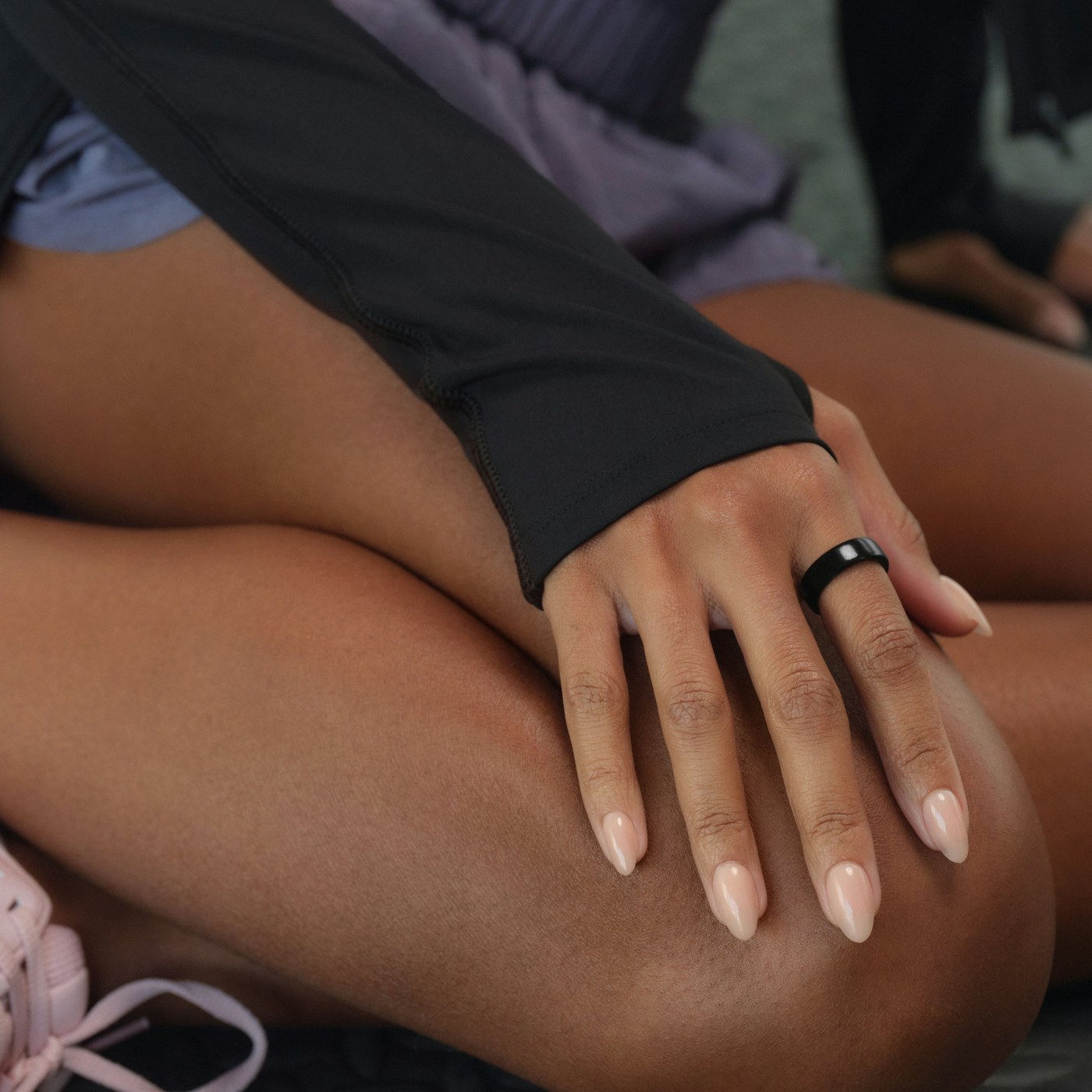
© Oura, official photo used for editorial purposes
How to fit the Oura Ring 5 into your RunMorph training
For a runner building training load week after week, the Oura Ring 5 works better as a complement to a dedicated sensor than as a replacement. It takes over on what no watch measures well at night: HRV, temperature and sleep regularity, three signals that let you adjust a week before an overuse injury sets in.
RunMorph's pro tip
A low recovery score two mornings in a row is a signal to take seriously before an interval session. Pair the Oura Ring 5's sleep and HRV data with RunMorph training plans to adjust your weekly load without waiting for an injury.
The RunMorph Coach's verdict
The overall score of 6.5/10 is not the raw average of the six criteria, which would come out slightly higher: it gives more weight to accuracy during exercise and compatibility with a sports ecosystem, the two points that determine a sensor's real value for a runner who structures their training, and less to comfort or sleep, where the ring excels but where the competition is improving just as fast. Taken on its own, the Oura Ring 5's recovery side deserves a score close to 9. Taken as a training tool, with a mandatory subscription and no heart rate shown while running, it drops significantly. 6.5/10 reflects that gap: a recovery ring you shouldn't buy thinking it will replace a dedicated heart rate sensor.
FAQ
Does the Oura Ring 5 show heart rate while running?
No, not without a paired external sensor. Without a connected chest strap or armband, the activity screen only shows pace and distance calculated by the phone.
What is the Oura Ring 5's real battery life?
Oura claims 6 to 9 days. An independent test over four weeks of wear found 6 to 7 days in everyday use, with 1 to 2 hours of activity per day.
Do you need a subscription to use the Oura Ring 5?
Yes, 5.99 euros per month or 69.99 euros per year to access detailed data, beyond the three scores shown for free each day.
Is the Oura Ring 5 more accurate than the Ring 4?
Oura claims up to 19 to 24% improvement depending on the metric. For sleep, the difference between the two generations is barely noticeable day to day.
Which size should you choose for the Oura Ring 5?
A free sizing kit with dummy rings is essential before ordering: Oura sizes, 6 to 13 for the Ring 5, don't match standard jewellery sizes.