A minimalist running vest, eco-designed and sewn in a Fair Trade factory, that won over American testers for the long haul... until the front clip system and the seams in high-friction areas started showing signs of weakness.
A minimalist running vest, eco-designed and sewn in a Fair Trade factory, that won over American testers for the long haul... until the front clip system and the seams in high-friction areas started showing signs of weakness.
The Patagonia Slope Runner Vest is a minimalist 4-liter running vest made from recycled ripstop polyester in a Fair Trade Certified factory, with two 500 ml HydraPak soft flasks included. Comfortable and breathable over the long haul according to the American testers who made it their go-to vest, it still suffers from a fit that feels a bit loose when empty and a front clip system that several users, French and English-speaking alike, call unreliable over time. At 170 euros for just 4 liters, its value for money is debatable against the competition.
The RunMorph catalog already covers more than twenty trail packs and vests, but none from Patagonia, even though the brand shows up on the apparel side (Houdini Jacket, Air Jacket) and has run a structured trail running line since 2019. The Slope Runner Vest is the entry point to that line: a minimalist 4-liter vest built for outings of a few hours, neither a pure race vest nor a heavily loaded trail hiking pack. Its eco-designed approach (recycled materials, Fair Trade Certified factory, DWR with no intentionally added PFAS) fits the brand's overall identity, which rarely takes center stage in this highly technical segment.
The vest comes in four sizes (XS to L, chest 76 to 122 cm) and two colors, Black and Weathered Stone, at 170 euros (169.90 euros at some French retailers).
| Feature | Detail |
|---|---|
| Volume | 4 L (reference 49521) |
| Weight | 196 g claimed (199 g measured in an independent test) |
| Main fabric | 100% recycled ripstop polyester, mechanical stretch, DWR with no intentionally added PFAS |
| Back panel | Mono-mesh, 100% recycled nylon ripstop, hydrophobic |
| Hydration included | 2 HydraPak® 500 ml soft flasks |
| Bladder compatibility | Yes, up to about 2 L |
| Pole holders | 2 elastic loop systems (front and lower back) |
| Sizes | XS, S, M, L (chest 76-122 cm) |
| Colors | Black, Weathered Stone |
| Manufacturing | Vietnam, Fair Trade Certified™ factory, bluesign® certified materials |
| Official price | €170 |
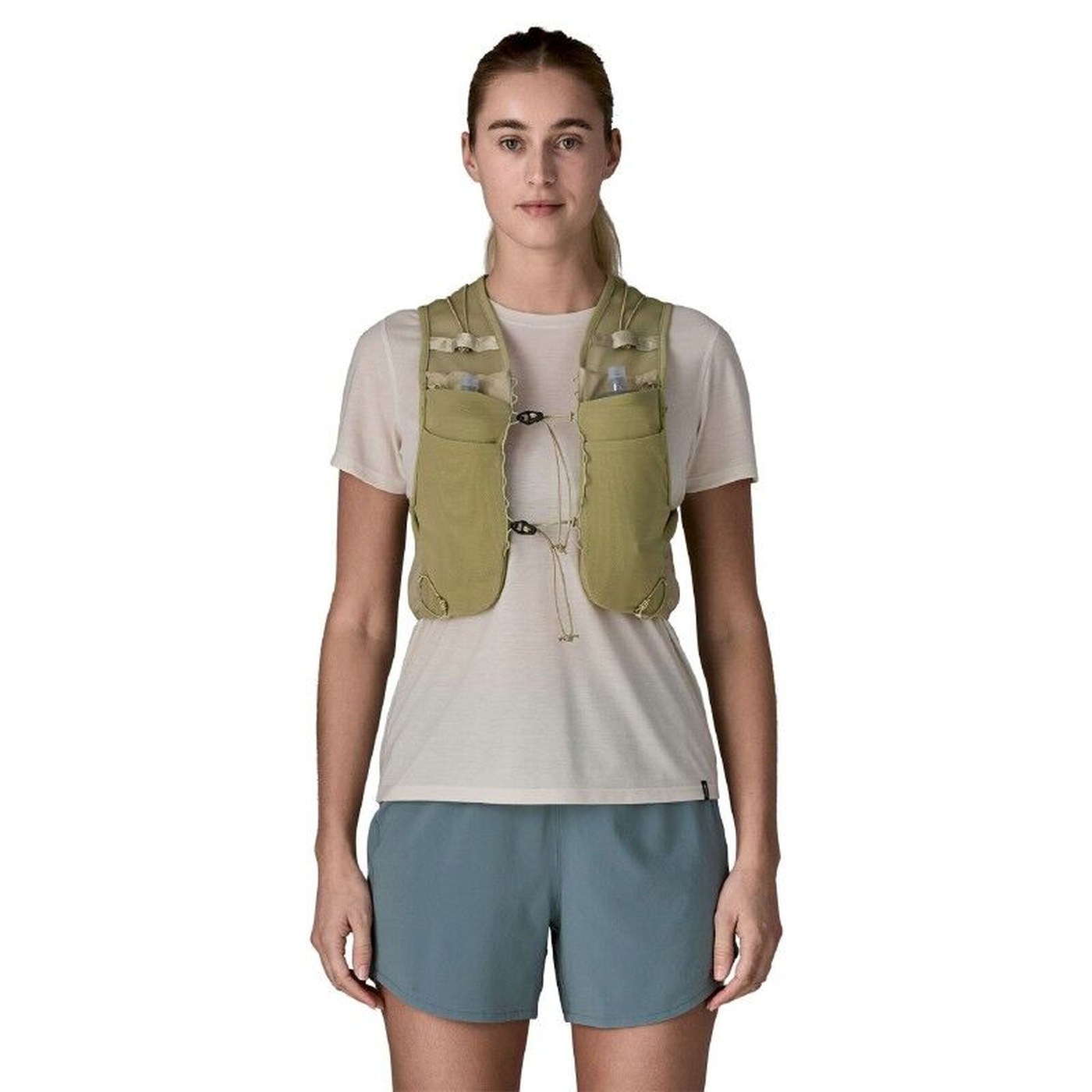
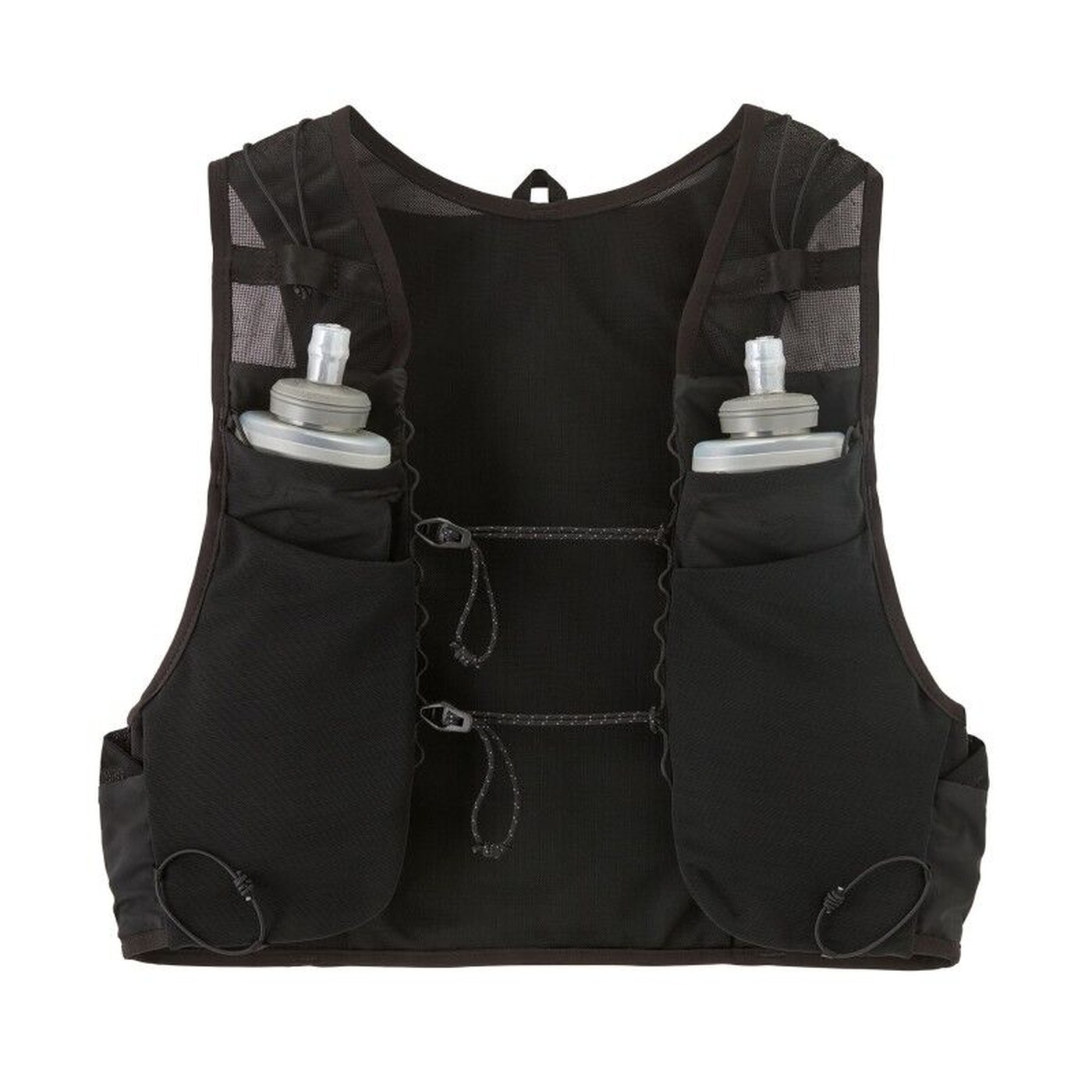
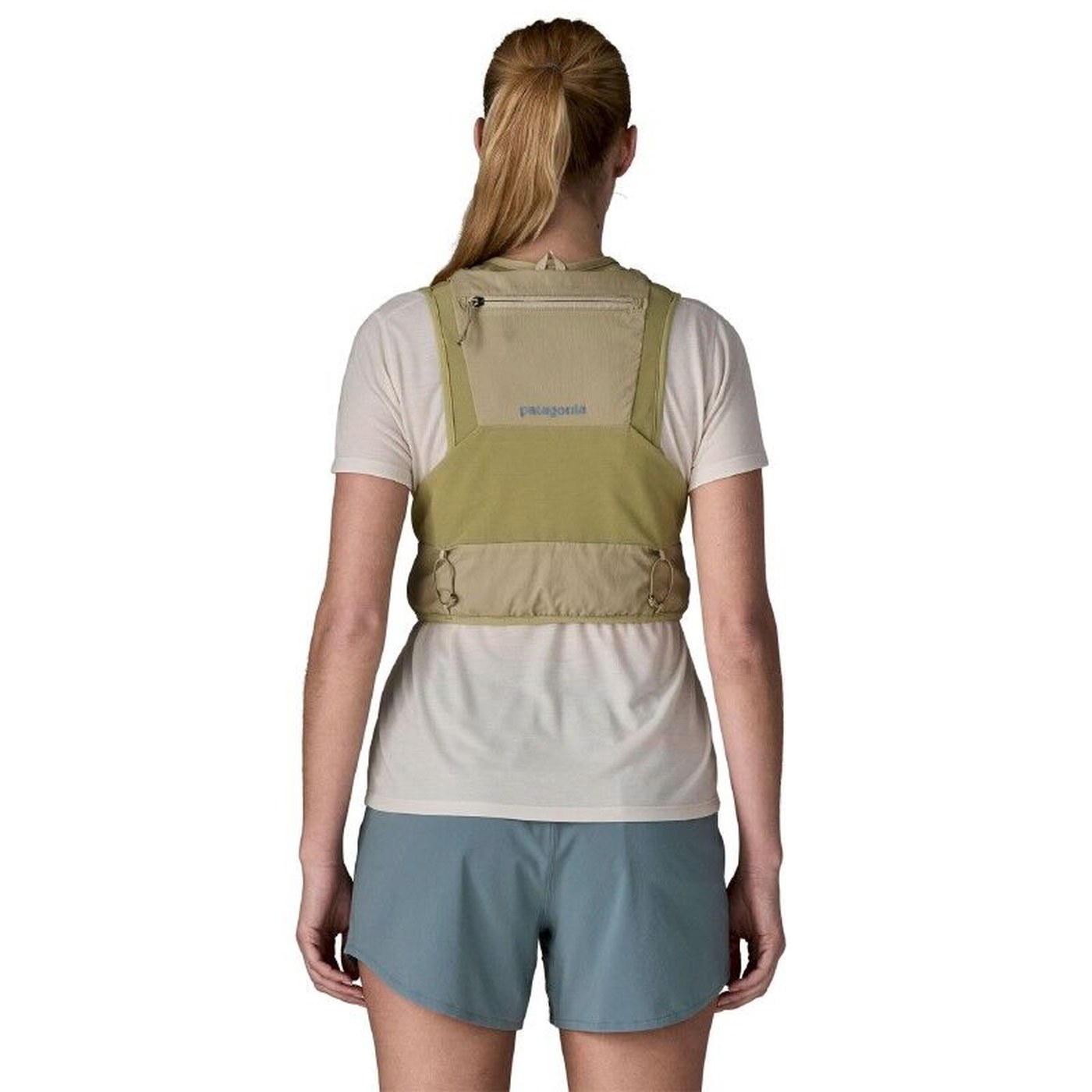
The front of the vest is made of recycled ripstop polyester with mechanical stretch, while the back uses a recycled nylon ripstop mono-mesh that's hydrophobic and highly ventilated, designed to maximize airflow against your back. Two stretchy front pockets hold soft flasks or a smartphone, backed by two stacked pockets for solid food. On the back, a zippered pocket, a catch-all kangaroo pocket and a bladder sleeve round out the storage, along with two sets of elastic loops for carrying trekking poles, both at the front and at the lower back.
The sternum closure relies on static cords with plastic clips rather than conventional adjustable straps. This design, unchanged since the vest's first generations, lets you fine-tune the fit along a chain of attachment points, but it takes some getting used to before it feels intuitive.
A tester from an American trail running outlet wore this vest for more than a year in the canyons of Utah and Colorado's San Juan Mountains, to the point of making it her favorite race vest: a snug, bounce-free hold once dialed in, remarkable comfort whether empty or fully loaded, and solid overall durability despite use she described as a "contact sport" with the terrain. The only drawbacks after more than a year of heavy use: holes starting to form in the fabric at the very bottom of the vest, and front clips that still felt unintuitive even after a long adjustment period.
An American outdoor gear review site delivers a more nuanced take after two months of testing in the Pacific Northwest and Michigan. Its testers found the vest "a bit loose," with noticeable bounce when lightly loaded, and the static cord on the sternum strap hard to adjust on the move, especially with cold fingers. Some testers also saw the seams break down in high-friction areas (sternum loops, flask pockets), although the pocket mesh kept its shape despite heavy use.
Verified customer reviews posted directly on Patagonia's official French product page (4.2/5 from 33 reviews) confirm the same tension. Buyers praise the comfort and pocket access, but several report that the elastic loops holding the flasks come loose over time and that the center-hook straps unclip mid-run, suggesting an extra clip or locking system on the center section would help. We're laying out this divergence rather than smoothing it over: a vest everyone finds comfortable and breathable, but whose front closure draws consistent criticism from all three sources, French and English-speaking alike.
| Slope Runner Vest | NNormal Race Vest 5L | |
|---|---|---|
| Volume | 4 L | 5 L |
| Weight | 196 g | About 150 g |
| Official price | €170 | About €140 |
| Flasks included | 2 x 500 ml HydraPak® | Not included on some versions |
| Front closure | Static cords with clips | Adjustable elastic straps |
| Recycled materials | Yes, bluesign® certified | Partially |
| Manufacturing | Fair Trade Certified™ factory, Vietnam | Europe |
The Slope Runner Vest stands out for its eco-conscious approach and included flasks, but it's heavier and pricier than a direct rival like the NNormal Race Vest 5L, which even offers more volume.
Runners who want a minimalist vest for two- to four-hour outings and care about where materials come from and how the vest is made. Also runners who always head out with a full load rather than a highly variable one.
Trail runners who want flawless hold even when the vest is empty or carries a light, variable load. Anyone who wants a secure zippered front pocket or a simpler sternum closure than a set of static-cord clips.
Your hydration is sorted; now you need training to match. Check out the RunMorph training plans, built to prepare you for trail and road without getting injured.
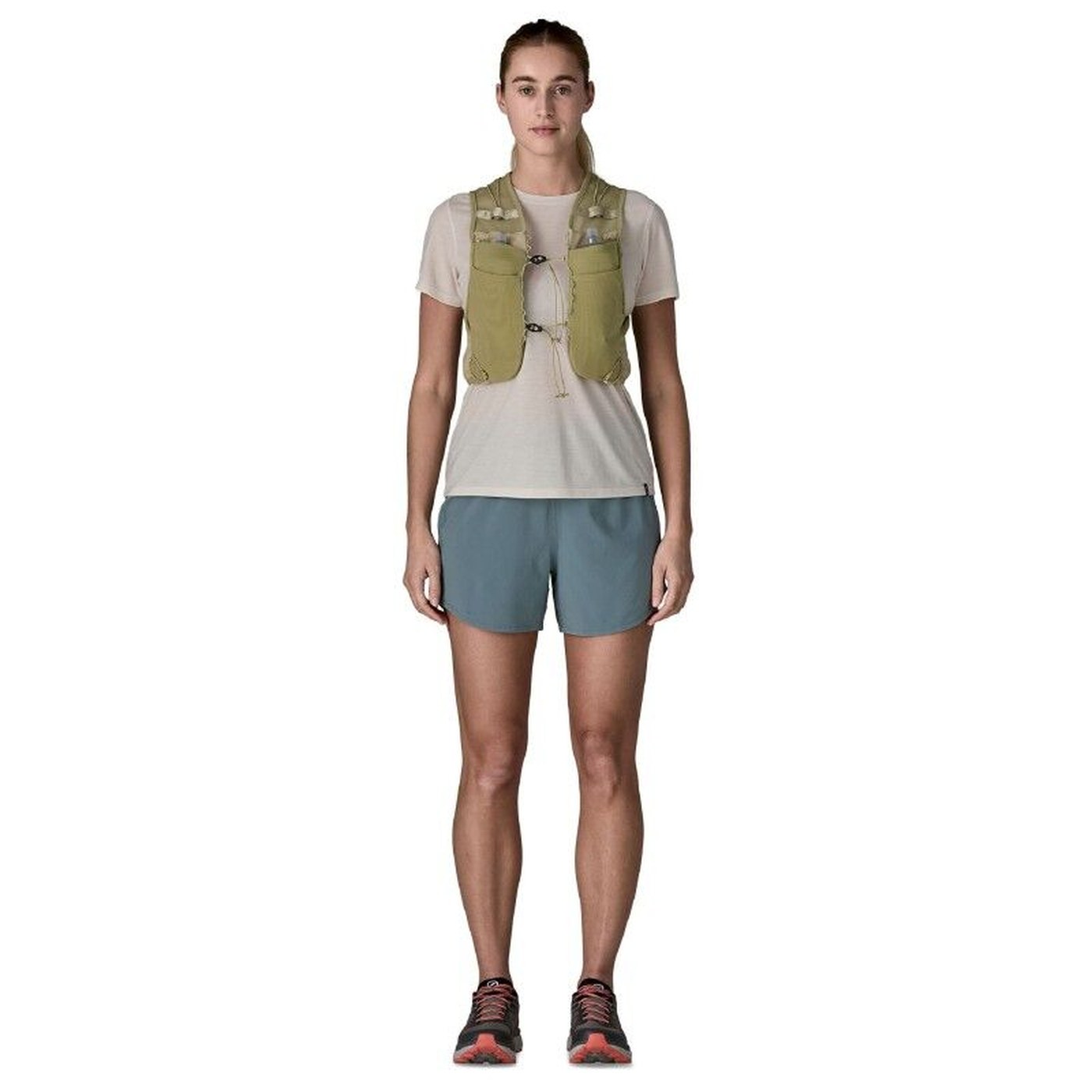
The Patagonia Slope Runner Vest delivers on comfort and breathability, and its eco-designed, Fair Trade Certified approach sets it apart in a segment short on real differentiators. But the front clip system, criticized consistently by American testers and French buyers alike, plus a fit that can feel too loose when empty, dampen the enthusiasm for a product priced at 170 euros for just 4 liters. RunMorph verdict: 7.3/10, a pleasant vest to wear whose front closure deserves a rethink.