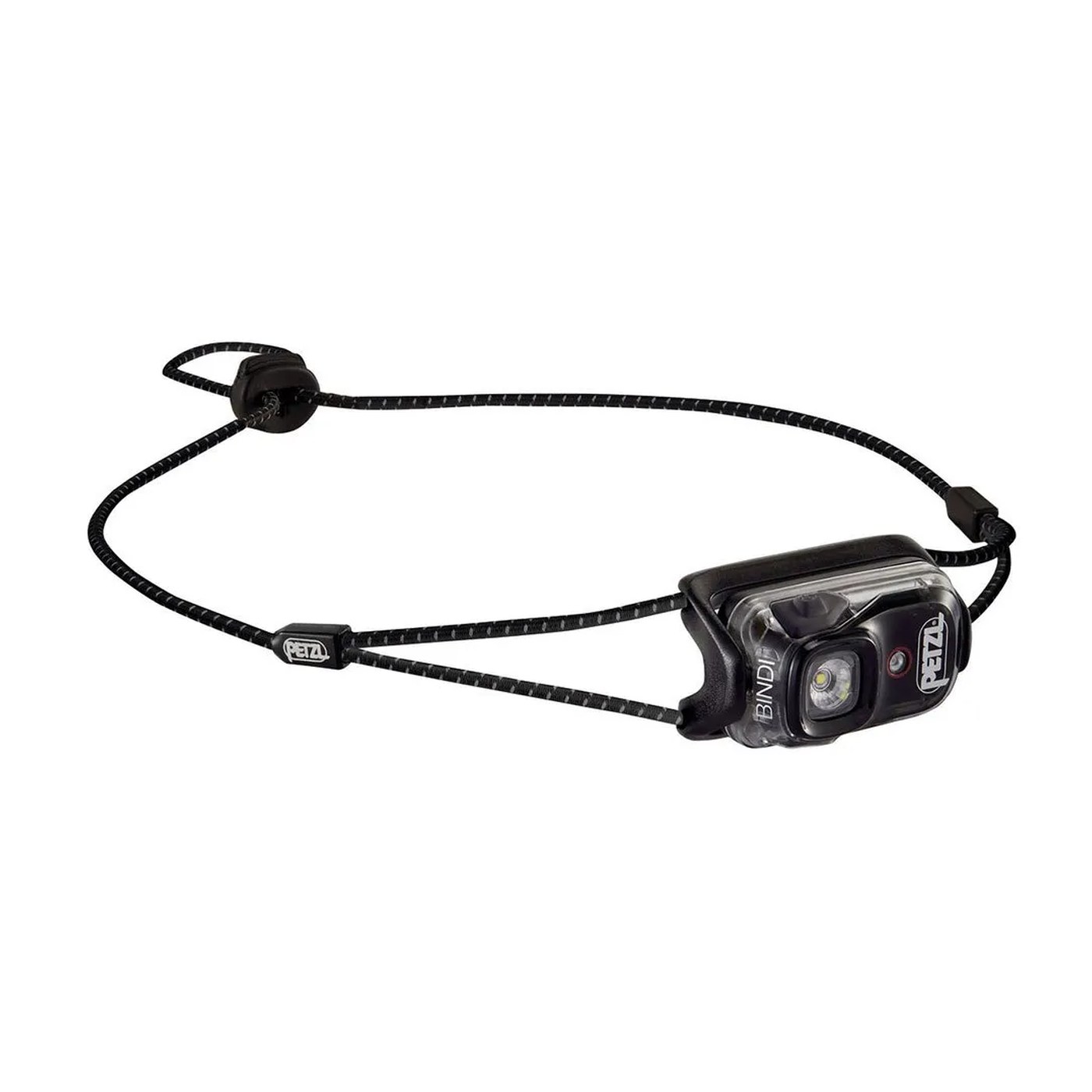
A trail headlamp often packs 1000 lumens, a remote battery pack and 150 grams on the scale. The Petzl Bindi takes the exact opposite approach: 35 grams, 200 lumens and a single target, the urban runner heading home after dark who doesn't want to haul an expedition headlamp. RunMorph cross-checked several independent French-language reviews of this exact model to see whether the minimalist promise really holds up.
Petzl Bindi Review: 35 Grams, 200 Lumens, Zero Fuss in the City
7.5/10
The essentials in 3 sentences
The Petzl Bindi is an ultralight 35-gram headlamp built for urban and suburban runners, not for demanding night trail runs. It targets evening easy runs in town, runs that straddle dusk and backup duty tucked into a shorts pocket. It largely delivers on lightness and compactness, but you need to know two concrete drawbacks before buying: the battery isn't replaceable and the micro-USB port has no cover.
7.5
/ 10 · RunMorph overall score
Who is it for?Urban and suburban runners who head home after dark, anyone who wants a backup headlamp that weighs nothing in a shorts pocket, and runners who switch between lit sidewalks and darker stretches without ever venturing deep into the woods.
Who should skip it?Trail runners who spend hours out in the dead of night on technical terrain, anyone who needs long battery life at full power, and runners who won't accept a non-replaceable battery that means buying a new lamp in a few years.
Petzl, the Bindi and the ultralight urban market
Petzl built its reputation on demanding trail and mountaineering headlamps: the Nao RL and its 1500 lumens, the Swift RL and its Reactive Lighting, the Actik Core for all-round hiking. The Bindi, launched in 2018 and still in the catalog with no major generational update since, targets a completely different crowd: the runner heading home from the office at 19:00 in winter, the one squeezing in an easy run before sunrise, or the trail runner who wants a backup headlamp that weighs nothing at the bottom of the pack. At RunMorph, this segment is still underrepresented next to the high-output headlamps (900 to 2000 lumens) we've already reviewed: Petzl Nao RL, Silva Trail Speed 5R, Ledlenser NEO9R. The Bindi fills that gap with a deliberate approach: fewer lumens, far less weight and a reasonable price of around 40 to 50 euros.
Petzl Bindi specs: the lightest headlamp in the catalog
| Feature | Petzl Bindi |
|---|---|
| Weight | 35 g claimed (34 g measured independently) |
| Max output | 200 lumens |
| Modes | Proximity (6 lm), movement (100 lm), distance vision (200 lm), steady red and flashing red |
| Beam distance | 6 m (eco mode) to 30-36 m (max mode) |
| Battery life | 50 h (eco mode) to 2 h (max mode), varies by source (see field test) |
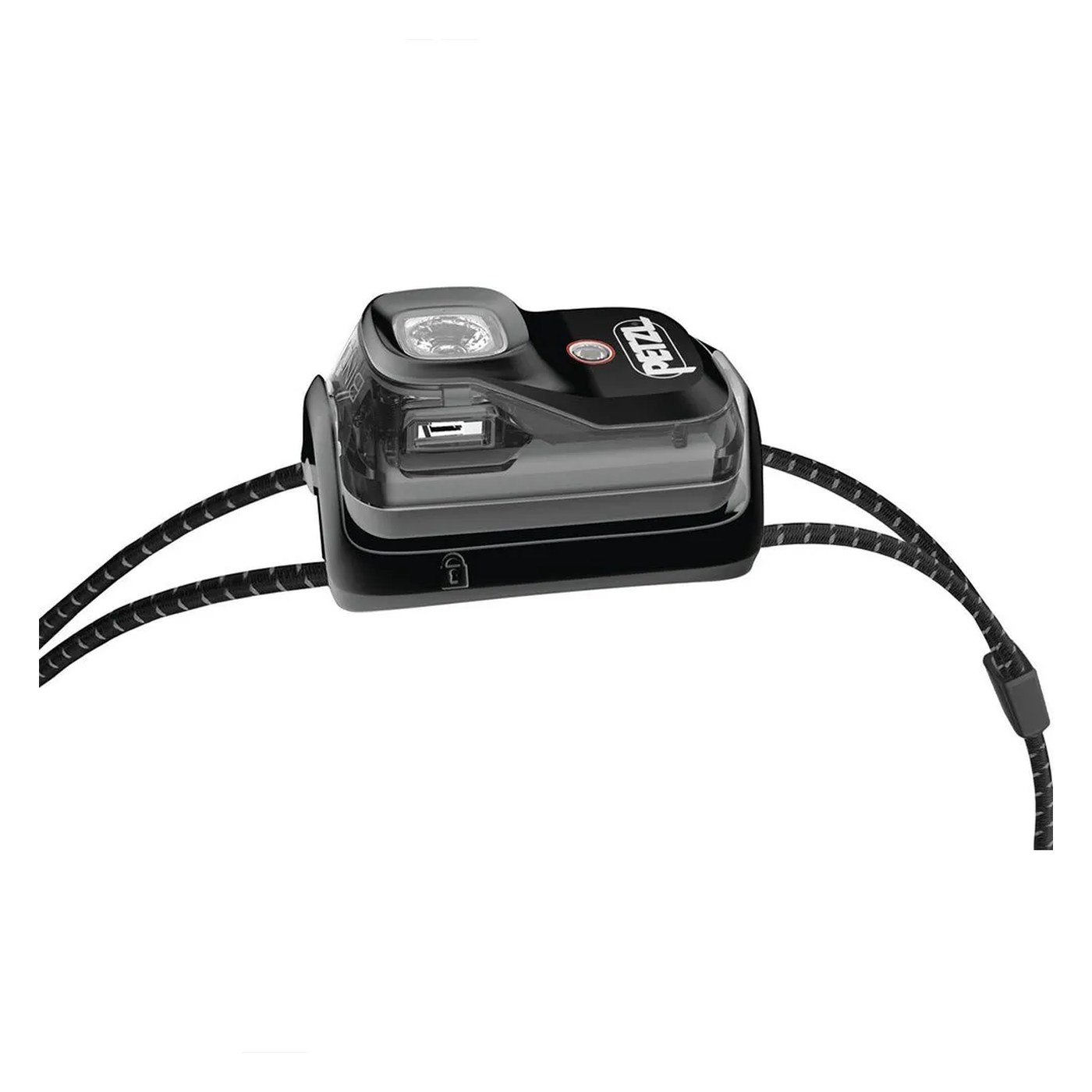
| Battery | 680 mAh Li-ion, non-replaceable, 300 charge cycles |
| Charging | Micro-USB, port has no protective cover |
| Water resistance | IPX4 (weather-resistant, not submersible) |
| Dimensions | 5.1 x 3.1 x 3 cm without headband |
| Colors | Black, orange, emerald |
| Official price | 39.95 to 49.90 euros depending on retailer |
Bindi technology: three modes, a non-replaceable battery and a lock mode
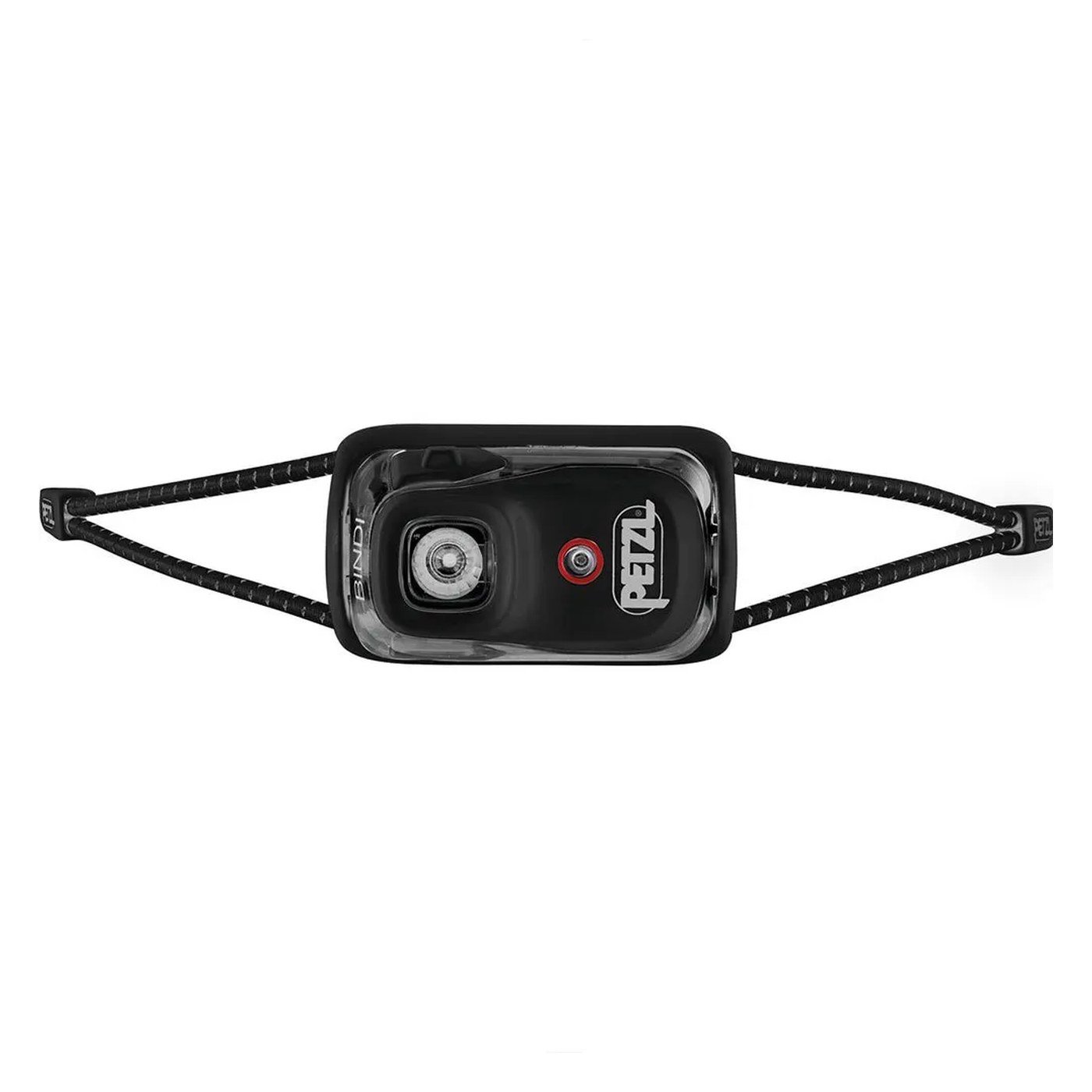
The Bindi keeps its promise of simplicity with a single button on top of the housing that handles power and mode changes with short presses. You get three white light levels: proximity (6 lumens, ideal in the tent or for reading), movement (100 lumens, the most versatile mode day to day) and distance vision (200 lumens, for occasional needs). A red light rounds out the package: steady to preserve night vision in a group or a mountain hut, flashing to stay visible in an emergency. The housing pivots 360 degrees on its bracket, and its flat base lets you set it on the ground as a makeshift lantern, a feature few headlamps this compact offer.
The defining feature is still the 680 mAh rechargeable lithium-ion battery, charged via micro-USB, non-replaceable and rated for around 300 charge cycles. The built-in battery management system caps charging current at 0.3 A: even with a charger or power bank that can deliver 2 A, a full charge takes nearly 3 hours. A lock mode prevents accidental switch-on in your bag: just rotate the housing on its axis until it clicks, or hold the button for 4 seconds.
Field test: urban easy runs, bivouacs and caveats you need to know
RunMorph tip: keep the Bindi in the side pocket of your running jacket rather than at the bottom of your pack. At 35 grams, you'll never feel it, and you'll have it on hand the day an easy run meant to finish before dark goes a little longer than planned.
Independent reviews agree on the essentials: once it's on your head, you forget the Bindi is there. A field test from a weekend of hiking and bivouacking in the Belledonne range describes a headlamp that "fits in the palm of your hand" and whose minimalist headband, despite early doubts about comfort, works well in use. The tester rates the 200-lumen mode as impressive for such a small unit, with a measured beam distance of over 30 meters. Another, more technical review measured an actual weight of 34 grams and confirmed a wide beam that suits running and walking well, but is less useful for precision DIY work.
Battery life is another story: the sources clearly disagree, and RunMorph would rather say so than smooth it over with a reassuring average. The Belledonne test reports that at full power, the claimed 2 hours doesn't hold up as is: real-world runtime is closer to 1 h 30 min before brightness gradually fades. Conversely, a running-focused review published on a site run by a specialist retailer estimates that the Bindi "lasts between 2 and 3 hours" at full power depending on outside temperature, which matches or even beats the spec sheet. A third review, with repeated timed tests in the intermediate mode (100 lumens), measured 2 h 35 min and 2 h 45 min over two runs against a claimed 3 hours, a gap of about 10 to 15%. Our reading at RunMorph: the Bindi broadly delivers on battery life in the intermediate mode, with a reasonable gap. The max mode, though, is the weakest and the most sensitive to conditions of use, so don't treat it as a long-duration mode.
The second red flag is more structural: the battery isn't replaceable. Several user reports spanning several years, posted in the comments of an independent review, describe lamps that stop holding a charge after a few years of regular use, leaving after-sales service or a full replacement as the only options. The micro-USB charging port also has no protective cover, a choice several testers regret on a lamp meant to be used in the rain or with sweat. Finally, the headband's elastic cord, very thin to save weight, leaves marks on your skin if you tighten it too much, a deliberate trade-off for the featherweight build.
Petzl Bindi vs Nathan Neutron Fire RX 2.0: head to head
Among lightweight headlamps built for visibility rather than raw output, the Nathan Neutron Fire RX 2.0 is the most relevant comparison in the RunMorph catalog.
| Feature | Petzl Bindi | Nathan Neutron Fire RX 2.0 |
|---|---|---|
| Max output | 200 lumens | 250 lumens (boost), 200 lumens continuous |
| Weight | 35 g | About 95 g |
| Battery life on high | About 1 h 30 min to 3 h depending on source | 6 h and up |
| Signaling | Steady and flashing red light | Red/green/blue side strobes |
| Water resistance | IPX4 | IPX4 |
| Price | 39.95 to 49.90 euros | 64.95 euros |
The Bindi wins big on weight and bulk, a decisive edge for a backup headlamp or very occasional use. The Neutron Fire RX 2.0 takes the lead on battery life and side signaling, which is more reassuring along busy roads. The choice mostly comes down to how you'll use it: the Bindi if you never want to feel your headlamp, the Nathan for regular road runs where visibility matters more than absolute lightness.
Pros and cons
ProsRecord-low weight of 35 grams, practically unnoticeable once on. Wide, even beam, more than enough for urban and suburban use. Lantern mode thanks to the pivoting housing with a flat base. Steady and flashing red light, handy in a hut or in a group. Reasonable price of around 40 to 50 euros. Effective lock mode against accidental switch-on in your bag.
ConsNon-replaceable battery, with reports of wear after several years of regular use. Micro-USB port with no protective cover at all. Battery life in max mode rated short, even inconsistent across the sources reviewed. 200 lumens is clearly not enough for technical night trail running. Thin elastic cord that can mark your skin if too tight.
Our take: who is it for?
The Petzl Bindi isn't meant to replace a trail headlamp. At RunMorph, we see it as the main headlamp for urban and suburban runners who regularly head out at dusk on lit sidewalks and bike paths, or as a backup headlamp tucked into a jacket pocket for runs that might stretch past sunset. It fits naturally into a 10K, half marathon or beginner training block, when evening runs pile up in fall and winter.
To build your training weeks around those evening slots without sacrificing session quality, head to the RunMorph training plans, which factor seasonal daylight into how key runs are scheduled.
RunMorph Coach verdict
With a score of 7.5/10, the Petzl Bindi is a very good product in its category, but that category is an openly niche one. It fully delivers as an ultralight headlamp for urban and suburban runners, with wearing comfort that's nearly unbeatable on the market. The drawbacks are real and documented by several independent reviews: a non-replaceable battery that limits the product's lifespan, an unprotected charging port, and high-mode battery life that varies with conditions and measurements. A good buy if you want exactly what the Bindi offers, a poor choice if you're hoping for a versatile night trail headlamp.
Key takeaways for your training
- Right use first: the Bindi is built for city and suburban running, not for hours of technical trail in the dead of night.
- Intermediate mode as your baseline: 100 lumens gives you the best balance of output and battery life day to day, and it's more reliable than max mode.
- Plan your charging: the 0.3 A charging current means you charge the night before, not in a rush right before heading out.
- Protect the USB port: avoid direct exposure to heavy rain, because the missing cover is a real weak point of the product.
- Think lifespan: the non-replaceable battery limits use to a few years of regular running, a factor to include when you weigh value for money.