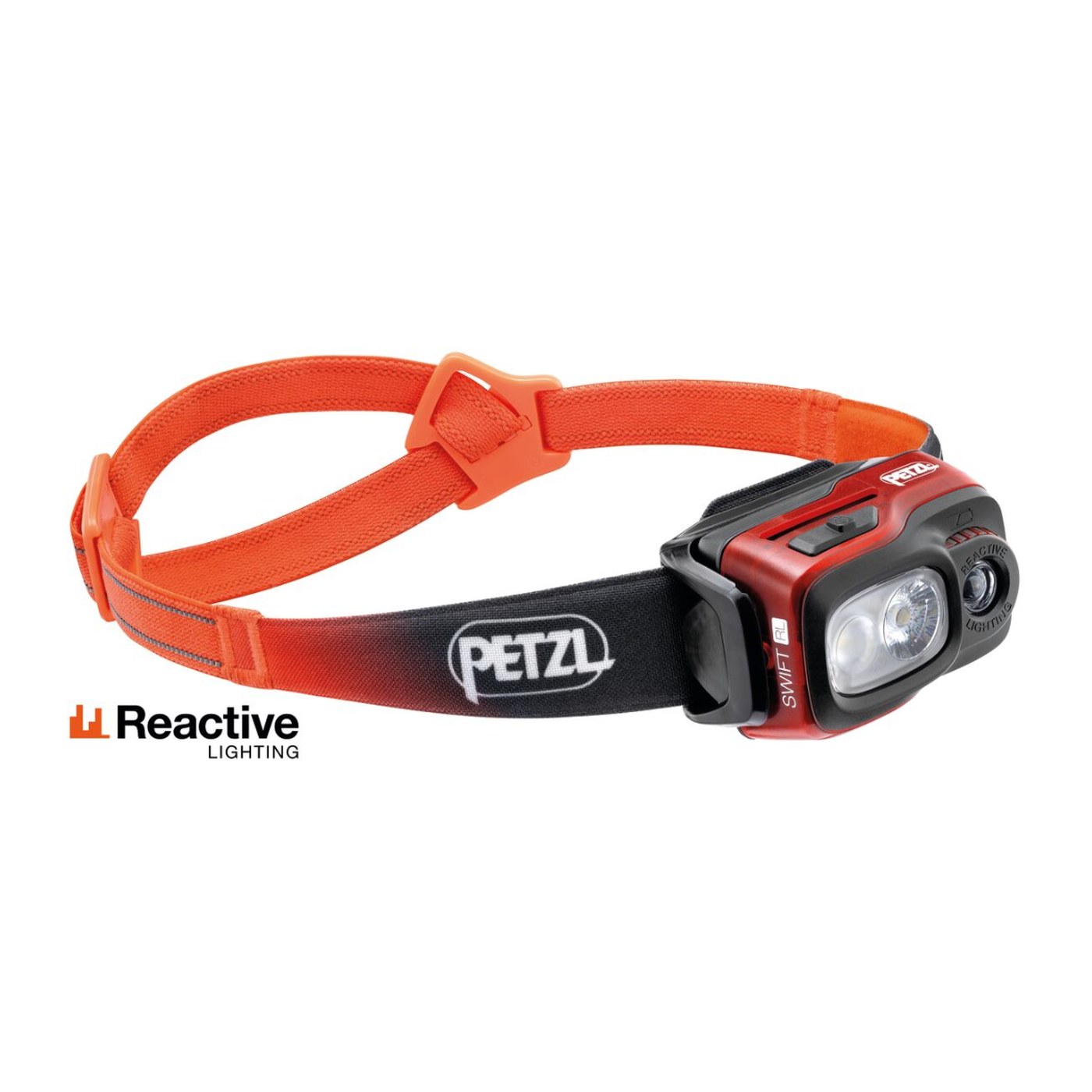
Six in the morning, the start of a night trail race in the mountains. Your headlamp has to go from dense forest track to open trail under the stars without you touching a single dial. That's exactly what the Petzl Swift RL promises with its Reactive Lighting technology: smart light that adapts to the environment in real time. We put it through its paces for you.
Petzl Swift RL Review: 1100 lm Reactive Lighting for Night Trails
8.5/10
The essentials in 3 sentences
The Petzl Swift RL delivers up to 1100 lm with Reactive Lighting, which automatically adjusts output to ambient light to spare both your eyes and the battery. At 100 g on your head, with an ultrathin 45 mm headband and built-in USB-C charging, it's built for trail runners who want to forget they're wearing a headlamp. Its only real watch-out: the IPX4 rating (splash resistant, not submersible) and the non-removable battery, worth keeping in mind on very long ultras in extreme conditions.
8.5
/ 10 · RunMorph overall score
Who it is for
The regular night trail runner who wants a smart headlamp that manages its output automatically, so you can run with a clear head and never touch a button.
Who it is not for
The ultrarunner who strings together nights of more than 40 h in very wet conditions or with river crossings: IPX4 and the non-removable battery are real limits.
Petzl Swift RL: 1100 lumens on demand, hands-free
RunMorph's advice: If you run trails at night regularly and want a headlamp that handles all the lighting logistics for you, the Petzl Swift RL is a lasting investment. For a dual-beam alternative with more raw power, read our review of the Silva Trail Speed 5R (1200 lm).
Specifications
| Feature | Value |
|---|---|
| Brand / Model | Petzl Swift RL |
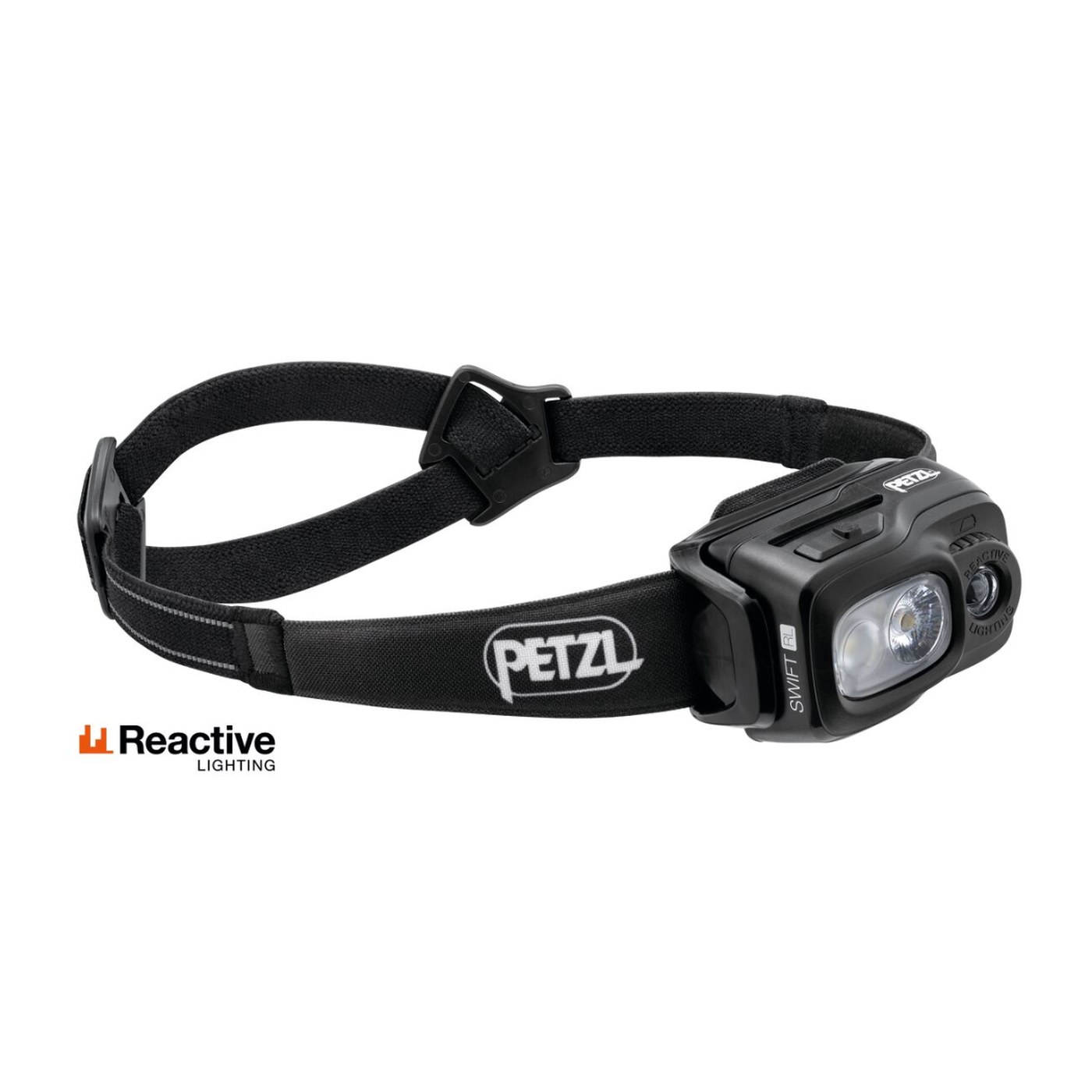
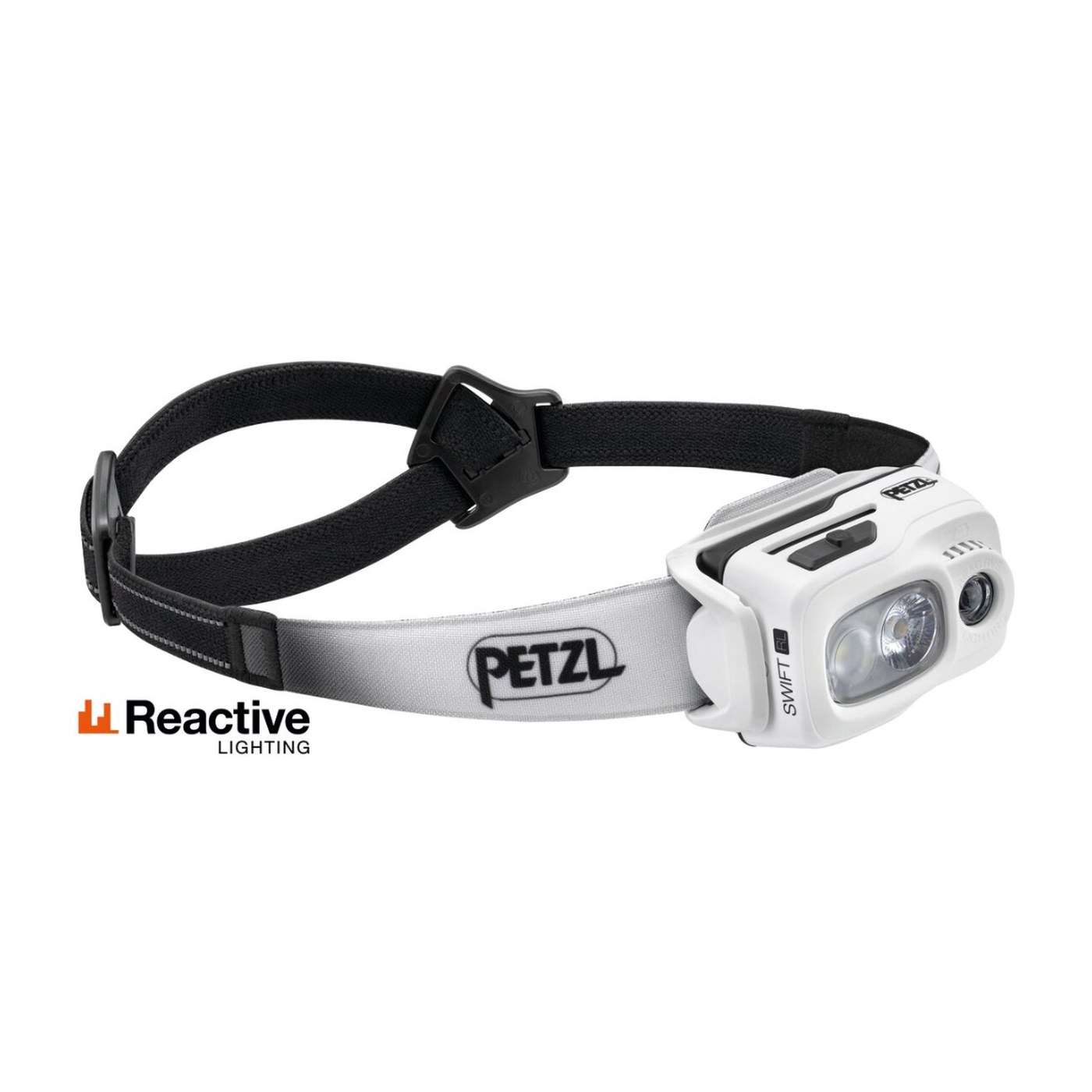
| Product code | E095B (black) / E095C (white) |
| Maximum output | 1100 lm |
| Beam technology | Reactive Lighting (auto adjustment) + dual wide / spot beam |
| Max beam distance | 95 m |
| Battery life (reactive mode) | 18 h to 75 h depending on conditions |
| Battery life (constant max) | 2 h |
| Weight with battery | 100 g |
| Battery | Li-ion 1300 mAh, built-in USB-C charging |
| Water resistance | IPX4 (splash resistant) |
| Headband | Ultrathin 45 mm, adjustable length |
| Secondary lighting | Red (constant + strobe) |
| Guide price | ~€90 |
Who is the Petzl Swift RL for?
The night trail runner who wants a clear head
Do your night runs follow trails that alternate between dense woods and open ridges? Reactive Lighting is made for you. It spares you constant trips to the buttons: the headlamp ramps up on fast descents and saves battery on moonlit flats. For a trail runner who wants to focus on footing rather than gear, it's liberating from the very first run.
The ultrarunner chasing a light night setup
On ultras with one or two night stretches of under six hours, the Swift RL is a smart replacement for a heavier headlamp. A hundred grams, USB-C charging shared with your phone and GPS watch, a headband that doesn't snag under a helmet or your jacket hood: it ticks every box of a minimalist, self-sufficient kit built for long races.
The regular urban night runner
Early winter mornings or late city trail runs: the red strobe mode makes you visible to cars without dazzling you. And 1100 lm easily handles poorly lit bike paths or forest trails close to town. If most of your kilometers are urban or suburban, the Swift RL may be slightly overkill, but it will last for years without missing a beat.
On the trail: what Reactive Lighting actually changes
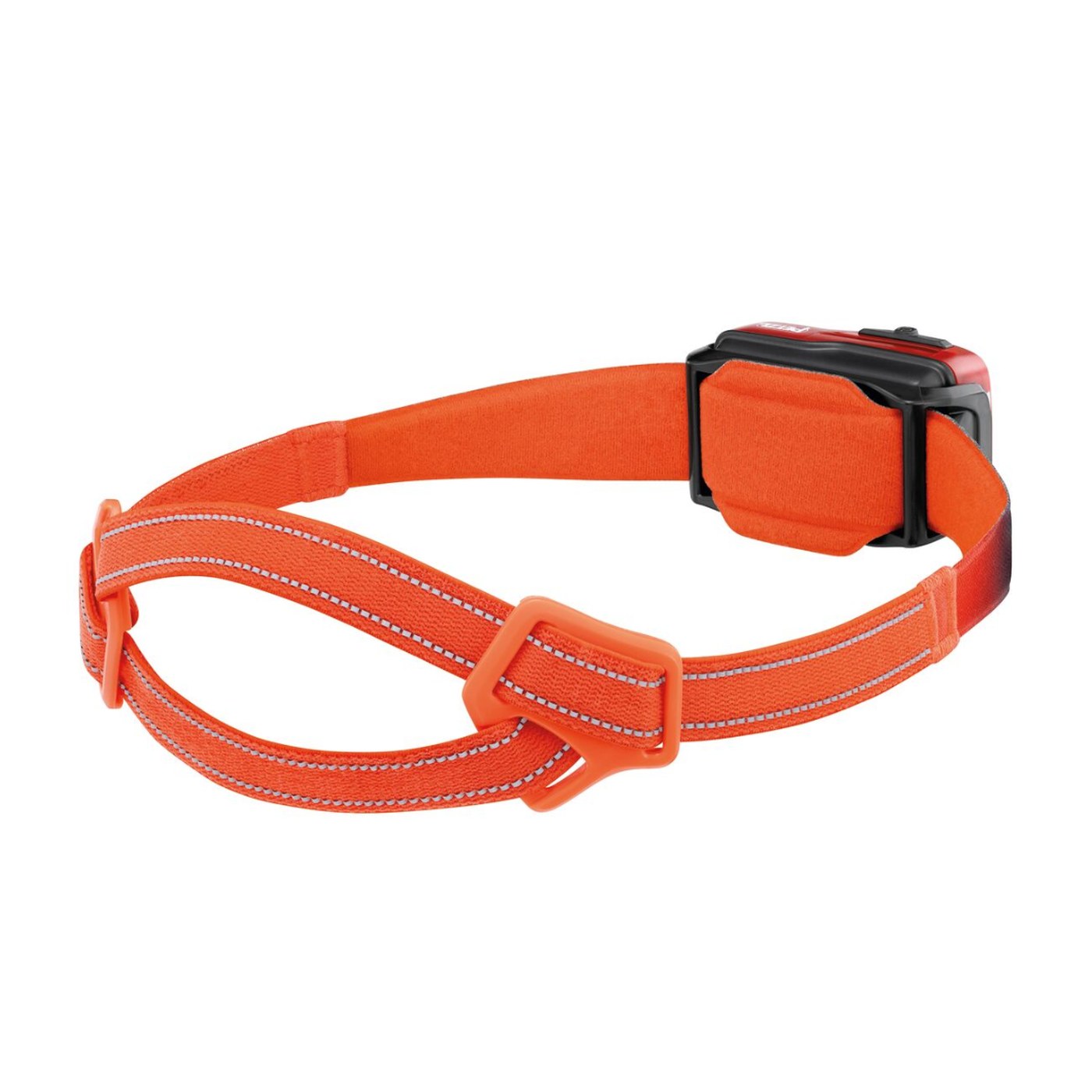
At RunMorph, we took the Petzl Swift RL on several night runs in the mountains, from three to seven hours, in dry and wet conditions. First takeaway: the ultrathin 45 mm headband is remarkably unobtrusive. Even worn over a sweatband, the Swift RL stays stable without creating pressure points. No bounce on descents, no slipping at a dynamic stride.
Reactive Lighting kicks in as soon as ambient light changes. Entering dense woods, the headlamp ramps up gradually, with no stutter. On an open ridge under a bright moon, it drops on its own to 200-300 lm to save battery. You barely notice it visually, but battery life benefits: a six-hour run alternating forest and ridge used about 60% of the battery, a rate fully compatible with a full night of ultra.
The dual wide/spot beam deserves special mention. The wide beam lights a broad angle in front of you, ideal for securing a rocky descent and keeping your peripheral vision. The spot throws to 95 m and suits spotting cairns or navigating open trail. Switching between them takes a single long press, without breaking your running rhythm.
One notable drawback: IPX4 is enough for 90% of trail conditions. But if you run in downpours or have to ford rivers at mid-calf depth, the housing isn't designed for immersion. Extra protection is a must in those extreme conditions, unlike IPX7-certified alternatives.
Pros
- Truly smart Reactive Lighting that frees the runner's mind
- 1100 lm with battery life managed automatically to suit the environment
- Ultrathin 45 mm headband, 100 g, unobtrusive on long runs
- Built-in USB-C charging, same cable as your phone and watch
- Dual wide + spot beam, red light included
Cons
- IPX4 only (not submersible, avoid it on river crossings)
- Non-removable battery (no way to carry a spare)
- Mode navigation via a single button, not intuitive in total darkness
- ~€90: premium price, though the product's longevity justifies it over time
Comparison: Petzl Swift RL vs. the competition
| Model | Max output | Weight | Reactive battery life | Water resistance | Battery | Guide price |
|---|---|---|---|---|---|---|
| Petzl Swift RL | 1100 lm | 100 g | 18-75 h | IPX4 | Built-in USB-C | ~€90 |
| Silva Trail Speed 5R | 1200 lm | 178 g | N/A (manual) | IPX4 | Built-in USB-C | ~€130 |
| Black Diamond Sprinter 500 | 500 lm | 102 g | N/A (manual) | IPX4 | Built-in USB-C | ~€55 |
| Ledlenser NEO10R | 600 lm | 160 g | N/A (manual) | IPX4 | Built-in USB | ~€70 |
The Silva Trail Speed 5R offers 1200 lm and an even more versatile dual beam, but weighs 78 g more and costs about €40 extra. If you put weight and smart battery management ahead of raw power, the Swift RL clearly wins. The Black Diamond Sprinter 500 is more affordable and well designed for night running, but its 500 lm hold it back on technical mountain terrain. The Ledlenser NEO10R delivers decent beam quality, but with no automatic adjustment and nowhere near the same lightness.
How to fit the Petzl Swift RL into your RunMorph training plan
The Petzl Swift RL fits naturally into two specific contexts. First, high-volume night running in winter: between November and March, runners targeting 60 to 90 km per week inevitably run in the dark. The Swift RL lets you keep a natural stride without breaking rhythm to manage the light by hand.
Second, night races and mountain ultras where you wear the headlamp for hours on end. The built-in rechargeable battery and featherweight design let you handle aid station transitions with no extra gear in your pack. A single USB-C top-up from your phone's power bank is enough to recharge the Swift RL during a long break.
To adapt your night sessions to your progress and plan your long runs around the seasons, the RunMorph training plans build in night/day volume management and the specifics of night trail running.
RunMorph coach's verdict
The Petzl Swift RL earns its reputation as the benchmark among trail headlamps. Reactive Lighting isn't a marketing gimmick: it's genuine lighting assistance that frees up the runner's attention and optimizes battery life in real-world conditions. The ultrathin headband and 100 g weight make it the least intrusive headlamp on the market at this output.
The IPX4 limit and the non-removable battery are the only objective drawbacks for very long ultras in extreme conditions. For 90% of trail and night running uses, it more than covers your needs and proves a solid investment over several seasons.
Overall score: 8.5/10
Key takeaways for your night training
- Reactive Lighting = mental freedom: the headlamp manages its output automatically, so you focus on your stride and the terrain.
- 1100 lm is enough for technical trails: the 95 m reach covers fast descents and reading the trail in dense forest.
- 100 g with a built-in battery: the best power-to-weight ratio in its category, with USB-C charging shared with your other devices.
- IPX4: plan an alternative for very wet ultras or river fords: the Swift RL handles splashes but isn't designed for immersion.
- Real-world battery life of 18 to 75 h in reactive mode: depending on the environment, it can cover several ultra nights without recharging when conditions are favorable.