Polar sells two ECG chest straps that, by the brand's own admission, use exactly the same measurement chip. The H10 costs 20 to 30 euros more than the H9. So the question isn't which one measures heart rate better, but what those 20 to 30 euros actually buy you, and whether a runner who has no need for Zwift or timed swimming has a single good reason to pay them.
Polar H9: the €47 ECG chest strap, an unfiltered test against the H10
7.9/10
The essentials in 3 sentences
The Polar H9 takes the H10's ECG sensor for 47 to 65 euros depending on the retailer, with a comfortable strap and Bluetooth, ANT+ and 5 kHz compatibility that covers pretty much every GPS watch on the market. It loses its big sister's internal memory, dual simultaneous Bluetooth connection and anti-slip silicone dots, and its claimed 400-hour battery life drops to around 300 hours in an extended field test, with at least one user report talking about two weeks. For classic solo training with a watch or a phone, it measures exactly like the H10, at a clearly lower price.
7.9
/ 10 · RunMorph overall score
Who is it for?The runner who trains alone with a watch or a phone and wants Polar's ECG accuracy without paying H10 money.
Who should skip it?The triathlete who swims with it, the cyclist riding Zwift on a dual connection, or anyone who wants to record a session with no connected device nearby.
Polar H9: the strap that answers one single question
Polar's chest strap lineup fits into one letter and two numbers: the H10, the brand's benchmark, and the H9, its little sister, launched to take on the Garmin HRM-Dual head-on in the entry-level strap segment. Both use the same ECG technology, the same measurement circuit and the same claimed 400-hour battery life on a CR2025 coin cell. The difference lies in what Polar stripped out to bring the price down: the internal memory for one session (30 hours on the Polar H10), the dual simultaneous Bluetooth connection, and the silicone dots that stop the strap from slipping during effort.
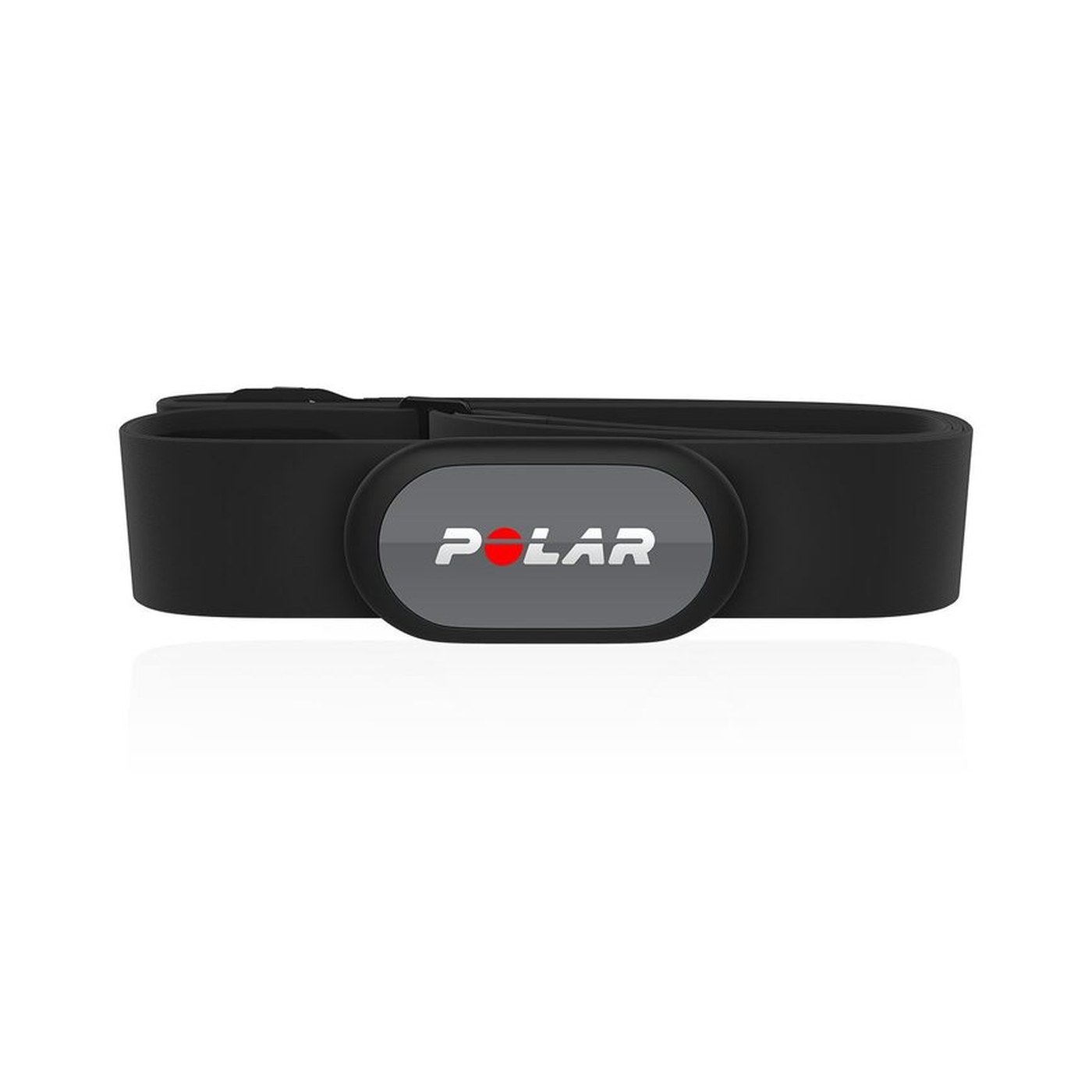
© Polar, official photo used for editorial purposes
On paper, the H9 costs 20 to 30 euros less than the H10 and gives up features most runners never use. In practice, the field test and user feedback reveal a nuance the spec sheet doesn't mention: real-world battery life varies far more than on the H10, and not only because of the normal ageing of a coin cell.
Objective technical data
| Brand | Polar |
| Model | H9 |
| Sensor type | Chest strap, ECG measurement |
| Weight | 60 g with strap, 21 g without the strap |
| Connectivity | Bluetooth LE, ANT+ 2.1, 5 kHz link (only one Bluetooth connection at a time) |
| Internal memory | None |
| Claimed battery life | 400 hours (replaceable CR2025 cell) |
| Water resistance | 30 m (WR30), transmission possible in water |
| Strap sizes | XS-S and M-XXL |
| Strap | Soft textile, machine washable, detachable pod |
| Street price | €47 to €65 depending on the retailer (€65 direct from Polar) |
Claimed vs measured battery life: what the testers say
Polar claims 400 hours from a CR2025 cell, which is more than a year of training at one hour a day. A field test published on a French-language cycling site after several months of real use, including a continuous 27-hour ride with no adjustment needed, lands on an estimate of around 300 hours, and the tester couldn't even pin down when the battery was last changed, the interval is that long. The gap between 400 claimed hours and 300 measured hours stays within a reasonable range for a coin cell exposed to varying conditions.
A harsher report, however, changes how you read the product: a user who posted detailed feedback on a blog specialising in GPS watches reports a battery that doesn't last two weeks on his unit, plus firmware updates that fail after hours of waiting. This case remains isolated compared with the many accounts of several months, even a year, without a battery change, but it points to a plausible cause documented on Polar user forums: the H9 sensor has no on/off button, so it keeps searching for a connection as long as the pod stays clipped to the strap, even tucked away in a drawer. The right habit, never mentioned in the manual, is to unclip the pod from the strap between sessions rather than storing it assembled.
The flaw behind the battery life gaps
The Polar H9 has no switch. Stored with the pod clipped to the strap, it keeps using energy searching for a device to pair with. Systematically unclipping the pod after every session is the only documented way to get close to the claimed 400 hours rather than landing in the low range reported by some users.
The Polar H9 has no switch. Stored with the pod clipped to the strap, it keeps using energy searching for a device to pair with. Systematically unclipping the pod after every session is the only documented way to get close to the claimed 400 hours rather than landing in the low range reported by some users.
Who is the Polar H9 for?
The solo runner who trains with a watch or a phone
Polar built the H9 for exactly this profile. With no need for internal memory or a dual simultaneous Bluetooth connection, the H9 covers the entire classic use case: a GPS watch or an app on your wrist, a strap that transmits, nothing else to manage.
The athlete who already owns an H10 and wants a second strap
Same sensor, same claimed accuracy, much lower price: the H9 is the logical choice to kit out a second training spot, a shared indoor bike or a gym, without paying for another H10.
The triathlete, or the cyclist on Zwift and a watch at the same time
This profile is not the H9's. With no internal memory, you can't record a swim session without a device nearby, and the single Bluetooth connection rules out broadcasting to an app and a watch simultaneously. The Polar H10 is then the only sensible option in the lineup.
RunMorph's advice: if your only doubt is about budget and never about multi-device use or swimming, the H9 isn't a default choice, it's the rational one. It only becomes a bad call if you need to record a session with no phone or watch within range, as when swimming with the Verity Sense.
The field test: what cross-checked reviews reveal
On pure accuracy, the tests agree without reservation. A comparison published on a specialist cycling site that pitted the H9 against the H10 and the Verity Sense confirms that the two ECG straps share the same sensor and therefore the same measurement reliability, the only differences being memory and connectivity, never the quality of the heart signal. A months-long cycling field test, with the strap paired to three different devices on the same ride, reports instant pairing every time and uninterrupted data, including in the rain and during a 27-hour ride with no adjustment.
Opinions do diverge on build quality, though. The forum of a French site specialising in GPS watches, which has followed the product since launch through dozens of reader comments, flags a point not covered in the official documentation: several users report batteries draining far faster than Polar's estimate, especially those who leave the pod clipped to the strap all the time. A cycling field test, on the other hand, describes battery life so comfortable that the tester no longer remembers when he last changed the cell. At RunMorph, our takeaway is that accuracy and comfort are not in question in any of the sources we consulted, and that only real-world battery life depends directly on a care habit few buyers know about before reading a detailed test.
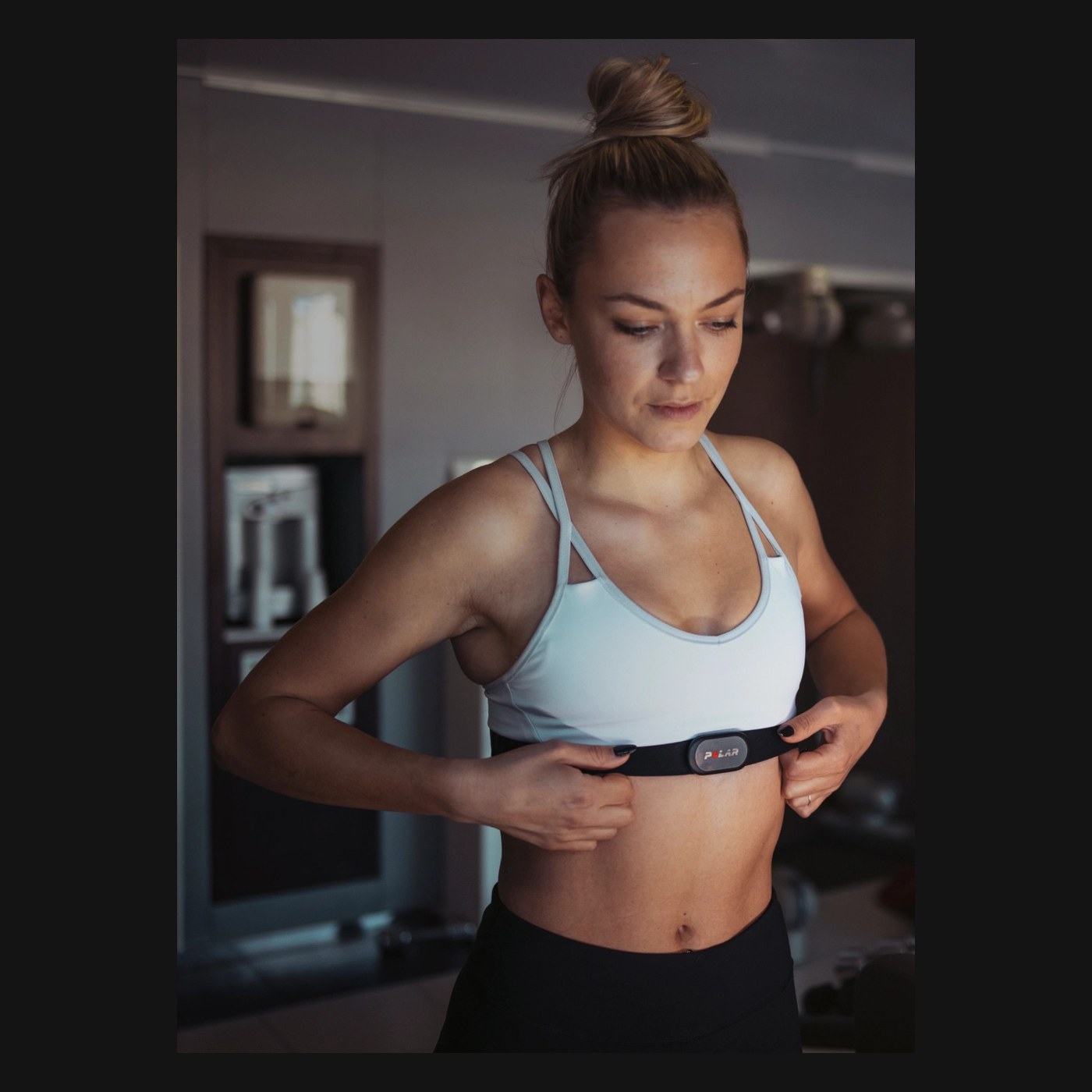
© Polar, official photo used for editorial purposes
Polar H9 vs Polar H10: head to head
| Criterion | Polar H9 | Polar H10 |
|---|---|---|
| ECG sensor | Identical | Identical |
| Internal memory | None | 1 session, up to 30 h |
| Simultaneous Bluetooth | 1 connection | 2 connections |
| Silicone anti-slip | No | Yes |
| Claimed battery life | 400 h | 400 h |
| Street price | €47 to €65 | €70 to €90 |
Put simply, the H10 is only worth it for swimming without a device, Zwift on a dual connection, or the comfort of a strap that never moves thanks to its silicone. For everything else, the H9 gives you the same measurement for 20 to 30 euros less, and it should remain the default choice for a runner discovering ECG straps.
Pros and cons
ProsECG accuracy identical to the H10 ✓ Clearly lower price, €47 to €65 depending on the retailer ✓ Comfortable, machine-washable textile strap ✓ Bluetooth, ANT+ and 5 kHz compatible with almost every watch and bike computer on the market ✓ Water resistant to 30 m, usable for swimming if a compatible device is nearby
ConsNo internal memory, a connected device is mandatory ✗ Only one Bluetooth connection at a time ✗ No anti-slip dots, the strap moves more than on the H10 ✗ No on/off switch, the battery drains if the pod stays clipped to the strap between sessions ✗ More basic design, without the H10's finishing touches
How to fit the Polar H9 into your RunMorph training plan
The Polar H9 fits into any training block built on precise heart rate zones: intervals, threshold work, long runs at easy aerobic pace. Since it stores no data on its own, it is always used paired with your watch or phone during the session, which is exactly how a RunMorph plan structures your training.
To frame the sessions where heart rate accuracy matters most, pair the H9 with one of the RunMorph training plans built around your goal, from the 10K to the marathon: each session's target zones take on their full meaning with a reliable ECG reading rather than an optical wrist sensor, which is prone to artefacts when you speed up.
The RunMorph Coach's verdict
The Polar H9 does what it promises: the same heart rate accuracy as the market benchmark, on an entry-level budget. It isn't a compromise that sacrifices measurement, only the extra features most solo runners never use. The only real reservation concerns battery life, less predictable than on the H10, and a care habit (unclipping the pod between sessions) that Polar doesn't bother to explain clearly. 7.9/10: excellent accuracy for the price if you train alone, best kept for simple use rather than demanding multisport.
Key takeaways for your training
- Same sensor as the H10: measurement accuracy is no different between Polar's two ECG straps.
- 20 to 30 euros apart: the H9's street price hovers around €47 to €65, against €70 to €90 for the H10.
- No internal memory: you can't record a session without a watch or phone nearby.
- Unclip the pod between sessions: that simple move prevents premature draining of the CR2025 cell.
- Only one Bluetooth connection: the H9 isn't suited to using Zwift and a watch simultaneously, that's H10 territory.