The Powerbeats Fit replaces the Beats Fit Pro and slots in between them and the high-end Powerbeats Pro 2. Three French reviews agree on a rock-solid fit and punchy, well-balanced sound, but also on a tough pricing equation: at €229.95, it sits just €20 below the AirPods Pro 3, with an older chip, no wireless charging and noticeably weaker noise cancelling.
© Beats, official photo used for editorial purposes
Powerbeats Fit: Beats unifies its sports lineup around a new standard
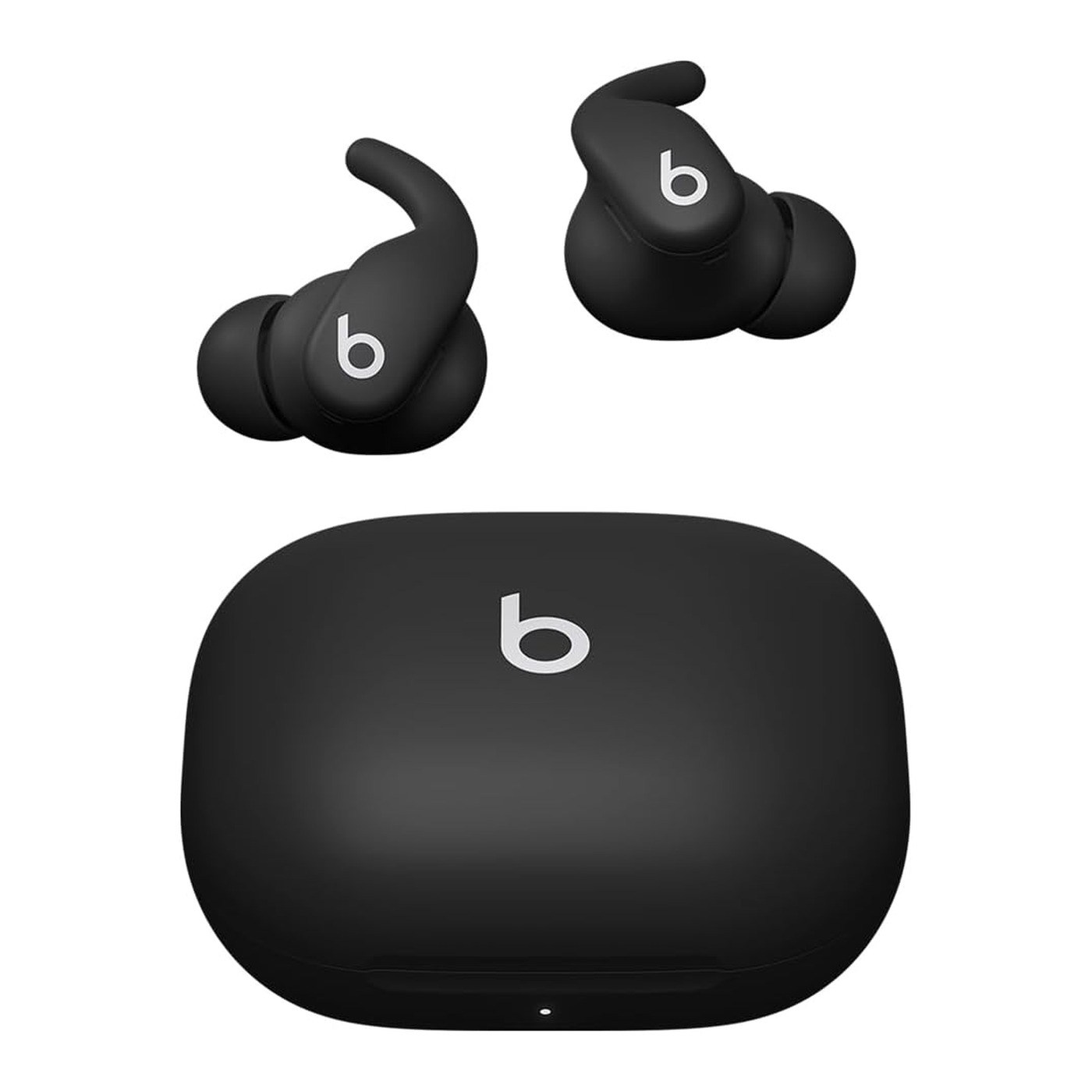
Launched in October 2025 at €229.95, the Powerbeats Fit is the direct replacement for the 2021 Beats Fit Pro and fills the gap between them and the more technical, more expensive Powerbeats Pro 2. The wingtip, the signature of the Powerbeats range, has been redesigned to be 20% softer, and the charging case is about 17% more compact than the Fit Pro's. Four ear tip sizes now come in the box (XS to L), up from three.
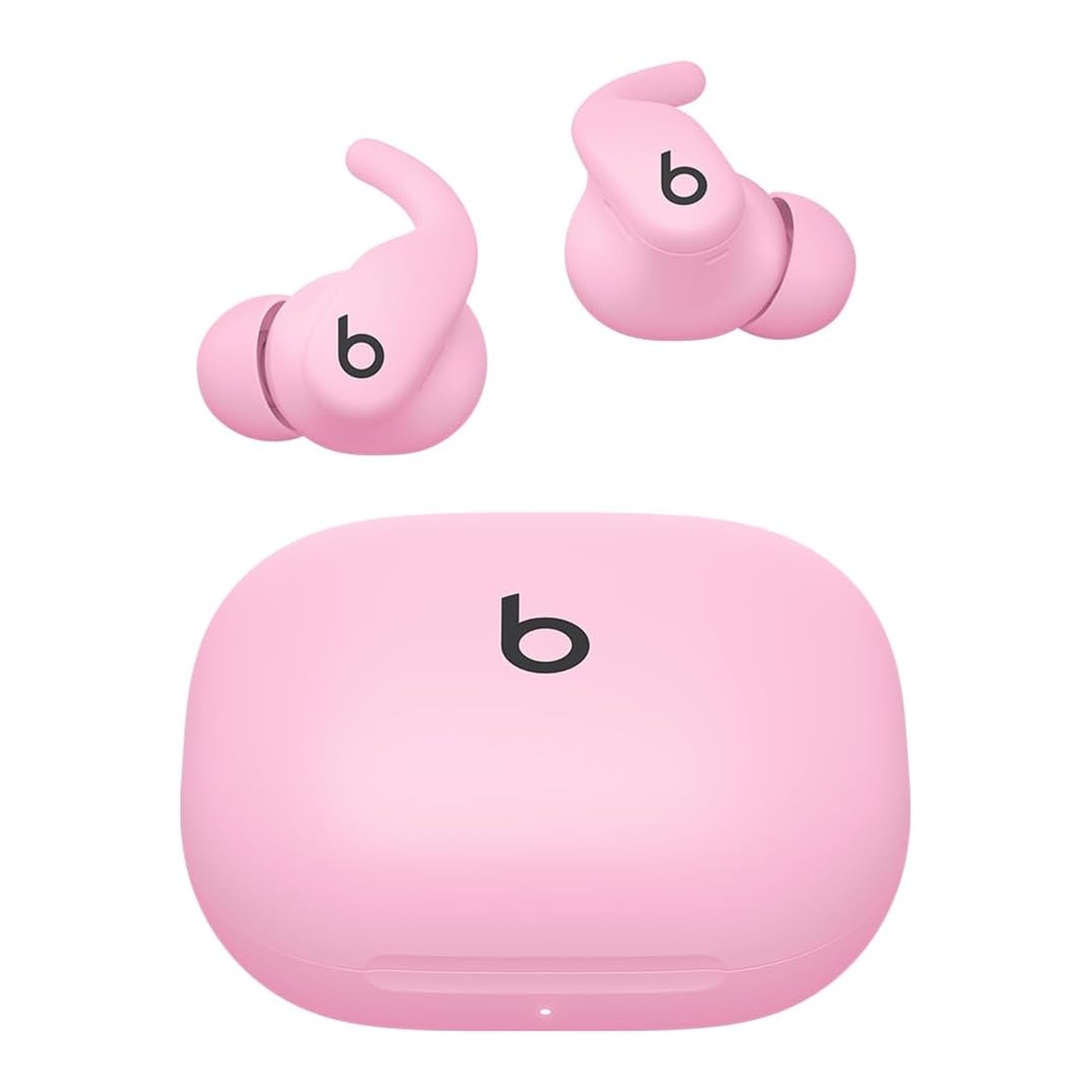
It comes in four colors, including a Turbo Orange that matches the iPhone 17 Pro, alongside Obsidian, Granite Gray and Neon Pink.
RunMorph's take: if a built-in heart rate sensor and ear-hook stability matter more to you than a low profile, the Beats Powerbeats Pro 2 remain the technical benchmark of the range, for a bigger budget.
Powerbeats Fit: what really sets it apart from its two siblings
The three French reviews we went through agree almost completely on the measured specs, which is a rare sign of reliability: 7 hours per earbud confirmed (6 hours with ANC on), 30 hours total with the case, no wireless charging and an H1 chip instead of the H2. So the issue isn't a gap between claimed and measured figures, it's a pricing decision that all three sources flag: at €229.95, the AirPods Pro 3 (€249.95) are only €20 more, while the Powerbeats Fit ship with a previous-generation chip, no wireless charging and noise cancelling that falls clearly short of Apple's.
| Spec | Powerbeats Fit | AirPods Pro 3 (benchmark) |
|---|
| Price | €229.95 | €249.95 (+€20) |
| Chip | H1 (previous generation) | H2 |
| Wireless charging | No | Yes |
| Noise cancelling | Decent, weaker on high frequencies and voices | Market benchmark according to all 3 sources |
| Sports stability | Wingtip, rated better for high-impact sports | No wingtip, less stable during intense workouts |
© Beats, official photo used for editorial purposes
Comfort and fit: the one thing all three reviews agree on
Not one of the three sources has anything bad to say about the fit. The softer wingtip locks the earbud in place without excess pressure, even during intervals, jumps or sharp changes of direction, and lets you go for hours without noticeable discomfort. One reviewer points out that the wingtip design works better for people who wear glasses or piercings than the rigid ear hook of the Powerbeats Pro 2, while still being more stable than the wingtip-free AirPods Pro.
The physical controls, rather than touch controls, also get unanimous praise: a button you can find by feel even mid-effort, with one click for play/pause, a double click to skip tracks and a long press to switch between ANC and Transparency. The one shared complaint: no volume control on the earbud itself, so you have to go through your phone, your watch or a voice assistant.
Where it shines, and where it falls short
Running, HIIT, city cycling: its sweet spot, confirmed by all three sources, with stability and sweat resistance in one package.
Runs in light rain: IPX4 does the job, but these are not swimming earbuds.
Open-plan office and commuting: ANC does a good job on steady low frequencies (ventilation, engines) but lets through more voices and high-pitched noise than a premium model.
Calls in noisy places: the beamforming dual microphones filter wind and background chatter well, according to all three sources.
Heart rate tracking during workouts: not on this model; if you want it, look at the Powerbeats Pro 2.
Watch out #1: pricing the press calls a stretch
All three French sources point to the same gap: for just €20 more, the AirPods Pro 3 give you a newer chip, wireless charging and better noise cancelling. The Powerbeats Fit claw back ground on sports stability, but the price only makes sense if that criterion clearly outweighs everything else.
Watch out #2: no wireless charging, no heart rate sensor
Two deliberate trade-offs by Beats to keep the case compact: no Qi/MagSafe charging and no built-in heart rate sensor (reserved for the H2-equipped Powerbeats Pro 2). It fits the product's "simple, reliable sports earbuds" positioning, but you need to know this before buying if either feature is a dealbreaker.
Powerbeats Fit vs Beats Fit Pro, the generation it replaces
The Powerbeats Fit keeps the overall design of the Fit Pro (2021) and fixes its known pain points: a 20% softer wingtip, a 17% more compact case and four ear tip sizes instead of three. If you already own a pair of Fit Pro in good shape, upgrading isn't essential; for a first purchase, the Powerbeats Fit is the logical pick in the current Beats lineup.
Powerbeats Fit vs the direct competition
Against the Beats Powerbeats Pro 2, it comes down to priorities: heart rate sensor, H2 chip and fuller controls on the Pro 2 side, versus compactness and a low profile on the Fit side. Both offer a fit rated excellent, in two different formats (wingtip versus ear hook).
Against the Jabra Elite 8 Active Gen 2, priced in the same ballpark, the Jabra wins on military-grade durability (IP68 versus IPX4) but loses on pure sound quality, with lab measurements showing a clear drop-off in the highs on the Jabra.
Pros
- Fit rated outstanding by all 3 reviews, even in high-impact sports
- Punchy, balanced sound, a pleasant surprise according to two sources
- Reliable physical controls you can find by feel mid-effort
- Confirmed battery life (7 h/6 h with ANC, 30 h with the case) and effective Fast Fuel
- Dedicated Android app, a rarity for Apple/Beats
Cons
- Tight pricing against the AirPods Pro 3 (only €20 more)
- H1 chip instead of H2, no built-in heart rate sensor
- No wireless charging
- Noise cancelling weaker on highs and voices than the best in class
- No volume control on the earbud itself
Find the right training plan for your runs on RunMorph →
The RunMorph verdict: 7.8 / 10
The Powerbeats Fit delivers on its main promise: sports earbuds that never move, with punchy sound that keeps you going and battery life that covers a full week of training without a second thought. The three French reviews also agree on its limits: noise cancelling that isn't on par with the best in class and tight pricing against the AirPods Pro 3, only €20 more but better equipped. If stability beats everything else for you, the equation still works; if you're torn between these and Apple's earbuds, do the math before you buy.
Key takeaways
The Beats Powerbeats Fit is an IPX4 wingtip sports earbud at €229.95, successor to the Beats Fit Pro and positioned below the Powerbeats Pro 2. Three French reviews agree on an outstanding fit, punchy and balanced sound, and reliable battery life of 7 hours per earbud (30 hours with the case). Its documented limits: H1 chip instead of H2, no wireless charging, no heart rate sensor, and noise cancelling that trails the AirPods Pro 3, available for just €20 more.
Beats Powerbeats Fit FAQ
Does the Powerbeats Fit replace the Beats Fit Pro?
Yes, it directly succeeds the Beats Fit Pro (2021) with a 20% softer wingtip, a 17% more compact case and four ear tip sizes instead of three.
Does the Powerbeats Fit have a heart rate sensor?
No, that feature is reserved for the Powerbeats Pro 2, which run on Apple's H2 chip. The Powerbeats Fit uses the previous-generation H1 chip.
Can you charge the Powerbeats Fit wirelessly?
No, the case only charges over USB-C. Skipping Qi/MagSafe charging is a deliberate choice by Beats to keep the case compact.
Is the Powerbeats Fit noise cancelling any good?
It handles steady low frequencies well (ventilation, engines) but falls short on highs and voices compared with the AirPods Pro 3, according to the three French reviews.
What's the difference between the Powerbeats Fit and the Powerbeats Pro 2?
The Pro 2 add a heart rate sensor, the H2 chip and a more technical ear-hook fit, for a bigger budget. The Fit bets on compactness, a low profile and a wingtip fit that's rated more comfortable for everyday use.