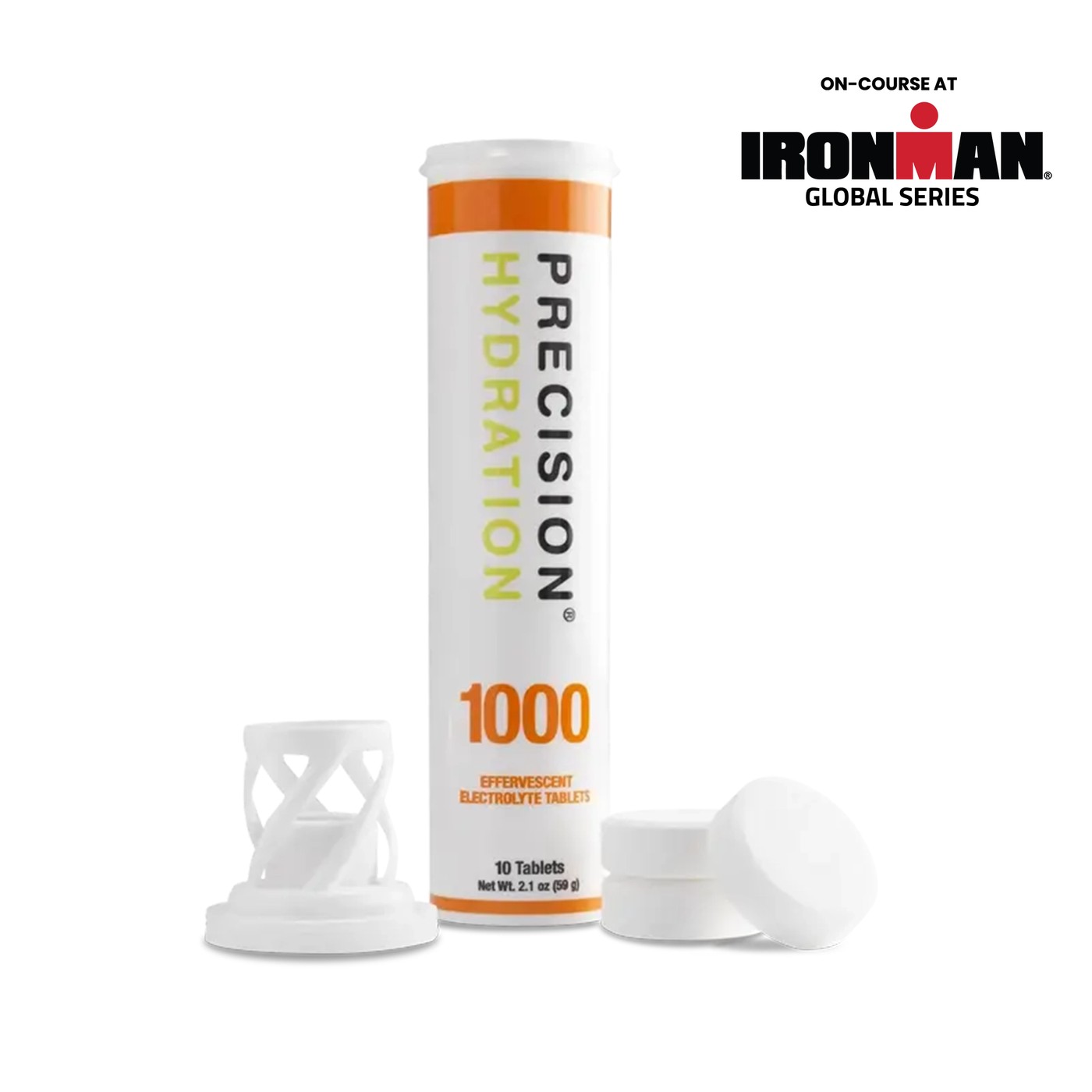
Precision Fuel & Hydration built its reputation on one simple idea: the sodium you lose through sweat varies massively from one athlete to the next, so a single electrolyte tablet can't suit everyone. The PH 1000, which sits in the middle of a three-tier range, became the official hydration drink on IRONMAN Global Series courses in 2026. Here's our test, put in perspective with the brand's PF 30 Gel, which RunMorph has already reviewed.
© Precision Fuel & Hydration, official photo used for editorial purposes
The official hydration of the 2026 IRONMAN Global Series
Precision Fuel & Hydration was founded in 2011 by Andy Blow, a triathlete plagued by recurring cramps and hydration problems in races, who developed a sweat test to measure individual sodium losses. Since 2026, the PH 1000 has been the official hydration drink on IRONMAN Global Series courses, served pre-mixed in bike bottles and in cups on the run.
The principle is still the one that made the brand's name: every runner loses sodium at a different rate depending on their physiology, the temperature and the intensity of the effort. Hence a range with three concentrations rather than one tablet for everybody.
RunMorph's tip: the PH 1000 delivers almost no carbs. For a long run, pair it with a gel like the brand's own PF 30 Gel, which contains no sodium and needs exactly this kind of top-up.
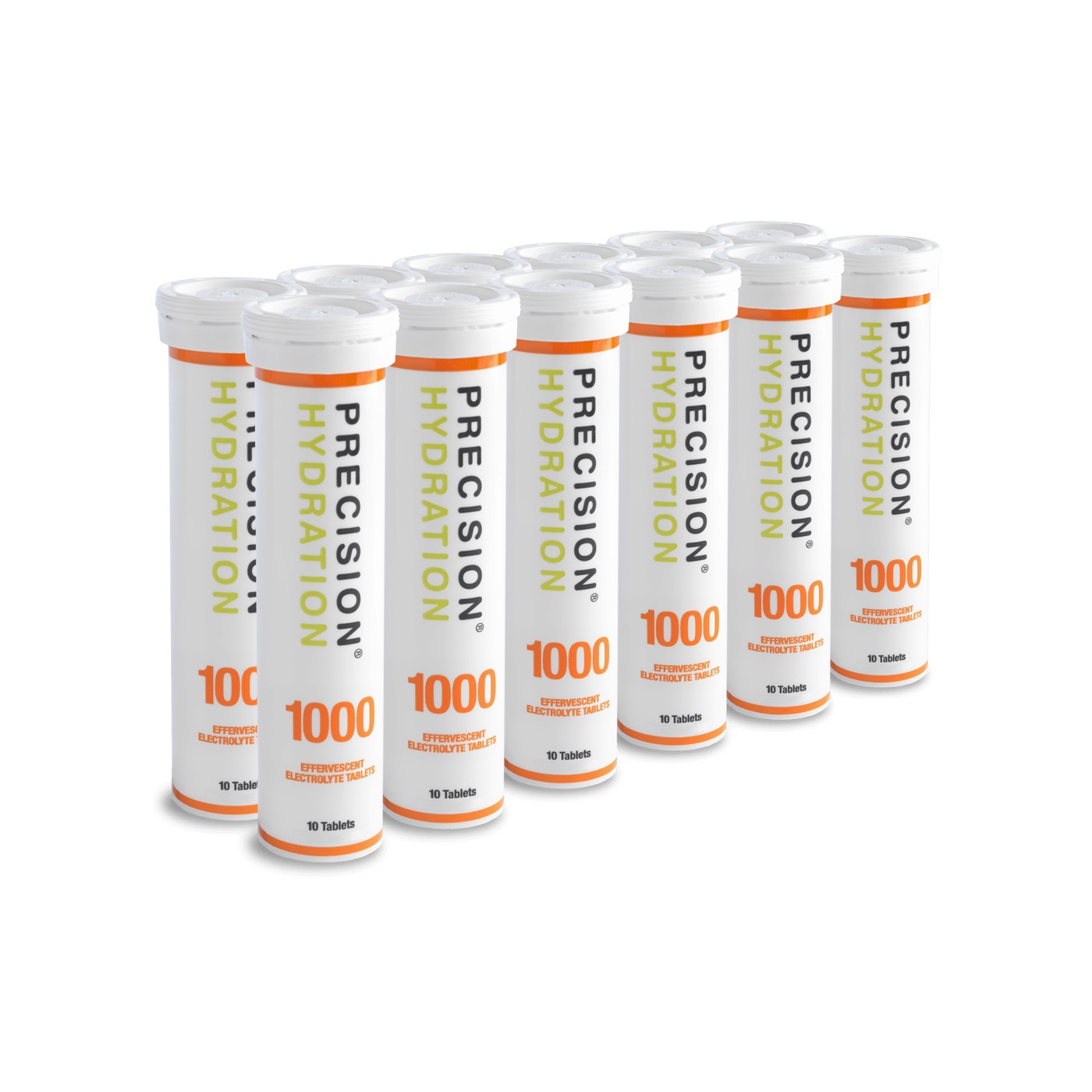
PH 1000 spec sheet
| Feature | Detail |
|---|
| Format | Effervescent tablet (also available as single-serve powder sachets) |
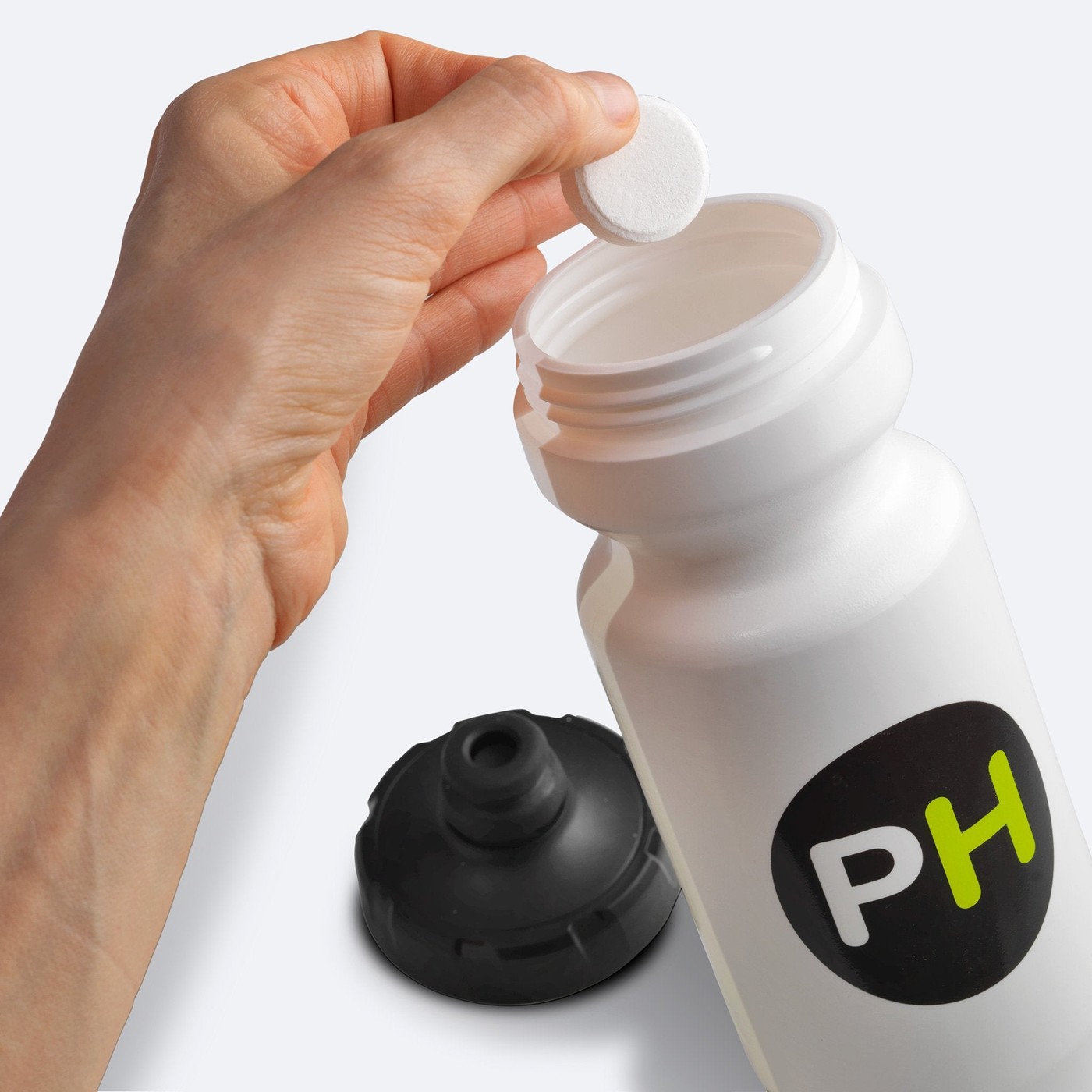
| Dilution | 1 tablet in 500 ml of water |
| Sodium | 1000 mg per litre |
| Full range | PH 500 / PH 1000 / PH 1500 depending on how heavily you sweat |
| Calories | Low (tablet version), the powder sachet version contains 17 g of sugar |
| Diet | Vegan, gluten-free, lactose-free |
| Certification | Lab-tested against the WADA list (anti-doping) |
| Formula | Hypotonic, promotes fast water absorption |
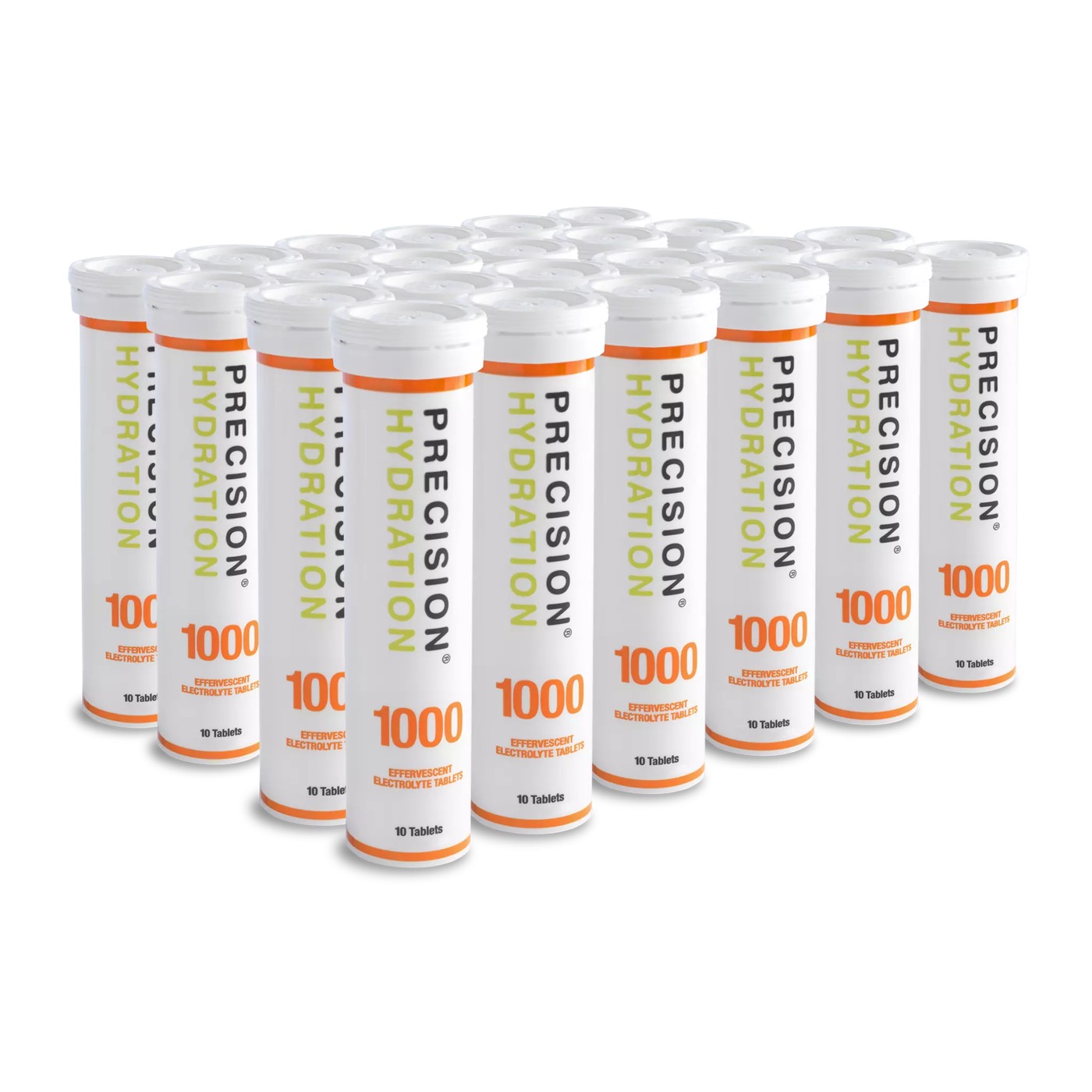
| Price | €9.99 for a tube of 10 tablets (€9.90 at Hardloop.fr) |
© Precision Fuel & Hydration, official photo used for editorial purposes
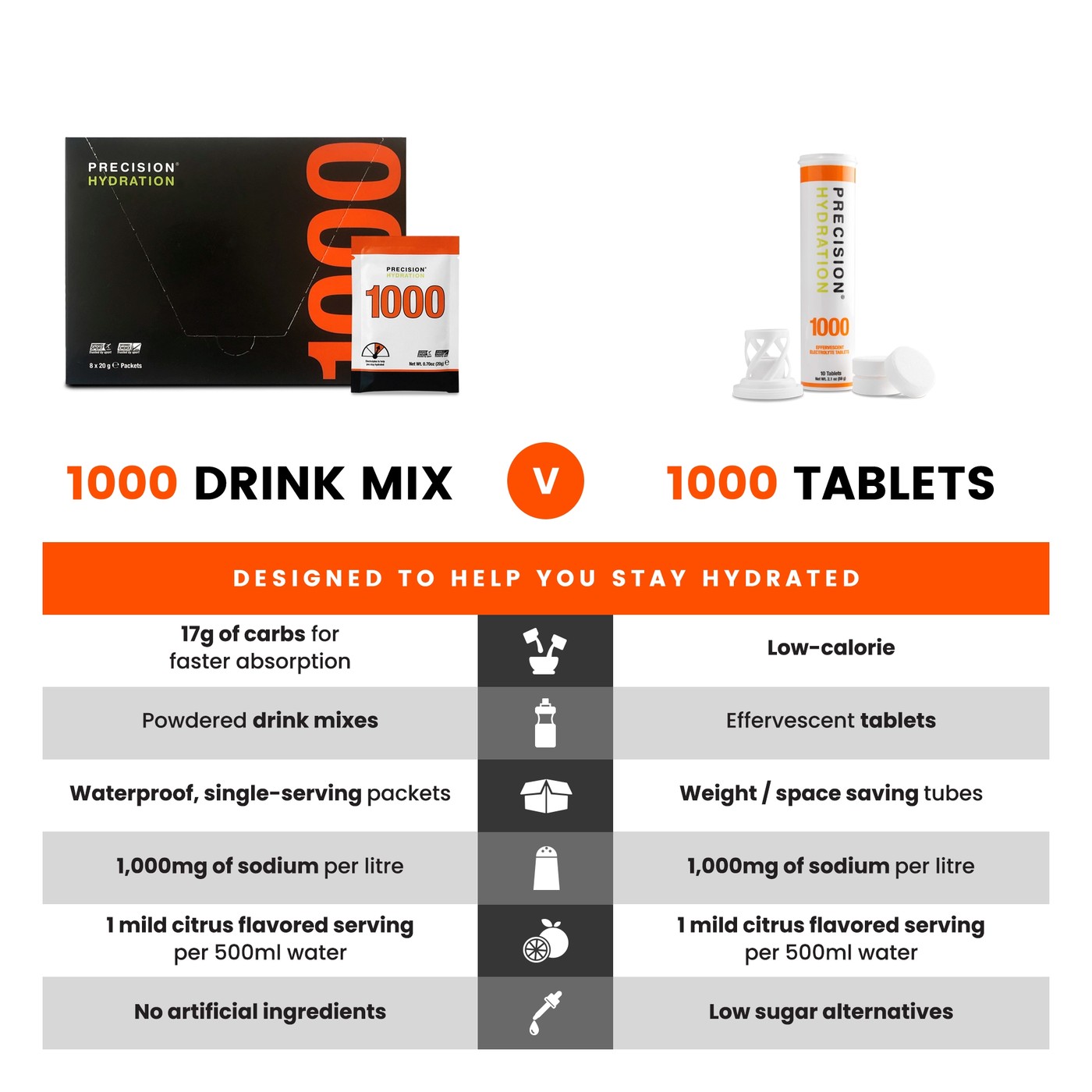
Tablet or powder: two formats, one composition difference you need to know
Precision Fuel & Hydration sells the PH 1000 in two distinct formats, and the French test we consulted (Top Tri, which used the brand's full range over several months of training and racing) highlights a composition difference that rarely gets much attention: the effervescent tablet is practically calorie-free, while the single-serve powder sachet contains around 17 g of sugar per serving. That adds a small energy boost but changes the nutritional picture. Both formats deliver the same sodium dose and a taste described as neutral, slightly lemony for the tablet.
| Data | Tablet format | Powder sachet format |
|---|
| Sodium | 1000 mg/litre | 1000 mg/litre |
| Carbs | Practically zero | ≈ 17 g of sugar per sachet |
| Taste | Neutral, slightly lemony | Neutral |
| Convenience | Compact, light tube | Single-serve sachet, easy to pocket |
© Precision Fuel & Hydration, official photo used for editorial purposes
Out on the road: progressive dosing rather than a one-size-fits-all electrolyte
The test we consulted stresses what sets Precision Fuel & Hydration apart from most competing electrolyte brands: instead of a single formula, the PH 500 / PH 1000 / PH 1500 range lets you match your sodium intake to your own sweat profile. The PH 1000, the middle dose, is recommended for athletes with moderate to high losses or for sessions in hot, humid conditions; the PH 500 suits short efforts or light sweaters, the PH 1500 salty sweaters going very long. One customer review describes cramps and headaches during races disappearing after introducing targeted sodium supplementation, which fits with sodium's role in preventing dehydration-related cramps.
Watch out #1: the PH 1000 gives you almost no energy
Unlike a classic isotonic drink that combines carbs and electrolytes, the PH 1000 tablet is designed purely for hydration and sodium. For energy, you need a gel or a carb drink on top, otherwise you'll run out of fuel on long efforts.
Watch out #2: pick the right dose in the range
Taking the PH 1000 when a PH 500 would do brings no extra benefit and can make your drink taste saltier than it needs to. The test we consulted recommends choosing based on how heavily you sweat and how long you're out, rather than always reaching for the strongest dose.
Where it works, where it falls short
Trail or marathon in hot/humid conditions: the PH 1000's home turf according to the official product sheet, to make up for high sodium losses.
Long-distance triathlon, IRONMAN style: use validated at scale since its adoption as the official drink of the 2026 IRONMAN Global Series.
Short run under an hour: the less concentrated PH 500 is usually enough; the PH 1000 adds nothing over a short distance.
Paired with an energy gel: a smart combo with a sodium-free gel like the PF 30 Gel, the two products complementing each other rather than replacing one another.
Looking for calories from your electrolyte: go for the powder sachet (17 g of sugar) rather than the tablet, which is practically calorie-free.
© Precision Fuel & Hydration, official photo used for editorial purposes
PH 1000 vs the competition
Compared with classic isotonic drinks such as Isostar Hydrate & Perform, which combine carbs and electrolytes in a single formula, the PH 1000 takes the opposite approach: it strictly separates sodium hydration from energy intake, leaving you to manage the two independently.
Within its own range, Precision Fuel & Hydration's PF 30 Gel remains the natural partner, carb-based and sodium-free, to build a complete hydration/energy duo for long runs.
Strengths
- Three-dose range (500/1000/1500) to match sodium to your individual profile
- Lab-tested against the WADA anti-doping list
- Official drink of the 2026 IRONMAN Global Series, validated at scale
- Neutral taste, well tolerated according to the test we consulted and customer reviews
- Compact, light tablet format, handy in races
Weaknesses
- No meaningful energy in tablet form, so you need a gel or carb drink on top
- Composition difference between tablet and powder sachet not always made clear
- Pricier per tube than generic electrolyte tablets
- You have to pick the right dose in the range, which can confuse beginners
Find the training plan that fits your runs on RunMorph →
© Precision Fuel & Hydration, official photo used for editorial purposes
RunMorph's verdict: 7.9 / 10
The PH 1000 delivers on its promise: precisely dosed sodium hydration, validated at scale by its adoption as the official drink of the 2026 IRONMAN Global Series. Its big strength, the split into three doses by sweat profile, is also what demands the most attention when buying: you still have to pick the right level in the range, and plan your energy separately since the tablet provides almost none. Paired with a gel like the brand's PF 30, it makes a coherent hydration/energy duo for long runs in demanding conditions.
Key takeaways
Precision Fuel & Hydration's PH 1000 is an electrolyte tablet at €9.99 for a tube of 10, dosed at 1000 mg of sodium per litre and positioned in the middle of the brand's PH 500/1000/1500 range. Official hydration drink of the 2026 IRONMAN Global Series, it targets athletes with moderate to high sweat losses. With no meaningful energy in tablet form, it pairs naturally with a gel like the brand's PF 30 to cover both hydration and energy on long runs.
PH 1000 FAQ
What's the difference between the PH 500, PH 1000 and PH 1500?
The three products differ in their sodium dose per litre of water (500, 1000 or 1500 mg), to be chosen based on your own sweat profile and the intensity of the effort. The PH 1000 targets moderate to high losses.
Does the PH 1000 contain carbs?
In tablet form, practically none. The single-serve powder sachet contains around 17 g of sugar, a small energy top-up. For a substantial carb intake, you need to pair it with a gel or a dedicated drink.
Is the PH 1000 used in official competition?
Yes, it's the official hydration drink on 2026 IRONMAN Global Series courses, served pre-mixed in bike bottles and in cups on the run.
Can I combine the PH 1000 with an energy gel?
Yes, that's actually the recommended approach for long runs: the PH 1000 covers hydration and sodium, and a gel like the brand's PF 30 covers carbs.
How do I know if I need the PH 1000 rather than the PH 500?
The PH 1000 suits athletes who sweat heavily or train in hot, humid conditions. For short runs or a low sweat rate, the PH 500 is usually enough.