For fourteen years, the Kinvara has stood for one simple idea at Saucony: a light shoe doesn't have to be a fragile one. The 16th edition brings that principle up to date with a new PWRRUN foam and a redesigned upper, all while staying under 210 grams. The question is whether that trademark lightness still holds up against the competition.
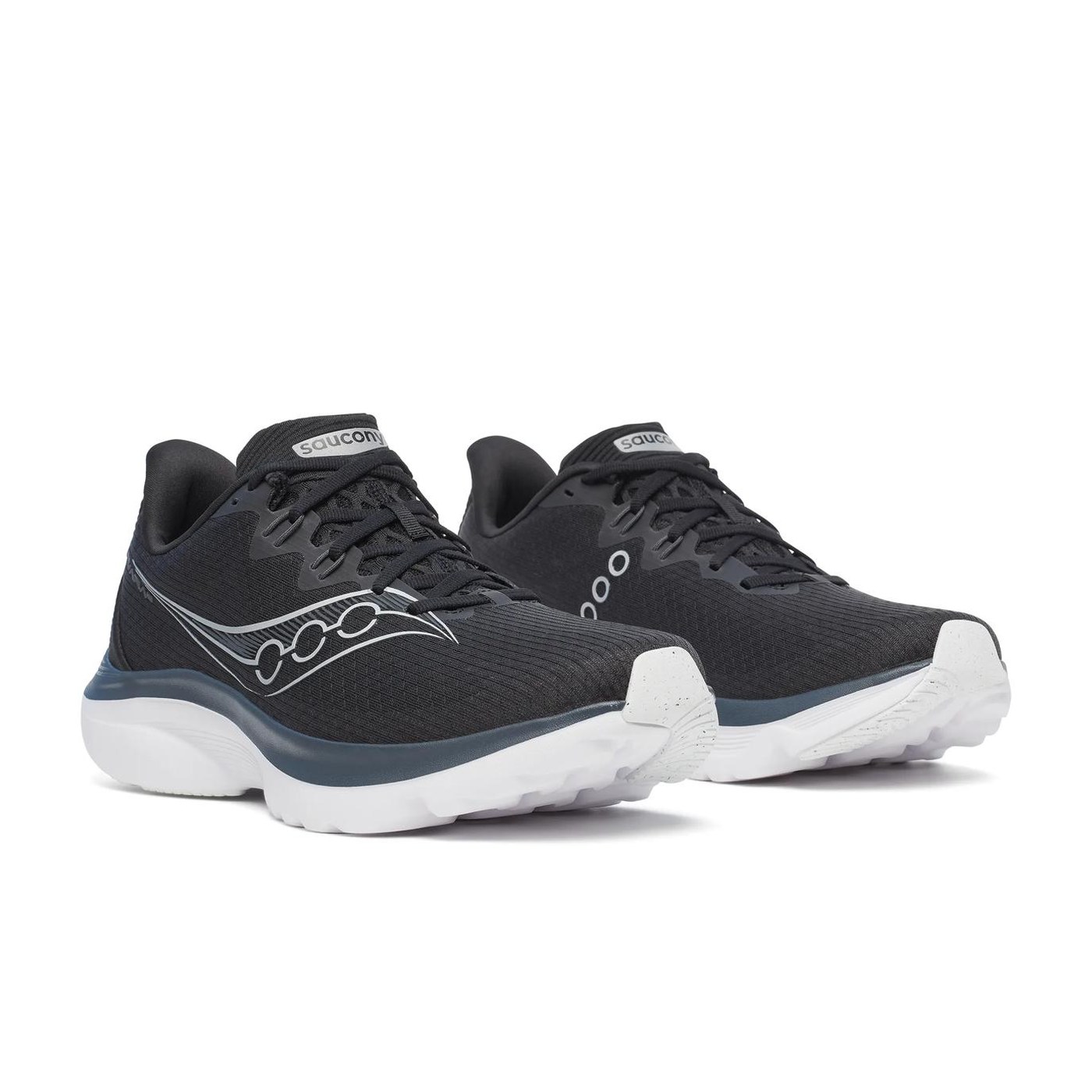
© Saucony, official photo used for editorial purposes
Saucony Kinvara 16: a lightweight legend goes back to its roots
The Kinvara has always had its own niche at Saucony: the training shoe that refuses to bulk up while the rest of the market keeps stacking on more foam. The 16th generation, released in July 2025, sticks to that philosophy. It weighs 206 grams, has a 4 mm drop and gets a new PWRRUN formula that blends EVA and TPU, with a claimed 3% gain in energy return over the previous version.
At a launch price of 130 euros, and often found between 91 and 120 euros on sale in mid-2026, it sits squarely in the affordable segment against pricier tempo shoes. The bet hasn't changed in fourteen generations: a natural, close-to-the-ground ride, with no carbon plate and no extra structure.
RunMorph's tip: if you're looking for a tempo shoe to pair with a more race-oriented Saucony Endorphin Speed 5, the Kinvara 16 is the natural partner for your short VO2max intervals and threshold runs, and it keeps your race pair from wearing out early.
Who is the Kinvara 16 for?
The runner who wants a light tempo shoe for everyday use
At 206 grams, the Kinvara 16 practically disappears on your foot. It's the obvious pick for threshold sessions and faster-paced runs, where a heavier shoe would dull the feeling of speed.
The trail or road runner who rotates shoes
Used in rotation with a more race-oriented carbon-plated shoe, the Kinvara 16 lets you vary the biomechanical load and lowers the injury risk that comes with running exclusively on stiff plates.
The light runner training for a 10K or half marathon
For light to mid-weight runners, the Kinvara 16 can even double as a race shoe for the 10K and half marathon. Its mild forefoot rocker smooths the transition without locking your stride.
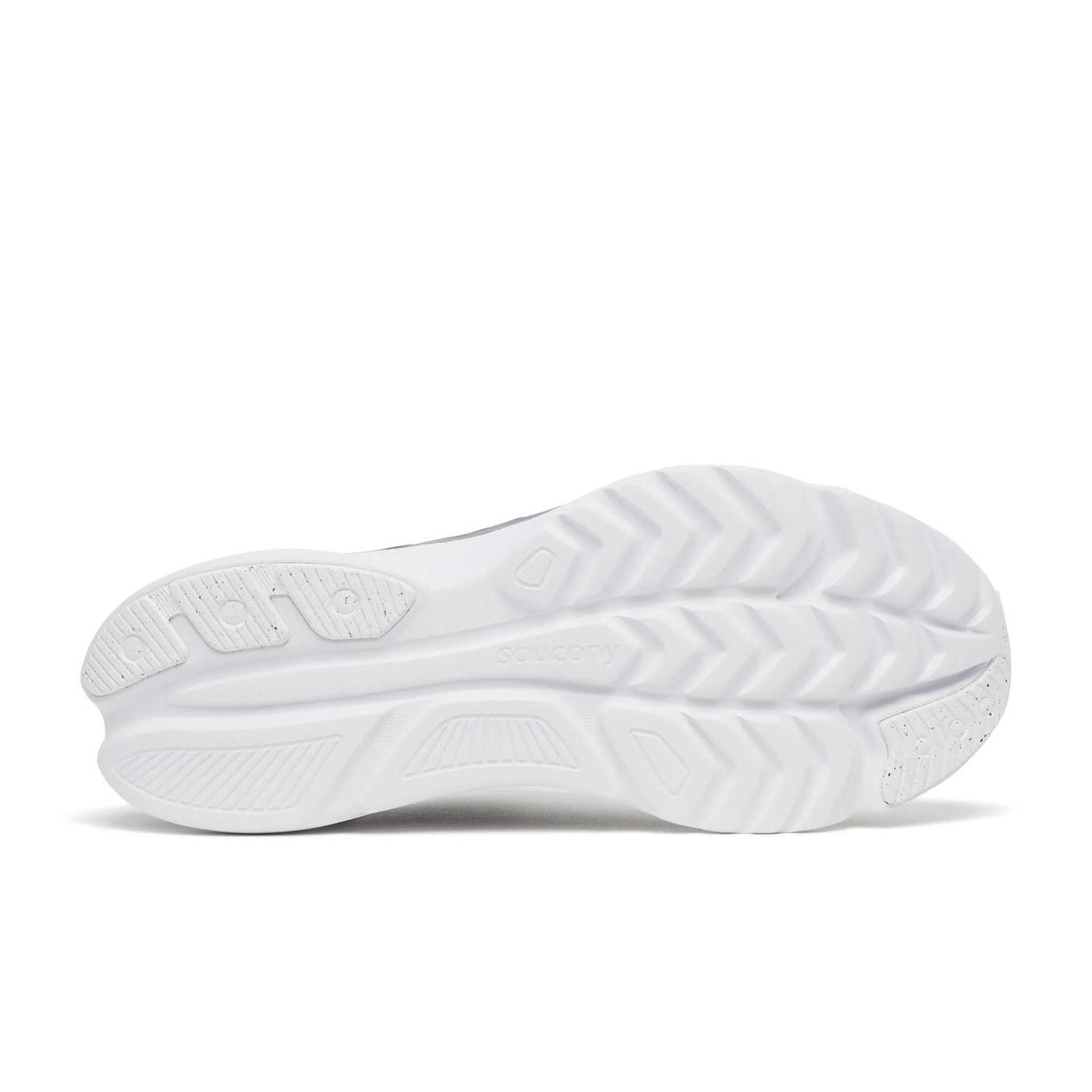
© Saucony, official photo used for editorial purposes
On the road: comfort, responsiveness and the limits of the fit
Independent reviews agree on the essentials: the Kinvara 16 delivers on its promise of lightness and liveliness. The reworked PWRRUN foam comes across as firm but responsive cushioning, especially at home at faster paces, with enough protection for runs up to 15-20 km without notable discomfort. The forefoot rocker, carried over from previous generations, stays flexible rather than rigid. The transition happens without an abrupt tipping effect, unlike more guiding carbon-plated shoes.
The most common complaint in real-world testing is the fit. Several independent testers report a narrow forefoot, to the point that Saucony now offers a dedicated Wide version. The issue had already come up on the previous generation. There, a more wrapping upper around the heel made it feel closer to a versatile training shoe than a pure minimalist tempo shoe, and the snug forefoot fit was confirmed across several sizes tested.
On distance, independent reviews are just as clear: beyond 20 km, or for a runner over 85 kg, the cushioning hits its limits and foot fatigue sets in faster than in a shoe with a higher stack height. That's not a design flaw. It's a deliberate consequence of the Kinvara's minimalist positioning, which has never aimed for maximum comfort over very long distances.
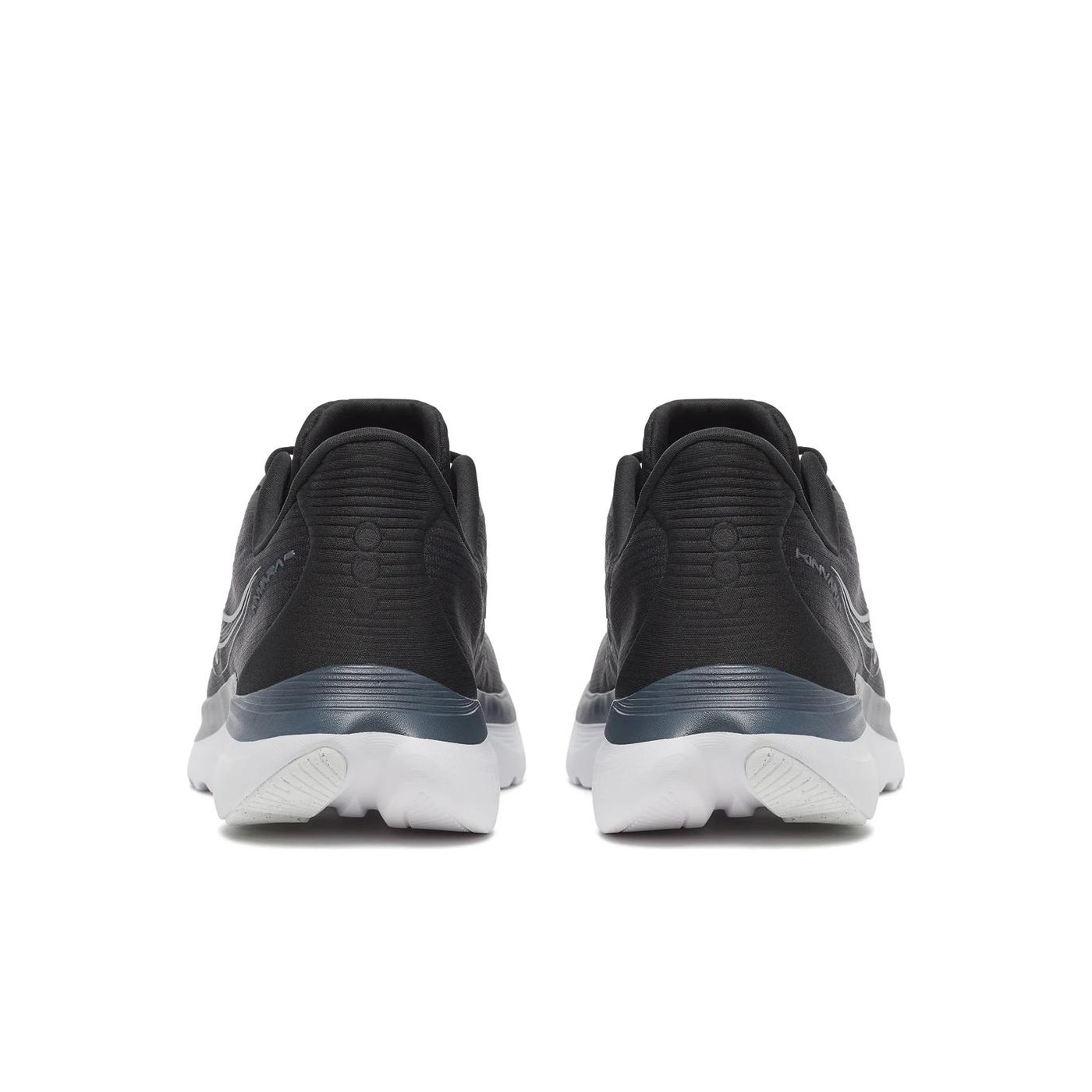
© Saucony, official photo used for editorial purposes
Saucony Kinvara 16 vs Hoka Mach 7 vs New Balance FuelCell Rebel v5: head to head
| Criterion | Saucony Kinvara 16 | Hoka Mach 7 | NB FuelCell Rebel v5 |
|---|
| Weight | 206 g | ~230 g | ~215 g |
| Drop | 4 mm | 5 mm | 6 mm |
| Cushioning | Firm, responsive | More generous | Soft, lively |
| Fit | Narrow forefoot | Standard | Standard |
| Price | €130 | ~€150 | ~€140 |
Compared with the Hoka Mach 7, the Kinvara 16 embraces a lower, closer-to-the-ground profile, while the Mach bets on more generous cushioning to cover longer distances. Against the Adidas Adizero Evo SL, another benchmark in the ultralight category, the difference comes down mostly to fit, which is roomier on the Adidas. Within the Saucony lineup, the Kinvara 16 sits below the Saucony Ride 19, which is more versatile and better equipped for long distances, and it's a natural complement to an Endorphin Speed 5 kept for the toughest sessions.
How to fit it into your RunMorph training plan
In a RunMorph training plan, the Kinvara 16 naturally slots into threshold sessions, short intervals and tempo runs where lightness matters more than maximum protection. For a light runner targeting a 10K or half marathon, it can even become the race shoe, as long as you've validated the fit in training. For a marathon goal or a heavier build, keep it for quality sessions and stick with a more cushioned shoe for long runs.
RunMorph verdict
The Saucony Kinvara 16 pulls it off: it stays true to the line's minimalist, lightweight DNA while modernizing its foam for more responsiveness. At 130 euros, it remains one of the most affordable tempo shoes on the market, with no compromise on build quality.
The limits are well known and documented by several independent reviews: a narrow forefoot fit that won't suit every foot, even in the Wide version, and cushioning that runs out as soon as distance or runner weight goes up. For its target audience, light to mid-weight runners looking for a versatile tempo shoe, these reservations don't undermine the shoe's appeal.
8.5/10: a light, affordable benchmark for tempo work and short to middle distances, best kept to lighter runners for long runs.