Scott, the Swiss brand known for its bikes, skis and trail shoes, is now taking on the folding carbon pole market head-on with the Trail Ultra Carbon. At 179.90 euros and 160 grams per pole, it bets everything on packability and a strap storage system never seen before. In a segment already crowded with Leki, Black Diamond and Guidetti, is that enough to justify the price, when the tip is still steel while most direct rivals have moved to tungsten carbide?
Scott Trail Ultra Carbon Review: Fast-Folding Carbon Poles
7/10
The essentials in 3 sentences
The Scott Trail Ultra Carbon is a 4-section folding carbon trail pole that weighs about 160 g per pole and folds down to 36 cm, thanks to the S.P.S system that stows the strap right inside the grip. It targets runners who often switch between running with and without poles and want lightning-fast folding more than a bombproof tip. It delivers on packability, but the premium price (179.90 euros) and a steel tip that wears faster than the carbide used by direct rivals take a clear toll on the overall package.
7
/ 10 · RunMorph overall score
Who is it for?Trail runners who stow and deploy their poles several times per run and want a quick move without taking their hands out of the straps, on runnable to moderately technical courses.
Who should skip it?Runners looking for the toughest tip on rocky terrain or the best weight-to-price ratio on the market: Guidetti, Kiprun and Camp do better on those two specific points.
Scott and trail poles: a late but confident entry into a crowded market
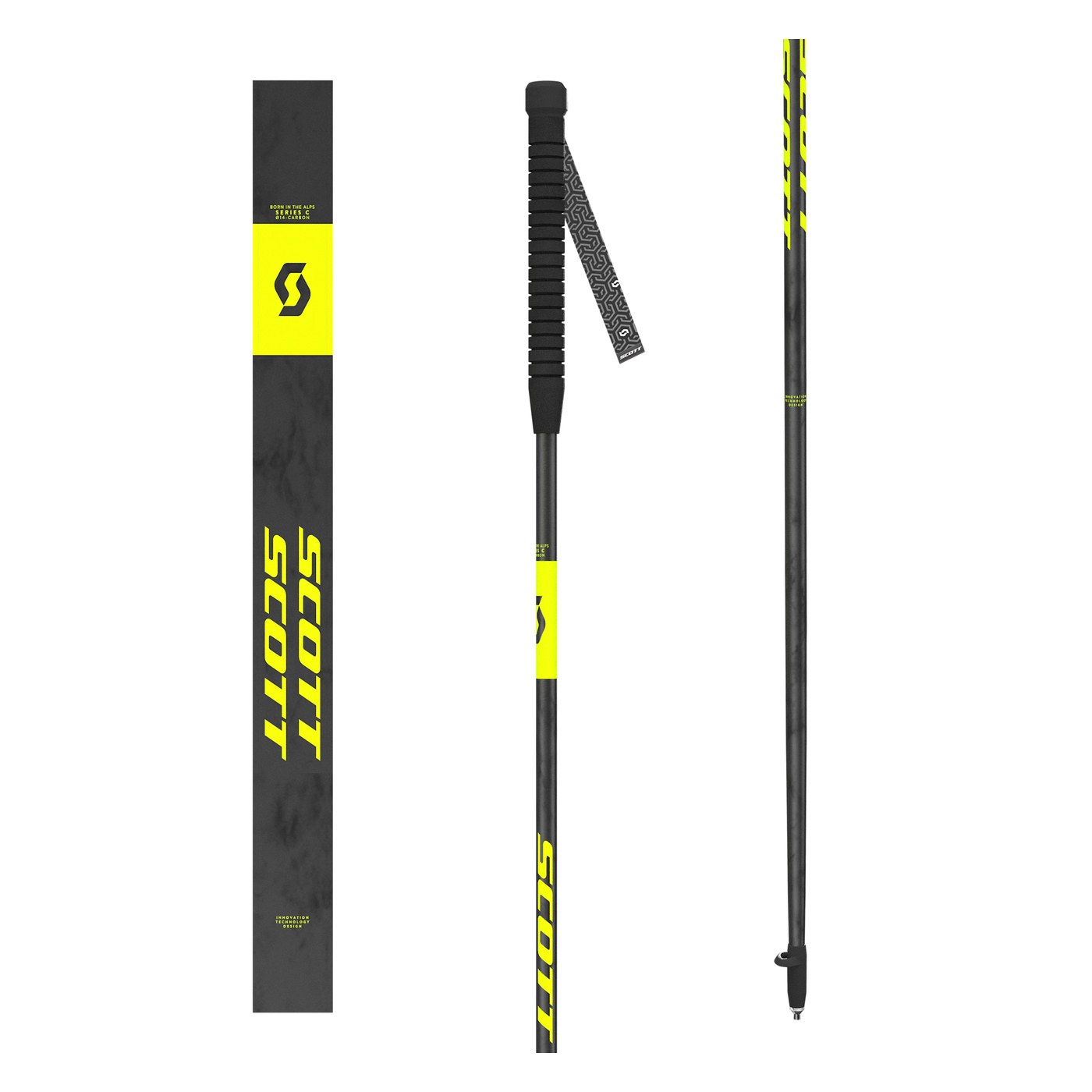
Scott built its running reputation on shoes, with models like the Kinabalu and the Supertrac already covered by the French specialist press. Trail poles are newer territory for the Swiss brand, and it comes in with the same logic as on its skis and bikes: bet on engineering rather than price. The Trail Ultra Carbon is direct proof, with a slim 14 mm carbon shaft and a strap storage system, S.P.S, that the brand bills as a first for this type of product.
The problem: the folding carbon pole segment is already hotly contested. Leki, Black Diamond, Guidetti and Salomon all offer models around 150 to 190 grams per pole, priced between 150 and 190 euros. Scott arrives as a challenger in a mature market, where the technical argument has to win on its own. S.P.S genuinely makes stowing easier, but on its own it doesn't make up for a steel tip instead of carbide, a technical choice that stands out on a pole positioned at the high end.
Scott Trail Ultra Carbon specs
The data below comes from Scott's official product page, cross-checked against the spec sheets of three French retailers (i-Run, Snowleader, Bike24), which all agree on the same figures.
| Feature | Value |
|---|---|
| Brand | Scott |
| Model | Trail Ultra Carbon |
| Year | 2026 |
| Type | Folding trail pole, fixed length |
| Shaft material | Carbon, 14 mm diameter |
| Number of sections | 4 |
| Weight | About 160 g per pole (320 g per pair) |
| Folded length | 36 cm |
| Available sizes | 110 / 120 / 130 cm (3 fixed sizes) |
| Grip | Trail foam |
| Strap | Ultra Light strap, non-removable |
| Tip | Steel |
| Basket | Trail Running basket |
| Folding system | S.P.S (Strap Pull System) |
| Included accessory | Carry bag |
| Official price | 179.90 euros per pair |
S.P.S technology: what does it change day to day?
S.P.S (Strap Pull System) is the Trail Ultra Carbon's core selling point. In practice, you pull the strap until it locks to deploy the pole, then press the button on the grip and fold the shaft to stow the strap right inside the grip. On standard folding poles, the strap dangles once the pole is folded and sometimes snags on your pack or belt. Here, it disappears into the grip in one move, which genuinely cuts transition time on sections where you switch between running and pole walking.
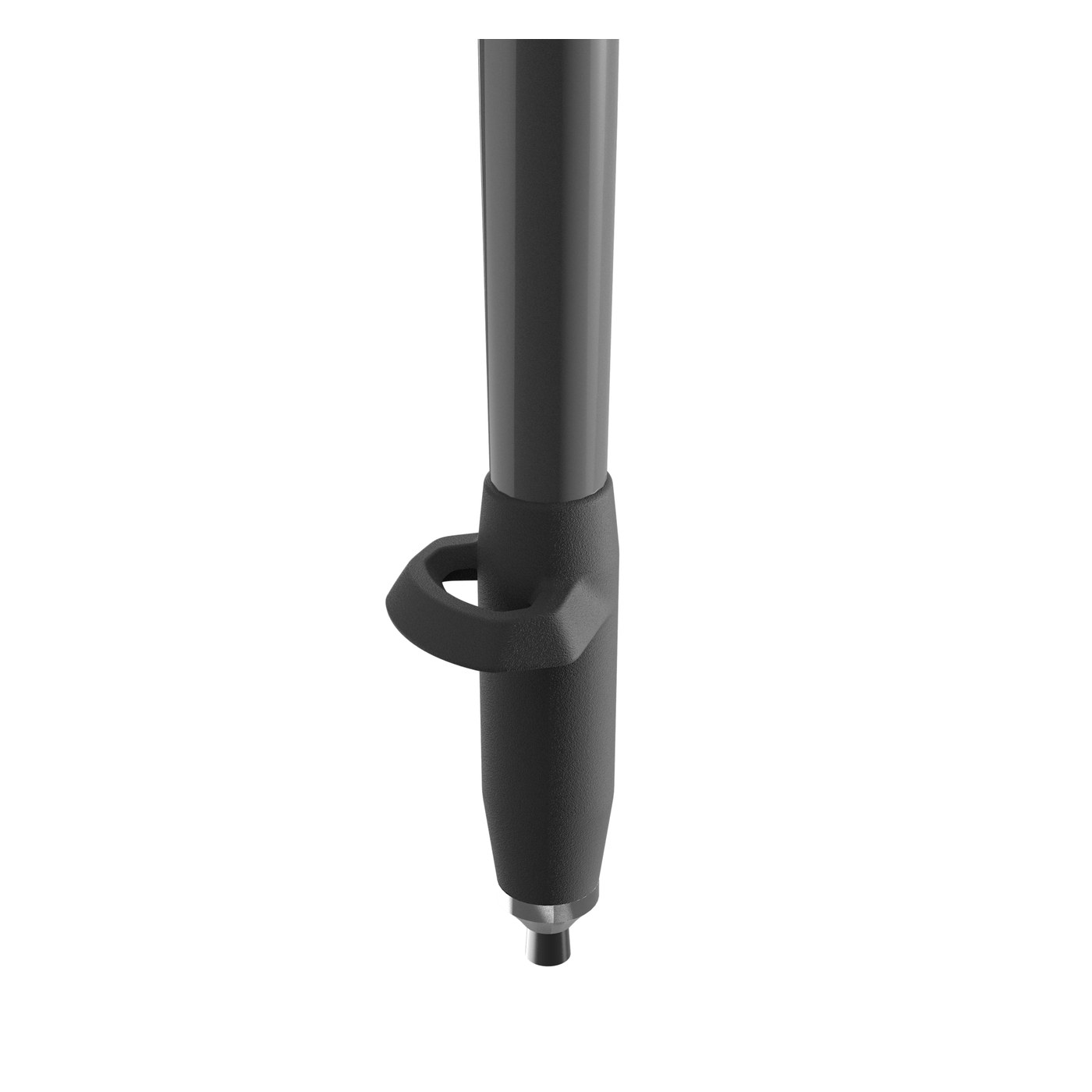
That compactness (36 cm folded, 4 slim 14 mm sections) comes at a cost on two specific points. First, perceived stiffness: a thinner tube flexes more under heavy load than a thicker 3-section model like the Leki Ultratrail FX.One. Second, and above all, the steel tip. Nearly every pole at this price (Guidetti, Black Diamond FKT, even the 100-euro Kiprun) has moved to tungsten carbide, which resists abrasion on rock and stony trails far better. A steel tip wears faster and loses its grip sooner, a surprising compromise on a pole that costs close to 180 euros.
Field test: what early users report
The Trail Ultra Carbon is a recent launch, and dedicated French editorial coverage is still limited: we found no in-depth review with detailed mileage from the usual reference sources (Journal du Trail, u-Trail, Materieltrail, Alpine Mag). At RunMorph, we'd rather flag that than invent a consensus that doesn't exist yet. The available material comes down to an editorial comparison whose authors handled the pole (rated 4.7/5 in a top 10 of trail poles, with the Trail Ultra Carbon presented as a relevant alternative for anyone who puts packability first), an independent technical database that confirms the official figures with no notable discrepancy on weight or diameter, and three verified customer reviews (purchase-verified) on the i-Run store. All three give it 5/5 and all say the same thing in a few words: "ultra light and practical", "light", "light and quick to use".
Brief as it is, this agreement confirms one point: the feeling of lightness and speed in use is not up for debate. However, no available feedback covers the steel tip's lifespan beyond a few runs, or how the pole behaves on an ultra beyond 50 km. At RunMorph, we're staying cautious on durability until long-term feedback is available: for now, the compromise on tip material remains a technical deduction rather than quantified field data.
RunMorph's advice: on a course where you stow and deploy your poles several times (rolling terrain, runnable sections broken up by climbs), S.P.S saves you real seconds at every transition. On a technical, rocky ultra where the tip works nonstop, a carbide-tipped model like the Guidetti Platinium Néo will last longer.
Scott Trail Ultra Carbon vs Salomon Ultra Carbon Foldable: head to head
The two poles share a near-identical weight (160 g per pole) and similar positioning, which makes this the most relevant comparison for choosing between them.
| Criterion | Scott Trail Ultra Carbon | Salomon Ultra Carbon Foldable |
|---|---|---|
| Weight per pole | 160 g | 160 g |
| Shaft material | 4-section carbon, 14 mm | 100% carbon, 3-section Split Second folding |
| Tip | Steel | Carbon/Widia |
| Sizes | 110 / 120 / 130 cm (3 fixed) | 100 to 140 cm in 5 cm increments |
| Storage system | S.P.S, strap stowed in the grip | Split Second, fast 3-section folding |
| Price | 179.90 euros | 160 euros |
At the same weight, the Salomon offers a much wider size range (six lengths versus three for Scott) and a carbon/widia tip considered tougher on rock, for about twenty euros less. The Scott only takes the lead on one specific point: the fold/unfold motion, which is faster thanks to S.P.S. For a similar budget, the Salomon remains RunMorph's most balanced pick of the two.
Pros and cons
Pros
- Very fast folding and unfolding thanks to S.P.S, with the strap stowed in the grip
- Very compact when folded (36 cm)
- Low weight, 160 g per pole, in the upper average of the carbon segment
- Carefully built 14 mm carbon, consistent with the brand's ski/bike expertise
- Carry bag included
Cons
- Steel tip, less durable than the tungsten carbide used by nearly all direct rivals
- Only 3 fixed sizes (110/120/130 cm), a narrow range compared with the competition
- Basic, non-removable strap with no detachable glove, unlike Guidetti or TSL
- Premium price (179.90 euros) hard to justify with a steel tip
- Independent French review coverage still very limited at the time of testing
Our field take: who is it for?
The Scott Trail Ultra Carbon suits runners preparing for a rolling or moderately technical trail race who frequently stow and deploy their poles along the course: that's where S.P.S fully earns its place. It's a weaker fit for runners targeting an ultra on rocky terrain who want a tip that goes the distance without replacement, or for anyone who puts the best weight-to-price ratio first. Both profiles are better served elsewhere in the catalog.
Whether this pole backs up a short trail build or your first mountain long run, the work on your legs and effort management matters at least as much as the gear. RunMorph training plans help you structure runs with side slopes and elevation gain ahead of a trail goal, so you show up on race day with legs ready to handle the distance, poles or not.
RunMorph Coach's verdict
The Scott Trail Ultra Carbon delivers on its promise of packability and fast folding thanks to S.P.S, a genuinely good technical idea, well executed. But at 179.90 euros, the steel tip is hard to justify against competitors that have almost all switched to carbide, and a size range limited to three fixed lengths restricts how well you can match it to your build. A good pole, but not yet the best choice in its price bracket. RunMorph score: 7/10.
Key takeaways for your training
- Express folding: the S.P.S system stows the strap in the grip in one move, handy on courses where you often switch between running and pole walking
- Keep an eye on the tip: steel wears faster than carbide on rocky terrain, so plan on replacing it more often at high volume
- Only three sizes: check your ideal length carefully (height x 0.67 as a rule of thumb) before buying, since the range offers no fine adjustment
- Compare the budget: at the same weight, the Salomon Ultra Carbon Foldable offers more sizes and a tougher tip for less money
- Limited track record: it's a recent launch, and long-term durability still needs confirming by more feedback