Sennheiser Momentum Sport Review: Earbuds With Polar Sensors
7/10
✓Outstanding fit, even without ear wings, confirmed by every independent review
✓Rich, warm sound with well-controlled bass, living up to the Sennheiser name
✓Unique dual heart rate and temperature sensor, compatible with most sports ecosystems
✗Official price of 329.90 euros, among the highest in the sports category
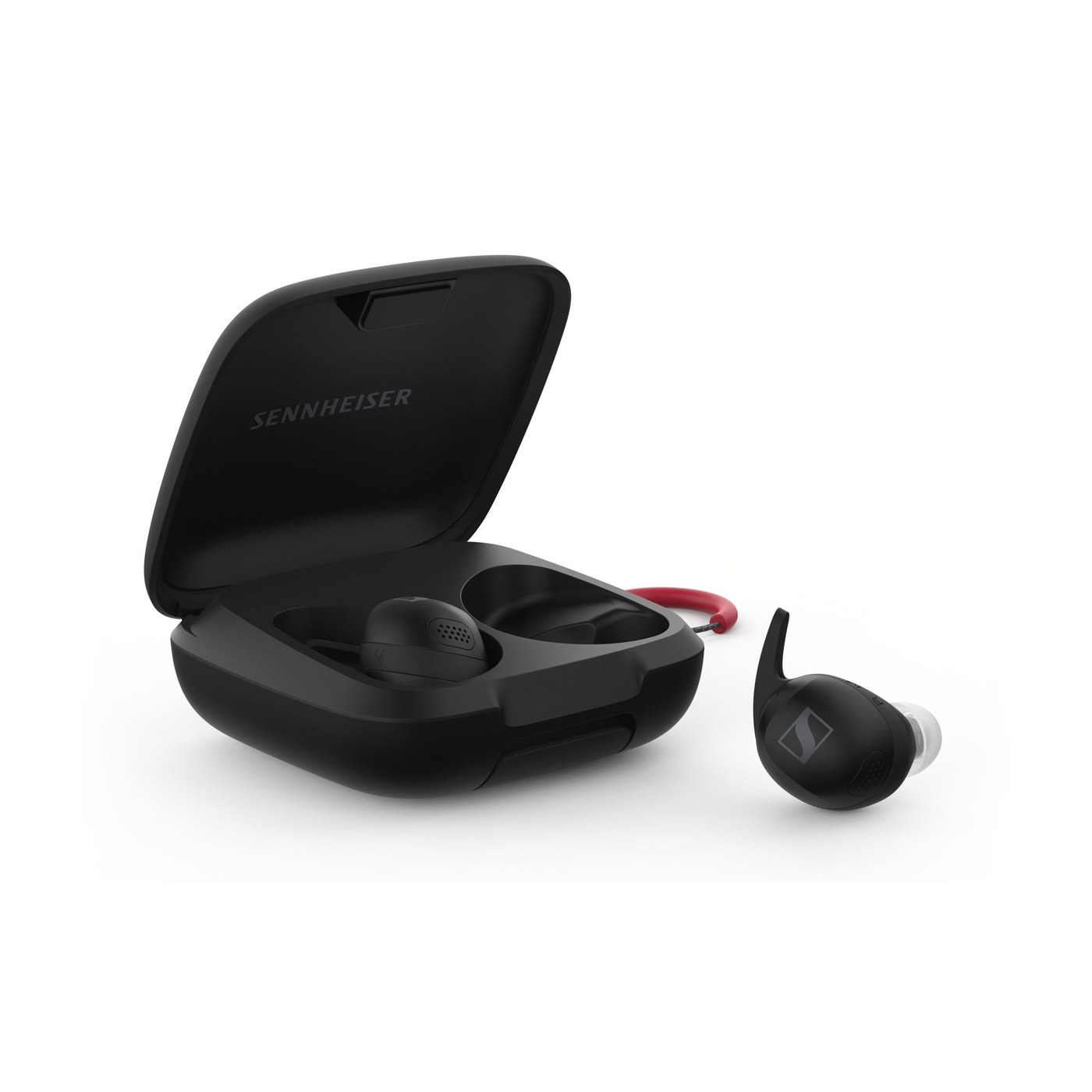
A heart rate sensor and a body temperature sensor built right into the earbuds, developed with Polar and lab-validated at the Technical University of Munich: the Sennheiser Momentum Sport promises to turn a pair of premium earbuds into a full athlete's control center. The question is whether all that technology delivers once your running shoes are laced, and whether a price of 329.90 euros really makes sense when most runners already wear a GPS watch on their wrist.
The Momentum Sport is a premium in-ear model from Sennheiser, and the brand's very first to integrate biometric sensors (heart rate and body temperature) developed with Polar. It targets the demanding, music-loving runner who refuses to trade sound quality for sport use, with a secure fit reinforced by interchangeable ear wings and a semi-open design. It only half delivers: sound, comfort and fit are excellent, but the high price, water resistance capped at IP55 and the questionable value of the sensors next to a GPS watch already on your wrist hold back our recommendation.
7
/ 10 · RunMorph overall score
Sound quality
7.8 / 10
Secure fit
9 / 10
Battery life
6.5 / 10
Water resistance
6 / 10
Value for money
5 / 10
Who is it for?The music-loving runner who listens to a lot of music and wants one premium device for both city and sport, without wearing a GPS watch or chest strap on top.
Who should skip it?Trail runners and ultrarunners who need full waterproofing and 10 hours or more of battery life, and runners who already own a GPS watch, for whom a second built-in heart rate sensor adds nothing.
Sennheiser Momentum Sport: the German audiophile takes on the connected sports market
Sennheiser is celebrating 80 years in business and remains a benchmark in high-end audio, from stage microphones to audiophile headphones. Since 2021, the brand's consumer business (headphones, earbuds) has belonged to the Swiss group Sonova, owner of Phonak, and now operates under a Sennheiser license through Sonova Consumer Hearing. Launched in April 2024, the Momentum Sport is a historic first: no Sennheiser earbud had ever carried biometric sensors before.
To get there, Sonova teamed up with Polar, the long-standing name in sports heart rate monitors, and had its measurements validated by an independent lab at the Technical University of Munich. The product swept eleven "Best of Show" awards at CES 2024 and signed Magnus Ditlev, one of the world's top long-distance triathletes, as its ambassador. The strategy is clear: go hunting on Jabra's turf (the Elite Active range) and Beats' (Powerbeats Pro), while steering clear of the budget ground held by Shokz and JBL.
The "Momentum Sport" name sells, but at an official price of 329.90 euros, it costs far more than the vast majority of sports earbuds on the market. The core question of this review: does all that technology justify such a price gap for a runner who already owns a GPS watch that tracks heart rate?
Sennheiser Momentum Sport specs
Feature
Details
Brand
Sennheiser (Sonova Consumer Hearing)
Model
Momentum Sport
Release
April 2024
Type
True wireless in-ear, semi-open, interchangeable ear wings and ear tips
Biometric sensors
Heart rate (PPG) and body temperature, Polar technology
Water resistance
IP55 (earbuds), IP54 (charging case)
Driver
10 mm TrueResponse dynamic driver, 15 Hz to 18 kHz
Bluetooth 5.2, SBC, AAC, aptX, aptX Adaptive, multipoint
Battery life
6 h from the earbuds, 24 h total with the case (3 charges)
Fast charging
10 min of charging for 45 min to 1 h of playback, full charge in about 1 h 30 min
Weight
6.4 g per earbud, 78.4 g for the case, 91 g in total
Colors
Polar Black, Metallic Graphite, Burned Olive
Official price
329.90 euros
Polar sensors and TrueResponse driver: what do they really change?
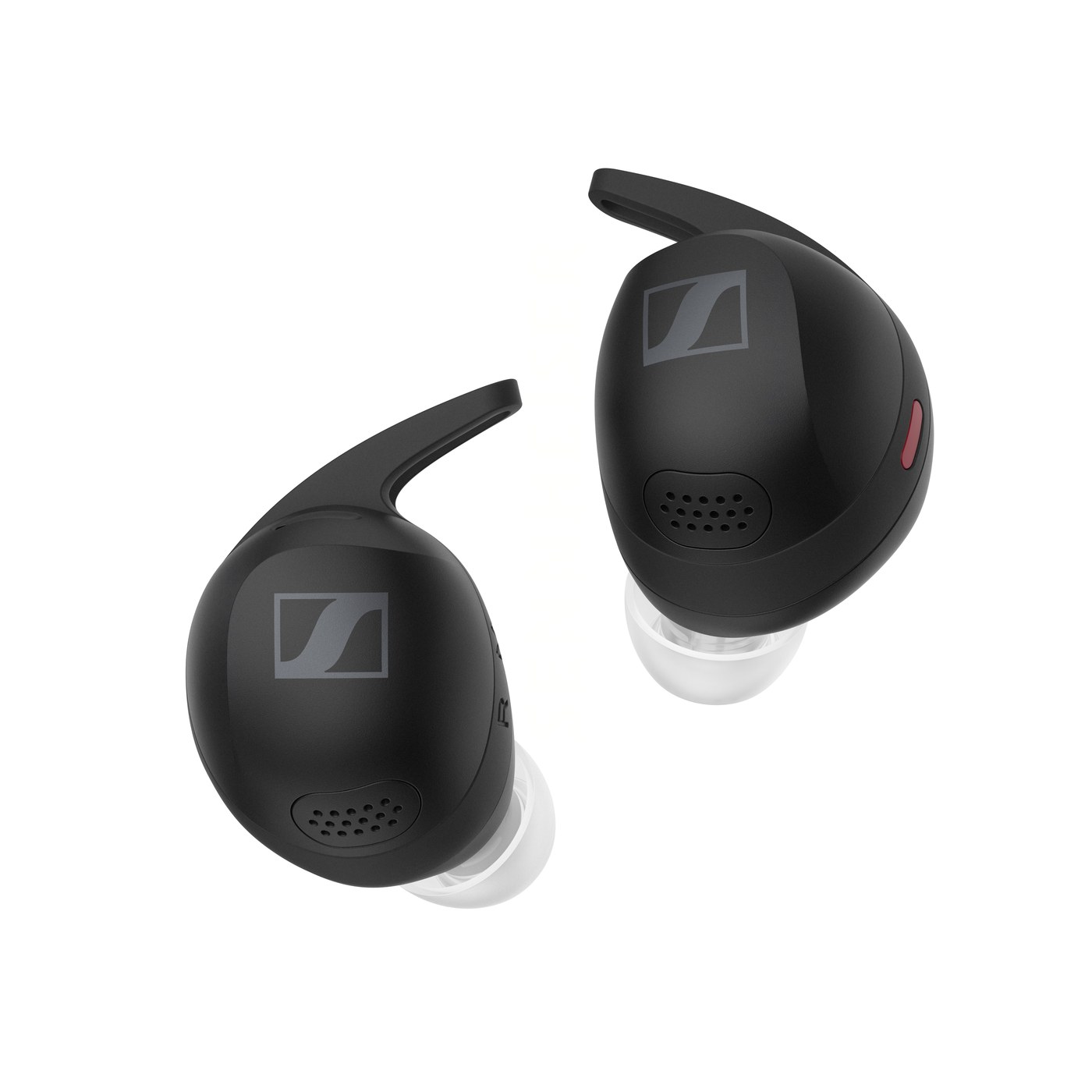
The heart of the innovation lies in two sensors housed right in the clear ear tips. A PPG (photoplethysmography) sensor measures heart rate from 30 to 220 beats per minute, and a body temperature sensor is a first for a consumer product in this category. Sennheiser pitches the ear canal as a stable spot on the body during exercise, less prone to motion artifacts than an optical sensor on the wrist. Both data streams feed live into the Sennheiser Smart Control app and can be shared with Polar Flow, Garmin Connect, Apple Watch and Apple Health, Strava, Zwift or Peloton over Bluetooth.
On the audio side, the new 10 mm TrueResponse dynamic driver covers a range of 15 Hz to 18 kHz. The semi-open design, with an acoustic pressure-relief channel, lets a little air through to cut the footstep and breathing noise your body transmits, while keeping a natural awareness of your surroundings. Adaptive active noise cancelling relies on six microphones (three per earbud) and adds a dedicated wind reduction mode plus a Transparency mode so you stay alert outdoors.
RunMorph's advice: if you already own a GPS watch such as a Garmin, or an Apple Watch paired with AirPods Pro 3, the Momentum Sport's sensors duplicate what you have. They make the most sense for runners who want to ditch the watch and track their training straight from the Polar Flow app or their smartphone.
The field test: fit, sound and sensor reliability in real use
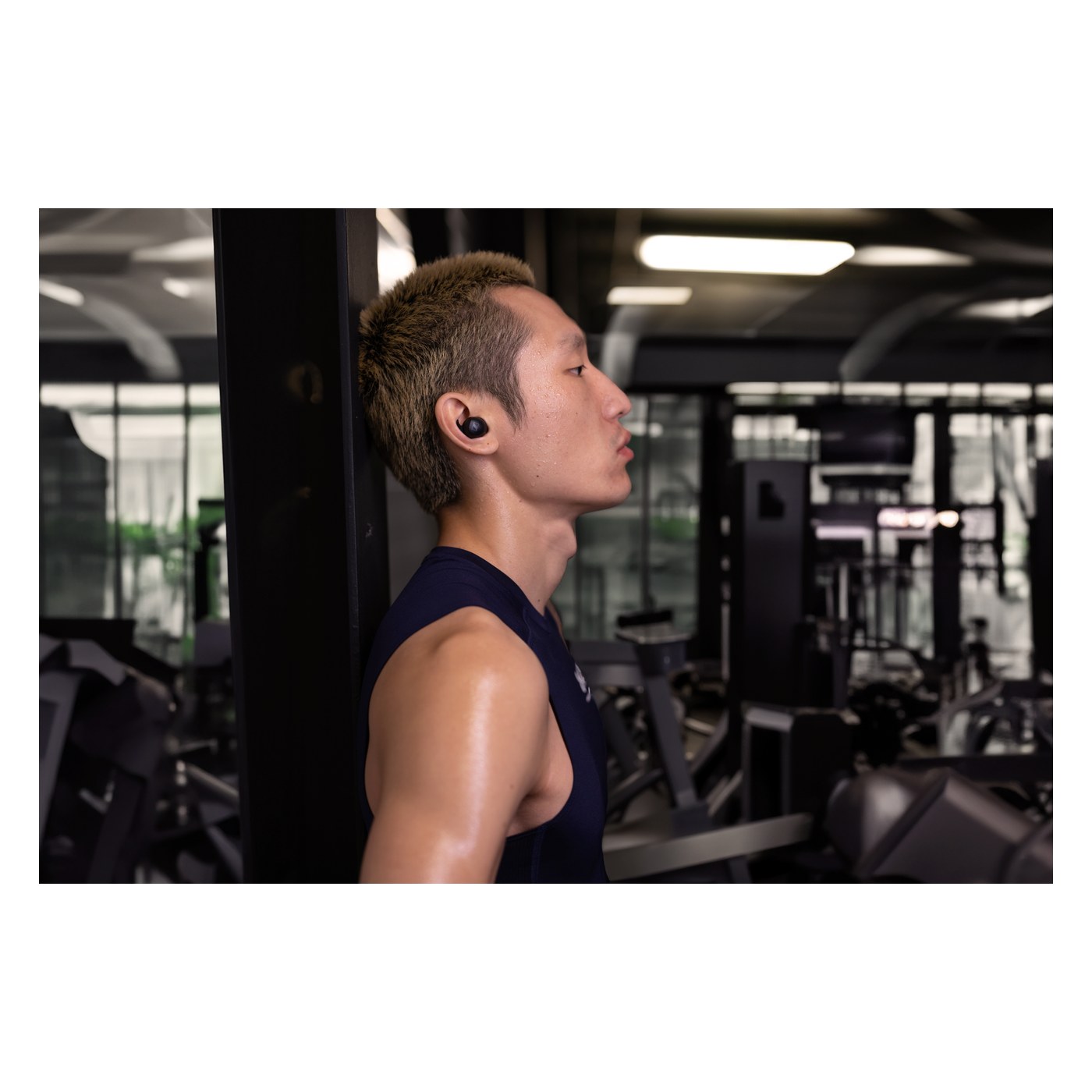
To assess the Momentum Sport in real conditions, RunMorph draws on a synthesis of several independent reviews covering weeks of use. On one point, every test agrees without exception: the fit is outstanding. Even without the silicone ear wings (four sizes included), the earbuds stay put thanks to their semi-in-ear shape. With the right wing, the fit becomes locked in for the hardest sessions, intervals included.
The sound is just as widely praised: present, well-controlled bass and warm mids that bring vocals forward, for a relaxed rather than sharp listen. The weakness flagged again and again across the three reviews we read in full is the treble, sometimes judged muddy or lacking clarity, a deliberate trade-off rather than studio neutrality. Active noise cancelling earns praise for handling bass and mids well, with a slight weakness on surrounding voices, which stay partly audible. Paradoxically, that choice helps you stay alert outdoors.
On battery life, the brand claims 6 hours from the earbuds alone and up to 24 hours total with the case. Independent measurements land on a matching result, or even slightly better (around 6 h 30 min in normal use). But one independent test protocol points out that premium rivals reach up to 8 hours from the earbuds alone, which puts the Momentum Sport in the middle of the pack rather than at the top of its category for intensive sport use.
On the sensors, one independent test protocol compared the Momentum Sport's heart rate readings with a reference smartwatch during a run: the data is almost identical, except during short surges where a slight lag appears. The temperature sensor was also checked against a semi-pro reference sensor over two 20-kilometer runs. The gap stayed constant at around 0.8 degrees below the reference, compared with the 0.3-degree accuracy margin Sennheiser claims. The real gap therefore exceeds the official tolerance, without making the data useless for tracking trends.
Opinions split sharply, however, on how useful these sensors are. Some reviews call them valuable for anyone without a sports watch. Another review sees a costly redundancy for athletes who already wear a tracker on their wrist, and names the extra cost as the product's main weakness. At RunMorph, we see this split as a reflection of two different runner profiles: it shouldn't be smoothed into an average, but owned as a real personal buying criterion.
Sennheiser Momentum Sport vs Apple AirPods Pro 3: head to head
Criterion
Sennheiser Momentum Sport
Apple AirPods Pro 3
Heart rate sensor
PPG + temperature, Polar technology
256 Hz infrared PPG, no temperature
Water resistance
IP55 earbuds / IP54 case
IP57 earbuds and case
Battery life with ANC
6 h earbuds / 24 h case
About 8 h 30 min / 24 h case
Case weight
78.4 g
Far more compact
Ecosystem
Polar Flow, Garmin, Apple Health, Strava
Apple Health, closed Apple ecosystem
Official price
329.90 euros
249 euros
Both models play the same card: a heart rate sensor built into a premium earbud. Their philosophies differ, though. The Momentum Sport bets on a never-before-seen dual measurement (heart rate and temperature) and multi-ecosystem compatibility through Polar Flow. The AirPods Pro 3 bet on Apple integration, better water resistance and more generous battery life, and still cost 80 euros less. On value for money alone, Apple clearly comes out ahead.
Sennheiser Momentum Sport pros and cons
Pros
Outstanding fit, even without ear wings, confirmed by every independent review
Rich, warm sound with well-controlled bass, living up to the Sennheiser name
Unique dual heart rate and temperature sensor, compatible with most sports ecosystems
Effective active noise cancelling, with a dedicated wind reduction mode for outdoor running
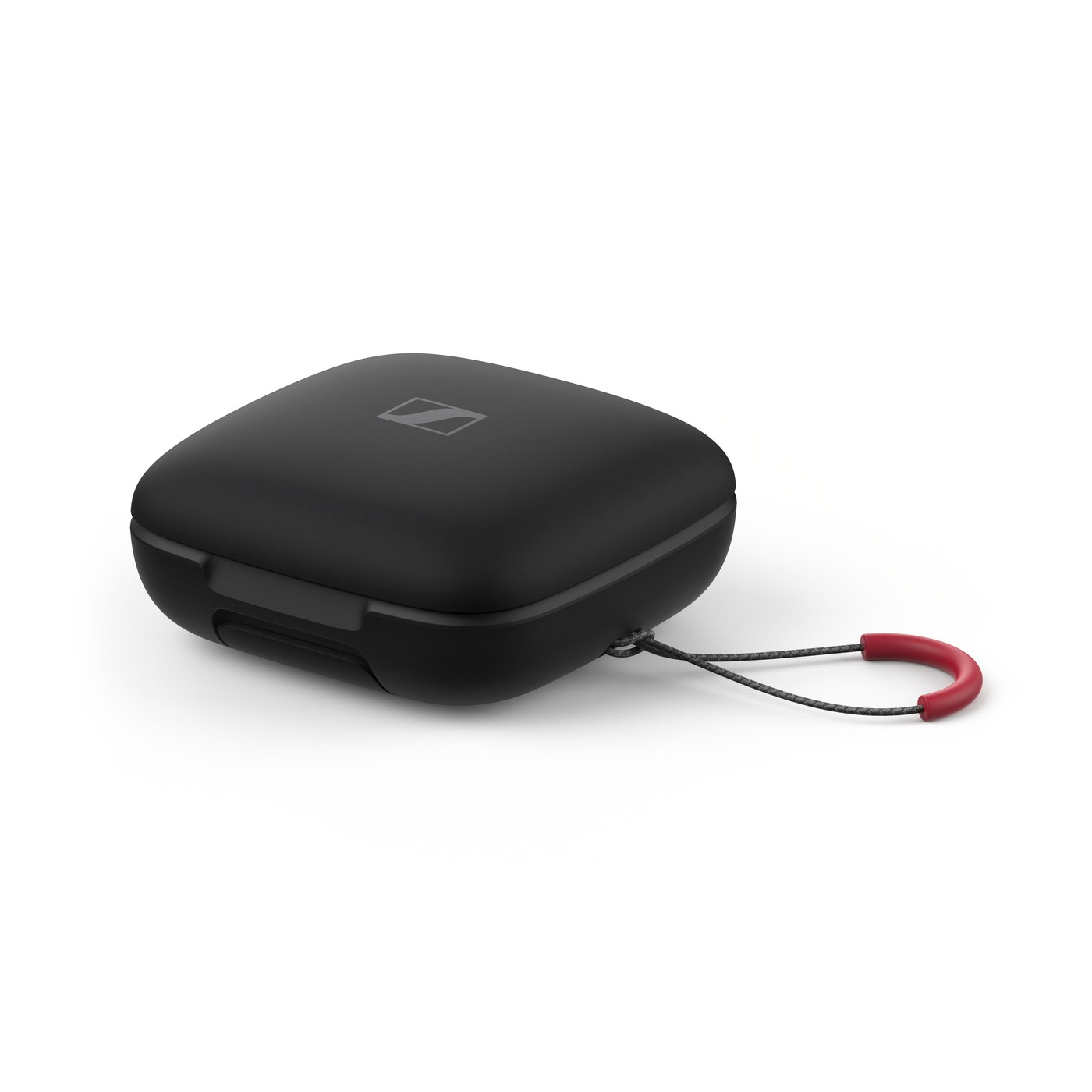
Sturdy case with Qi wireless charging, despite its bulk
Cons
Official price of 329.90 euros, among the highest in the sports category
Water resistance capped at IP55, behind the best dedicated running earbuds
Bulky 78.4-gram case, awkward in a shorts pocket
Measured 0.8-degree gap on body temperature versus the claimed margin
Sensors seen as redundant for runners who already own a GPS watch
The Sennheiser Momentum Sport is aimed first at the music-loving runner who listens to as much music away from sport as during workouts, and wants one high-end product for everything. Its dual heart rate and temperature measurement really pays off for runners who don't wear a GPS watch and want to track their training from their smartphone alone via Polar Flow. On the other hand, trail runners and ultrarunners who need full waterproofing, 10 hours or more of battery life and a controlled budget will be better served by the Shokz OpenRun range or a more affordable in-ear model.
To turn the heart rate and temperature data the Momentum Sport captures into properly structured sessions (intervals, long runs, marathon pace), your best bet is a personalized training plan rather than the motivation of a playlist alone. Explore RunMorph training plans built for your level and your goal, from 10 km to the marathon.
RunMorph Coach verdict
On pure audio, the Sennheiser Momentum Sport delivers exactly what the brand promises: warm sound, outstanding fit and effective noise cancelling. Where it wobbles is its positioning for a demanding sports audience. IP55 water resistance lags behind direct rivals, battery life sits in the middle of the pack rather than at the top, and above all, a price of 329.90 euros makes you wonder whether the heart rate and temperature sensors add real value for anyone who already owns a GPS watch. A good product, but its price and positioning clearly limit our recommendation to a niche audience. RunMorph score: 7/10.
Key takeaways for your training
Fit comes first: the four ear wing sizes included let you fit the Momentum Sport to any ear shape, for intervals and long runs alike.
Sensors as a complement, not a replacement: without a GPS watch, dual heart rate and temperature tracking via Polar Flow becomes a real asset.
Take temperature with a grain of salt: a measured gap of about 0.8 degrees versus a reference sensor means you should follow the trend rather than the absolute value.
IP55, nothing more: fine for sweat and rain, but keep them away from swimming or submersion.
Handy fast charging: 10 minutes buys you close to an hour of playback before an impromptu run.