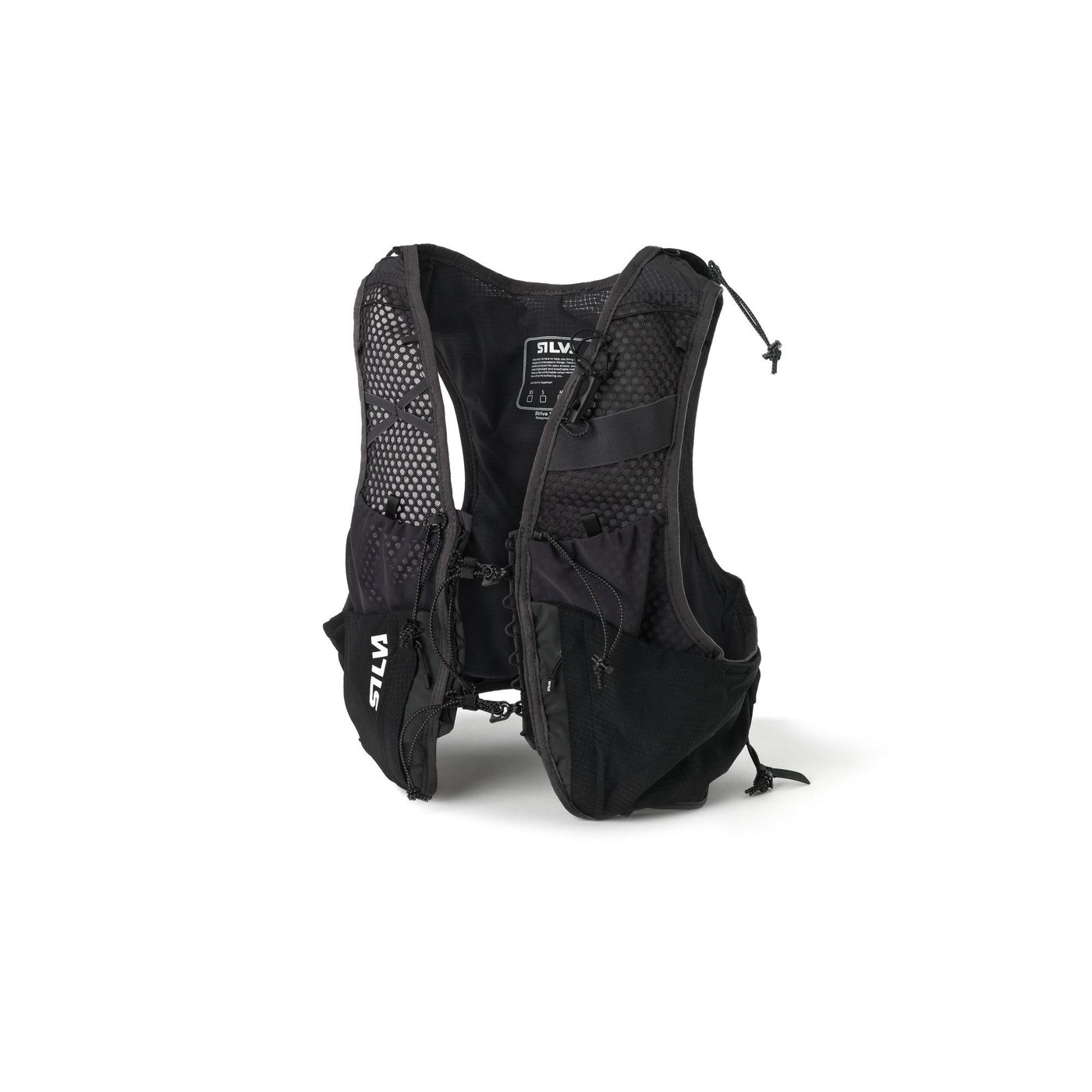
Silva has been selling headlamps and compasses since 1932. Trail running vests, though, are still new territory for the Swedish brand: the Strive 10 Vest has only been around for a few years, against decades as a benchmark in lighting. Yet it already wins on one very specific point, weight, with a figure the official product page doesn't even spell out.
© Silva, official photo used for editorial purposes
Silva, the headlamp brand, tries its hand at trail vests
Silva built its reputation on lighting and navigation: headlamps, compasses and, more recently, GPS watches and heart rate sensors. The Swedish brand only launched its running vest range, the Strive line, in recent years, well behind Salomon or Raidlight, which have held this segment for much longer. So the Strive 10 Vest isn't a standalone entry-level product: it shares its platform with the Strive 5 (runs of one to three hours), the Strive Fly (113 g, fast racing) and the Strive Mountain Pack (17 or 23 litres, multi-day trips). The 10-litre model targets a precise use: long runs of more than three hours and races with a mandatory kit list, where a 5-litre vest runs out of space and a 15-litre one becomes overkill.
The marketing pitch for this model rests on a relative figure rather than an absolute one: Silva claims the Strive 10 Vest is 32% lighter than its predecessor, the Strive Light Black 10, without ever publishing the exact weight on its official product page. An independent field test weighed the vest at 190 g in size M, which lets us work back to the weight of the old model, at around 280 g. At RunMorph, a missing absolute figure on the official page is exactly the kind of detail worth flagging rather than repeating the marketing line as is.
Silva Strive 10 Vest specs
| Brand | Silva |
| Model | Strive 10 Vest |
| Volume | 10 litres |
| Weight (size M, measured) | 190 g |
| Available sizes | XS, S, M, L |
| Materials | Soft ripstop and breathable 3D mesh |
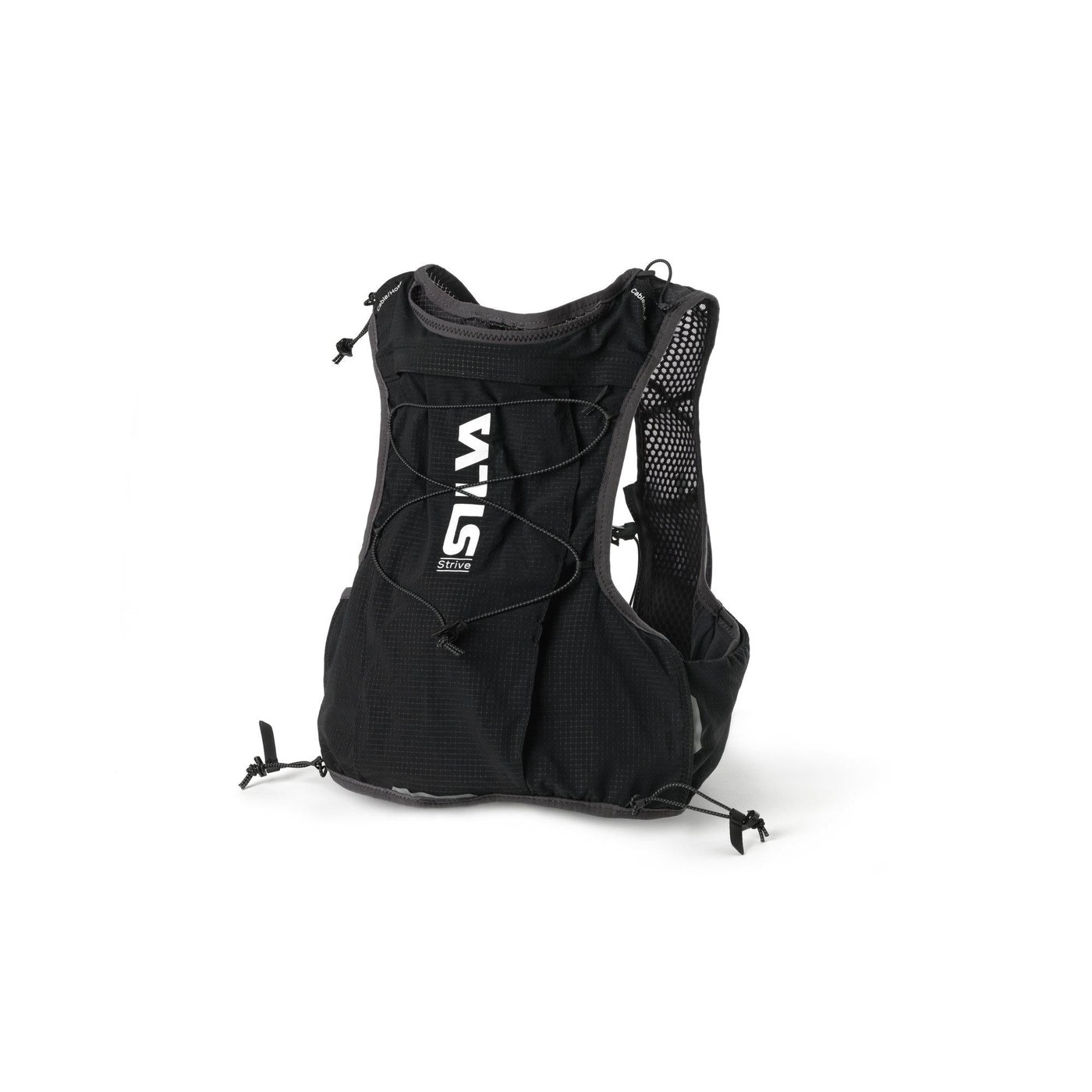
| Front pockets | 2 soft flask pockets with adjustable straps |
| Zipped pockets | 3 (1 on the back, 2 on the front, one with a key clip) |
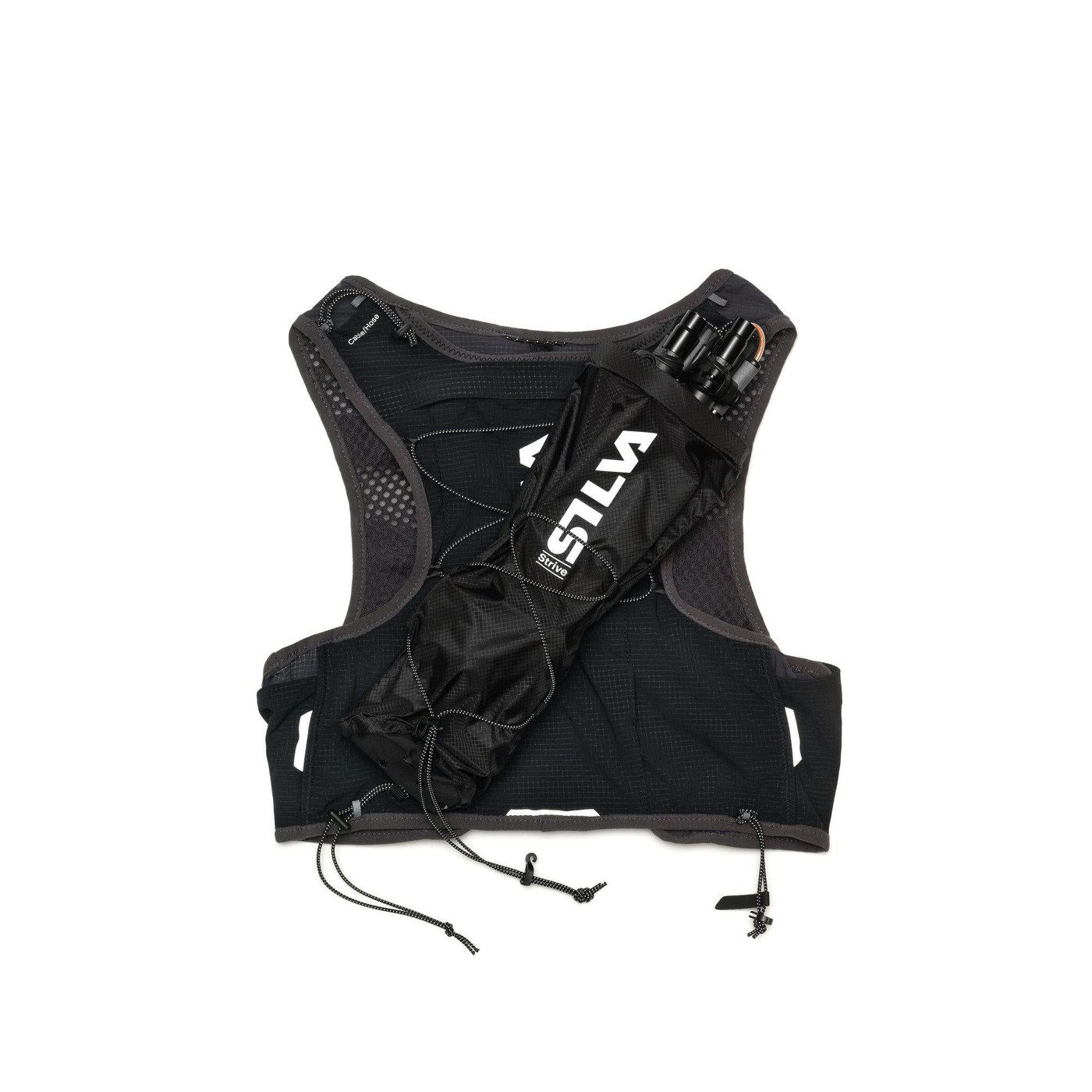
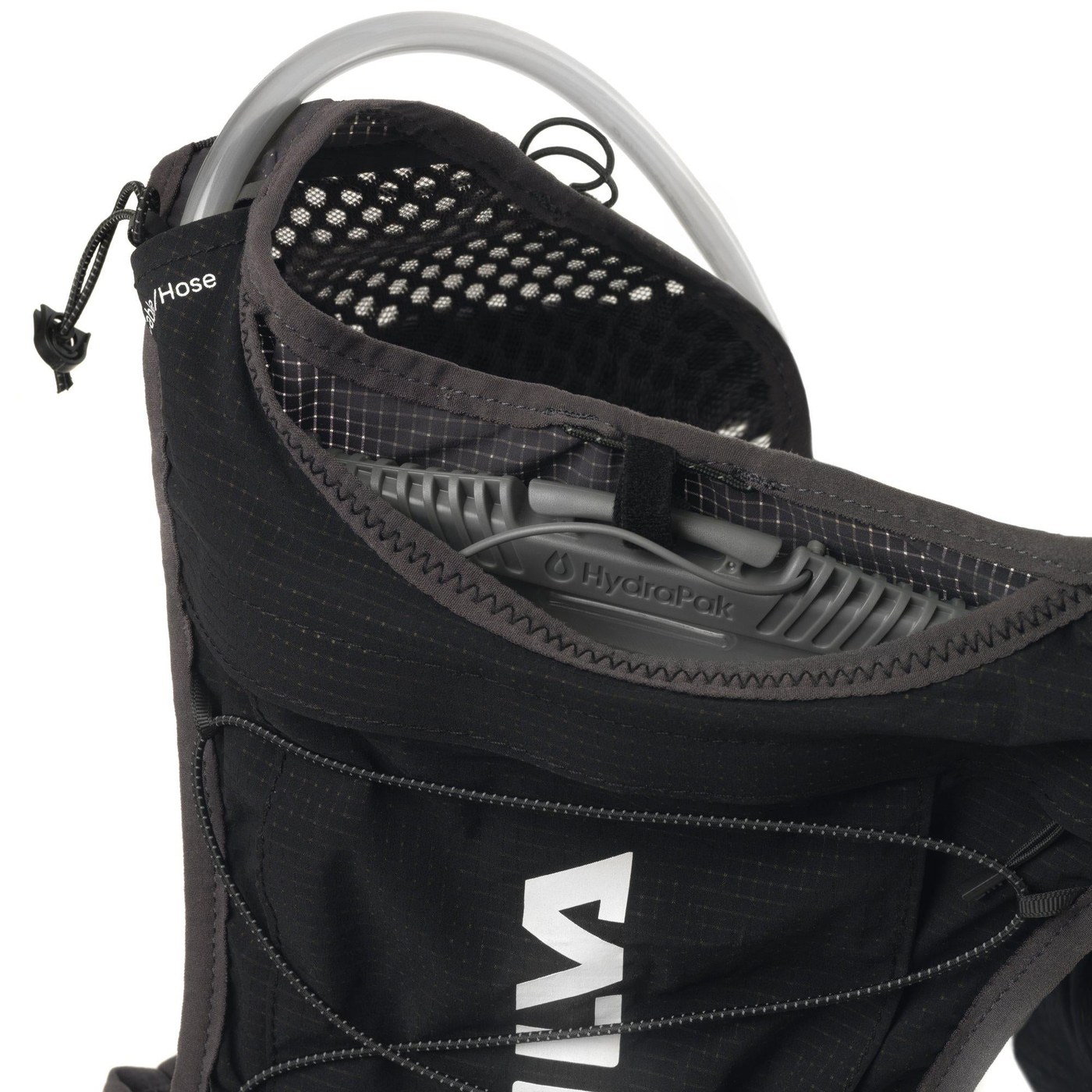
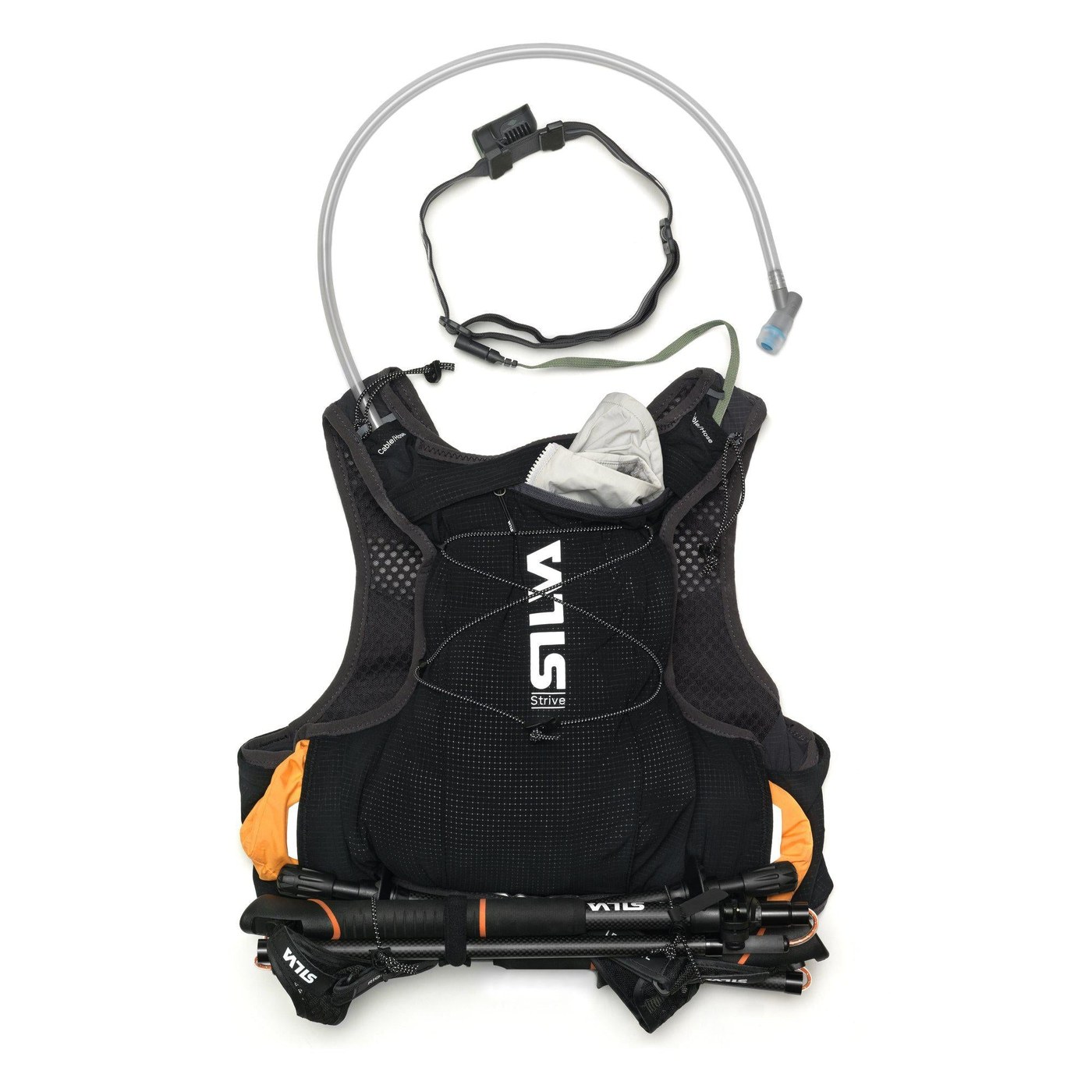
| Hydration bladder compatibility | Yes, dedicated compartment with tube exits at the shoulders |
| Pole holders | 4 removable, adjustable straps, compatible with the Strive Quiver (sold separately) |
| Details | Reflective elements, built-in whistle, front mount for a Silva headlamp |
| Official price | Between 75 and 100 euros depending on the retailer (99.99 euros list price) |
RunMorph tip: if you combine a headlamp and a vest, the Strive 10 Vest has an edge its rivals lack, a front mount designed for a Silva headlamp and a dedicated battery pocket on the back. That makes it a natural match for the Silva Smini Fly, already tested by RunMorph, for night runs.
© Silva, official photo used for editorial purposes
Strive technology: what the switch to ripstop and 3D mesh changes
The Strive 10 Vest drops the stiffer fabrics of the previous generation for soft ripstop paired with breathable 3D mesh across the whole harness. That combination accounts for most of the weight loss Silva claims. The flip side, noted by the independent field test, is the complete lack of padding on the back: nothing separates you from what's inside the vest, so you need to pack it with a bit of method to avoid pressure points. It's also what lets the vest hug your body and barely move while running, a point independently confirmed by the French user review found on Alpiniste.fr.
The bladder compartment deserves its own mention: unlike the The North Face Summit Run 10L already tested by RunMorph, which says nothing about bladder compatibility, the Strive 10 Vest has a dedicated compartment with tube exits at both shoulders, designed for a HydraPak bladder. On this specific point, Silva made a more complete choice than TNF for a much lower price.
© Silva, official photo used for editorial purposes
The field test: two months of running, from the Wiltshire Downs to the Lake District
Cross-checked reviews of this exact model are still few at the time of this test: only one in-depth field test and one French source were identified and read in full, as dedicated French editorial coverage of the Strive 10 Vest (as opposed to retailer product pages) remains thin for this model. We flag this limitation here rather than hide it, in line with RunMorph's cross-checked review rule.
The most complete field test identified covers two months of regular runs on rolling trails, plus one session in the mid-mountains. In size M, the vest fits like a second skin straight out of the box. The chest fasteners, small hooks combined with an adjustment chain, allow a fine-tuned fit but prove fiddly with thick gloves or cold fingers: a concrete flaw, not just an impression. The tester singles out the large open rear pocket, wide enough for a map, as one of the vest's strengths for keeping a waterproof jacket within reach during a race. None of the pockets offers real rain protection, a deliberate choice by the brand in favour of breathability.
The only verified French review available, posted by a user on Alpiniste.fr, lands on the same strengths: easy loading, low weight, good ventilation, a good carrying system and plenty of adjustment, with a clear recommendation. No disagreement was found between the two sources on the vest's core qualities (low weight, stability, no bounce); the reservation about the chest fasteners in cold weather remains, for now, specific to the English-language source and has been neither confirmed nor refuted by a second winter test.
© Silva, official photo used for editorial purposes
Silva Strive 10 Vest vs Kiprun Bag 900 10L: same-volume comparison
| Criterion | Silva Strive 10 Vest | Kiprun Bag 900 10L |
|---|
| Volume | 10 L | 10 L |
| Weight | 190 g | 240 g |
| Price | 75 to 100 euros | around 80 euros |
| Bladder included | Not included, compatible compartment | Yes, 1 L included |
| Pole holders | 4 straps + optional quiver | More basic built-in system |
Put simply, the Kiprun has the edge of including a bladder out of the box and costs slightly less, a strong argument for a first vest. The Strive 10 Vest wins on weight (a 50 g gap you'll feel over a race of several hours) and on its more modular pole-carrying system. It comes down to priorities: all-inclusive at a low price versus a lighter, more technical vest for almost the same budget.
Silva Strive 10 Vest vs Salomon ADV Skin 12: the premium comparison
| Criterion | Silva Strive 10 Vest | Salomon ADV Skin 12 |
|---|
| Volume | 10 L | 12 L |
| Price | 75 to 100 euros | 160 to 230 euros |
| Carrying system reputation | Confirmed by a field test and a user review | The market's long-standing benchmark |
| Bladder compatibility | Yes | Yes, up to 1.5 L |
The Salomon remains the benchmark of the premium segment, and its SensiFit system still sets the standard after years on the market. But the Strive 10 Vest covers the essentials (comfort, hydration, pole carrying) for less than half the price. For a runner getting into ultras, or one who wants a lighter second vest without breaking the bank, the Silva is a defensible choice against a Salomon whose case rests mainly on product longevity and the brand's after-sales service.
© Silva, official photo used for editorial purposes
Pros
- 190 g measured, among the lightest in the 10 L category
- HydraPak bladder compatible, unlike several rivals at the same price
- Dedicated Silva headlamp mount, handy for night runs
- Under 100 euros for a complete 10 L vest
- Stability independently confirmed by two separate sources
Cons
- Chest fasteners fiddly with gloves or cold fingers
- No rain-resistant pocket, phone needs separate protection
- No back padding, pack carefully to avoid pressure points
- No official weight on Silva's product page, only a relative percentage
Our field verdict: who does this vest make sense for?
The Strive 10 Vest suits runners preparing a four-to-eight-hour race with a mandatory kit list (waterproof jacket, warm layer, beanie, gloves, first aid kit) who don't want to spend more than 150 euros on a vest. It also suits anyone looking for a second vest lighter than their usual 12 or 15 litres for runs where full self-sufficiency isn't needed. It's a weaker fit for runners who regularly train in heavy rain, since there's no dedicated protection, and an even weaker one for those with big hands or who often run in thick gloves, because of the chest fasteners.
To structure the long runs that justify a 10-litre vest, whether it's an ultra build-up or a weekly long run on the way to your first trail race,
RunMorph offers
trail training plans that set the volume and intensity of those runs instead of leaving them to chance.
RunMorph Coach's verdict
The Silva Strive 10 Vest delivers on a simple promise: a light, well-designed 10-litre vest for under 100 euros. The 190 g measured independently put it among the lightest vests in its volume class, and native bladder compatibility sets it apart from several similarly priced rivals. The reservations are about concrete details, fasteners that are awkward in the cold and zero rain protection, not about the overall design of the product. For a runner who accepts those trade-offs in exchange for an accessible price, it's a purchase that holds up. 7.9/10.