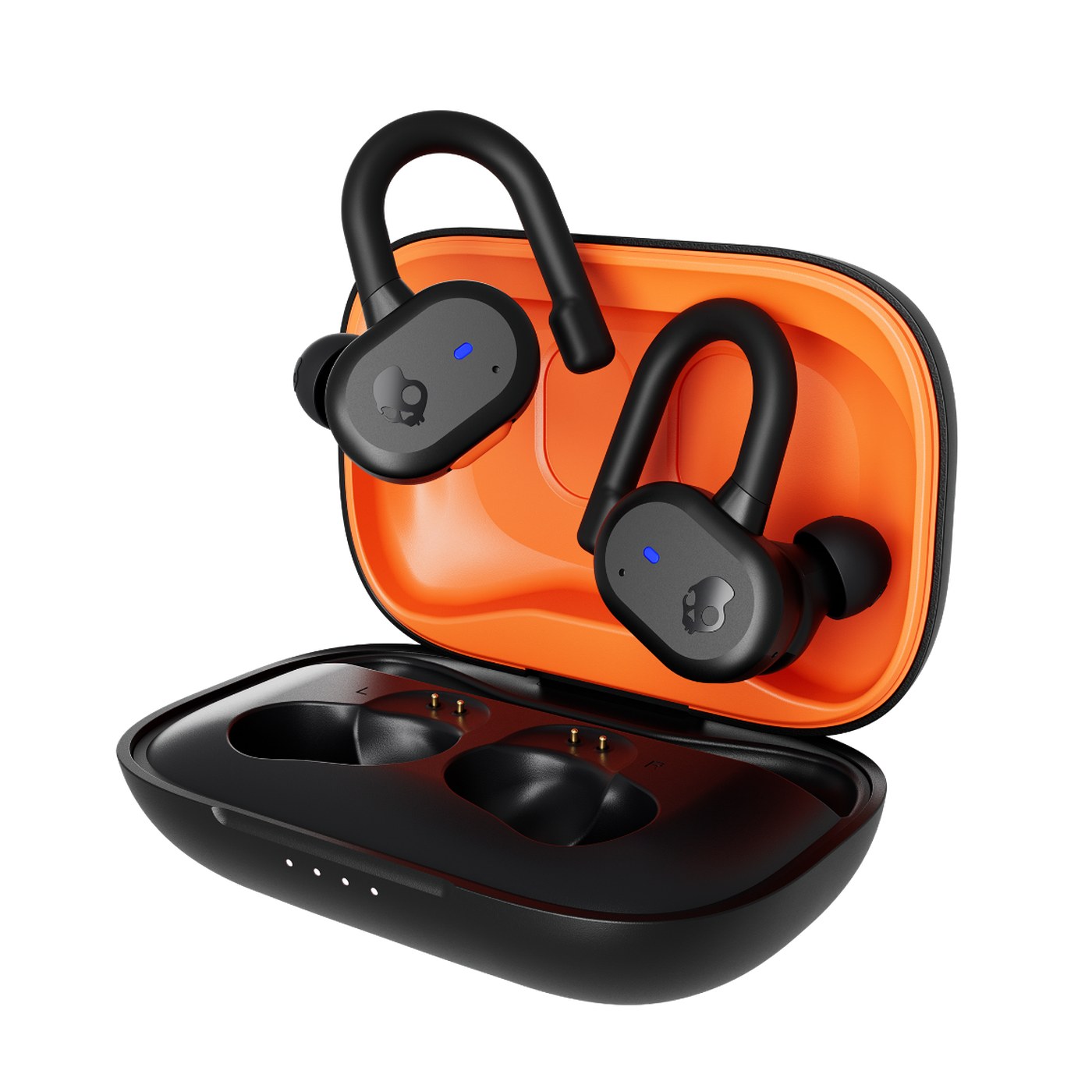
Ear-hook earbuds have a bad reputation style-wise, but they fix the one real problem with cheap sports earbuds: falling out mid-session. Skullcandy plays that card to the hilt with the Push Active, sold at €79.99, betting everything on fit and battery life rather than on sound or touch controls.
Skullcandy Push Active: 44 hours of battery and an unbreakable ear hook, but a voice that only speaks English
7.8/10
The essentials in 3 sentences
The Skullcandy Push Active stay put thanks to a flexible over-ear hook that no tester has seen give way, even when skiing or trail running. The battery delivers 44 hours in total, 10 hours in the earbuds and 34 hours in the case, with a 10-minute quick charge good for 2 extra hours of listening. On the flip side, the sound is decent but nothing more, the IP55 rating lags behind premium models, and the Skull-iQ voice commands only work in English.
7.8
/ 10 · RunMorph overall score
Who is it for?Runners who keep losing regular earbuds mid-session and want a rock-solid fit without spending more than €80.
Who should skip it?Anyone after active noise cancellation, rich and detailed sound, or voice commands that work in a language other than English.
Skullcandy Push Active: betting on the hook rather than the sound
Launched in late 2021, the Skullcandy Push Active are still on sale in 2026 on the brand's official site and at mainstream retailers, at an unchanged price of €79.99. What sets them apart is obvious the moment you open the case: a soft rubber hook sits behind each ear, a solution usually found on much pricier models like the Beats Powerbeats Pro 2. Skullcandy delivers the same fit concept at less than a third of the price, with a deliberate trade-off on the rest of the spec sheet: no active noise cancellation, no touch controls, and an IP55 rating that trails the IP68 of premium sports models.

© Skullcandy, official photo used for editorial purposes
To make up for the lack of touch controls, Skullcandy relies on Skull-iQ, a suite of eleven voice commands triggered by the wake phrase "Hey Skullcandy". Skipping tracks, answering a call, turning on ambient listening mode or even triggering the camera on your paired smartphone: everything goes through your voice rather than your fingers. These voice commands only recognize English, though, a limitation every test we reviewed documents in the same way, with no announced date for support of other languages.
Objective technical data
| Brand | Skullcandy |
| Model | Push Active |
| Type | True wireless in-ear with over-ear hook |
| Weight | 95 g in total (earbuds and case) |
| Connectivity | Bluetooth 5.2 |
| Driver | 6 mm, 105 dB ± 3 dB, 20 Hz to 20 kHz response |
| Battery life | 44 hours total (10 h earbuds, 34 h case), quick charge 10 min = 2 h |
| Water resistance | IP55 (sweat, rain, dust) |
| Controls | Skull-iQ voice commands (English only) and a physical button on each earbud |
| Extra features | Built-in Tile tracking, Spotify Tap, preset equalizer via the Skullcandy app |
| Colors | Black/orange, dark blue/green, light gray/blue |
| Street price | €79.99 |
Fit confirmed in real-world use, ambient mode a letdown: what cross-checking the tests reveals
On fit, the verdict is unanimous. A field test carried out running and skiing, with the earbuds used in both activities without ever slipping even slightly, matches the findings of two French testers who evaluated the product in CrossFit, running and everyday use, all agreeing on how reliable the over-ear hook is despite its bulky size. The case, however, doesn't win everyone over on looks: one of the French testers called it "really bulky", but nobody questions its charging efficiency or its toughness.
The disagreement lies elsewhere, on ambient listening mode. Both French tests praise Aware mode (available on demand, handy at the gym or in group classes like Zumba) without any particular reservations. A field test based on extended outdoor use, on the other hand, calls the equivalent Stay Aware feature disappointing, saying it "doesn't do much" once switched on in real city traffic. The gap most likely comes down to context: a mode designed for an enclosed gym performs worse on a noisy sidewalk, something Skullcandy doesn't mention anywhere in its documentation.
What the product page doesn't tell you
Ambient listening mode works well indoors (group classes, gym) but struggles to let voices or traffic through during extended outdoor use. If safety in urban settings is your priority, don't rely on this feature alone.
Ambient listening mode works well indoors (group classes, gym) but struggles to let voices or traffic through during extended outdoor use. If safety in urban settings is your priority, don't rely on this feature alone.
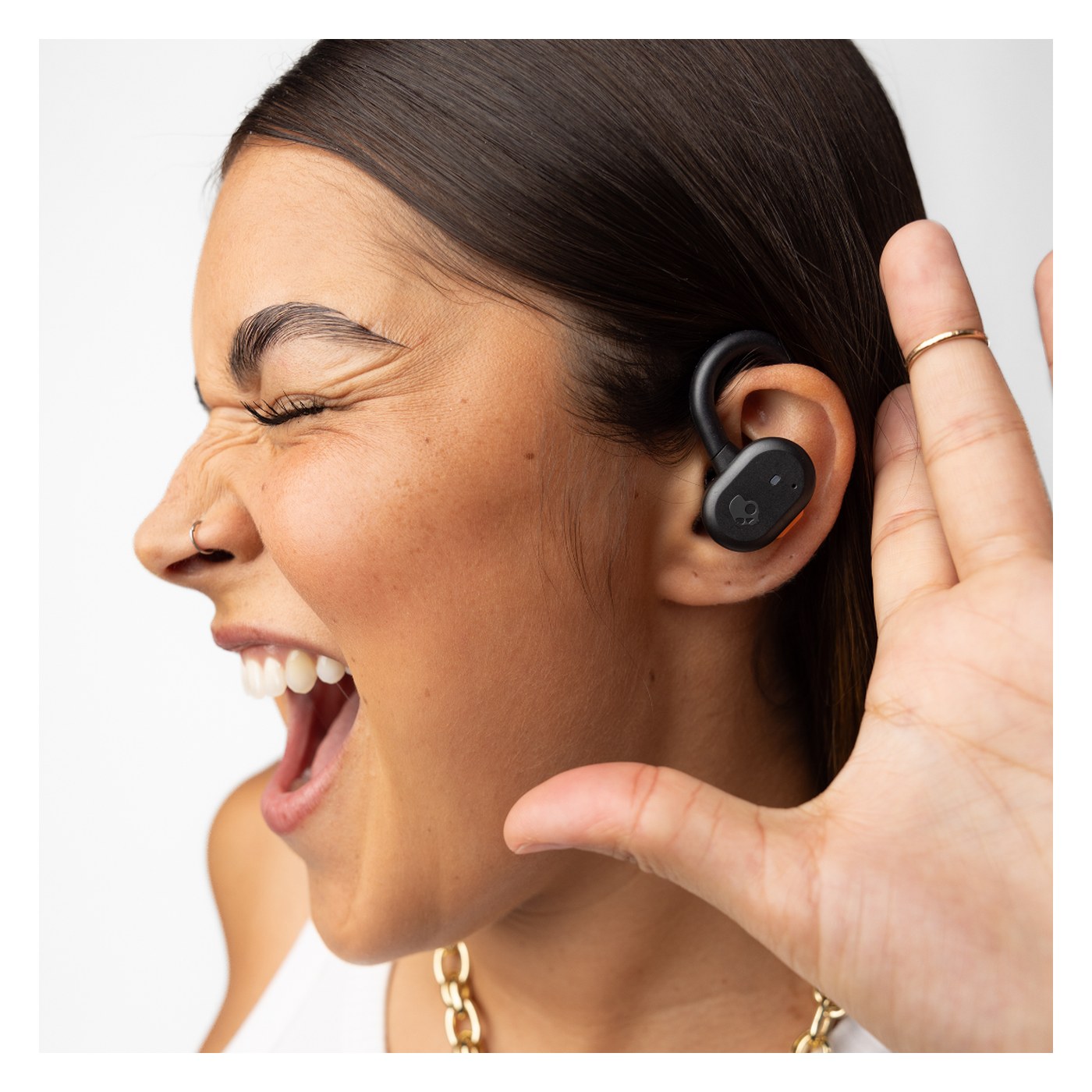
© Skullcandy, official photo used for editorial purposes
Who are the Push Active for?
Runners who lose or break regular earbuds
This is Skullcandy's number one target. The over-ear hook eliminates the risk of falling out that threatens regular in-ear buds during intervals or technical descents, at a lower price than most competitors with the same kind of fit.
Multi-sport athletes who want their hands free
Cycling, climbing, skiing: the Skull-iQ suite really comes into its own as soon as pulling out your phone becomes risky or impractical. As long as you speak English to the controls, skipping a track or answering a call happens without a second thought.
Who should look elsewhere
Audiophiles who want rich sound, runners who insist on active noise cancellation for city running, or non-English speakers who refuse to say "Hey Skullcandy" just to skip a track. On these three specific points, the competition does better, often at a higher price.
RunMorph tip: choose the Push Active for what they genuinely do well, staying put and going the distance on battery. If polished sound or active noise cancellation is your priority, look at the JBL Endurance Race 2, available at a similar price with ANC.
The field test: what the cross-checked reviews report
On sound quality, all three sources we reviewed land on the same nuanced verdict without exception: balanced sound across the frequency range, but recessed bass. A French test covering everyday use points to lows "that could be stronger and deeper", while a field test in real sports conditions rates the sound quality as simply "average", adding that it's still more than enough to power a workout rather than for careful listening.
On battery life, no disagreement at all: the 44 hours in total claimed by Skullcandy are confirmed without reservation by every source, as is the 10-minute quick charge for 2 hours of listening, judged almost as fast as a warm-up by the tester who paired the trial with ski sessions. On voice commands, the same consensus on the technical effectiveness of the Skull-iQ system, immediately followed by the same unanimous caveat: they only work in English.
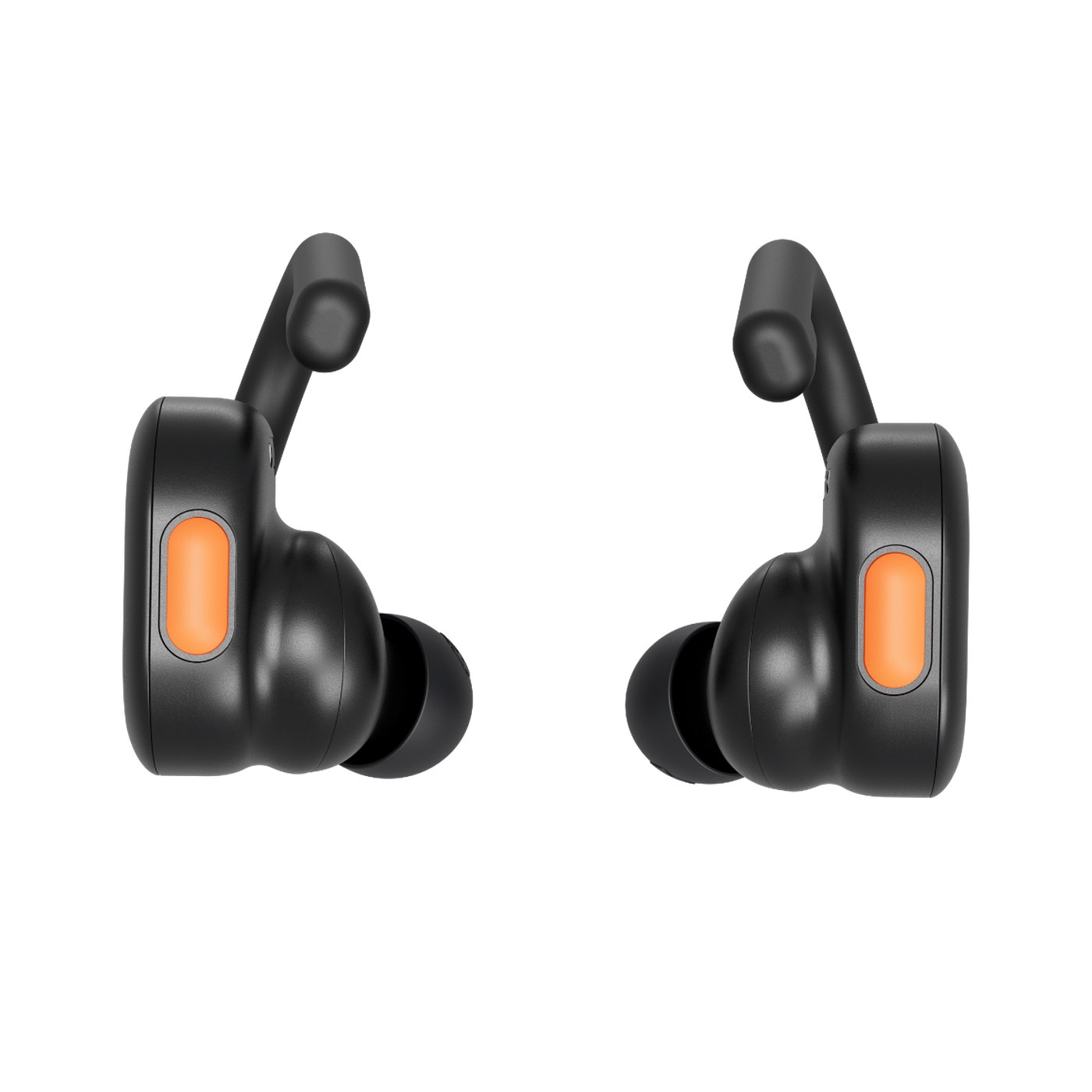
© Skullcandy, official photo used for editorial purposes
Skullcandy Push Active vs Beats Powerbeats Pro 2: head to head
| Criterion | Skullcandy Push Active | Beats Powerbeats Pro 2 |
|---|---|---|
| Fit type | Soft over-ear hook | Soft over-ear hook |
| Active noise cancellation | No | Yes |
| Built-in heart rate sensor | No | Yes |
| Water resistance | IP55 | IPX4 |
| Battery (earbuds only) | 10 h | 10 h |
| Controls | Voice (English) and physical button | Multilingual touch controls |
| Street price | €79.99 | €249.95 |
Both models use the same fit concept, proof that the over-ear hook isn't reserved for high-end gear. The price gap, around €170, comes down to the ANC, the heart rate sensor and the multilingual touch controls of the Beats Powerbeats Pro 2, all missing on the Skullcandy. For basic sports use without biometric tracking, the feature gap doesn't necessarily justify the price gap.
Pros and cons
ProsRock-solid fit confirmed running, skiing and in CrossFit ✓ 44 hours of total battery life with a 10-minute quick charge for 2 hours ✓ Complete Skull-iQ voice command suite (Tile, Spotify Tap, photo capture) ✓ Far cheaper than premium hook models ✓ You can use just one earbud at a time
ConsVoice commands work in English only ✗ Decent sound but recessed bass, far from audiophile territory ✗ No active noise cancellation ✗ IP55 rating trails premium sports models ✗ Bulky charging case, not ideal for a small pocket
How to fit the Push Active into your RunMorph training plan
The Push Active's secure fit makes them a logical choice for sessions where a regular earbud is most likely to fall out: hill intervals, technical trail runs, floor-based strength work. Since each earbud works independently in either ear, you can run with just one during the phases where staying aware of your surroundings matters, then switch back to stereo for the hardest part of the session.
To structure those interval sessions or long runs, pair the Push Active with one of the RunMorph training plans built for your goal, from 10K to marathon. Fit won't be an issue anymore; all that's left is managing your pace.
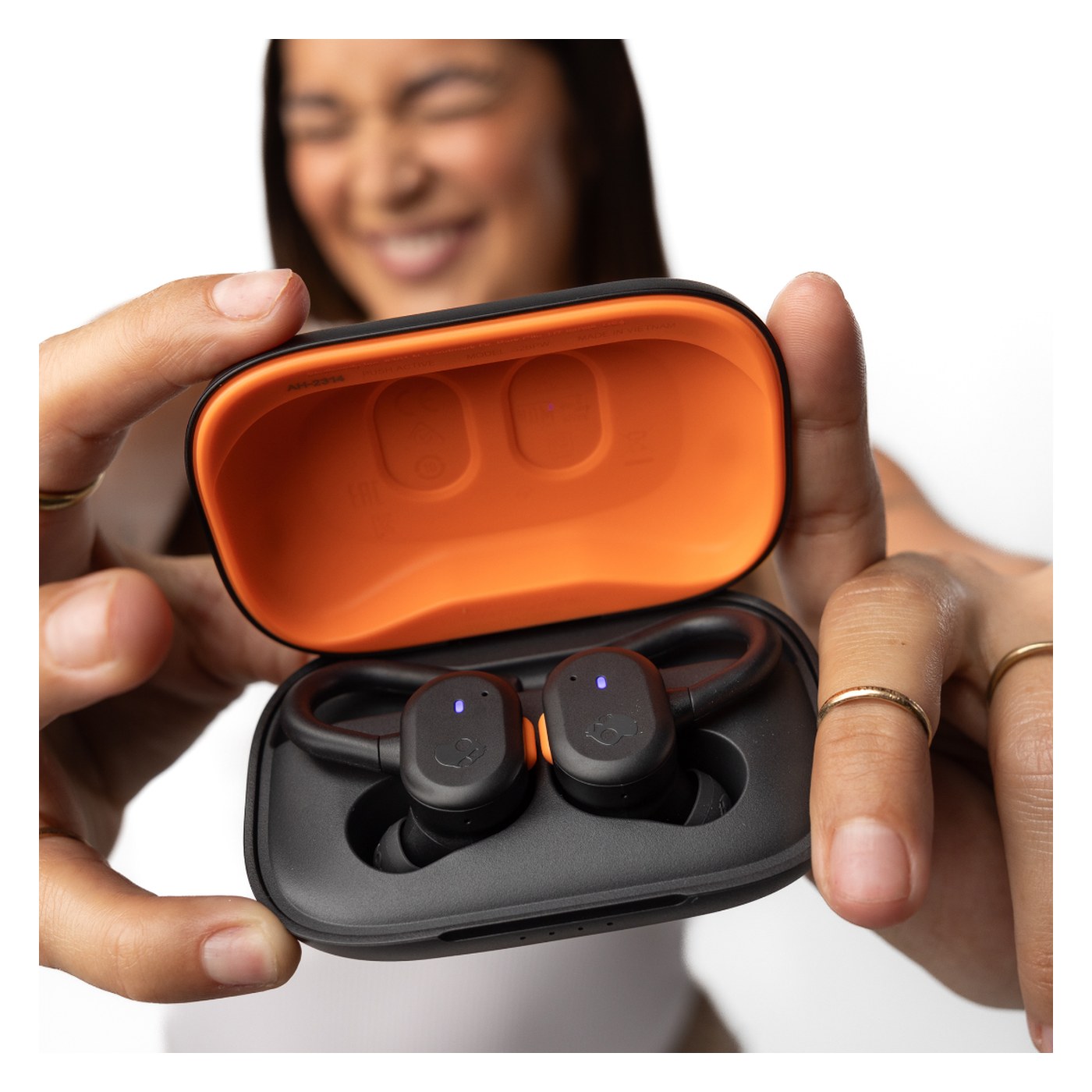
© Skullcandy, official photo used for editorial purposes
RunMorph Coach verdict
The Skullcandy Push Active make one simple promise and keep it well: never falling out mid-effort, with battery life that covers one to two weeks of training without a recharge. The rest of the spec sheet openly accepts the compromise of an entry-level price: honest but unremarkable sound, water resistance that trails the high end, and voice commands that ignore every language except English. 7.8/10: an excellent pick if fit and budget come first, best kept for pure sports use rather than demanding everyday listening.
Key takeaways for your training
- Over-ear hook tested running, skiing and in CrossFit: none of the testers we reviewed reports a single fall, even under intense use.
- 44 hours of total battery life: 10 hours in the earbuds, 34 hours via the case, 10-minute quick charge for 2 hours.
- Skull-iQ voice commands in English only: the weak spot every test agrees on, with no announced date for other languages.
- Keep ambient mode for indoors: effective at the gym, judged disappointing for safety during extended outdoor use.
- IP55 and no ANC: the deliberate trade-off of a €79.99 price tag against premium hook models.