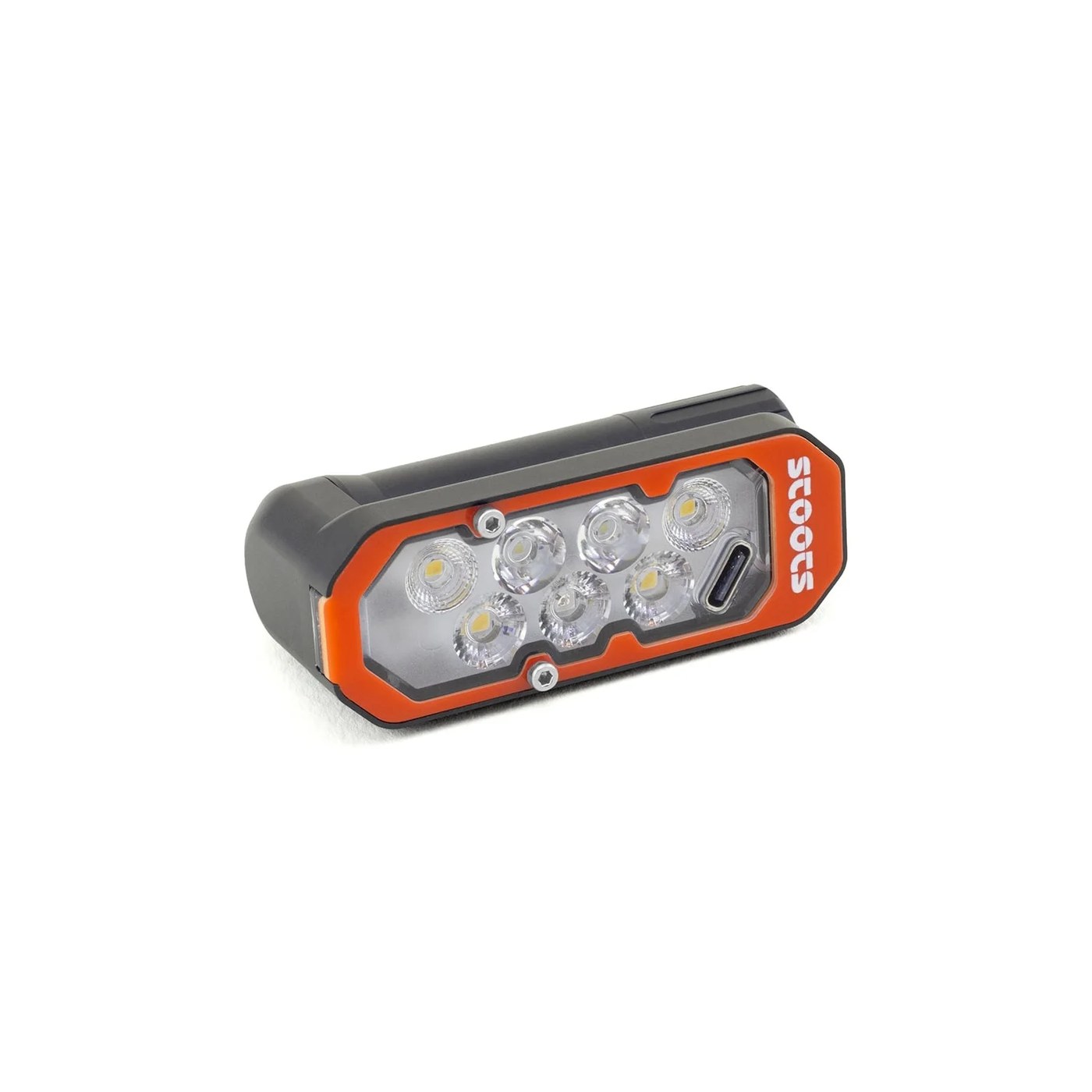
A French headlamp, machined by hand, that promises the best weight-to-power-to-runtime ratio on the market: in two years, the STOOTS Kiska 3 has become the benchmark for trail runners who run at night. At €145, it takes on Petzl and Silva on their home turf.
© STOOTS, official photo used for editorial purposes
STOOTS, the French headlamp shaking up Petzl and Silva on their home turf
Two heavyweights have dominated the trail headlamp market for years: Petzl and Silva. Up against them, a small French brand working out of its own workshop has built its reputation on yearly updates and very strong word of mouth in the ultra-trail community. STOOTS doesn't sell its lamps in big-box sporting goods stores. It sells direct, with an unapologetically technical pitch and a clearly premium positioning.
The Kiska 3 is the third generation of the brand's flagship model, launched alongside the more compact Hekla 3. At RunMorph, we see STOOTS making a choice that's rare in this sector: rather than piling up entry-level models, the brand focuses its lineup on a handful of premium models, all built around the same modular easyLock concept.
Kiska 3 specs: the detail that changes everything
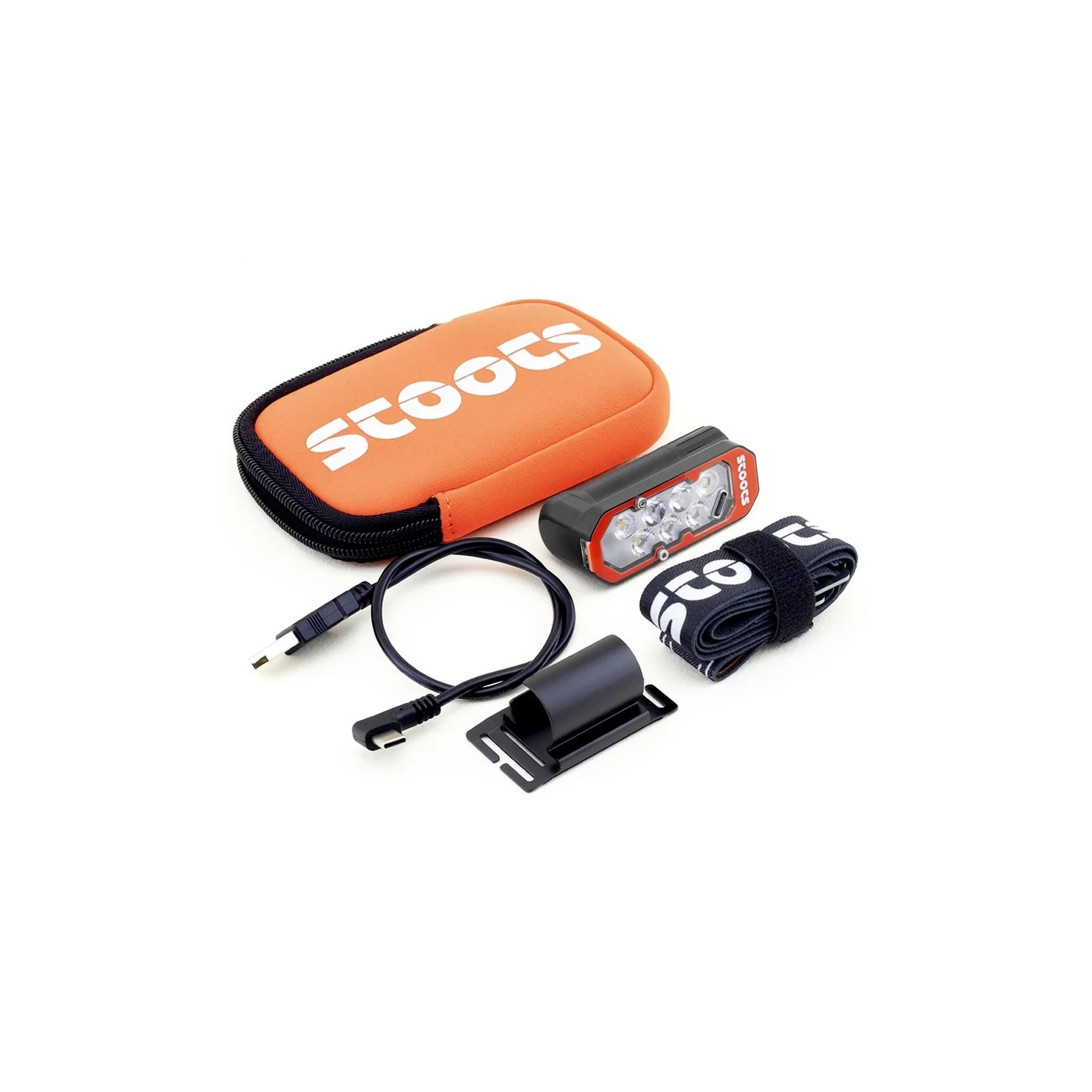
| Brand | STOOTS |
| Model | Kiska 3 |
| Origin | France, handcrafted in the brand's workshop |
| Max output | 1200 lumens (5 levels: 100, 200, 400, 700, 1200 lm) |
| Weight | 89 g (lamp + battery) / 118 g with mount and strap |
| Claimed battery life | 7 h at 400 lumens, 30 h at 100 lumens |
| Beam | Mixing Focus technology, 3 blended widths (wide, medium, narrow), range up to 120 m |
| Water resistance | IP68 (30 min of immersion down to 2 m) |
| Battery | easyLock 18, 12 Wh / 3350 mAh, swappable, USB-C charging |
| Color temperature | 4000 Kelvin (warm, natural rendering) |
| Material | Machined anodized aluminum |
| Official price | €145 (full kit), €155 in special colors |
© STOOTS, official photo used for editorial purposes
Mixing Focus and electronic regulation: what difference does it make in the dead of night?
The Kiska 3's technical signature is called Mixing Focus. Instead of a single beam whose shape stays fixed whatever output you choose, the lamp combines 6 white LEDs split into three pairs (wide, medium, narrow) that switch on progressively depending on the level you select. On climbs, the wide, diffuse beam lets you read the nearby terrain without eye strain. On technical descents, the beam tightens and reaches up to 120 meters, giving you time to spot a tricky section before you commit to it.
The other technical argument the brand pushes is constant electronic regulation. Where part of the market sees brightness fade as the battery drains, the Kiska 3 holds its rated output from start to finish of the runtime available at that level. Several independent testers confirm this, and it sets the brand apart from some competitors whose regulation is only partial.
The field test: from evening training to overnight ultras
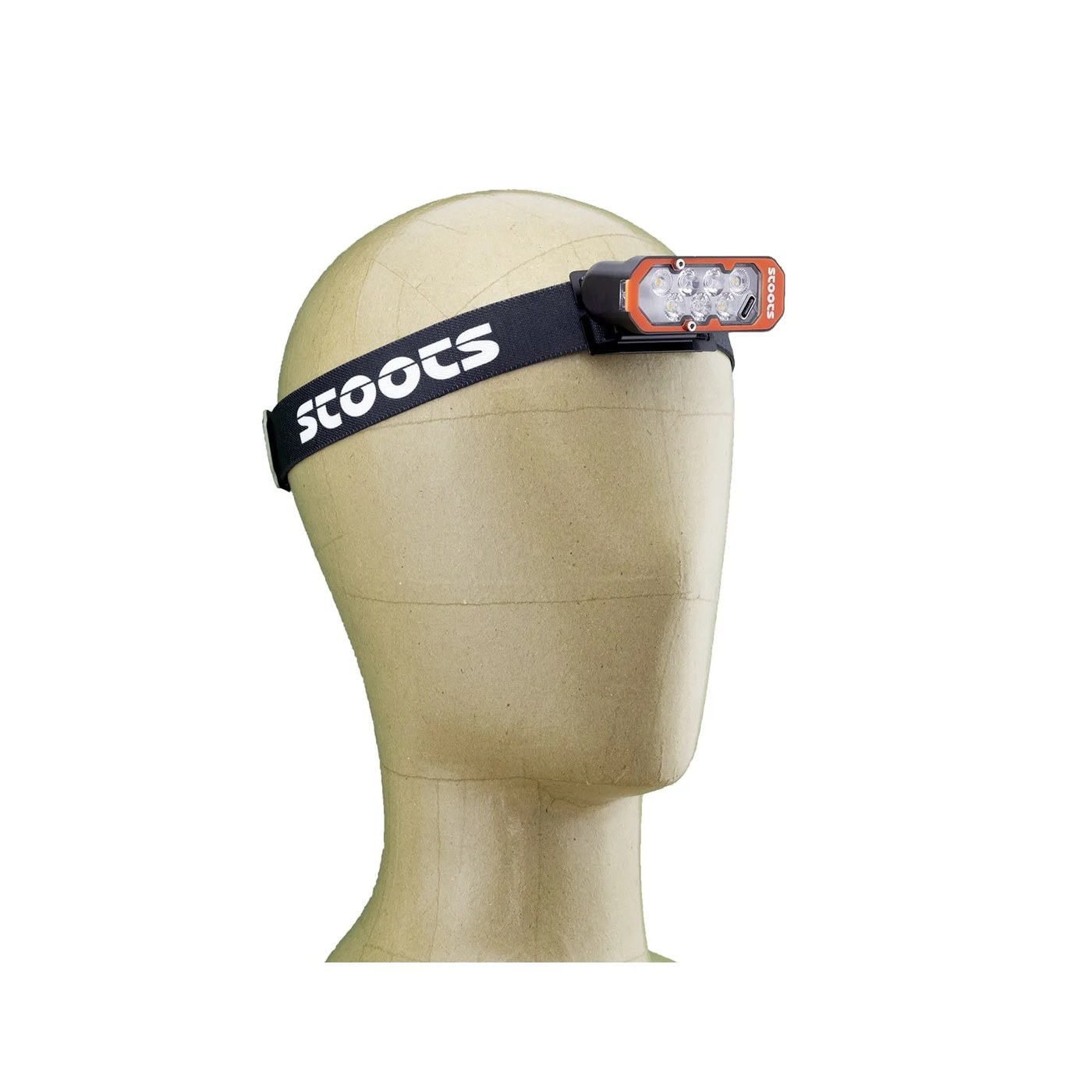
At RunMorph, we found that the Kiska 3's weight-to-power trade-off delivers on the trail. Independent tests converge on several concrete points. The lamp sits steadily on your head on climbs, but you need the top strap (sold separately, €12) as soon as the descents turn technical; several testers flag this and recommend always adding it to the base kit. The warm 4000 Kelvin light wins unanimous praise: testers describe it as easier on the eyes than the bluish white of rival lamps, with no tunnel effect and no stray halo.
Opinions split sharply, though, on real-world battery life at the 400-lumen level, the mode runners use most. The manufacturer claims 7 hours, a figure two testers confirmed as-is on their first runs. A third tester, after several months of repeated use and a more thorough field measurement protocol, recorded only 4 h 30 min of actual runtime at the same level: a gap of nearly 40% from the claimed figure. At RunMorph, we think this discrepancy deserves to be taken seriously. On an ultra with a long night section, pack a spare battery (€30, swappable in seconds thanks to the easyLock system) rather than relying strictly on the marketing figure.
RunMorph's tip: on an ultra with several hours of darkness, start with a spare easyLock 18 battery instead of basing your plan on the claimed runtime. The hot-swap charging system (a backup battery charges while the other one powers the lamp) makes the switch almost seamless, unlike a headlamp such as the Ledlenser NEO9R, which you have to switch off to recharge.
© STOOTS, official photo used for editorial purposes
STOOTS Kiska 3 vs Petzl Swift RL: the comparison to help you choose
In the premium segment of high-output, highly responsive headlamps, the Kiska 3 goes head to head with the Petzl Swift RL, the long-standing benchmark in the category.
| STOOTS Kiska 3 | Petzl Swift RL |
| Max output | 1200 lumens | 1100 lumens |
| Beam technology | Manual Mixing Focus, 3 widths | Automatic Reactive Lighting |
| Weight | 89 g (118 g with strap) | Heavier, rear-mounted battery |
| Manufacturing | France, handcrafted | France, industrial |
| Price | €145 | Similar positioning |
The difference in philosophy is clear: the Petzl Swift RL automatically adjusts its output to the ambient light, while the Kiska 3 leaves the runner in full control. It's a deliberate choice by STOOTS that guarantees predictable output, but the three-button interface takes some getting used to.
Our field verdict: who is the Kiska 3 for?
Trail runners who log night runs all year round
This is the profile that gets its money's worth. One headlamp for winter morning training and summer ultras, with the option of adding a spare battery instead of buying a longer-lasting model.
Runners preparing an ultra with a long night section
The Kiska 3 holds up, provided you start with an extra easyLock 18 battery and the stabilizing strap. Pairing it with the Misti 3 (an ultralight backup headlamp that uses the same mount) makes a lot of sense for meeting the mandatory gear rules of many races.
Occasional runners who rarely head out after dark
This profile doesn't need this level of technology. A more affordable entry-level headlamp will do the same job for occasional runs of under an hour.
To structure your winter night runs or an ultra build-up with a night section, check out
our RunMorph training plans: they include sessions at unusual hours, exactly the kind that justify investing in a premium headlamp like the Kiska 3.
RunMorph Coach verdict
The STOOTS Kiska 3 lives up to its reputation as the benchmark for weight, power and runtime, with a warm light that makes a real difference to eye fatigue at the end of a night run. But the measured gap between claimed and real-world battery life at 400 lumens (up to 40% depending on the tester) has to factor into your ultra preparation, not just get a passing mention. 8/10: a premium headlamp that earns its price for regular use, but at €145 it's no impulse buy.