September 25, 2026Suunto 5 Peak: 39 g, 40 hours of battery and 299 euros, but no barometer or compass
6.7/10
Suunto sells the 5 Peak as a watch built for "training, exploration and wellbeing". The word exploration implies two basic instruments on any outdoor watch: a barometric altimeter and an electronic compass. The 5 Peak has neither, and the product pages are in no hurry to tell you.
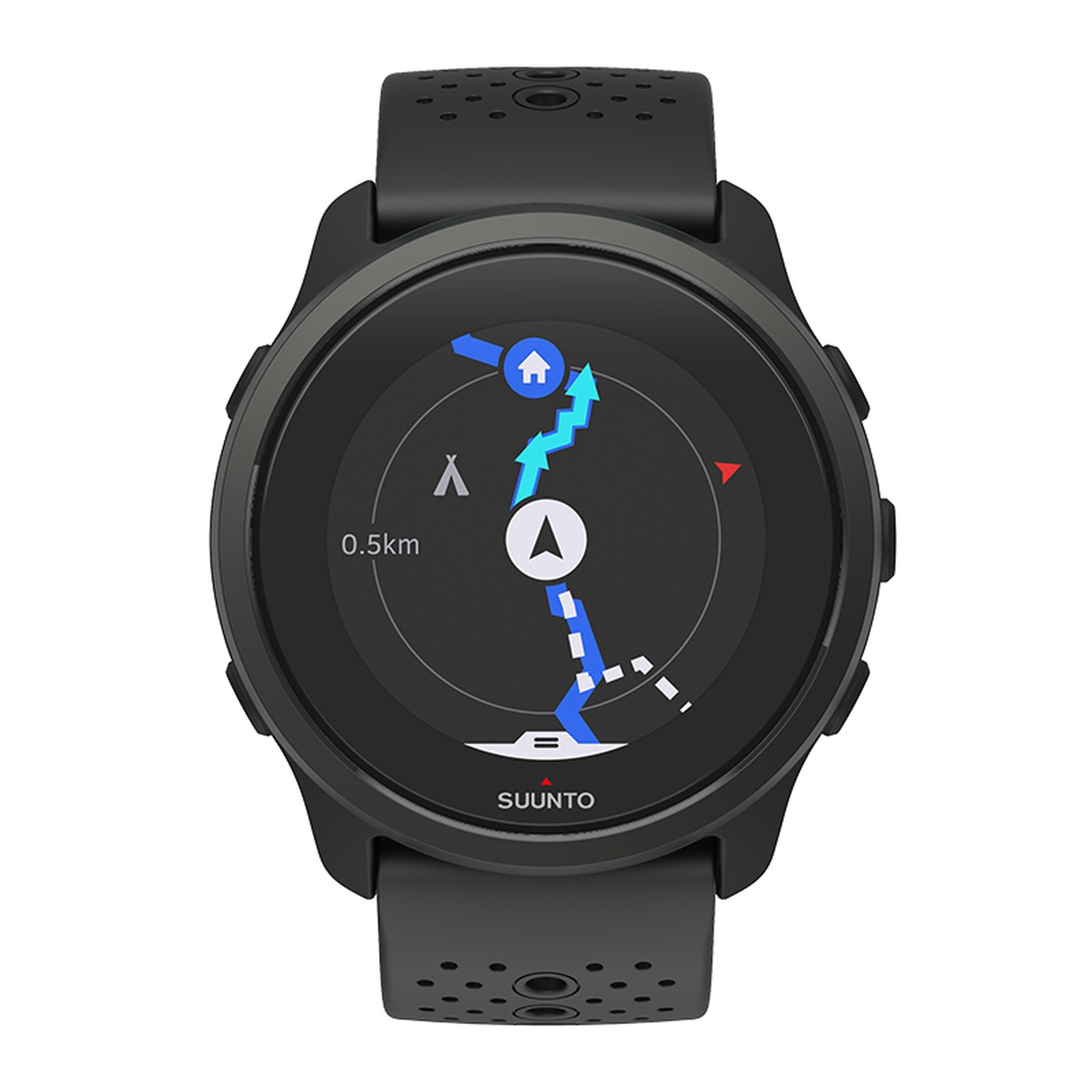
© Suunto, official photo used for editorial purposes
The bottom line in 3 sentences
The Suunto 5 Peak bets on low weight (39 g) and flexible battery life of up to 100 hours for 299 euros. It claims an outdoor positioning without the two instruments that define a real trail watch: no barometer, no electronic compass. That's a defensible choice for a road runner or an occasional hiker, and a much harder sell next to the Suunto Run, released later with an AMOLED screen and dual-band GPS the 5 Peak lacks, for less money.
6.7
/ 10 · RunMorph overall score
Comfort and weight
8.5 / 10
Who is it for?The road runner or occasional multisport athlete who wants a light watch that lasts several days, without breaking the bank and without needing maps.
Who should skip it?The trail runner who navigates in the mountains and relies on a barometric altimeter and compass to find the way, or the triathlete who wants multi-band GPS and mapping.
Suunto 5 Peak: an outdoor watch with no altimeter or compass, what it really is
Suunto puts the 5 Peak in the same family as the Vertical and the Race: the word "Peak" and the focus on multi-GNSS suggest a hiking or light trail watch. In reality, the 5 Peak has no barometer and no electronic compass, two sensors you'll find on much cheaper watches from Garmin (the Instinct 2, also under 300 euros, has both). Within Suunto's own lineup, the Vertical offers them at 599 euros. So the 5 Peak sits in an odd niche: a light multisport watch that borrows trail vocabulary without the full trail toolkit.
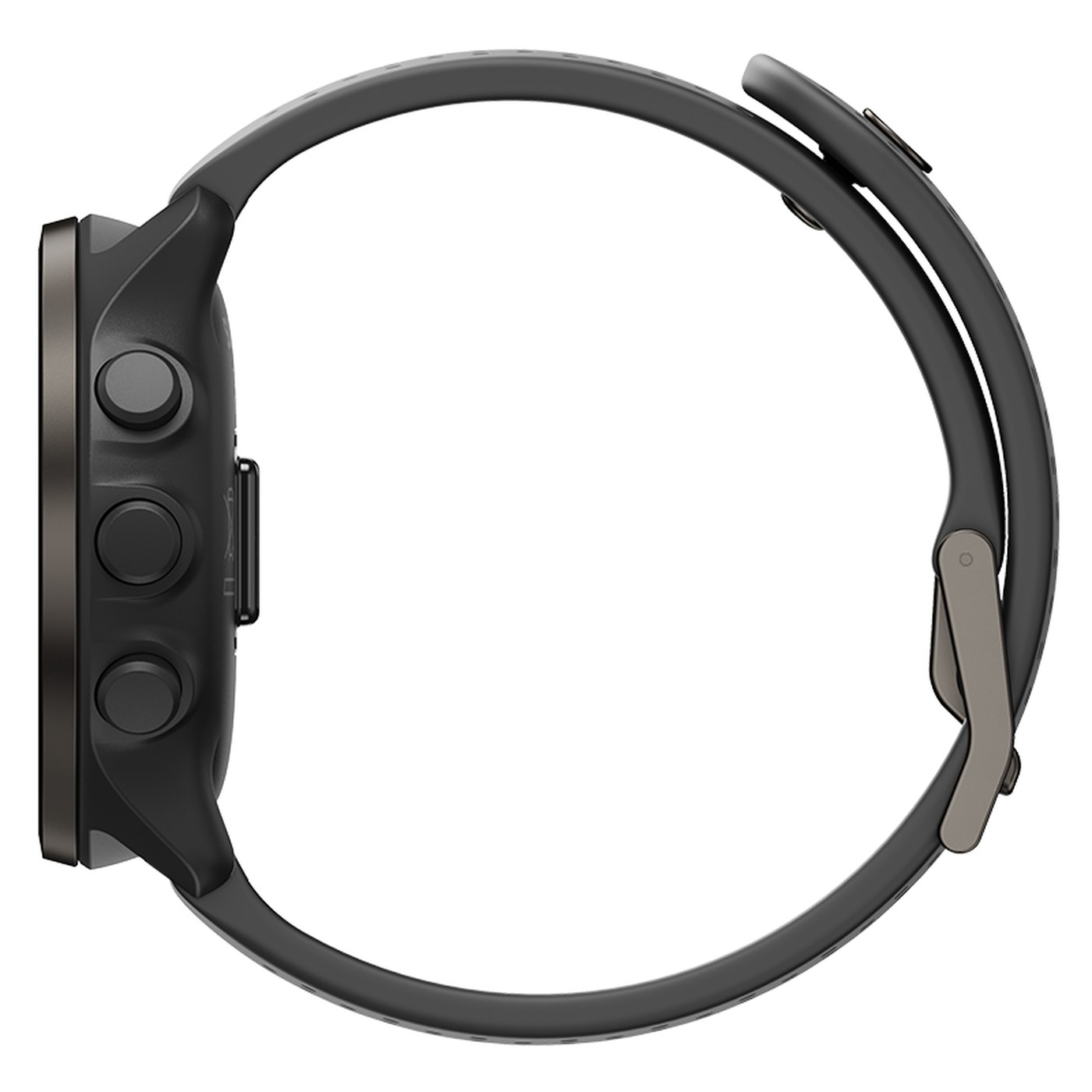
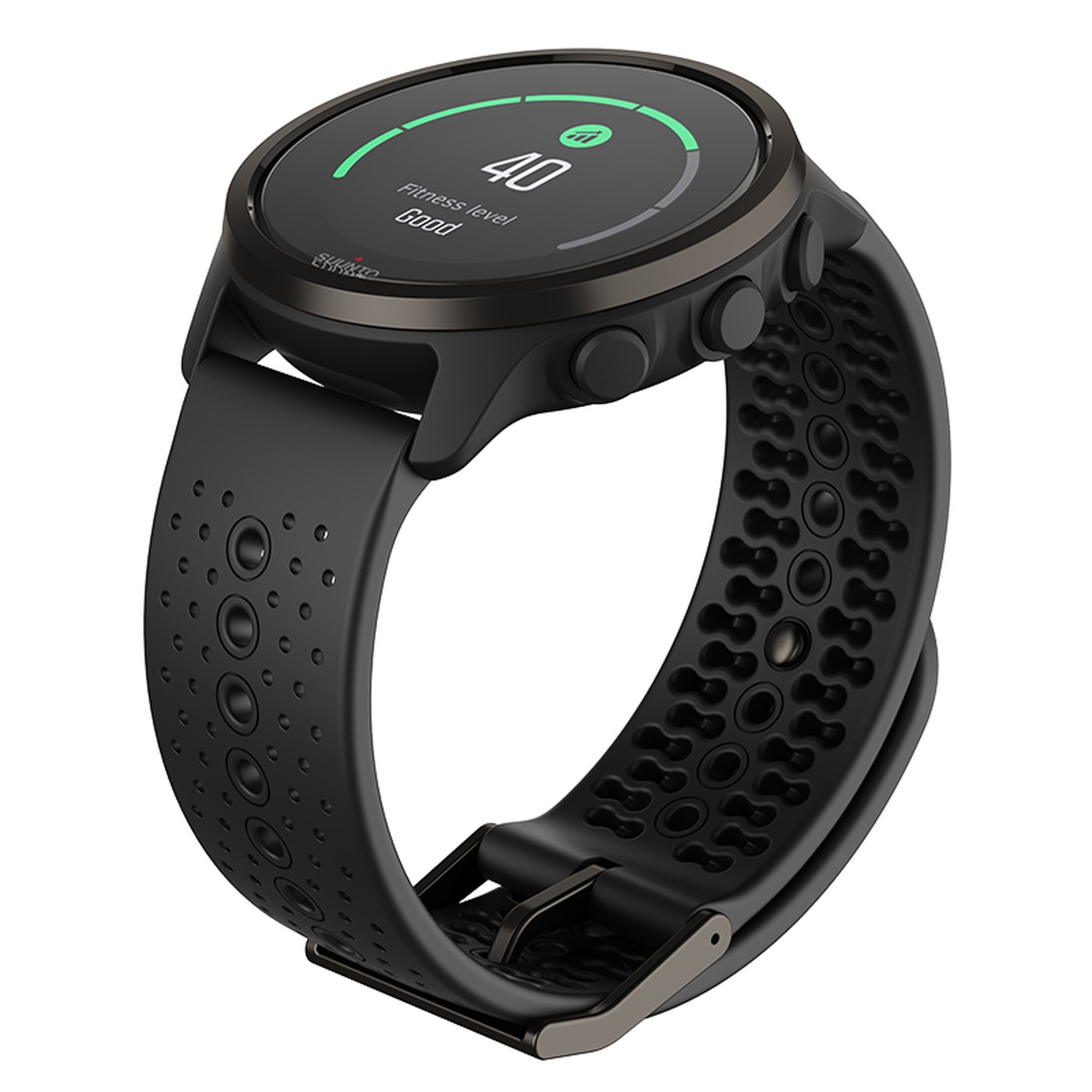
The 43 mm polyamide case with a stainless steel bezel and the claimed 39 grams (41% lighter than the model it replaces in the Suunto 5 range, according to one French review) confirm the product's real priority: low weight on the wrist over outdoor toughness. A defensible choice, as long as you know exactly what you're buying.
Suunto 5 Peak specs
| Brand | Suunto |
| Model | 5 Peak (All Black colorway) |
| Release | 2022 |
| Case | 43 x 43 x 12.9 mm, polyamide, stainless steel bezel |
| Weight | 39 g |
| Display | 1.1 inch (28 mm) color MIP, 218 x 218 px, non-touch |
| GNSS | Multi-GNSS: GPS, GLONASS, Galileo, QZSS, BeiDou, single frequency |
| Sensors | Wrist optical heart rate, accelerometer, gyroscope (no barometer, no compass) |
| Mapping | None: routes imported from the app, off-route alert |
| Sport profiles | 80+ |
| Music storage | None |
| Contactless payments | No |
| Water resistance | 30 m (3 ATM) |
| Smartphone connection | Bluetooth, Suunto app (iOS and Android) |
| Price | 299 euros |
Who is the Suunto 5 Peak for?
The road and track runner
For runs on the road, on marked forest trails or on the track, the missing barometer and compass almost never hurt: GPS is enough to track distance and pace, and French reviews agree on tracking accuracy within roughly 1% over a given distance. This is the product's most natural audience.
The occasional hiker or trail runner
On short outings over rolling terrain, the 5 Peak still does the job, but take the displayed altitude (calculated by GPS alone, with no barometric sensor) with a grain of salt: the three French reviews read for this article independently call it "underestimated" or "highly variable". For serious climbing or off-trail navigation, a watch with a barometer and compass is still the better pick.
The budget-minded multisport beginner
With 80 sport profiles, swim tracking one French tester rates as reliable and battery life that can reach 100 hours in Tour mode, the 5 Peak covers a lot of ground for someone who mixes running, cycling, swimming and hiking without chasing race results.
© Suunto, official photo used for editorial purposes
RunMorph tip: before picking the 5 Peak for hilly trail running, compare it with the Garmin Instinct 2, which packs a barometer and a compass for a similar price.
GPS accuracy and heart rate sensor: what independent reviews say
Three French reviews took the 5 Peak into the field, over periods ranging from a few runs to a full month. On distance, the consensus is clear: Sport-Passion measured tracking "fairly faithful to the route taken", with deviations under 1% against other watches worn at the same time, and RunMag recorded a maximum error of about 300 meters on a 30 km trail run, again close to 1%. The optical heart rate sensor gets a more mixed verdict: RunMag calls it "a fairly good student" while flagging "unexplained spikes or dips" during effort, and Journal du Trail reports erratic behavior during intervals, a common flaw of entry-level optical sensors.
The three sources do split on altitude, though: with no barometer, the reading relies on GPS alone, and Sport-Passion finds it "rather underestimated" while Journal du Trail calls it "highly variable" on bumpy terrain. This isn't an isolated glitch, it's the direct and predictable result of having no barometric sensor. Swimming is a different story: one tester ranks it among the most reliable models he has tested across all brands, a strong point the product pages rarely mention.
No maps, no barometer: what's the real impact on the ground?
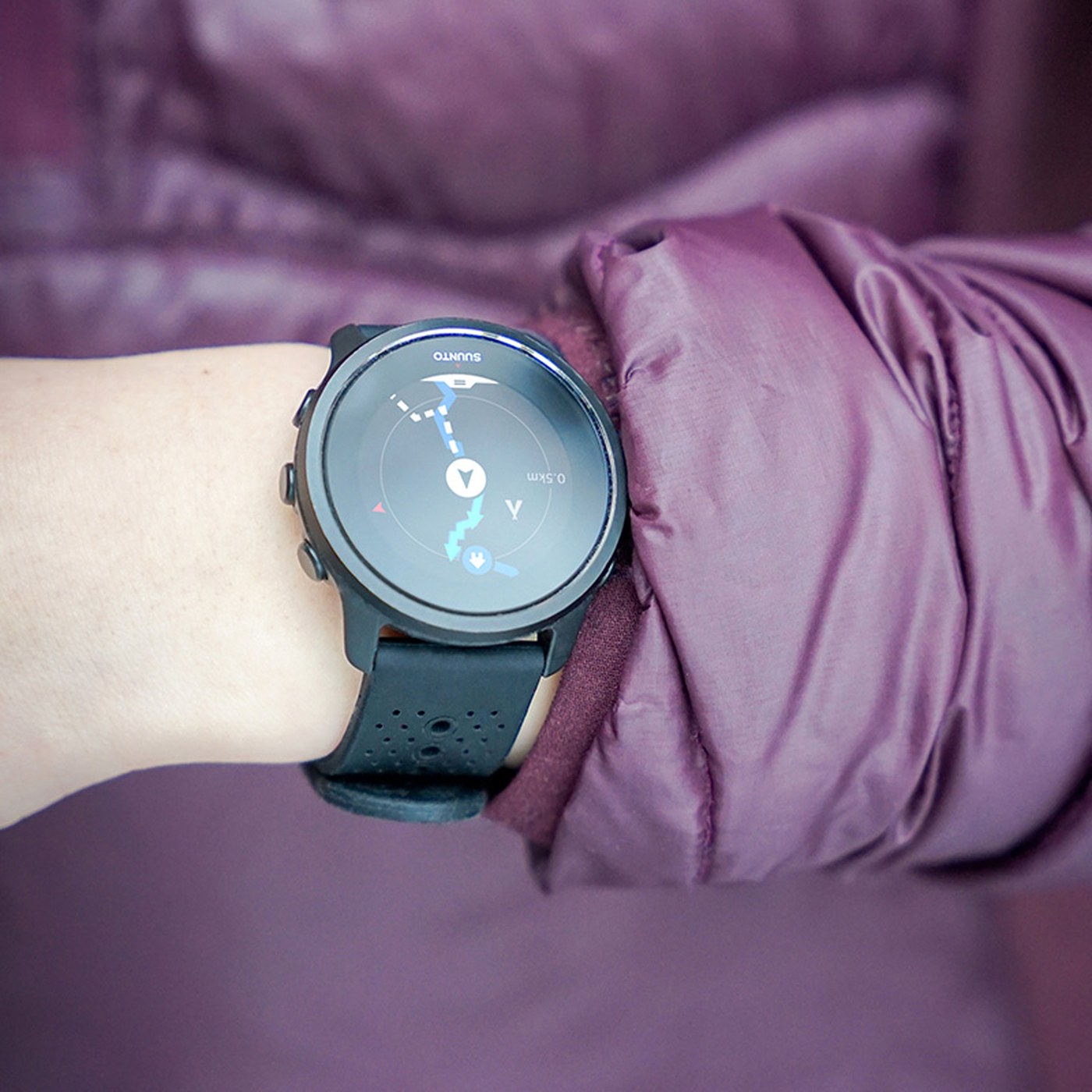
Two structural limits come up in all three reviews read for this article. First, altitude, as covered above: without a barometer, the elevation gain shown on a hilly route can stray far from reality, which makes the 5 Peak unreliable for planning an effort around a precise climbing target. Second, navigation: without an electronic compass, when the GPS signal drops or you stop, the digital route pointer (the breadcrumb trail Sport-Passion nicknames "Tom Thumb") simply vanishes from the screen. You then have to reopen the app or rely on a visual landmark, a hassle a watch with a compass spares you.
On mapping, the 5 Peak never shows a base map: just a route built in the Suunto app and sent to the watch, with an off-route alert. Testers praise how easy route creation is from a smartphone, but the guidance is a bare line on a black background, far from the topographic maps offered by the Suunto Vertical or Suunto Race 2 at a higher price.
Real battery life: 20, 40 or 100 hours depending on the mode
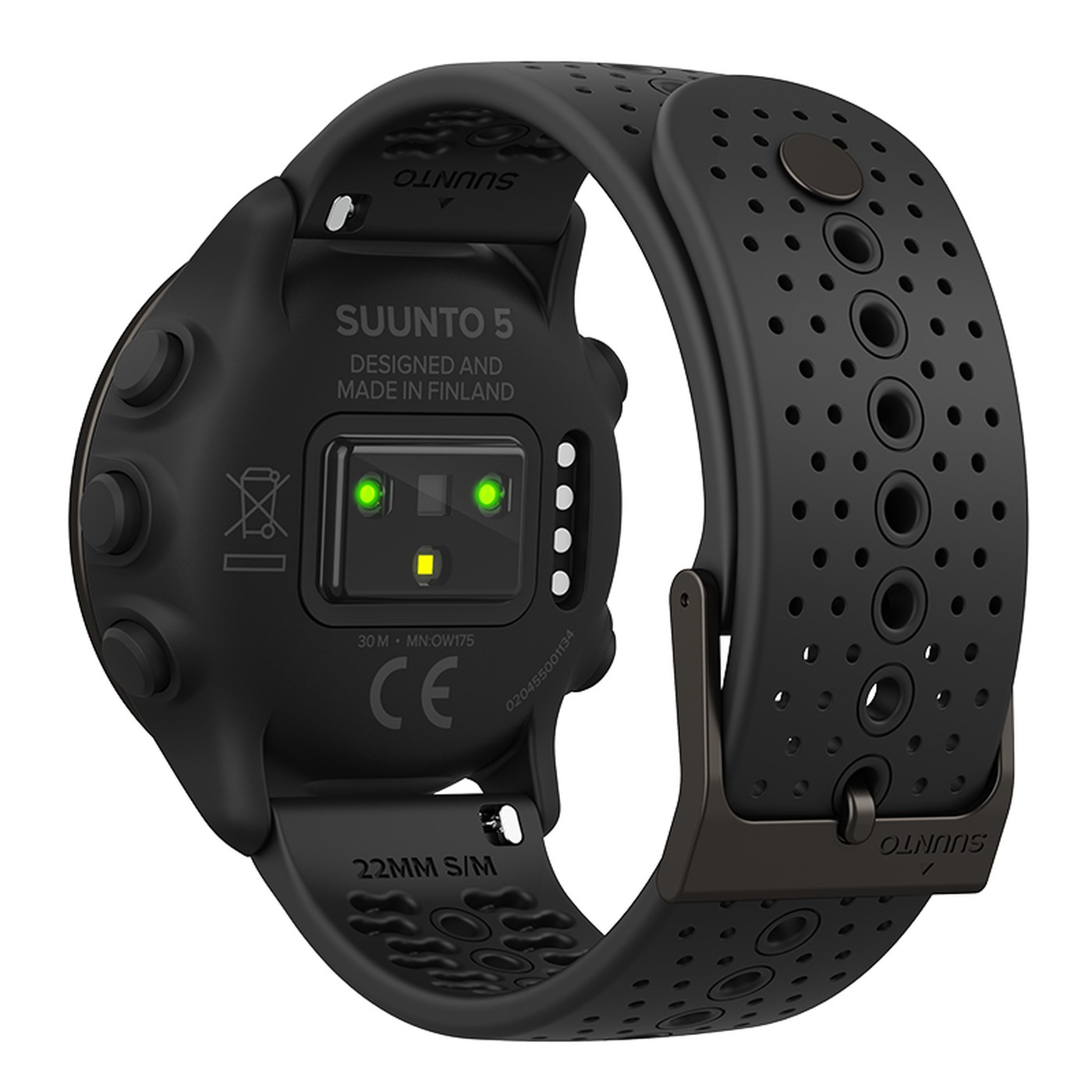
The three modes Suunto claims are confirmed by the reviews: 20 hours in Performance GPS (maximum accuracy), 40 hours in Endurance mode and up to 100 hours in Tour mode, with track quality degrading as the GPS sampling interval stretches (RunMag notes a "fairly degraded track" in Endurance mode). In smartwatch use, battery life drops to 7 days, well short of the Suunto Run and its 12 days. A full charge takes between 1 hour 30 and 1 hour 40 via USB cable. One tester flags an oddity worth watching: a "10 hours remaining" readout while the battery still showed 69% charge, which raises questions about how linear the software's battery estimate really is.
© Suunto, official photo used for editorial purposes
Suunto 5 Peak vs Suunto Run: which Suunto to pick under 300 euros?
| Criterion | Suunto 5 Peak | Suunto Run |
| Price | 299 euros | 249 euros |
| Display | Color MIP 218 x 218 px | AMOLED 466 x 466 px |
| GPS | Multi-GNSS, single frequency | Dual-band L1+L5 |
| Weight | 39 g | 36 g |
| Battery, max accuracy GPS | 20 h | 20 h |
| Battery, power-saving mode | 40 h (100 h in Tour mode) | 40 h |
| Battery, smartwatch mode | 7 days | 12 days |
| Onboard music | No | 4 GB |
The short version: the Suunto Run, released after the 5 Peak, costs 50 euros less and beats it almost everywhere, except for the 100-hour Tour mode that only the 5 Peak offers. At RunMorph, unless you specifically need extreme battery life in a degraded mode, the Suunto Run is the more sensible pick in Suunto's current lineup for the same budget.
Suunto 5 Peak vs Coros Pace 2 and Garmin Forerunner 55: the budget showdown
| Criterion | Suunto 5 Peak | Coros Pace 2 | Garmin Forerunner 55 |
| Launch price | 299 euros | 199 euros | 159 euros |
| Weight | 39 g | 29 g | 37 g |
| Barometer | No | No | No |
| GPS battery life | 20 h | 30 h | 20 h |
| Mapping | No | No | No |
None of the three watches has a barometer: on that specific point, the 5 Peak gives nothing away to its closest rivals, it's just more expensive. So the decision comes down to budget: the Coros Pace 2 gives you 10 more hours of GPS battery for 100 euros less, and the Forerunner 55 remains the cheapest way into a Garmin ecosystem that's richer in third-party apps. The 5 Peak only makes sense against them if the Suunto ecosystem (route creation, swim tracking rated as reliable) matters more to you than price.
Pros and cons
Pros
- 39 g on the wrist, one of the lowest weights in its class
- Flexible battery life up to 100 hours in Tour mode
- Route creation in the app rated "very user-friendly"
- Swim tracking ranked among the most reliable tested
- Standard 22 mm straps, easy to replace
Cons
- No barometer: altitude rated underestimated or highly variable
- No compass: the navigation pointer disappears when you stop
- Optical heart rate erratic during intervals, according to one tester
- Small, dim screen, buttons with little tactile feedback
- 299 euros for less screen and less GPS than the Suunto Run at 249 euros
© Suunto, official photo used for editorial purposes
© Suunto, official photo used for editorial purposes
Our field verdict: who is it for, and with which RunMorph plan?
The 5 Peak fits a road runner or multisport athlete who wants a light, long-lasting watch without paying for maps or multi-band GPS they'll never use. Paired with a RunMorph training plan, it handles easy aerobic runs, long runs and even intervals without trouble, with the caveat already mentioned about how stable the optical heart rate sensor is at high intensity.
To make progress with the Suunto 5 Peak: pair it with a
RunMorph 10K training plan, or another plan matched to your goal up to the marathon, to turn the distance and heart rate data it collects into measurable progress, with no need for the maps it lacks to follow a road or track plan.
RunMorph verdict
The Suunto 5 Peak is a good lightweight watch for running on roads or marked forest trails, not a real trail watch despite its name. 6.7/10. The score doesn't reward the price: at 299 euros, with no barometer, no compass and no maps, it costs more than the Coros Pace 2 and the Suunto Run, two rivals that match or beat it on at least one major technical spec. What saves it is genuinely low weight on the wrist and battery life that can climb very high in degraded mode, two strengths independently confirmed by the three French reviews read for this article.
Key takeaways for your training
- 39 g on the wrist: one of the watch's strongest selling points, confirmed by every tester.
- No barometer: don't count on the displayed altitude for a precise climbing target on a hilly run.
- No compass: the navigation pointer disappears when GPS stops, so plan a backup landmark on remote outings.
- 3 battery modes: 20 hours at max accuracy, 40 in Endurance, 100 in Tour, to pick based on how long you'll be out.
- 299 euros: always compare it with the Suunto Run (249 euros) before buying, the spec sheet doesn't justify the price gap.