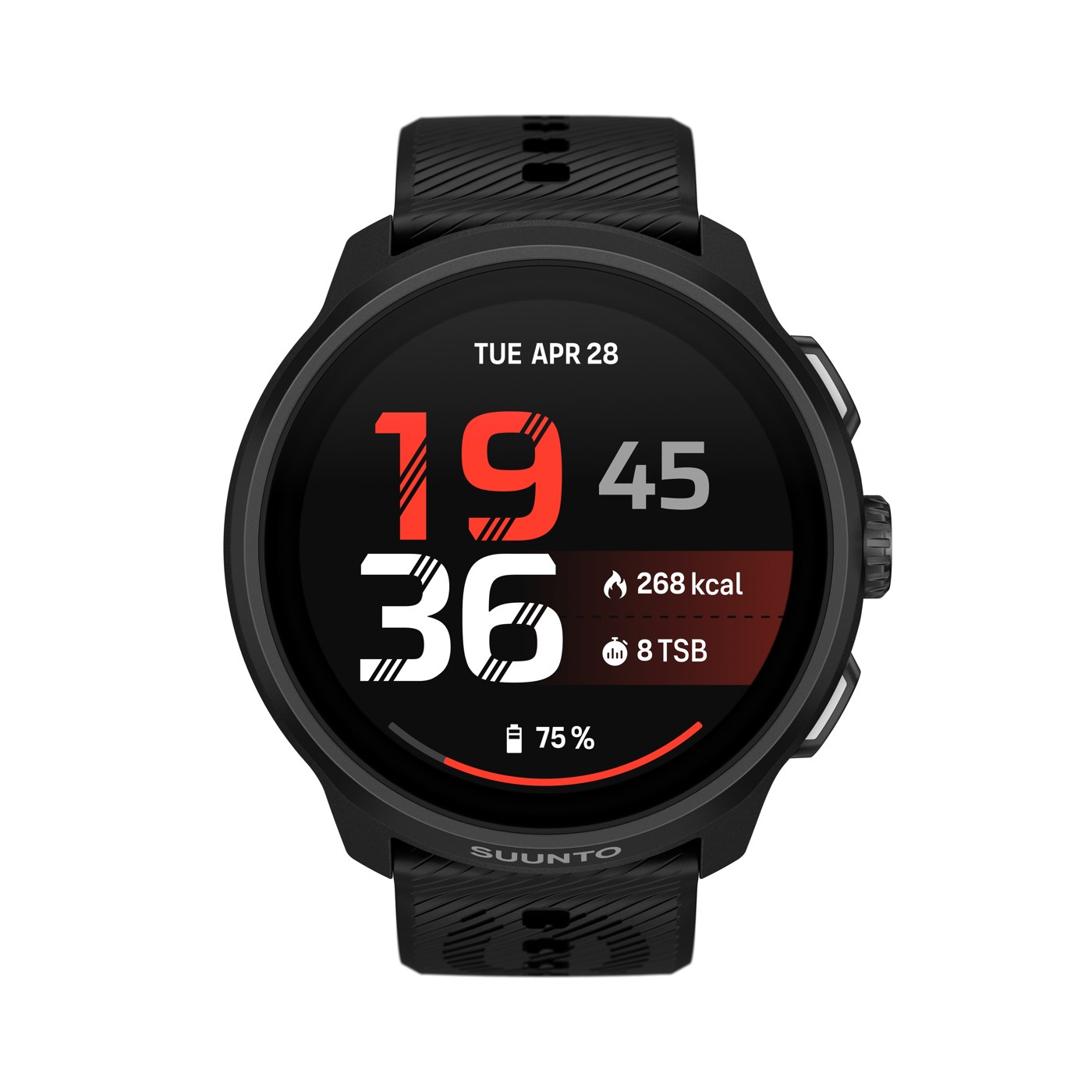
Launched on 8 September 2026, the Suunto Run 2 replaces the Suunto Run, one of the Finnish brand's best-rated watches in the affordable segment. It keeps the compact format and the 35 grams that made its predecessor a hit, but changes almost everything else: a screen three times brighter, a new heart rate sensor, next-generation dual-band GPS and, something Suunto fans have been waiting on for years, offline maps. The price climbs accordingly, and that is exactly where the first independent tests start to take the shine off.
Suunto Run 2 in All Black, launched on 8 September 2026.
The verdict in 3 sentences
The Suunto Run 2 delivers top-tier GPS and heart rate accuracy, holding its own against benchmarks like the Garmin Fenix 9 Pro and a reference chest strap. Battery life lives up to the official claim, with five to six days in always-on display mode, despite a charging bug that capped the battery below 100% during testing. But the $100 price jump over the original Suunto Run weakens its value case against the Coros Pace 4 and the Garmin Forerunner 170, which are better placed at the same budget.
7.2
/ 10 · RunMorph overall score
GPS accuracy
8.8 / 10
Heart rate accuracy
8.8 / 10
Battery life
8.5 / 10
Design / comfort
8.2 / 10
Training analysis
5.5 / 10
Who is it for?Runners who want top-level GPS and heart rate accuracy without stepping up to Suunto's premium range (Race 2, Vertical 2).
Who should skip it?Runners chasing the best value for money above all: the Coros Pace 4 or the Garmin Forerunner 170 are better placed at the same budget.
Suunto Run 2 specs
Feature
Value
Case
46 x 46 x 11.7 mm, 35 g (steel bezel, glass fibre reinforced polyamide case)
Display
1.32-inch AMOLED, 466 x 466 px, up to 2000 nits, Gorilla Glass
380 mAh, up to 10 days (daily use), up to 24 h in dual-band GPS
Storage
4 GB or 64 GB (two separate models)
Water resistance
5 ATM
Price
299 € (4 GB) / 349 € (64 GB) in France; $349 / $399 in the US
GPS and heart rate: the real win
This is where the first tests agree most clearly. An independent two-week field test, run by a tester with a 2:25 marathon PB, compared the Run 2's GPS accuracy with benchmarks like the Garmin Fenix 9 Pro and the Coros Pace 4: the tracks stayed aligned on every run. On heart rate, the tester admits going in sceptical, since several previous Suunto watches had disappointed on this front despite similar promises. This time the result is different: against a chest strap, a far more reliable reference than any wrist-based optical sensor, the Run 2's 12-channel sensor stayed on target, even during interval sessions with sharp spikes and drops in heart rate.
Battery life also lives up to the official claim: the tester ran into a charging bug that capped the battery at 90-95% during the test, yet still got five to six days with the always-on display and daily training, better than what he saw with the Coros Pace 4 and the Garmin Forerunner 70/170 under the same conditions.
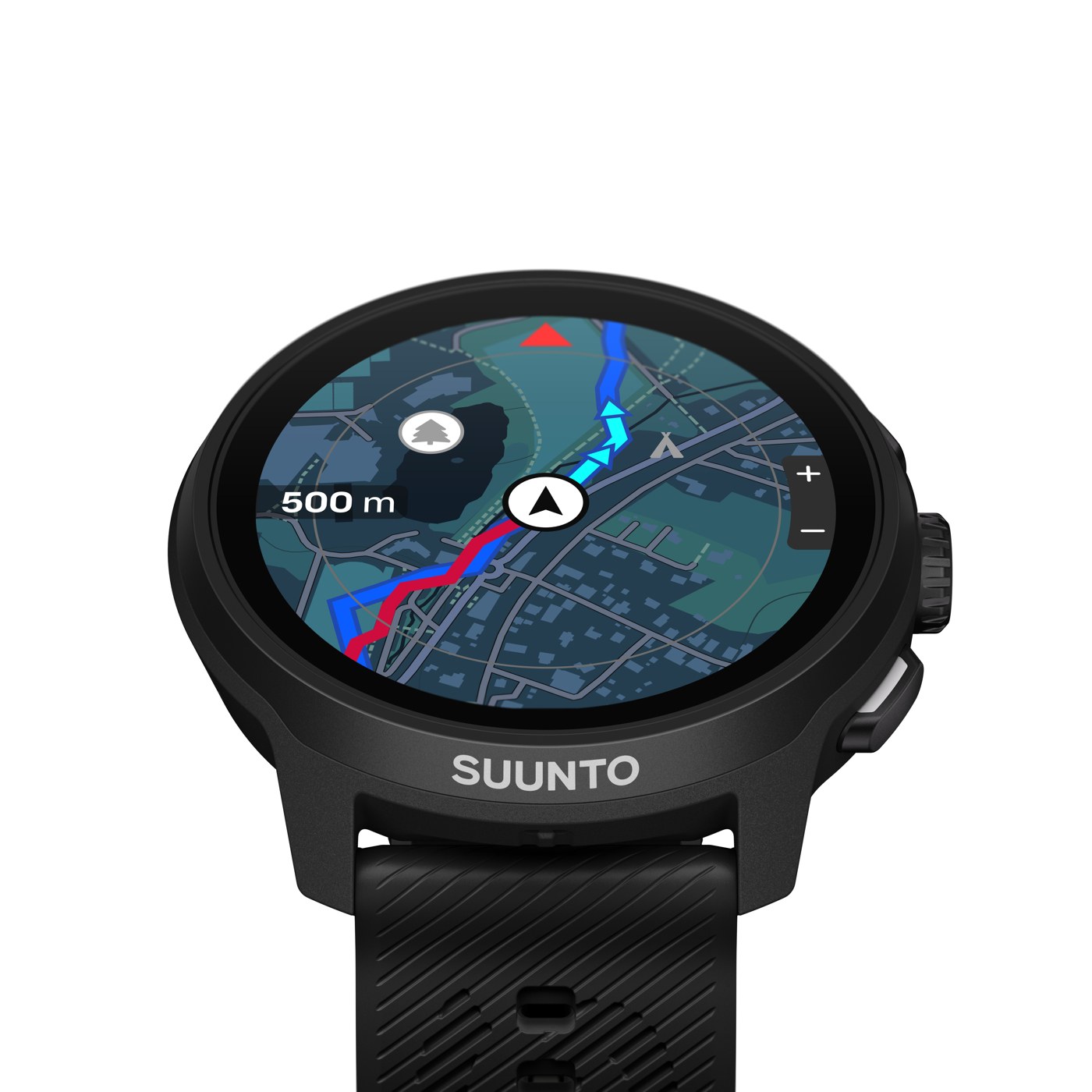
Offline maps: the information depends on who you ask. Suunto's official page presents free offline maps as a general Run 2 feature, with no distinction between the two models. A detailed spec breakdown published by a specialist site on launch day claims the opposite: only the 64 GB version gets maps, and the 4 GB version goes without. The independent field test, for its part, suggests local maps remain possible even on the 4 GB model ("if you only need your own area and don't use music, 4 GB will do"). At the time of publication, we found no definitive confirmation settling this contradiction between the launch sources themselves. Check before you buy if maps are your top priority, especially on the 4 GB model.
The real sore point: the price
The original Suunto Run stood out for exceptional value, at $249 at launch and already down to $179-199 on sale. The Run 2 climbs to $349, a full $100 more, for a watch still pitched as the affordable option against direct rivals. The independent tester sums up the dilemma bluntly: at launch price, the Coros Pace 4 ($249, maps added via a software update) offers more value, and the Garmin Forerunner 170 ($299) delivers a more polished experience and better smart features, even without maps. His conclusion: at $249-299, the Run 2 would be a far more compelling pick, and he expects that price to drop in sales.
Strengths
GPS and heart rate accuracy confirmed against market benchmarks
Battery life among the best in its class, even with a charging bug during testing
Polished, rugged design that feels more premium than Coros and Garmin rivals in the same segment
Free offline maps, a first for Suunto at this price point
Screen three times brighter than the original Suunto Run
Watch out for
$100 price hike over the Suunto Run, which erodes the range's value argument
Step counting and sleep tracking judged inaccurate in independent testing, a recurring Suunto weakness
Training analysis (VO2 max, race predictions) hard to read and sometimes far from the tester's real performance
No contactless payments, no music streaming, limited smart features compared with Garmin
Unresolved contradiction over map availability on the 4 GB vs 64 GB version (see box above)
Bugs reported in testing: always-on display sometimes switching off outside workouts, charging capped below 100%
Who is it for?
The Run 2 is still a solid option for runners who want top-level accuracy without moving up to Suunto's premium range (Race 2, Vertical 2). But the argument that made the original Run so strong, outstanding value for money, has taken a serious hit with this price increase. At launch price, the comparison with the Coros Pace 4 and the Garmin Forerunner 170 doesn't always go the Run 2's way.
Offline maps on the AMOLED screen, dark theme.
How it compares
Against the original Suunto Run, the Run 2 improves almost everything (screen, heart rate, GPS, battery, maps) but loses the price advantage that made the first model a success, now discounted below $200 on sale.
Against the Coros Pace 4 (269 €, maps added via update) and the Garmin Forerunner 170 (under 300 €, no maps but more polished smart features), the Run 2 gets squeezed on value for money despite GPS and heart rate readings that are excellent across the board.
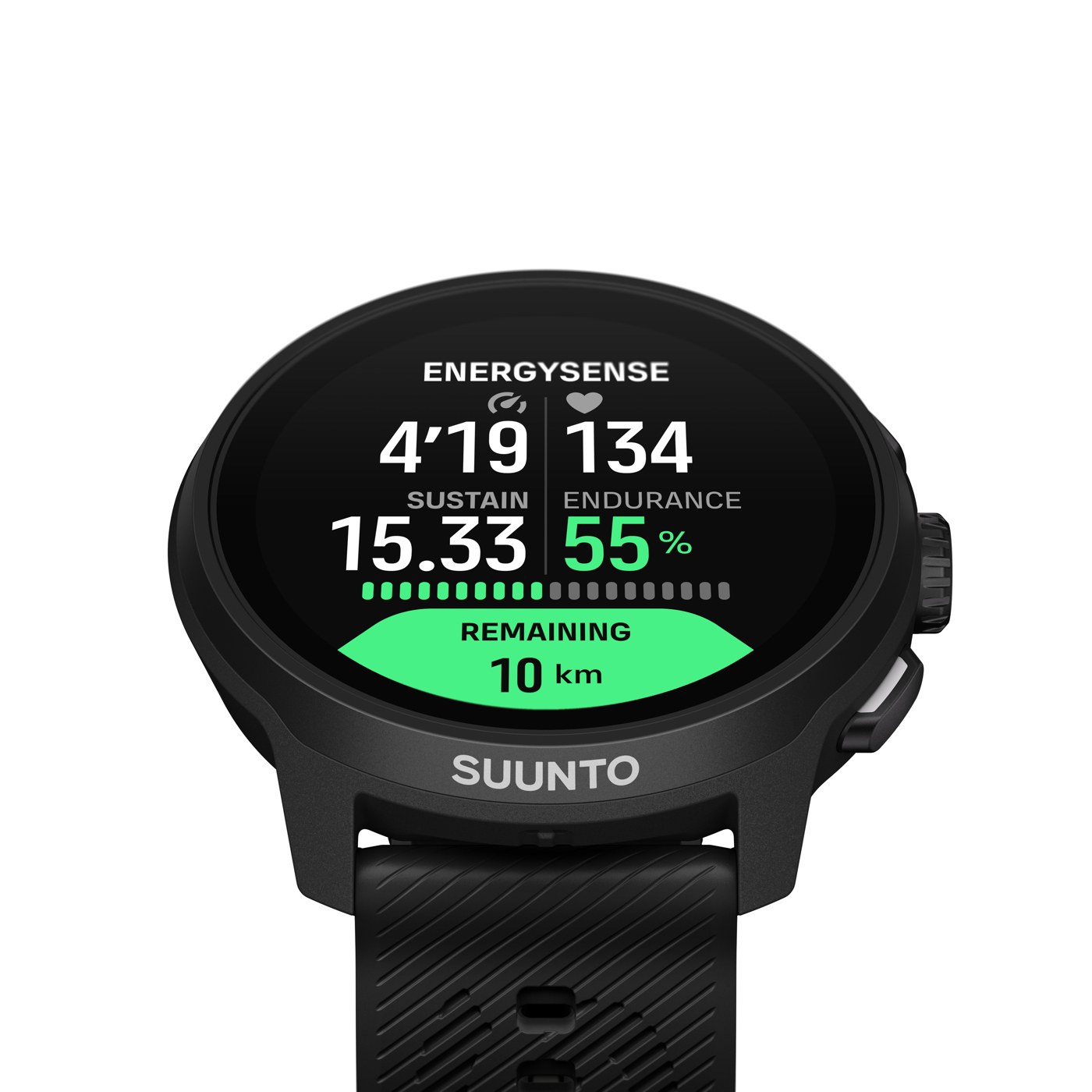
EnergySense feature: real-time effort tracking against your remaining energy capacity.