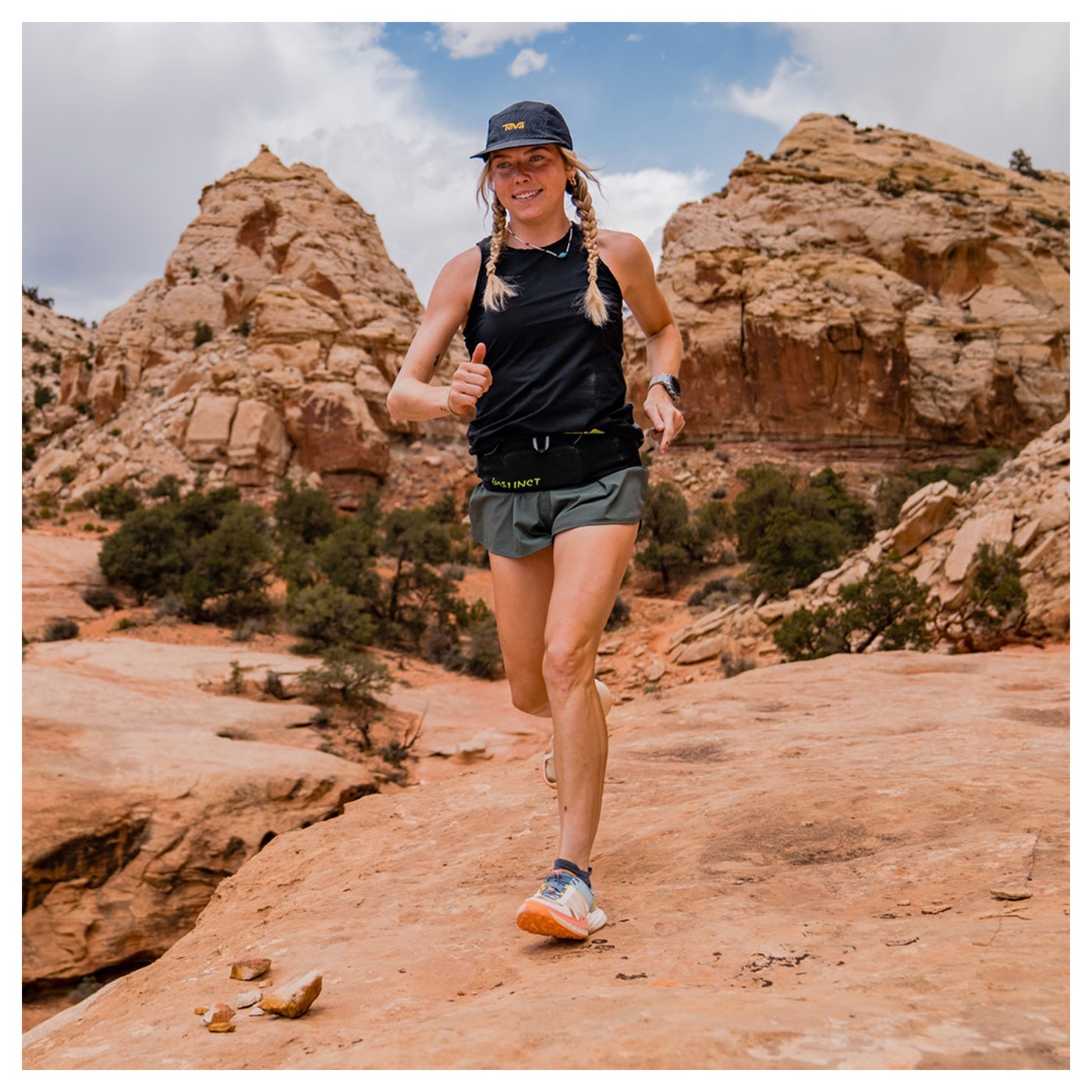
Teva Trailpeak review: the brand's first performance trail shoe, fully tested
6.3/10
Released on September 1, 2026, the Teva Trailpeak is the very first performance trail running shoe from a brand best known for its hiking sandals. At 160 euros and 235 grams for the men's version, it promises technical trails that feel both light and secure. One week after launch, the first field reports tell two very different stories.
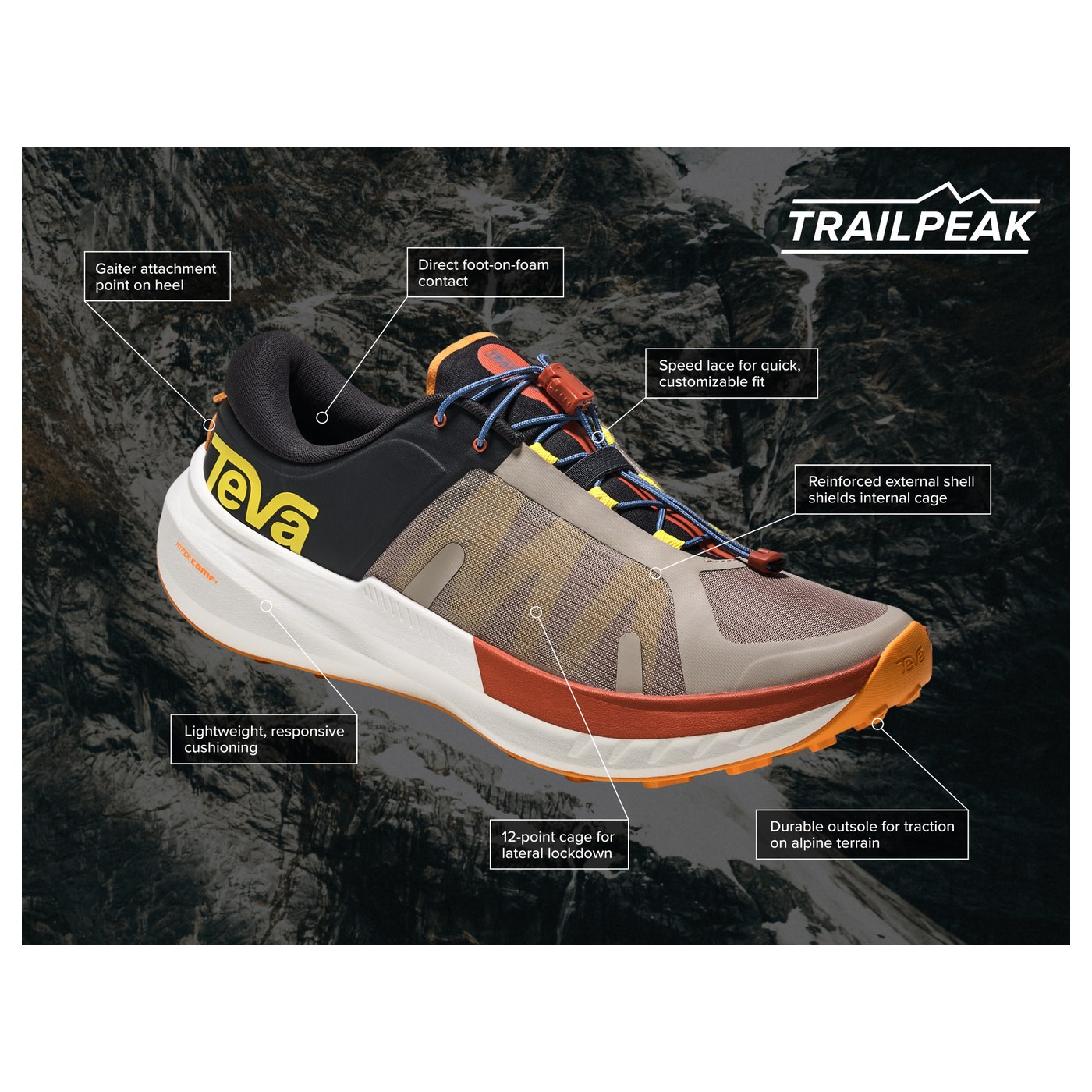
The Teva Trailpeak, the brand's first performance trail shoe, available in a single colorway at launch (official Teva photo).
The gist in 3 sentences
The Teva Trailpeak, the brand's first performance trail shoe, bets on comfortable HYPER-COMF+ cushioning and an internal cage with 12 anchor points that locks your foot in laterally. But the lack of a rock plate and of a removable insole, already flagged by an independent field test, undermines its claim to be a shoe built for the mountains. An experienced tester even reported localized separation between the foam and the outsole within the first few runs.
6.3
/ 10 · RunMorph overall score
Cushioning
7.5 / 10
Responsiveness
6.5 / 10
Lateral support
7 / 10
Technical grip
5.5 / 10
Durability
5 / 10
Who is it for?Runners looking for a light, comfortable trail shoe for smooth singletrack or daily road-to-trail mileage.
Who should skip it?Technical mountain runners who need a rock plate and a proven track record of reliability.
Teva, a sandal brand taking on performance trail running
Since the 1980s, Teva has been tied to hiking sandals and music festivals rather than trail race times. With the Trailpeak, the Deckers-owned brand switches terrain: it is its first closed shoe designed specifically for trail running, co-developed with athletes from its in-house Bureau of Adventure program, including FKT specialist Erin Ton. Teva claims 1,500 miles of testing across 9 mountain ranges in the United States, Canada and Peru before launch.
At RunMorph, we believe a first generation in a category that is brand new for a company deserves a no-nonsense review. Six days on sale is not enough for long-term feedback, but two independent field tests run at the official launch in Breckenridge (Colorado) already paint a mixed picture of the product, which we break down further below.
Teva Trailpeak specs
Feature
Value
Price
US$160 (about 160 euros)
Weight
235 g (men's US 9) / 185 g (women's US 7)
Drop
6 mm
Stack height
30.5 mm heel / 24.5 mm forefoot (men's)
Cushioning
HYPER-COMF+ foam (dense EVA + supercritical foam)
Outsole
Spider Rubber Endure, 3 mm lugs
Upper
PU-coated mesh, internal cage with 12 anchor points, speedlace system
Rock plate
None (no rigid plate and no removable insole)
Intended use
Daily performance trail running, moderate to technical terrain
Availability
Since September 1, 2026, one colorway at launch
Claimed vs measured: what the marketing says, what the trail reports
Teva's promise
What field testers report
"Tested on tight switchbacks, technical trails and fast mountain routes", "built for confidence when the terrain gets technical"
One tester reports feeling every stone underfoot due to the missing plate, slipping on rock during descents, and a toe box too roomy for precise control on off-camber sections
"The lightest and most responsive Teva cushioning ever"
Confirmed on flat ground and smooth trails; far less reassuring as soon as off-camber terrain or sharp rocks show up
A true "performance" trail shoe
An independent tester recommends positioning it instead as a daily road-to-trail trainer for non-technical terrain, not as a mountain shoe
HYPER-COMF+ and a 12-point cage: the tech under the hood
HYPER-COMF+ foam pairs a dense EVA base with a supercritical foam core, a recipe close to what Hoka and Salomon already offer in their mid-range lineups. Walking and on smooth trails, the cushioning feels fairly generous without turning mushy. The problem flagged by a tester who likes a natural ground feel: with no removable insole, unlike almost every trail shoe on the market, rock edges come straight through to your foot, and without a rock plate every sharp stone makes itself felt on fast descents.
The internal cage with 12 anchor points, an open nod to the brand's heritage sandals, wraps the foot under the mesh and aims to make up for the missing plate with extra lateral support. On this point, both field tests agree: the speedlace cinches down quickly and the upper keeps your foot in place when you surge. The disagreement starts as soon as the terrain gets tricky.
The Trailpeak's internal cage with 12 anchor points and speedlace system (official Teva photo).
The field test: two sharply different takes
On the French-speaking side, Pacing Trail published an analysis of Teva's move into performance trail running, questioning how credible a sandal brand can be on this terrain and pointing to the 1,500 miles of testing Teva claims across three continents. The tone stays cautious: is this a real strategic shift or a marketing trial balloon ahead of the technical generation promised for late 2027?
Out on the trail, a North American tester wore the Trailpeak for two weeks, including a 12 km out-and-back climb of Quandary Peak (4,348 m, Colorado). His verdict: an overall score of 7.8/10, with comfort praised at 9/10, protection rated 8.1/10 and grip scored 7.8/10. He sees the lack of a rigid plate as a deliberate choice that keeps the shoe light and nimble, and says it did not hurt his experience on a well-marked but rough trail.
A second tester, who attended the official Trailpeak launch in Breckenridge, delivers a far more critical take after a run on the same Quandary Peak. She reports a stone that "went right through the arch of the foot" because of the missing plate and removable insole, repeated slips on rock during descents due to the 3 mm Spider Rubber Endure lugs, and a toe box so roomy that the foot slides sideways on off-camber sections. The most worrying point for durability: she reports that the HYPER-COMF+ foam came unglued from the outsole in places during the test, a flaw also seen by other participants at the same event.
Major flaw reported by an independent test: localized separation between the midsole foam and the outsole was spotted within the first few runs by an experienced tester at the launch event. RunMorph has not yet been able to verify this over time; we flag it here as a precaution, since there is not enough hindsight yet on pairs sold to the public.
Marketing vs product gap: Teva presents the Trailpeak as tested on "technical trails" and "built for confidence when the terrain gets technical". On the ground, the lack of a plate and of a removable insole leads an experienced tester to recommend it instead for daily road-to-trail use on mellow terrain, a long way from the high-mountain promise in the press kit.
Teva Trailpeak vs Salomon Sense Ride 5
Criterion
Teva Trailpeak
Salomon Sense Ride 5
Weight (men's)
235 g
About 290 g
Drop
6 mm
8 mm
Rock plate
None
None, but a standard removable insole
Positioning
Daily non-technical trail, first generation
Versatile trail for all distances, established line
Price
About 160 euros
Around 130 euros
Teva Trailpeak vs Hoka Challenger 7
Criterion
Teva Trailpeak
Hoka Challenger 7
Use
Non-technical road-to-trail (actual observed use)
Road and trail, versatility claimed and confirmed
Cushioning
Generous but no rock plate
CMEVA foam, more enveloping
Technical grip
Limited on rock according to an experienced tester
Decent on mixed terrain, without excelling on technical ground
Line maturity
First generation (2026)
7th generation, proven formula
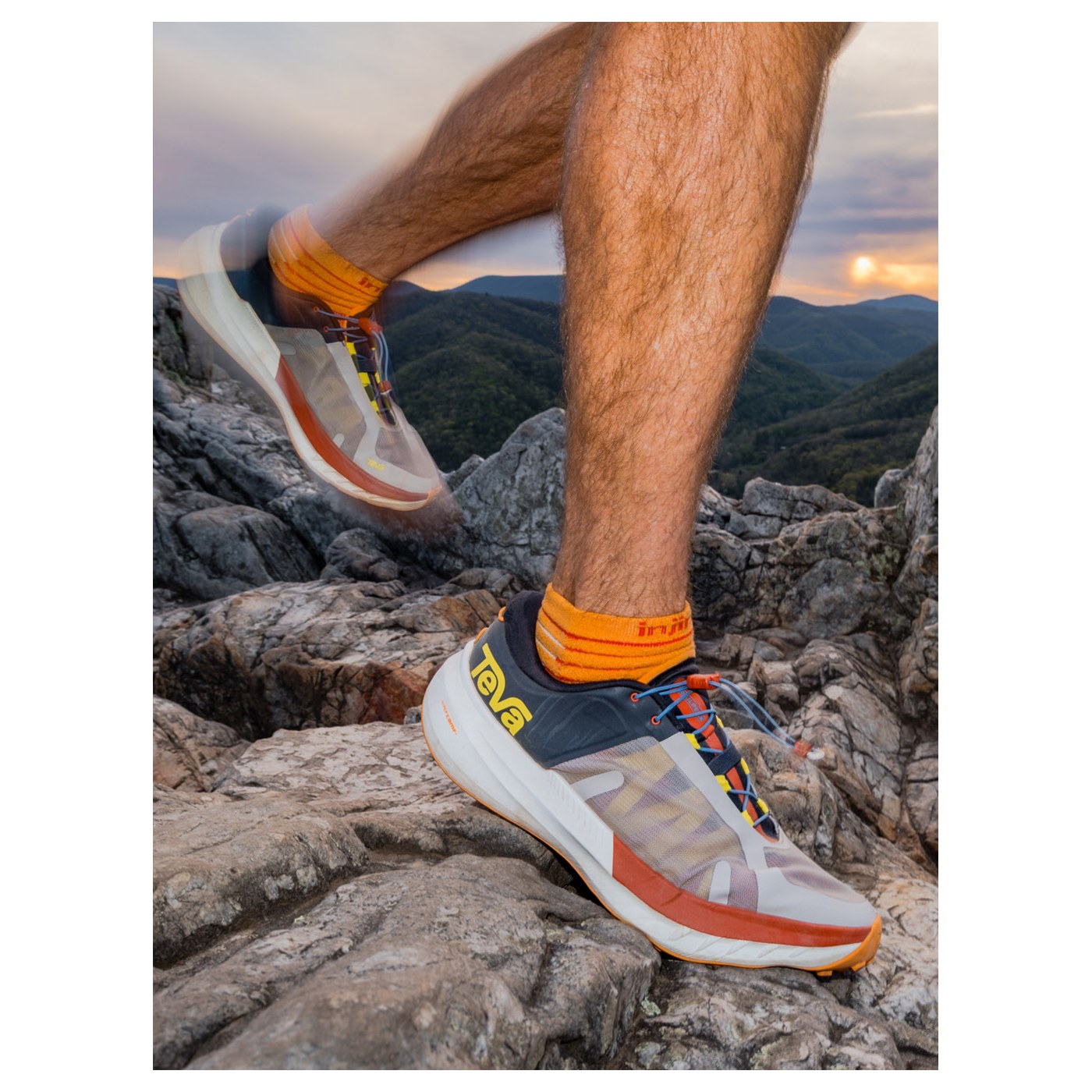
The Trailpeak tested in real conditions at the official launch, climbing Quandary Peak, Colorado (official Teva photo).
Pros and cons
Pros
Low weight: 235 g for men, among the lightest in its category
Cushioning comfort praised by both field testers (9/10 from one of them)
Solid lateral support thanks to the 12-point cage and speedlace
Spider Rubber Endure outsole works well on road and smooth trails
Cons
No rock plate and no removable insole
Grip judged insufficient on rock and technical terrain by an experienced tester
Foam/outsole separation reported within the first runs by one tester
Toe box judged too roomy for precise control on off-camber terrain
Marketing positioning at odds with the actual use seen on the trail
Durability: the point that calls for the most caution
This is the most sensitive point in this first field feedback. One tester reports that the HYPER-COMF+ foam came partly unglued from the outsole after a single mountain run, a problem she says she also saw on other participants at the same launch event. One week after release, RunMorph does not have enough hindsight to confirm whether this defect is isolated or recurring on pairs sold to the public. At RunMorph, we will keep a close eye on it and update this article as soon as more and longer-term feedback comes in.
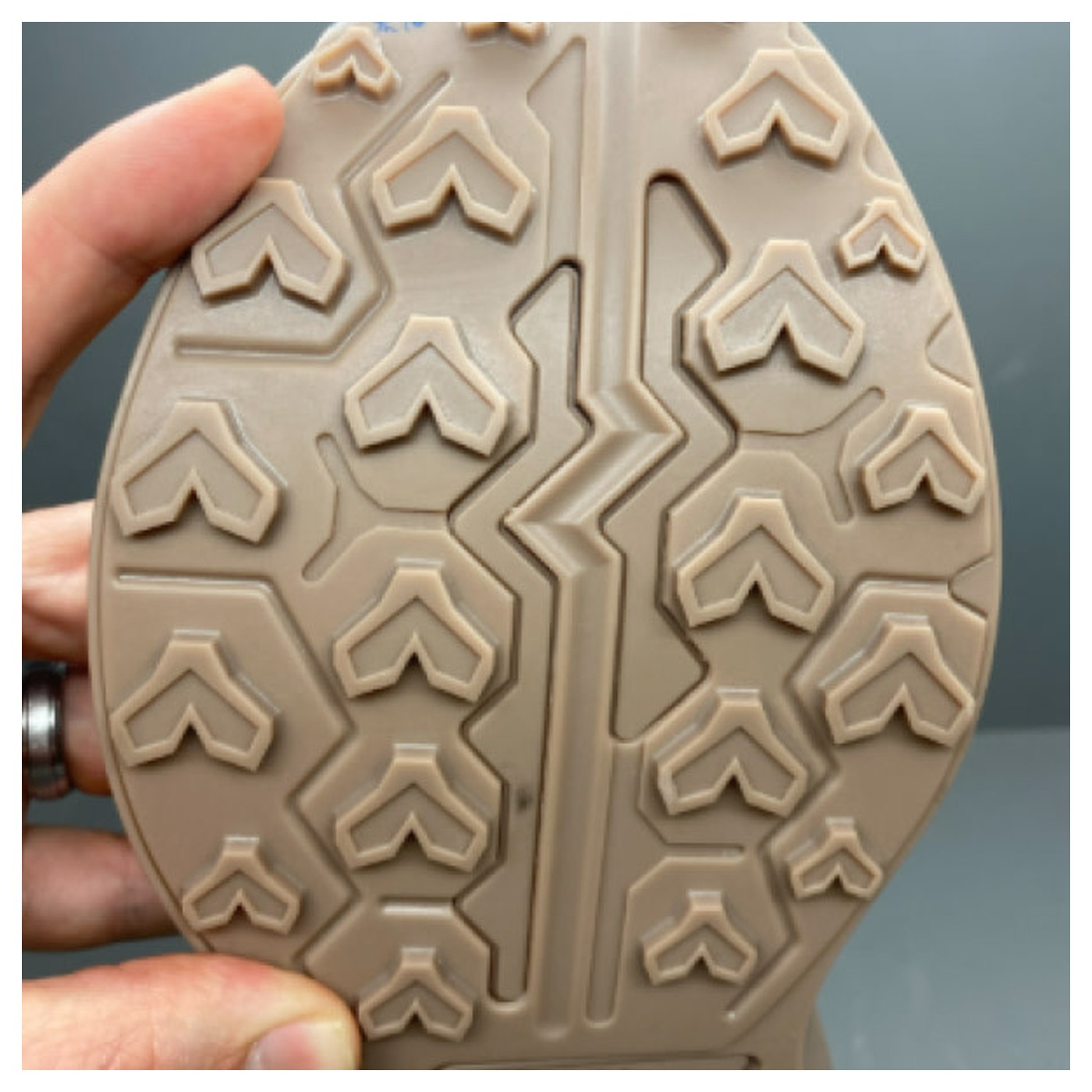
The Spider Rubber Endure outsole and its 3 mm lugs, the sore spot of the first technical tests (official Teva photo).
What RunMorph thinks of the Trailpeak
At RunMorph, our takeaway is a first generation that looks honest on paper but is still fragile when it meets technical terrain. The comfort and lateral support are real: this is not an empty marketing shell. But the missing rock plate, combined with a durability flaw already reported independently and a sales pitch that oversells the shoe's technical ability, calls for clear caution if you are after a demanding mountain shoe.
To objectively compare your paces and volume on this kind of terrain before choosing your next pair, RunMorph tools are available through our training plans.
RunMorph verdict: 6.3/10
The Teva Trailpeak nails its debut on comfort and low weight, but partly misses its promise as a technical trail shoe. For daily running on smooth trails or as a road-to-trail trainer, it does the job. For demanding mountain terrain, two independent testers recommend looking elsewhere, at least until Teva proves its first generation is built to last.
Key takeaways
235 g for men (US 9), 185 g for women (US 7), 6 mm drop
Teva's first performance trail shoe, available since September 1, 2026
Comfort and lateral support praised, but no rock plate and no removable insole
A foam/outsole separation issue reported by an independent tester right at launch
Better suited to daily non-technical road-to-trail use than to high mountains, despite the marketing
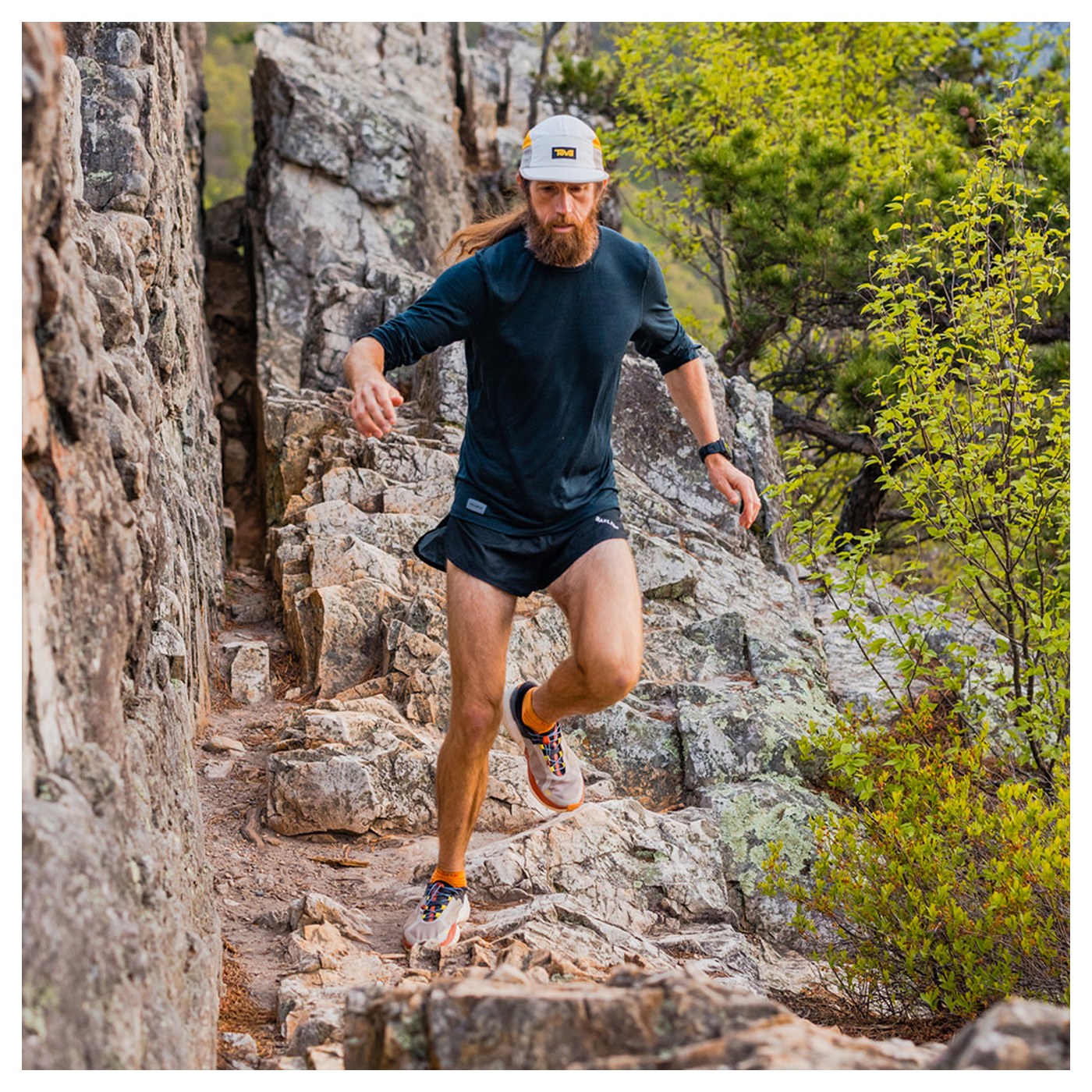
Descending a rocky trail, the terrain where testers disagree the most (official Teva photo).
FAQ
How much does the Teva Trailpeak weigh? 235 g in men's US 9 and 185 g in women's US 7, which puts it among the lightest trail shoes in its category, below the 290 g of a Salomon Sense Ride 5.
Does the Teva Trailpeak have a rock plate? No. Unlike almost every comparable trail shoe, it has neither a rigid plate nor a removable insole, a choice two testers read differently depending on the terrain they ran.
How much does the Teva Trailpeak cost? $160 in the United States, or about 160 euros at launch on September 1, 2026, close to the 145 to 175 euros charged for established versatile trail shoes.
Is the Teva Trailpeak durable? Too early to call: one tester reports localized foam separation after her very first mountain run. RunMorph is tracking this and will update this article with longer-term feedback.