The North Face has been selling Nuptse puffer jackets for fifty years, but on the start line of an ultra-trail, the brand with the square logo has never really been a player. With the Summit Series range and its Summit Run 10L vest, the American company wants a seat at a table Salomon, Hoka and Millet have owned for years. At 165 euros, the pitch is clear: a stretch fabric that vanishes on your torso and a pocket layout designed with UTMB athletes. What the price doesn't include is a hydration bladder, or any certainty about the claimed weight.
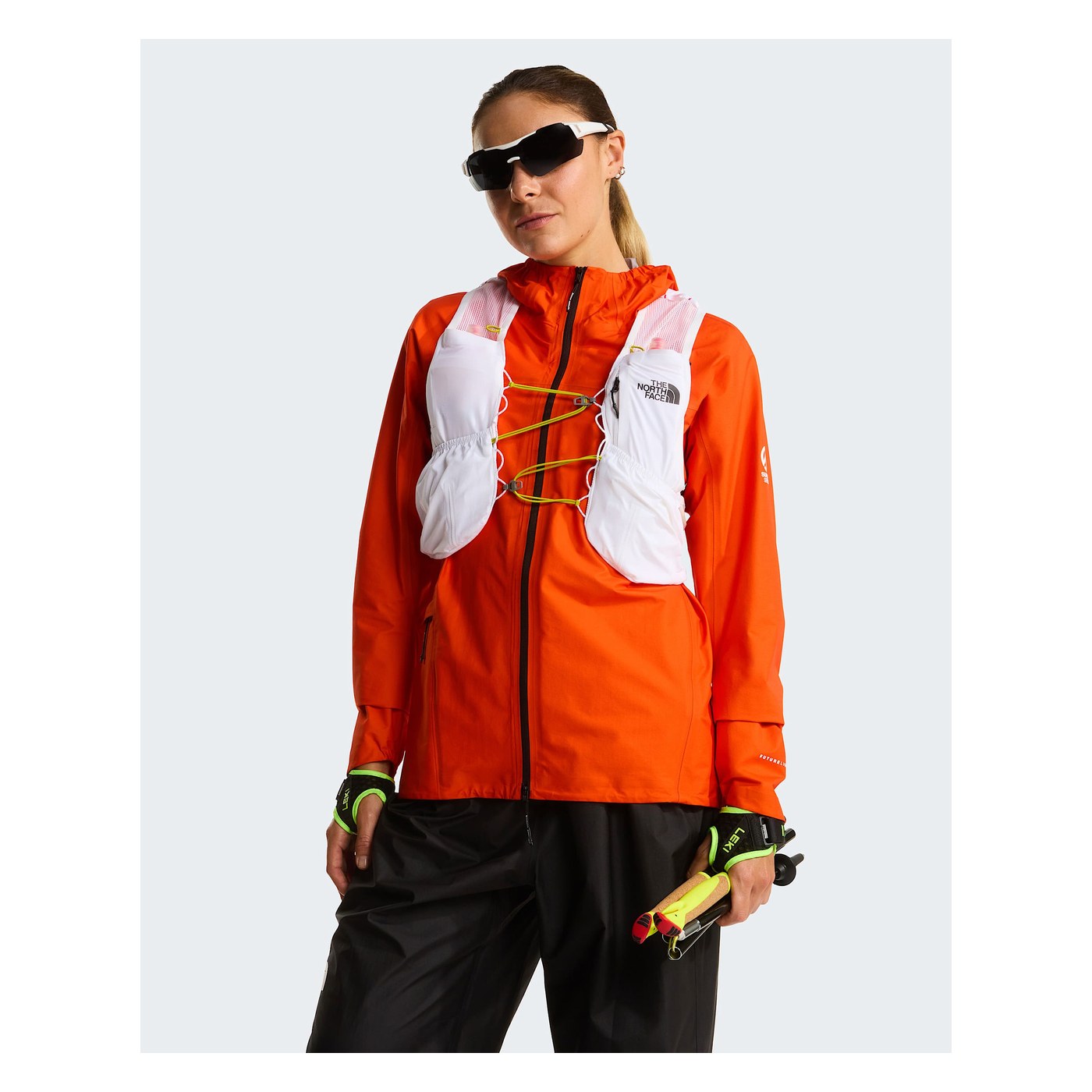
© The North Face, official photo used for editorial purposes
The North Face takes on the trail vest: the Summit Series promise
The trail running vest market is already crowded. Salomon's ADV Skin 12 has dominated for years, Hoka launched its Trail Run Vest 10L in 2024, and Millet is betting on eco-friendly Dyneema. The North Face arrives late to this segment with the Summit Series, a high-end line developed with its elite athletes and tested at UTMB, Western States and Hardrock 100. The Summit Run 10L is its flagship race vest. It replaces the Summit Run 5L and doubles the volume to reach a wider audience, especially trail runners training for ultras with a mandatory gear list.
Volume isn't the only change from the 5L. The main body fabric moves from pure nylon to a 40D stretch woven made of 85% nylon and 15% elastane, built into the weave instead of just paired with mesh panels. That technical choice drives the brand's entire marketing pitch: a vest that moves with your rib cage, not against it. The question is whether that promise holds up on the trail, and whether it justifies 165 euros against better-established competition.
FlashDry and stretch woven: what difference does it make on your back?
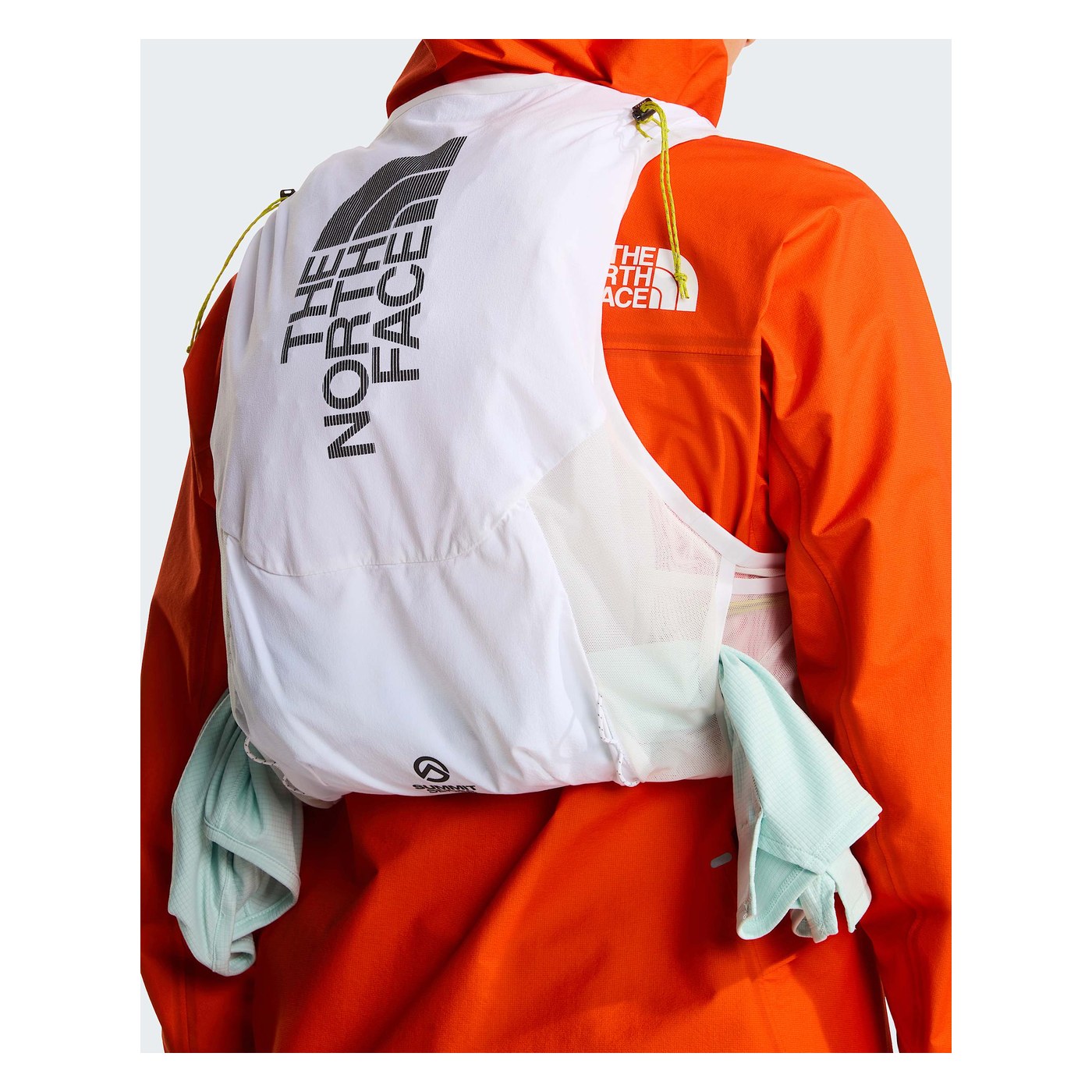
FlashDry is The North Face's in-house treatment for wicking moisture away from your skin. Nothing revolutionary there: most premium brands offer an equivalent technology. What really sets the Summit Run 10L apart is pairing that treatment with a stretch weave containing 15% elastane across the entire body panel, not just on side panels like many competitors do. In practice, the vest stretches in all four directions with every deep breath, which eliminates the squeezed feeling non-stretch fabrics create as soon as you pick up the pace.
The technical mesh side panels (88% nylon, 12% elastane) and the warp-knit mesh back (86% nylon, 14% elastane) carry that stretch logic further while maximizing ventilation. On paper, it's one of the most breathable vests on the market right now. Independent measurements agree on this exact point: the Summit Run 10L ranks among the vests least prone to that clammy feeling, even during sustained efforts in high heat.
Field test: from breezy short runs to the limits of mandatory gear
Real-world tests agree on one undeniable strength: almost zero bounce, even fully loaded. An independent test on the trails of North Wales and the hills of Wiltshire reports stability that held even with a heavy load carried on purpose to push the system to its limits, with no painful chafing or annoying sloshing on fast descents. Everyone agrees on how light it feels: several independent testers compare it to a compression garment more than a traditional backpack.
RunMorph's advice: the Summit Run 10L is built for efforts that get you hot, not for winter ultras with an emergency bivvy and a full first-aid kit. If you're targeting a UTMB-style race in midsummer or a demanding trail marathon in the heat, pair it with your RunMorph training plan for your target distance: it will deliver. For an off-season mountain ultra, look at the Salomon S/Lab Ultra 12 instead.
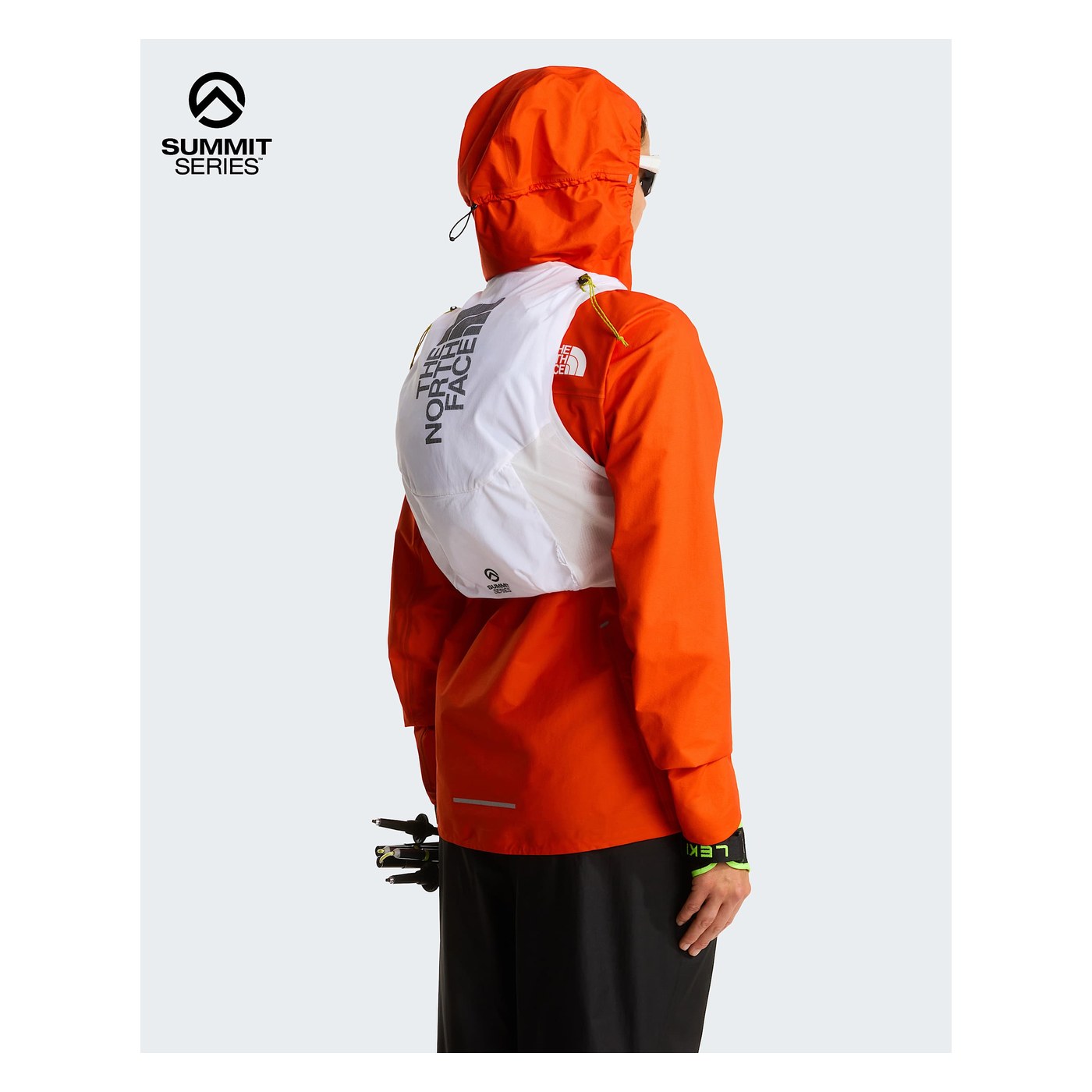
© The North Face, official photo used for editorial purposes
Opinions split sharply on whether it belongs in an ultra. A British field test explicitly advises against this vest for winter mountain ultras with a full mandatory gear list. Its verdict: fitting a puffer jacket, an emergency bivvy and a first-aid kit into 10 liters turns into a game of Tetris, and races like that call for at least 12 liters. By contrast, an American test run over several months across Washington State, Michigan and Costa Rica calls this vest an excellent choice for streamlined races like UTMB or Cocodona. The gap comes down to the angle of evaluation. The first test focuses on the real volume constraints of a full mountain winter; the second mainly assesses organization and access during a race, without an exhaustive winter setup. At RunMorph, our take is simple: for a race with a reduced kit, the Summit Run 10L more than holds its own. For a winter ultra with full mandatory gear, you're better off with a 12 to 15 liter vest.
On accessibility, the dual-tier pocket system (upper tier for instant access to your soft flasks and bib, lower tier for gear you need less often) wins unanimous praise as well thought out for a UTMB-style race. Two friction points, however, come up independently across several tests. The first is the sternum closure, described as especially finicky and nearly impossible to operate with cold fingers or hands swollen from effort, a real problem in a race where every second counts. The second is the rear kangaroo-style lumbar pocket, which sits too high to reach easily. One experienced tester also notes that the vest runs small compared with other brands and recommends sizing up if you're unsure.
On durability, the consensus from field tests is cautious. The thin fabric and featherweight build make the Summit Run 10L more prone to snags and tears than sturdier vests, although no structural defect showed up during the test periods. The conclusion is consistent: excellent for streamlined racing, less suited to hard daily use or demanding backcountry adventures.
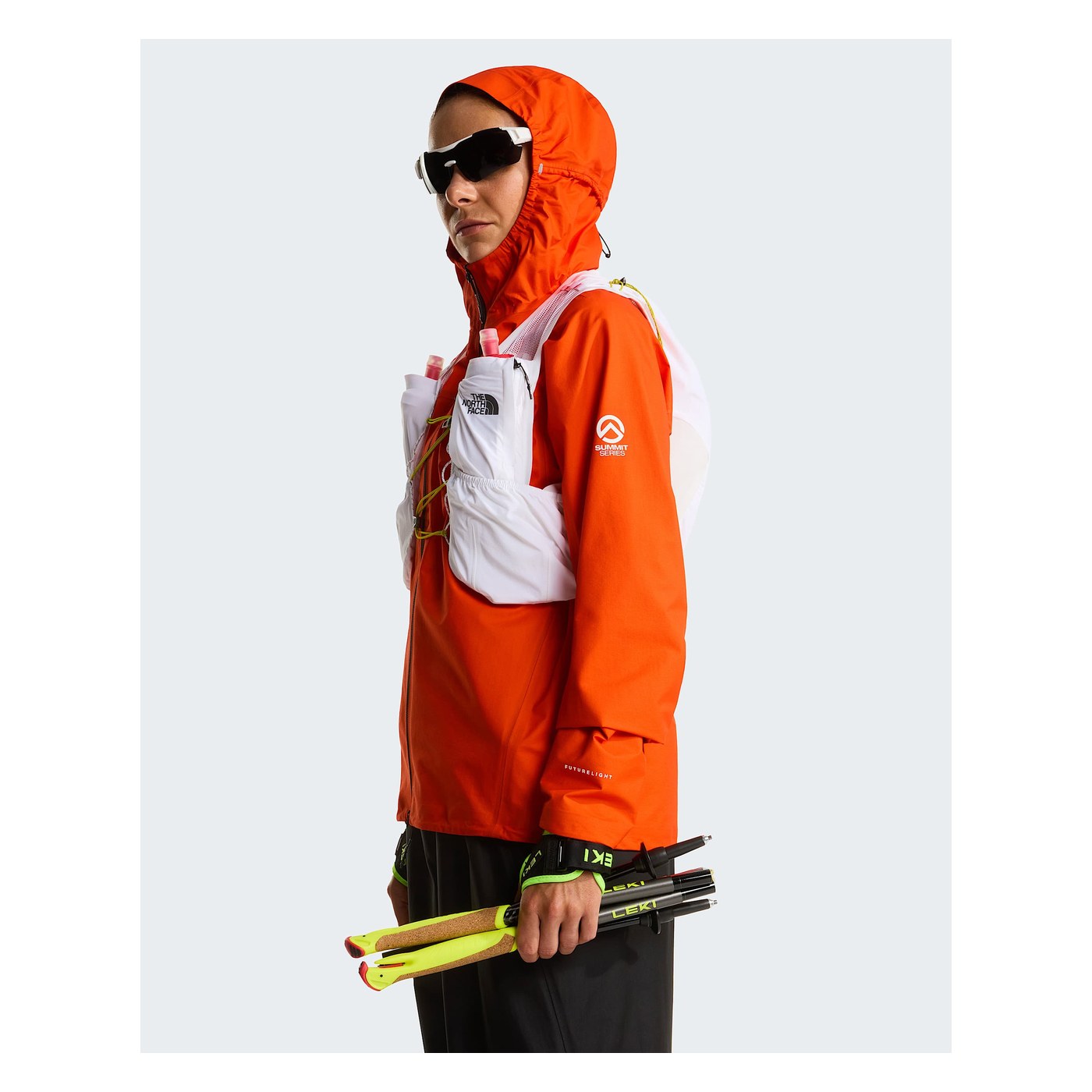
© The North Face, official photo used for editorial purposes
The North Face Summit Run 10L vs Salomon ADV Skin 12: head to head
| Criterion | TNF Summit Run 10L | Salomon ADV Skin 12 |
|---|
| Volume | 10 L | 12 L |
| Weight | Not disclosed (about 220 g measured) | 244 g in size S (official) |
| Soft flasks included | 2 x 500 ml | 2 SoftFlask 500 ml |
| Bladder included | No (compatible) | No (compatible) |
| Fabric | FlashDry 4-way stretch woven | Sensifit Sweep 4-way stretch |
| Strengths | Breathability, almost invisible feel | Proven benchmark, 8 pockets, Quick Pole |
| Price | €165 | €165 |
At the same price, the ADV Skin 12 offers 2 extra liters of volume and a built-in Quick Pole system for your poles, while the Summit Run 10L bets everything on how the fabric feels. The choice comes down to priorities. If breathability and a second-skin feel come first, TNF holds its own. If volume and versatility matter more, Salomon remains the safe bet. Against the Hoka Trail Run Vest 10L, another outsider in the 10L segment with its sewn-in quiver, the Summit Run 10L stands out with its unisex cut and more technical fabric, but loses on weight transparency.
Our field verdict: who is it for?
The Summit Run 10L is a perfect fit for runners preparing for a race format (trail marathon, skyrace or UTMB with a lightweight setup) who put thermal comfort first on long runs in hot weather. It's a much weaker fit for trail runners targeting a winter ultra with a full mandatory gear list: the 10-liter volume and the lack of an included hydration bladder then become real constraints, not minor details.
To structure your preparation before investing in a premium vest like this, head to the
RunMorph training plans. Whether you're targeting a trail marathon, a skyrace or your first self-supported long run, the right plan will tell you exactly how much volume and how much water you'll need on race day.
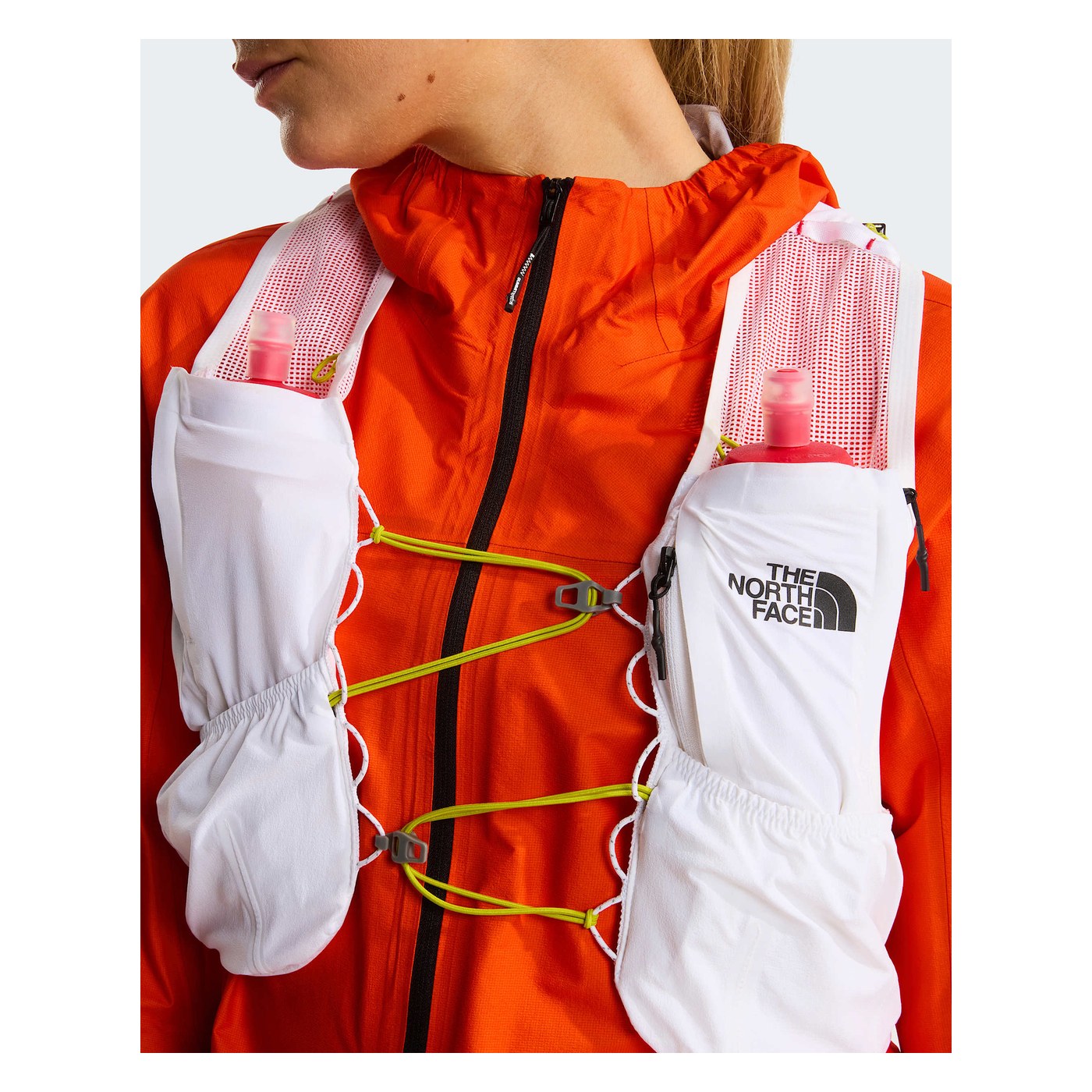
© The North Face, official photo used for editorial purposes
RunMorph verdict
The North Face makes a credible entry into the trail vest market with the Summit Run 10L. The FlashDry stretch woven fabric delivers on its comfort promise, and the pocket system was clearly designed by people who run ultras. But at 165 euros, the missing hydration bladder and the brand's silence on the product's weight are hard to justify against a Salomon ADV Skin 12 that offers more at the same price. The thin fabric, pleasant as it is to wear, also raises a real durability question for hard training use. 7.5/10: a very good race vest if you value fabric feel and breathability in a lightweight setup, but not yet the all-round benchmark the Summit Series marketing suggests.
Key takeaways for your training
- The stretch fabric makes the difference: save this vest for runs where you want to forget you're wearing anything, especially in high heat.
- Buy your hydration bladder separately: the back compartment is compatible but nothing comes in the box, so budget for this extra purchase.
- Check your size before buying: several independent reports say it runs small, so size up if you're unsure.
- Keep it for race formats: for a winter ultra with full mandatory gear, a 12 to 15 liter volume will be more comfortable.
- Practice with the sternum closure before race day: it takes practice to work it quickly, including with cold hands.
© The North Face, official photo used for editorial purposes