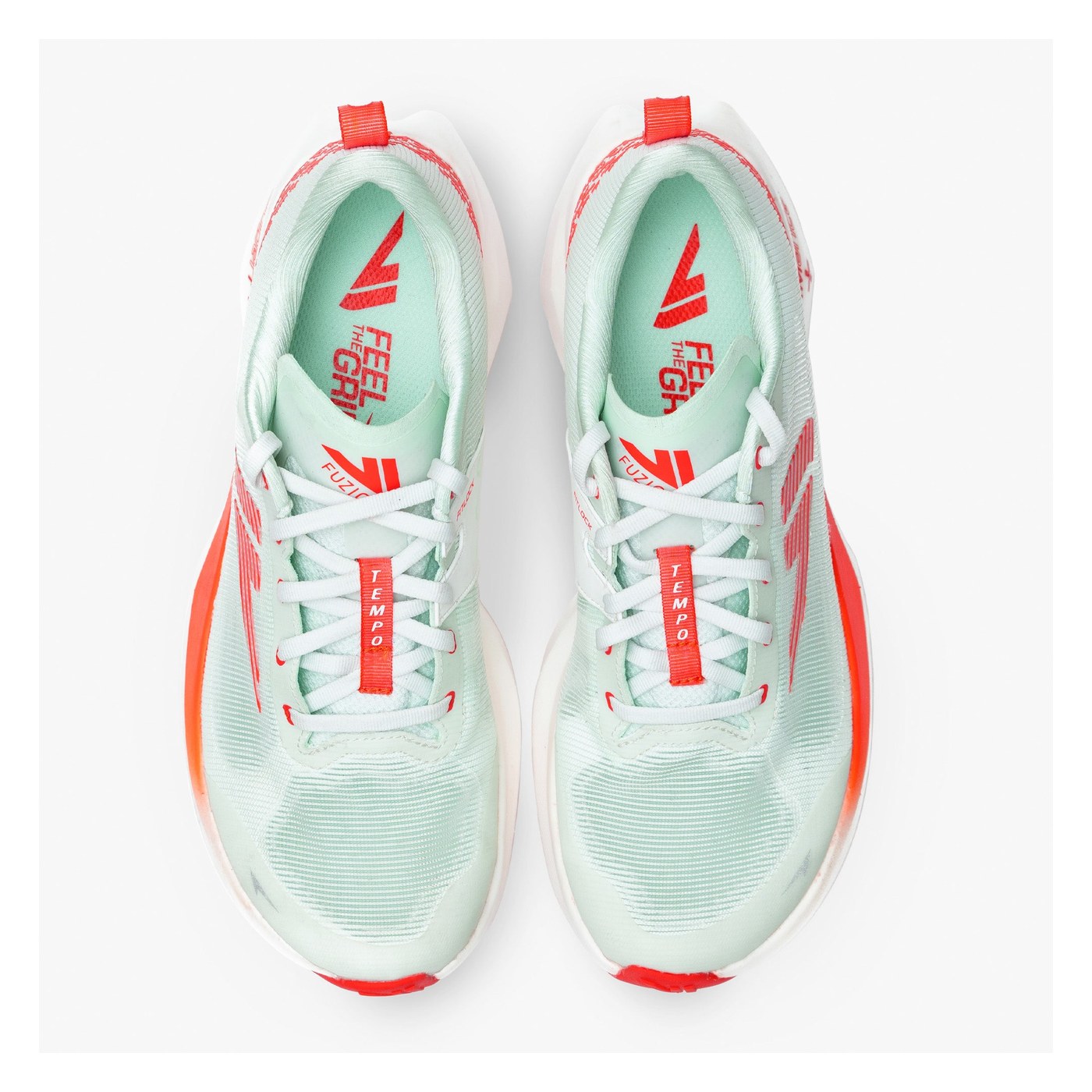
For two years now, French trail runners have been discovering Nordic brands they'd never heard of, one after another. Norda led the way in 2025. In August 2026, it's VJ's turn: the Finnish maker, born in 1981 in the forests of Orivesi, is trying its luck with the FZN Tempo, a road-to-trail shoe that promises to roll on asphalt as well as it bites into dirt paths.
© VJ, official photo used for editorial purposes
VJ, a Finnish brand trying to break into a saturated market
The trail market has never been this crowded. Salomon, Hoka, Brooks, Asics, adidas, Nike, New Balance, La Sportiva, Merrell, Saucony, Altra, Inov-8, On, NNormal and Norda already take up most of the shelf space and media attention in France. In that landscape, a brand the general public doesn't know yet needs a clear, identifiable argument to get a runner to change habits.
Yet VJ is no opportunistic start-up riding the trail boom. The story starts in 1981 in Orivesi, in central Finland, when a shoemaker with a passion for orienteering built his own shoes because he couldn't find any that held on wet, slippery Scandinavian terrain. That origin still defines the brand today: orienteering remains at the heart of its development, which later expanded into trail running, skyrunning and winter running with models like the iRock, the XTRM and the Ultra 3.
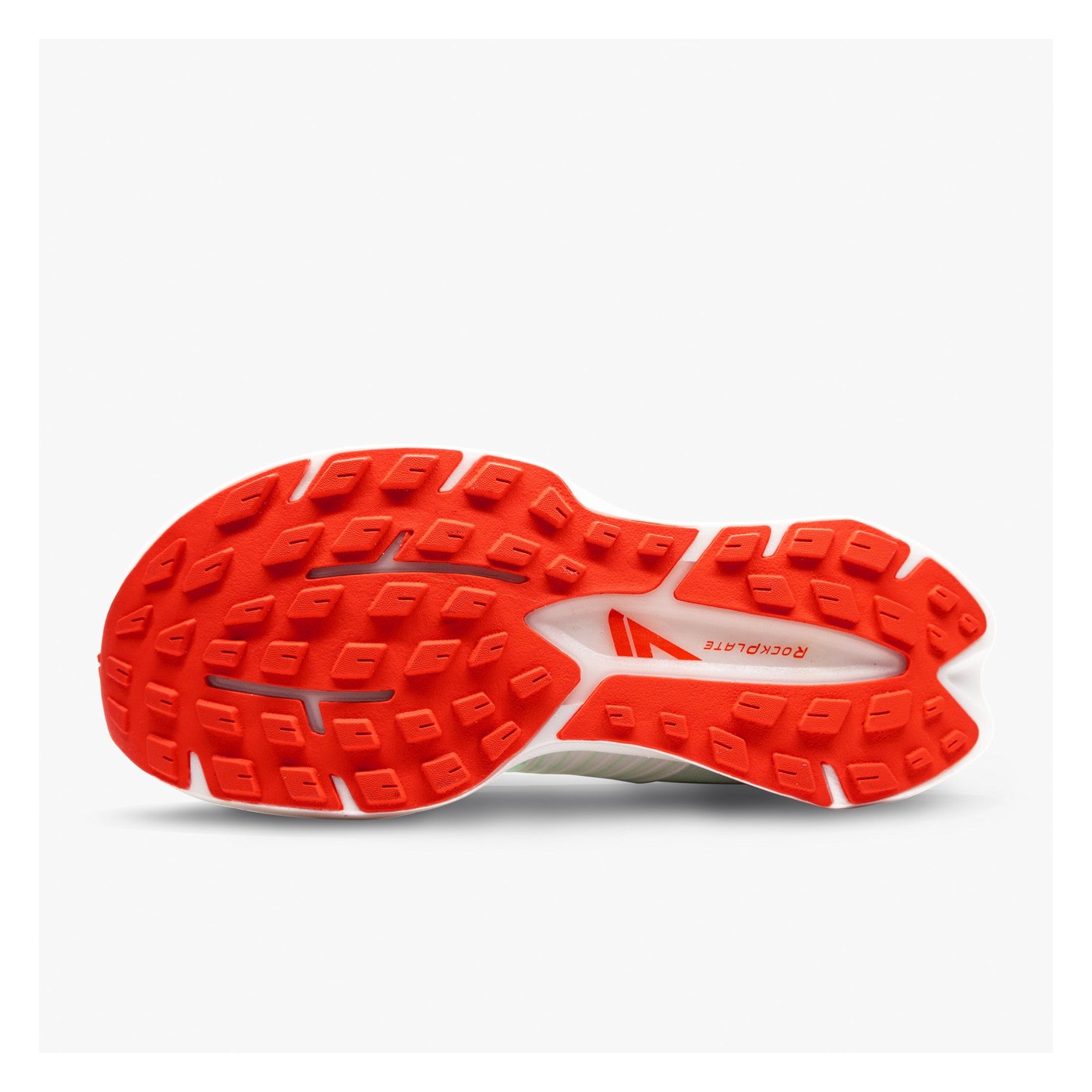
VJ's pitch fits in one word: grip. The brand uses butyl rubber on several models, softer than conventional compounds and especially effective on wet ground. This isn't just marketing talk. On the Ultra 3, independent reviews had already rated the outsole grip among the best they'd tested, an observation backed by several testers who compared it favorably with the benchmark ultra-trail shoes. With the FZN Tempo, VJ brings that specialty to a much wider audience than its orienteering regulars: runners who link roads, gravel tracks and trails without switching pairs.
FZN Tempo specs: a true road-to-trail shoe
| Brand | VJ |
| Model | FZN Tempo |
| Origin | Finland (Orivesi), brand founded in 1981 |
| Release | February 2026 |
| Type | Road-to-trail, tempo and mixed-surface intervals |
| Drop | 6 mm |
| Stack height forefoot / heel | 28 mm / 34 mm |
| Weight (UK 8.5, about EU 42.5) | 240 g |
| Foam | SuperFOAMance+ (nylon + TPEE + EVA, nitrogen-infused) |
| Plate | Full-length branched rock plate (protection, no carbon) |
| Outsole | Lightweight rubber, 3 mm lugs |
| Upper | Multi-zone draining technical mesh, Fitlock system at the midfoot |
| Recommended use | Intervals, tempo, mixed road-trail runs up to 1 h 30 min |
| Official price | €179 |
© VJ, official photo used for editorial purposes
SuperFOAMance+ and a branched rock plate: what does it change underfoot?
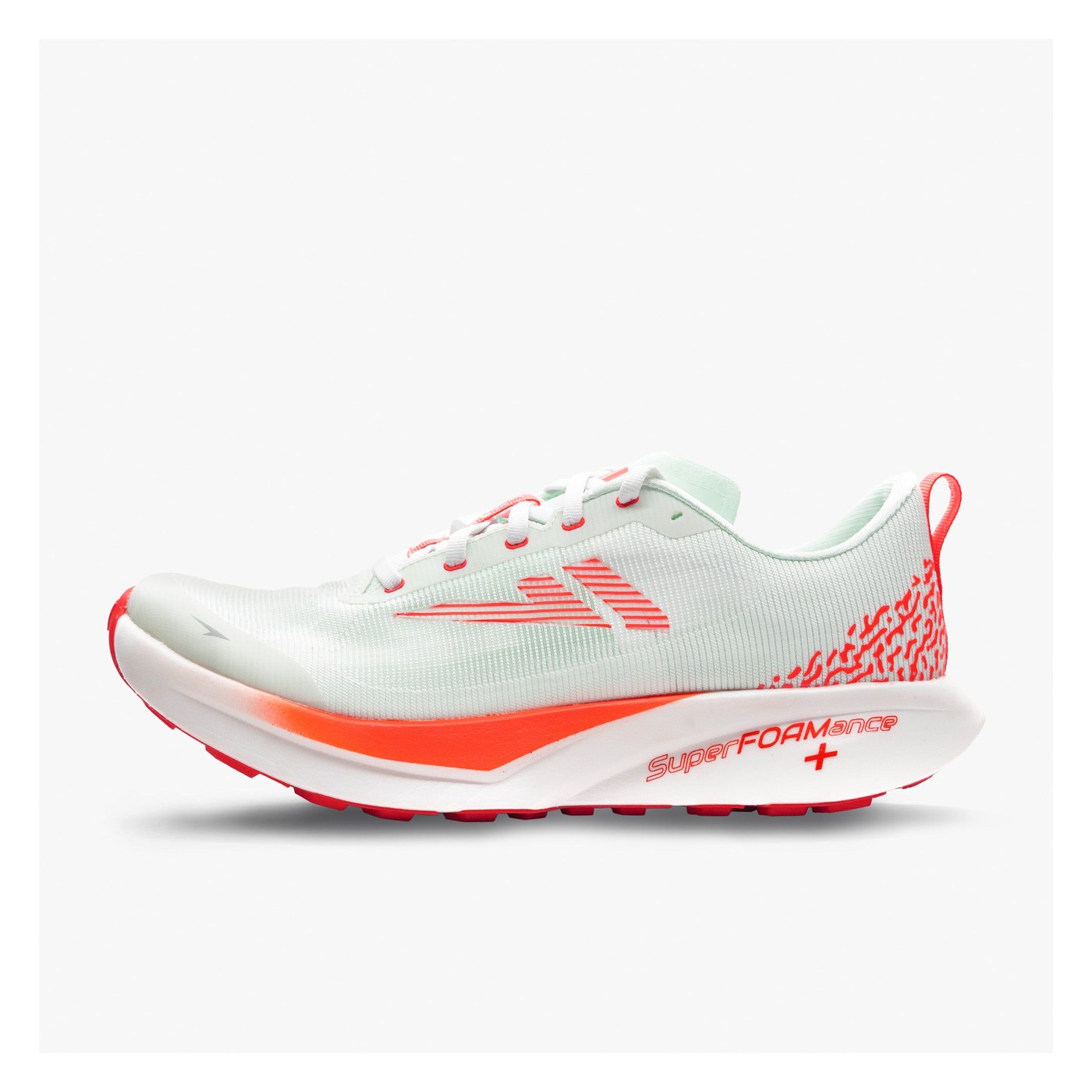
The FZN Tempo uses the latest version of VJ's in-house foam, SuperFOAMance+, infused with nitrogen to seal the foam structure so air can't escape and water and grit can't get in. In practice, it feels firmer than the FZN Aerofly, its more cushioned sibling in the same Fuzion collection, with a livelier rebound as soon as the pace picks up.
The rocker built into the sole is designed to roll your foot forward rather than let it sink into the foam. At tempo or interval pace, this geometry works well and delivers quick transitions. At slow paces, though, the rocker feels different: you land slightly behind the pivot point, which makes your stride a little less smooth than in a classic daily trainer. The FZN Tempo isn't built for easy runs. It's built to push.
Under the foam, a branched rock plate runs the full length of the shoe. It adds torsional rigidity and shields you from rocks and roots without adding weight or making the shoe stiff. That kind of component, common on trail shoes but rare on a shoe this light, is what lets the FZN Tempo leave the asphalt without stalling at the first roots.
Field test: from asphalt to runnable singletrack
At RunMorph, we see the FZN Tempo deliver on one specific point: it doesn't stall when the surface changes. The 3 mm lugs, well spaced, grip a surprisingly wide range of surfaces without ever getting in the way on asphalt. The rubber compound, reworked compared with the brand's older models, gains durability on abrasive surfaces without sacrificing the grip VJ is known for.
Independent reviews of this exact model agree on several concrete points. The consensus from field tests is that comfort holds up for a full session, warm-up and cool-down included, and stays consistent even on runs of up to an hour and a half. Several testers also note that the Fitlock system, positioned at the midfoot, keeps the foot locked in on descents and uneven terrain, a sensitive point on such a light shoe. A review by a specialist retailer also confirmed that the rubber compound holds up on wet and lightly muddy ground, while pointing out that the protective plate doesn't add excessive stiffness to your stride.
Opinions split, however, on how it feels at slow paces. For some testers, the firmness of SuperFOAMance+ is a real plus: it helps you hold good posture and stay more aware of your pace. For others, it makes the first warm-up kilometers less pleasant than in the softer FZN Aerofly. At RunMorph, we read this split as a clear positioning choice: the Tempo targets fast sessions, not recovery runs.
RunMorph's advice: if you want a road-to-trail shoe for recovery runs and easy trails, look instead at a softer option like the Mount to Coast H1. Save the FZN Tempo for sessions where you want to push the pace without leaving the trail.
© VJ, official photo used for editorial purposes
VJ FZN Tempo vs Mount to Coast H1: which one to choose
On paper, the FZN Tempo goes head to head with the Mount to Coast H1, another road-to-trail shoe RunMorph reviewed recently. Both target the same use, but with different personalities.
| VJ FZN Tempo | Mount to Coast H1 |
| Weight | 240 g | 242 g |
| Drop | 6 mm | Varies with setup |
| Character | Firm, dynamic, geared toward faster paces | More versatile, TUNEDFIT dual lacing |
| Strength | Grip on every surface | Long-haul comfort |
| Price | €179 | Similar positioning |
Livelier than the Mount to Coast H1 on sustained efforts, the FZN Tempo is still harder to find in stores. The H1 already has a bit more of a track record in France. The Tempo remains a bet on a brand that's still building its name.
Pros and cons
Pros
- Reliable grip on a wide range of surfaces, confirmed by several independent reviews
- Rock plate that protects without adding weight or noticeable stiffness
- Clean road-to-trail transitions without switching pairs
- Comfort holds up for 1 h 30 min of continuous effort
- Effective Fitlock system on descents and uneven terrain
Cons
- 3 mm lugs fall short as soon as the ground turns muddy or very wet
- Less smooth at slow paces than in fast sessions
- Distribution in France still very limited, few chances to try it on in stores
- €179 is expensive for a brand with no established local after-sales network
- The two-letter brand name is hard to remember and to search for
© VJ, official photo used for editorial purposes
Our field verdict: who is the FZN Tempo for?
Runners who mix road and trail in the same outing
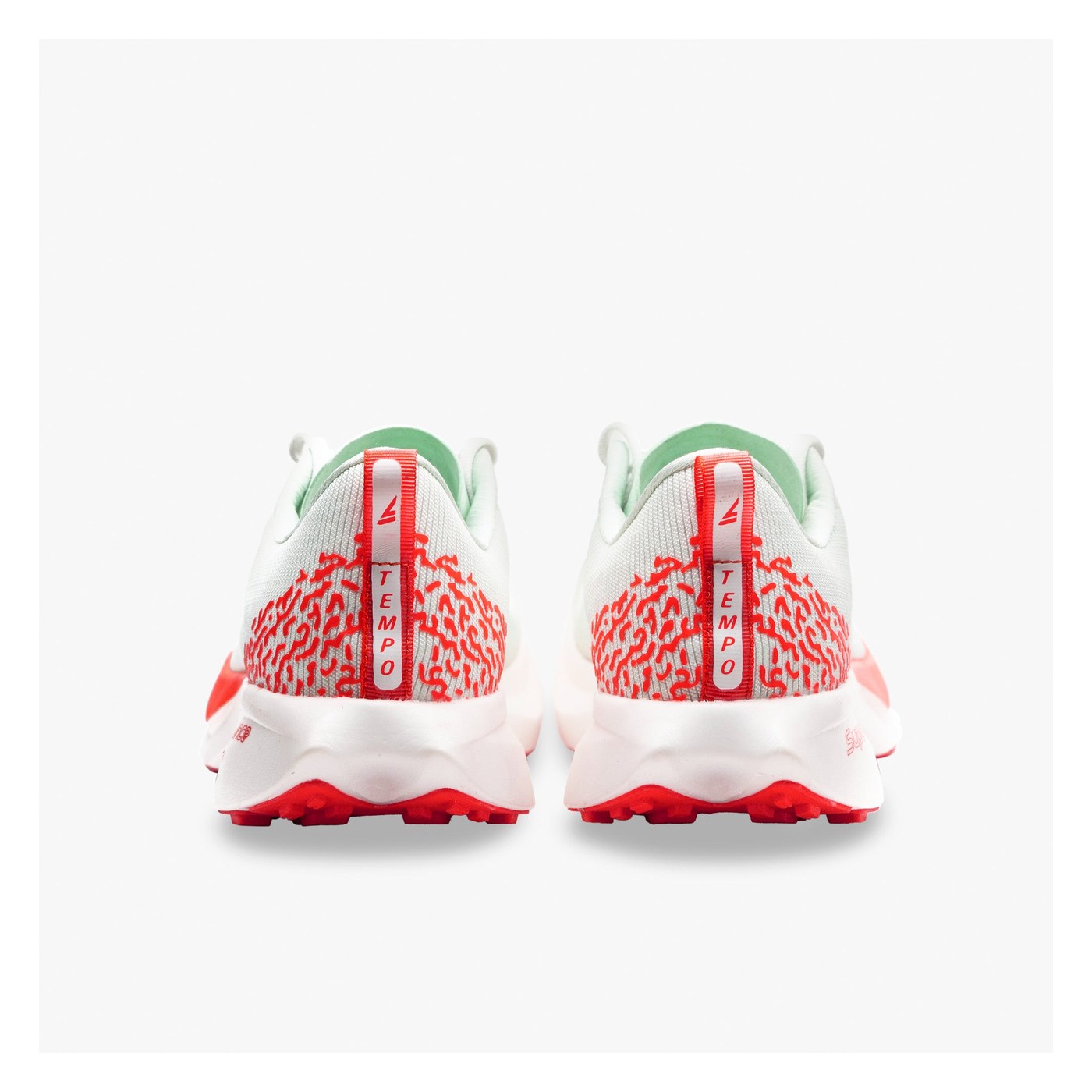
This is the ideal profile. The FZN Tempo is designed for exactly that: head out your front door, eat up a few kilometers of asphalt, reach a trail or a forest, then get back on the road without ever feeling the transition as a compromise.
Runners training intervals or threshold runs on mixed terrain
The firm foam and pronounced rocker are especially well suited to faster paces. This is a workout shoe, not a shoe for easy long runs.
Runners who need local after-sales service and a wide choice in stores
This profile should wait. VJ's distribution in France is still in its infancy, even though the official website now ships in euros across the European Union.
To fit a road-to-trail shoe like the FZN Tempo into your training, it slots naturally into the interval or tempo sessions of a trail plan, when the route alternates runnable stretches with easy trails. Head to
our RunMorph training plans to build a training block that puts this kind of shoe to work at the right point in your week.
RunMorph Coach's verdict
The VJ FZN Tempo delivers on a real technical promise: grip that doesn't falter when the surface changes, backed by a brand that has been earning its credibility since 1981 on the slipperiest terrain in Northern Europe. The rock plate and Fitlock do their job without extra weight, and the SuperFOAMance+ foam rewards faster paces.
But a good shoe isn't enough to win over such a crowded market. At €179, without a dense distribution network in France and with a two-letter name that's hard to remember, the FZN Tempo remains a purchase for curious runners rather than a default choice. 7.5/10: the product is worth a look, but the brand still has to prove itself commercially in France.