Arc'teryx has spent fifty years selling €450 Gore-Tex shells and mountaineering packs. With the Norvan line, the Canadian brand wants trail runners to believe it can design an outsole too. The LD 4, the fourth generation of its long-distance model, promises stability and protection on technical terrain. But cross-check the numbers from several independent testers and one figure moves too much to leave as is: heel stack, listed at 29 mm by the brand, is measured at 25 mm by one source and 31 mm by another. RunMorph read the reviews that matter to work out what's actually worth taking away.
© Arc'teryx, official photo used for editorial purposes
Arc'teryx takes on trail: an outdoor signature applied to running
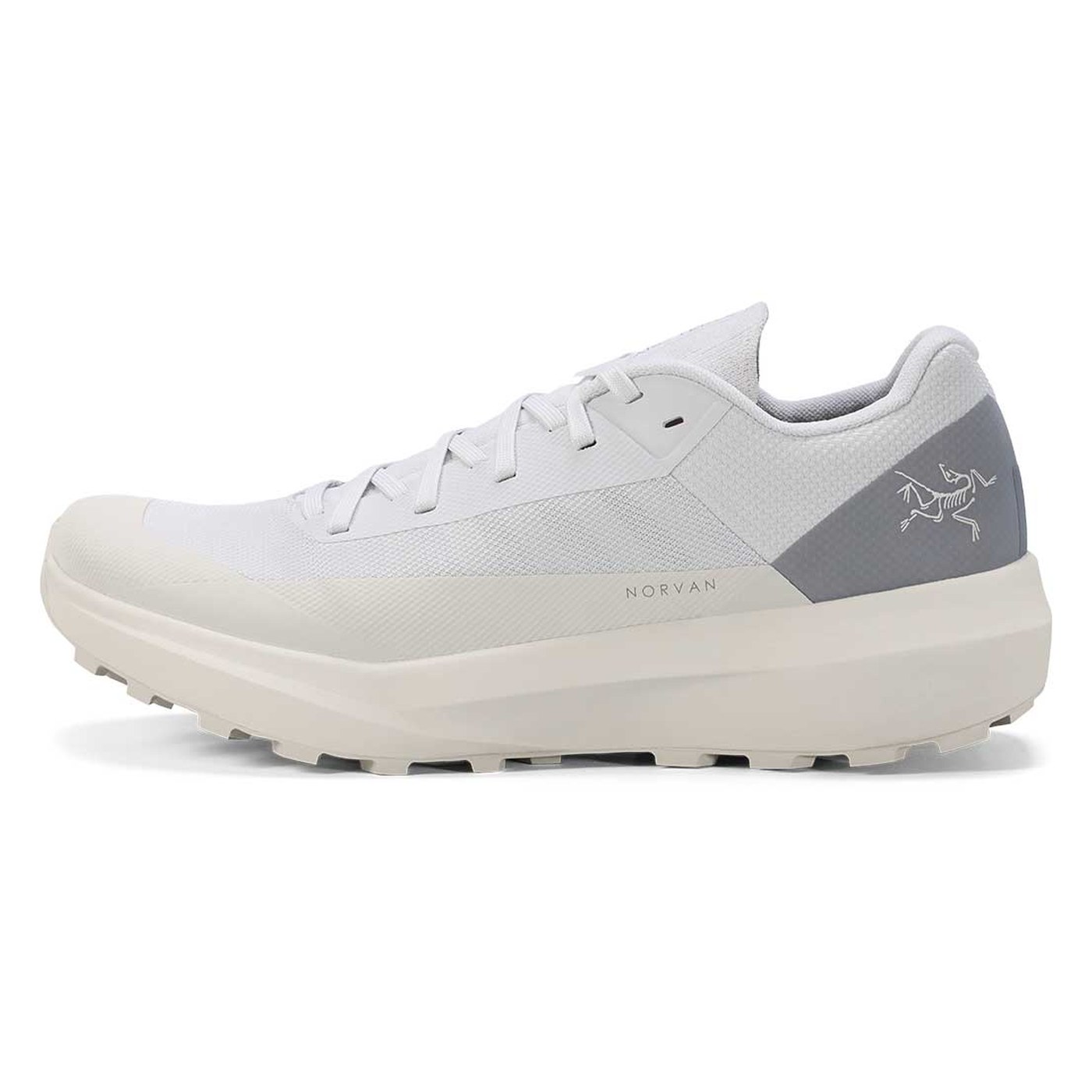
Arc'teryx built its reputation on Gore-Tex jackets and climbing harnesses, not running shoes. The Norvan line has been changing that for several years, and the LD 4 is now its long-distance flagship. The brand's pitch fits in one sentence: a shoe built to last on the toughest terrain, with a PFAS-free upper and a Vibram Megagrip outsole. No carbon plate, no maximalist foam chasing the recent ultra-trail trend. Arc'teryx is playing a different card here, stability and protection, on a segment where Salomon and NNormal already have a foothold.
The positioning is clear from the product page, but the numbers behind it are less so. That's where the RunMorph test starts to diverge from a simple rewrite of the spec sheet.
Norvan LD 4: what Arc'teryx claims versus what was measured
Arc'teryx's spec sheet lists 29 mm of heel stack and 270 g on the scale. Three independent tests, read in full by RunMorph, tell a less tidy story.
| Spec | Brand claim | Independent measurements |
|---|
| Weight (standard men's size) | 270 g | 273 to 277 g depending on the source, up to 2.6% heavier |
| Heel stack | 29 mm | 25 mm from one source, 31 mm from another, a 6 mm gap between two independent readings of the same model |
| Drop | 6 mm | 6 mm confirmed across every source read, no discrepancy |
On weight, the gap stays within the usual margin of an in-store scale rather than a lab one, nothing alarming. On stack height, though, neither independent measurement matches the brand figure, and they don't match each other either. No clear consensus, and no RunRepeat entry with standardized measurements for this exact model to settle it. RunMorph would rather print it as it stands than invent a reassuring average that proves nothing.
Infuse foam and Vibram Megagrip Litebase: what does that actually change underfoot?
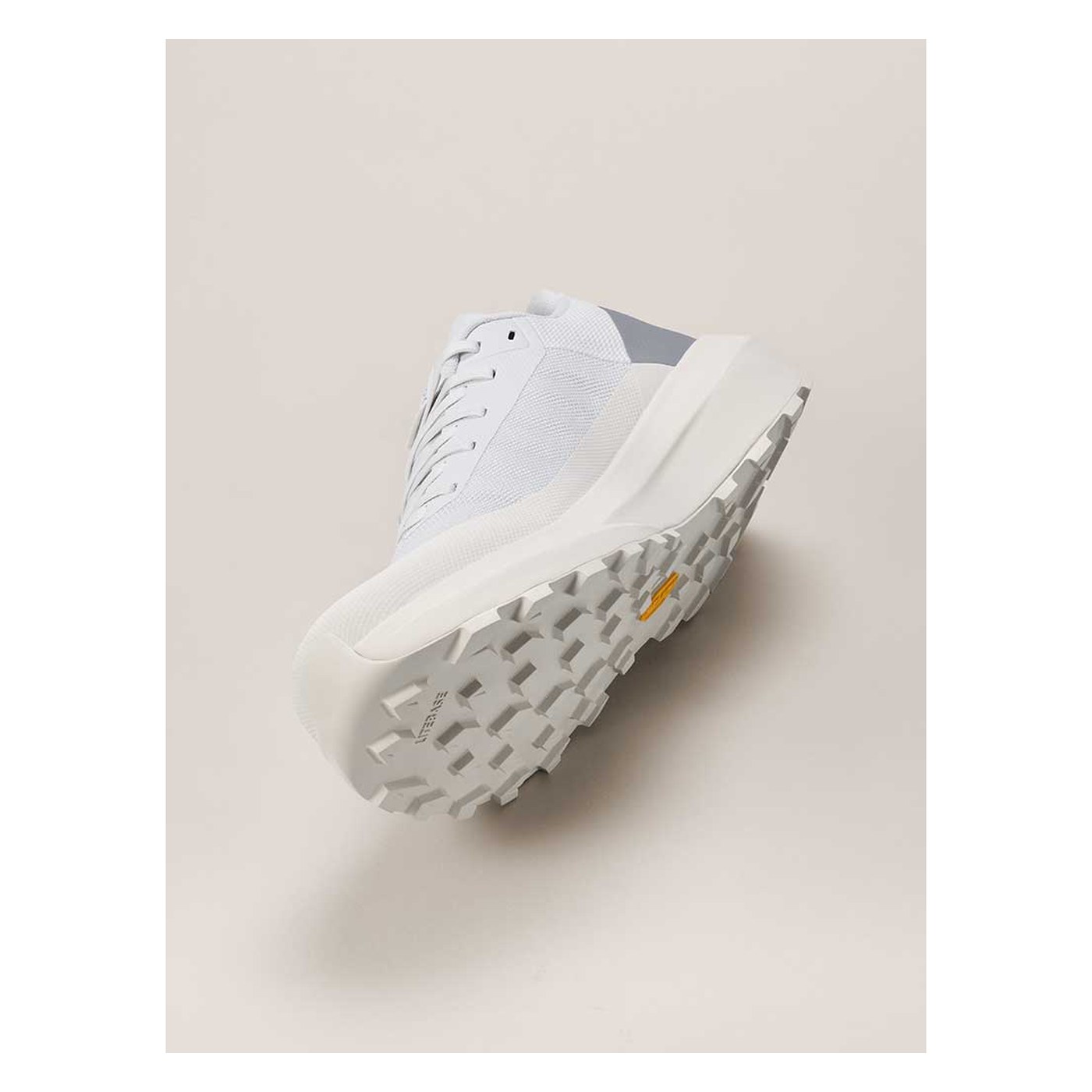
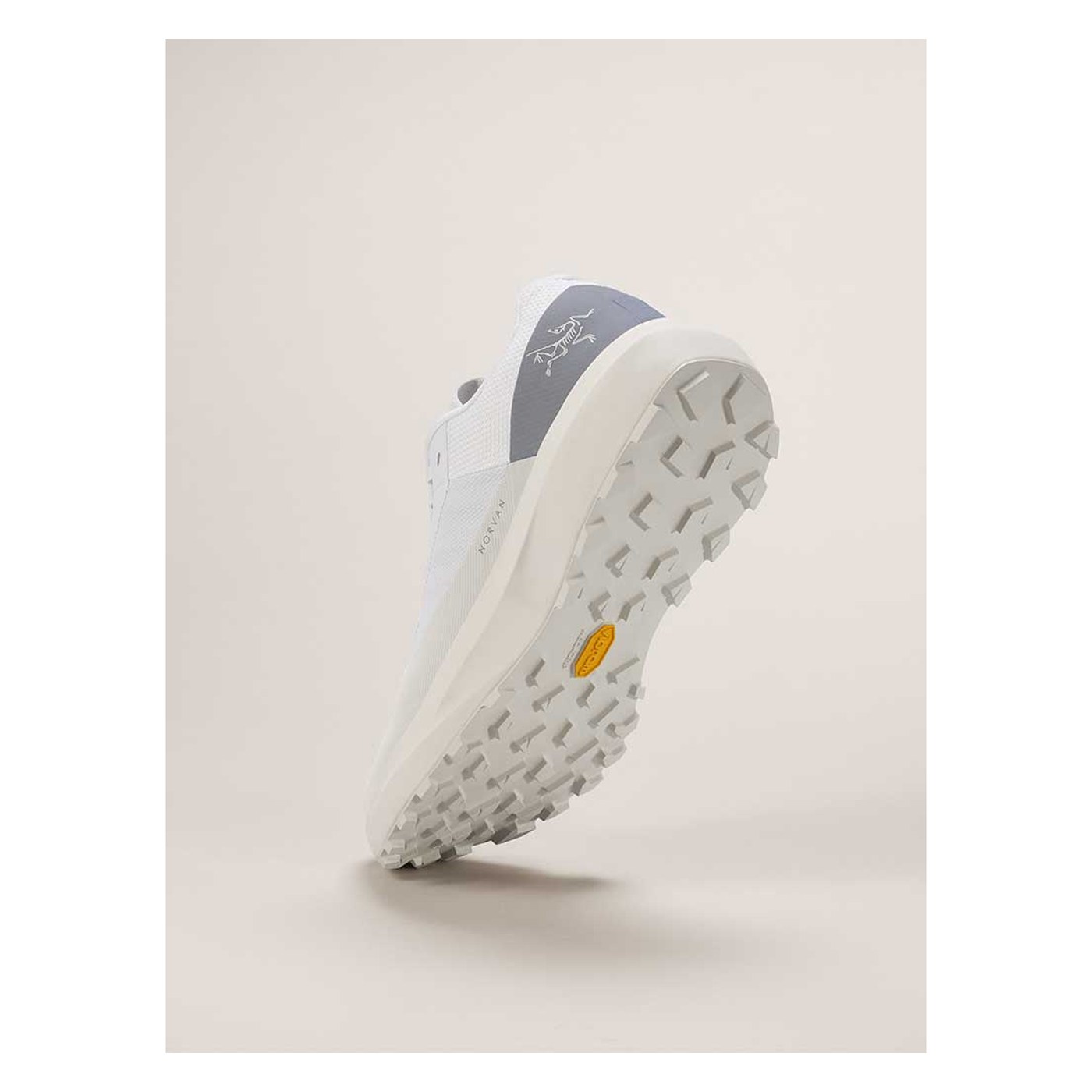
The Infuse midsole combines two foam densities, a firmer layer below and a softer one at the heel to smooth the transition. The result described in the tests read is a close-to-ground feel with sharp feedback on footstrike, far from the thick, bouncy foams of today's max-cushion trail shoes. Underfoot, the Vibram Megagrip outsole with Litebase technology (a thinned rubber layer that shaves weight without giving up grip) carries 4 mm flat-profile lugs designed to shed mud rather than bite into soft ground the way a pointed 6-8 mm lug would.
On dry rock, stony trail and hardpack, every tester read rates the grip as excellent. On deep mud and very waterlogged terrain, opinions diverge slightly, a point covered further down in the durability and traction section.
© Arc'teryx, official photo used for editorial purposes
Fit: an upper that needs breaking in
None of the three sources RunMorph read put a figure in millimeters on toe-box height, a gap flagged here rather than papered over with an invented estimate. On width, though, the picture is consistent. The forefoot is described as flared and fairly wide, the midfoot and heel as standard, and the toe box as narrower than on the Sylan, the brand's more race-oriented model. Narrow feet or heels report a looser hold, with some risk of slipping specifically at the heel.
The shoe tends to run slightly large according to one of the French sources read, which echoes a similar observation reported in North American use. Sticking to your usual size is the safest call, with an in-store fitting beforehand for lower-volume feet if possible.
On the trail: stability stands out, upper needs taming
RunMorph's advice: on technical, mountainous terrain, the Norvan LD 4's stability is worth the detour even for runners used to lighter shoes like the NNormal Kjerag 2. Save it for cool or shoulder-season outings, though, if your feet run hot.
The independent tests converge on one central point: stability. It's described as one of the clearest strengths in its category, comparable to a benchmark model like the Salomon S/Lab Genesis according to one French source, and better than several lighter rivals on technical descents. The flat lug pattern and the width of the heel base explain this hold, independently confirmed by several testers over 100-plus cumulative kilometers.
On the upper, opinions diverge more. One French tester reports rubbing early on, with a break-in period needed before comfort settles in. A second notes a tongue that tends to roll and bunch forward, forcing a mid-run adjustment. An English-language tester RunMorph read internally reports pressure points under the lacing eyelets on the inner foot, a flaw that only affects some testers depending on foot shape. Rather than smooth these three reports into one vague line, RunMorph prefers to quote them as they stand, since they all point to the same part of the shoe: the upper and its lacing.
What pace does it suit, and where does it fall off
Easy runs and base endurance: the shoe works well here, the firm foam keeps good control on uneven ground without the softness of a more cushioned model.
Long run: this is the Norvan LD 4's natural habitat, up to 50 to 90 km according to the most conservative source RunMorph read, thanks to the outsole's stability and protection.
Trail-marathon pace or runnable sections: a weakness flagged by one French tester, who describes heel slap as soon as the ground flattens out or turns runnable, a less fluid feel than on pure technical terrain.
Threshold or fast sections: not the model's main use case. Stability takes priority over responsiveness here, and a lighter shoe such as the brand's own Sylan, or a dedicated racer, will do better on this kind of terrain.
Technical descents and rough terrain: a strength confirmed across every source, where the combination of stability and Vibram grip feels particularly confident, even at a brisk pace on rock.
Major flaw: an upper that rubs before it's broken in
Three independent sources, both French and English-language, each report localized upper discomfort during the first few runs. General rubbing for one, a tongue that rolls and bunches for another, pressure points under the eyelets for the third. None describes an irreversible structural flaw, and all agree comfort improves clearly after breaking the shoe in, but the number of converging reports on the same part of the product justifies treating it as its own point rather than burying it in a bullet list of cons. In practical terms, for a French runner prepping a long mountain outing, that means testing the shoe over several short runs before committing it to a 50 km-plus goal.
Major flaw: breathability drops off once it gets hot
The second measurable issue flagged independently is breathability and drying time. One French source describes it explicitly as weak, with slow drying after a water crossing or a rain shower. The upper, built from dense woven polyester to stay PFAS-free and abrasion-resistant, protects well but breathes less than a thin, airy mesh. On a hot summer outing, that translates into a lingering damp feeling inside the shoe. Conversely, that same construction is an asset in shoulder-season or cool, wet conditions, where it keeps out light surface water.
Norvan LD 4 versus Norvan LD 3: worth the upgrade?
| Criterion | Norvan LD 3 | Norvan LD 4 |
|---|
| Overall profile | Stiffer upper, higher profile at the front of the foot | Lower profile, softer and more breathable upper according to a comparison run by a French retailer |
| Weight | Slightly lighter at matched spec | Slightly heavier, a few extra grams |
| Heel stack | Higher on paper | Lower profile and closer to the ground based on available reports |
Direct comparative data stays limited, with only one source explicitly putting the two generations side by side. The clearest signal that emerges, a lower profile and a softer upper on the LD 4, points toward a more agile shoe on technical terrain. A runner already happy with their LD 3 has no pressing reason to switch. A runner after more stability and a comfier upper will find a case for upgrading.
Norvan LD 4 versus Salomon Sense Ride 5 and NNormal Kjerag 2: the quick read
| Criterion | Norvan LD 4 | Salomon Sense Ride 5 | NNormal Kjerag 2 |
|---|
| Positioning | Long-distance, technical, stable | Versatile, protective | Performance, technical, light |
| Drop | 6 mm | 8 mm | Not disclosed to date in the sources read |
| Lugs | 4 mm | 3.5 mm | Dedicated performance outsole for technical terrain |
| Price | €170 | Comparable range | €190 |
The quick read: one independent measurement compares the Norvan LD 4 directly against the Sense Ride 5, and tips clearly toward the Norvan on grip and lacing width, while the Sense Ride 5 keeps a narrower toe box and a slightly more generous stack. Against the pricier, more performance-focused Kjerag 2 with its Matryx upper and EExpure TPE foam, the Norvan LD 4 leans into a more versatile, more protective profile, built to last over a long goal rather than to shave minutes off a short format.
Pros
- Vibram Megagrip traction rated excellent on dry, rocky, technical terrain by every source read
- Stability among the best in its category, confirmed over 100-plus cumulative kilometers by one tester
- PFAS-free upper, build judged durable (virtually no visible wear after 100-plus km for one source)
- Solid protection with no carbon plate or needless gimmicks
Cons
- Upper needs breaking in, with rubbing and a rolling tongue reported by several independent testers
- Breathability and drying lag behind, not recommended for hot summer use
- Measured stack inconsistent by source (25 to 31 mm at the heel), no reliable reference measurement available to date
- Less comfortable once the terrain flattens or turns runnable, with noticeable heel slap
© Arc'teryx, official photo used for editorial purposes
Grip and durability: what's the cost per kilometer?
One French source observes almost no visible wear on the Cordura upper after 100-plus km, a good early sign. A second is more cautious about lug longevity given their flat shape, noting their wear deserves watching over time even if their geometry should limit abrasion compared with taller, more pointed lugs. On grip in heavily degraded conditions, reports diverge slightly. One source reports very good grip even on soft, wet ground, the other places the limit at deep, greasy mud, where grip drops to average.
With no reference mileage published by an independent source, RunMorph lands on a conservative estimate of 500 to 600 km for this type of protective trail shoe with a Vibram Megagrip outsole, in the low-to-mid range for the segment. At €170, that works out to roughly €0.28 to €0.34 per kilometer, a level consistent with a technical shoe at this positioning, neither a standout deal nor an excessive price.
Our verdict: who should buy the Norvan LD 4?
The Norvan LD 4 is aimed first at trail runners prepping a long outing or a technical mountain race, somewhere between 50 and 90 km, who rate stability and grip above everything else. The typical profile: a runner who has already felt a lack of hold on a rocky descent in a lighter shoe, and who accepts a less breathable upper and a few runs' worth of break-in in return.
RunMorph Coach's verdict
The Norvan LD 4 delivers on the essentials: grip and stability on technical terrain rank among the best in its category according to the independent tests RunMorph read. The overall score of 8.2/10 is weighted toward those two criteria, the real core of Arc'teryx's pitch, and marked down for two concrete, recurring issues: a fit that needs breaking in and breathability that caps out once it gets hot. It's not a perfect shoe, and the murkiness around measured stack height (25 to 31 mm depending on the source) deserved more clarity from Arc'teryx. But it's an honest shoe about what it does well, and RunMorph would rather have a good shoe with clear flaws than a polished marketing sheet with no rough edges.
FAQ: the Arc'teryx Norvan LD 4
Is the Norvan LD 4 suitable for trail running beginners?
Yes, provided you stick to outings under 50 km. Its stability reassures a less experienced foot on technical terrain, but its €170 price stays steep for a first pair.
How durable is the Norvan LD 4?
RunMorph lands on a conservative estimate of 500 to 600 km in the absence of reference mileage published by an independent source, with a Cordura upper that shows little wear after 100-plus km according to one French tester.
Does the Norvan LD 4 run large or small?
It tends to run slightly large according to one French source, a finding echoed elsewhere. Sticking to your usual size is the safest recommendation.
What's different compared with the Norvan LD 3?
The LD 4 brings a lower profile and a softer, more breathable upper according to one direct comparison, at the cost of a few extra grams on the scale.