Kilian Jornet has nothing left to prove on the trails, but NNormal, his brand, still has to win over runners beyond the ultra crowd. The Kjerag 2 shows the Andorran brand knows how to fix its mistakes: the V1, praised for its precision but judged too harsh, gives way to a more cushioned V2 that keeps every bit of its surgical character.
© NNormal, official photo used for editorial purposes
NNormal, Kilian Jornet's brand, course-corrects with the Kjerag 2
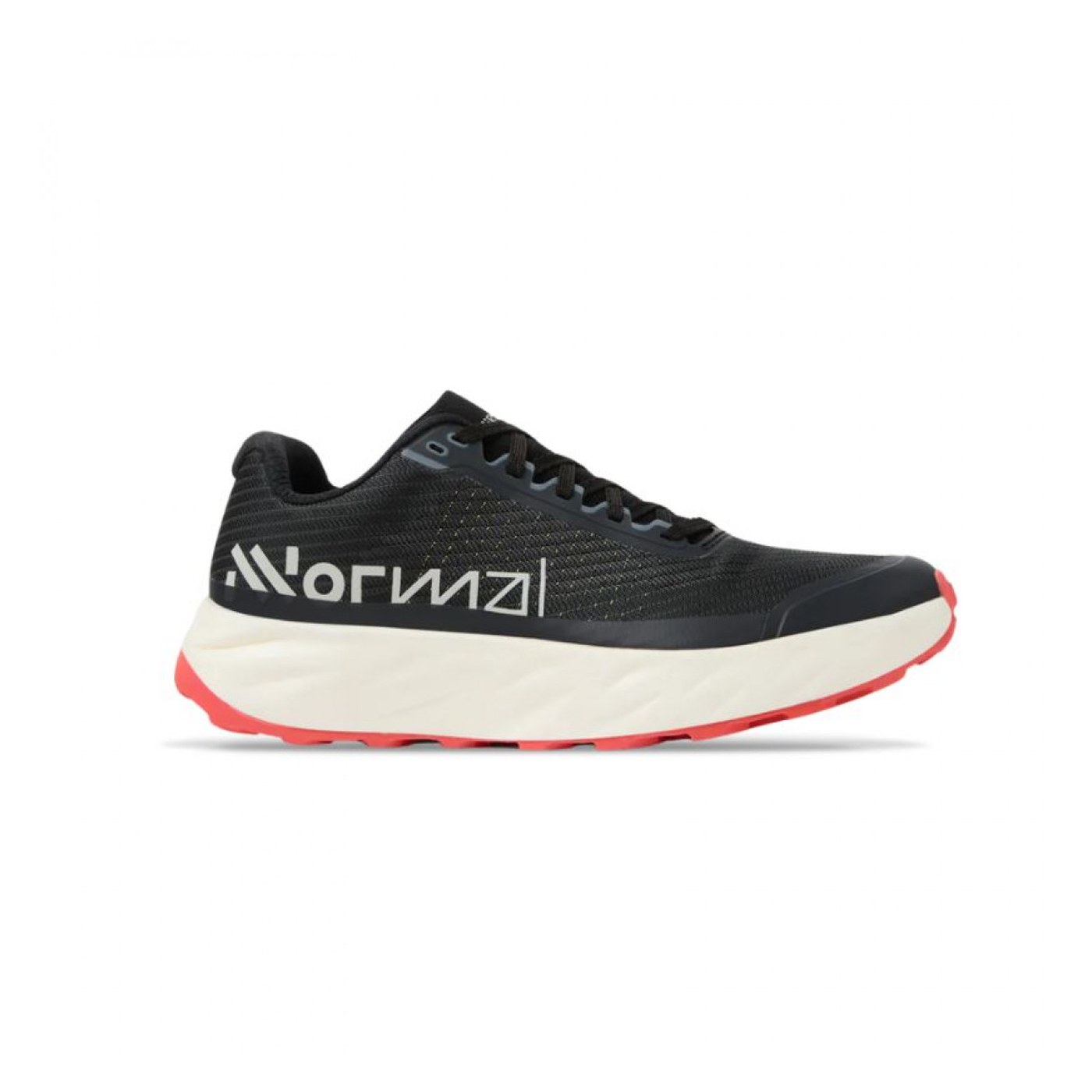
NNormal was built on a simple bet: a tight lineup with no pointless model sprawl, carried by Kilian Jornet's image and field expertise. The brand has already won us over at RunMorph with the NNormal Tomir 2, a versatile shoe that covers everything from short trail races to ultras. The Kjerag plays in a completely different segment: pure precision, designed for rocky trails and fast paces.
The first Kjerag made an impression with its unapologetic minimalism, but many French reviewers found it too harsh for extended use. On the Kjerag 2, NNormal switches foams (a new TPE formula replaces the V1's supercritical EVA) and adds 2 to 3 mm of stack height. The goal: keep the shoe's surgical DNA while making it more versatile over longer efforts. The price drops slightly compared with the V1 (€190 versus about €200), which stays impressive for a shoe carrying Kilian Jornet's name.
RunMorph's advice: if you're torn between the Kjerag 2 and the Tomir 2 in the NNormal lineup, ask yourself about distance and terrain. The Kjerag 2 is built for precision on short to mid-distance technical trails; the Tomir 2 is built for lasting comfort all the way to ultras.
EExpure foam and Matryx upper: what changes underfoot?
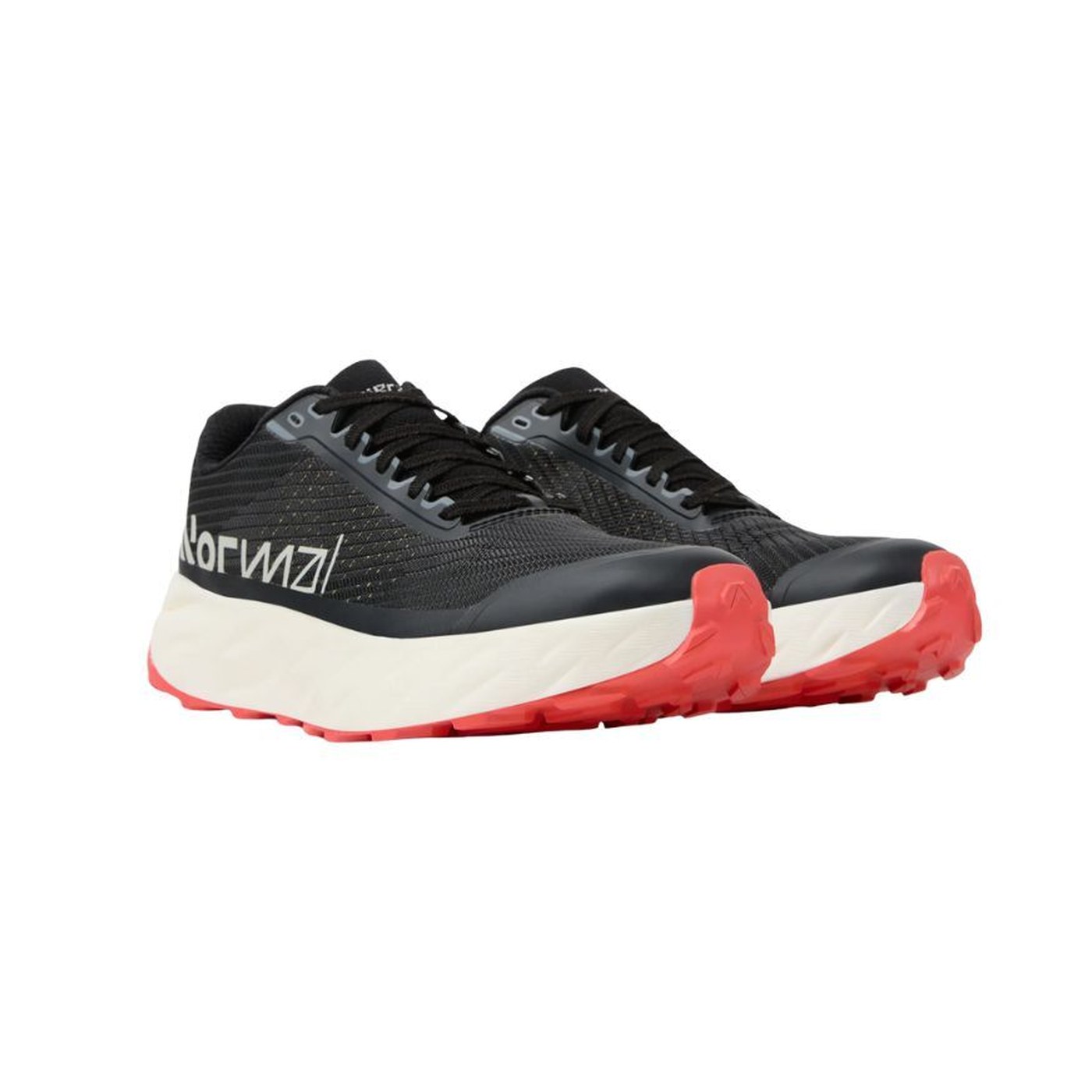
The biggest change on this V2 happens in the midsole. NNormal keeps the name of its in-house foam, EExpure, but completely changes the formula: the shoe moves from a fairly firm supercritical EVA to a supercritical TPE, a foam family you also find in some high-end carbon road shoes. On the trail, the formula stays firmer than on a road shoe, but the gain in softness over the V1 is clear. Heel stack height climbs from 23 to 26 mm, a modest gain on paper that noticeably changes how impacts feel on loose rock.
The upper barely changes: Matryx remains the shoe's visual and technical signature, with a braided weave that wraps the foot without any unnecessary thick spots. The tongue has evolved into a stretchier, sock-like construction that makes the fit more gradual. One point still divides opinion: there's no removable insole, just a nubuck-style texture bonded to the footbed. Your foot gains precision (zero internal play), but some runners report an unusual rubbing sensation against the sock on long runs.
© NNormal, official photo used for editorial purposes
Field test: from 4:30 to 6:00/km on technical trails
At fast paces (4:30 to 5:00/km), the Kjerag 2 is formidable. Your foot stays locked in at the midfoot with no sliding, even on steep off-camber sections, and the rocker drives your stride forward without feeling like you're running on a plank. On longer runs at a moderate pace (5:30 to 6:00/km), the extra cushioning over the V1 shows up under the metatarsals, especially on rocky stretches where the lack of a rock plate was painfully obvious on the previous generation.
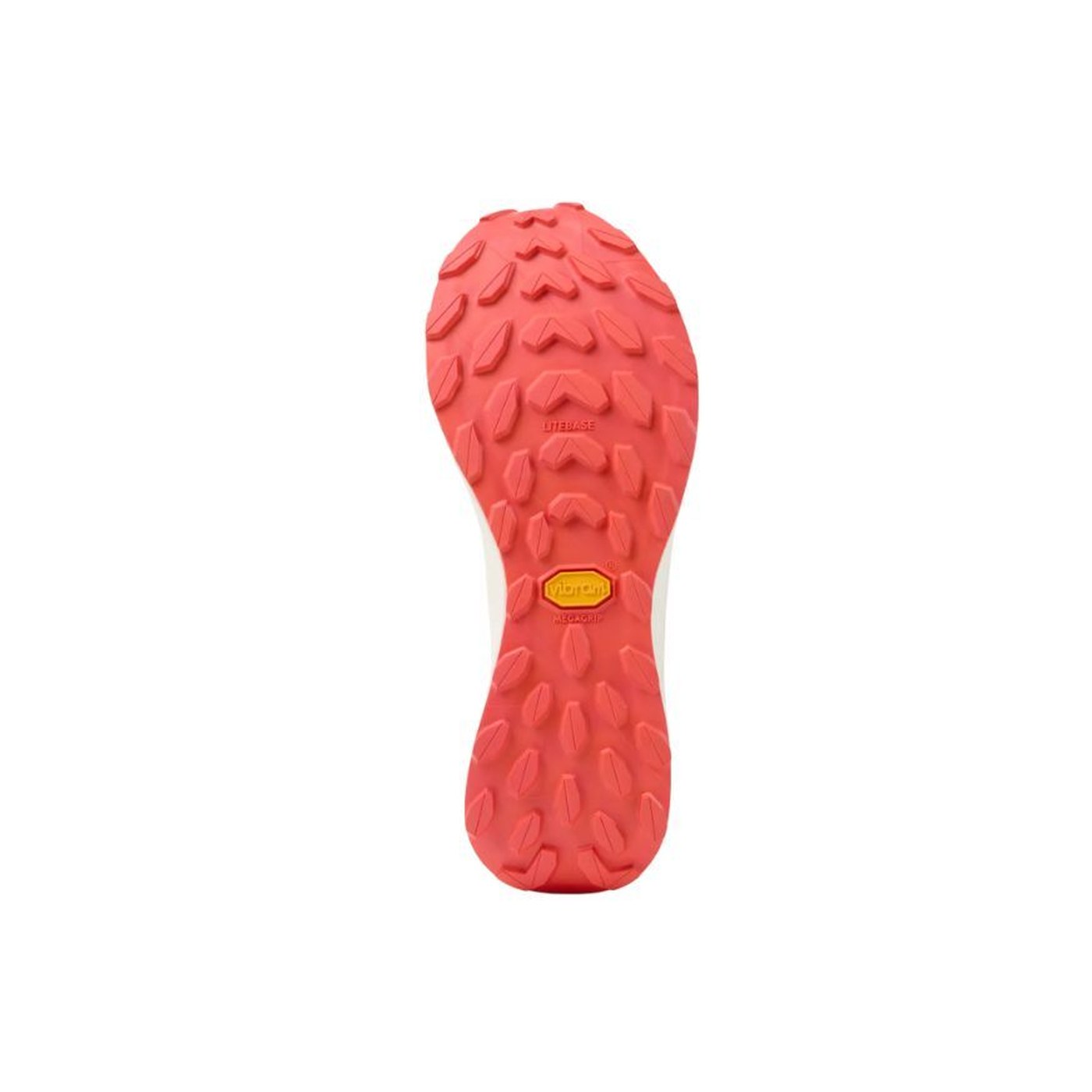
The Vibram Megagrip Litebase outsole bites perfectly into dry rock and slabs, with low, flat lugs that favor contact over penetration. On wet grass or greasy mud, though, grip hits its limits: this is clearly not the shoe's playground. It's designed first and foremost for dry, technical mid-mountain trails.
RunMorph's advice: if you regularly run on muddy ground or in damp woods, save the Kjerag 2 for dry outings and keep a shoe with deeper lugs, like the Salomon Speedcross 6, for rainy days.
NNormal Kjerag 2 vs Hoka Zinal 3: which light technical trail shoe to pick
In the lightweight, plate-free technical trail segment, the most relevant comparison is the Hoka Zinal 3, which RunMorph has already reviewed. Both shoes target experienced runners looking for responsiveness on rocky trails, but with different philosophies.
| Criteria | NNormal Kjerag 2 | Hoka Zinal 3 |
|---|
| Weight | ~225 g | 253 g |
| Drop | 6 mm | 5 mm |
| Heel stack height | 26 mm | 31.8 mm |
| Fit | Very snug, sock-like | Roomier, stretchy Leno weave |
| Best terrain | Dry, rocky, technical trails | Mixed terrain, a little more versatile |
| Price | €190 | €160 |
The Kjerag 2 is lighter and more precise, built for runners who put total control first. The Zinal 3 offers a bit more cushioning and a roomier fit at a more accessible price. The choice comes down to how you like your fit: visceral and wraparound with NNormal, more conventional with Hoka.
NNormal Kjerag 2 pros and cons
Pros
- Exceptional precision and foot hold on technical trails
- Featherweight (~225 g) despite the extra foam
- New EExpure foam is more comfortable than the V1's, with no loss of responsiveness
- Vibram Megagrip Litebase outsole is very effective on dry rock
- Reasonable price (€190) for a shoe backed by Kilian Jornet
Cons
- No removable insole, possible rubbing over long distances
- Limited grip on greasy or muddy ground
- No rock plate, so you feel loose stones under the metatarsals
- Less suited to long distances than the Tomir 2 from the same lineup
© NNormal, official photo used for editorial purposes
Our field verdict: who is the Kjerag 2 for?
Technical trail runners racing skyraces or short mountain races
This is the ideal profile. The Kjerag 2's precision comes into its own on rocky trails and quick changes of direction, where a poorly held foot costs you a lot of energy.
Runners training for a trail marathon or a 20 to 42 km race
The Kjerag 2 is built for exactly this: enough cushioning to go the distance, enough responsiveness to stay sharp on long climbs.
Trail beginners or runners looking for a max-cushion shoe for ultras
Skip it. The very snug fit and the non-removable insole call for an experienced foot, and for ultra-distance racing, a more cushioned shoe is the better choice.
RunMorph pick: to prepare for a skyrace or a technical trail marathon in the Kjerag 2, a structured plan makes all the difference on elevation gain and pace management. Check out the RunMorph training plans built for trail running, and schedule your hill and downhill technique sessions around your race date.
The RunMorph coach's verdict
The NNormal Kjerag 2 delivers on its promise: it fixes the V1's main flaw without losing what made it great. The result is one of the most precise technical trail shoes on the market, at a price that stays reasonable given the brand's image. It doesn't try to please everyone: fans of plush comfort and beginners will look elsewhere, and the non-removable insole remains a choice that won't win unanimous support.
For experienced runners who want to feel every foot strike on a rocky trail, it's hard to find better in this weight class. 8/10, with a small reservation on grip in greasy terrain and footbed comfort over very long distances.