Every new generation of trail jacket promises to be lighter than the last. CimAlp's Storm Pro 4 does the opposite: a claimed 285 g in size M, against 260 g for the Storm Pro 3 tested in 2022. Here is what those extra 25 g really change out on the trail, and why this jacket's breathability splits opinion.
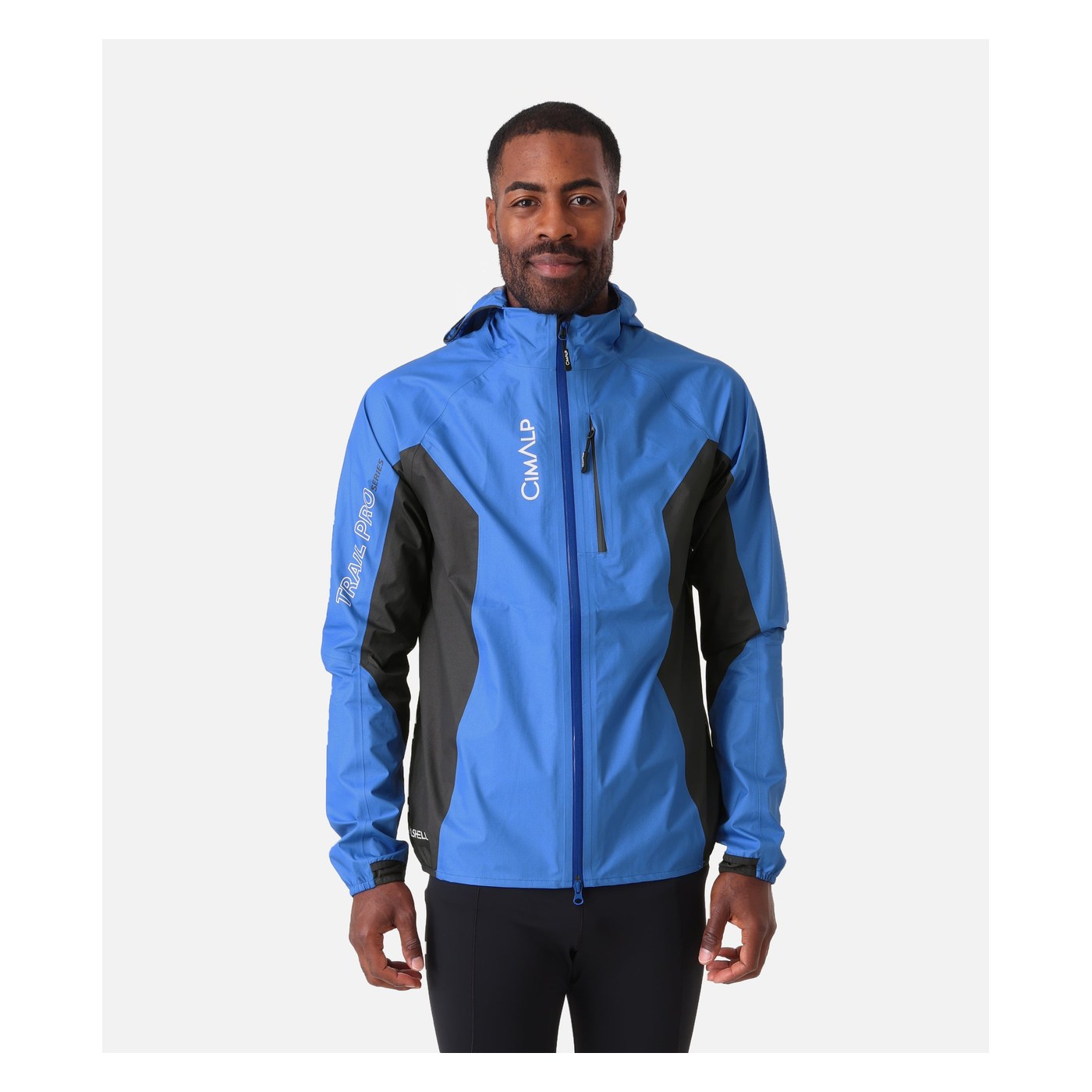
© CimAlp, official photo used for editorial purposes
CimAlp, the Vercors brand betting on durability rather than marketing
Founded in 1964 in the Vercors, CimAlp champions a technical and responsible approach: sensibly chosen materials, fewer middlemen, repairable products. The French brand targets demanding outdoor athletes (hikers, mountaineers, trail runners) with prices generally below those of long-established rivals such as Salomon, while regularly feeding its users' field feedback into the development of its ranges.
The Storm Pro is the best-seller in the brand's waterproof trail range. Version 4, now on sale, replaces the Storm Pro 3 with three changes CimAlp fully owns: a new design, a two-way center zip so you can open the jacket from the bottom and reach your shorts or tights pockets more easily, and reworked thumb loops for extra comfort. The technical ratings, on the other hand, are listed as unchanged: 20,000 Schmerber waterproofing, 80,000 g/m²/24h breathability.
Weight on the rise: what version 4 really changes on the scale
The Storm Pro 3, tested in 2022 by a specialist French outlet, weighed 260 g in size M at a list price of 229 euros. The Storm Pro 4 now weighs 285 g, i.e. 25 g more (+9.6 %), at a lower listed price of 189.90 euros. On paper, the waterproofing and breathability ratings are identical across the two generations: so the extra weight doesn't come from any announced technical upgrade, but most likely from construction changes (new two-way zip, reinforced thumb loops) rather than from any measurable gain in protection.
For comparison, the Salomon Bonatti Pro, already reviewed by RunMorph, weighs about 193 g measured in real conditions for a comparable level of waterproofing, but with far lower breathability on paper. The Storm Pro 4 makes a deliberate trade: more weight and bulk, in exchange for a clearly higher official breathability rating.
RunMorph's advice: if you're targeting a timed ultra where every gram counts, look at the Salomon Bonatti Pro. If you mostly tackle the mountains in bad weather at a hike-and-run pace, the Storm Pro 4's extra 25 g won't change a thing for you.
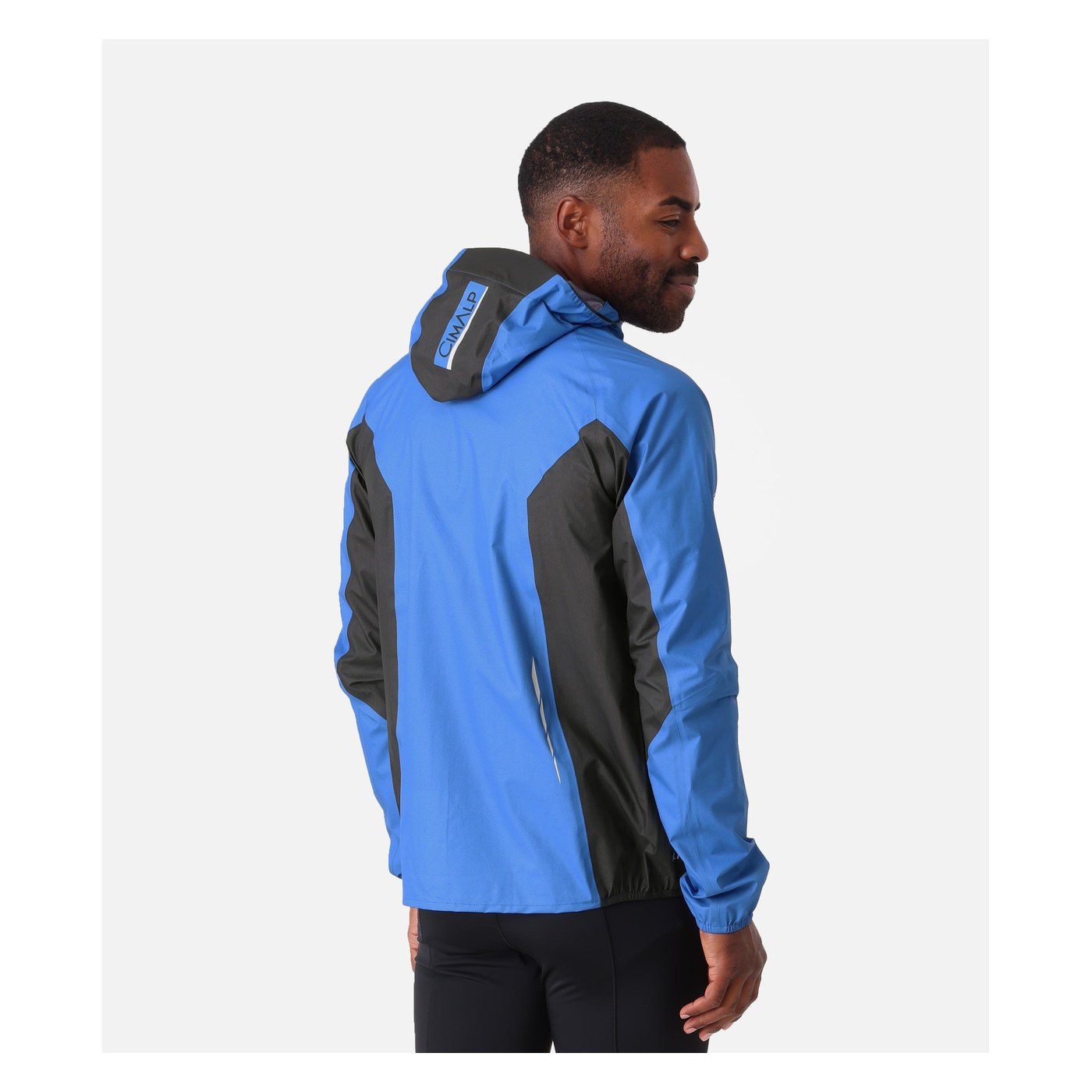
© CimAlp, official photo used for editorial purposes
Field test: fully waterproof, confirmed. Breathability divides
At RunMorph, our test material draws on three independent French and French-language sources, covering several generations of the Storm Pro built on the same Ultrashell technology. A specialist French outlet tested the Storm Pro 3 in depth over several outings: no water ingress at all, including on the back after several hours of effort in the rain, a strong windproof effect even at altitude, and a hood held in place by two magnets that was singled out as particularly well thought out. The same test notes, however, that the jacket loses breathability at high intensity or in warm weather, and that it isn't very packable: it doesn't stow in its own pocket and takes up a lot of room in a pack.
A second test, published in October 2025 by a French-language Belgian sports outlet, confirms on the latest generation total waterproofing through several hours of continuous rain and breathability that keeps condensation well in check, with comfortable use even on long climbs carrying a 10 to 12 liter pack. This test also concludes that the jacket's only real compromise is its packability, as it is bulkier than lighter rivals.
A third, older report (2019, on an earlier generation of the same range) describes a positive experience on a 1h30 run in continuous rain in Quebec: the tester says the hood was so comfortable he forgot he was wearing it, and that he stayed completely dry. He reports no breathability issues despite the jacket being thicker than other models he had tested.
One point of disagreement deserves a mention, and we won't smooth it over: a recent comment from a Storm Pro 4 buyer calls it a "sauna", which contradicts the three detailed tests above. This isolated report isn't backed up by any other source we consulted; they all agree instead that it handles moisture well at a moderate pace. It is still a reminder that breathability is, by nature, the criterion that depends most on individual perception and effort intensity: at high intensity or in strong heat, even the most favorable tests note a drop in performance.
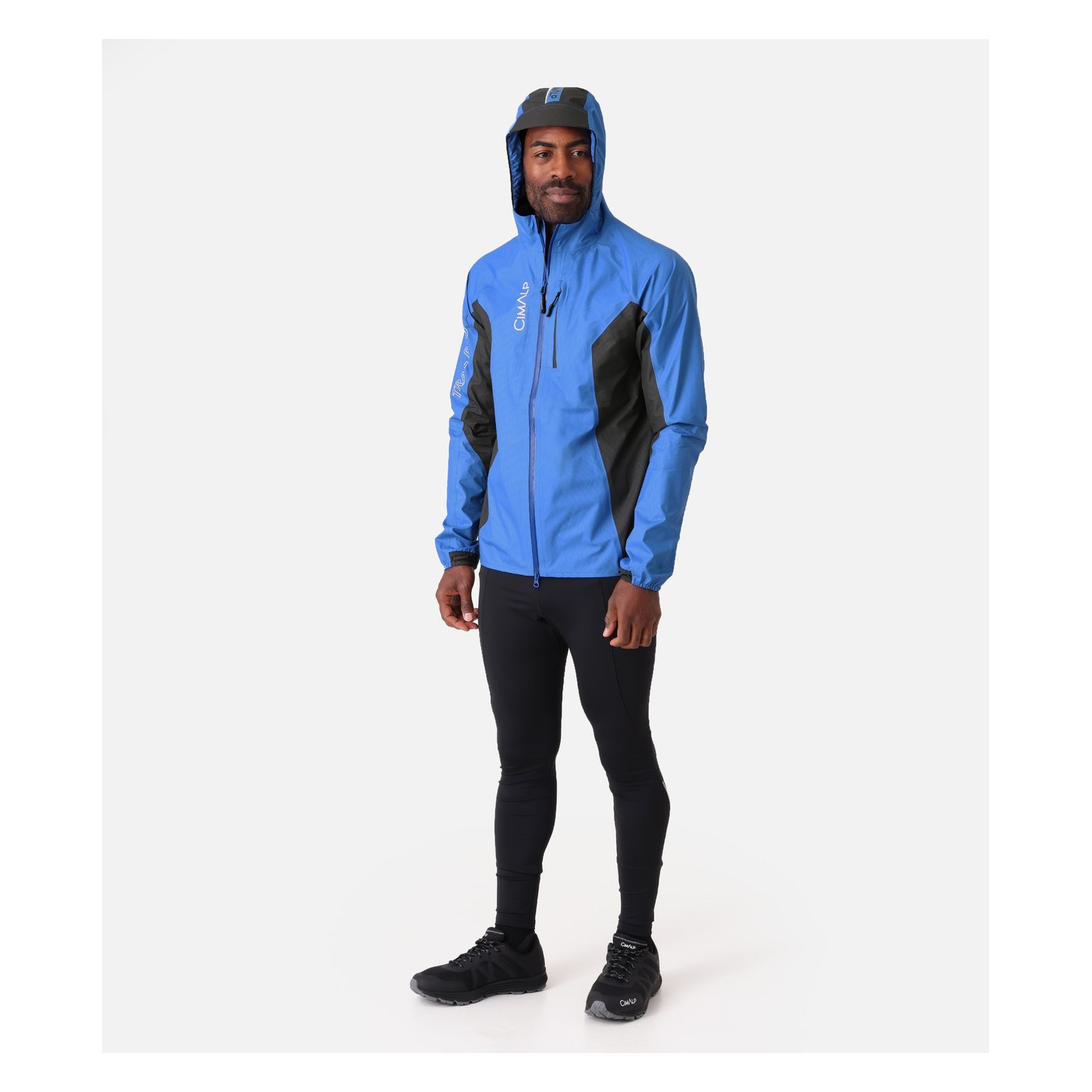
© CimAlp, official photo used for editorial purposes
CimAlp Storm Pro 4 vs Salomon Bonatti Pro: weight versus breathability
| Criterion | CimAlp Storm Pro 4 | Salomon Bonatti Pro |
|---|
| Weight | 285 g (M) | about 193 g measured |
| Waterproofing | 20,000 Schmerber | 20,000 Schmerber (adv.DRY) |
| Breathability | 80,000 g/m²/24h | 20,000 g/m²/24h |
| Price | 189.90 euros | 280 euros |
The simple read: the Bonatti Pro wins on weight and packability, the Storm Pro 4 wins big on official breathability and price. For a multi-hour ultra with sustained efforts and pace changes, the CimAlp's breathability becomes a real selling point; for a jacket that rarely leaves your pack, the Bonatti Pro's featherweight build takes over.
CimAlp Storm Pro 4 vs CimAlp Storm Pro +: when pack compatibility becomes the deciding factor
| Criterion | Storm Pro 4 | Storm Pro + |
|---|
| Worn over a pack | No | Yes, designed for it |
| Price | 189.90 euros | 209.90 euros |
| Membrane | 3-layer Ultrashell | 3-layer Ultrashell |
The flaw users of the standard Storm Pro range report most often, the fact that you can't pull it on over a pack or hydration vest you're already wearing, is solved by CimAlp with the Storm Pro +, which costs 20 euros more. If you're a trail runner who rarely gets your jacket out mid-run without your pack already on your back, weigh that extra cost before you buy.
Pros
- Total waterproofing confirmed by three independent sources, including over several hours of continuous rain
- Official breathability of 80,000 g/m²/24h, higher than most rival jackets in the same price bracket
- Magnetic hood retention and thumb loops praised for their comfort
- Reasonable price at 189.90 euros against premium rivals at 250 euros and up
Cons
- 285 g, i.e. 25 g more than version 3, and it doesn't pack into its own pocket
- Can't be worn over a pack or hydration vest, unlike the Storm Pro +
- Breathability falls behind at high intensity or in strong heat, with one isolated review even describing a sauna feeling
- Bulky in a light trail pack, better suited as a just-in-case layer than for everyday use
Our field verdict: who does this jacket really suit?
The Storm Pro 4 is aimed first and foremost at the trail runner preparing a mountain outing or race with a real weather risk: sustained rain, strong wind, cold. To build a training block that takes these conditions and the mandatory gear into account, head to the RunMorph trail training plans: every trail plan covers managing your safety gear according to the season and terrain, so you don't discover how much your waterproof jacket weighs on race day.
RunMorph Coach's verdict
The CimAlp Storm Pro 4 delivers on its promise of total waterproofing and posts solid official breathability, but it pays for it in weight and packability, gaining 25 g over the previous version with no announced technical gain in return. The lack of pack compatibility, not fixed on this model even though CimAlp offers a solution with the Storm Pro +, also weighs on the score. 7.0/10: a reliable jacket built for the mountains, but neither the lightest nor the most versatile in its category.
FAQ
Is the CimAlp Storm Pro 4 suitable for ultra-trails?
Yes. Its 20,000 Schmerber waterproofing and heat-sealed seams meet the requirements of ultra-trail race rules that mandate a waterproof jacket with a hood.
How much does the CimAlp Storm Pro 4 weigh?
285 g in size M, i.e. 25 g more than the Storm Pro 3 (260 g), for identical claimed technical ratings.
Can the Storm Pro 4 be worn over a running pack?
No. For that, CimAlp offers the Storm Pro +, designed specifically to be pulled on over a pack or hydration vest, priced at 209.90 euros.
Does the Storm Pro 4 run large or small?
According to the most detailed test we consulted, the cut is more fitted than it looks in the photos on the official website, while staying roomy enough for an extra technical layer in winter.
