Diadora is still a rare sight on French start lines, but for two years the Italian brand has been pushing its running lab hard enough that people are starting to notice. The Gara Carbon 3 is its third attempt to compete with the heavyweights of the carbon marathon market, and this time the new foam and plate go well beyond cosmetics.
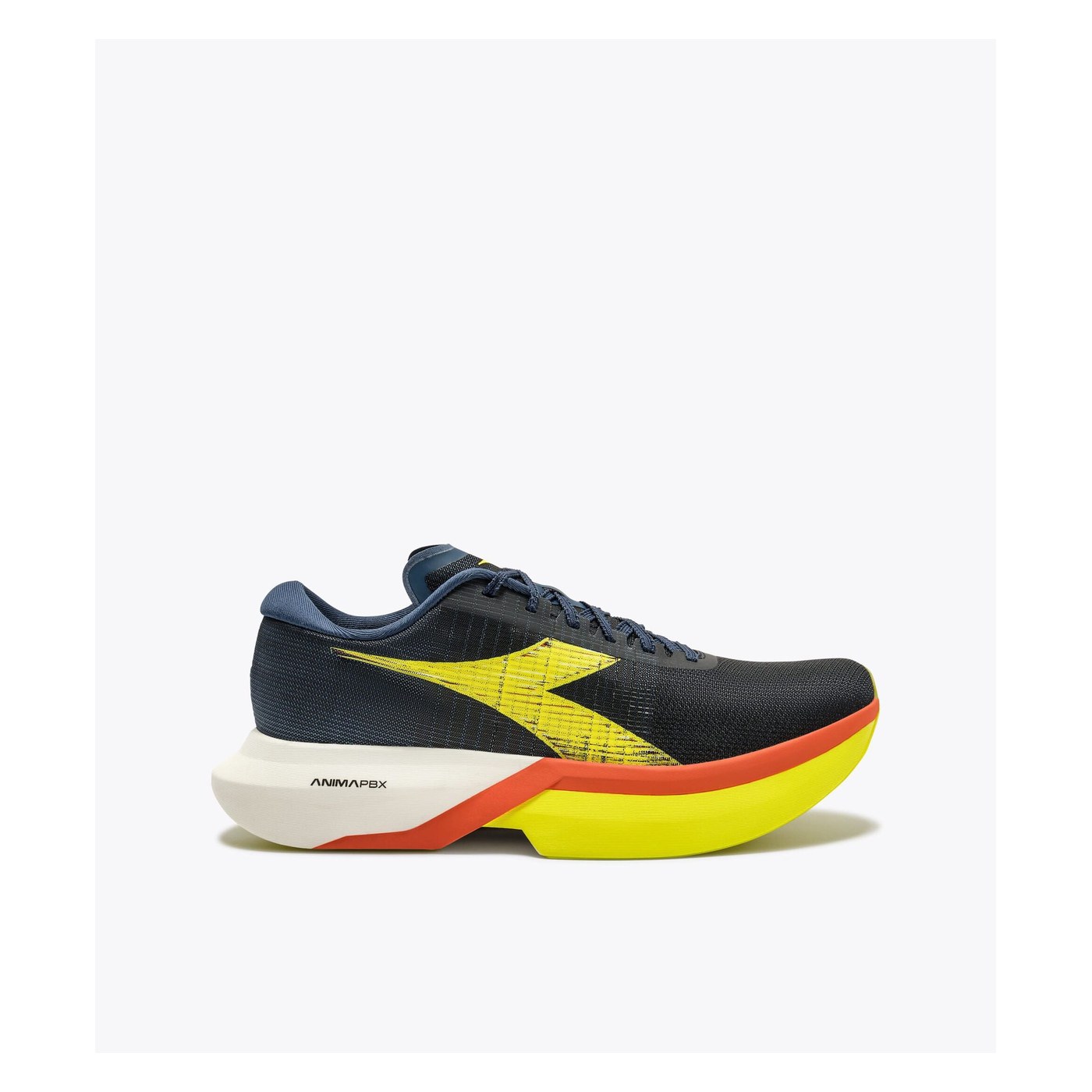
© Diadora, official photo used for editorial purposes
Diadora Gara Carbon 3: Italy's third shot at taking on the carbon heavyweights
The first two generations of the Gara Carbon shared one flaw: a comfortable fit and an EVA foam that cushioned well but gave little back at toe-off. The result felt more like a premium daily trainer dressed up with a carbon plate than a true race-day weapon. Diadora clearly heard the criticism. The Gara Carbon 3 switches foam (Anima PBX, a supercritically expanded PEBA), reshapes the Leva Carbon plate and sheds weight compared with the previous version. On paper, the Italian brand claims 55% more rebound and a 40% weight reduction compared with its old EVA Light foam.
The marketing promise is no longer the issue. The real problem lies elsewhere: Diadora has almost zero name recognition on French start lines, and a 290 euros price tag doesn't land the same way when you're Diadora rather than Nike or Asics. So the question this V3 raises isn't just technical, it's commercial too: is the shoe good enough to earn your blind trust?
RunMorph tip: before committing to a brand that's barely known in France, compare the fit with a shoe you've already worn. If you usually run in the Hoka Rocket X 3 or the Saucony Endorphin Pro 5 with no forefoot issues, the width of the Gara Carbon 3 calls for a try-on first rather than a blind online purchase.
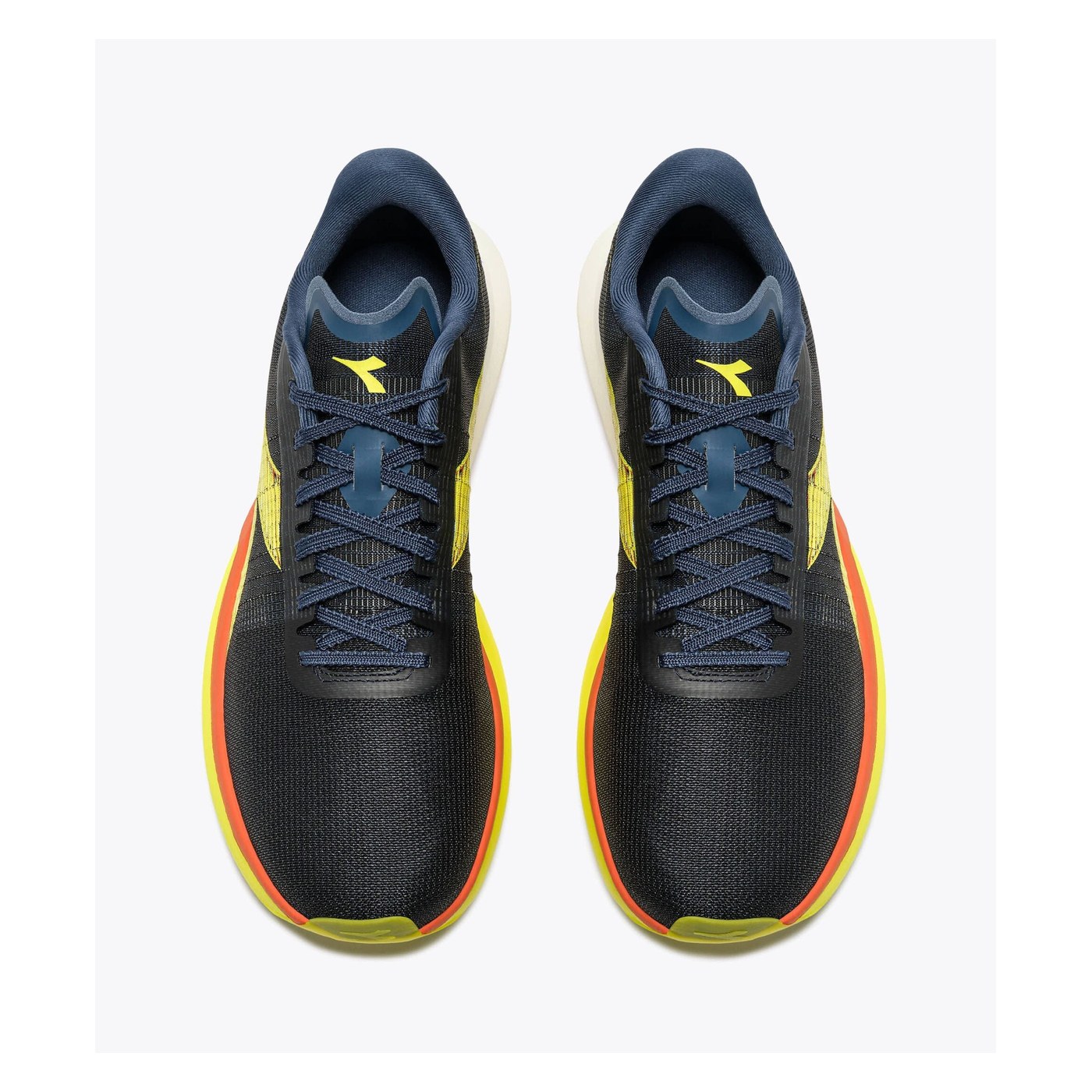
© Diadora, official photo used for editorial purposes
Gara Carbon 3 specs: what's changed since the V2
| Brand | Diadora |
| Model | Gara Carbon 3 |
| Release | Early 2026 |
| Type | Road, racing shoe (10 km to marathon) |
| Drop | 5 mm claimed (feels very low, even zero at the heel, per independent measurements) |
| Stack height forefoot / heel | 34 mm / 39 mm |
| Weight (US M9 / 42.5) | 198 to 205 g depending on the pairs measured independently |
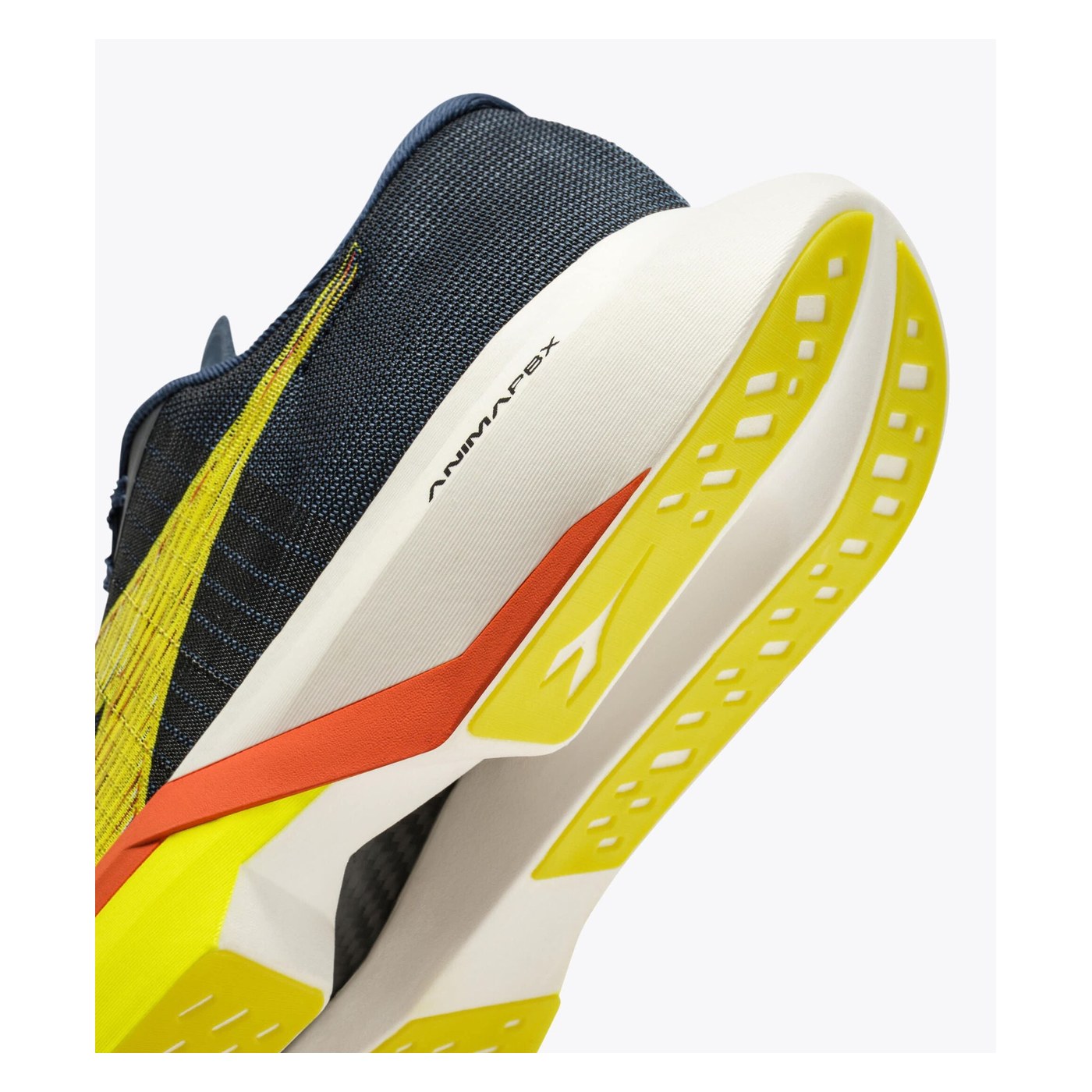
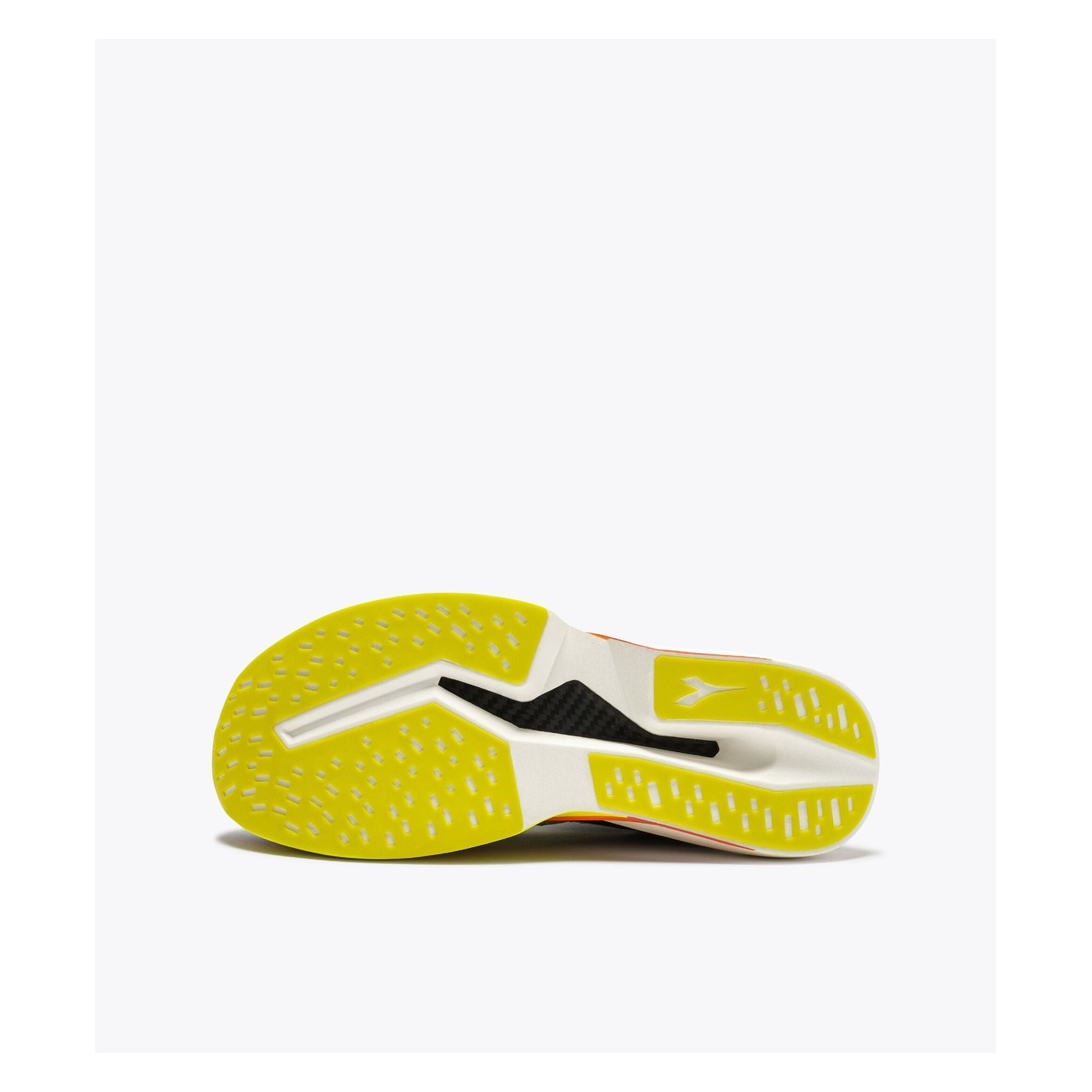
| Carbon plate | Yes, full-length Leva Carbon, central and lateral cutout at the midfoot |
| Foam | Anima PBX (PEBA, supercritical expansion) |
| Upper | Woven Matryx mesh with carbon fibers |
| Outsole | TPU rubber, wider base at the heel |
| Recommended distance | 10 km to marathon |
| Official price | €290 |
A word of caution on the claimed weight: independent measurements range from 198 g to 205 g depending on the pairs tested in an equivalent US M9. That's a gap of nearly 4%, within the normal variation from one pair to the next, but worth flagging rather than smoothing over. Same story with the drop: listed at 5 mm, it feels much lower, close to zero at the heel under load, because the heel foam compresses more than the forefoot foam at initial contact.
Anima PBX foam and Leva Carbon plate: what difference do they make underfoot?
Anima PBX is a supercritically expanded PEBA, the same family of process used by the market leaders. Diadora claims 85% energy return, a high figure you should read with caution, since this kind of measurement varies widely with each manufacturer's methodology. What you can verify independently is how the shoe behaves in real use: the heel foam is noticeably softer than the forefoot foam, which creates an unusual two-stage transition for a super shoe.
The Leva Carbon plate now sits higher under the heel and dips lower in the forefoot, leaving more Anima PBX foam between your foot and the plate there. New on this V3: a lateral cutout at the midfoot that extends the central cutout already found on the V2. In practice, this cutout creates a lateral bias that helps guide the foot outward at toe-off, a stability feature you rarely see on a pure racing shoe. It's a real selling point for runners with mild overpronation who dislike traditional medial posts.
© Diadora, official photo used for editorial purposes
Field test: from marathon pace to intervals, a two-speed shoe
We read three independent reviews in full to build this section: Runpack's (France, timed test with detailed scores for each criterion), an English-language review (clinical testing by a sports physical therapist, about 30 miles covered) and a second English-language review (multi-tester format with numbers-backed comparisons against four direct rivals). All three agree on one central point: the Gara Carbon 3 is a two-speed shoe. Below tempo pace, between 4:00 and 5:00 per kilometer according to the French review, it stays "basic," comparable to a non-plated daily trainer. Independent measurements confirm that shorter than 10 km, as you approach interval paces, the design shows its limits: the transition doesn't react fast enough and cruising rhythm is slow to arrive.
Past that tipping point, the shoe changes character. As soon as the pace climbs toward threshold and fast marathon pace, the field tests agree on clear propulsion, driven by the forward roll onto the forefoot and the stiffness of the plate up front. Independent data puts the sweet spot between 10 km pace and the marathon, with a special mention for long efforts at a sustained pace rather than pure speed.
Opinions split sharply on fit comfort, though. The French review praises comfort "with no blisters or rubbing" from the very first run. Independent clinical measurements tell a different story: a narrow, low-volume fit, marked pressure on the 4th and 5th toes, and a lateral heel area that becomes an irritation point over time for sensitive feet. This contradiction matters. It most likely comes down to different foot shapes among the testers, which confirms that trying this model on first is essential, more so than with most other super shoes. At RunMorph, we treat the fit as a real purchase risk, not a minor detail.
On durability, the reviews agree: the outsole holds up better than on the previous generation, with no visible wear after 35 miles according to the most thorough independent measurements, and the Anima PBX foam keeps its rebound after a break-in period estimated at 20 to 30 km. Grip gets a shared caveat: very good on dry ground, slightly weaker on wet surfaces, a flaw common to nearly all current carbon super shoes.
Diadora Gara Carbon 3 vs Hoka Rocket X 3: the stable super shoe showdown
The two models are regularly compared in independent reviews because, with a few rare exceptions, they are the only super shoes on the market that deliberately prioritize stability over pure lightness.
| Criterion | Diadora Gara Carbon 3 | Hoka Rocket X 3 |
|---|
| Stack height forefoot / heel | 34 mm / 39 mm | 33 mm / 40 mm |
| Drop | 5 mm claimed (feels lower) | 7 mm |
| Forefoot flexibility | Stiff plate, little flex | Forked plate, more flexible |
| Fit | Narrow, low volume | Roomier, suits more foot shapes |
| Price | €290 | Similar price in France |
The independent review that tested both pairs side by side prefers the Rocket X 3's transition, which feels more natural thanks to a more flexible forefoot plate, while the Gara Carbon 3 wins on heel comfort and premium build quality. In other words: with comparable stability, the Hoka breathes better and forgives more foot shapes, while the Diadora mainly rewards strides that stay high on the forefoot.
© Diadora, official photo used for editorial purposes
Our field verdict: who is it for?
The Gara Carbon 3 targets a specific profile: a runner with fairly narrow feet, preparing for a fast 10 km, a half or a marathon, who wants lateral stability that few super shoes offer. It's not an interval shoe, nor a first purchase to discover the carbon feel: its two-stage transition needs pace to come alive.
A carbon shoe takes preparation; you don't discover it the night before a race. To fit the Gara Carbon 3 (or any other super shoe) into your progression toward a time goal, a RunMorph training plan structures the threshold sessions and long runs that truly get your money's worth out of this kind of gear, instead of only bringing it out on race day.
RunMorph verdict
The Diadora Gara Carbon 3 is a genuine super shoe, not a marketing stunt dressed in carbon. The firmer Anima PBX foam and the repositioned Leva Carbon plate deliver real propulsion at long-distance paces, and the lateral midfoot cutout offers stability that very few rivals match. But the narrow fit is no detail: it rules out part of the running population from the start, and nobody should buy it without trying it on first. At 290 euros from a brand with almost no presence at French races, it's still a risky bet until word of mouth confirms its long-term durability. 7.7/10: a serious shoe for a specific runner profile, not yet a no-brainer.