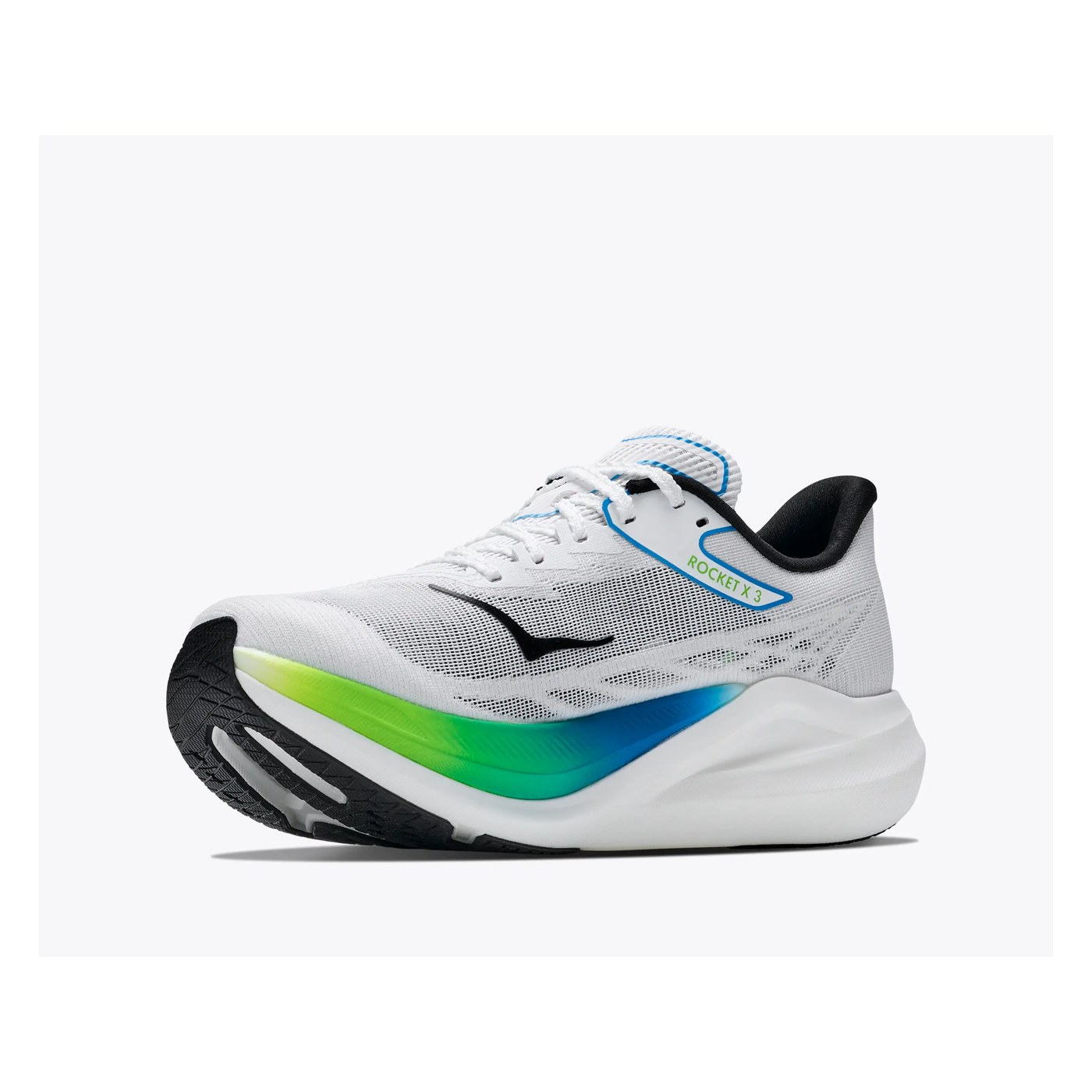
Every runner who tested the Rocket X 2 knew its flaw: it slipped on wet roads. That's a dealbreaker for a racing shoe that has to hold its line in the rain of a fall marathon. Hoka went back to the drawing board without diluting the line's DNA, and the result, the Rocket X 3, now stands out as one of the most stable super shoes on the market.
Hoka Rocket X 3 Review: A Stable, Forgiving Carbon Racer
8.3/10
- Wet-surface grip finally fixed, the historic weak spot of the Rocket X line
- Remarkable stability for a racing shoe, confirmed by several independent reviews
- Excellent muscle savings, little to no soreness reported after sessions
- Durability in the lower half of the category, around 300 to 400 km
The essentials in 3 sentences
The Rocket X 3 is a racing shoe built around a carbon plate with side wings and dual-density PEBA foam, designed for everything from the 5 km to the marathon. It fixes the line's historic weak spot (grip on wet surfaces) and gains stability through firmer cushioning, at the cost of slightly higher muscular demand. It targets experienced runners who want a carbon shoe that forgives less-than-perfect strides, more than a pure trampoline effect.
8.3
/ 10 · RunMorph overall score
Who is it for?Runners racing anything from 10 km to the marathon who want a stable carbon shoe, including those new to this type of shoe.
Who should skip it?Runners chasing the most pronounced trampoline effect possible, or who want a single pair for an entire race season.
Hoka Rocket X 3: the rocket that learned to brake at the right moment
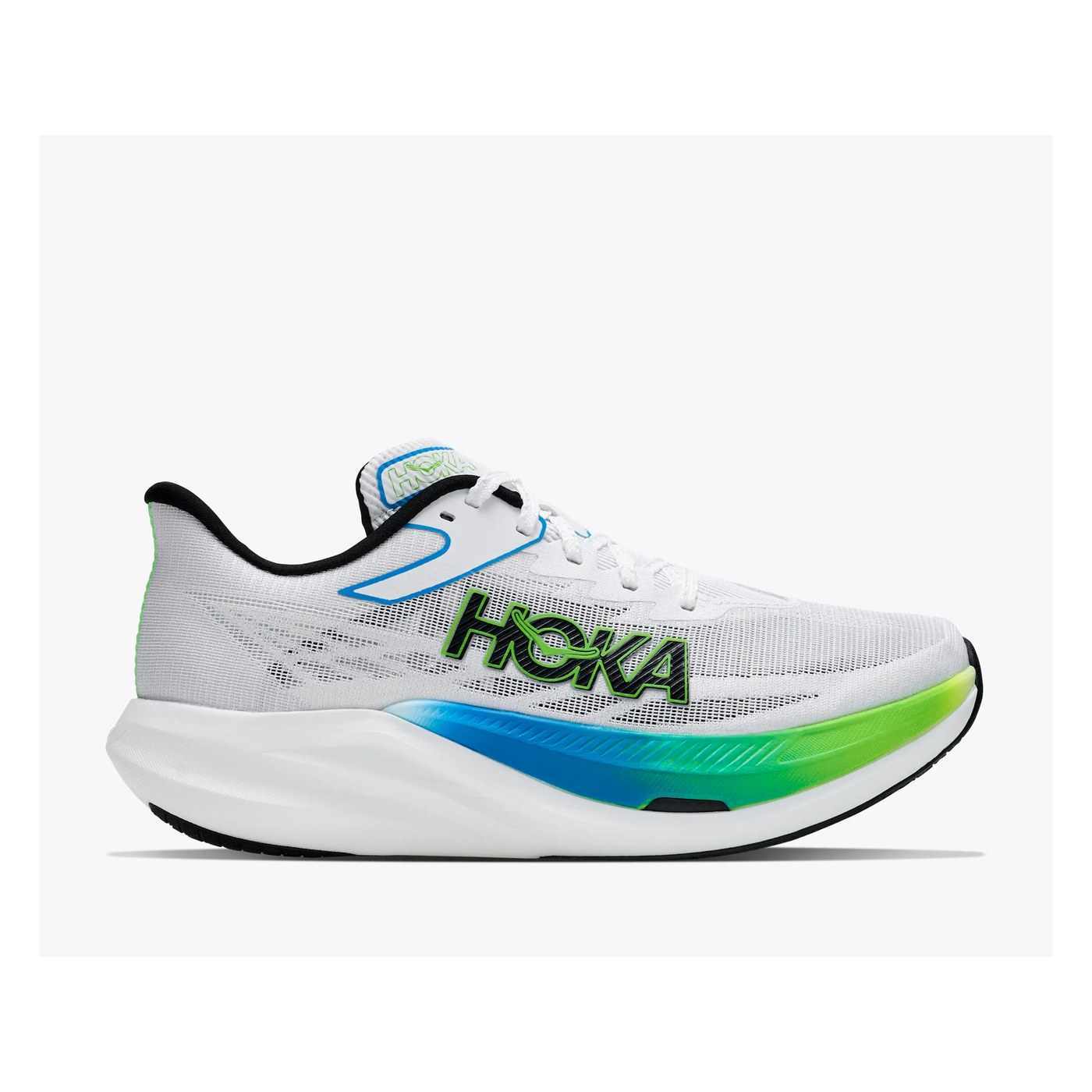
The Rocket X 2 was praised for its responsiveness but criticized for its poor grip on wet surfaces, so Hoka had a clear brief for version 3: keep the energy, fix the grip. The brand adds a reworked carbon plate with side wings, a Hoka-specific design few competitors copy, plus a stiffer collar that locks the heel in better.
Released in July 2025 at 250 euros, the Rocket X 3 goes up against market benchmarks like the Adidas Adizero Adios Pro 4 and the Saucony Endorphin Pro 5, with one differentiating argument: a level of stability rarely seen in such a race-focused shoe.
RunMorph tip: if you're new to carbon-plated shoes and worried about losing control of your stride, the Rocket X 3 is a more reassuring entry point than the Adios Pro 4 or the Vaporfly 4, which demand more running technique.
© Hoka, official photo used for editorial purposes
Objective technical data
| Brand | Hoka |
| Model | Rocket X 3 |
| Release | July 2025 |
| Type | Road, racing |
| Drop | 7 mm |
| Stack height forefoot / heel | 33 mm / 40 mm |
| Weight (men's, size 42-43) | 210 to 227 g depending on size and source |
| Foam | Dual-density PEBA |
| Carbon plate | Yes, with side wings |
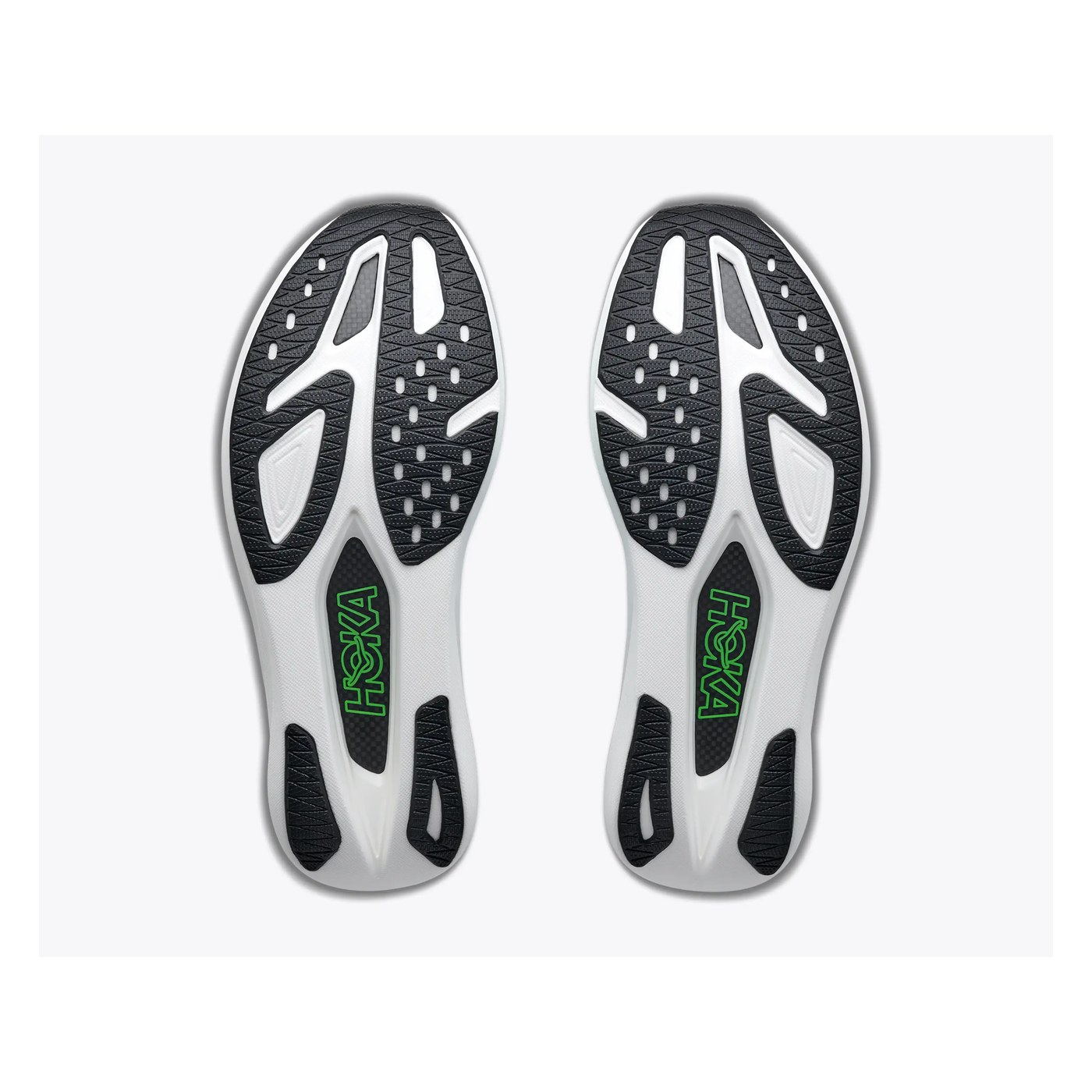
| Outsole | Reinforced grippy rubber |
| Upper | Technical jacquard mesh |
| Recommended distance | 5 km to marathon |
| Official price | €250 |
One word of caution on these specs: independent reviews don't all agree on the exact weight or drop. Some measurements report 193 g and a 5 mm drop, while the manufacturer's official spec sheet and a test covering more than 100 km point instead to 227 g and a 7 mm drop (40 mm at the heel, 33 mm at the forefoot). The gap is too large to ignore: check the product page when you buy rather than trusting a single number found online.
Winged carbon plate technology: what does it change underfoot?
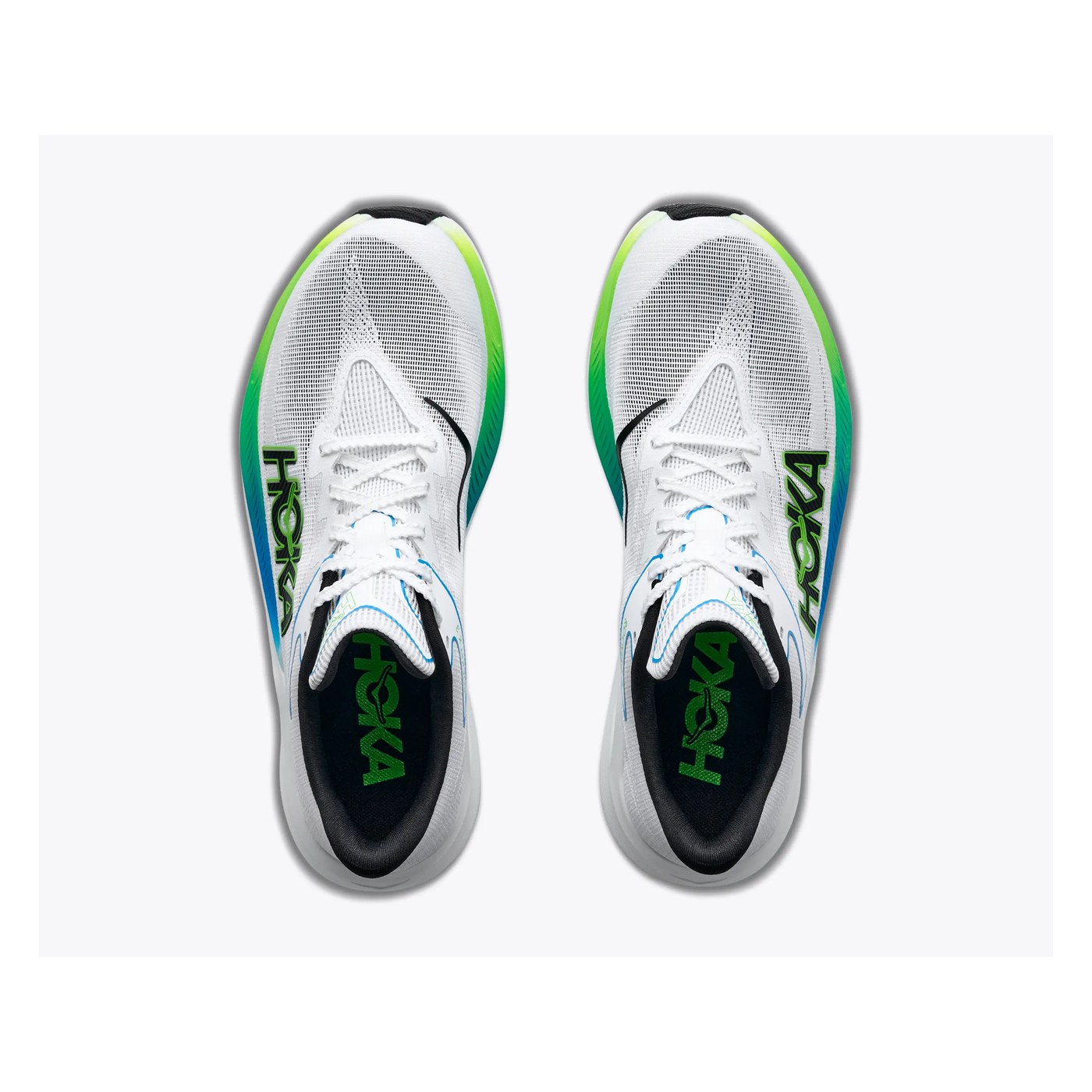
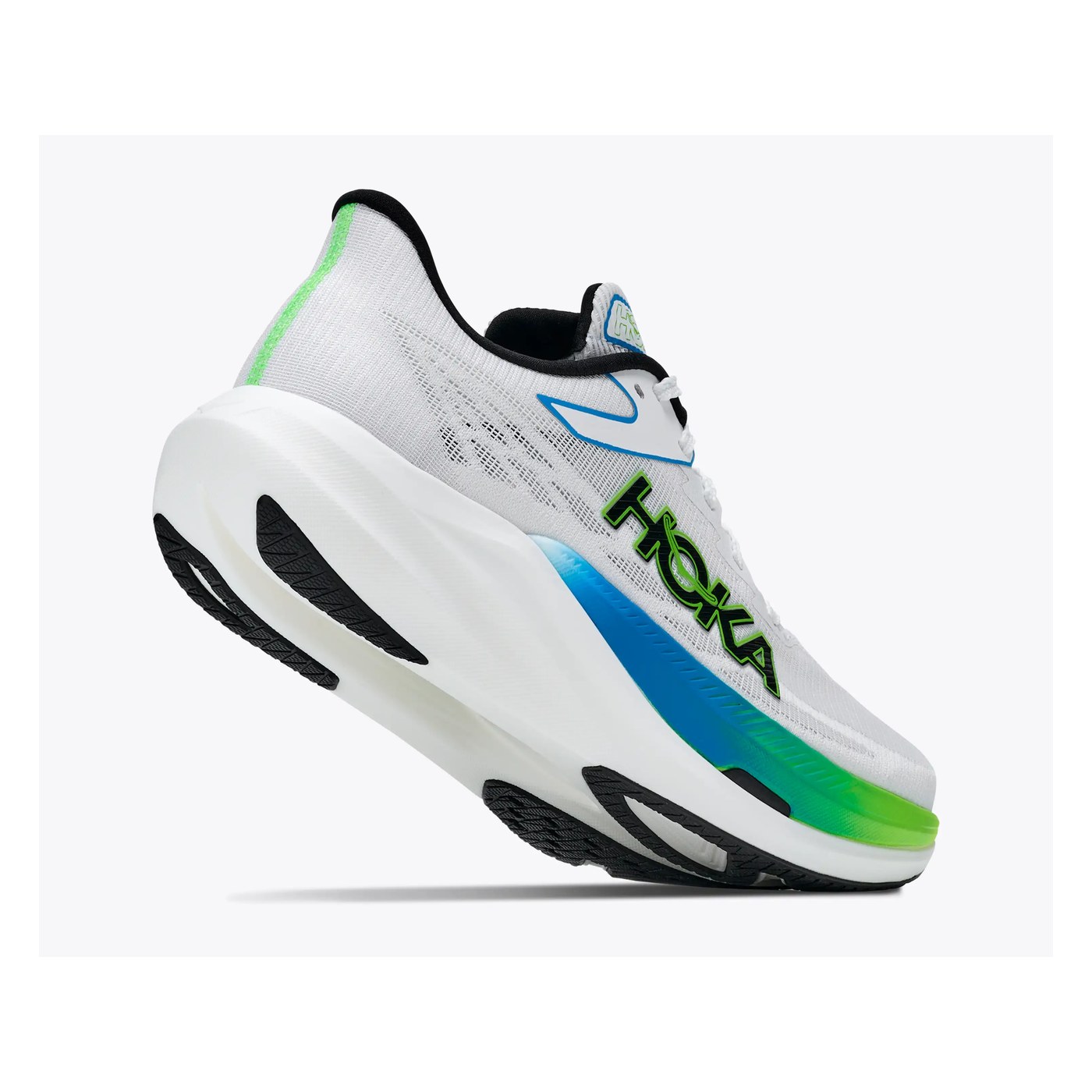
Hoka is the only brand that adds side wings to its carbon plate. In practice, these extensions reach beyond the central zone of the plate to widen the platform and limit unwanted foot movement at ground contact. Combined with the Active Foot Frame, which cradles the heel without making the shoe overly stiff, they explain the natural guidance every tester reports.
The dual-density PEBA foam completes the package: firmer under the heel to stabilize the landing, softer under the forefoot to return energy at toe-off. That trade-off explains why the Rocket X 3 is described as less "bouncy" than some rivals, but more predictable over the course of a race.
© Hoka, official photo used for editorial purposes
Who is the Rocket X 3 for?
The marathoner looking for stability over the distance
This is the most obvious profile. One tester who ran more than 100 km in the shoe reports remarkable muscle savings, with no soreness the day after sessions. That's a decisive criterion in the middle of a marathon build, when volume matters more than pure intensity.
The runner discovering carbon-plated shoes
The extra stability from the side wings makes the Rocket X 3 more approachable than a Nike Vaporfly 4 or an Adios Pro 4 for a runner who has never run on a carbon plate.
The runner chasing the maximum trampoline effect
Wrong target. The firmer cushioning favors control over explosive feel. If you want a more aggressive, bouncier rocker, Hoka's own lineup offers the Cielo X1 2.0, which delivers a more radical ride.
The field test: from the track to urban tempo runs
Independent reviews overwhelmingly agree on this generation's strong point: grip. Where the Rocket X 2 slipped on wet surfaces to the point of drawing recurring complaints, the Rocket X 3 was tested on damp cobblestones and on the track during interval sessions without a single reported incident. It's the most striking fix from one generation to the next, confirmed independently by several testers.
As for the ride, a half-marathon-pace tempo run on city roads describes a mesh you forget about from the warm-up, with no pressure points, then a clear propulsive effect as soon as the pace picks up, driven by the brand's signature MetaRocker. Another tester, with more than 100 km logged across long runs, intervals and threshold sessions, confirms the muscle savings, with no soreness the day after. He also notes that the more decisively you push off, the more the shoe responds.
On durability, one concrete figure comes out of the testing: after 100 km, the lateral side of the foam starts showing wear, with no rubber to protect it there. The resulting estimate puts its lifespan around 300 to 400 km depending on your stride, which places the Rocket X 3 in the lower half of its category rather than at the top.
© Hoka, official photo used for editorial purposes
Rocket X 3 vs the competition: the comparison to make the right choice
| Model | Weight | Drop | Price | Positioning |
|---|---|---|---|---|
| Hoka Rocket X 3 | 210-227 g | 7 mm | €250 | Maximum stability, firm and predictable cushioning |
| Adidas Adizero Adios Pro 4 | 193-200 g | 6 mm | €250 | Lighter, bouncier, demanding fit |
| Saucony Endorphin Pro 5 | 200 g | 8 mm | €240 | More versatile for fast training |
| Nike Vaporfly 4 | 195 g | 8 mm | €250 | Stronger propulsion, less stable by comparison |
Against the Adios Pro 4, the trade-off is clear: the Hoka weighs a few grams more and its cushioning is less bouncy, but it makes up for it with better muscle savings and superior stability over the course of a race. The Rocket X 3 speaks to a wider audience than models reserved for elite runners, which makes it a credible gateway to carbon-plated racing shoes.
Pros
- Wet-surface grip finally fixed, the historic weak spot of the Rocket X line
- Remarkable stability for a racing shoe, confirmed by several independent reviews
- Excellent muscle savings, little to no soreness reported after sessions
- Accessible to a wider audience than super shoes reserved for elite runners
Cons
- Durability in the lower half of the category, around 300 to 400 km
- Firmer cushioning, less trampoline effect than other carbon models
- Price judged steep by several testers for this level of durability
- Spec sheets disagree on the exact weight and drop depending on the source
© Hoka, official photo used for editorial purposes
How to fit the Rocket X 3 into your RunMorph training plan
Like any carbon-plated shoe, save the Rocket X 3 for race day and key sessions at goal pace. Testers who use it for intervals report good versatility on the track, but keep your usual training pair for everyday volume to preserve its lifespan, which is shorter than average on this shoe.
In your RunMorph training plan, specify that you use a stable carbon pair: the program can then schedule your threshold sessions and your benchmark race in this shoe, factoring in its shorter lifespan so you replace it before your main goal.
RunMorph Coach verdict
The Rocket X 3 pulls off a tough balancing act: it stays a sharp racing shoe while its stability opens it up to a wider audience. The fix for the Rocket X 2's grip problem isn't a marketing detail. It's a real change, confirmed by several independent reviews on wet surfaces. The downside is easy to name: durability that tops out around 300 to 400 km, below what you'd expect at this price, and firmer cushioning that won't suit runners chasing the thrill of bounce. For a runner who puts control and muscle savings ahead of explosive feel, it's an excellent choice.
RunMorph score: 8.3/10
Key takeaways for your training
- Check the weight and drop before you buy: spec sheets vary by source, so trust the label on the box
- Take advantage of its stability in wet conditions: it's the confirmed strong point that sets this generation apart from the last
- Plan its replacement: durability hovers around 300 to 400 km, so have a backup pair ready before your goal race
- Save it for races and key sessions: the firm cushioning works your muscles harder than a standard training pair
- Rotate it with a daily trainer: Hoka itself recommends rotating with a training model such as the Clifton