Chamonix, August 25, 2026: Garmin picks the mountains to unveil its new outdoor generation. The Fenix 9 Pro is not the official star of the day (that role goes to the regular Fenix 9), but it is the one grabbing the attention of demanding athletes, with a full titanium case, optional satellite and LTE connectivity, and a price tag that climbs to 1,349 euros. RunMorph put the 47 mm AMOLED titanium version through its paces to find out what those extra 100 to 350 euros really buy you over the standard Fenix 9.
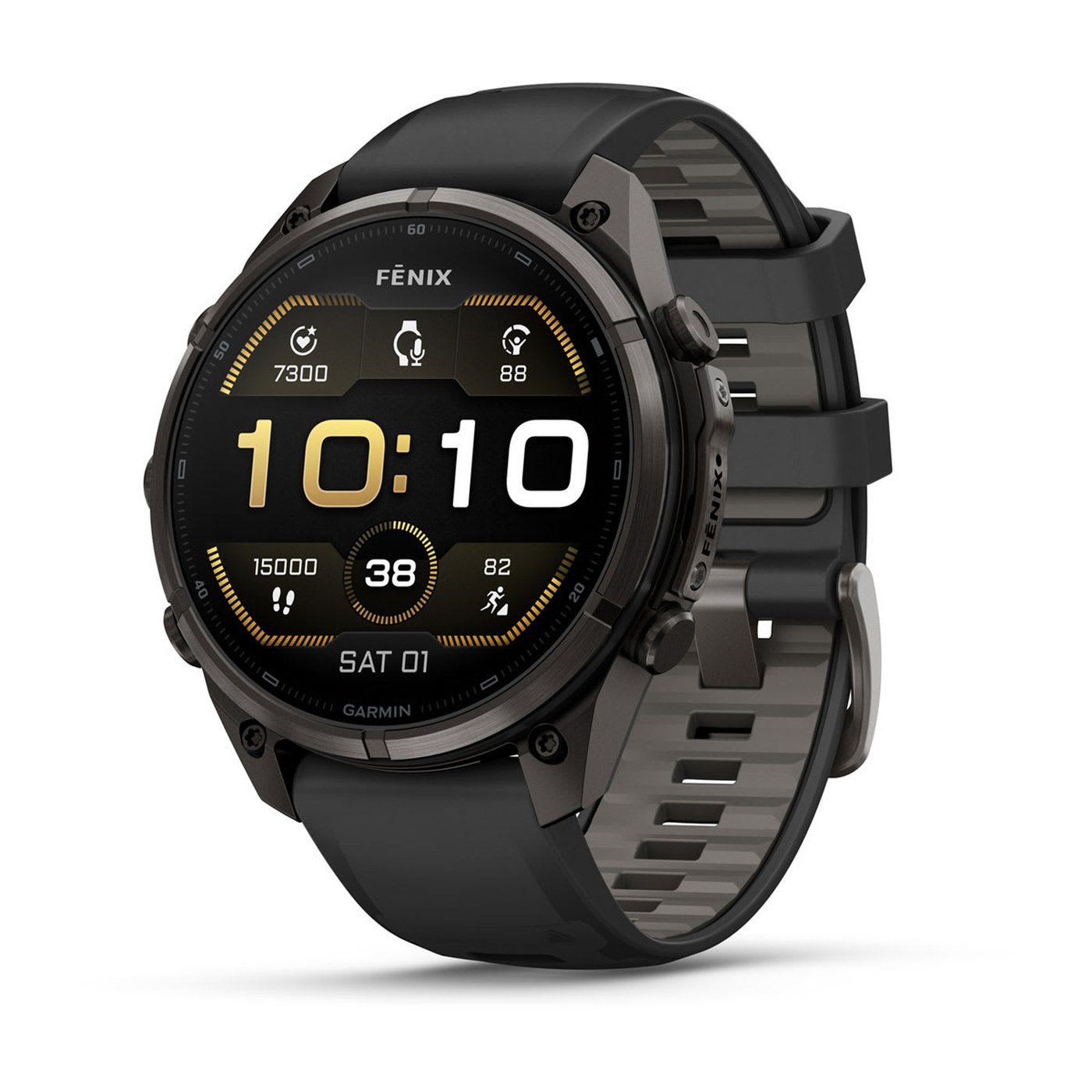
© Garmin, official photo used for editorial purposes
Chamonix, with the mountains as a backdrop: Garmin locks down its outdoor flagship
The choice of venue is no accident. By unveiling the Fenix 9 and Fenix 9 Pro from Chamonix rather than from a lecture hall, Garmin reaffirms that its flagship range targets the alpinist, the trail runner and the adventurer first, well ahead of the Sunday 10K runner. The brand does not change the formula: it refines it. A screen twice as bright, memory doubled to 64 GB, snappier TopoActive mapping, new stamina metrics. None of this turns a Fenix 8 owner's daily use upside down.
The real strategic shift happens elsewhere, in the split between Fenix 9 and Fenix 9 Pro. Garmin now reserves the full titanium case, the largest screen (1.5 inches on the 51 mm) and inReach satellite connectivity for the Pro range, which costs 100 to 350 euros more depending on the configuration. An à la carte watch, thirteen SKUs in total, which forces you to choose exactly what you pay for rather than grabbing "the" Fenix by default.
Fenix 9 Pro vs Fenix 9: what Garmin announces and what it really changes
On paper, the gap between Fenix 9 and Fenix 9 Pro comes down to four points, quantified by Garmin itself: the case (reinforced polymer with a titanium caseback on the Fenix 9, full titanium on the Pro), the LED flashlight (white and red versus white, red and green on the Pro), the screen on the largest size (1.4 inches at 454 x 454 px on the Fenix 9 51 mm, versus 1.5 inches at 466 x 466 px on the Fenix 9 Pro 51 mm) and battery life, slightly better on the Pro at equal size.
| Criterion | Fenix 9 (47 mm) | Fenix 9 Pro (47 mm) |
|---|
| Case | Reinforced polymer + titanium caseback | Full titanium |
| LED flashlight | White + red | White + red + green |
| Smartwatch battery life | 16 days | 18 days |
| GPS battery life, standard mode | 30 hours | 32 hours |
| inReach LTE/satellite | Not available | Optional |
| Price (AMOLED, without inReach) | 999 euros | 1,099 euros |
On this 47 mm size, the 100-euro gap mainly buys you two extra hours of sport battery life and access to the inReach option. Without that option, the difference is more about how the case feels in hand (full titanium feels colder and denser than polymer) than about any concrete new feature. It is on the 51 mm, with its screen enlarged to 1.5 inches, that the gap becomes truly visible in use.
Nano-molded titanium and inReach: the tech behind the Pro price tag
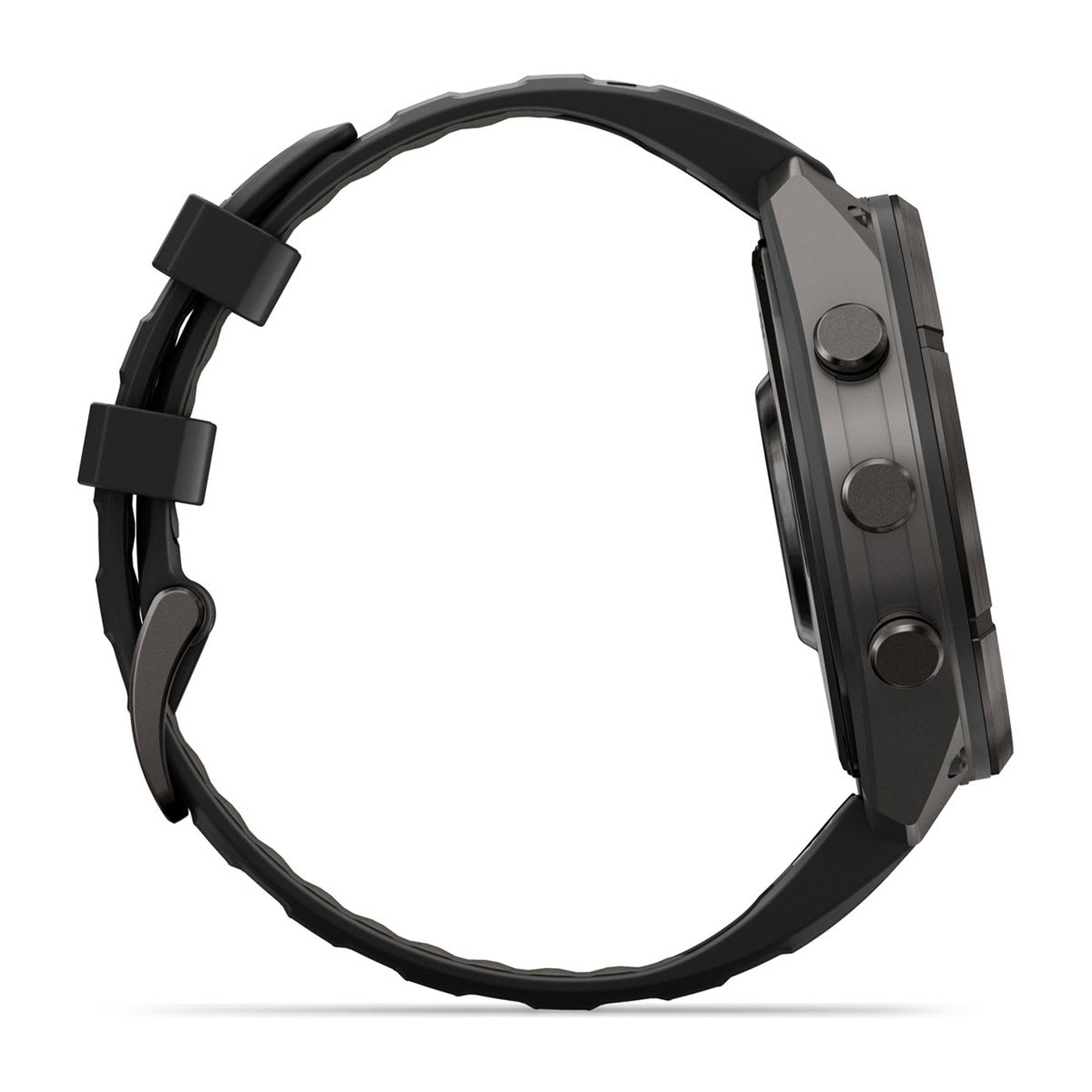
Garmin presents the Fenix 9 Pro case as its first full titanium build in this range, achieved through nano-molding: a technique that bonds metal and polymer at the molecular level to gain slimness without sacrificing strength. The result shows when you wear it: the 47 mm Pro version tested by RunMorph feels stiffer and more premium than the Fenix 8 Pro, with a thickness reduced by about 16 % according to the figures Garmin shared with its retailers.
The second technology that truly sets the Pro apart is inReach. Once you subscribe (between 9.99 and 59.99 euros per month depending on the plan, plus a 49.99-euro activation fee), the watch can send an interactive SOS directly to the Garmin Response rescue center, staffed 24 hours a day, without going through a phone. It can also exchange messages via the Garmin Messenger app, share your live location (Garmin Locate) and pull weather by satellite when the cellular network is out of reach. A real safety net if you regularly leave covered areas, a pointless recurring cost for everyone else.
© Garmin, official photo used for editorial purposes
The field test: what the first independent measurements say
The Fenix 9 Pro was released on August 28, 2026, just three days before this review was written. No multi-week field test protocol exists yet for this exact model, and RunMorph says so explicitly rather than inventing a consensus that has not had time to form. The available material rests on the detailed hands-on reviews published at launch by three specialized French-language sources, each of which had access to the final product before it went on sale.
Wanarun built a full, figure-based comparison of the three generations (Fenix 8, Fenix 9, Fenix 9 Pro) and positions the Fenix 9 Pro 51 mm as the smart pick if you want the largest AMOLED screen in the range, while naming the standard Fenix 9 as the most rational option for most athletes. Sport-Passion (Philippe Baudoin) goes further with a more critical take: after recalculating Garmin's official battery tables, the tester notes that the Fenix 9 and Fenix 9 Pro AMOLED models last less than their Fenix 8 equivalents, and ultimately sees the Fenix 9 more as a refined Fenix 8 than as a genuinely new generation. Nakan.ch highlights a technical change Garmin kept quiet in its messaging: the manually selectable dual-frequency multi-GNSS mode disappears in favor of a single automatic SatIQ mode, which limits the fine control experienced trail runners were used to having over the accuracy versus battery life trade-off.
All three sources agree on a point Garmin does not highlight in its launch messaging: sport battery life drops on the AMOLED models compared with the Fenix 8 generation, offset only on the Solar versions with a transflective screen. No fundamental disagreement between the three readings, which is also a sign of a launch still too recent to reveal the usage flaws that only show up after several weeks of real outings.
If you are preparing for a trail or ultra-trail using the Fenix 9 Pro's mapping and stamina tracking,
RunMorph offers
training plans calibrated on elevation gain and training hours rather than mileage alone.
The flaw you won't find on the spec sheet: GPS battery life goes backwards
Garmin talks up the gains (doubled memory, brighter screen, smoother mapping) without highlighting what its own published battery tables confirm: in standard GPS mode, the Fenix 9 Pro 47 mm AMOLED lasts 32 hours, versus 38 hours for the Fenix 8 Pro 47 mm AMOLED, a 16 % drop. In multi-band mode, the gap is 13 %, at 26 hours versus 30. Only smartwatch mode improves (18 days versus 15 on the Fenix 8 Pro, 20 % better), a mode a trail runner never uses mid-run.
If you are heading out on an ultra of more than 24 hours in multi-band mode (the most accurate), this drop means you will need to plan a recharge earlier than with the previous generation, or fall back to standard GPS mode, which is less accurate under tree cover and in steep, narrow terrain. Only the Pro Solar models with a transflective screen (47 and 51 mm) escape this drop, with battery life going up thanks to solar charging, but at the cost of a screen that is less bright and less responsive to touch than AMOLED.
Fenix 9 Pro vs Fenix 8 Pro: should you upgrade?
| Criterion | Fenix 8 Pro (47 mm) | Fenix 9 Pro (47 mm) |
|---|
| Memory | 32 GB | 64 GB |
| Screen brightness | Baseline | More than 2x higher |
| GPS battery life, standard | 38 hours | 32 hours |
| Smartwatch battery life | 15 days | 18 days |
| Garmin Epic | App only | Directly on the watch |
| LED flashlight | White + red | White + red + green |
The simple reading: if you own a Fenix 8 Pro and are happy with its sport battery life, there is no technical reason to switch, since the 16 % drop in standard GPS mode wipes out a good share of the software gains. The upgrade mainly makes sense if you want inReach in 43 mm (missing from the previous generation in that size) or if you are already hitting the 32 GB storage limit.
Fenix 9 Pro vs Suunto Vertical 2 and COROS Vertix 2S: the ultra-trail comparison
| Criterion | Garmin Fenix 9 Pro | Suunto Vertical 2 | COROS Vertix 2S |
|---|
| Case | Full titanium | Titanium / steel | Titanium |
| Satellite connectivity | LTE + inReach (optional) | No | No |
| GPS battery life, multi-band | 26 h | About 40 h | About 60 h |
| Price (tested config) | 1,099 to 1,299 euros | About 649 euros | About 799 euros |
On raw battery life alone, the Suunto Vertical 2 and the COROS Vertix 2S clearly outpace the Fenix 9 Pro, for 300 to 450 euros less. What remains unique to Garmin is the software ecosystem (Garmin Epic, Stamina, Training Readiness) and above all inReach, which neither rival offers. A trail runner who prioritizes pure battery life will look elsewhere; a trail runner who prioritizes safety when solo and isolated stays with Garmin.
Our field take: who does the Fenix 9 Pro make sense for?
The Fenix 9 Pro is aimed first at three profiles: the trail runner who strings together outings in dead zones and wants a reliable satellite SOS, the alpinist or long-distance hiker who needs robust mapping and a bombproof case, and the triathlete who wants the largest screen in the range on the 51 mm size. For a road runner, a short-trail runner or classic multisport use, the standard Fenix 9 at 999 euros or even the Epix Pro Gen 2 covers your needs without the titanium and inReach premium.
To prepare for an ultra-trail or high-mountain objective using the Fenix 9 Pro's stamina tracking and mapping, head to the
RunMorph trail training plans, built around cumulative elevation gain and pacing on climbs.
The RunMorph Coach's verdict
The Fenix 9 Pro is not a new generation of Fenix, it is a Fenix 8 Pro improved on specific points (full titanium, brighter screen, inReach extended to every size) and downgraded on another (sport GPS battery life, clearly down on the previous generation). 7.7/10: a score pushed up by build quality and satellite connectivity, pulled down by a value proposition that only holds if you actually use inReach. Without that specific need, the standard Fenix 9 at 999 euros remains the most rational choice in Garmin's 2026 lineup.
FAQ
Is the Fenix 9 Pro worth 100 euros more than the standard Fenix 9?
On the 47 mm AMOLED size without inReach, the 100-euro gap (999 versus 1,099 euros) buys a full titanium case, 2 extra hours of GPS battery life and access to the inReach option. Without that option, the difference remains marginal in daily use.
What real battery life can you expect in sport GPS use?
32 hours in standard GPS mode and 26 hours in multi-band mode on the 47 mm, according to Garmin's official figures, which is 13 to 16 % less than the Fenix 8 Pro in the same modes.
Is the inReach subscription required to use the watch?
No. Without a subscription, the Fenix 9 Pro inReach works like a regular Fenix 9 Pro. The subscription (9.99 to 59.99 euros per month, plus 49.99 euros for activation) is only needed to enable the satellite and LTE features.
Does the Fenix 9 Pro replace a Fenix 8 Pro bought in 2025?
Not in terms of sport battery life, which is down 13 to 16 %. The upgrade mainly makes sense for inReach in 43 mm or to get past the previous generation's 32 GB storage limit.
How much does the 47 mm version weigh on the wrist?
78 grams with the silicone strap supplied out of the box, versus 75 grams for the equivalent standard Fenix 9.