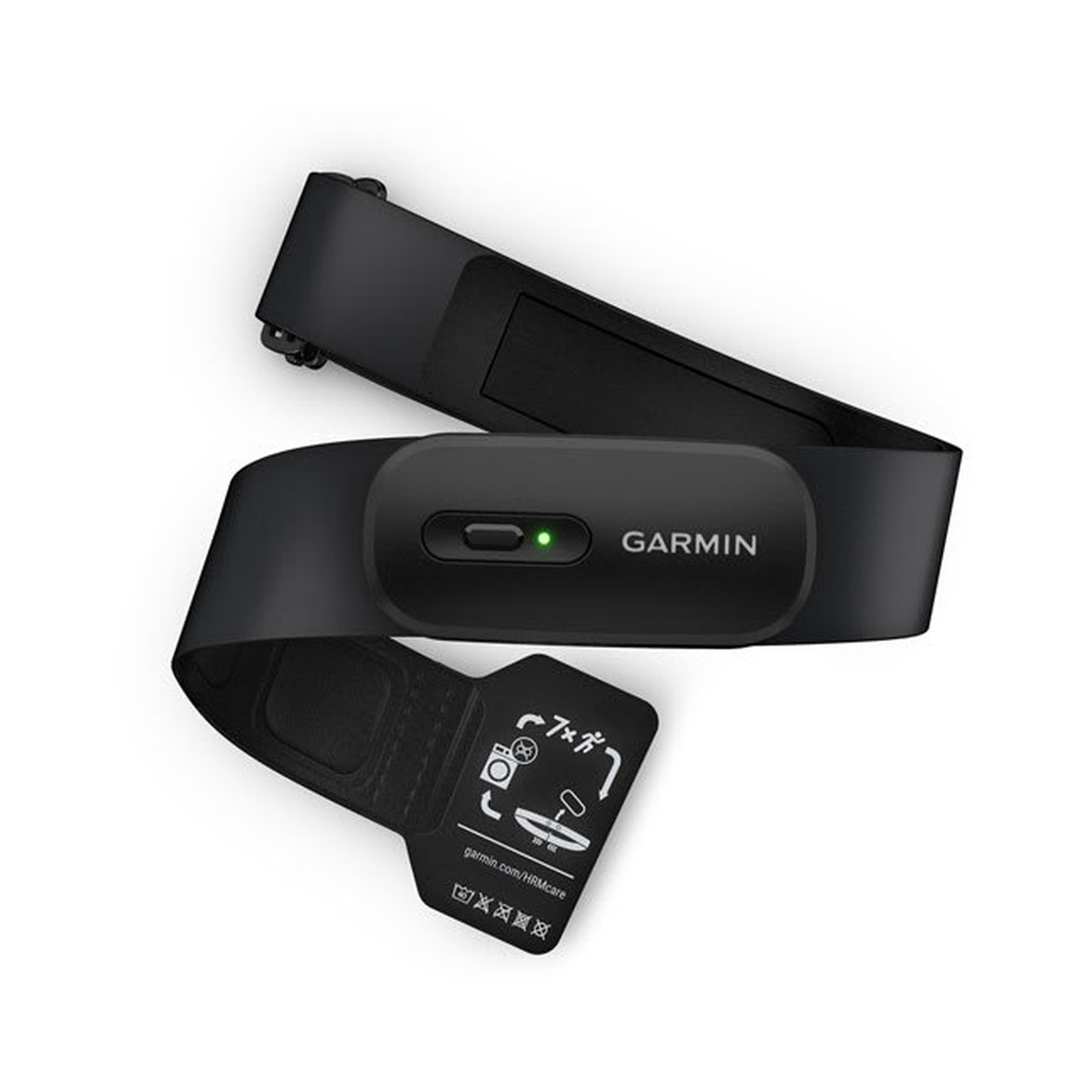
A full year of battery life on a coin cell, a measurement gap of less than 0.2 beats per minute against a scientific reference, and a price under 90 euros. The Garmin HRM 200 replaces the HRM-Dual in the brand's lineup with a simple promise: reliable heart rate data without the advanced features, or the price tag, of the HRM-Pro Plus and HRM 600 straps.
© Garmin, official photo used for editorial purposes
Garmin HRM 200: the strap that simplifies Garmin's lineup
For years, Garmin's chest strap lineup kept getting more complicated: HRM-Run, HRM-Tri, HRM-Dual, HRM-Pro, HRM-Pro Plus. With the HRM 200, launched in January 2025, Garmin switches to a new numeric naming system in line with its Forerunner watches. The message is clear: this is the base strap, the one that covers most runners who simply want reliable heart rate data during their sessions, without paying for advanced features they never use. It joins an already well-stocked range of Garmin heart rate sensors at RunMorph, alongside the HRM-Pro Plus and the HRM 600.
RunMorph's advice: if you swim with your strap in triathlon, the HRM 200 is not for you, go for the Garmin HRM-Tri instead. For easy runs, intervals or cycling, it gets the job done with zero fuss.
Secure mode and battery compartment: the real upgrades
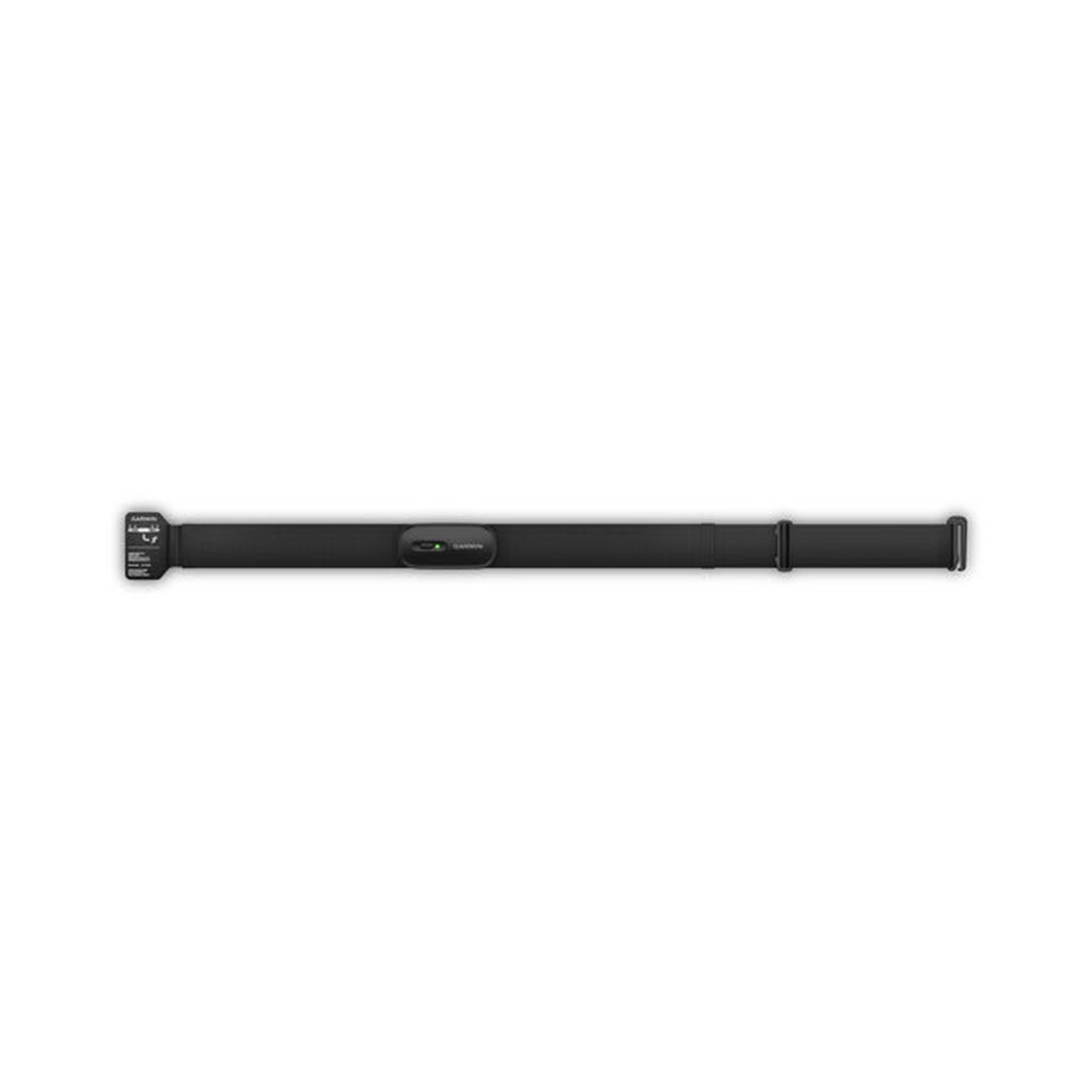
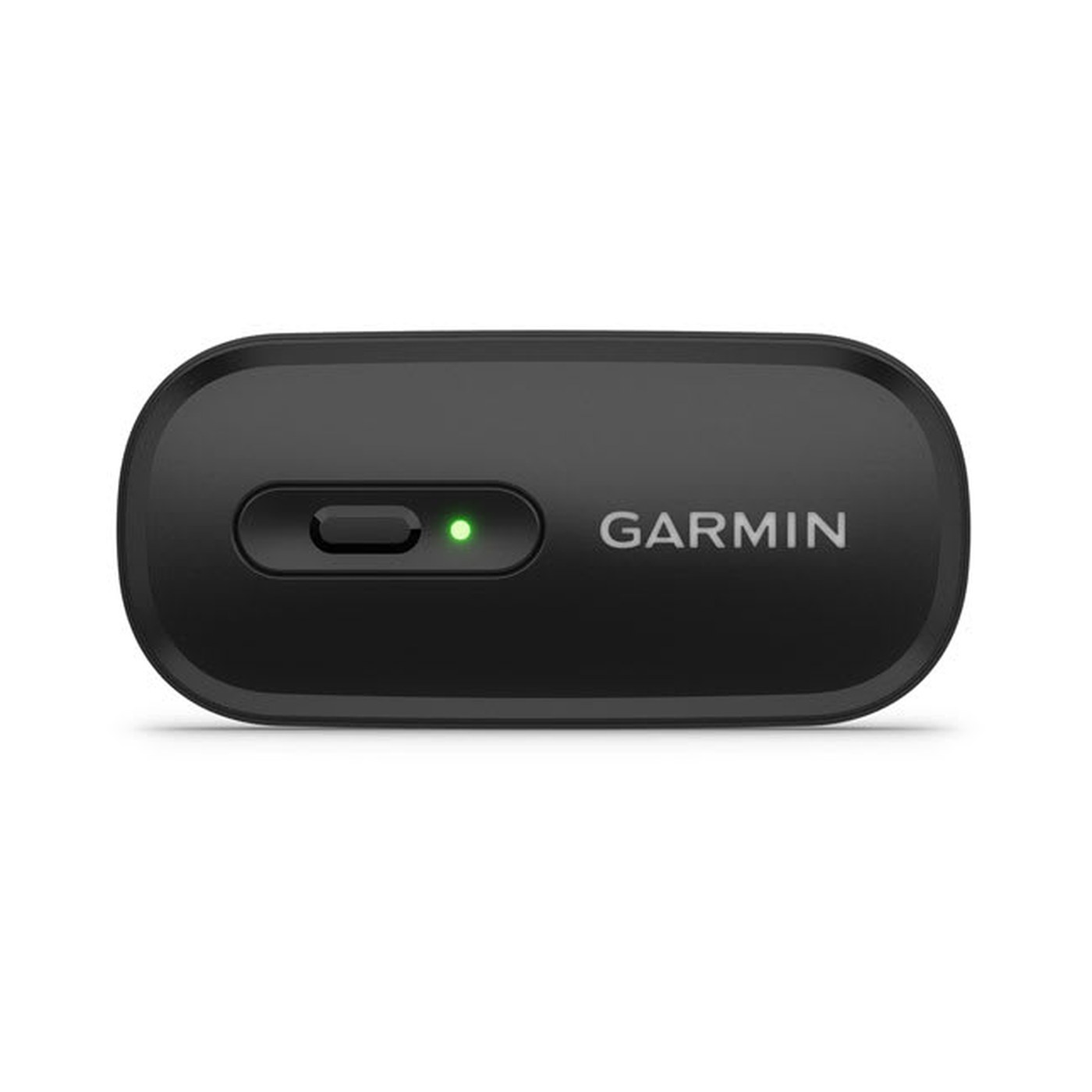
On paper, the HRM 200 looks little like previous generations: the electronic module goes all black, dropping the colored rings that set earlier models apart. The real upgrade is hidden in the battery compartment, now accessible without tools thanks to the strap's adjustment buckle, with an LED that shows the charge status (green, orange, red). A button on the front lets you switch between an open mode (unencrypted ANT+ or Bluetooth) and a secure mode with encryption and authentication, a direct response to new European requirements on broadcasting personal data. In practice, this mode changes nothing for everyday training: it is about keeping your signal broadcast private.
© Garmin, official photo used for editorial purposes
Field test: accuracy backed up by the data
On accuracy, the most solid data comes from a particularly rigorous independent test run head to head against the Polar H10, a reference strap validated by scientific studies on heart rate and heart rate variability (HRV). Across several activities (running at varied paces, cycling), the average gap between the HRM 200 and the Polar H10 came in at 0.16 to 0.18 beats per minute, with a maximum gap of 2 bpm over all sessions. That level of accuracy is considered flawless in this kind of comparative test: below an average gap of 0.5 bpm, the rounding limit, the measurement is rated perfect. The verdict from this source is unequivocal: the HRM 200 measures heart rate as well as far more expensive straps, as long as it is worn correctly and the electrodes are moist enough.
On comfort, however, the same independent test is more reserved: the textile strap is rated less comfortable than a premium competitor or the Polar H10 itself. It still stays firmly in place during effort, and being able to machine-wash it (unlike all-in-one straps such as the HRM-Pro) partly makes up for this weak spot. A French hands-on review focused on the product confirms the overall picture: the HRM 200 is described as enough for the vast majority of runners, with no need to invest in a 109-euro HRM-Pro Plus to get reliable day-to-day data. Verified customer reviews aggregated across retail platforms converge on an average rating of 4.4/5, with pairing described as especially quick and easy, whether with Garmin watches, treadmills or third-party apps.
Garmin HRM 200 vs HRM-Pro Plus: the comparison
| Model | Running dynamics | Swimming | Battery life | Price |
|---|
| Garmin HRM 200 | No | No | 1 year (battery) | 90 € |
| Garmin HRM-Pro Plus | Yes | No | 1 year (battery) | 109 € |
| Garmin HRM-Tri | No | Yes | 1 year (battery) | 90 € |
Upgrading to the HRM-Pro Plus only makes sense if you use an older watch that doesn't calculate running dynamics at the wrist. Since an update in late 2024, recent Garmin watches compute these stride metrics natively with their own internal sensors, which makes the HRM-Pro Plus largely redundant for many recent owners. The HRM-Tri remains a must if you swim with your strap in triathlon, since the HRM 200 doesn't store data underwater.
Our field verdict: who is it for?
The Garmin HRM 200 is built for the runner who wants reliable heart rate data to steer their sessions, without needing advanced stride metrics or swimming with the strap. It is the rational choice for most runners, including those who already own a recent watch that calculates running dynamics at the wrist.
To get the most out of accurate heart rate data, pairing it with a zone-based RunMorph training plan lets you truly progress instead of running blind through your interval or threshold sessions.
© Garmin, official photo used for editorial purposes
The RunMorph Coach's verdict
The Garmin HRM 200 delivers on its promise as a capable base strap: measurement accuracy is flawless, on par with far more expensive straps, and coin cell battery life remains a real everyday comfort compared with rechargeable options. At RunMorph, our main regrets are the below-par textile comfort and the total lack of swim tracking, which limits it to pure runners and cyclists. Within that exact scope, it is a smart buy that saves you from paying for Pro features most runners no longer use. 8.2/10.