A smartwatch that gains dozens of sport profiles and running dynamics without an external sensor, but loses the barometric altimeter along the way and costs thirty euros more. Does the Vivoactive 5's successor deliver once you're out running?
A smartwatch that gains dozens of sport profiles and running dynamics without an external sensor, but loses the barometric altimeter along the way and costs thirty euros more. Does the Vivoactive 5's successor deliver once you're out running?
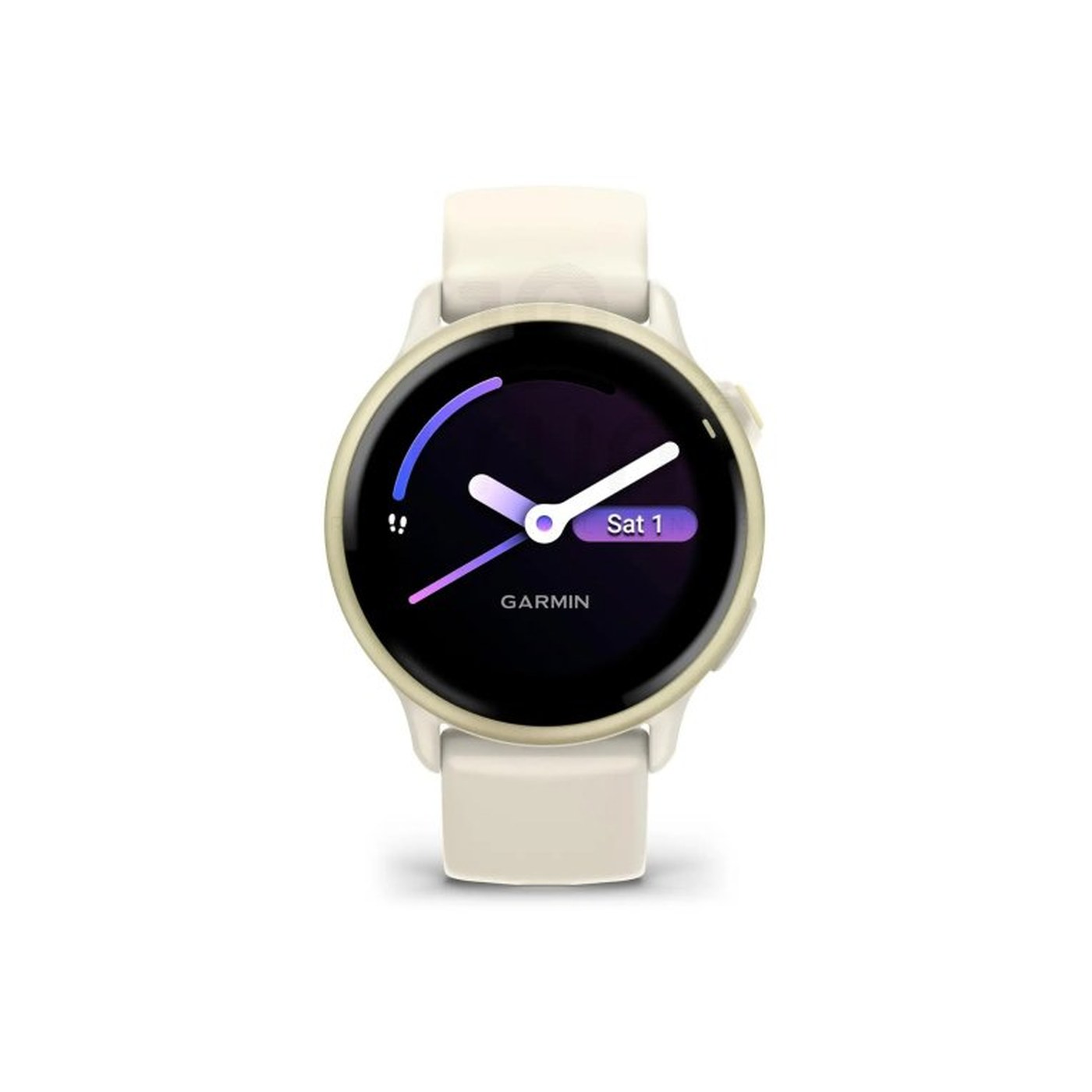
The Garmin Vivoactive 6 adds more than 80 sport profiles, running dynamics without an external sensor and Garmin's own running power, all at a featherweight 36 g. It still sacrifices the barometric altimeter, skips the mic and speaker, and climbs to 329.99 euros: 30 euros more than the Vivoactive 5 for upgrades the French press considers minor. A comfortable, well-rounded watch for regular training at a steady pace, less convincing once intervals or elevation come into play.
A year and a half after the Vivoactive 5, Garmin is refreshing its most versatile mainstream smartwatch. The RunMorph catalog already covered the Vivoactive 5 but never its direct replacement, even though the Vivoactive 6 brings exactly the additions that matter most to casual runners: running dynamics without a strap, estimated wrist-based running power, PacePro pacing strategy and nearly 80 sport profiles versus around thirty on the previous model. It still sits between the more basic Venu Sq 2 and the sensor-richer Venu 3, but it clearly leans toward sport and the outdoors rather than simple wellness tracking.
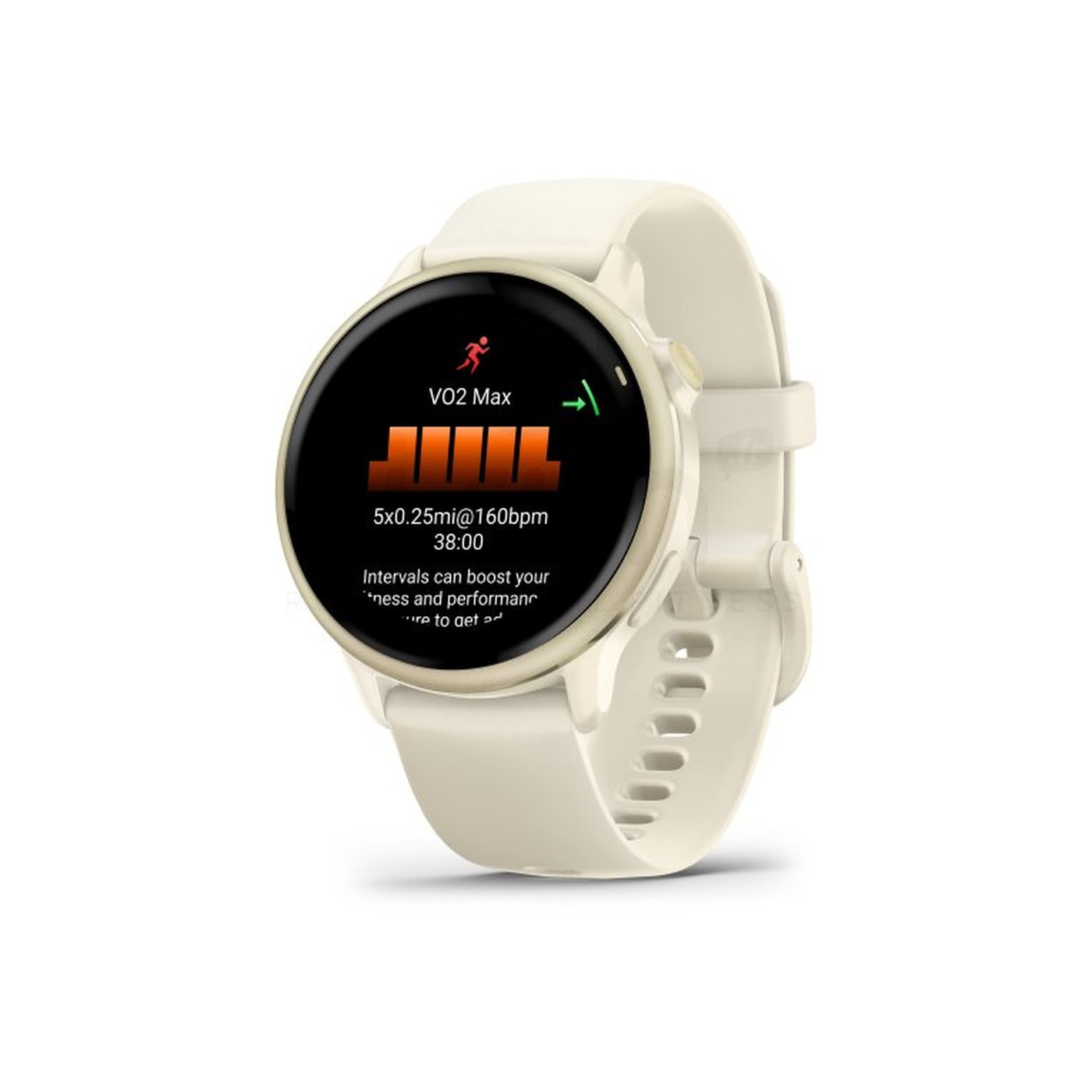
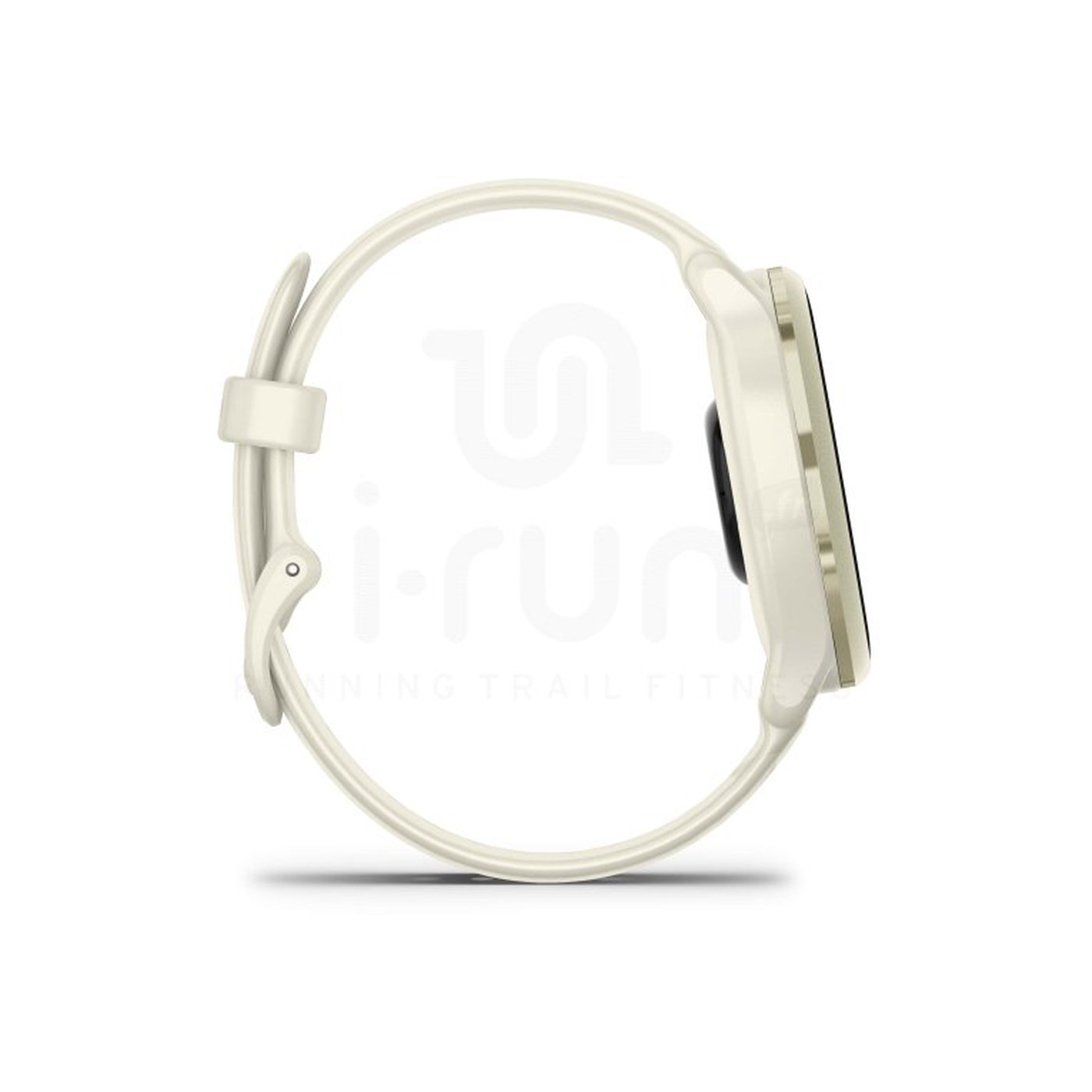
The 42 mm polymer case gets slightly slimmer (10.9 mm vs. 11.1 mm), and the top button goes from an elongated shape to a round one. The 1.2-inch AMOLED display (390 x 390 pixels) sits under Corning Gorilla Glass 3, framed by an anodized aluminum bezel. It comes in four colorways: Black/Gray, Ivory/Lunar Gold, Pine Green and Peach Pink, at an official price of 329.99 euros.
| Feature | Details |
|---|---|
| Display | 1.2" (30.4 mm) AMOLED touchscreen, 390 x 390 px, Corning Gorilla Glass 3 |
| Case | 42 mm diameter, 10.9 mm thick, anodized aluminum bezel, one size |
| Weight | 36 g with 20 mm quick-release silicone band |
| Water resistance | 5 ATM (swimming OK, no diving) |
| Heart rate sensor | Elevate Gen 4 wrist sensor + Pulse Ox |
| GNSS | GPS, Glonass, Galileo, QZSS, Beidou (single-frequency) |
| Barometric altimeter | None |
| Music storage | 8 GB (Spotify, Deezer, Amazon Music with a subscription) |
| Smartwatch battery life | 11 days (21 days in battery saver mode) |
| GPS battery life | 21 h GPS only, 17 h all systems, 8 h with music |
| Connectivity | Bluetooth, ANT+, Wi-Fi, Garmin Pay, Connect IQ store |
| Built-in sports | More than 80 profiles |
| Official price | €329.99 |
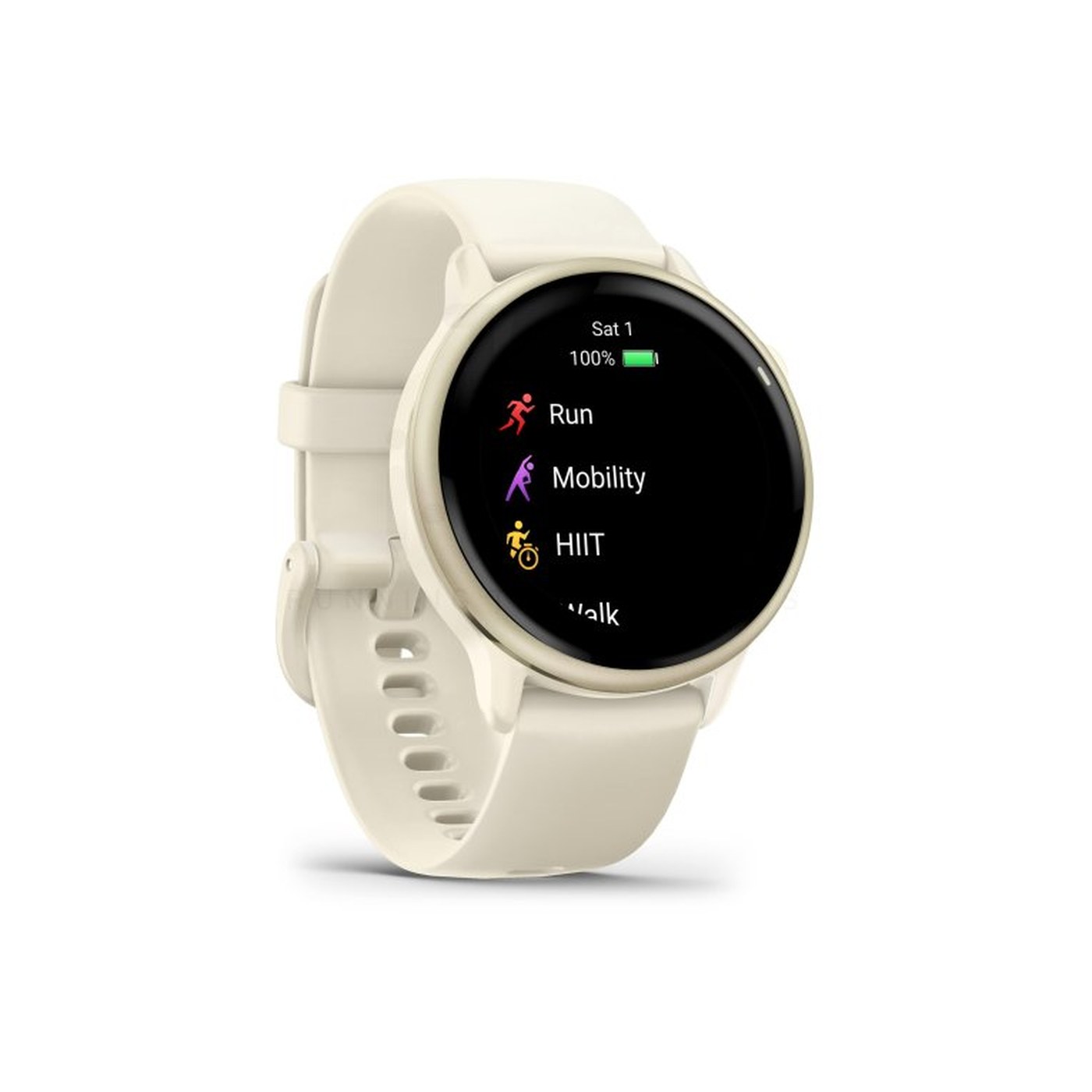
The big news in this generation is on the running side. Running dynamics (cadence, stride length, ground contact time, vertical oscillation) now show up without pairing an external sensor, and so does running power, calculated from pace, vertical oscillation, slope and wind strength. PacePro gives you a target pace along an entire course, factoring in its elevation profile, and a race predictor estimates your 5 km, 10 km, half marathon and marathon times from your measured fitness.
On the sleep side, the new Smart Alarm detects a light sleep phase in the half hour before your set time and wakes you gently with a vibration instead of pulling you out of deep sleep. The morning report brings together sleep, Body Battery, HRV and your calendar for the day. What Garmin still won't give this model is a barometric altimeter: no real-time elevation, no floors climbed. That effectively limits the appeal of the new trail and hiking profiles the brand itself is pushing.
This review cross-checks three independent sources. Sport-Passion (Philippe Baudoin) gives a measured take on the Vivoactive 6 launch: in his view, the genuinely new features are thin for a 30-euro price increase over the Vivoactive 5, and the continued absence of a barometric altimeter is a letdown for the trail and hiking profiles Garmin promotes on this very watch.
Fitfitzone (Maud Collignon) ran a numbers-driven, watch-versus-watch protocol. Against a Garmin Venu 2S paired with an HRM Pro Plus reference strap, the Vivoactive 6 recorded an average heart rate of 158 beats per minute versus 164 on the reference strap during steady-pace runs, a contained gap. But as soon as the protocol included intervals, the wrist sensor lost reliability. On GPS, distance (7.02 km vs. 7.11 km), average pace and cadence stayed very close to the reference watch, while peak pace and maximum speed drifted further apart (4:15/km vs. 4:30/km), a sign of weaker accuracy on short accelerations. On battery life, the tester reports only about 4 days of real-world use with the display always on and 1 hour 30 minutes of cumulative GPS tracking, far from the 11 days Garmin claims for typical use.
Verified customer reviews on i-Run.fr, which sells the watch from 299 euros, show a 4.7/5 rating across 78 reviews, with 94% of customers satisfied. Several comments come from former Vivoactive 3 owners happy with the upgrade, or from buyers who chose the retailer specifically for a lower price than on Garmin's official site. We're flagging the divergence rather than smoothing it over: the overwhelming enthusiasm of buyers contrasts with the more critical view of technical testers on the gap between claimed and real-world battery life, and on accuracy during intervals.
| Vivoactive 6 | Vivoactive 5 | |
|---|---|---|
| Official price | €329.99 | €239.99 (currently from €199) |
| Music storage | 8 GB | 4 GB |
| Built-in sports | More than 80 | About 30 |
| Sensor-free running dynamics | Yes | No |
| Running power | Yes | No |
| PacePro | Yes | No |
| Barometric altimeter | No | No |
| Weight with band | 36 g | 34 g |
So the Vivoactive 6 doesn't change segments: it remains a fitness- and health-focused smartwatch, but its new training tools make it far more credible for regular runners, where the Vivoactive 5 stuck to more general-purpose tracking.
Casual athletes and regular runners who train at a steady pace and want a light watch packed with profiles without breaking the bank. Former Vivoactive 3 or 4 owners who want to upgrade without jumping to a premium sports model.
Trail runners and hikers who need real-time elevation (the missing barometric altimeter is a dealbreaker). Experienced runners doing intervals who demand pinpoint wrist-based heart rate accuracy. Anyone who wants to take calls directly from their watch.
Whether you wear a Vivoactive 6 or a more race-focused watch, a training plan matched to your level makes all the difference. Check out the RunMorph training plans, built to help you improve without getting injured, from 5 km to the marathon.
The Garmin Vivoactive 6 remains the brand's most versatile smartwatch for regular training, and its new running tools (sensor-free dynamics, running power, PacePro) make it far more appealing to runners than its predecessor. But the persistent lack of a barometric altimeter, no way to take a call and heart rate accuracy that slips during intervals limit its reach to casual and regular athletes rather than demanding runners or trail runners. RunMorph verdict: 7.2/10, a pleasant, well-rounded watch, but not the most rigorous in its category.