For ten years, the Clifton and its XXL cushioning have divided runners as much as they have won them over. With the Clifton Pro, launched on July 9, 2026, Hoka promises to keep that trademark comfort while adding a dose of responsiveness the line has never had, thanks to supercritical SCF foam and the ProGlide+ system. A real step forward or a marketing stunt? We ran 80 km in it at paces from 4:00 to 6:00 per kilometer to give you a straight answer.
Who it is for: Regular runners (30 to 70 km per week) and amateur marathoners looking for ONE pair to handle easy runs, long runs and moderate threshold work. Who it is not for: Runners chasing a PR over 5-10 km, who will stick with a carbon-plated shoe.
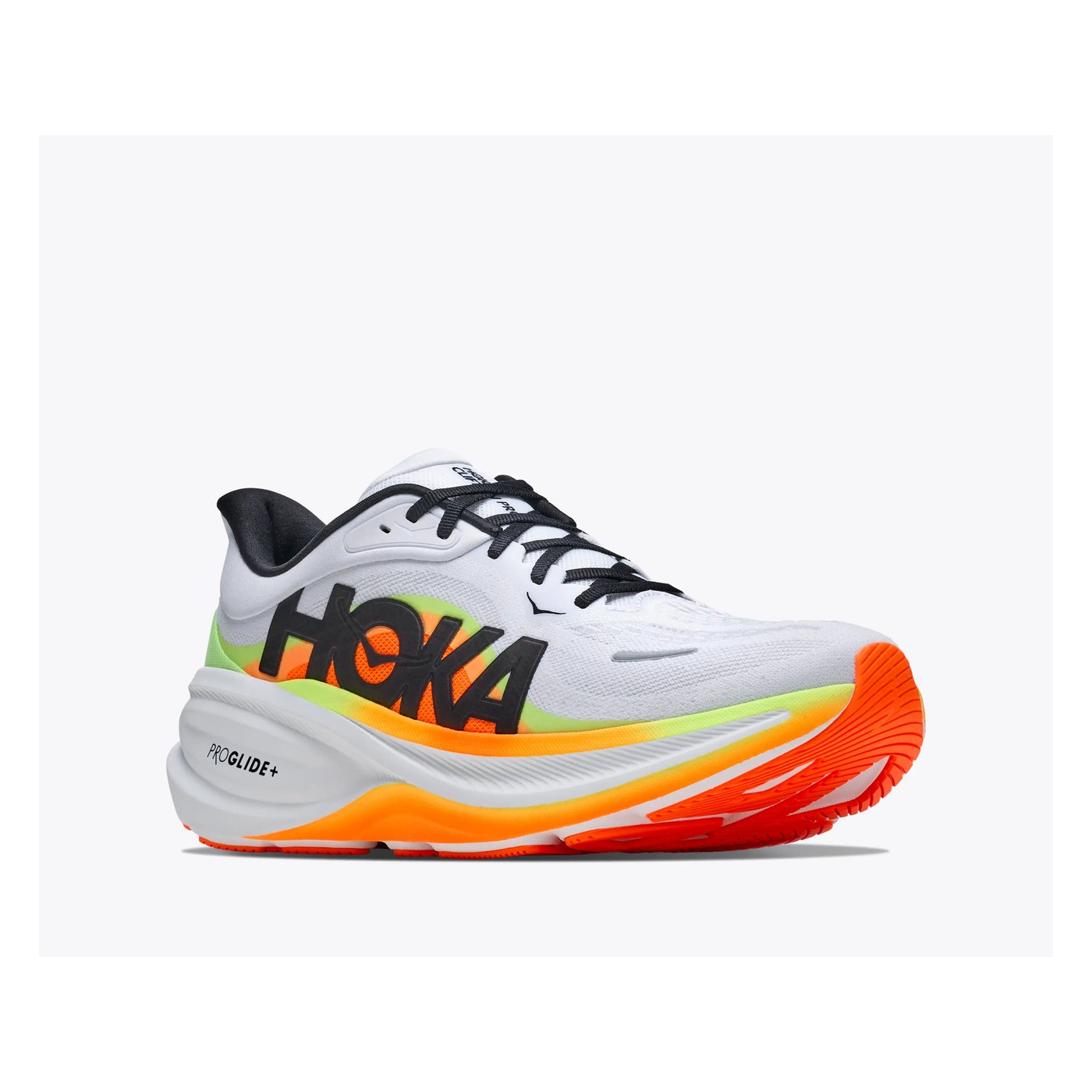
© Hoka, official photo used for editorial purposes
Why a Clifton "Pro"? The strategy behind the break
To understand this shoe, look at the market. For two seasons now, brands have stopped simply pitting easygoing daily trainers against carbon-plated super shoes reserved for racing. A new category has emerged between the two: the super trainer, a shoe with no carbon but with ultra-responsive foams, built to absorb the heavy volume of a marathon build while staying lively. The Clifton Pro is Hoka's answer to that shift.
It is a bold move, because the Clifton is an institution. Historically, it stood for slow, comfortable easy runs and recovery: the cloud-like cushioning that brought maximalism to the masses. By slapping the Pro label on it, Hoka deliberately moves the needle toward performance and efficiency. At RunMorph, we read it as an intentional repositioning: the Clifton 11 remains the guardian of laid-back comfort, while the Pro becomes the version that wants to run fast and long.
That leaves the question everyone is asking: "Pro" sells, but does it deliver? Let's be clear from the start. At around 296 g on the scale in a men's size, this is not a sprint shoe or a 5 km record breaker. It is a "Pro" of volume and stride efficiency, not a rocket. That distinction changes everything about how you should choose it.
Hoka Clifton Pro specs: the leap to supercritical foam
| Brand / Model | Hoka Clifton Pro |
| Release | July 9, 2026 |
| Type | Road, super trainer / lively premium daily trainer |
| Drop | 8 mm |
| Heel / forefoot stack height | 42 mm / 34 mm (men), 38 mm / 30 mm (women) |
| Weight | 296 g (men's US10), 242 g (women's) |
| Foam | SCF supercritical, ProGlide+ system |
| Carbon plate | No (the bounce comes from the foam) |
| Geometry | Redesigned, more aggressive MetaRocker |
| Outsole | Abrasion-resistant Durabrasion rubber in high-wear zones |
| Upper | Breathable engineered mesh, slightly snugger fit |
| Retail price | €170 |
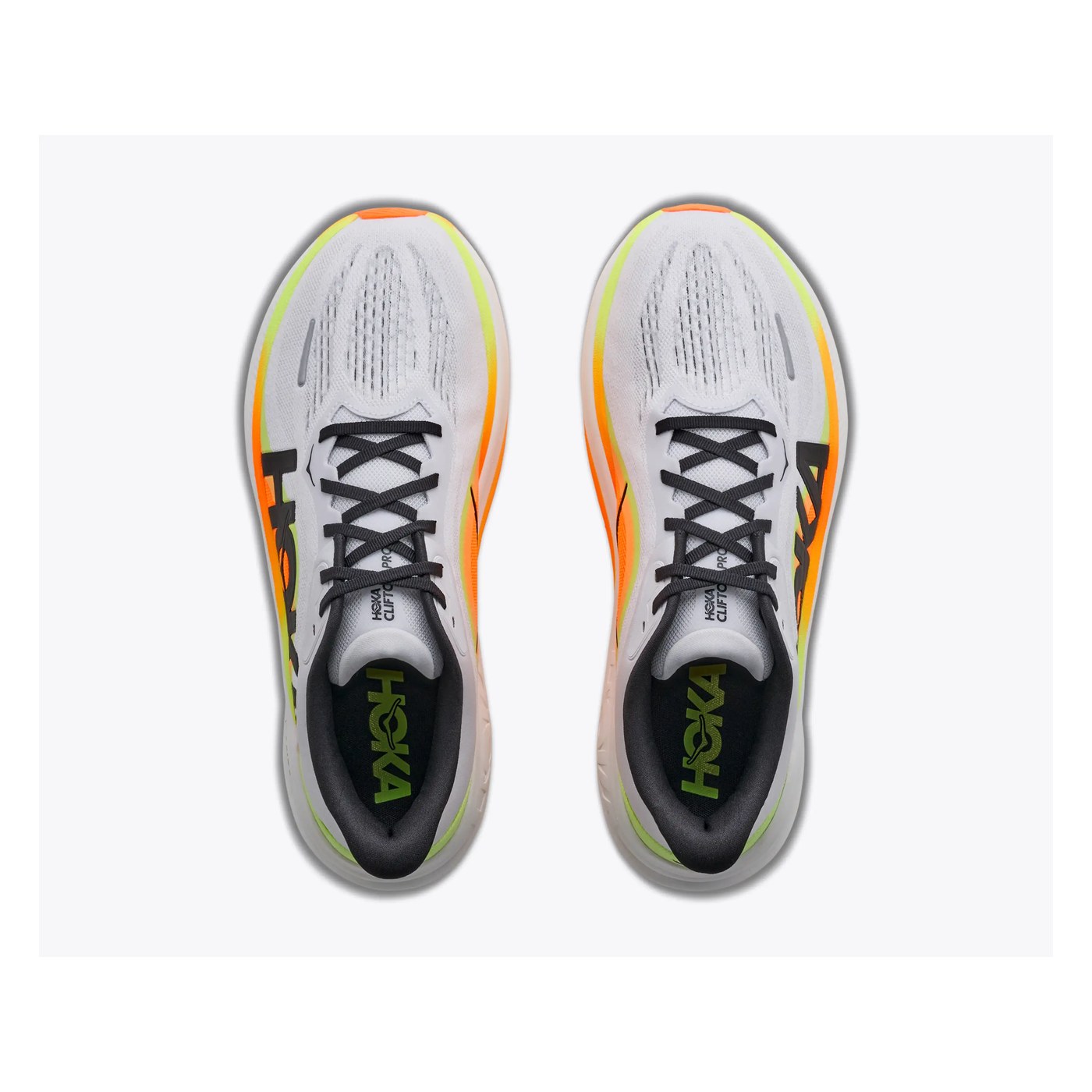
© Hoka, official photo used for editorial purposes
ProGlide+ technology: what changes underfoot?
The heart of the matter is the foam. Until now, the Clifton rode on a conventional EVA: soft, but a little dead. The Clifton Pro switches to SCF, or supercritical, foam. The material is expanded by injecting pressurized gas, which creates a finer, lighter and far more elastic cell structure. In plain terms, the foam bottoms out less and gives you back more energy with every footstrike.
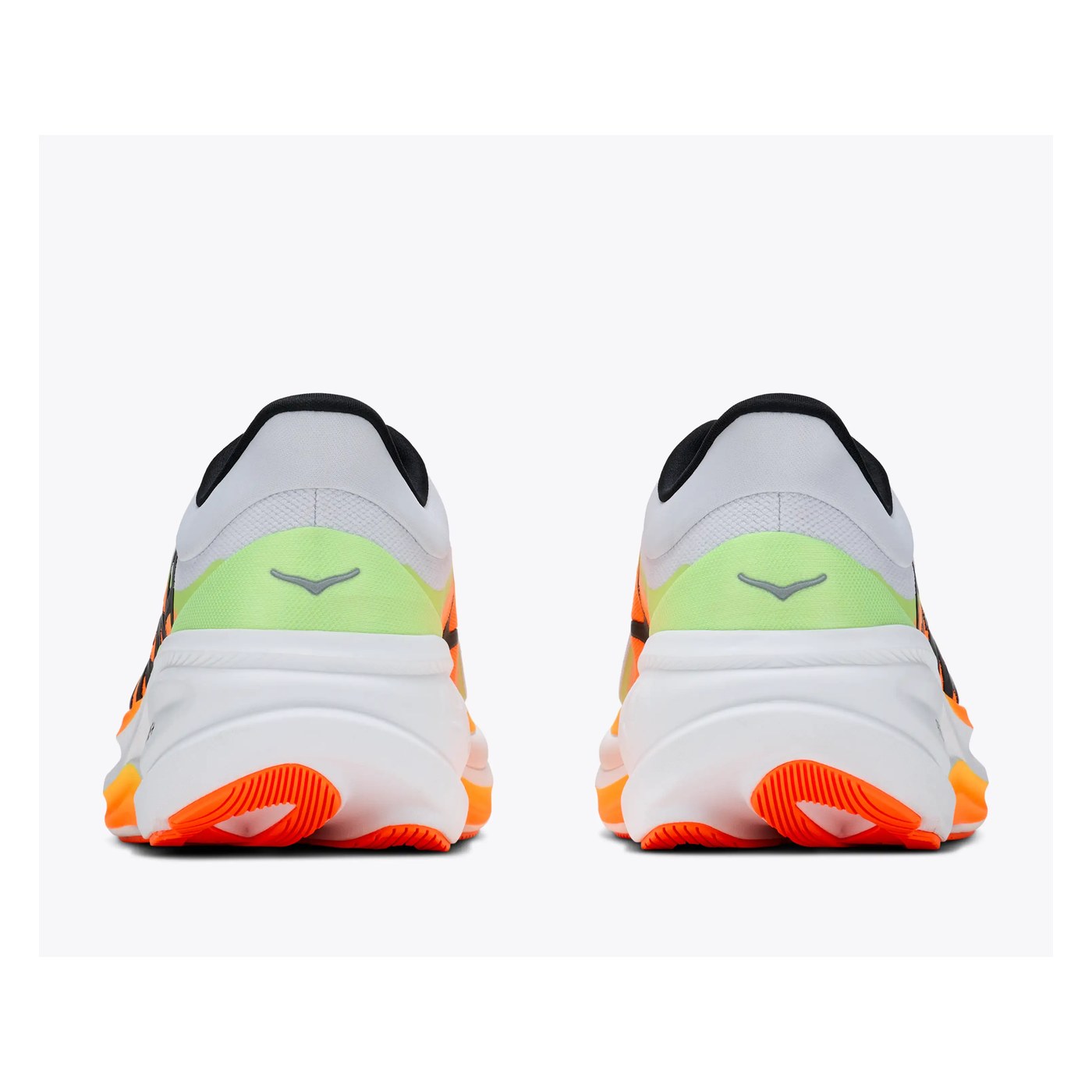
But ProGlide+ is not just a chemistry story. It pairs this responsive foam with a more aggressive geometry. The MetaRocker, the curved sole profile that rolls your foot from heel to toe, has been accentuated. The two work together: the foam supplies the bounce, the rocker directs it forward. The result is a shoe that no longer just absorbs impact but actively contributes to your stride.
The difference from a classic Clifton is obvious from the first steps. Where the old one felt like walking on a pillow, the Pro makes you want to speed up. The trade-off is a slightly firmer foam. If you were after the pure plushness of the Hoka cloud, this is where you will feel the change in philosophy.
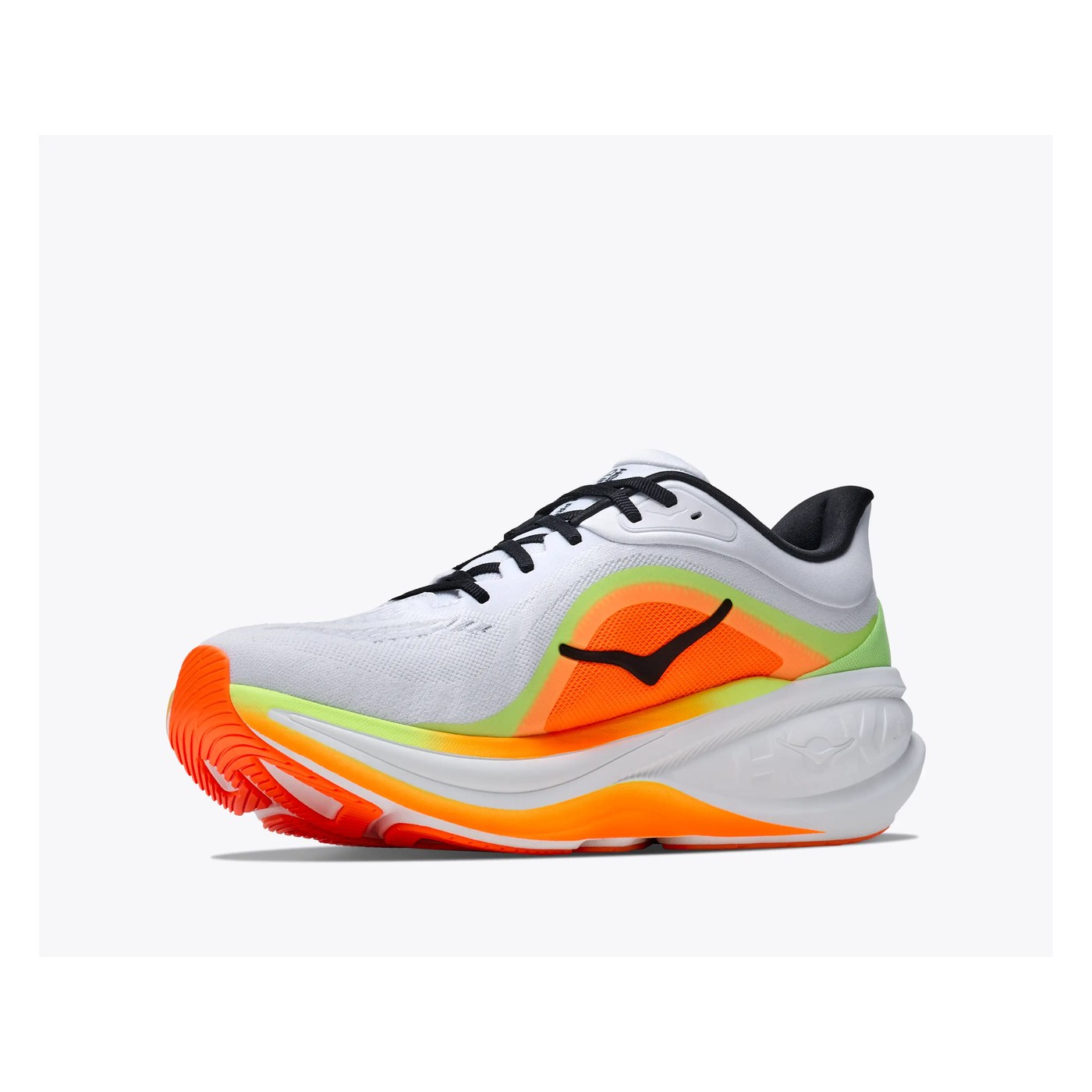
© Hoka, official photo used for editorial purposes
The road test: how it runs from 4:00 to 6:00 per kilometer
We put 80 km on the Clifton Pro, from slow easy runs up to half marathon pace, on asphalt and a few stretches of smooth dirt path. The verdict on feel is clear: this shoe loves rhythm.
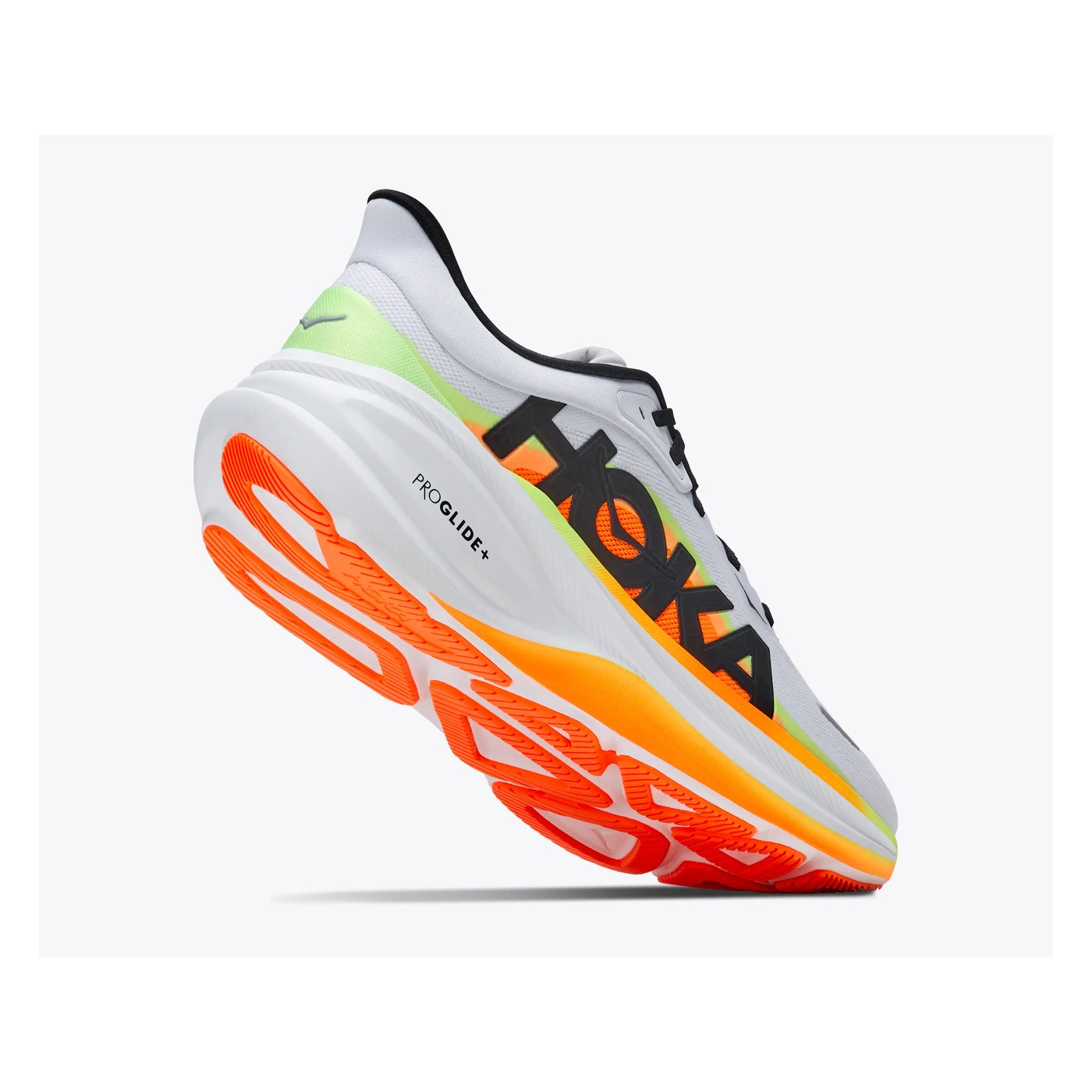
© Hoka, official photo used for editorial purposes
On relaxed easy runs around 6:00/km, cushioning rules and protects you perfectly. But the magic happens when you pick up the pace. As soon as you push toward 4:30/km, you feel the full roll of the MetaRocker: the shoe does not squash down, it guides your foot forward and holds your cadence without you having to force it. At 4:00/km on shorter reps, it holds up and stays pleasant, although you then notice its 296 g and the absence of a plate to add a crisp snap at toe-off.
The Durabrasion rubber, placed in the high-wear zones, handled the asphalt well over the course of our test with no sign of premature wear. That has historically been a Hoka weak spot, and the Pro looks set to fix it. The fit turned out slightly snugger than on previous Cliftons: good for lockdown at pace, but worth checking if you have wide feet or usually need extra volume.
RunMorph tip: give it a few kilometers before you judge it. A supercritical foam needs to warm up to deliver its full bounce. The very first strides can feel firm when the shoe is cold. That is normal: the ride softens once your body and the foam are up to temperature.
Hoka Clifton Pro vs Clifton 11: which one should you buy?
This is THE question that stops most buyers, and it deserves a clear answer rather than a lukewarm opinion. The two shoes share the Clifton name and the platform, but they do not serve the same runner.
| Criterion | Clifton Pro | Clifton 11 |
|---|
| Foam | SCF supercritical, firmer and more responsive | Conventional CMEVA, softer |
| Character | Lively, drives the stride forward | Easygoing comfort, cushions |
| MetaRocker | More aggressive, guides you forward | Gentler, neutral |
| Best use | Volume, long runs, threshold, marathon build | Easy runs, recovery, beginners |
| Weight (men) | about 296 g | about 283 g |
| Price | €170 | €180 |
The bottom line: if you want a restful shoe for your easy runs and your first steps in running, or if plush comfort is your top priority, the Clifton 11 remains the logical choice. If you already run regularly, rack up the kilometers and want a pair that keeps up when the pace rises, the Clifton Pro is made for you. The Pro does not bury the 11. It opens a second door in the lineup.
Pros and cons: what we liked, and what we liked less
What we liked
- The bounce of the SCF foam, which turns the Clifton into a true lively volume shoe.
- The MetaRocker effect at pace, smooth and exhilarating from 4:30/km.
- Cushioning that is still generous and protective on long runs.
- The durability of the Durabrasion outsole, which fixes a long-standing flaw.
- Rare versatility: easy runs, threshold and marathon build in a single pair.
What we liked less
- 296 g: this is not a pure speed shoe or a short-race shoe.
- Stability that could be better in tight turns, because of the 42 mm heel stack height.
- A snugger fit than before: try it on if you have wide feet.
- A firmer foam that will put off fans of the classic Clifton cloud.
- €170, a premium price for a shoe with no plate.
© Hoka, official photo used for editorial purposes
Our verdict from the road: which distances and which runners?
The Clifton Pro hits its sweet spot in the core of a training block: aerobic easy runs, long runs and threshold or moderate tempo sessions. That is exactly where it excels, protecting your legs over time while holding your pace thanks to its rocker. For a marathon or half marathon at cruising pace, it ticks every box as a training partner, and it can even work on race day for runners who put comfort ahead of chasing the fastest possible time.
On the other hand, keep a lighter, speed-oriented pair for your true short interval sessions and your 5 and 10 km performance goals, where a carbon-plated shoe will stay sharper. As always, the ideal is to build a coherent rotation between a volume shoe and a workout shoe.
Make the Clifton Pro the ally of your goal
The Clifton Pro is the high-volume shoe par excellence. If you are looking for the ideal pair to eat up the kilometers of your marathon build or lock in your long runs toward a half marathon, you still need to structure those kilometers intelligently.
Explore RunMorph training plans
Verdict from the RunMorph Coach: Hoka pulled it off
The Clifton Pro is the Clifton many runners have been asking for: all the comfort of the franchise, but finally with real pop. The SCF foam and the ProGlide+ system make it a convincing super trainer, capable of covering most of a structured training plan. It loses some of the easygoing simplicity of the original and is less suited to very slow easy runs, but that is the deliberate price of its new character. Not a marketing gimmick, not a record breaker: an excellent volume partner for runners targeting distance. RunMorph score: 8.5/10.