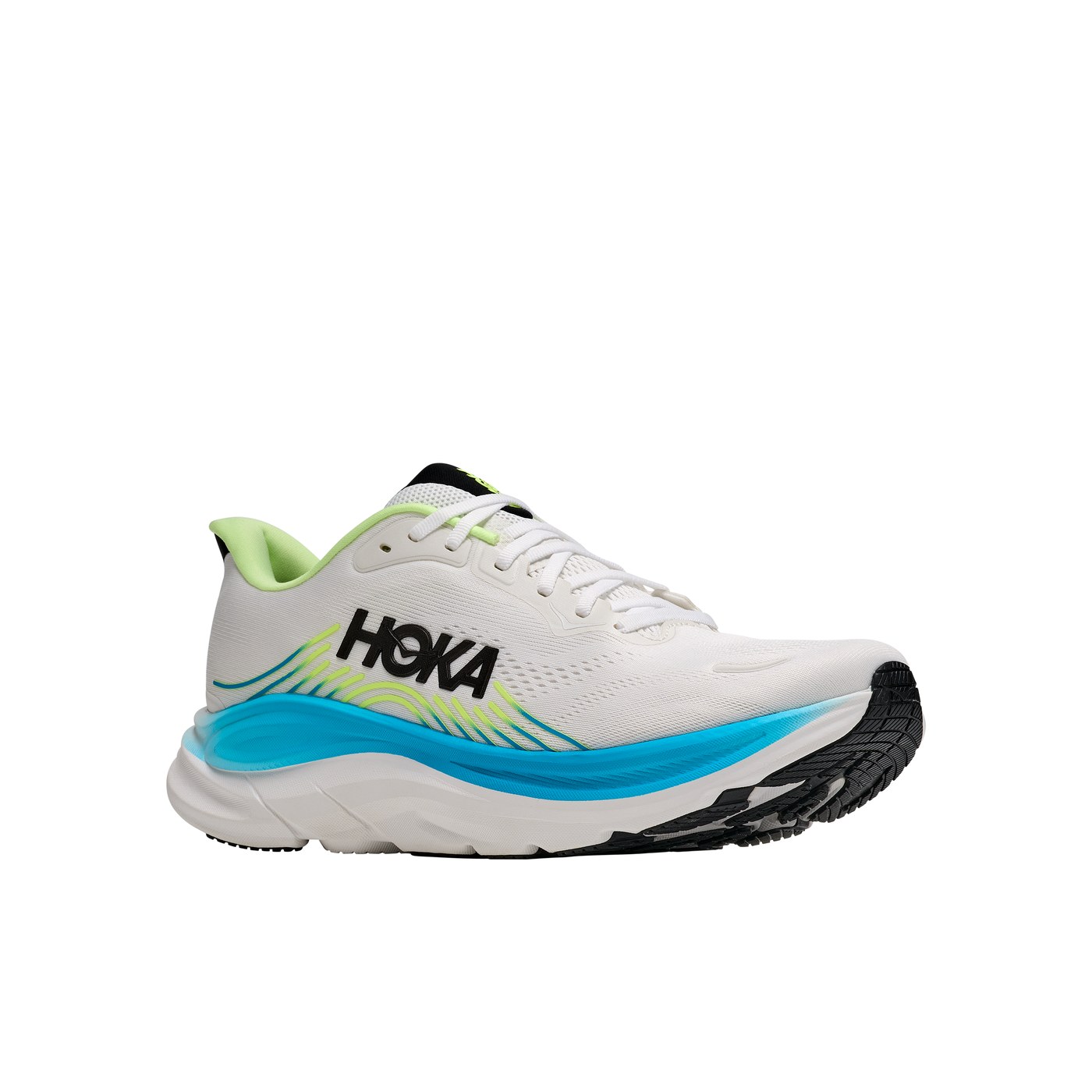
Eleventh straight season for Hoka's best-selling daily trainer. The Clifton 11 officially launches in France on July 1, 2026, at €180. Hoka is deliberately going against the grain: no supercritical foam, no plate, no taller stack. The wide geometry stays, the CMEVA foam stays, and only the top half of the shoe changes. Here's our verdict.
Hoka Clifton 11 Review: Same CMEVA, New Mesh, Softer Fit
8/10
Hoka Clifton 11: the best-selling daily trainer that sits out the supercritical foam race
Hoka could have ticked every 2026 marketing box. Supercritical PEBA foam. A carbon plate, even on the daily trainer. A stack height flirting with 45 mm. The brand did the opposite. The Clifton 11 carries over the compression-molded EVA (CMEVA) foam the franchise has used since day one, keeps the V10's 42 mm heel and 34 mm forefoot stack, and puts its engineers to work elsewhere: on the upper, the fit, the details.
This deliberate conservatism makes sense. The Clifton has been the brand's breadwinner for ten years. You don't mess with a recipe that sells millions of pairs a year just to chase a tech trend. You polish it. That's exactly what the V11 does.
RunMorph's advice. If you loved the Clifton 10, the V11 is a targeted upgrade with no surprises: same foam, same rocker, same stack height, just a more accommodating fit and more polished details. If you want a modern daily trainer that pushes you forward, look at the Asics Novablast 6 or the Mizuno Wave Rider 30 instead: they play a different tune, livelier and bouncier.
© Hoka, official photo used for editorial purposes
Objective technical specs
| Brand | Hoka |
| Model | Clifton 11 |
| Official release | July 1, 2026 (France, via i-Run, hoka.com/fr, Snowleader, Alltricks) |
| Type | Neutral road daily trainer, accessible max-cushion |
| Drop | 8 mm (same as Clifton 10) |
| Stack height | 42 mm heel / 34 mm forefoot (same as V10) |
| Weight | ~283 g (men's EU 42) / ~227 g (women's EU 39) |
| Foam | CMEVA (compression-molded EVA), no supercritical foam |
| Carbon plate | None |
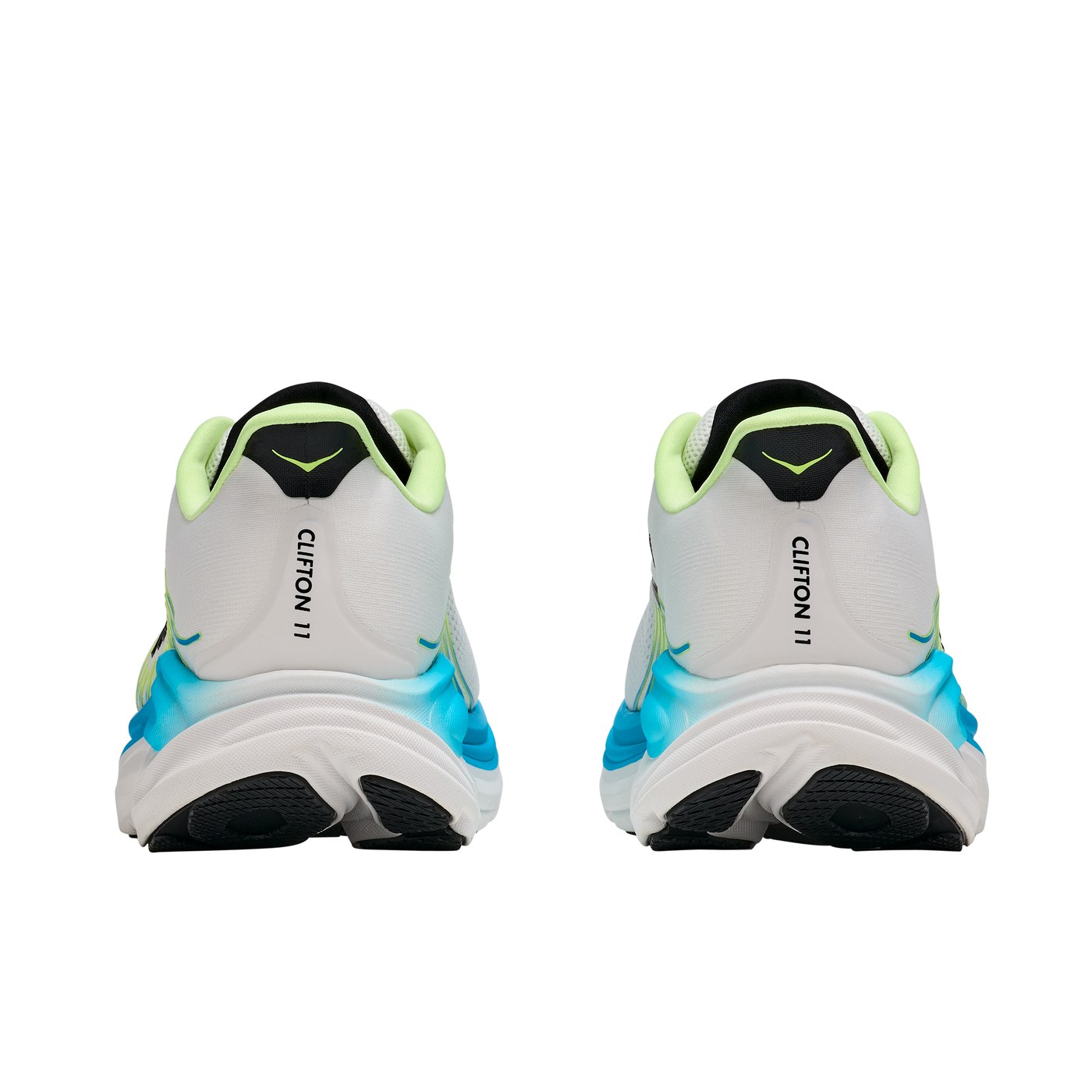
| Geometry | Wide platform carried over from the V10 (stable base), Hoka's signature Meta-Rocker |
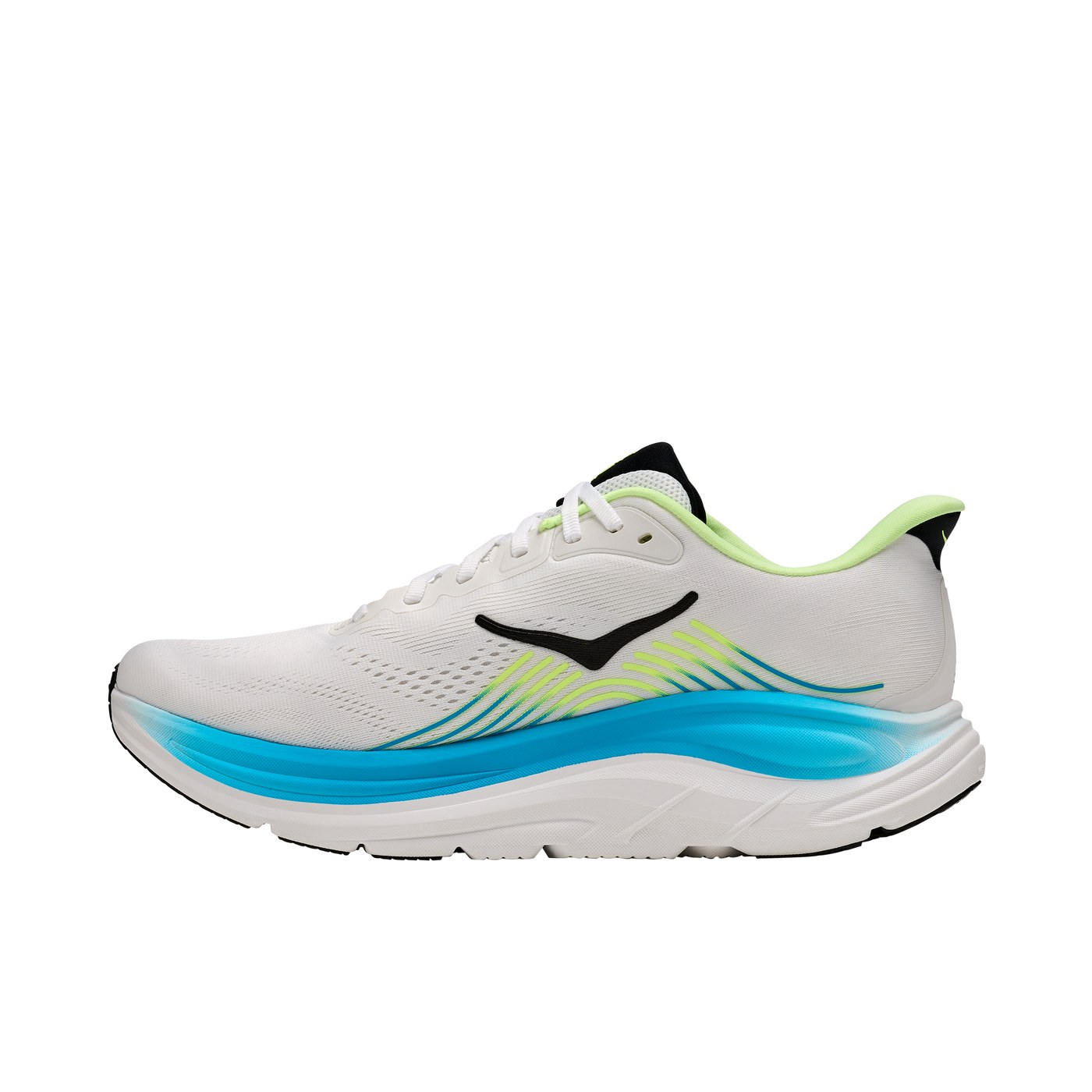
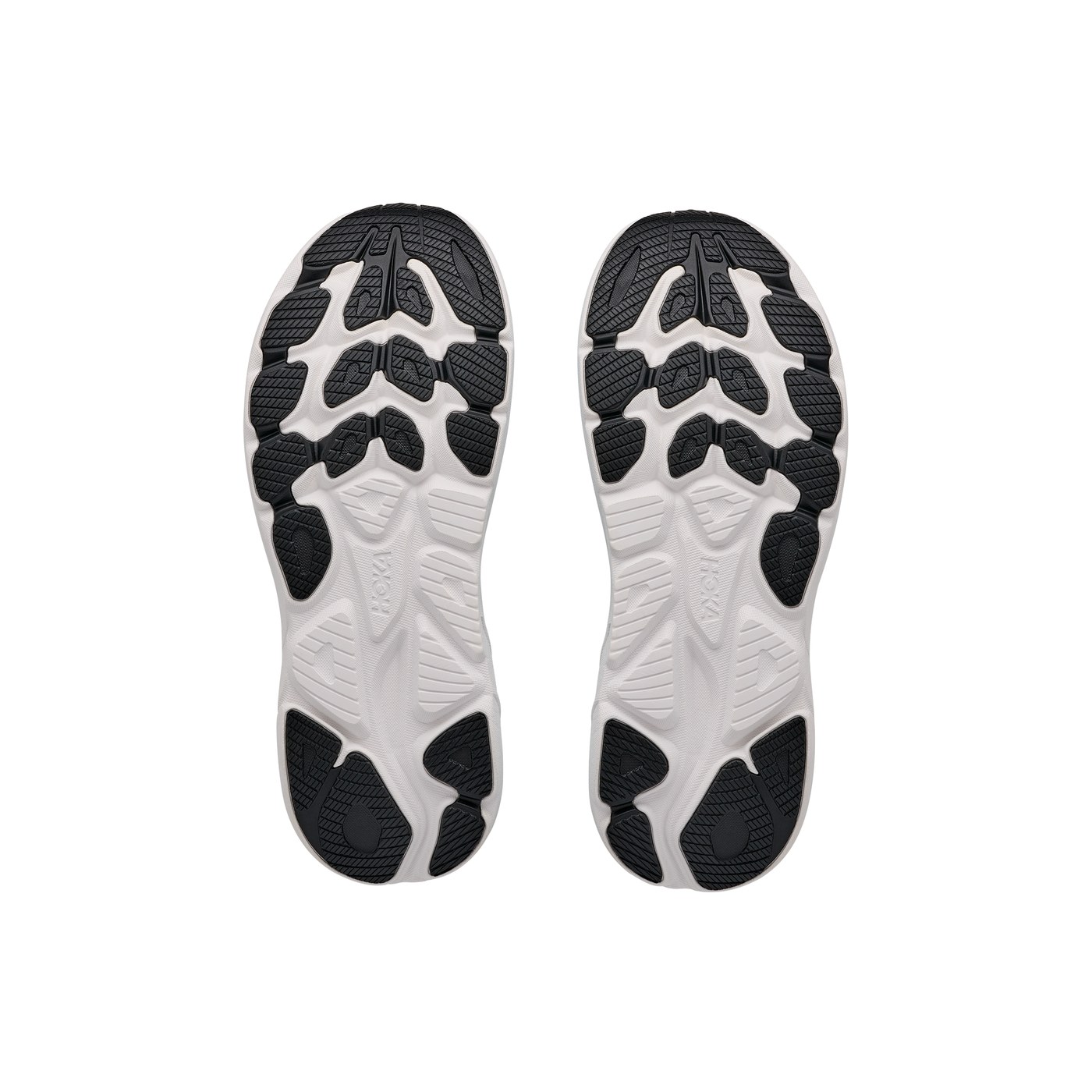
| Outsole | Waffle-pattern rubber on high-wear zones, exposed EVA everywhere else to save weight |
| Upper | Reworked, softer engineered mesh, padded collar and tongue, double-lace lock |
| Sockliner | New premium sockliner, plusher, with better moisture management |
| Details | Tactile silicone touchpoints, reflective accents for night running |
| Recommended distance | From a 30-minute run to a 25 km long run, marathon possible for intermediate runners |
| Sizes | Men's 38.5 to 49.5 EU / Women's 35.5 to 43 EU (Standard and Wide widths) |
| Official price | €180 (France) |
Who is the Clifton 11 for?
The recreational runner who wants one shoe for 80% of their sessions
This is the franchise's historic core. You run three to four times a week, you don't want to think about which shoe to pick before every run, and you want comfort. The Clifton 11 gives you exactly that. You wear it in the morning for your recovery run, put it back on Wednesday for an easy run, and keep it on over the weekend for the long run. It will never hold you back, and it asks very little of you in return.
The beginner who wants a real running shoe without getting it wrong
If you're just getting into running, the Clifton 11 is a smart entry point. The rocker does the work for you to kick off toe-off, the 42 mm stack soaks up the inevitable footstrike flaws of the first few months, and the wide platform forgives ankles that roll a little. You don't need to hunt down a dedicated stability shoe: the geometry is enough in 90% of cases.
The experienced runner who wants a bulletproof daily trainer for high mileage
You run 60 to 100 km a week, you rotate several pairs, and you want a shoe that handles your "easy" days without complaint. CMEVA isn't the most exciting foam, but it's the most durable on the market: it doesn't pack out before 600 to 800 km. The Clifton 11 will become your "workhorse", the pair that takes every day when you don't want to feel anything but your stride.
© Hoka, official photo used for editorial purposes
Comfort, ride and grip
First lace-up, first verdict: the mesh is noticeably softer than on the Clifton 10. On the V10 and V9, the fit could feel stiff, especially along the edges of the midfoot. Hoka listened. The V11's knit wraps around your foot from the very first run, with no break-in period. If you've ever had a blister under the ankle bone in a previous Clifton, this should fix it.
The new sockliner is the other real change you'll feel underfoot. Plusher and better shaped to the inner arch, it delivers that step-in comfort from the very first stride. It's a detail. It's also exactly the kind of detail that turns a shoe into your favorite.
On the run, nothing changes. The Meta-Rocker does its usual job: it initiates toe-off without you having to push. The wide platform carried over from the V10 keeps your ankle in check even when you tire in the second hour of a long run. CMEVA stays what it is: an honest foam. No punchy bounce like the Novablast 6. No lively pop like the Mach 7. But consistent, predictable cushioning that doesn't break down after 500 km.
Tempo runs and intervals? Honestly, that's not why you buy a Clifton. The shoe lets you push it down to 4:30/km without complaint, but beyond that you'll want something else. That's by design: Hoka makes the Mach and the Mach X for exactly that.
On grip, the waffle-pattern rubber covers the main wear zones (outer heel, forefoot) and leaves the foam exposed elsewhere to save a few grams. On dry roads, you won't notice. On wet surfaces, the Clifton 11 holds up without shining: if you run in the rain year-round, look at the Brooks Ghost 18 instead, which has more generous rubber coverage.
The double-lace lock that keeps the tongue from sliding is a non-issue for 95% of runners. But if you're in the 5% who have to relace their Clifton mid-run because the tongue slips, this detail will change your life.
How it stacks up against the competition
The Clifton 11 lands in an oversaturated market. You'll be torn between three or four other models, so here's how to decide.
Vs. the Asics Novablast 6 (€160, 253 g, 8 mm drop). The Novablast 6 plays a different tune: supercritical FF Turbo² foam in the forefoot, noticeable energy return, 30 g lighter on the scale. If you want bounce and pop, pick it. If you want predictable comfort and no-surprise durability, pick the Clifton 11. Both can work as daily trainers, but for opposite runner profiles.
Vs. the Mizuno Wave Rider 30 (€160, 258 g, 8 mm drop). The Wave Rider 30 went through the overhaul the Clifton refuses: dual Enerzy NXT, a first full-length Wave plate, stack height raised to 42.5/34.5 mm. It offers more energy return for €20 less. The Clifton 11 keeps the edge with its Meta-Rocker, quicker into toe-off, and a wider base. If you're torn, try both on in a store: it will come down to how the forefoot feels.
Vs. the Brooks Ghost 18 (€150, 10 mm drop). €30 cheaper, higher drop (10 mm vs 8 mm), more generous rubber coverage. The Ghost 18 remains the champion of price-to-durability in wet conditions. The Clifton 11 offers more enveloping comfort and a wider base. If you pronate slightly and your natural mechanics prefer a 10 mm drop, go with the Ghost.
Vs. the Hoka Mach 7 (€160, 244 g, 5 mm drop). Staying in the Hoka family. The Mach 7 is faster and lighter, with a livelier Profly+ foam that is also more tiring over long distances. Save it for tempo runs and short races. The Clifton 11 stays your "everyday" pair. They don't cannibalize each other, they complement each other.
How to fit the Clifton 11 into your RunMorph training plan
The Clifton 11 fits most sessions in your RunMorph plans. Here's how I program it as a coach.
Recovery runs and easy aerobic running. This is its absolute comfort zone. Lace up, head out, don't overthink it. At 5:30 to 6:00/km pace, the shoe smooths out the ground and you can focus on your stride. On a marathon plan, this is the pair you'll wear 60% of the time.
Long runs (1:30 to 2:30 hours). The Meta-Rocker works for you through the last two hours. The wide platform keeps your ankle in check when fatigue makes your footstrike drift. You finish fresher. Ideal for a half marathon or marathon plan, especially on marathon-pace long runs, where you can keep it on up to 25 km without losing efficiency.
Tempo and light threshold work (4:30 to 5:00/km pace). It keeps up without standing out. If your plan includes weekly threshold sessions, keep the Clifton 11 for recovery weeks and switch to an Asics Superblast 3 or a Saucony Endorphin Speed 5 for key weeks.
Max-speed intervals and short races. Not its turf. For a 10 km race, you'll want a lighter, livelier shoe. The Clifton 11 remains an excellent choice for the warm-up and cool-down, but not for the race itself.
First marathon. Yes, without hesitation. This is the shoe that will get you to the finish line comfortable, without having to learn how to handle a carbon plate or a supercritical foam that demands a precise footstrike. You focus on your plan, your fueling, your pace. The shoe does its job quietly.
© Hoka, official photo used for editorial purposes
The RunMorph coach's verdict
The Clifton 11 is exactly what it wants to be: a targeted, low-key update to a recipe that has worked for ten years. Hoka could have caved to marketing pressure and switched to a supercritical foam. Instead, the brand chose to reinvest its engineering effort in the upper, the sockliner and the details. The result is coherent: the V11 is more accommodating on the foot than the V10, without sacrificing any of what makes the franchise the brand's best-selling shoe.
There's a flip side. At €180, you're paying for a shoe that rivals €20 to €30 cheaper will beat on energy return. If pop is your only criterion, look elsewhere. If you prioritize longevity, predictability and instant comfort, the Clifton 11 remains one of the three best daily trainers in the accessible max-cushion category.
As a coach, I recommend it to any recreational runner who wants just one pair for 80% of their runs, and to any experienced runner looking for a reliable partner for the days when they don't want to feel a thing.
Score: 8/10.
Key takeaways for your training
- Ideal profile: daily trainer for 80% of your sessions, from easy runs to long runs, rotated with a faster shoe for quality sessions.
- Upper over foam: Hoka changed what you feel around your foot (softer mesh, plusher sockliner), not what you feel underfoot (CMEVA carried over). If you like the Clifton feel, the V11 keeps it.
- Durability: CMEVA lasts 600 to 800 km without noticeable packing out. One pair of Clifton 11 gets you through a full marathon cycle and half of the next one.
- Limits: forget sustained tempo and short intervals. The Mach 7 and Mach X 2 cover that in the Hoka lineup.
- Smart buying: wait for the FLCK version or the classic colorways at the official July 1, 2026 launch. The Clifton 10 is still excellent: if you find the V10 on sale under €130, the difference doesn't justify the €50 gap.