August 7, 2026Hoka Rincon 5 Review: The Cheapest Hoka, but Is That Enough?
7/10
- ✓The lowest price in Hoka's road lineup
- ✓Stable, predictable cushioning on easy runs
- ✓Wide base that forgives sloppy foot placement late in a run
- ✗EVA foam with zero bounce, flat feel beyond a slow easy run
The Rincon 5 has been on sale since July 2026, at 125 USD in the US, 115 GBP in the UK and €135 in France. Along with the Solimar, it's still the cheapest shoe in Hoka's lineup. But the fifth generation switches philosophy: it drops the lightness that built the line's reputation and becomes a more conventional daily trainer, more structured and a little heavier. RunMorph went through the spec sheet and real-world feedback to find out whether this shift is good news for your wallet.
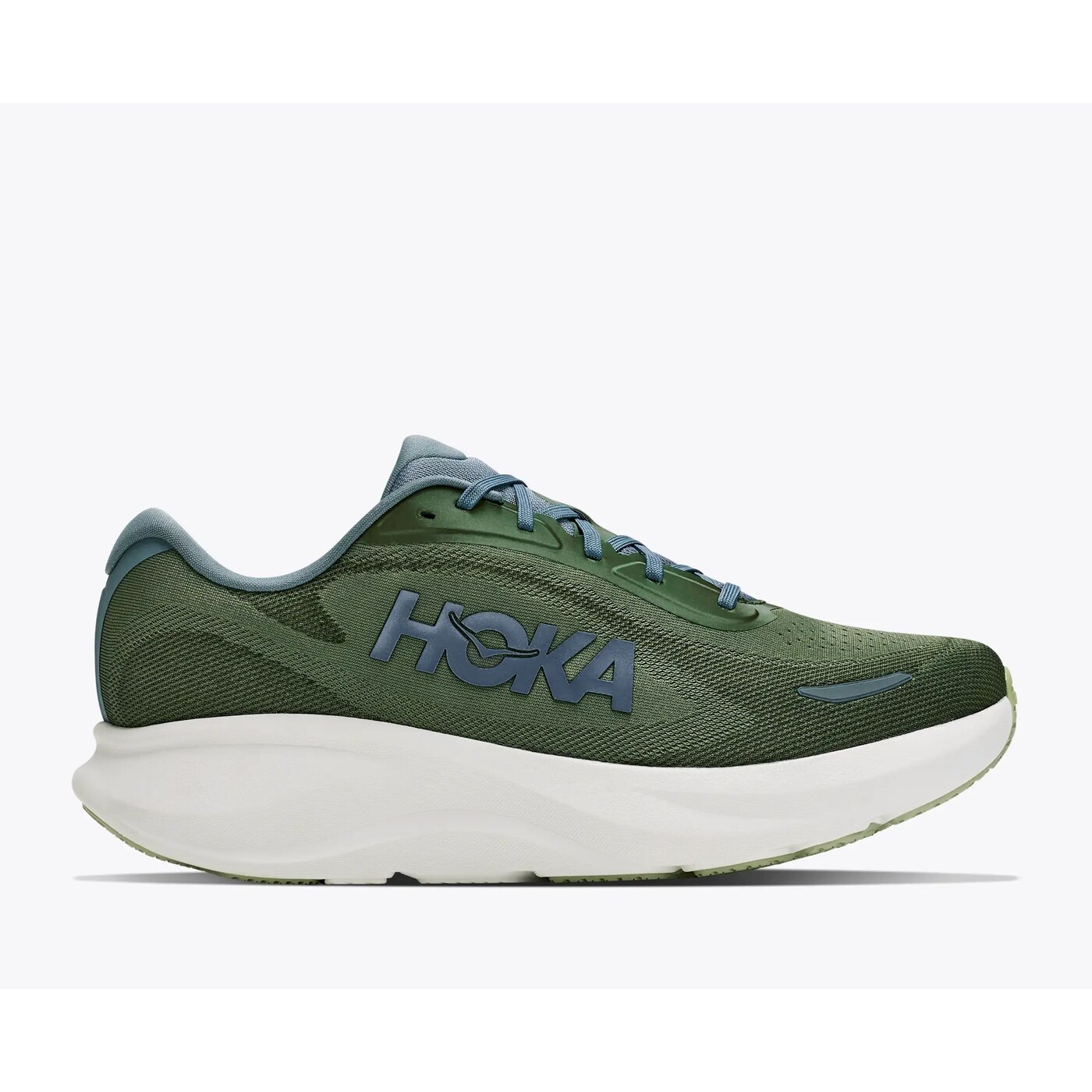
© Hoka, official photo used for editorial purposes
The essentials in three sentences
The Rincon 5 is a neutral daily trainer built around compression-molded EVA foam, an 8 mm drop and 275 g on the scale, at a price that remains the most affordable in Hoka's road lineup. It trades the line's trademark lightness for a more structured, more stable geometry, closer to a classic daily trainer than a featherweight. The foam gets the job done without ever surprising you: a reliable base, but not a shoe that makes you want to pick up the pace.
7
/ 10 · RunMorph overall score
Comfort / cushioning
7.2 / 10Responsiveness / bounce
5.5 / 10Expected durability
6.8 / 10
Who is it for?Runners who want a reliable first pair of Hokas for easy runs and aerobic base training, without paying for a supercritical foam they'll never use.
Who should skip it?Runners looking for bounce or a lively feel for tempo work, and longtime Rincon fans who loved exactly the lightness that's now gone.
Hoka Rincon 5: the entry-level shoe that no longer plays the lightness card
For years, the Rincon was the shortcut into Hoka without spending much: max cushioning at a featherweight, no frills. Version 3 weighed barely more than 200 grams, in the same class as some racing shoes. Version 5 makes a clean break with that history. It goes up to 275 grams (9.70 oz) and an 8 mm drop, versus 8.04 oz and 5 mm for the Rincon 4. That's the biggest geometry change the line has seen since launch.
In practice, Hoka chose to beef the shoe up rather than keep stripping the formula down. The upper switches to a finer, tighter engineered mesh, the overall silhouette gets cleaner and less visually busy than the previous generation, and the foam is still conventional compression-molded EVA, with no supercritical foam. The price barely moves.
Hoka Rincon 5 specs
| Brand | Hoka |
| Model | Rincon 5 |
| Type | Neutral entry-level road daily trainer |
| Availability | On sale since July 2026 (confirmed in stock in the US and UK in early August 2026) |
| Drop | 8 mm (vs. 5 mm on the Rincon 4) |
| Weight | 275 g / 9.70 oz (US M9 reference), vs. 228 g on the Rincon 4 |
| Foam | Compression-molded EVA, no supercritical foam |
| Stability | Neutral, J-Frame technology and a wide base for moderate support without aggressive correction |
| Cushioning | Positioned as "balanced" by Hoka, neither the most responsive nor the softest in the brand's lineup |
| Upper | Breathable engineered mesh, tighter and cleaner silhouette than the previous generation |
| Outsole | Durabrasion rubber in the high-wear zones, segmented "pod" design, exposed EVA foam elsewhere |
| Geometry | Smooth Meta-Rocker for the transition |
| Widths | Standard and Wide |
| Official price | 125 USD (US) / 115 GBP (UK) / €135 (France) |
A house foam, no tech gimmicks
Nothing in the Rincon 5 is a tech showcase. Compression-molded EVA has been in the line since day one and still covers the essentials: stable cushioning that doesn't break down fast and protects your foot properly on long runs. Hoka itself labels this foam "balanced" on its own lineup scale, between its most responsive and its softest models. That deliberately puts it in the middle rather than at an extreme.
The outsole uses a pod design: Durabrasion rubber covers the main impact zones, but most of the underside is bare EVA foam to save weight. It's a classic trick on entry-level models, and it works fine as long as the shoe stays on clean, dry pavement.
RunMorph's tip. If budget isn't your main constraint and you want a daily Hoka that keeps more pop underfoot as the kilometers add up, the Hoka Clifton 11 is still the best way into the lineup: same EVA philosophy with no plate and no supercritical foam, but a more generous stack height and a better-established reputation for long-term durability.
The real flaw: a foam that protects but never gives anything back
On paper, the Rincon 5 has everything an honest daily trainer needs. On the road, the limit shows up fast: compression-molded EVA cushions, but returns almost no energy. After the first easy kilometers, the ride turns flat, almost dead compared with the supercritical foams Hoka saves for its Mach, Clifton Pro or Cielo lines.
This isn't a manufacturing accident. It's a deliberate budget choice, and we'd rather say it plainly than sugarcoat it: at this price, no brand is going to put €100 worth of foam into a shoe that sells for 125. The problem is that the Rincon 5 gained weight and drop without gaining any liveliness to make up for it. The result is a shoe that gets the job done without ever making it enjoyable beyond an easy pace. On a slow easy run, it works just fine. As soon as the pace picks up, the foam can't keep up and the firmness takes over from any sense of bounce.
Second thing to watch, and it's less visible when you buy: the pod outsole design leaves a large share of the EVA foam exposed underfoot. Earlier Rincon generations had a known history of premature packing out on the lightest versions, before the Rincon 4 partly fixed the issue by adding material. The Rincon 5 keeps that extra material, which should limit fast packing out. But how long the grip lasts on the zones without rubber is still something to monitor over time, especially if you regularly run on wet or uneven ground.
On the road: solid on easy runs, unremarkable everywhere else
On aerobic base runs, the Rincon 5 does exactly what you expect. The Meta-Rocker rolls you through the transition effortlessly, the wide base keeps your footstrike stable even late in the run, and the 8 mm drop brings the stride feel closer to most daily trainers on the market, far from the "race-oriented" profile the Rincon 3 had. Overall comfort is good without being exceptional: the thinner mesh breathes well enough but lacks the plushness of a premium upper.
When you change pace, the shoe hits its limits sooner than expected. It's not a matter of poor design but of choice: the foam doesn't return enough energy to support a surge, and the platform, firmer than the usual Hoka style suggests, absorbs rather than propels. On a long run of more than an hour, that firmness builds up gradually. It never gets uncomfortable, but it never makes you want to open up your stride either.
Grip is a non-issue on dry pavement. On wet sidewalks or damp cobblestones, the exposed foam area behind the forefoot is less reliable than an outsole with more generous rubber coverage. Nothing dangerous, but keep it in mind if you often run in the rain.
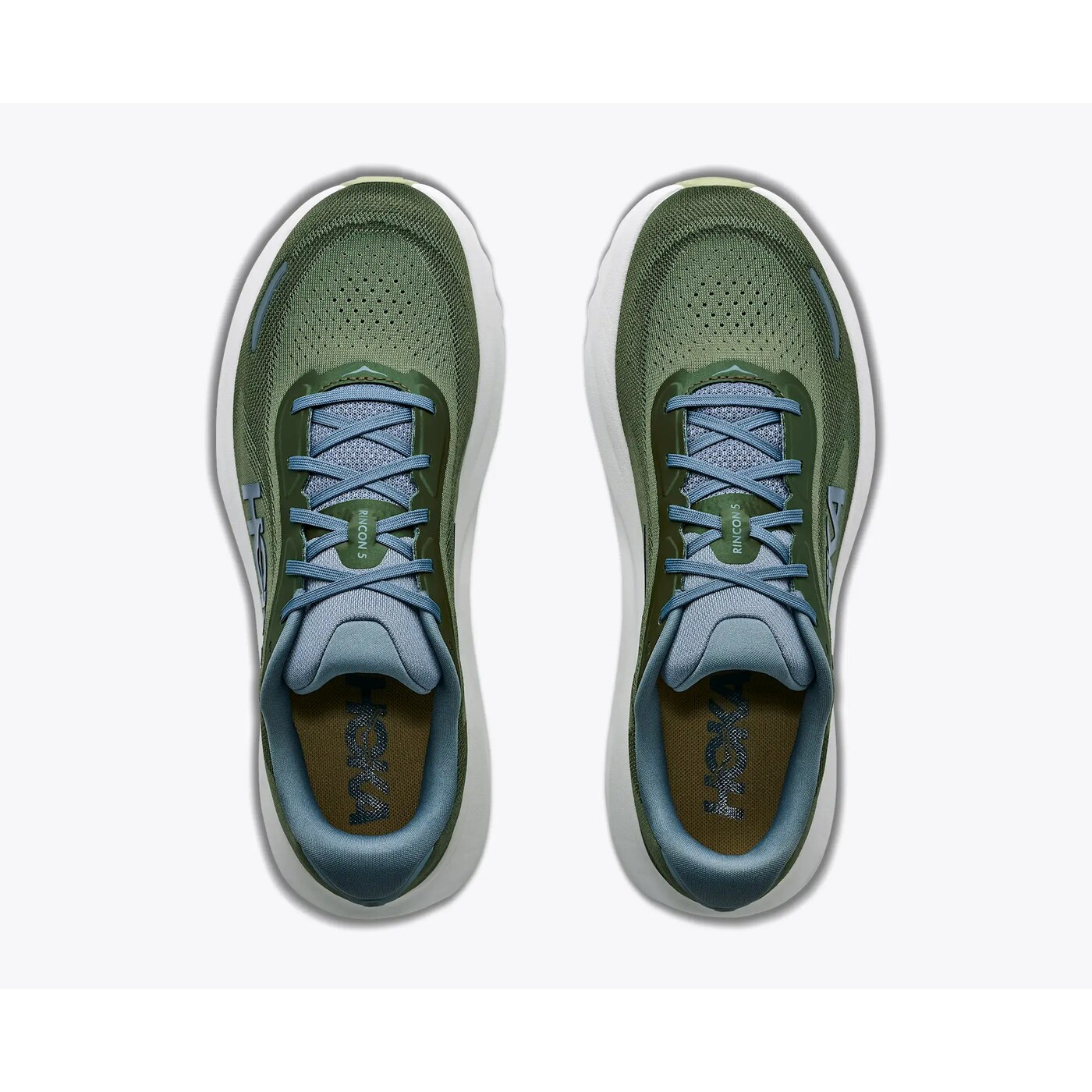
© Hoka, official photo used for editorial purposes
Hoka Rincon 5 vs Adidas Supernova Rise 3: two takes on the affordable daily trainer
| Criterion | Hoka Rincon 5 | Adidas Supernova Rise 3 |
|---|
| Price | 125 USD / €135 | €150 |
| Weight | 275 g | 272 g |
| Drop | 8 mm | 8 mm |
| Foam | Compression-molded EVA | Full-length Dreamstrike+ PEBA |
| Stack height | Not precisely disclosed by Hoka | 37 mm heel / 29 mm forefoot |
| Feel | Firm, stable, not very responsive | Soft, livelier |
| Positioning | Unapologetically entry-level | Affordable but more premium |
At nearly identical weight, these two shoes show what an extra €15 can change. The Supernova Rise 3 packs a full-length PEBA foam that returns clearly more energy, while the Rincon 5 bets everything on basic but reliable EVA. If a strict budget comes first, the Rincon 5 remains the cheapest way in. If €15 more doesn't change your decision, the Supernova Rise 3 delivers an objectively livelier feel underfoot for a small price gap.
Pros and cons
Pros
- The lowest price in Hoka's road lineup
- Stable, predictable cushioning on easy runs
- Wide base that forgives sloppy foot placement late in a run
- Thinner, more breathable upper than the previous generation
- Standard and Wide widths available from launch
Cons
- EVA foam with zero bounce, flat feel beyond a slow easy run
- Clear weight gain over the Rincon 4: the line's lightweight DNA is gone
- Pod outsole with exposed foam, grip to watch on wet ground
- Exact stack height not disclosed by the brand
- Will disappoint longtime fans looking for a light, affordable Hoka
Our take: who is it for, and for which RunMorph training?
The Rincon 5 fits runners who want a reliable first Hoka for easy runs and aerobic base training, without worrying about a premium foam they'd never use to its full potential. It's also a sensible second pair, reserved for recovery days, while a livelier shoe handles the quality sessions.
For tempo runs, intervals or whenever you want a lively feel, the Rincon 5 is the wrong answer: the foam can't keep up and the firmness wins over the fun of running. No surprise for an entry-level shoe, but better to know before you buy than after your first botched interval session.
RunMorph Coach's verdict
The Rincon 5 does what it promises, nothing more. It protects, it stabilizes, and it fits a tight budget better than any other Hoka road shoe in the lineup. But the turn taken with this fifth generation (heavier, more structured, no longer a featherweight) strips the line of what made it unique: rare lightness at this price. What's left is an honest but bland daily trainer, carried by a foam that cushions without ever being fun.
At 125 USD / €135, it's hard to fault the Rincon 5 much on pure price-to-reliability. But for €15 to €25 more, several competitors deliver a clearly livelier feel underfoot. So the Rincon 5 earns its recommendation mainly by budget default, not by enthusiasm.
Score: 7/10.
Key takeaways for your training
- Ideal profile: affordable first Hoka, easy runs and aerobic base training, second pair for recovery.
- The real weak spot: a basic EVA foam that protects but gives nothing back, with a flat feel as soon as the pace picks up.
- Weight up: 275 g vs. 228 g on the Rincon 4; the line's trademark lightness is gone in favor of a more structured geometry.
- Outsole to watch: pod design with exposed foam, less reliable grip on wet ground.
- Smart buy: if €15 to €25 more doesn't break your budget, check out a daily trainer with premium foam before committing to the Rincon 5.