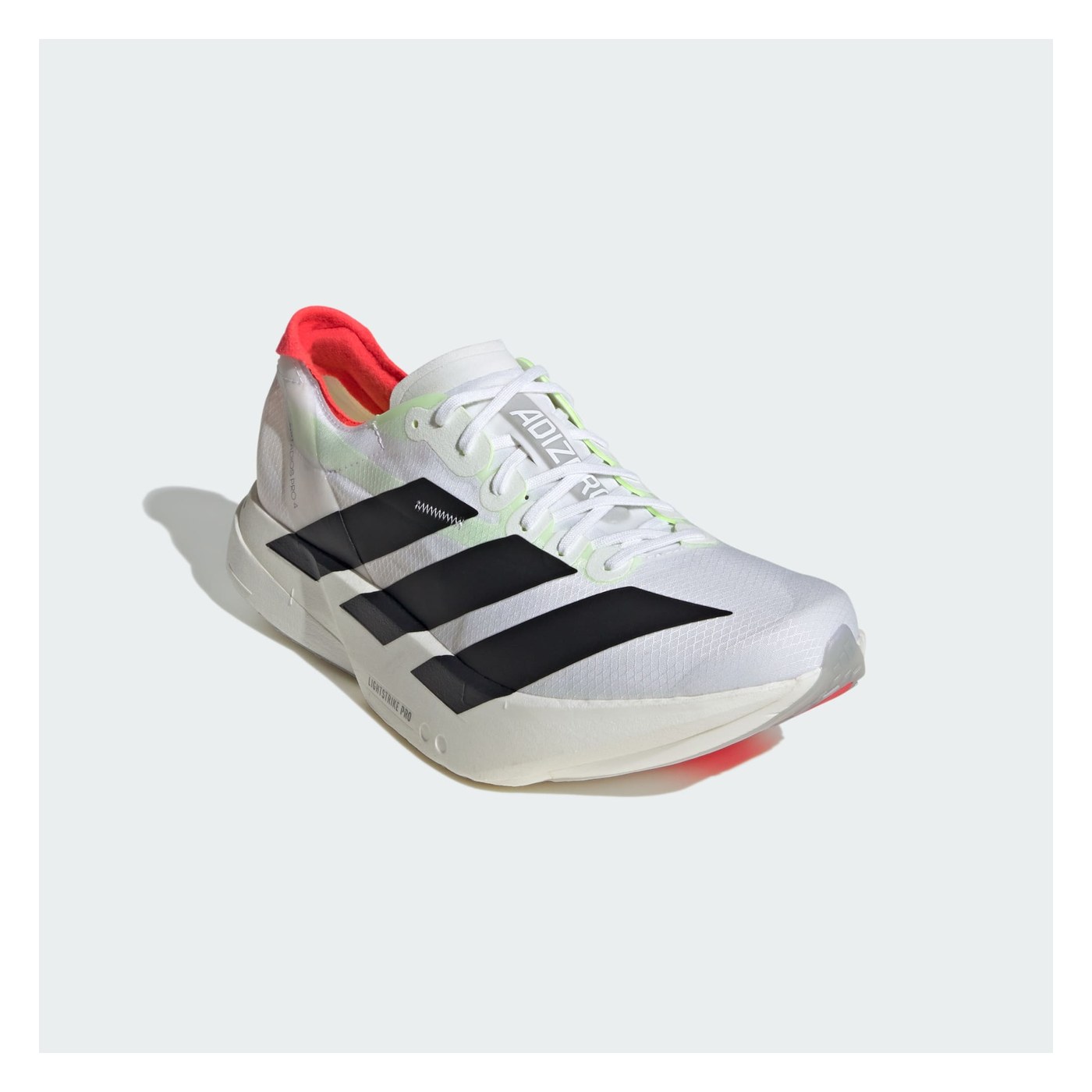
Two years passed between the Adios Pro 3 and this fourth generation. In a market where every brand launches a new carbon rocket every twelve to eighteen months, Adidas's silence looked like a risky bet. Independent lab measurements prove the bet right on one specific point, energy return, but they also reveal a tighter fit and markedly lower stability than the previous version.
Adidas Adizero Adios Pro 4 Review: Record Energy Return
9.3/10
- Energy return measured at 80.4%, the best value ever recorded by an independent lab across more than 385 tested models
- Clear weight savings over the v3 (up to 25 g) with no sacrifice in cushioning (142 SA, above the market average)
- No more reported heel slippage, unlike the v3
- Narrower toe box: 2.3 mm less in width and 8.3 mm less at the big toe than the v3, backed by lab measurements
The essentials in 3 sentences
The Adios Pro 4 posts the best energy return score ever measured by an independent lab across more than 385 tested shoes (80.4%), driven by its new Lightstrike Pro foam and Energy Rods 2.0. It sheds up to 25 g compared with the v3 and feels softer, but at the cost of a toe box several millimeters narrower and a heel hold rated markedly less stable in independent testing. It's built for experienced midfoot or forefoot strikers chasing a sub-3:15 marathon or a sub-50-minute 10 km, not for pronounced heel strikers or runners looking for a daily training shoe.
9.3
/ 10 · RunMorph overall score
Who is it for?Experienced runners chasing a race time, from 10 km to the marathon, with a midfoot or forefoot strike and narrow to regular feet.
Who should skip it?Pronounced heel strikers, wide feet, and runners looking for a daily training shoe or reassuring stability late in a race.
Adidas Adizero Adios Pro 4: the three-stripes racer after the long wait
While Nike, Asics and Saucony refreshed their flagship models every year, Adidas left the Adios Pro 3 on the shelves for two full cycles. The brand explained the gap with the release, in the meantime, of the Adios Pro Evo 1, a 133 g prototype sold for 500 euros to a handful of elite runners, which served as a test bench. Today the Adios Pro Evo 3 plays that technology showcase role within the same Adizero family. It's a different shoe, built for records and with a very short lifespan, while the Adios Pro 4 is the mass-market version, available for under 250 euros.
The "Pro" name sells, but the real question is what two years of waiting actually changed underfoot. The answer, backed by independent lab measurements: a record 80.4% energy return, a markedly softer foam than before, a toe box several millimeters narrower, and heel stability clearly down from the v3.
RunMorph's advice: if you're torn between the Adios Pro 4 and a more versatile shoe like the Saucony Endorphin Pro 5, ask yourself one question: how many races a year do you really plan to run on a carbon plate? If the answer is more than three and you're not a heel striker, the Adios Pro 4 justifies its price. If not, save your budget for a quality training shoe.
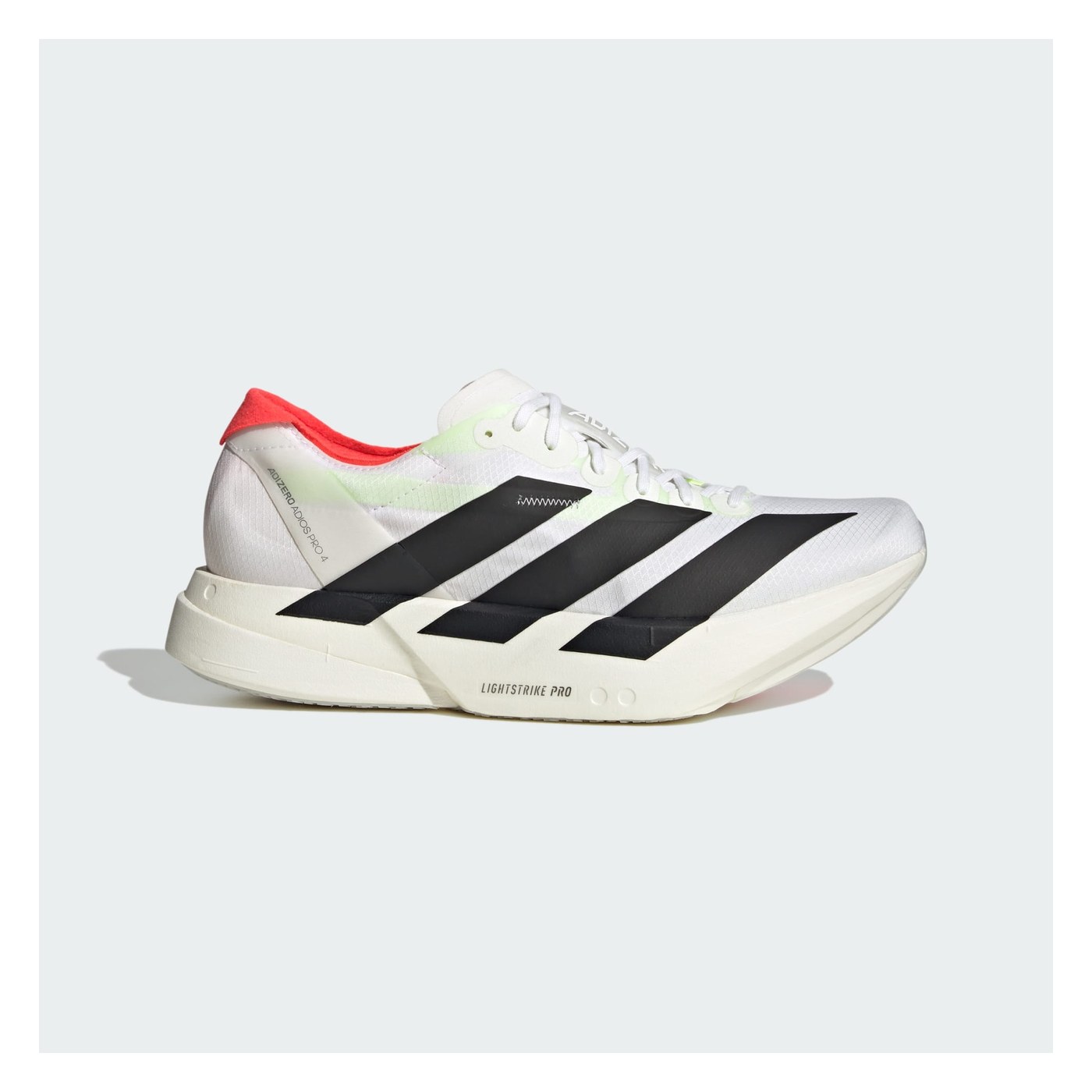
© Adidas, official photo used for editorial purposes
Objective technical data
| Brand | Adidas |
| Model | Adizero Adios Pro 4 |
| Release | January 2025 |
| Type | Road, racing |
| Claimed drop | 6 mm |
| Drop measured by an independent lab | 8.1 mm |
| Claimed forefoot / heel stack height | 33 mm / 39 mm |
| Measured forefoot / heel stack height | 28.5 mm / 36.6 mm |
| Lab-measured weight | 200 g |
| Measured energy return | 80.4%, the best value recorded across more than 385 tested shoes |
| Measured shock absorption | 142 SA (market average: 131 SA) |
| Foam | Lightstrike Pro, new softer formulation: 29.3 AC versus 37.6 AC on the v3 |
| Carbon plate | Yes, Energy Rods 2.0 |
| Outsole | Continental + Lighttraxion |
| Upper | Adizero Lightlock, woven mesh |
| Recommended distance | 5 km to marathon |
| Official price | €250 |
Energy Rods 2.0 and Lightstrike Pro: what changes underfoot?
The midsole keeps the formula that made the line a success: two layers of Lightstrike Pro foam sandwich pretzel-shaped carbon rods, grouped into a rigid structure running parallel to the metatarsals. The changes come down to two specific points, confirmed by independent lab measurements. First, the foam compound: the new Lightstrike Pro formulation measures 29.3 AC versus 37.6 AC for the v3 foam, a clear gap that translates into a much plusher impact feel underfoot. Second, the rocker geometry, which in practice is nearly identical to the v3's (contrary to what you may read elsewhere). The adjustments are limited to a few millimeters tied to the new Lighttraxion outsole.
On the road, the softer foam shows from marathon pace: your foot sinks deeper at impact, and the propulsion follows smoothly. Lab-measured energy return reaches 80.4%, the best value recorded across more than 385 models tested under identical conditions, far ahead of the 58.6% market average. To date, it's the absolute benchmark on this specific criterion. The flip side: this softer foam also wears out faster. Independent measurements put the optimal performance window for this type of foam at around 150 to 160 km of hard use before the responsiveness starts to fade noticeably. That's a much shorter "pop" lifespan than the v3, which was known for going the distance without losing its edge.
Who is the Adizero Adios Pro 4 for?
The sub-3:15 marathoner
This is the runner the shoe was designed for. Lab-measured cushioning (142 SA, versus a 131 SA market average) absorbs the 42.195 km without bottoming out, and the record energy return helps you hold goal pace through the second half, right when most racing shoes fall flat.
The 10 km and half marathon runner chasing a time
The Adios Pro 4 isn't limited to the marathon. On the independent tests' performance-by-use scale, it scores 93/100 for racing and 88/100 for tempo work: the propulsion kicks in from the first fast strides. It particularly suits runners used to sustained paces who already know how to get the most out of a carbon shoe.
The beginner looking for a first pair
It's the wrong choice. The rocker and the stiff plate demand well-established running form, and the same independent tests give this shoe a score of just 45/100 for slow daily use. A daily trainer like the Nike Pegasus 42 is far better suited to building volume before you consider a racing shoe.
The road test: from marathon pace to short intervals
Independent lab measurements confirm what feedback from the road already suggested: the Adios Pro 4 excels at racing and drags during slow training. The message is unambiguous. This shoe has no place on a recovery run, and its use scores (93/100 for racing, 88/100 for tempo, 45/100 for daily use) spell it out in black and white.
On fit, the numbers settle the debate that has been raging on forums since launch. The toe box measures 93.2 mm at its widest point versus 95.5 mm on the v3, or 2.3 mm less. At the big toe, the gap is even bigger: 69.5 mm versus 77.8 mm on the v3, or 8.3 mm less. These aren't subjective impressions; they're lab measurements taken from molds. Wide or square feet that loved the Pro 3 for its roomy comfort should expect a radical change, and RunMorph recommends trying the shoe on before buying rather than ordering online blind.
On stability, independent tests are categorical: the Adios Pro 4 is markedly less stable than the v3, a deliberate trade-off for a softer foam. The heel counter gets the lowest possible rating in stiffness testing (1 out of 5), and the narrower heel shrinks the landing platform. In practice, pronounced heel strikers will feel lateral instability from the first fast strides, especially late in a race when fatigue breaks down their form. This isn't a minor flaw. It's the central trade-off of this version.
On breathability, the lab verdict is final: 2 out of 5, one of the lowest scores on the market today. A smoke and light test showed an upper that blocks almost all airflow, with lightness clearly prioritized over ventilation. In a hot-weather marathon, expect your feet to heat up faster than in the previous generation.
On traction, the new Continental rubber paired with Lighttraxion technology delivers: the independent measurement gives 0.55, versus around 0.59 on the v3, a minimal 0.04-point gap you won't feel on the road. Grip remains among the best in its category, on dry and wet roads alike.
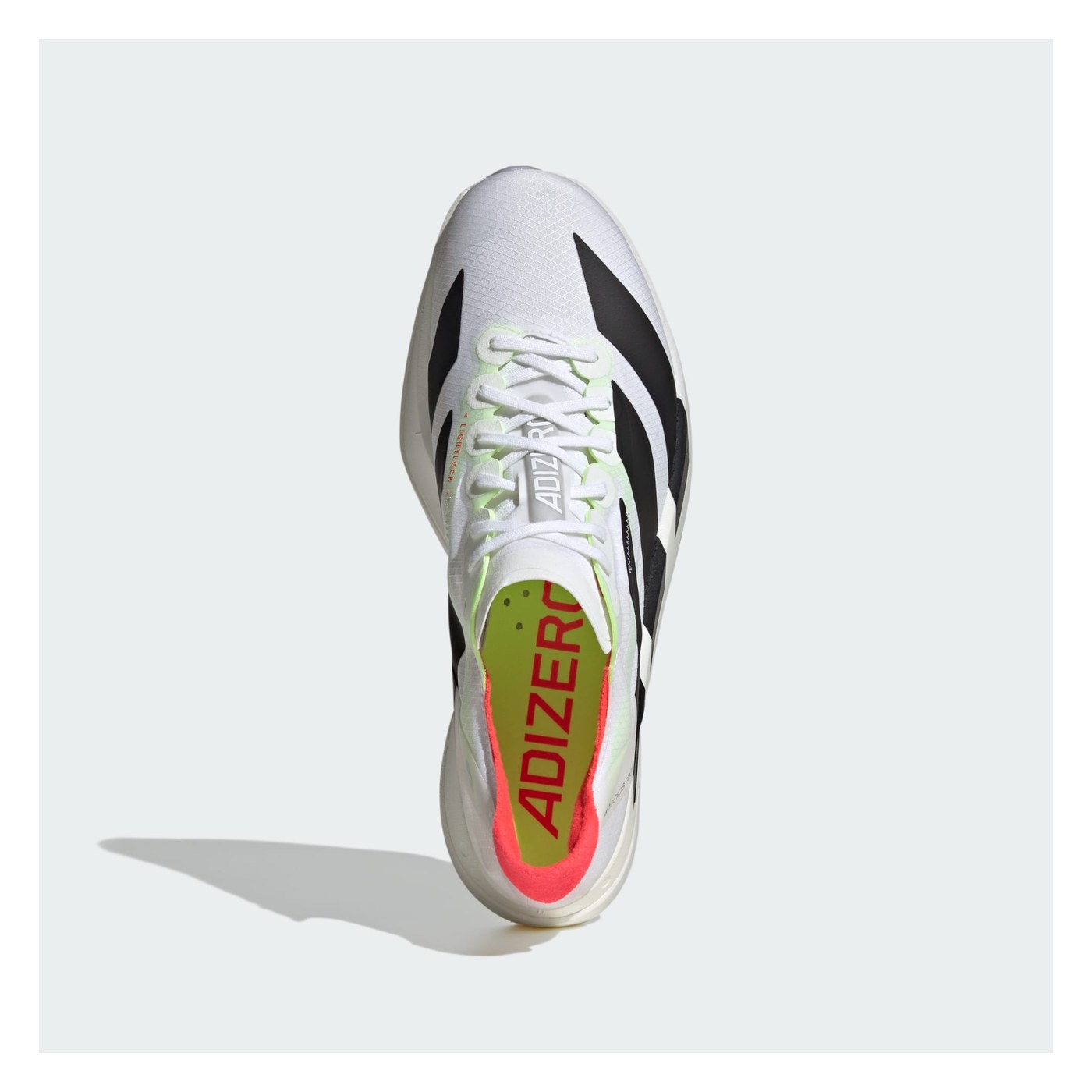
© Adidas, official photo used for editorial purposes
Adizero Adios Pro 4 vs the competition: how to make the right choice
| Model | Weight | Claimed drop | Price | Positioning |
|---|---|---|---|---|
| Adidas Adizero Adios Pro 4 | 200 g measured | 6 mm (8.1 mm measured) | €250 | Record energy return, demanding fit, reduced stability |
| Saucony Endorphin Pro 5 | 200 g | 8 mm | €240 | More versatile, less sharp in pure performance |
| Nike Vaporfly 4 | 195 g | 8 mm | €250 | The historic benchmark, very pronounced propulsion |
| Asics Metaspeed Sky Tokyo | 198 g | 5 mm | €270 | Very aggressive rocker, built for fast paces |
Against the Saucony Endorphin Pro 5, the Adios Pro 4 wins on pure energy return (80.4% measured, a score few models come close to) but loses on stability and versatility. The Saucony handles a mix of racing and fast training better, while the Adios Pro 4 remains a race-day shoe for midfoot or forefoot strikers. Against the Adios Pro Evo 3 from the same family, the difference is clear: the Evo 3 chases the absolute record with a very short lifespan and nearly double the price, while the Pro 4 remains the sensible option for regular racing over a full season.
Pros
- Energy return measured at 80.4%, the best value ever recorded by an independent lab across more than 385 tested models
- Clear weight savings over the v3 (up to 25 g) with no sacrifice in cushioning (142 SA, above the market average)
- No more reported heel slippage, unlike the v3
- Traction nearly unchanged from the v3 (0.55 versus 0.59), very solid on wet roads
- Lighter upper and comfortable tongue
Cons
- Narrower toe box: 2.3 mm less in width and 8.3 mm less at the big toe than the v3, backed by lab measurements
- Markedly reduced stability (RunMorph score 6.8/10, heel counter rated 1 out of 5 in independent testing): not recommended for pronounced heel strikers
- Poor breathability (2 out of 5 in the smoke and light test), with an upper that blocks almost all airflow
- Limited foam durability: the optimal performance window sits around 150 to 160 km before responsiveness fades, well short of the v3's staying power
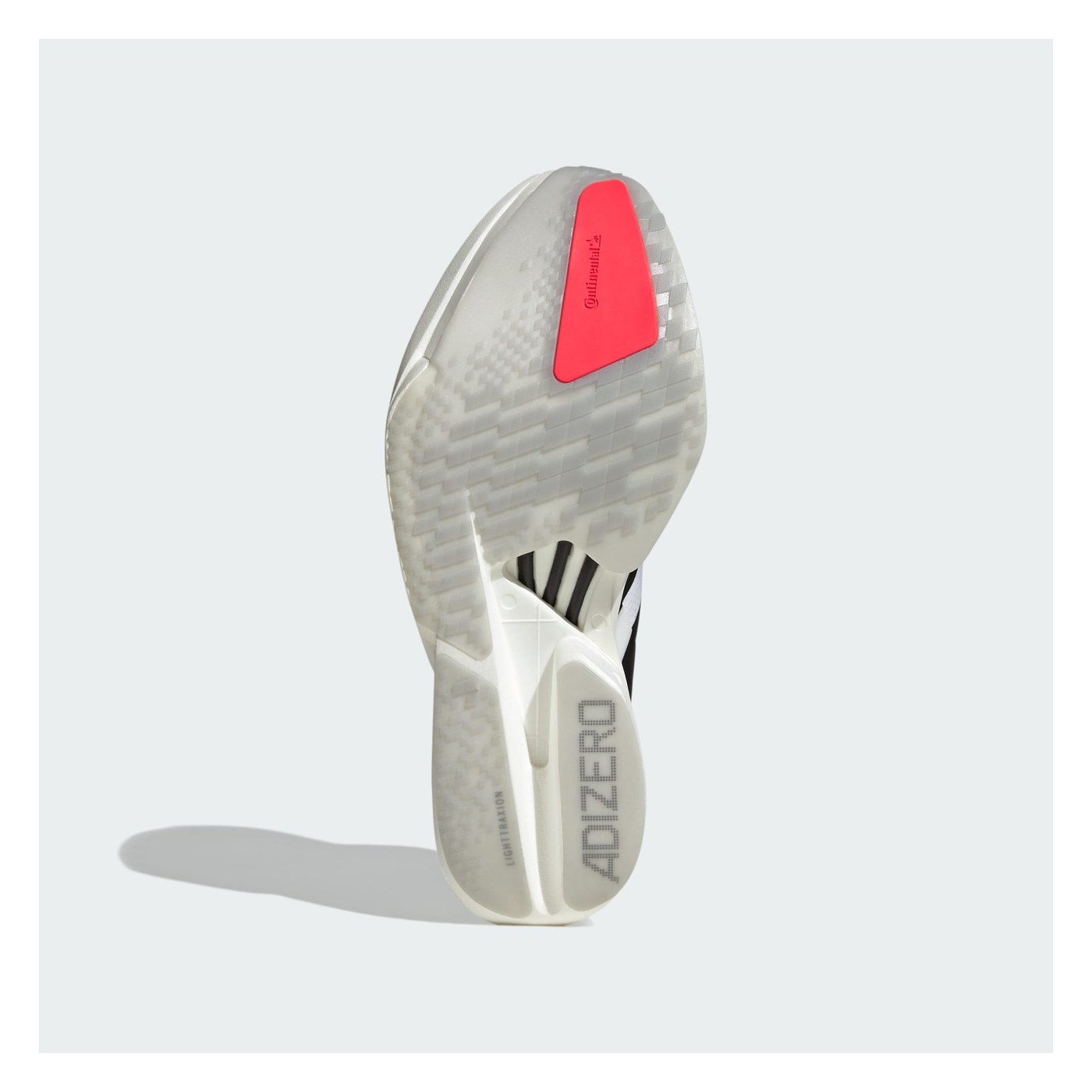
© Adidas, official photo used for editorial purposes
How to fit the Adios Pro 4 into your RunMorph training plan
This shoe isn't meant to be your only pair, and independent measurements back that up: its daily-use score (45/100) is too low to justify logging training volume in it. It fits into a marathon or half marathon build as your race-day weapon and, occasionally, as your shoe for key fast sessions (long intervals, marathon-pace runs). Keep the 150 to 160 km window in mind before the foam loses its responsiveness: track your mileage on this pair so you don't race on already tired foam.
In your RunMorph training plan, note that you own a carbon-plated shoe. The plan can then schedule your goal-pace sessions and your benchmark race in that pair, so your training feel matches race day as closely as possible.
RunMorph Coach verdict
Backed by independent measurements, the Adios Pro 4 posts the best energy return score ever recorded across more than 385 tested shoes: 80.4%. That's a lab fact, not a marketing claim, and it's enough to make it one of the most accomplished racing shoes on the market today on this specific criterion. But the 9.3/10 overall score shouldn't hide a trade-off Adidas fully owns: markedly reduced stability, a toe box several millimeters narrower, poor breathability and a foam lifespan limited to 150-160 km before responsiveness declines. For experienced midfoot or forefoot strikers who are chasing a time and take the time to find the right size, it's a justified, even excellent, purchase. For pronounced heel strikers or runners with wide feet, the trade-off doesn't work: a more stable, more versatile Saucony Endorphin Pro 5 remains the more sensible choice.
RunMorph score: 9.3/10
Key takeaways for your training
- Save it for race day: with a 45/100 daily-use score in independent testing, it's not a shoe for slow training
- Go up half a size if you have wide feet: the toe box measures up to 8.3 mm less than the v3 at the big toe
- Avoid it if you're a pronounced heel striker: the heel counter is rated 1 out of 5 for stiffness, so pick a more stable shoe for this profile
- Track your mileage on this pair: the foam loses its responsiveness from 150 to 160 km of hard use, according to independent measurements
- Put it to work from half marathon pace: that's where the record energy return really kicks in