Inov-8 TrailFly Pro: 272 g in EU 45.5, not the claimed 228 g, the unfiltered review
7/10
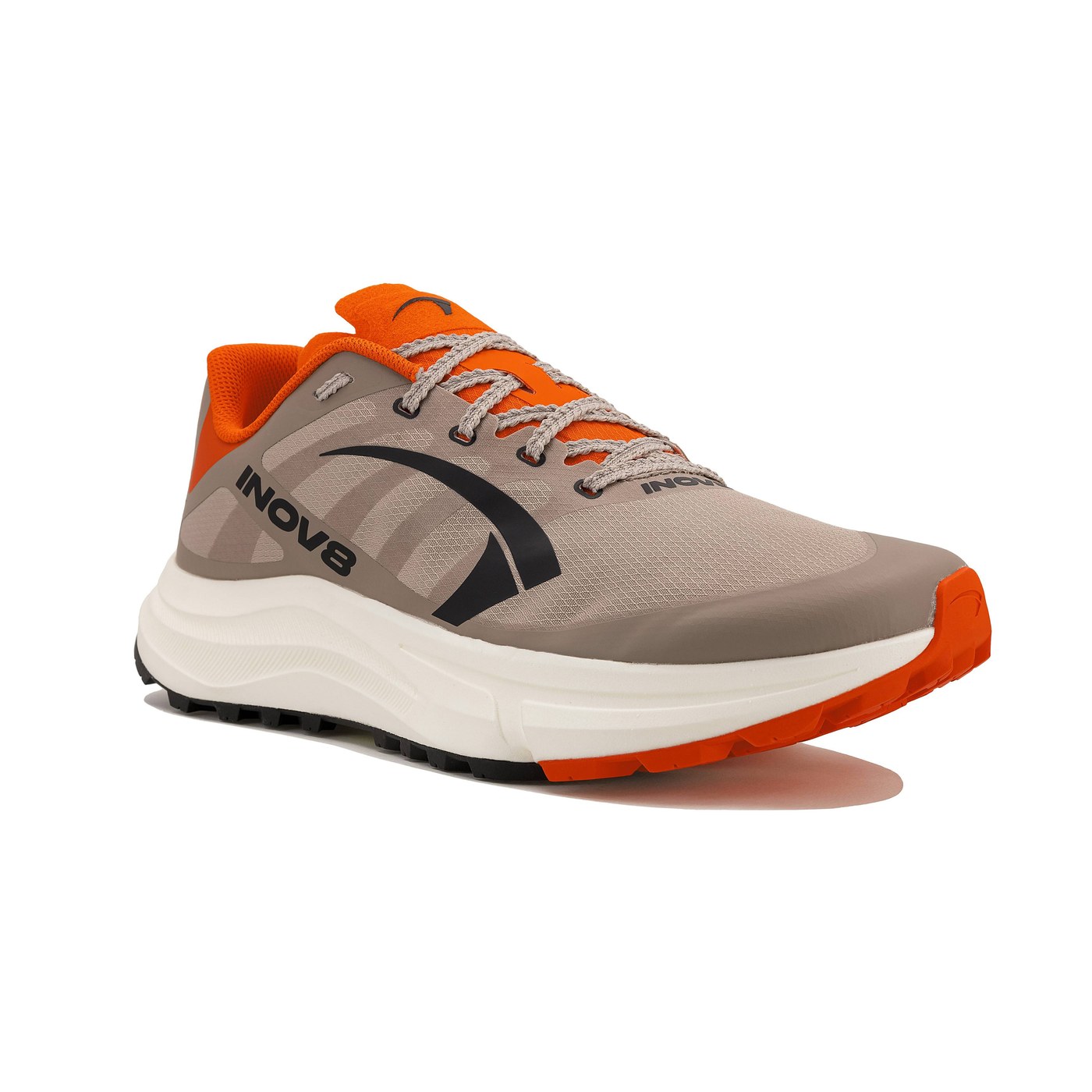
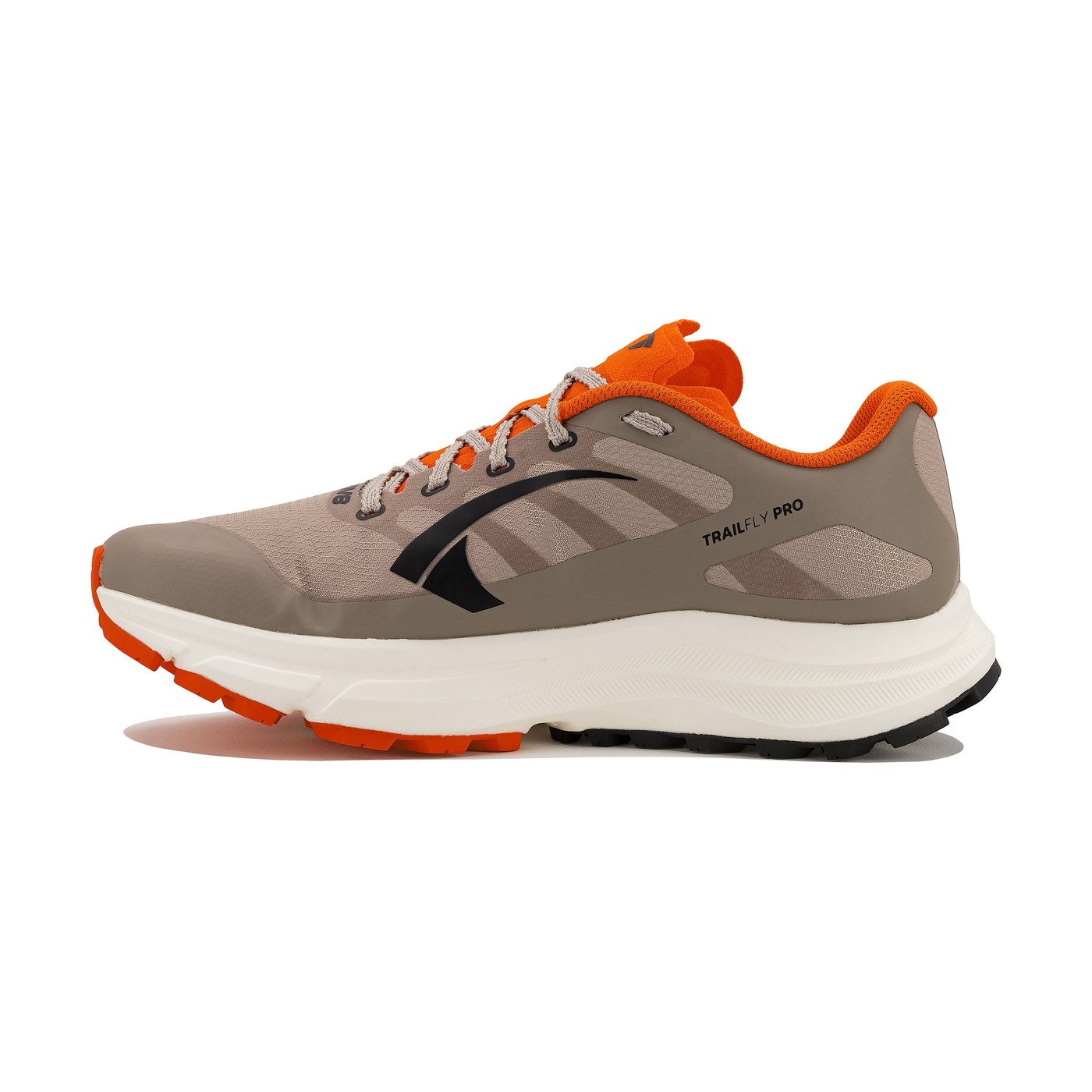
228 g in EU 42.5. That is the figure almost every product page and online comparison site quotes for Inov-8's TrailFly Pro. In EU 45.5, the most common size among runners, the scale actually reads 272 g, which is 19% more. Sold as a versatile technical trail shoe at €170, it hides a deliberately minimalist build: no plate, no noticeable rocker, and a soft heel counter that lets your foot twist on every uneven step. Here is what independent tests and real-world measurements reveal once the lugs are caked in mud.
The TrailFly Pro bets on a light, bouncy Powerflow Elite TPEE foam to deliver cushioning without sacrificing ground feel, inside a minimalist shoe with no plate and no rocker. Your foot does almost all the stabilising work on its own, which suits runners who already have solid footing and rules out very technical terrain. It grips well and weighs little, but durability is fragile (a lug coming unstuck reported after just 40 km) and the real price is €170, higher than the €150 sometimes quoted.
7.0
/ 10 · RunMorph overall score
Cushioning
8.0 / 10
Responsiveness
7.5 / 10
Grip
8.0 / 10
Stability
5.5 / 10
Comfort
7.5 / 10
Durability
5.5 / 10
Value
6.5 / 10
Who is it for?Runners with wide or high-volume feet who want an ultra-light shoe with plenty of ground feel, on runnable to moderately technical trails, over medium to long distances.
Who should skip it?Narrow feet (one width only, with a very roomy toe box), runners who need support on very technical terrain, or anyone after maximum durability on abrasive rock.
Inov-8 TrailFly Pro: a bet on cushioned minimalism from a range that had never tried it
Inov-8 was built on the British fells and the trails of the Lake District, with low, firm shoes designed for direct contact with rock. For years the TrailFly range carried that philosophy forward: little foam, lots of feel. The TrailFly Pro breaks from that line. It keeps the flat geometry and torsional flexibility the brand is known for, but adds 26 mm of Powerflow Elite foam under the heel, a new nitrogen-infused supercritical TPEE. The result looks like nothing else in the Inov-8 catalogue: more cushioning than a TrailFly Speed V2, yet still no plate and no rocker, at a time when competitors are putting them everywhere.
Until now, RunMorph had only two trail models from the British brand in its catalogue: the TrailFly Max v2 and the TrailFly Speed V2. The Pro fills a real gap between the two: more protective than the Speed, lighter and livelier than the Max. On paper, it promises to be a versatile technical trail shoe. In practice, the design stays firmly minimalist, and that is exactly what should drive your buying decision.
RunMorph's advice. Before ordering the TrailFly Pro, make sure your feet can handle a shoe with no support structure. If you are new to trail running or want a shoe that compensates for your footing, look at something more built up instead, like the Hoka Speedgoat 7.
TrailFly Pro specs: what the brand claims
Feature
Value
Brand
Inov-8
Model
TrailFly Pro
Release
2026
Type
Versatile technical trail, medium to long distances
Drop
6 mm
Heel / forefoot stack
34 mm / 28 mm
Weight (EU 42.5)
228 g
Weight (EU 45.5)
272 g
Carbon plate
No
Foam
Powerflow Elite (nitrogen-infused supercritical TPEE) + Boomerang Lite insole
Outsole
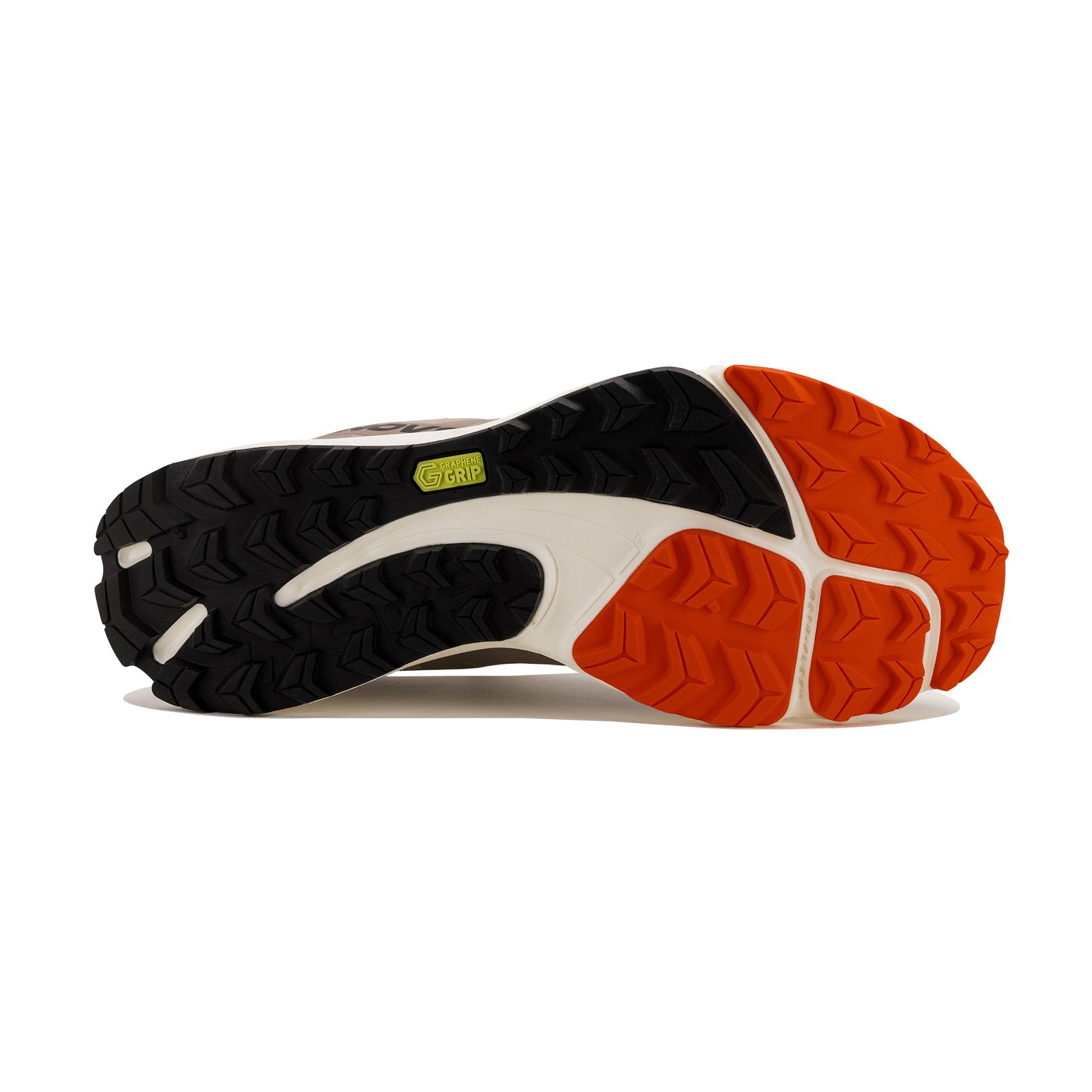
Graphene Grip, 4 mm chevron lugs, partial coverage
TrailFly Pro: what the brand claims vs what was measured
Product pages and most online comparison sites quote a single weight figure, the one for EU 42.5. Put that next to independent measurements in EU 45.5, the best-selling size among runners, and next to the prices actually charged by two French retailers, and the gap becomes significant on several points.
Data
Claimed
Measured / observed
Weight EU 42.5 (marketing reference)
228 g
228 g, confirmed by two independent tests
Weight EU 42 (real-world measurement)
228 g (general spec sheet)
231 g weighed in store
Weight EU 45.5 (common men's size)
228 g, copied as is by most comparison sites
272 g measured, i.e. 44 g and 19% more
List price
€150, still quoted by several price aggregators
€170 observed at two French retailers in September 2026
Drop and heel / forefoot stack
6 mm, 34 mm / 28 mm
Confirmed exactly by two independent tests
Outsole coverage
Grip promoted without any caveat in the marketing
Partial coverage in 4 zones separated by rubber-free grooves, with a lug coming unstuck reported after just 40 km
The weight gap is not a detail. A shoe advertised at 228 g sells a lightness argument that, in reality, only applies to a small size. Most runners who wear above EU 42.5 should expect figures much closer to 270 g than 230 g. That is still light for a trail shoe, but a long way from the featherweight image built around the headline number.
Powerflow Elite foam and Graphene Grip outsole: what difference do they make underfoot?
The technical heart of the TrailFly Pro is a new foam formula, Powerflow Elite, a nitrogen-infused supercritical TPEE. It replaces the firmer foams used so far across the TrailFly range and aims for a compromise Inov-8 had never attempted: bounce you can feel from the very first strides, without losing the ground contact the brand has always championed. The Boomerang Lite insole, made from the same material, extends that effect. Independent tests agree on this point: the energy return is real, driven as much by the foam as by the overall lightness of the shoe.
Underfoot, the Graphene Grip outsole, a graphene-enhanced rubber, is split into 4 independent zones by wide flex grooves, the Metaflex technology. This design deliberately removes material and stiffness so the foot can mould to the terrain. The 4 mm bidirectional chevron lugs point forward for propulsion and backward for braking. On dry ground and in moderately wet conditions, independent tests rate the grip as reliable. The flip side of this technical choice, the fragility of the Metaflex grooves on abrasive terrain, gets its own section further down.
TrailFly Pro fit: a wide toe box, one width only
From heel to midfoot, the fit stays within Inov-8 norms: snug, without excess play, with an offset heel collar that follows the natural height difference between the inner and outer ankle bones. The forefoot is where the shoe stands out. The toe box is clearly wider, with an estimated vertical volume of around 15 mm at the toes, against an average of 11 to 12 mm on technical trail shoes on the market. Independent tests confirm this generosity: several testers with slim feet report too much room, while wide feet or feet that swell late in an ultra welcome the freedom given to the toes.
This volume only comes in one width, unlike some Inov-8 models that offer a narrow version. Before buying online, trying them on is still recommended if you have slim feet: the Pro runs large, so much so that several independent testers recommend going down half a size, or even a full size for the slimmest feet.
The field test: runnable to moderately technical trails, 40 to 60 km of testing
The independent tests that ran in the TrailFly Pro agree on one thing: this is a shoe with a strong personality, hard to compare with what dominates today's technical trail market. One tester, after 60 km split between easy trails, forest and a few technical sections, describes it as a shoe that goes against the built-up, stable, supportive models that usually dominate his testing. Another independent report, from a runner with wide feet, confirms the feeling of lightness and the bounce of the foam, while noting slight discomfort at the toe bumper on descents.
On cushioning, the consensus is positive: the Powerflow Elite foam compresses underfoot and then gives back a clear rebound, without feeling like a max-cushioned stack of foam. On grip, opinions also line up: the Graphene Grip lugs bite well both uphill and downhill, on dry ground and in moderately wet conditions, although none of the available tests explored extreme waterlogged conditions.
Stability is where opinions sharply diverge. One independent assessment rates stability and cushioning at 8 out of 10 on a generic comparison-site grid, while real-world testing tells a different story: a completely soft heel counter, no lockdown whatsoever, and longitudinal and lateral torsion that the tester himself calls extreme. At RunMorph, we see a simple explanation for this gap: a generic scoring sheet rates standardised criteria, while a test on foot reveals how the shoe really behaves once it lands on a rock on a side slope. That second level of reading is the one that should guide an informed purchase.
RunMorph's advice. If you want a shoe that keeps you stable on committing technical terrain, this is not the one. Check out our review of the NNormal Kjerag 2 instead, which is more structured for that kind of ground.
TrailFly Pro: at which paces it works, and where it falls off
Easy runs and base endurance. This is the shoe's natural playground. On runnable trails or gentle forest paths, the lightness (272 g in EU 45.5) and the bounce of the Powerflow Elite foam make easy runs enjoyable, with no heaviness underfoot.
Long runs. Independent tests put the reasonable limit at around 50 to 60 km for a foot used to minimalism. Beyond that, the lack of any support structure forces your stabilising muscles to work in a way few runners are used to over such long durations, with a higher risk of foot fatigue.
Marathon pace, sustained effort on runnable sections. The combination of low weight and lively foam works well at this pace, as long as the terrain stays runnable. The energy return from the Powerflow Elite is noticeable without having to push hard into the ground.
Threshold and half marathon pace. This is where the lack of a rocker shows. Independent tests note an unassisted heel-to-toe transition, as the sole stays almost flat: at fast paces, it is up to the runner to compensate, which limits efficiency compared with a shoe with a pronounced rocker.
Short intervals. The foam's bounce helps on surges, but the lack of a plate and the very free torsion of the sole make your footing less precise than in a more structured shoe. Only for runners already comfortable in minimalist models.
The flaw that should give you pause: stability is almost non-existent
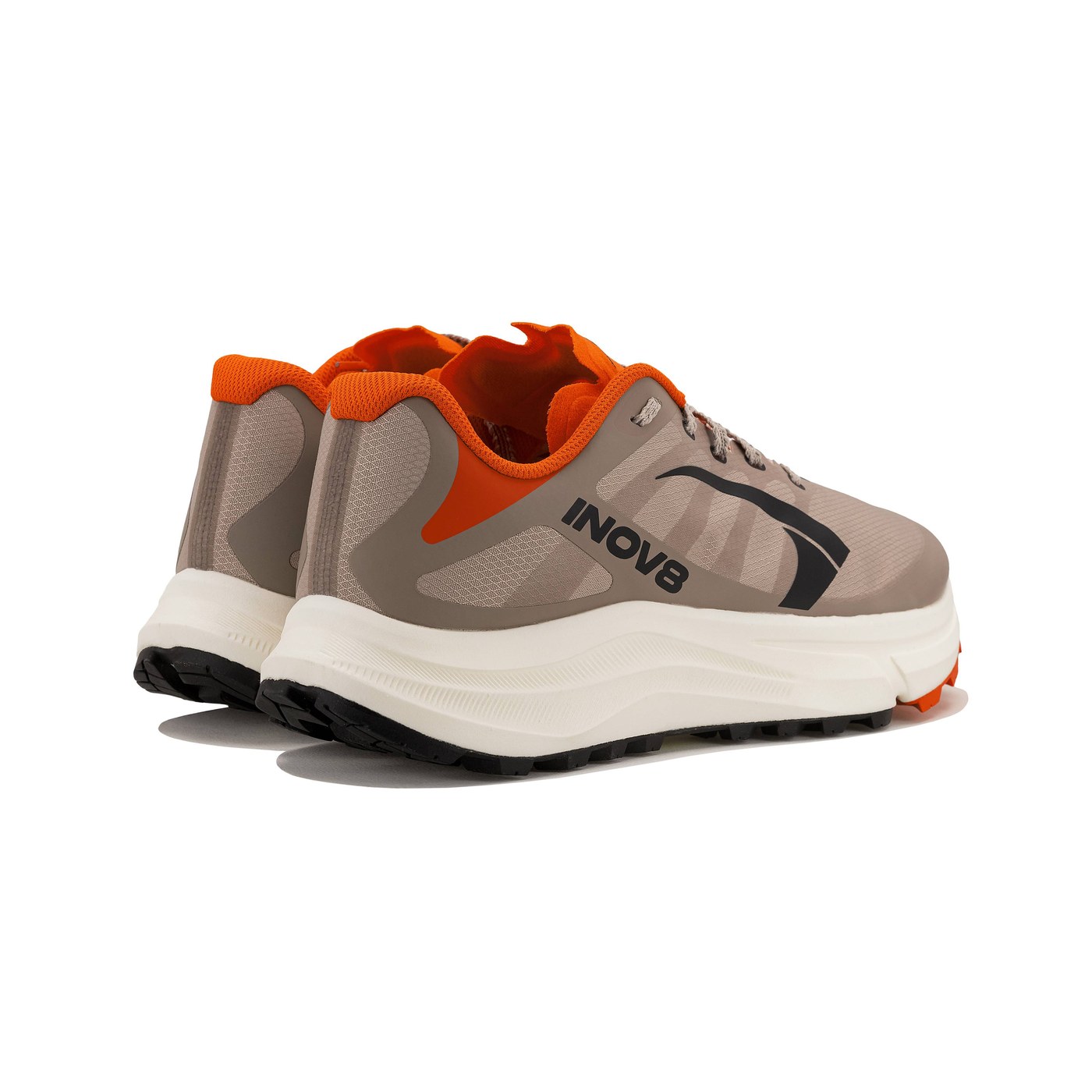
This is the most documented point in independent tests, and the most clear-cut. The TrailFly Pro has no built-in support whatsoever: the heel counter is described as completely soft, with no ankle lockdown, and the Metaflex grooves deliberately strip stiffness from the sole so it can twist in every direction. One tester, experienced and used to high mileage, reports his stabilising muscles working much harder than usual, with clear discomfort from the very first technical sections.
In practical terms, the forefoot and rearfoot can twist independently on uneven footing: one badly placed rock is enough to feel it. For a French runner who alternates between flat trails and more committing sections in the hills and mid-mountains, this behaviour demands constant attention on technical ground, the exact opposite of what a runner looking for a reassuring shoe expects. The trade-off is not neutral: this same lack of structure is what makes the 272 g weight and the close-to-the-ground feel praised elsewhere possible.
The second flaw: an outsole that does not like abrasive terrain
One independent report documents a lug coming unstuck after around 40 km of use, right at a Metaflex groove, on a run that included a technical section. Only one shoe of the pair was affected, but the technical explanation holds up: by design, the Metaflex grooves are rubber-free zones, and therefore weak spots that cope poorly with terrain that punishes the outsole. The complete absence of a rock plate under the forefoot points the same way.
For a runner who mostly sticks to forest trails or hard-packed paths, this flaw is unlikely to show up before several hundred kilometres. For anyone aiming at real mid-mountain terrain, rocky ground or abrasive surfaces, the risk of premature wear is real and documented, not hypothetical. It is a point the product page, focused on grip, never mentions.
TrailFly Pro vs TrailFly Speed V2: which Inov-8 should you choose?
Criterion
TrailFly Pro
TrailFly Speed V2
Positioning
Versatile technical trail, medium to long distances, sub-ultra
Technical racing on hard and rocky ground, up to 30 km
Weight
228 g (EU 42.5) to 272 g (EU 45.5)
274 g (EU 42)
Drop
6 mm
4 mm
Heel / forefoot stack
34 mm / 28 mm
21 mm / 17 mm
Protection
None, Metaflex grooves
Flexible Meta-Shank rock plate
Foam
Powerflow Elite (supercritical TPEE)
Powerflow Pro
Official price
170 €
160 €
The choice between the two does not come down to weight, which is very similar, but to protection and the terrain you are targeting. The Speed V2 has a real flexible protection plate underfoot, a lower drop and roughly half the stack: it is built for committing rocky ground and shorter races. The TrailFly Pro, with 13 mm more stack at the heel and no rock protection at all, is aimed at longer runs on less hostile terrain. A runner who mostly runs dry, rocky trails with speed in mind should stick with the Speed V2. If you want more cushioning over long distances on more runnable terrain, the Pro is an option, provided you accept the total lack of protection underfoot.
TrailFly Pro vs Salomon S/Lab Pulsar 4 and NNormal Kjerag 2: the comparison
Criterion
Inov-8 TrailFly Pro
Salomon S/Lab Pulsar 4
NNormal Kjerag 2
Weight
228 to 272 g
250 g claimed / 247 g measured
~225 g (EU 42 2/3)
Drop
6 mm
6 mm claimed / 7.1 mm measured
6 mm
Heel / forefoot stack
34 mm / 28 mm
34 mm / 28 mm claimed (32.6 mm / 25.5 mm measured)
26 mm / 20 mm
Plate
No
No
No
Foam
Powerflow Elite (supercritical TPEE)
optiFoam + optiFoam+ (PEBA/EVA)
EExpure (supercritical TPE)
Outsole
Graphene Grip, partial coverage
All-Terrain Contagrip, 3.5 mm lugs
Vibram Megagrip Litebase, 3.5 mm lugs
Official price
170 €
220 €
190 €
The short version: the TrailFly Pro is the cheapest of the three and the only one that goes all in on minimalism with zero protection underfoot. The Pulsar 4 and the Kjerag 2 cost €20 to €50 more, but use rubbers with a reputation for being tougher, Contagrip and Vibram Megagrip, with fuller coverage than the Pro's partial Graphene Grip. For a runner targeting races on technical terrain on a tight budget, the TrailFly Pro still makes sense on weight for the money. If you want a shoe that can take more kilometres on rocky ground without worrying about the outsole, the Kjerag 2 or the Pulsar 4 justify their extra cost.
TrailFly Pro pros and cons
Pros
272 g in EU 45.5: a controlled weight despite genuine cushioning
Reliable grip uphill and downhill, on dry ground and in moderately wet conditions
Powerflow Elite foam with bounce you feel from the very first strides
Wide toe box that lets your foot splay, a real plus for high-volume feet
Reasonable price at €170, €20 to €50 below its two direct rivals
Cons
Almost zero stability: soft heel counter and a sole that twists on every uneven step
Lug coming unstuck reported after just 40 km on technical terrain
One width only, too roomy for slim feet
No rock protection under the forefoot
No usable rocker, which hurts the transition at faster paces
Grip and durability: what it really costs per kilometre
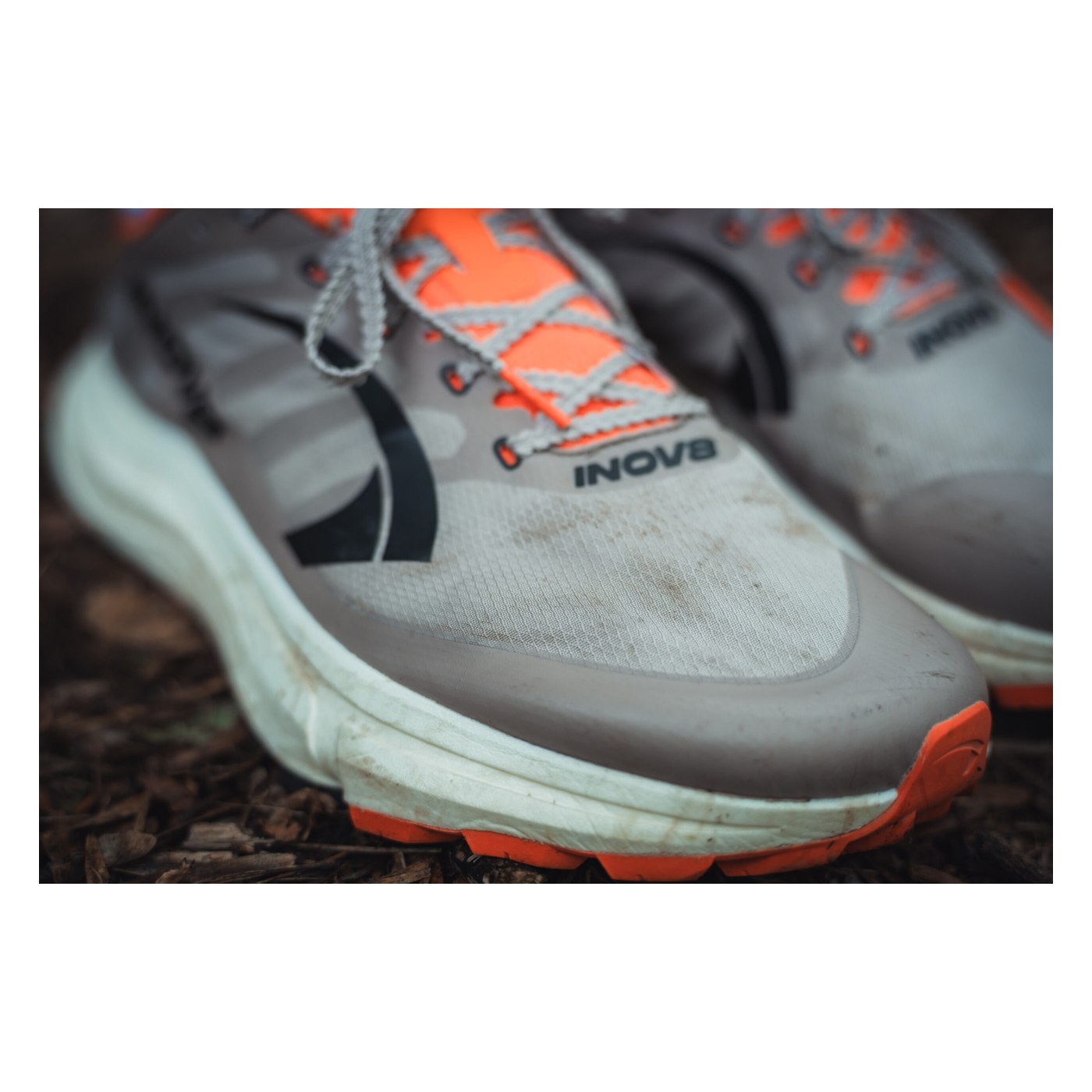
On pure grip, the TrailFly Pro delivers: the 4 mm Graphene Grip chevron lugs bite effectively uphill and downhill, and the graphene-enhanced compound is confirmed by independent tests on dry ground and in moderately wet conditions. Durability is the real question. The foam itself settles after 30 to 40 km of use and then stays put, typical break-in behaviour. The weak point is the outsole: its partial coverage in 4 zones, separated by rubber-free Metaflex grooves, produced a documented lug failure after around 40 km on a technical run.
With appropriate use, on runnable trails and non-abrasive forest paths, a lifespan of 400 to 500 km before a noticeable loss of grip is a reasonable estimate based on the observed behaviour. On rocky, abrasive terrain, the risk of premature wear brings that range closer to 150 to 250 km. At €170, that works out to a cost per kilometre of between €0.34 on suitable terrain and more than €1 on abrasive terrain, in the worst case. By comparison, the NNormal Kjerag 2, at €190, relies on Vibram Megagrip rubber known for its toughness and fuller outsole coverage, which should mean more kilometres and therefore a more stable cost per kilometre on tough terrain despite a higher purchase price. So the choice depends directly on the terrain you run most, more than on the sticker price.
Our field verdict: who it is for, and how to fit it into your training
The TrailFly Pro targets a specific profile: an experienced runner with wide or high-volume feet who wants a very light shoe with plenty of ground feel for medium to long runs on runnable to moderately technical trails. Your foot must already know how to stabilise itself, without help from a built-in structure. It makes sense as a rotation shoe to work on proprioception and foot strength during easy runs or less technical outings, alongside a more structured model for days on committing terrain.
For a trail build with gradually increasing volume, the TrailFly Pro can slot into your easy runs and medium-length outings on runnable profiles, while keeping it away from the most technical sessions in your plan.
To structure your long runs and easy runs without overloading feet that this lightness already works hard, a suitable training plan limits the injury risk that comes with too much volume. Discover the RunMorph trail training plan and build your trail progression on a volume that protects your feet.
The RunMorph Coach's verdict
The TrailFly Pro's technical bet largely pays off: a new-generation supercritical TPEE foam that adds bounce without Inov-8 losing its ground-feel DNA, at a controlled weight even once you account for the real size, 272 g in EU 45.5, not 228 g. The grip is reliable, and the €170 price stays below its two direct rivals. But two structural flaws weigh heavily: stability that is almost non-existent and requires already solid footing, and outsole durability that remains fragile on abrasive terrain, with a lug failure documented after just 40 km.
The RunMorph overall score comes in at 7.0/10. It is not the raw arithmetic average of the 7 criteria on the scorecard: it gives extra weight to cushioning and grip, which deliver on the product's promise, without erasing the real weaknesses in stability and durability that limit it to a specific runner profile. It is a very good niche product, not a do-it-all trail shoe for everyone.
Key takeaways for your training
The real weight: count on 272 g in EU 45.5, not the 228 g listed for EU 42.5, before judging the advertised lightness.
The real price: budget €170, not the €150 still quoted by some comparison sites.
Stability: keep this pair for already solid footing, it offers no built-in support.
Durability: a lug coming unstuck was reported after just 40 km on technical terrain, so keep an eye on it on abrasive ground.
Fit: one width only, very roomy in the forefoot, try it on before buying if you have slim feet.
Ideal terrain: runnable to moderately technical trails, over distances from 10 km to 50-60 km.
FAQ
Is the Inov-8 TrailFly Pro suitable for beginners?
Not recommended as a first pair. With zero support structure and a completely soft heel counter, it needs stabilising muscles that are already well trained. A runner new to trail will progress more comfortably with a more built-up model before considering these minimalist 272 g.
How many kilometres does the TrailFly Pro last?
Around 400 to 500 km on suitable runnable terrain, but a lug coming unstuck was reported after just 40 km on a run that included a technical section, which brings the estimate down to 150-250 km on rocky, abrasive terrain.
Does the TrailFly Pro run large or small?
It runs large. Several independent testers recommend going down half a size to a full size, with one tester who usually wears EU 46.5 opting for EU 45.5.
Is the €170 price justified against the competition?
Yes on weight for the money: the TrailFly Pro costs €20 less than the NNormal Kjerag 2 (€190) and €50 less than the Salomon S/Lab Pulsar 4 (€220). The maths gets worse on abrasive terrain, though, where the cost per kilometre climbs fast because of the outsole's limited durability.
Does the TrailFly Pro replace the TrailFly Speed V2?
No. The Speed V2 has a Meta-Shank protection plate that the Pro lacks, a 4 mm drop versus 6 mm, and targets shorter runs up to 30 km on hard ground, while the Pro targets longer distances with 13 mm more heel stack.