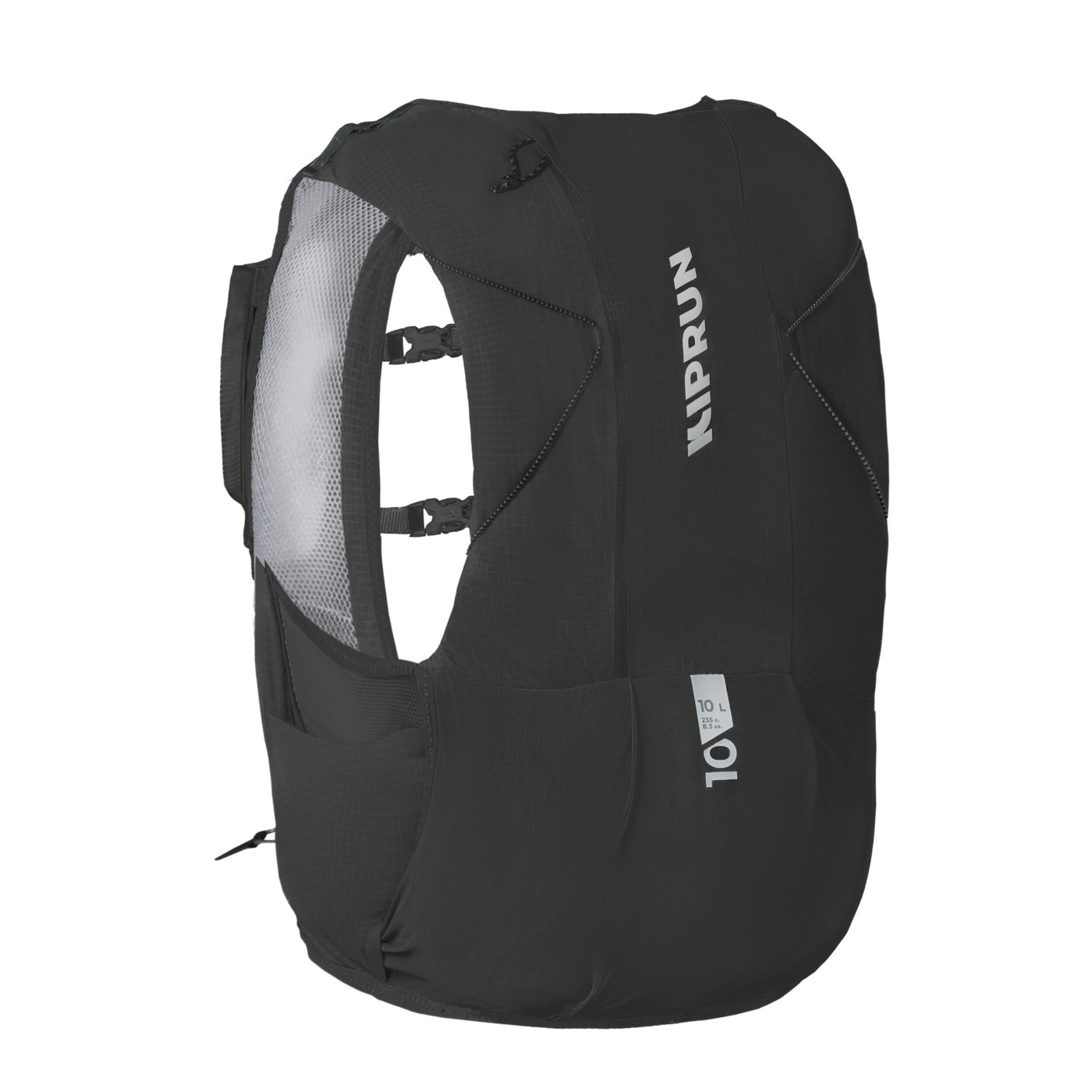
The Kiprun Bag 900 10L weighs 240 g, packs 11 pockets and a front pole holder, and ships with a 1 L bladder for €80. On paper, Decathlon ticks every box of the modern ultra-trail vest at a price no premium brand can touch. Here's what this pack, built for 40 to 120 km outings, is really worth, and where it starts to show its limits.
Kiprun Bag 900 10L Review: 240 g, 11 Pockets, 1 L Bladder, €80
8/10
Kiprun Bag 900 10L: the 40-120 km vest that wants to bring ultra to everyone
Kiprun, Decathlon's running brand, rebuilt its entire trail pack lineup around a simple idea: copy what works for the specialists, but at an accessible price. The Bag 900 10L is the cornerstone of that strategy. Sold for €80 with a bladder, it plays in the same segment as the Salomon Adv Skin and the Compressport UltRun, both of which climb well above €150. The real question of this review: does the Kiprun truly hold up, or do you need to pay extra for better stability, finish or lifespan?
RunMorph tip: in the 40-120 km range, a pack's stability matters more than its weight. A 10 L vest that bounces with every stride wears out your shoulders and rubs your skin raw after 30 km. Before you buy, load the pack with 1.5 L of water and 600 g of gear, then run 20 minutes of technical downhill. If you feel the pack slapping your back, change size or model. To compare how they move, read our reviews of the Salomon Adv Skin 12 and the Compressport UltRun S Pack Evo 10.
© Kiprun, official photo used for editorial purposes
Technical specs
| Brand | Kiprun (Decathlon) |
| Model | Bag 900 10L |
| Volume | 10 L |
| Empty weight (M/L) | 240 g |
| Available sizes | XS/S, M/L, XL (unisex) |
| Front pockets | 5 (including 2 sleeves for 500 ml flasks and 1 waterproof zippered phone pocket) |
| Side pockets | 2 |
| Back pockets | 4 |
| Bladder compatibility | Up to 2 L (1 L bladder included, with tube and magnetic clip) |
| Flasks included | No (sleeves for 2 x 500 ml) |
| Fabric | Ventilated mesh back, elastane stretch panels, lightweight ripstop |
| Side compression | Elastic side straps |
| Pole holder | 2 elastic front straps for vertically carried 3-section poles |
| Sternum straps | 3 height-adjustable straps |
| Reflective details | On the back |
| UTMB mandatory gear compatible | Yes (2 L of hydration possible) |
| Color tested | Smoked black |
| Other colors | Beige, green |
| Official release | Summer 2024, lineup carried over for the 2025-2026 season |
| Official price | €80 (with 1 L bladder) |
Who is the Kiprun Bag 900 10L for?
The runner discovering ultra who wants to spend wisely
If you're training for your first 50 km or your first 80 km, the Bag 900 10L ticks every box without asking you to drop €170. You get the bladder, the two flask sleeves, the pole holder, the waterproof phone pocket, and enough room for your rain jacket, headlamp, bars and the mandatory gel. It's a pack that will carry you through three trail seasons without a second thought about gear.
The regular trail runner who wants a dedicated pack for long races
In the 40 to 120 km range, 10 L is the most versatile volume. Too small for a self-supported 24 h ultra, too big for a 2 h run, it hits the sweet spot of marked races with aid stations: think ÉcoTrail Paris, Marathon du Mont-Blanc, Saintélyon or Templiers. If you race this format regularly, the Bag 900 works as a second pack reserved for race day, without stepping on the toes of the 5 L pack you keep for training.
The runner who prefers a back bladder to front flasks
This is one of the real differences from the new skyrace school (NNormal Race Vest, Compressport UltRun), which goes all in on front flasks and drops the back bladder. The Bag 900 sticks with the original Salomon Adv Skin philosophy: a 1 L bladder on the back plus front flasks. If you refuse to stop and refill a flask every 45 minutes, this setup remains the most practical on runs of 5 h and more.
© Kiprun, official photo used for editorial purposes
Comfort, bounce and secure fit
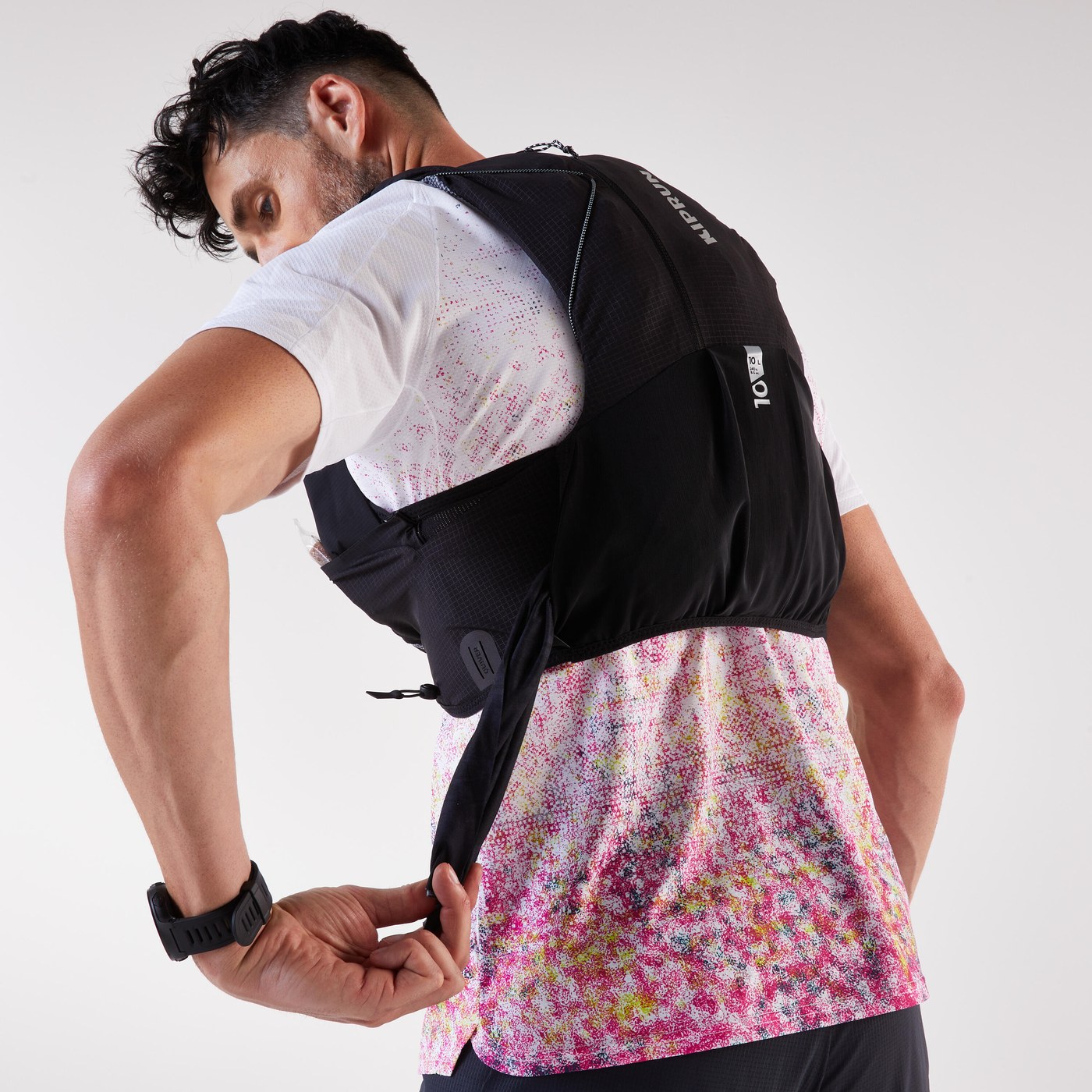
This is where the Kiprun team's bet paid off most. The pack uses a very wraparound "vest" cut, designed to hug your torso rather than strap onto it. The side panels stretch, the fabric rides high on the ribs, and the ventilated mesh covers the entire back. The result: at 1.5 kg loaded (1 L bladder full, headlamp, jacket, bars), the pack stays glued to your body on technical descents, without the pendulum sway that drove runners away from earlier generations of Decathlon packs.
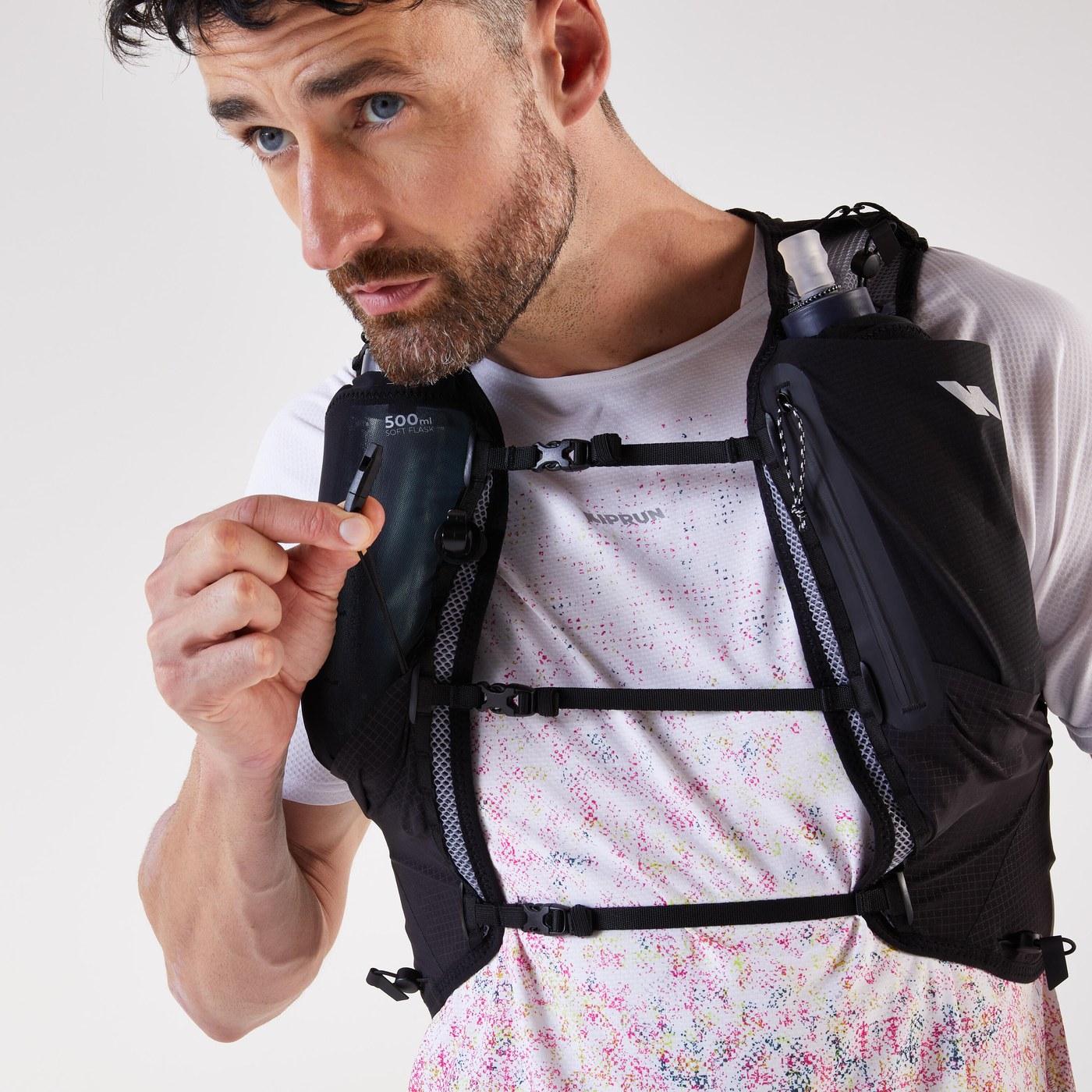
The 3 height-adjustable sternum straps are the second strength. On premium vests, straps often slide down as soon as you start sweating. Here, Kiprun's clip system is set once and stays put for the whole race. The catch is for runners with less common body types: the M/L size covers 165 to 185 cm, and above 90 kg some runners report a slight gap in the lower back. The XL size exists for that reason, but it's rarely in stock in physical stores.
Over 4 h of running with 800 m of elevation gain, the pack causes no chafing in the armpits, the critical spot on 10 L vests. The ventilated mesh lets air flow and keeps your shirt from getting soaked between the shoulder blades. This is probably where Kiprun has improved the most over the previous generation (the Evadict line).
Pockets and accessibility
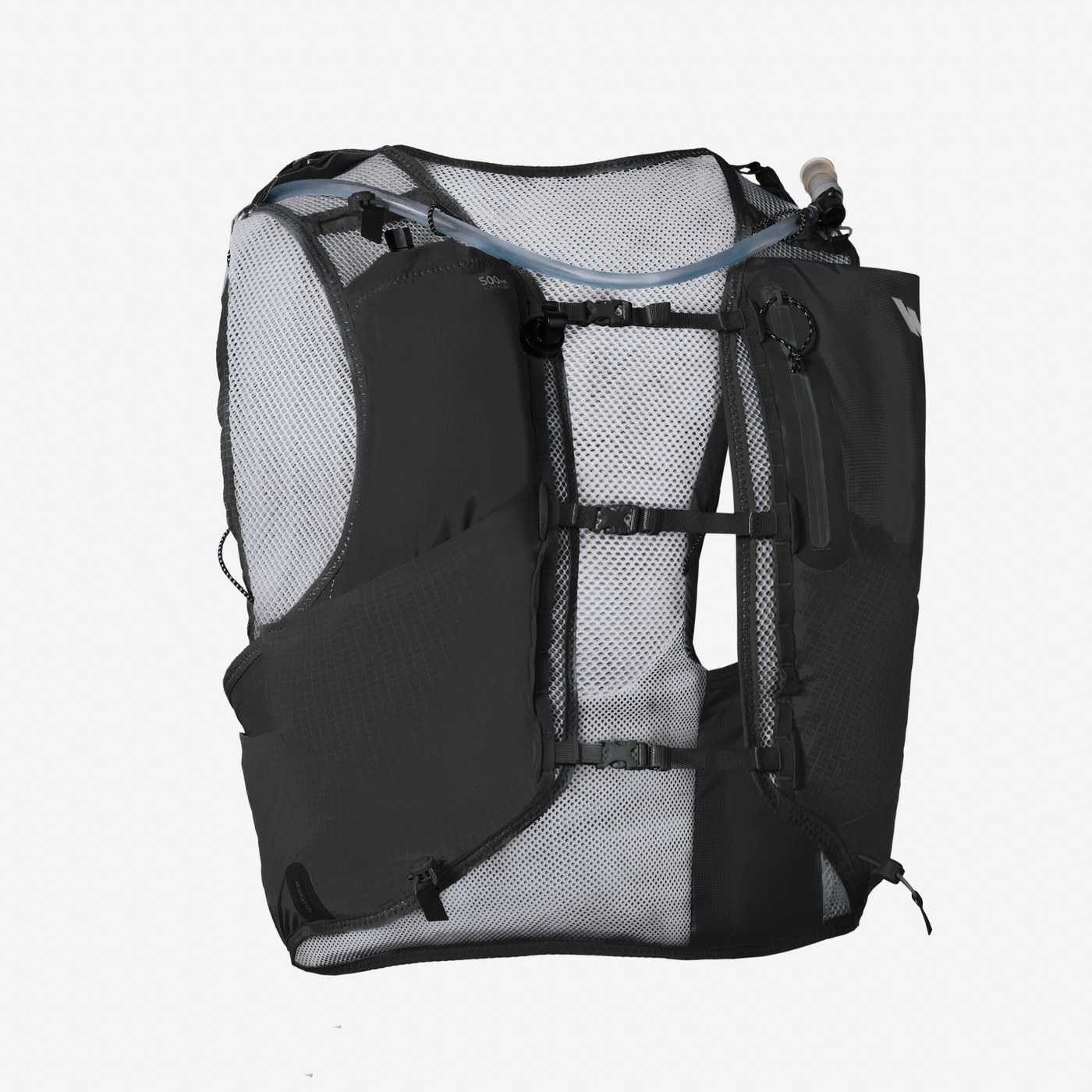
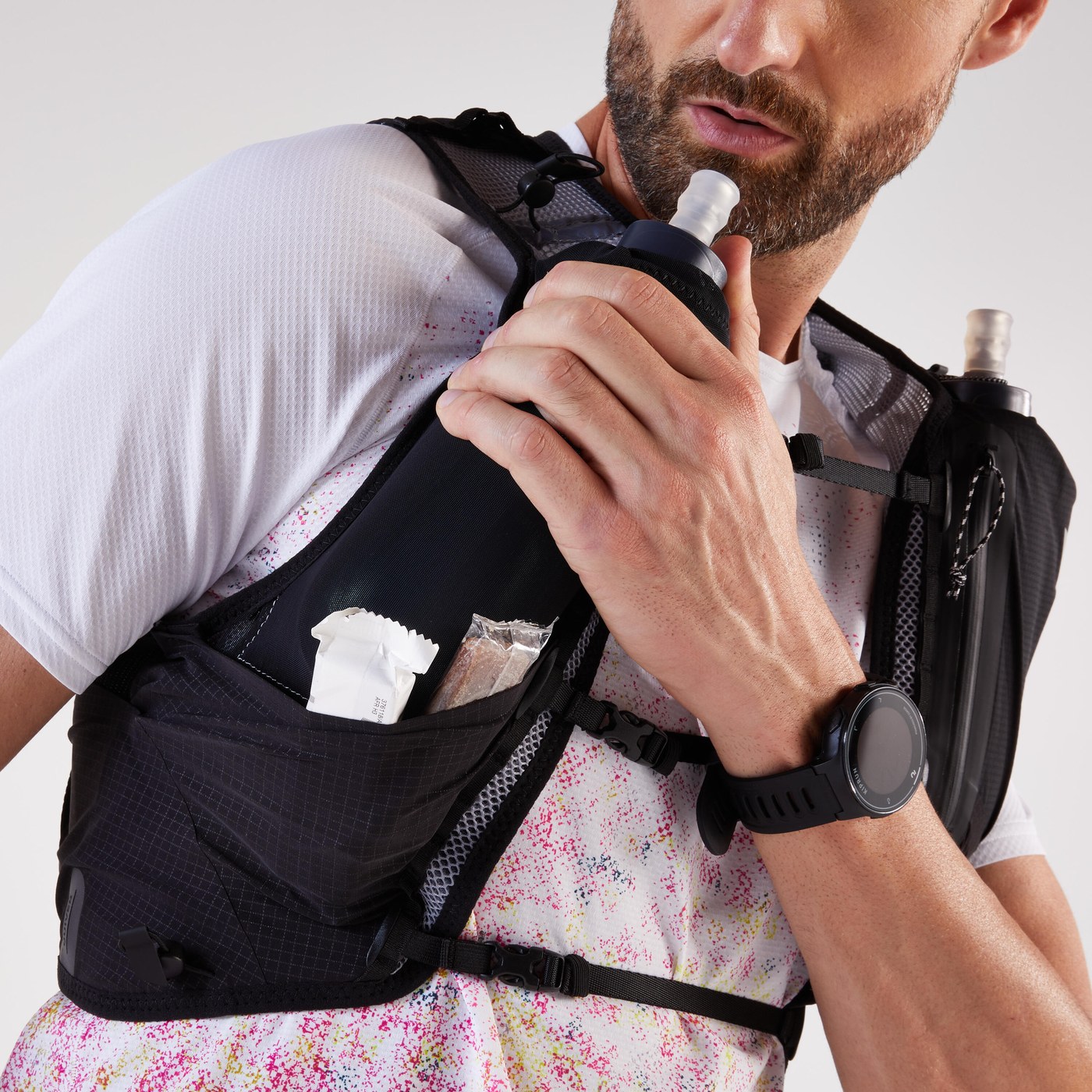
The Bag 900's 11 pockets follow a very clear logic. Up front, two flask sleeves sit on the left, over the heart, reachable one-handed thanks to a mesh opening with no drawcord. Above them, a deep waterproof zippered phone pocket swallows an iPhone 16 Pro Max with no trouble. Below the flask sleeves, two kangaroo mesh pockets hold bars, gels and nutrition sachets.
The two side pockets take collapsed poles and small items (tissues, salt, empty wrappers). At the back, four compartments: the main one for mandatory gear and the bladder, an external stretch panel for your rain jacket that you can reach without taking the pack off, and two mini zippered pockets for keys and ID.
Real-world accessibility is decent but falls short of the excellence of the Salomon Adv Skin 12. The mesh pockets lack a bit of stretch, so you have to pull harder than on a Salomon or a Compressport. At an aid station when you're racing the clock, that detail can cost you 10 seconds. On an untimed ultra, the gap becomes trivial.
Hydration
The included 1 L bladder is the Bag 900's main selling point. It slides into a dedicated back compartment, the tube runs up over the right shoulder, and a magnet holds the bite valve at chest height. The system is proven, identical to the 2020-generation Camelbak and Hydrapak designs. Flow stays consistent, and it stayed leak-free over 6 months of regular use. The only complaint: the screw cap is slower to fill than a Hydrapak-style slide-seal closure, but easier to clean.
Flasks aren't included. That's the model's main cost-cutting compromise: 2 Decathlon 500 ml flasks cost €8 each, so €16 on top of the sticker price. You can go for compatible third-party flasks (Hydrapak SoftFlask, Salomon SoftFlask) that slot into the sleeves without issue. The total stays under €100, which keeps the price argument intact against direct rivals.
For runs beyond 5 h, the total capacity of 2 L (1 L on the back + 2 x 500 ml up front) is enough for a marked race. For a self-supported ultra or the Diagonale des Fous, you'll need to move up in volume (Salomon Adv Skin 12, Black Diamond Distance 15, Raidlight Revolutiv 24L).
Head-to-head with the competition
Against the Salomon Adv Skin 12 (€165, 244 g), the Kiprun loses on fit precision and pocket accessibility, but wins on price (an €85 gap) and comes with a bladder where Salomon sells you two SoftFlasks. Over a marked 100 km race like the SaintéLyon, the Salomon stays more precise in motion, but the Kiprun never falls clearly behind and delivers 90% of the feel for half the price.
Against the Compressport UltRun S Pack Evo 10 (€170, 117 g), the matchup is more lopsided. The Compressport follows a different philosophy: ultralight, elastic zigzag closure, no back bladder. For runners who want a pure racing vest for the CCC or MIUT, the Compressport stays ahead. For 8 to 15 h outings with full mandatory gear, the Kiprun takes back the lead thanks to its more wraparound cut and better-organized volume.
Finally, against the Hoka Trail Run Vest 10L (€220, 227 g), the price argument becomes crushing. The Hoka brings a superior finish and polished ergonomics, but with a €140 gap, the Kiprun delivers some of the best value for money in the 2026 10 L segment.
© Kiprun, official photo used for editorial purposes
How to fit it into your RunMorph training plan
The Bag 900 10L covers two complementary uses over a training season. On Sunday long runs beyond 2:30, it's the ideal pack to carry your full nutrition, windbreaker and the bladder that saves you a stop at the fountain. You run longer without the mental load of managing hydration. For races you prepare with RunMorph (marked 50 km, 80 km, 100 km), it's your official race pack: test it on long runs from 6 weeks before race day to dial in the size and where everything goes.
To make those long runs count, load the pack like on race day (1 kg minimum), run hilly sessions that work your shoulders, and practice your nutrition strategy so you can drink and eat without slowing down. You'll find all RunMorph trail training plans tailored to your goal at runmorph.com/en/training-plans.
RunMorph verdict
The Kiprun Bag 900 10L keeps a simple promise: 90% of the feel of a Salomon Adv Skin for 50% of the price. The wraparound vest cut, stability on technical descents, included bladder and 11-pocket layout make it a fully credible tool for 40 to 120 km races. It's still a notch behind on fit precision and mesh pocket quality, but neither flaw becomes a deal-breaker in real use.
At €80 with the bladder included, it's one of the smartest buys on the 2026 market for runners who want a versatile trail pack without breaking the bank. Skyrace vest purists will keep hunting for 100 g less elsewhere. Serious ultra-trail runners will prefer a Salomon or Black Diamond fit. For everyone else, the Bag 900 does the job and then some.
RunMorph score: 8/10.
Key takeaways for your training
- 40-120 km versatility: 10 L of volume and 11 pockets built for marked races with full mandatory gear.
- Proven stability: the wraparound vest cut limits bounce even when loaded to 1.5 kg on technical descents.
- Bladder included: 1 L back bladder supplied, 2 L total capacity with two 500 ml flasks (sold separately).
- Unbeatable value for money: €80 versus €165 for Salomon and €170 for Compressport, with equivalent features.
- Long run required: test the loaded pack in real conditions from 6 weeks before your goal race to confirm size and nutrition strategy.
© Kiprun, official photo used for editorial purposes