Decathlon has been selling running shoes for under €70 for years, and serious runners still have the same reflex: walk straight past them to a €150 or €180 pair. The Kiprun Cushion 500 is built to break that reflex. At €69.99, it packs a 37 mm heel stack and a level of stability that several independent testers compare to shoes costing three times as much. At RunMorph, we read every available field test to see whether the promise holds up, and exactly where it stops.
Kiprun Cushion 500 review: €0.07 per kilometre, the unfiltered test
8/10
The essentials in 3 sentences
The Kiprun Cushion 500 is an entry-level daily trainer at €69.99, with an EVA-based MFOAM midsole, an 8 mm drop and a measured weight of 264 g in a size 42. Independent tests agree on stability and comfort that easily match €140-150 models, with two recurring caveats: it runs small, and its responsiveness tops out as soon as you hit marathon pace. RunMorph verdict: the best budget option for building mileage, not a shoe for pushing your paces.
8.0
/ 10 · RunMorph overall score
Who is it for?Beginners, regular runners logging 10 to 40 km a week and tight budgets that want a reliable pair for everyday runs and long runs.
Who should skip it?Runners looking for pop for intervals or race pace, and wide feet that need extra volume.
Kiprun Cushion 500: Decathlon's attempt to make the price tag lie
© Kiprun, official photo used for editorial purposes
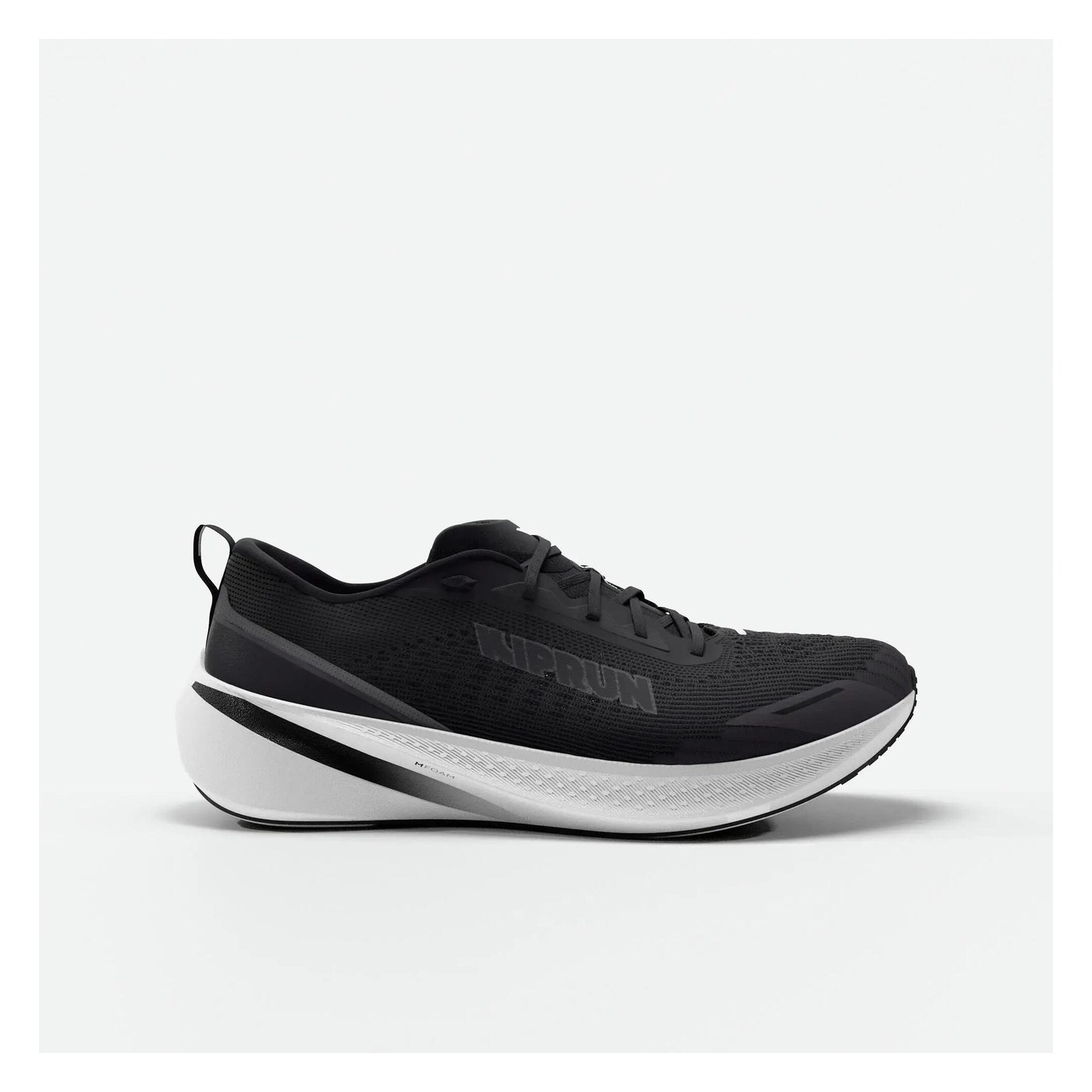
The Kiprun lineup is built on two levels: on one side, the Kipride Max and the Kipstorm Elite, €150-220 models aimed squarely at the premium benchmarks; on the other, a base of entry-level shoes the specialist press barely covers. The Cushion 500 sits in that base and reworks it: instead of sacrificing cushioning to hit the price, Decathlon kept a 37 mm heel stack, a figure close to €140-150 daily trainers like the Skechers GoRun Ride 12 (36 mm) or the Brooks Ghost 18 (also 36 mm). The price gap, €70 less than the Ghost 18, doesn't show up on the spec sheet. It shows up in the materials, and in a performance ceiling that field tests let us put numbers on further down.
RunMorph's advice: the Cushion 500 is a solid base for building mileage on the cheap, but it doesn't replace a dedicated pair once the session targets half marathon pace or short intervals. For those, the Skechers GoRun Ride 12 or the Kiprun Kipstorm Tempo are the better fit.
Kiprun Cushion 500 specs
| Feature | Kiprun Cushion 500 |
|---|---|
| Brand | Kiprun (Decathlon) |
| Type | Road, affordable daily trainer |
| Measured weight (men's, size 42) | 264 g |
| Measured weight (women's, size 39) | 214 g |
| Drop | 8 mm |
| Heel / forefoot stack | 37 mm / 29 mm |
| Foam | MFOAM (compressed EVA) |
| Outsole | 70 % EVA, 30 % synthetic rubber |
| Carbon plate | No |
| Claimed durability | 1000 km |
| Sizes | EU 36 to 46 depending on gender |
| Official price | €69.99 |
Decathlon hasn't published any independent lab measurements for this model, and no international measurement database covers Kiprun shoes, so a claimed vs measured table isn't possible here. The figures above come from the three French field tests we read in full for this article, and all three land on the same weight and the same drop. That alone is useful: there's no gap between what Decathlon claims and what testers weighed themselves.
MFOAM technology: what does it change underfoot?
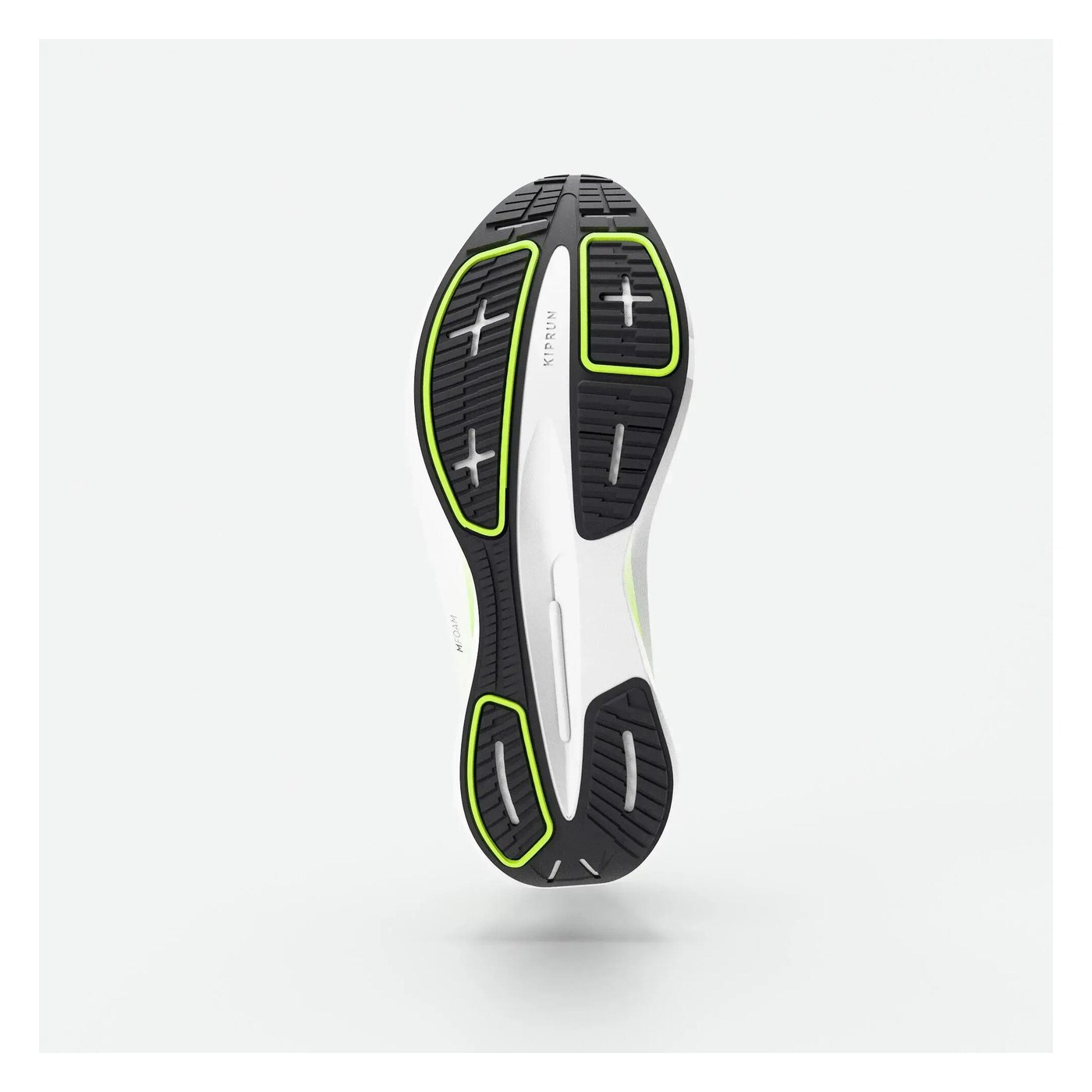
MFOAM is a compressed EVA foam, an older technology than the PEBA or nitrogen-infused foams found in premium daily trainers. It returns less energy than a supercritical foam, but it holds up better over time and costs less to make, which partly explains the price gap with the Kipride Max (€149.99) and its three-compound Softech+ foam. You feel the trade-off in the first few kilometres: the cushioning absorbs impact well at landing but doesn't drive your stride forward, and all three tests we read describe it in the same terms, cushioning that supports you without propelling you.
Kiprun Cushion 500 fit
© Kiprun, official photo used for editorial purposes
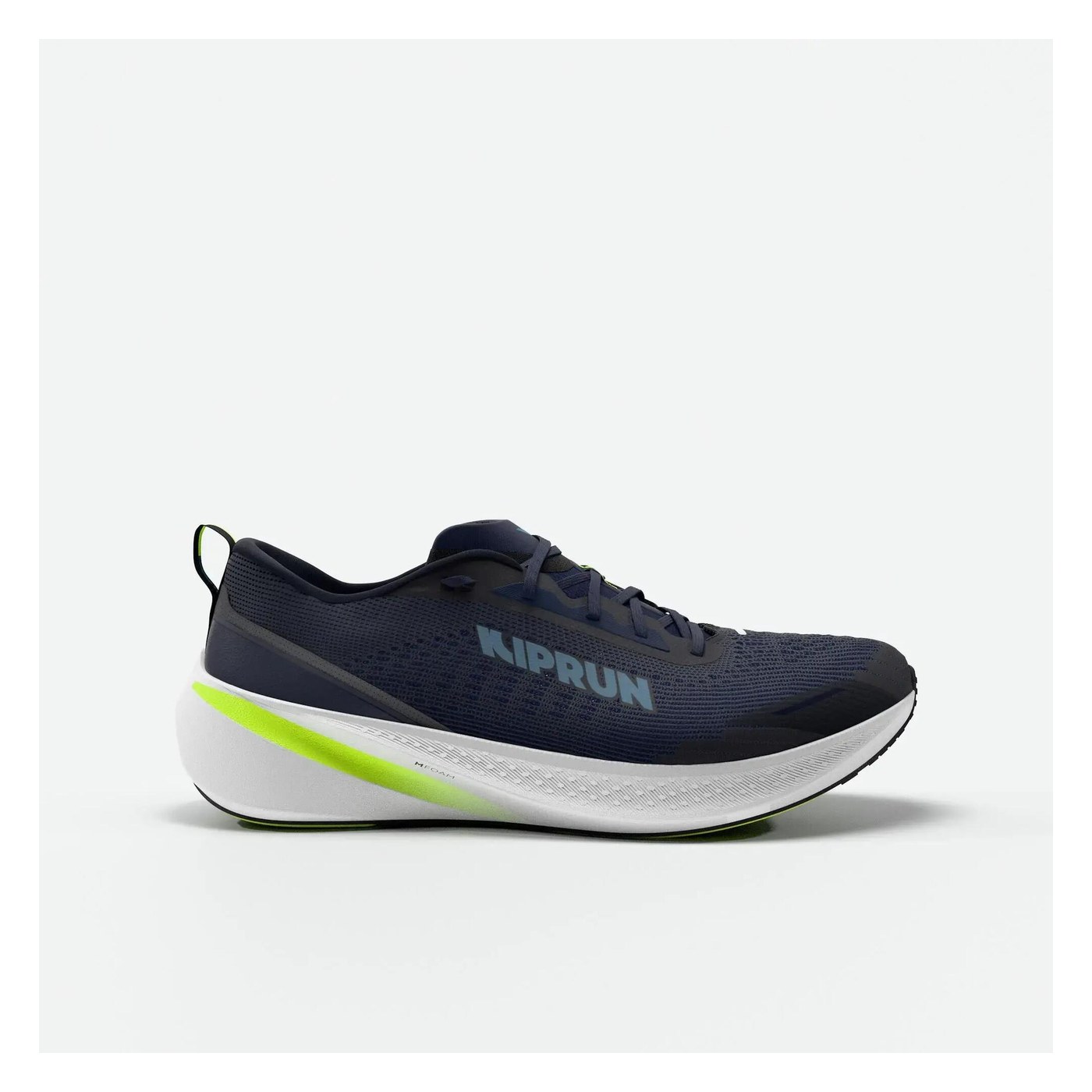
The breathable mesh upper is lined with foam padding at the heel and tongue, a choice that improves lockdown but adds material around the ankle. There's no independent measurement of toe box height for this model: Decathlon doesn't publish the figure and none of the sources we read measured it with calipers, a gap worth flagging rather than guessing at. The best-documented fit point, on the other hand, is unanimous across sources: the Cushion 500 runs small. Two independent testers explicitly recommend going half a size down from your usual size, a difference big enough to genuinely matter when you're buying online without trying them on.
The field test: what runners who actually wore it say
Three independent French tests were read in full for this article. Over 200 kilometres of real training, stability despite the thick midsole and immediate comfort get praise without reservation, with a build judged robust enough to last the 1000 kilometres Decathlon claims. A second test, run over a shorter 5-kilometre route in winter conditions, confirms pleasant cushioning on easy runs and reassuring stability on asphalt and urban paths, while noting a lack of responsiveness as soon as the pace picks up. A third review reaches the same conclusion on exceptional value for the price bracket, with the same caveat on responsiveness at faster paces. None of the three sources reports premature wear or a manufacturing defect over the distances tested.
Opinions do split on one point: breathability. One tester finds it fine in cool urban conditions, another finds it limited as soon as the heat rises. At RunMorph, we treat this as a genuine design flaw rather than a mere difference of opinion: an upper lined with foam at the heel structurally breathes less than a single-layer mesh, whatever the test temperature.
At which pace it works, at which pace it drops off
© Kiprun, official photo used for editorial purposes
Easy runs and base endurance (6'00 to 5'30/km): this is where the Cushion 500 is most at home, the compressed EVA soaks up impact with no perceived fatigue over time.
Long run: confirmed over 200 cumulative km with no noticeable loss of cushioning or stability, a solid result for a single-density EVA foam.
Marathon pace (around 5'00 to 4'30/km): the shoe still keeps up, but the lack of rebound starts to show, as the foam gives back the energy it receives without adding any.
Threshold and half marathon pace (around 4'15 to 3'45/km): this is where the lack of responsiveness becomes a real limit, because there's no plate or propulsive insert, unlike the Skechers GoRun Ride 12, which packs a carbon plate at a fairly similar price.
Short intervals (under 3'45/km): out of this shoe's reach, plateless MFOAM doesn't return enough energy for this kind of work, a logical result given its makeup rather than a manufacturing flaw.
Major flaw: it runs small
Of the three tests we read, two explicitly mention a fit that's shorter than your usual size, one recommending half a size down for proper lockdown. If you're buying online without trying them on, that's not a detail: a pair ordered in your usual size is likely to leave too much room in the forefoot, which undermines the very stability the shoe is built around. RunMorph's recommendation: order half a size down, or go to a Decathlon store and try them before you buy.
Major flaw: responsiveness tops out at marathon pace
The cause is in the materials, not a one-off: MFOAM is a single-density compressed EVA, with no nylon or carbon plate and no PEBA insert for rebound. By comparison, the Skechers GoRun Ride 12 packs an H-Plate carbon plate in the forefoot for €140, €70 more than the Cushion 500 but with a real gain in responsiveness beyond marathon pace. What it means in practice if you're chasing a time goal: the Cushion 500 can be your training pair for volume, but you need to pair it with a second, livelier shoe as soon as quality sessions (threshold, intervals, goal pace runs) enter your plan.
Kiprun Cushion 500 vs Kiprun Kipride Max: which Kiprun should you pick?
| Criterion | Cushion 500 | Kipride Max |
|---|---|---|
| Price | €69.99 | €149.99 |
| Weight (men's) | 264 g | 271 g |
| Drop | 8 mm | 6 mm |
| Heel stack | 37 mm | 42 mm |
| Foam | MFOAM (EVA) | Softech+ (EVA, PEBA, OBC) |
| Recommended use | Everyday runs, long runs, tight budget | Recovery, max cushioning, premium comfort |
The simple reading: if you're a beginner or run less than 40 km a week on a limited budget, you don't need the extra €80 for the Kiprun Kipride Max, the Cushion 500 covers the essentials. If you run more than 60 km a week or want maximum comfort for recovery runs, though, the extra stack and the more premium Softech+ foam of the Kipride Max are worth it.
Kiprun Cushion 500 vs Skechers GoRun Ride 12 and Brooks Ghost 18
© Kiprun, official photo used for editorial purposes
| Criterion | Cushion 500 | GoRun Ride 12 | Ghost 18 |
|---|---|---|---|
| Price | €69.99 | €140 | €150 |
| Weight | 264 g | 275 g | 289 g |
| Drop | 8 mm | 6 mm | 10 mm |
| Plate | No | Carbon (H-Plate) | No |
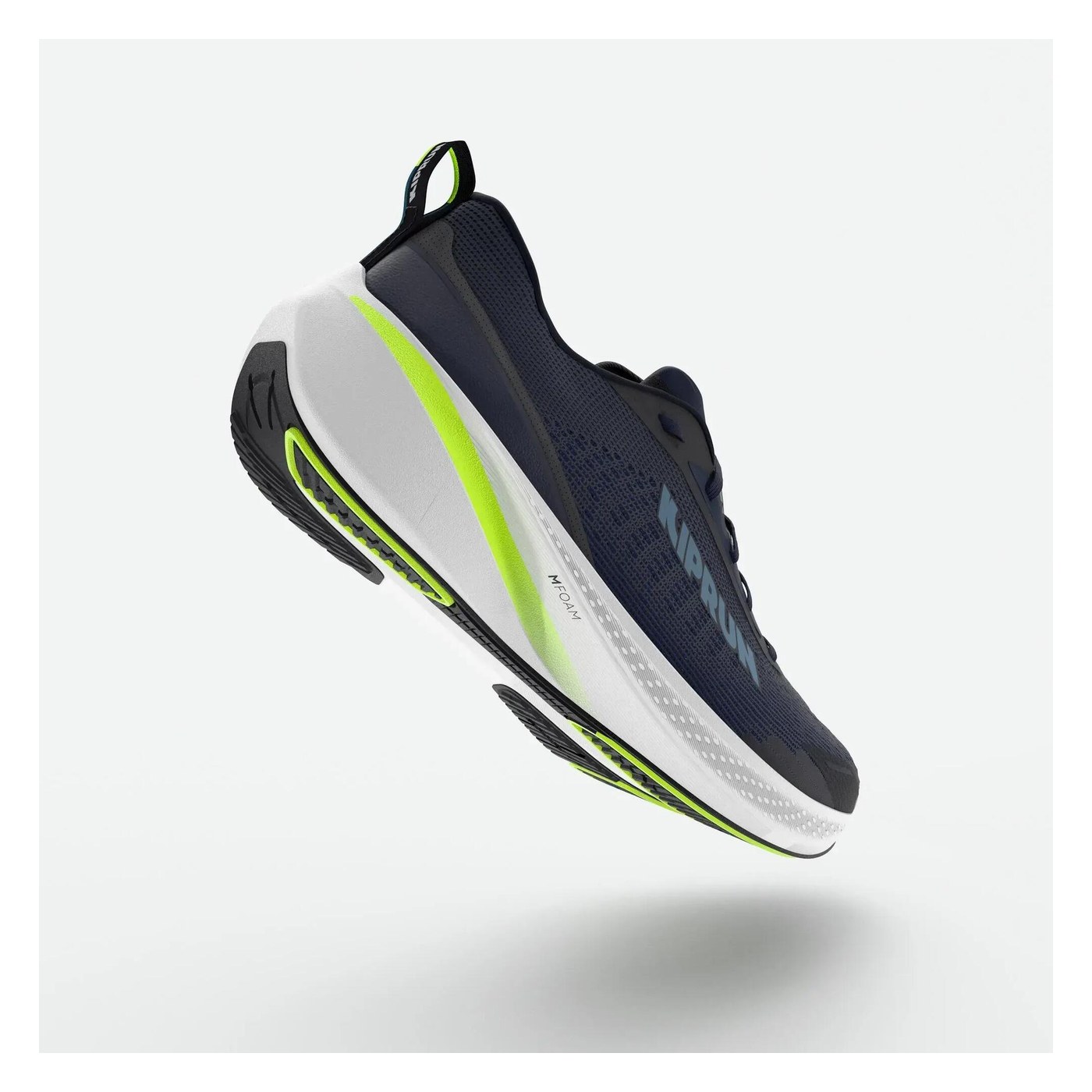
The decision rule is simple: at similar weights, the Cushion 500 costs two to three times less than the Skechers GoRun Ride 12 and the Brooks Ghost 18, at the cost of clearly weaker responsiveness once the pace climbs. So the choice comes down to how you'll use it, not the raw spec sheet: volume and budget go to the Cushion 500, performance and versatility go to the other two.
Pros and cons
Pros€69.99 for a 37 mm stack comparable to €140-150 models. Stability rated higher than the midsole height suggests by all three tests we read. No premature wear reported over 200 km of testing. Cost per kilometre of €0.07, among the lowest in the daily trainer market.
ConsRuns small, half a size down recommended by several testers. Limited responsiveness from marathon pace on, with no plate or propulsive insert. Limited breathability in serious heat because of the foam padding. Unremarkable design, no wide version announced.
Durability and cost per kilometre
Decathlon claims a 1000-kilometre lifespan for the Cushion 500, and the 200 cumulative kilometres in the longest test we read don't contradict it: no loss of cushioning or outsole wear was reported over that distance. Spread the official €69.99 price over those 1000 kilometres and the cost per kilometre drops to €0.07. By comparison, the Brooks Ghost 18 works out to around €0.19 per kilometre over its estimated lifespan, nearly three times more per kilometre run. That calculation, more than the sticker price, is what objectively makes the Cushion 500 a sound training option for high weekly mileage.
Our field verdict: who is it really for?
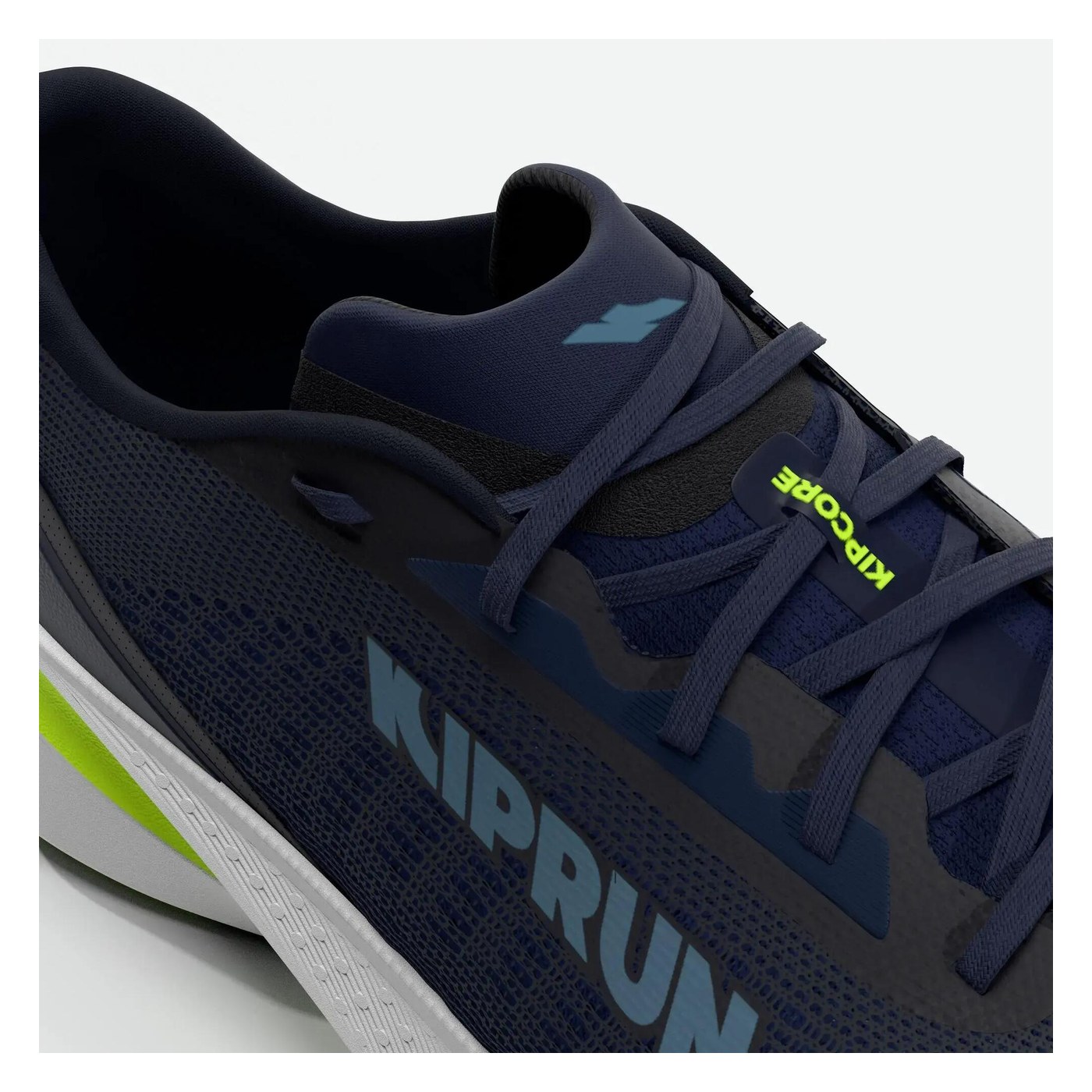
© Kiprun, official photo used for editorial purposes
The Cushion 500 is the pair to recommend to a runner starting a training block who wants to build volume without breaking the bank, or to an experienced runner looking for a cheap second pair for easy runs and long runs, while keeping a livelier shoe for quality sessions. It slots naturally into a RunMorph half marathon training plan or beginner plan focused on piling up easy kilometres, less so into a marathon plan heavy on threshold work or a 10K block that demands snap on every run.
RunMorph Coach verdict
The Kiprun Cushion 500 earns 8.0/10. The score is pulled up by value that's almost unmatched in the daily trainer market (€0.07 per kilometre) and by stability confirmed by every test we read, and pulled down by responsiveness that tops out at marathon pace and by sizing that forces you to order half a size down. At RunMorph, the weighting clearly favours value and stability over responsiveness for this product segment: an entry-level shoe isn't meant to compete with a carbon plate, it has to last and fit the budget, and the Cushion 500 does both without a single weakness flagged by the tests we read.
Key takeaways for your training
- €69.99: the official price, versus €140 to €150 for daily trainers with similar specs.
- €0.07 per kilometre: the real cost based on the claimed 1000 km lifespan, nearly three times cheaper than the Brooks Ghost 18.
- 264 g in size 42: a measured weight in line with €140 models in the segment.
- Half a size down: the correction several independent testers recommend before you order online.
- Marathon pace as the ceiling: beyond that, plan on a second, livelier pair for threshold and intervals.
FAQ
Is the Kiprun Cushion 500 good for beginners?
Yes: with an 8 mm drop and a weight of 264 g, it offers a neutral, stable profile that suits a first running shoe, without the tricky adjustment period of a plated shoe.
How long does the Kiprun Cushion 500 really last?
Decathlon claims 1000 km. The 200 cumulative km in the most thorough test we read show no degradation, which supports that claim without yet confirming it over the full distance.
Should you size down in the Kiprun Cushion 500?
Several testers recommend going half a size down from your usual size to avoid excess volume in the forefoot.
Is the Kiprun Cushion 500 suitable for a marathon?
It handles marathon pace, around 5'00 to 4'30/km, without a problem, but its lack of rebound makes it less relevant if you're chasing a tight time goal over the distance.
How is it different from the Kiprun Kipride Max?
An €80 price gap for 5 mm more heel stack (42 mm vs 37 mm) and a more premium three-compound Softech+ foam: the Kipride Max targets maximalist comfort, the Cushion 500 targets affordable volume.