Moonlight Noctia Max: the complete RunMorph review
7.8/10
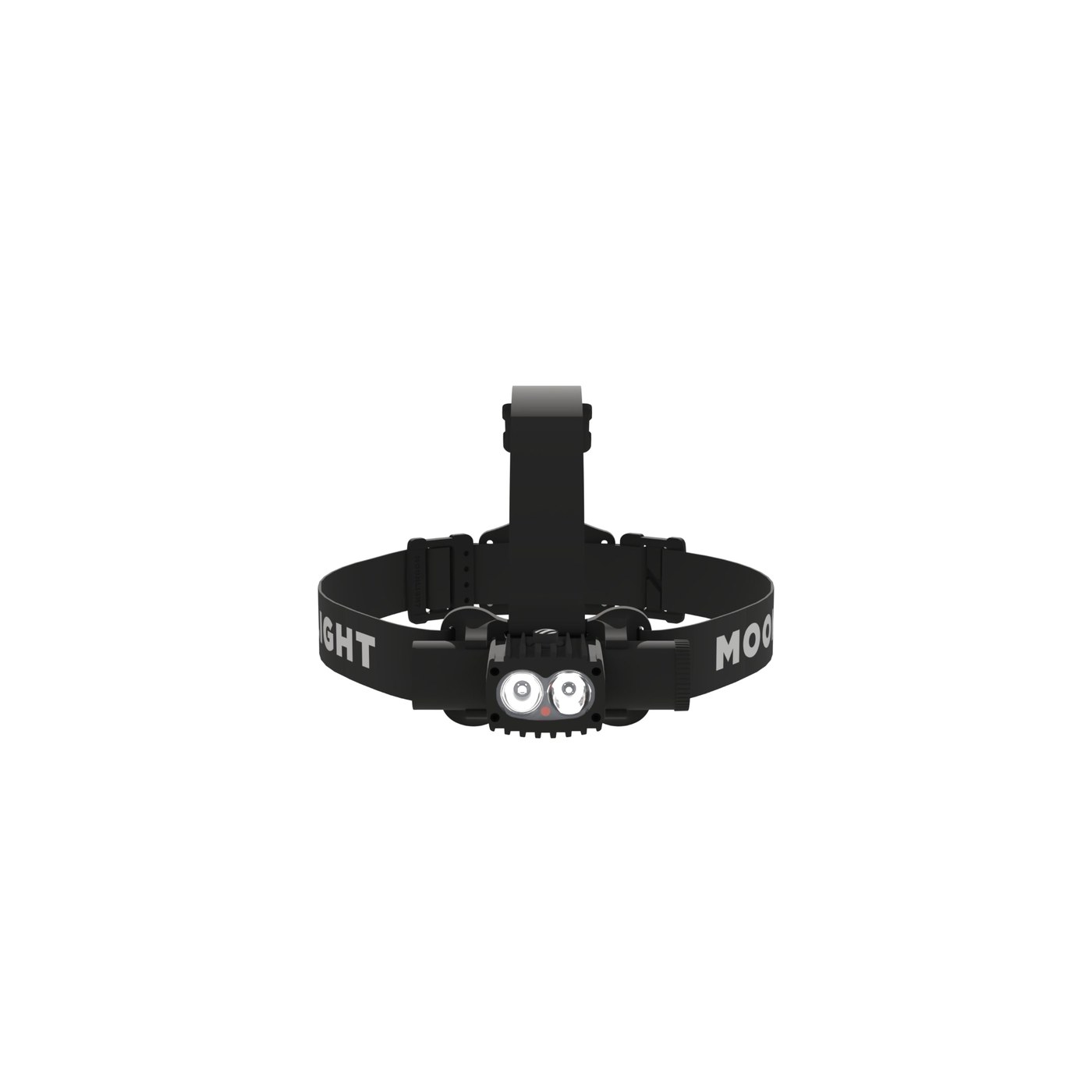
Since 2026, UTMB has required a forward-facing red light to cross the Contamines-Montjoie nature reserve at night. A small Norwegian brand that few people in France have heard of, and that Kilian Jornet uses for his own outings, had already solved the problem before the rule even existed: the Noctia Max builds the front red mode into its single light head, with no clip-on filter and no separate accessory. RunMorph put this newcomer, still hard to find on the French market, under the microscope.
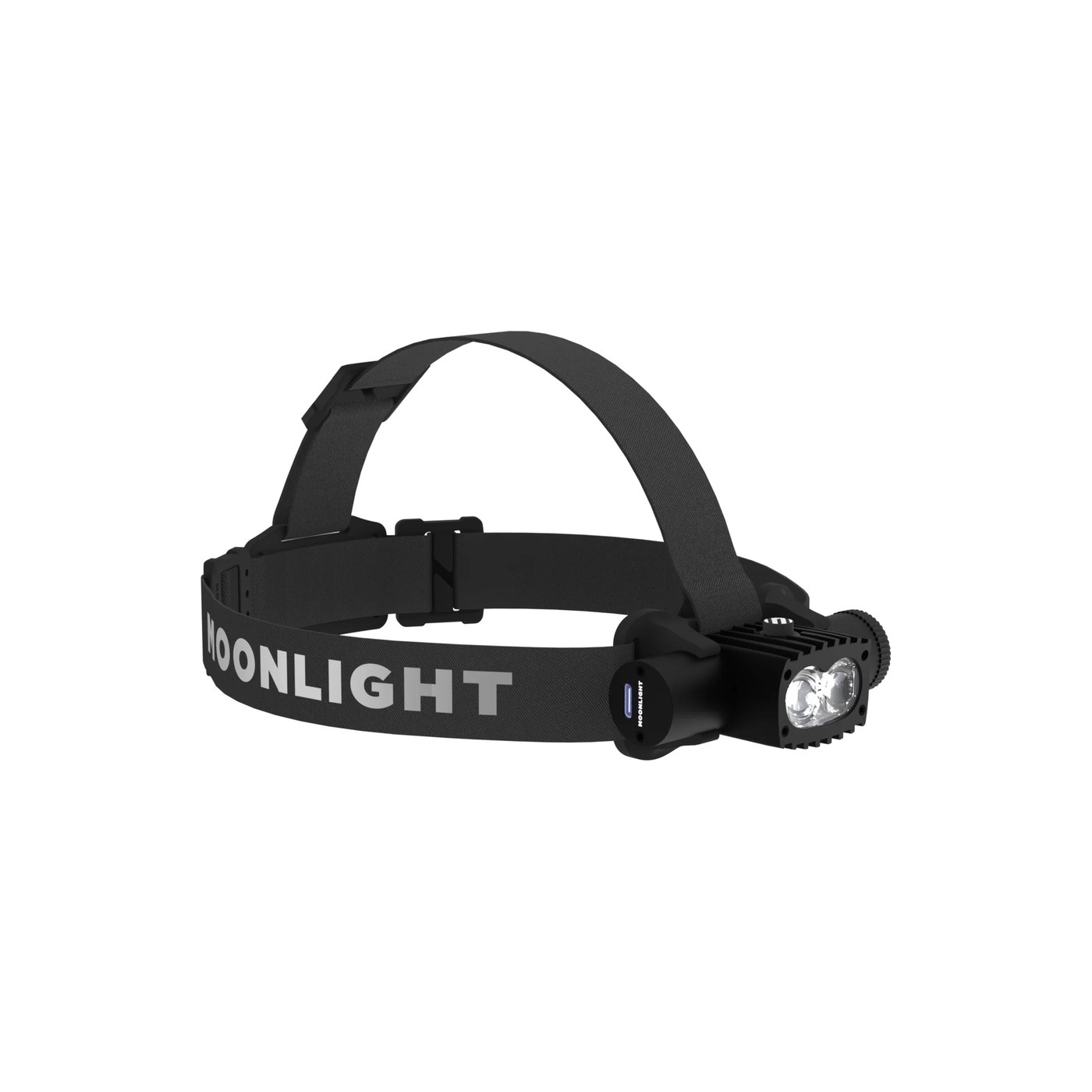
The Noctia Max is a premium headlamp made from recycled aluminium, with a removable Li-ion battery and a front red mode that complies with the UTMB 2026 rules straight out of the box. It targets runners who value reliability, repairability and honest battery life over the race for lumen figures inflated in boost mode. At 129 euros for 500 real, constant lumens, it makes a deliberate niche choice against more powerful and cheaper headlamps already in the RunMorph catalogue.
7.8
/ 10 · RunMorph overall score
Power
6.5 / 10
Battery life
8.5 / 10
Beam
8.5 / 10
Comfort/weight
7.5 / 10
Value
6.5 / 10
Who is it for?Trail runners who string several nights together on an ultra and want a lamp they can keep repairing for years, battery swap included.
Who should skip it?Runners chasing the most lumens for the lowest price for short, technical trail runs.
A Norwegian brand built around a single housing, not a whole range
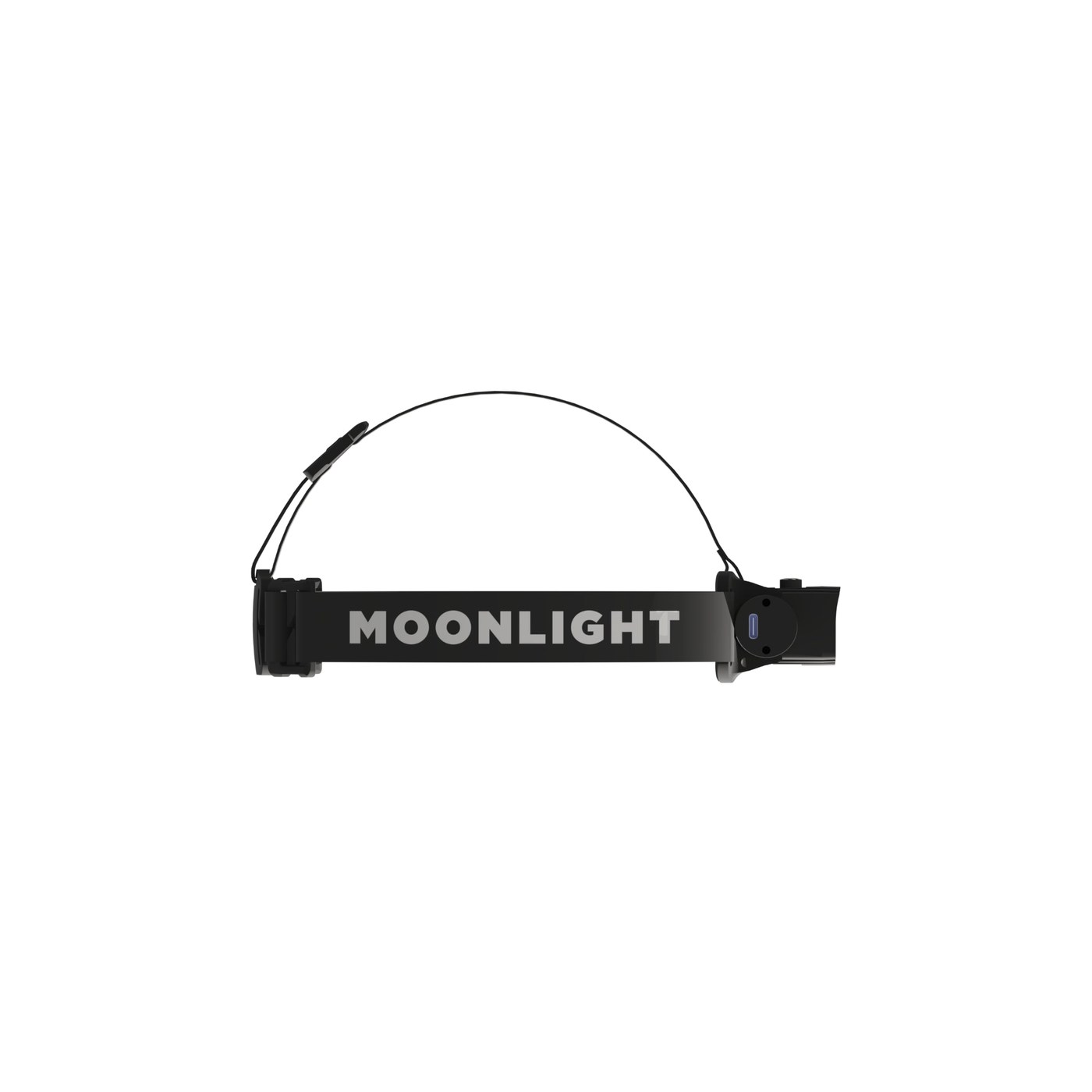
Moonlight is no outdoor giant. Founded in northern Norway by a small team of enthusiasts, the brand sells only a handful of headlamps, all built on the same principle: a repairable housing in recycled aluminium alloy, and electronics that guarantee real, constant lumens from the start to the end of the discharge, rather than a marketing peak that lasts a few seconds. It was this technical choice, more than the size of the catalogue, that convinced Kilian Jornet to use it on his States of Elevation expedition in the Rocky Mountains, then on other long outings. The Noctia Max, on sale since 2025, applies that principle in a compact format: 150 grams, a removable battery and a design that lets it come off the headband and work as a standalone torch.
In the RunMorph catalogue, which already covers more than twenty headlamps, Moonlight fills a complete brand gap. Up against models like the Petzl Nao RL or the Silva Trail Speed 5R, two heavyweights with the battery mounted at the back of the headband, the Noctia Max plays a different card: everything sits in one front housing, with no cable and no rear pack.
Objective technical data
Feature
Moonlight Noctia Max
Power
500 real, constant lumens (6400 K colour temperature)
Beam
Dual lens, wide and diffuse, 15 to 30 degrees of spread
Claimed battery life
2 h 50 min at 500 lm, 5 h 40 min at 250 lm, 11 h 20 min at 125 lm, 56 h 40 min at 25 lm, more than 5.5 days at 10 lm
Red mode
Front-facing, steady and strobe, compliant with the UTMB 2026 rules
Total weight
150 g (light head 57 g, battery 48 g, headband 45 g)
Battery
Removable 18650 Li-ion, 3400 mAh, 12.6 Wh, reversed poles to prevent accidental switch-on
The ultra runner who runs through several nights in a row
With a claimed 11 h 20 min at 125 lumens and up to 130 hours in eco mode, the Noctia Max is built for races that go beyond a single night. The removable battery also means you can carry a spare without switching lamps, a real asset over 170 km like UTMB.
The runner who keeps gear for years
Recycled aluminium housing, a replaceable battery instead of a glued-in one, long-term repairability promised by the brand: the Noctia Max is aimed at runners tired of throwing away a headlamp as soon as its internal battery stops holding a charge, a flaw already noted on other models in the catalogue such as the Petzl Nao RL.
The trail runner who wants to meet the new UTMB rules without an extra accessory
Unlike models such as the Nao RL or the Swift RL, which need an official clip-on filter to meet the 2026 front red light rule, the Noctia Max puts its red mode in the same light head as the white mode, with no extra part to carry or lose mid-race.
How it stacks up against the competition
In the segment of premium headlamps built for ultra distances, the Noctia Max crosses paths with several models RunMorph has already tested. The Petzl Nao RL aims higher on raw power (1500 lumens) but puts its battery at the back of the headband and needs the official red filter to be UTMB compliant. The Silva Trail Speed 5R follows the same rear-battery logic, with an adaptive dual beam that shines on technical trails. At the other end, the Nitecore NU43 and its UTMB-compliant MB version compete on a tight price for comparable power. The Go'Lum Piom+3 R, tested by RunMorph in September, had already opened the topic of the regulation front red mode with 320 dedicated red lumens, far more red power than the Noctia Max, but with a white output quoted in boost mode rather than continuous.
The field test: from the night-time reserve to technical trails
RunMorph's advice: on a race where battery life matters more than raw power, a lamp that lasts 130 hours in eco mode beats a 1500-lumen headlamp that forces you to recharge at every aid station. Compare your race profile with our Black Diamond Distance LT 1100 review before you decide.
The Noctia Max is too new to have built up a stack of full independent tests in France: it has just launched and French-language coverage of this exact model is still thin. RunMorph was nonetheless able to draw on a real field test carried out at the Tahiti Moorea Ultra Trail, on technical, treacherous trails, which highlights the success of the Swiss army knife concept (a headlamp that detaches into an everyday torch) and the safety of the reversed-pole battery system, designed to prevent any accidental switch-on inside a pack. That test also confirms the brand's recent partnership with the high-mountain guides of Samoëns, an extra sign of credibility for a product the French public still barely knows.
An independent test carried out at the Spine Race, a British winter race famous for its extreme conditions, adds another angle: the headlamp held up with no loss of performance in sub-zero temperatures, the controls stayed usable with thick gloves, and the five brightness modes (from eco all the way to full beam) cover a wide range. The same tester points out, though, that cheaper lamps exist and that lighter models are available if weight is your number one criterion. An independent measurement on the smaller sibling in the range (a more compact version with a battery half the size) also found a notable gap between claimed and actual runtime on full beam: 55 minutes at full power before a first step-down, against a manufacturer claim of 70 minutes for that smaller model. The gap has not been measured on the Max itself, but the shared electronics and optics between the two versions call for caution with real-world runtime figures, rather than blind faith in the spec sheet.
ProsReal, constant lumens with no marketing inflation. Removable battery and long-term repairability promised. Built-in front red mode, UTMB compliant out of the box. IP68 and a very tough aluminium housing. Detachable torch function.
Cons500 lumens falls short of the most powerful models in the catalogue. High price for the stated power. Possible gap between claimed and measured runtime, found on the smaller model in the range. Brand still barely covered by the French-language press.
Moonlight Noctia Max vs Petzl Nao RL: head to head
Criterion
Moonlight Noctia Max
Petzl Nao RL
White output
500 lm real and constant
1500 lm peak
Layout
Everything in the front
Battery at the back
UTMB red mode
Built in from the factory
Needs the official filter
Weight
150 g
145 g
Battery
Removable, 3400 mAh
Integrated, not replaceable like for like
Price
129 euros
About 170 euros (filter included)
The short version: the Nao RL remains the benchmark if you want maximum lumens and an automatic reactive beam. The Noctia Max targets a different profile, the runner who prefers a lamp that can be repaired for years and native UTMB compliance, even if it means giving up 1000 lumens of raw power.
How to fit the Noctia Max into your RunMorph training plan
A headlamp with generous battery life like the Noctia Max naturally belongs in trail or ultra-trail preparation, especially on weekend long runs that spill into nightfall in autumn and winter. The built-in red mode is also a good habit to build on training runs in sensitive natural areas, before you ever need it in a race.
To structure these night runs without burning out in training, RunMorph offers plans tailored to every trail goal. Head to our trail training plans to build a progression that works these long runs in safely.
RunMorph Coach verdict
The Noctia Max is not trying to win the lumen race. It bets on an honest spec sheet (500 lumens claimed, 500 lumens delivered), on a repairable design that is rare in this segment, and on native compliance with UTMB's new red light rule. Those choices come at a price, literally: 129 euros for output that cheaper rivals in the RunMorph catalogue easily beat. 7.8/10: a very good product for the specific profile it targets, a harder sell if what you want above all is maximum lumens at the best price.
Key takeaways for your training
500 real lumens: constant from the start to the end of the charge, with no marketing peak that lasts a few seconds.
150 grams: a fair weight for a lamp with such a generous battery, but not the lightest in the catalogue.
129 euros: a premium price to weigh against the cheaper headlamps in the catalogue if raw power comes first.
Built-in front red mode: compliant with the UTMB 2026 rules with no filter or extra accessory to buy.
Removable 3400 mAh battery: a real repairability advantage over lamps with a glued-in internal battery.