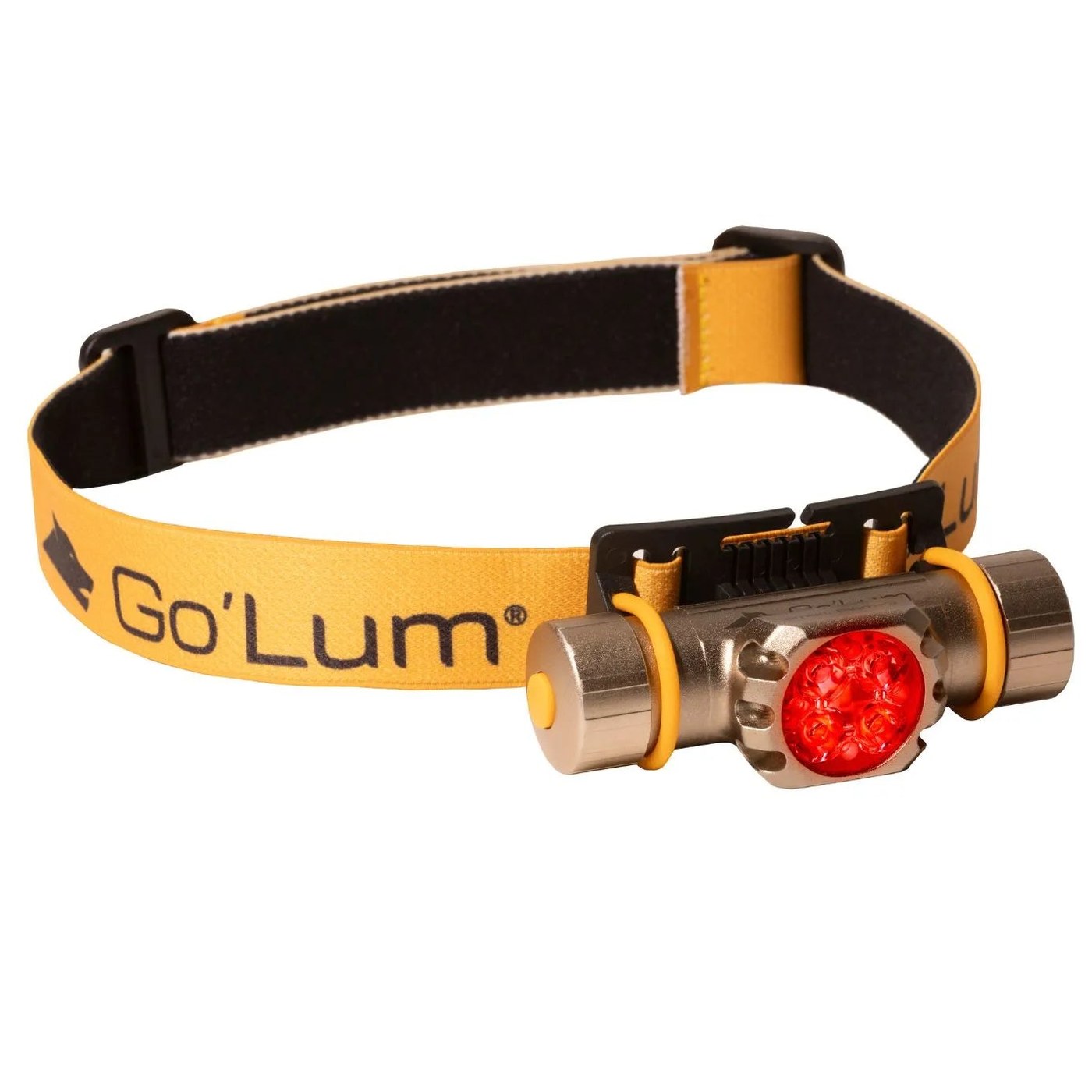
The 2026 UTMB season brings a change that caught a good part of the field off guard: over roughly 7 kilometers, between Notre-Dame-de-la-Gorge and the Col du Bonhomme, runners must cross the Contamines-Montjoie nature reserve with forward-facing red lighting, a genuine built-in LED and not a clip-on filter. The rule aims to limit disturbance to nocturnal wildlife, which is especially sensitive to the bluish spectrum of modern white LEDs.
The problem: almost every headlamp on the market has a red mode, but it's calibrated for reading a map or not blinding people in a mountain hut, around 50 to 90 lumens. Far below what you need to run at a solid pace on a technical trail. Three months after the rule was announced, French brand Go'Lum, based in Annecy, released two versions of its flagship range, the Piom3 R and the Piom+3 R, with a red LED rated at 320 lumens. We tested the Piom+3 R, available since August 11, 2026.
Go'Lum Piom+3 R, available since August 11, 2026 (official Go'Lum photo).
The essentials in 3 sentences
The Go'Lum Piom+3 R offers a 320-lumen forward-facing red LED, the most powerful on the market compared with Petzl's clip-on filters or the Stoots Kiska 3, designed to meet the new UTMB 2026 rule without sacrificing race pace. Comfort convinces despite the front-mounted battery, and switching between white and red takes two clicks with no filter to fiddle with. The downsides: IPX4 water resistance falls short for ultra-trail use, and the product is too new to judge its long-term reliability.
7.8
/ 10 · RunMorph overall score
Red light output
9.2 / 10
Battery life
7.8 / 10
Comfort / weight
8.5 / 10
Control ergonomics
8 / 10
Durability / water resistance
6 / 10
Who it's forRunners entered in a race that requires a true red mode, like certain sections of UTMB 2026.
Who should skip itAnyone without an immediate regulatory constraint: the Piom3 R in manual mode covers the same need for 40 € less.
Go'Lum Piom+3 R specs
Spec
Value
Max output (white)
1500 lumens (10 s boost)
Max output (red)
320 lumens
Claimed battery life
up to 43 h in smart mode
Weight
115 g with battery and headband (42 g lamp alone)
Water resistance
IPX4
Battery
Li-Ion 18650, 4000 mAh, removable
Price
from 219 € (1 battery, standard charger)
Manufacturing
designed and assembled in France (ESAT sheltered workshop)
A red LED built for running, not for reading a map
This is what this headlamp is really about. On paper, plenty of models already tick the "red mode" box. In practice, most use either a low-power LED meant for close-up tasks, or a clip-on red filter over the white optic, like the Petzl Swift RL (89 lm) or the Petzl Nao RL (60 lm). And these clip-on filters aren't accepted by the UTMB rules, which require a built-in red LED. The Stoots Kiska 3 does have a dedicated red LED, but it tops out at 50 lumens.
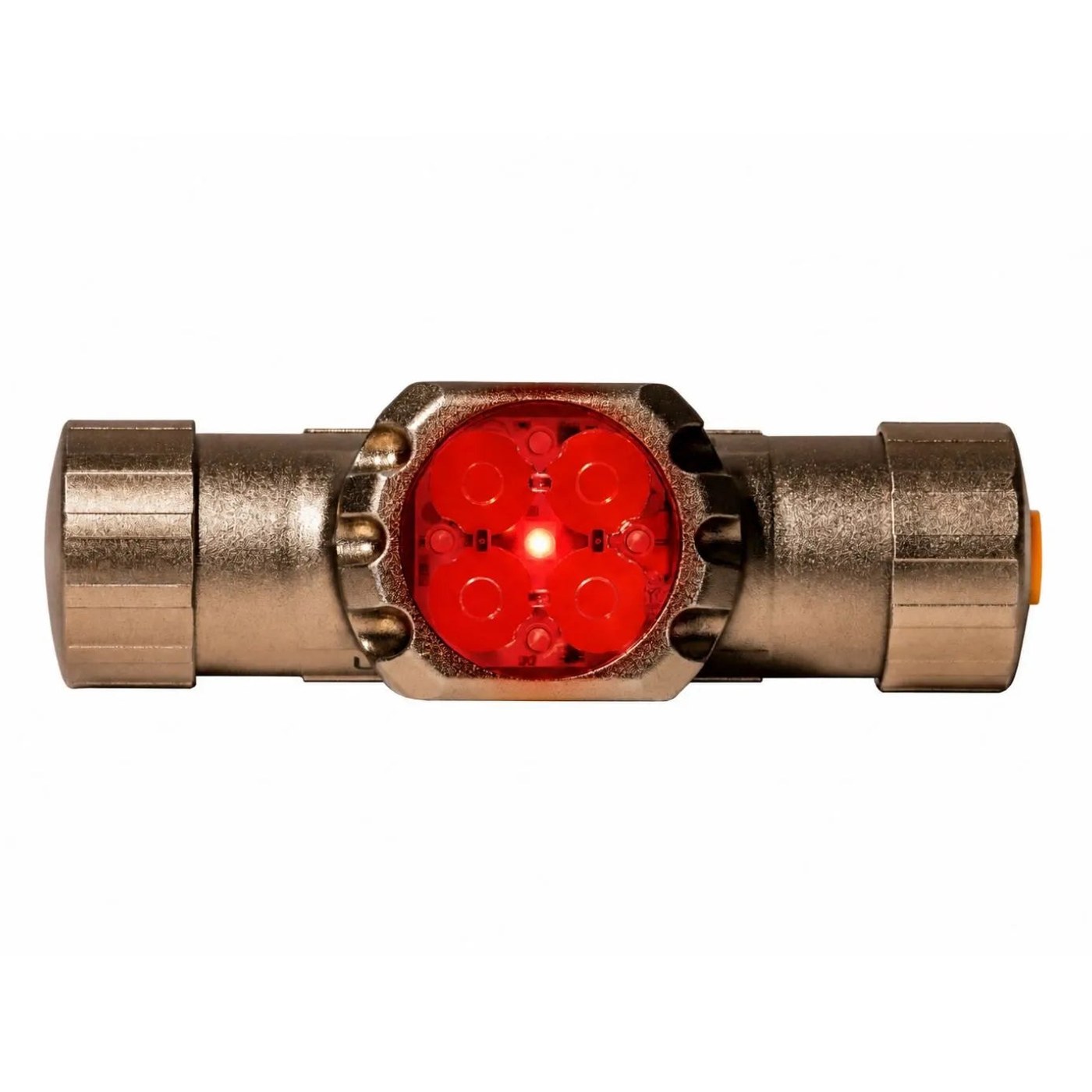
The Piom+3 R plays in a different league with 320 lumens of red, spread over three levels: 7 lumens on standby (200 h claimed battery life), 160 lumens in moderate running mode (8 h), and 320 lumens at full power (3 h). Over the 6 to 7 kilometers of the zone imposed by UTMB, even at the maximum level, you have a comfortable margin.
The u-Trail tester, who tried the Contamines-Montjoie reserve section in real conditions during UTMB, describes a clear jump in comfort compared with a standard red light: the beam lets you read the rocky terrain ahead and hold a running pace, and your eye quickly adjusts to the tint. The site also highlights the instant white/red switch, in two clicks, with no filter to handle.
Source transparency: the u-Trail test was carried out on a unit supplied by Go'Lum, with an explicit "unpaid article, independent test" disclaimer. We flag it here so you can weigh the enthusiasm of the field report, even though the red output figure (320 lm) is the brand's claim and is confirmed by a second outlet (Bornés) with no apparent commercial link to Go'Lum.
Smart modes: the difference from the Piom3 R
The range comes in two versions. The Piom3 R (from 179 €) works in manual mode: you pick the output level yourself, in white and in red. The Piom+3 R (219 €) adds Go'Lum's smart modes, which automatically adjust the white beam intensity based on running speed and terrain profile, with a choice between two profiles: battery life or power.
This architecture isn't new: it's the same as on the standard Piom3 and Piom+3, already well documented by several independent tests (Courir Mieux, Le Comparatif du Trail). You get an aluminum housing, good impact resistance, and white-mode battery life ranging from 76 h at 40 lumens down to 2 h 20 at 1000 lumens, with a 1500-lumen boost for 10 seconds.
Weight and comfort: you don't feel the front-mounted battery
At 115 g with battery and headband, the Piom+3 R sits in the upper-middle range for trail headlamps, but with an unusual layout: unlike many recent models that move the battery to the back of the head for balance, Go'Lum keeps everything at the front. The u-Trail field report mentions some initial doubts about this choice, quickly dispelled: no bounce felt on descents, a headband that doesn't slip, and a lamp you "forget about" while running.
Pros
320 lm of red you can actually run with, not just read with
Instant white/red switch, no filter to handle
Compliant with UTMB 2026 rules (built-in LED, no filter)
Made in France (Annecy, assembled in an ESAT sheltered workshop), warranty up to 5 years
Comfort praised despite the front-mounted battery
Watch out for
Only IPX4 water resistance, a weak point for a product positioned for ultra-trail
High price (219 €) compared with rivals like the Petzl Swift RL, even though the latter doesn't meet the UTMB requirement
Too new (released August 11, 2026) for any long-term durability feedback
Still limited field experience outside tests on units supplied by the brand
Claimed vs measured: at this point, no independent test has measured the red output with a lux meter to verify the 320 lumens claimed by Go'Lum, nor precisely timed battery life in real use rather than in the lab. Both sources cross-checked for this article (u-Trail, Bornés) repeat the manufacturer's figures with no independent counter-measurement published to date. We'll update this review as soon as a test with independent measurement is available.
Should you buy it before UTMB?
For runners entered in a race that already requires, or soon will require, a true red mode, the Piom+3 R meets a specific need that no other model on the market covers with the same power to date. The trade-offs are elsewhere: IPX4 rather than stronger water resistance, a price at the top end of the range, and a product too young to judge its reliability over several seasons. If you don't have an immediate regulatory constraint, the Piom3 R in manual mode (179 €) covers the same red-light need for 40 € less, without the smart modes.
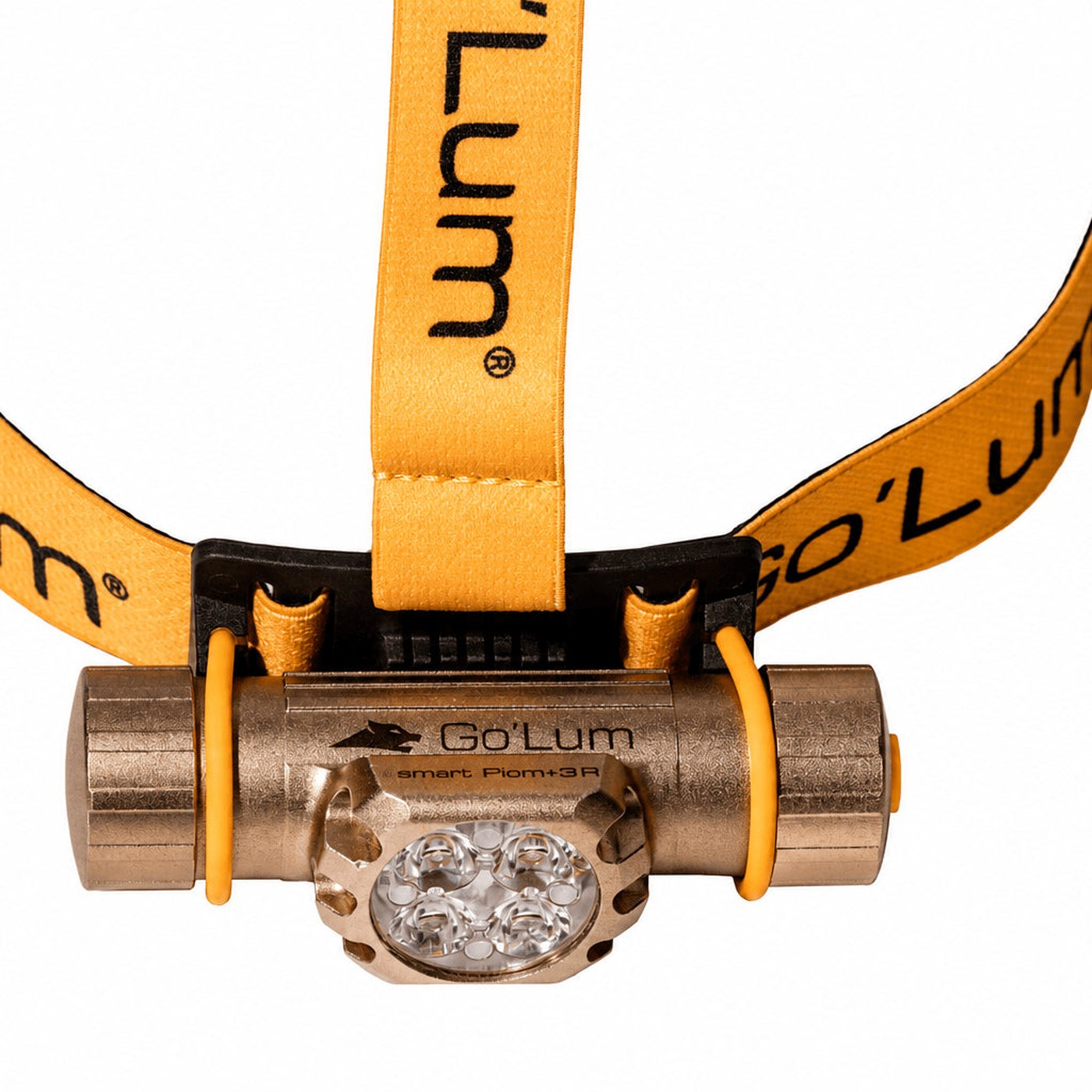
The Piom+3 R in white light configuration, smart mode on.
Comparisons
Against the Petzl Swift RL, the difference comes down entirely to rule compliance and red output: the Swift RL uses a clip-on red filter capped at 89 lumens, not accepted by UTMB rules, while the Piom+3 R offers a built-in LED at 320 lumens. On the flip side, the Swift RL is cheaper and benefits from Petzl's longer reliability track record.
Against the Stoots Kiska 3, another headlamp with a dedicated red LED, the power gap is stark: 50 lumens versus 320. The Kiska 3 still makes sense for close-range red use (bivouac, map reading) but not for running several kilometers through a regulated zone.