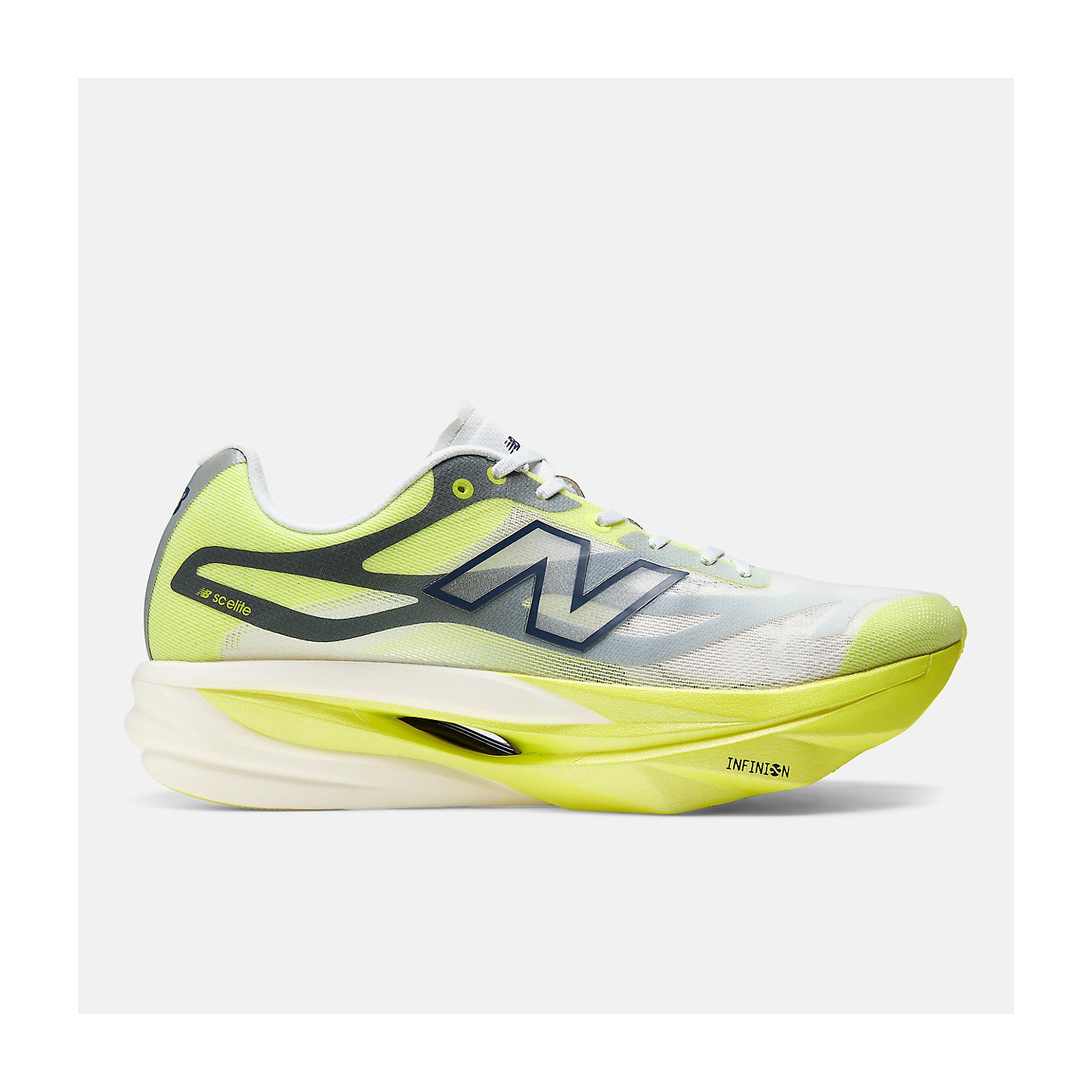
New Balance pitches the SC Elite v6 as its most complete racing shoe yet, the one that packs "all of the brand's most advanced racing technologies." You've read that line on every super shoe product page for five years, and it tells you nothing. RunMorph went straight to what happens underfoot instead: what changed since the v5, what works, and what doesn't. Because one thing really doesn't work, and it's not a minor detail.
What really changed since the v5
The v5 was a good shoe, but it had an awkward flaw for a €275 carbon racer: it ran more like a fast training shoe than a true race-day shoe. New Balance took the criticism on board and changed the part that matters most, the foam. FuelCell PEBA is out; Infinion is in, a supercritical TPEE that New Balance has never used before. The difference is obvious on the run. Compliance stays moderate, but resilience jumps, so the shoe feels far livelier than its predecessor at every pace we tested.
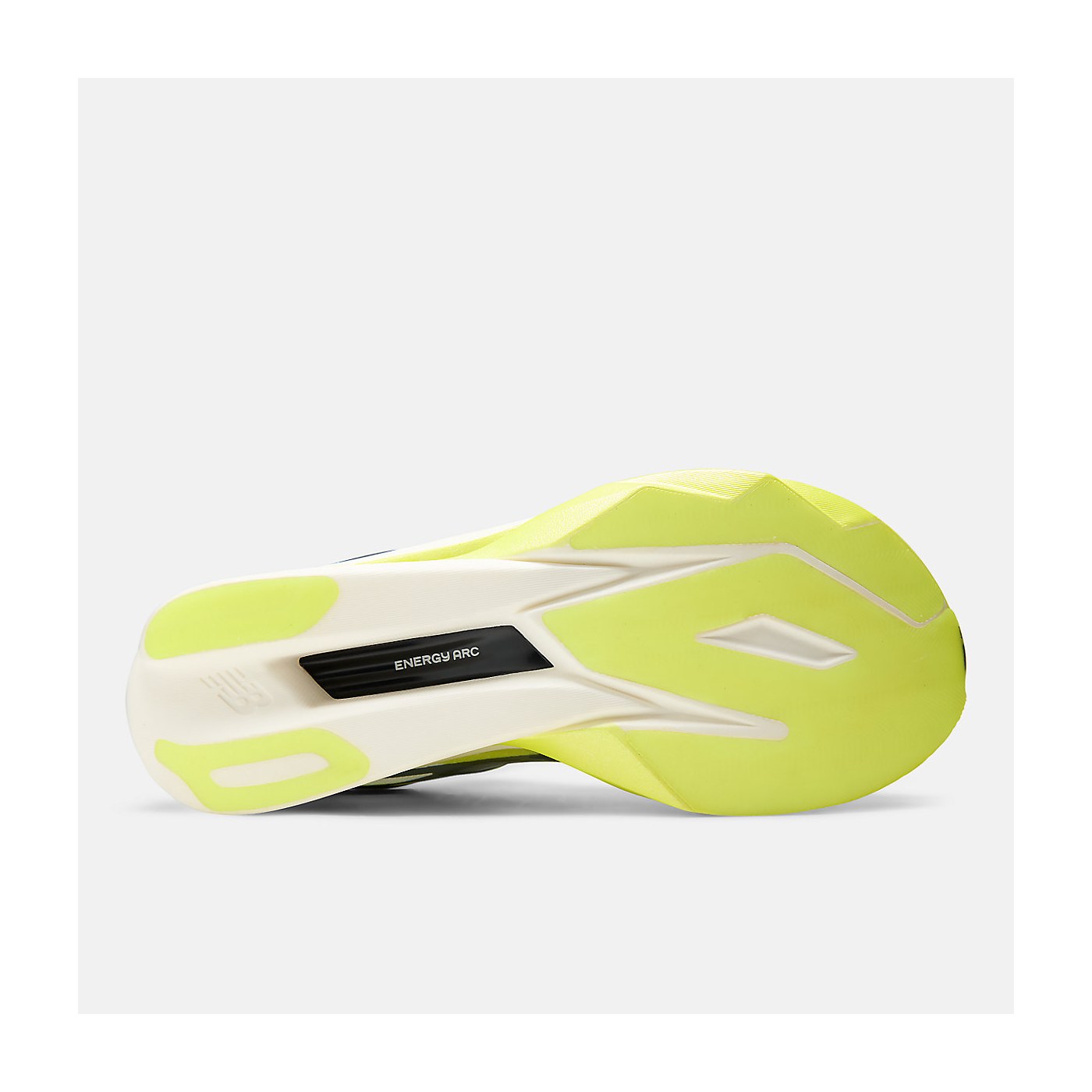
The carbon plate gets a new design too: thicker and stiffer in the forefoot, with a midfoot cutout that exposes the plate on the sides and all the way into the outsole. That cutout explains a good share of the weak points we cover below, so let's say it up front: it's not a cosmetic detail.
| Price | €275 |
|---|
| Weight (men's, 42.5) | 190 g |
|---|
| Drop | 8 mm |
|---|
| Stack height | 40 mm heel / 32 mm forefoot |
|---|
| Midsole | New Balance Infinion (supercritical TPEE) |
|---|
| Plate | Full-length carbon, exposed midfoot cutout |
|---|
| Upper | Translucent FantomFit mesh, non-gusseted tongue |
|---|
| Use | Racing, 5K to marathon (depending on level) |
|---|
| Availability | August 6, 2026 |
|---|
The sore point: a narrow platform that splits testers
Product pages never want to talk about this, so we will. The rearfoot and midfoot of the SC Elite v6 are narrow, and the central cutout that exposes the plate does nothing to make that area feel solid. On the road, the feedback is split. Some runners find the transition smooth and confident. Others feel the shoe lose its composure at heel contact, with a vague, unsettled landing. The comparison testers bring up most often is the Nike Vaporfly 3, known for the same overly narrow rear platform.
If you're a pronounced heel striker and you need even a little guidance, this shoe won't give you confidence. The forefoot is a different story: wide, well flared and far more stable than the rest of the shoe.
In other words, the SC Elite v6 rewards a stride that already lands well forward and punishes one that lands hard on the heel. New Balance clearly chose propulsion over versatility. That fits a racing shoe, but it matters a lot if your question is "will this pair work for me?"
The RunMorph road test
At marathon pace, the shoe rolls well and never feels floaty, even though the foam is softer than before. Infinion is at its best at 10K to 5K pace: the bounce becomes obvious, and the plate, stiffer up front, delivers a real push on every stride. At easy pace, it stays surprisingly comfortable for a racer, unlike plenty of rivals that turn harsh below threshold pace.
The fit is a real highlight: a thin, comfortable mesh and a forefoot with enough volume to leave your big toe alone over long distances, which matters in a shoe also built for the marathon. The non-gusseted tongue, on the other hand, is a pain to get right. It folds over on itself easily, so you need to check it lies flat every single time before you lace up, or you'll feel an annoying crease for the whole run.
On wet roads, traction caused no particular problems despite the thin strip of rubber. The shoe clearly has no business on gravel or dirt paths, though: the central midfoot cutout picks up stones, and that's not what it's made for anyway.
Durability: the real Achilles' heel
This is where RunMorph wants to be clear, because marketing copy rarely mentions it: this shoe wears fast, and not just "a bit faster than a regular training shoe" like most super shoes.
The outsole is thin and leaves much of the foam exposed, especially on the lateral midfoot and the forefoot. In the most thorough tests reported by the specialist press, visible wear on the exposed foam shows up after about twenty kilometers, and the rubber on the lateral forefoot starts to go around 40 km for runners who land hard. The Infinion foam itself holds up well over time and keeps its bounce, so it's not the problem. The problem is the outsole design, built to shave weight rather than to last.
In practical terms, at €275 you're not buying a shoe for the occasional workout, or even a racer you'll pull out ten times a year. You're buying a race-day pair, to save for the goals that count, and to replace sooner than the average super shoe on the market if you also use it for intervals or tempo runs.
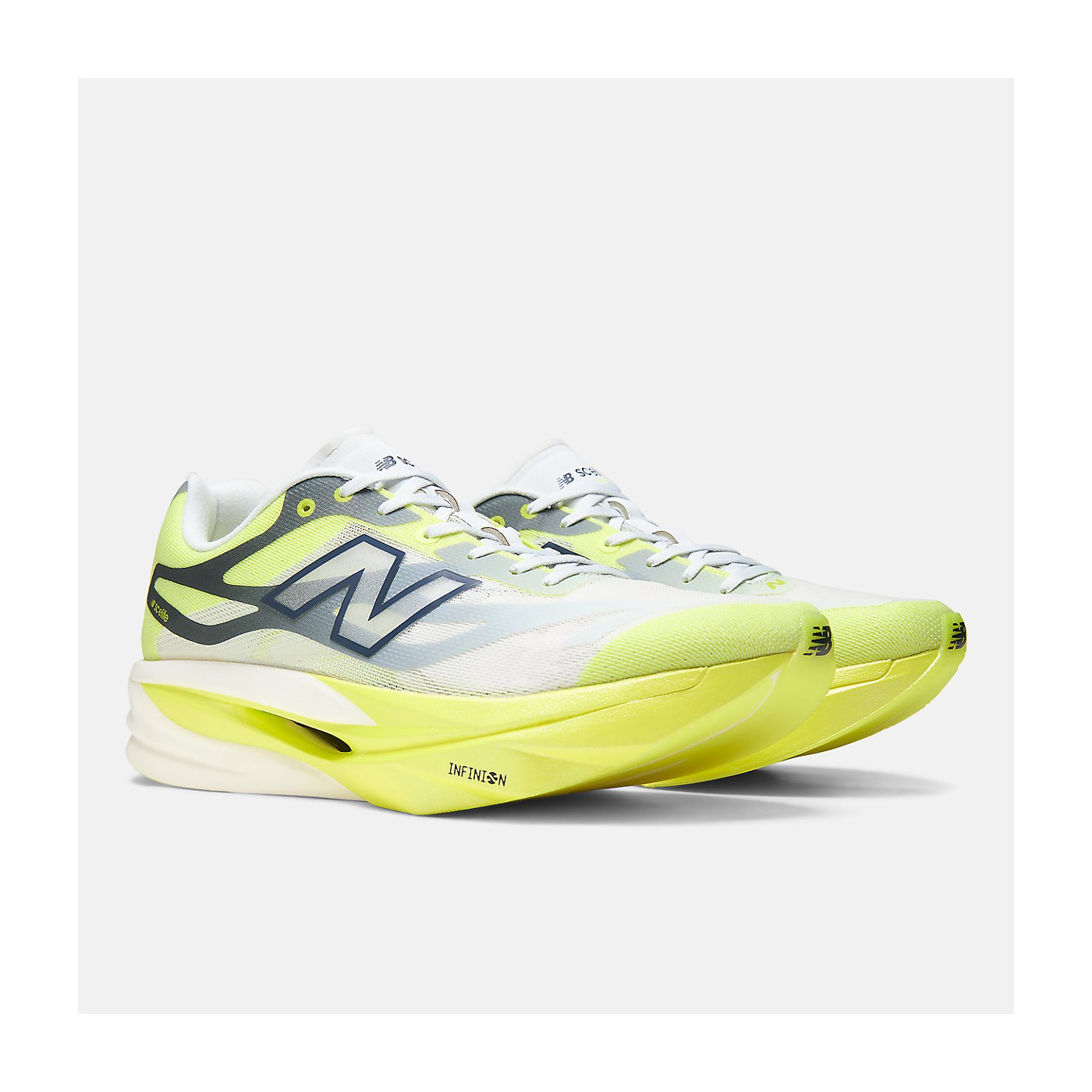
SC Elite v6 vs Nike Vaporfly 4: two takes on the lightweight carbon racer
| New Balance SC Elite v6 | Nike Vaporfly 4 |
|---|
| Weight | 190 g | ~198-205 g |
| Drop | 8 mm | 8 mm |
| Stack height | 40/32 mm | 40/32 mm |
| Rear platform | Narrow, exposed cutout | Narrow (known flaw since the v3) |
| Price | €275 | €285-295 |
| Perceived durability | Average to poor | Average |
Both shoes share the same core flaw: a rear platform deliberately sacrificed for weight and propulsion. The Nike Vaporfly 4 is still the benchmark for this approach and has a similar reputation among heel strikers. The SC Elite v6 goes a step further on perceived durability, with an even barer outsole. If one of the two wins you over when you try it on, the other is probably worth a look too. If neither gives you confidence at heel contact, the problem is built into this category of shoe, not specific to one brand.
Pros
- Infinion foam far more responsive than the v5's FuelCell
- 190 g, among the lightest in its category
- Comfortable fit for a racer, good forefoot volume
- Comfortable even at easy pace, unlike many super shoes
Cons
- Narrow rear platform, unsettling for heel strikers
- Outsole durability clearly below average
- Non-gusseted tongue, annoying to deal with on every run
- High price given its real lifespan
Our take after testing
New Balance did what it had to do to turn the SC Elite into a true racer: the foam finally delivers. But the brand also made design choices that carry a real cost for the runner, in stability as well as lifespan, and you can't brush that aside at this price. It's a good racing shoe as long as you accept its trade-offs with your eyes open, not a shoe for everyone.
RunMorph verdict
The SC Elite v6 is objectively the best racer New Balance has ever made. After this test, there's no doubt about it. But "the brand's best shoe" and "a flawless shoe" are two different things, and on this model the gap between them is clear: a rear platform too narrow for a share of runners, and outsole durability that falls short of what you expect at €275. If you land well ahead of your heel and save it for race day, it delivers on every promise. If you're a heel striker looking for one versatile pair to carry you through an entire training block, look elsewhere, or more precisely at the New Balance SC Rebel v1, the newcomer in the New Balance lineup that brings Infinion foam to a far more stable platform.
The bottom line
Get the SC Elite v6 if you're a midfoot or forefoot striker targeting the 5K to the half marathon and you want maximum propulsion for the minimum price. Skip it if you're a heel striker, if you want a pair that lasts several training blocks, or if you've never tried a narrow Vaporfly-style platform before spending €275.