Nike Vaporfly 4 Review: The Carbon Racer of the Record Era
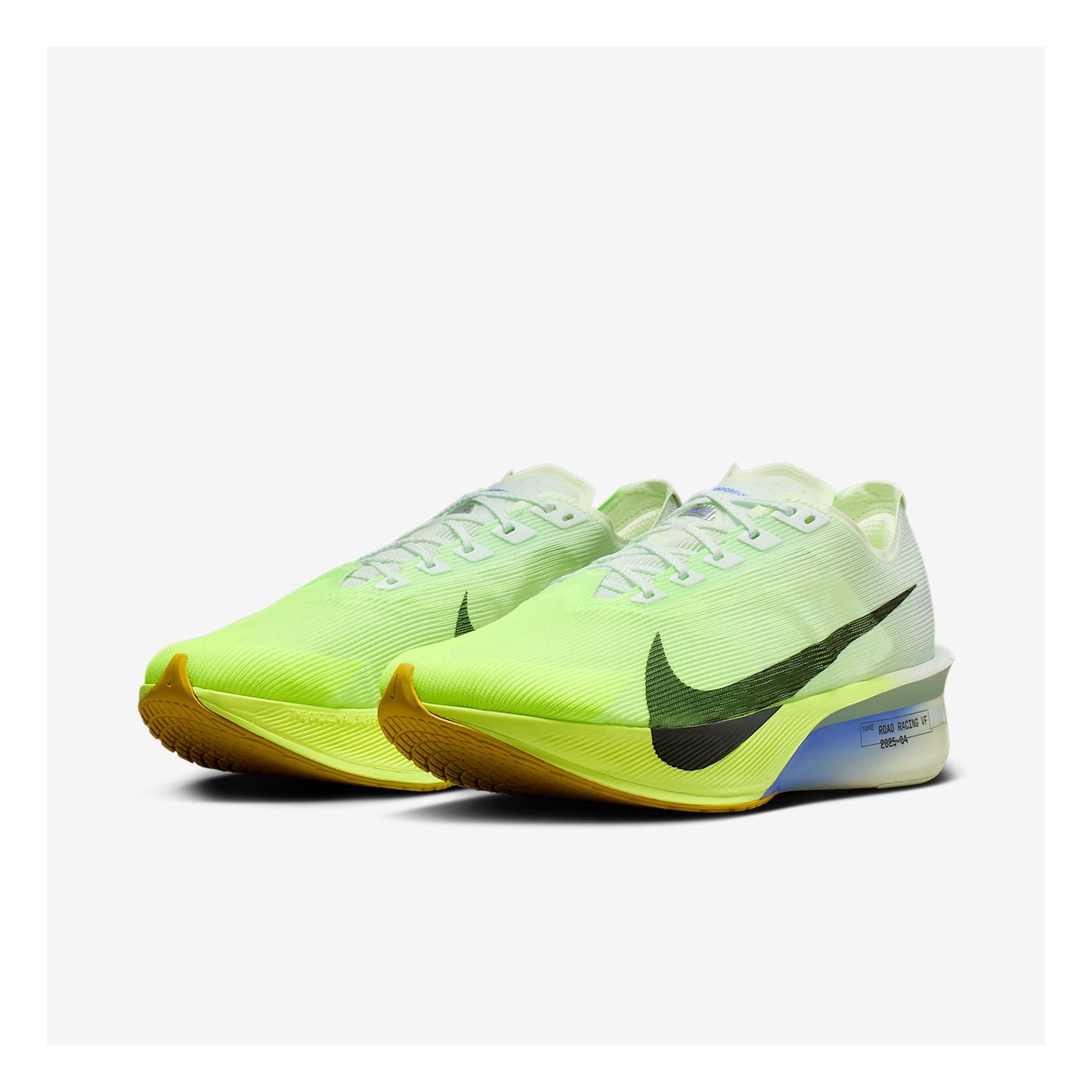
Racing soon? This is the shoe that holds you accountable.
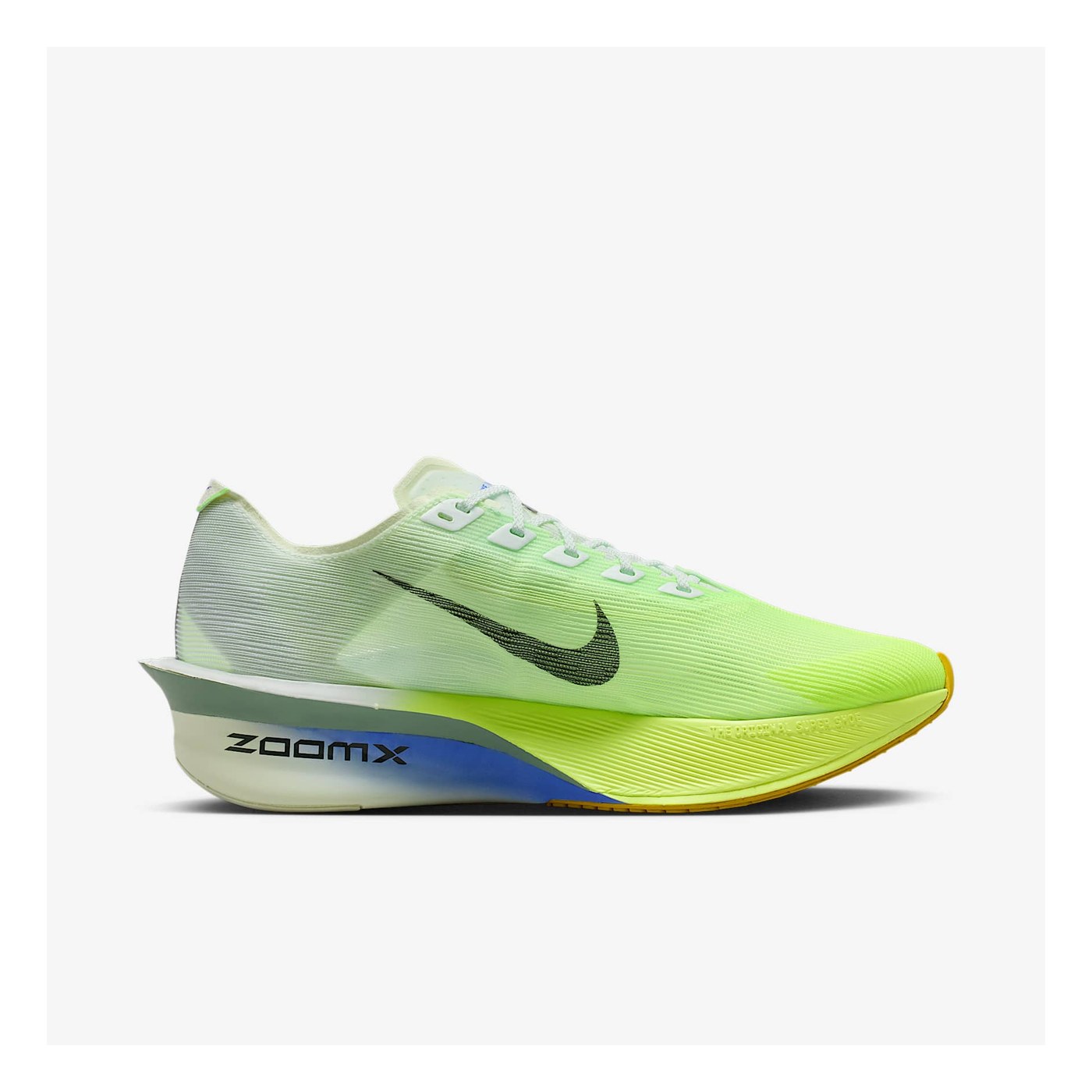
The Vaporfly is a legend. Since the very first version, it has redefined what we expect from a fast running shoe. But the Vaporfly 3 left part of the community wanting more: too specialized for the marathon, it had lost the versatility of the early versions. With the Vaporfly 4, Nike changes course. Lighter, livelier and refocused on short to middle distances, it's once again a real weapon for smashing your PRs over 5 km, 10 km and the half marathon.
One warning, though: this isn't a shoe for everyone. Before you spend €260, you need to know whether you can actually make the most of it. That's what this full review is for.
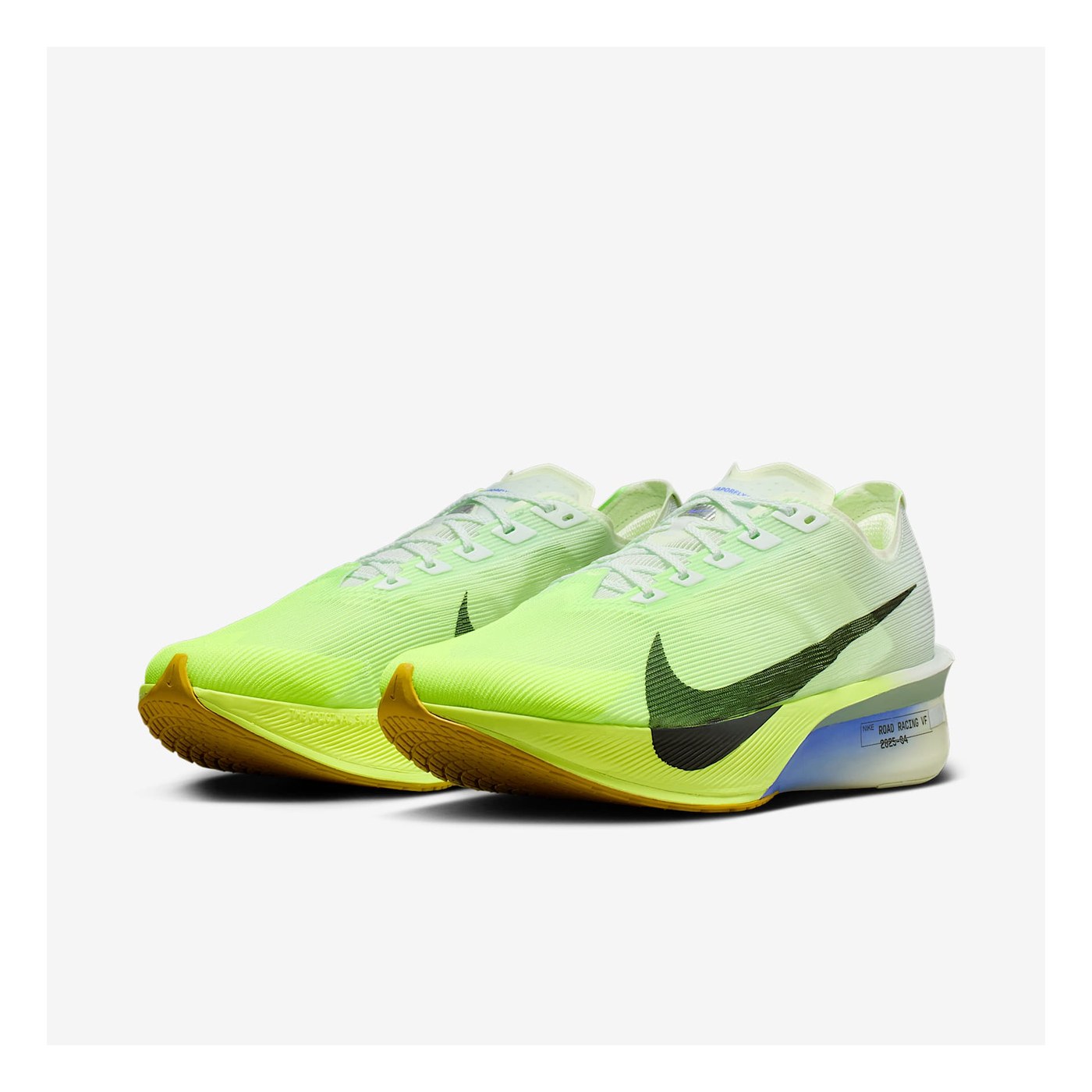
Nike Vaporfly 4 specs
| Brand | Nike |
| Model | ZoomX Vaporfly 4 (Vaporfly NEXT% 4) |
| Release date | March 1st, 2025 |
| Use | Road, carbon-plated racing |
| Drop | 6 mm (vs 8 mm on the V3) |
| Stack height (forefoot / heel) | 29 mm / 35 mm |
| Weight (men's size 42) | 169 g |
| Foam | ZoomX (slightly denser than on the V3) |
| Carbon plate | Yes, Flyplate, angle increased from 15° to 20° |
| Upper | Ultra-breathable Flyknit |
| Recommended distance | 5 km to half marathon (marathon possible, but the Alphafly 3 is a better fit) |
| MSRP | €259.99 |
| RunMorph score | 9.2 / 10 |
The Vaporfly 4: a racing weapon, not a training shoe
First things first: you don't buy a Vaporfly 4 for your Sunday easy runs. This shoe is built for one job: running fast on race day. Here's what defines it:
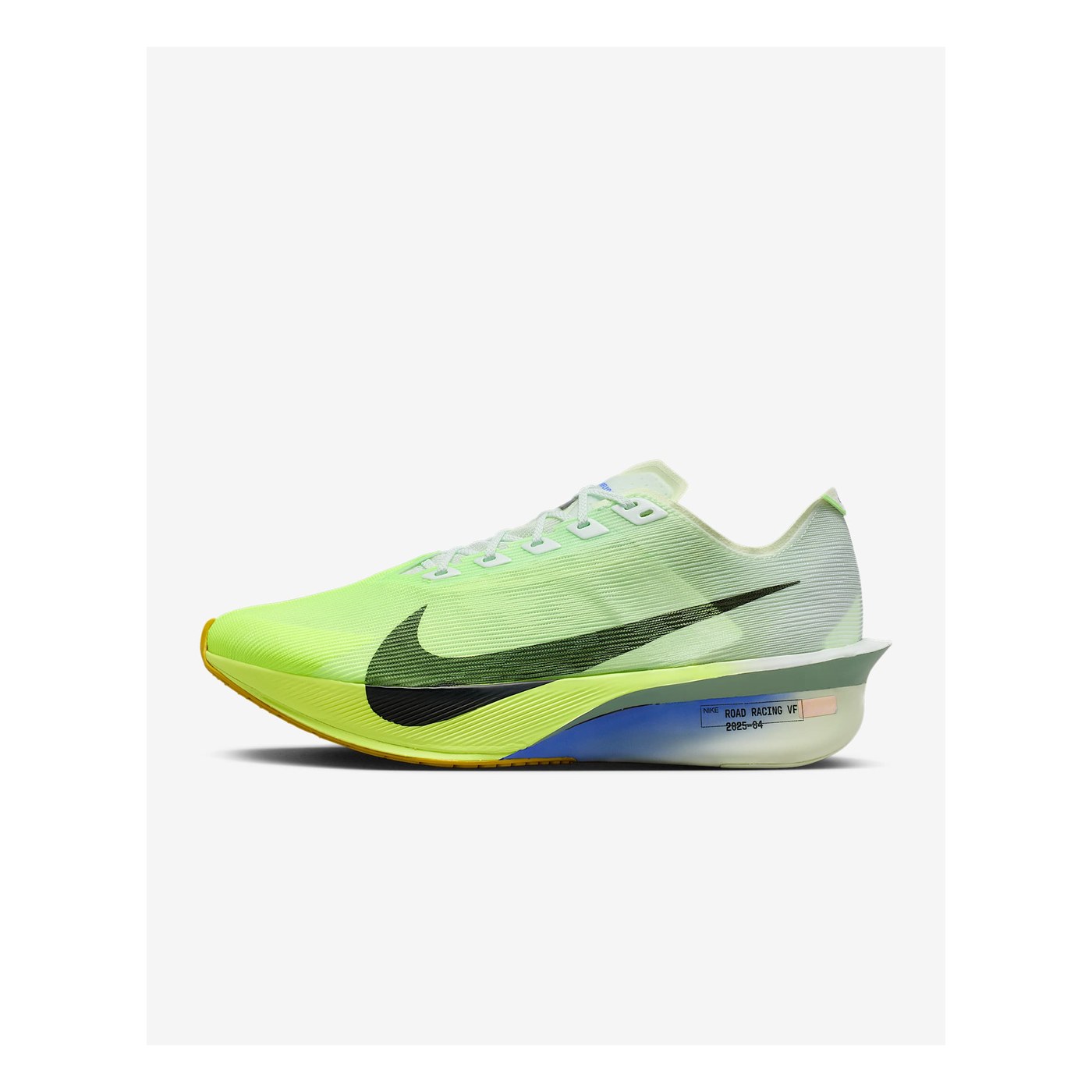
- Record-low weight: 169 g in size 42, roughly 10% less than the V3. You feel the difference the moment you pick it up, and even more after the 30th kilometer of a hard-paced half, when every gram saved is a direct energy gain.
- Reworked ZoomX foam: slightly firmer than on the V3, it strikes a better balance between impact absorption and energy return. You get back the iconic feel of the early Vaporflys: that crisp, precise bounce that drives you from one stride to the next.
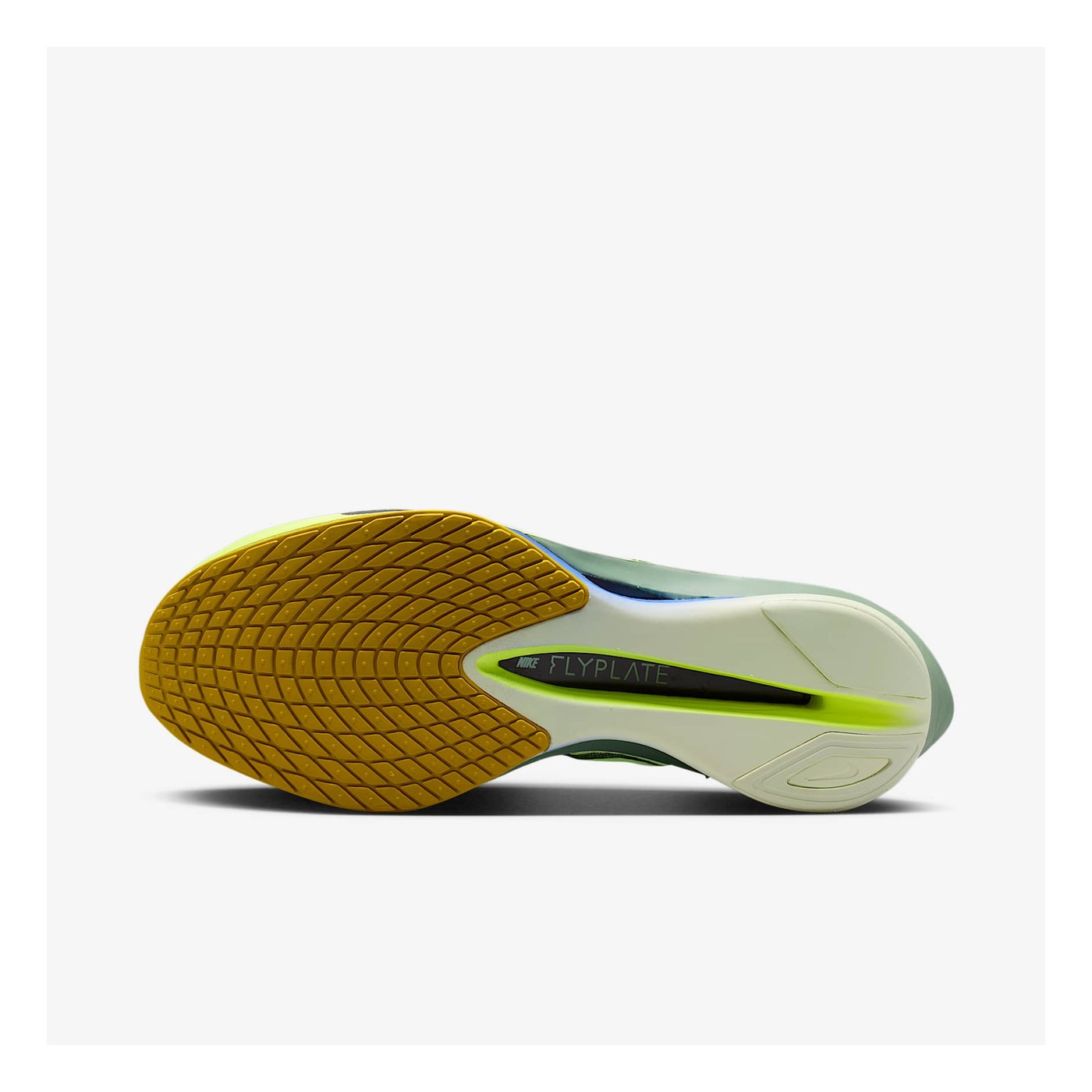
- Redesigned carbon plate: the Flyplate angle goes from 15° to 20°, and the forefoot gets 2 mm more foam. The result: a more pronounced rocker that guides your stride forward and makes toe-off easier.
RunMorph tip: don't put more than 200-300 km on your Vaporfly 4 in total. ZoomX foam breaks down fast under sustained effort. Save it for races and your 2-3 key pre-race sessions (half/10K goal pace), not for your long endurance runs.
Who is the Nike Vaporfly 4 for?
That's THE question before you spend €260. Here's our coaching take, profile by profile.
The simple verdict: the Vaporfly 4 is made for runners who can genuinely run fast and have the biomechanics to back it up. If you run your 10K under 50 minutes or your half under 1:50, you'll get your money's worth. Slower than that, the shoe won't give you the boost you're hoping for, and your body probably isn't ready to handle the stress of a carbon plate at that intensity.
For a marathon with a time goal, Nike explicitly recommends the Alphafly 3, which has more cushioning to absorb the 42 km. The Vaporfly 4 still works up to the marathon, but you can do better in that category: the Adidas Adios Pro Evo 3 and the Hoka Cielo X1 3.0 are serious alternatives over 42 km.
Under the hood: the tech in detail
To understand why this V4 marks a return to basics, let's dig into the engineering choices.
ZoomX foam: denser, livelier
ZoomX is the ultra-bouncy PEBA foam Nike made famous with the first Vaporfly. On the V4, the formula is slightly denser. You lose a touch of softness on impact, but you gain more direct responsiveness and better consistency over the distance. That's exactly what you want from a short-distance racing shoe: not a couch, but a trampoline tuned for performance.
Independent lab measurements confirm the foam remains one of the liveliest on the market. Paired with the plate, it delivers more energy return than the other super shoes in the segment.
Flyplate carbon plate: a more aggressive angle
This is probably the biggest change. The Flyplate angle goes from 15° to 20°. In practice, the plate acts as a more powerful lever with every stride. You feel the rocker the moment you put the shoe on: it tips you forward, almost in spite of yourself.
The upside: more efficient propulsion, especially at fast paces (under 4:00/km). The downside: the shoe is less forgiving if your stride isn't well aligned. At easy paces (slower than 5:00/km), you can feel "carried" without really benefiting from the rocker, and even struggle with instability.
Geometry and drop: 6 mm for a better connection
The drop goes from 8 to 6 mm. This shift nudges your stride toward a midfoot/forefoot strike, which better suits the shoe's target: a fast runner. If you're a heavy heel striker, you'll feel the difference and need a few runs to adapt. The Vaporfly 4 isn't a shoe for pure heel strikers.
What French reviewers say
Wanarun says the Vaporfly 4 marks Nike's return to the top, with a purer feel and renewed efficiency over shorter distances. The review does flag limited durability compared with rivals in the segment.
Lepape-Info highlights the record-low weight and the precision of the Flyplate, but stresses that this isn't a shoe for every runner: you need the right cadence and mechanics to get the most out of it.
Running Lab concludes that the Vaporfly 4 is once again the benchmark for the 5K, 10K and half, with the marathon remaining Alphafly 3 territory. Value for money is rated fair given the ultra-premium segment.
Our take as RunMorph coaches. The consensus is clear: Nike listened to the community and fixed the missteps of the V3. The Vaporfly 4 is once again a pure racing shoe, focused and devastatingly effective for the runner it targets. Outside that profile, though, it's a risky investment.
Quick comparison
Vaporfly 4 vs Adidas Adios Pro Evo 3. Two different philosophies. The Vaporfly 4 is more versatile over shorter distances (5K-10K-half), with a livelier feel. The Adios Pro Evo 3 targets the marathon with more generous foam and a different plate. Verdict: Vaporfly to break your 10K or half PR, Adios Pro Evo 3 to take on the marathon.
Vaporfly 4 vs Hoka Cielo X1 3.0. The Cielo X1 bets on long-haul comfort and works better than the Vaporfly 4 over a full marathon. The Vaporfly is snappier, more guiding and better suited to hard paces. Verdict: Vaporfly 4 if you want pure efficiency over middle distances, Cielo X1 3.0 if marathon comfort comes first.
Vaporfly 4 vs Alphafly 3. Siblings in the Nike lineup. Alphafly 3 = marathon (more cushioning, heavier, more stable over 42 km). Vaporfly 4 = 5K to half (lighter, more direct). If you're torn, Nike has already decided: Alphafly for the marathon, Vaporfly for everything else.
Fitting the Vaporfly 4 into your training
A €260 racing shoe isn't for everyday wear. Here's how to work it into your build smartly.
- Your everyday base: keep a durable, comfortable daily trainer like the Nike Pegasus 42 or the Asics Superblast 3. They soak up your weekly mileage without wearing out your race pair.
- Your fast sessions: for intervals, tempo runs and goal-pace work, use a lively but more affordable shoe like the Adidas Adizero EVO SL or the Adidas Hyperboost Edge. You get a plate-like feel without burning through your Vaporfly.
- 2 or 3 key sessions in the Vaporfly 4: in the 4 weeks before your race, schedule 2-3 goal-pace sessions in your Vaporfly 4 to get used to the plate and dial in your stride.
- Race day: it's the one. You know the shoe, your body knows the shoe, you're ready.
RunMorph tip: plenty of runners buy a super shoe too early, hoping for a "miracle" effect. The truth: a carbon plate only delivers a measurable gain above a certain speed and with a well-built stride. Before you invest in a Vaporfly 4, make sure you have consistent weekly mileage (40 km/week minimum) and several structured training blocks behind you.
The RunMorph coach's verdict
As a coach, I see the Nike Vaporfly 4 as a tool. Not a gimmick, not an everyday shoe: a precision tool for chasing personal bests. It doesn't replace your training volume or your race-specific prep. It reveals what you've already built.
For competitive runners, the ones targeting a sub-50-minute 10K, a sub-1:50 half or a sub-3:45 marathon, the Vaporfly 4 is probably the best current choice over short to middle distances. Its low weight, responsiveness and aggressive rocker let you unlock the 1-3% biomechanical gain super shoes promise.
For the average runner looking for comfort, stability or an "all-terrain" shoe, the Vaporfly 4 will be a poor investment. Not because it's bad, far from it, but because it simply isn't built for that job.
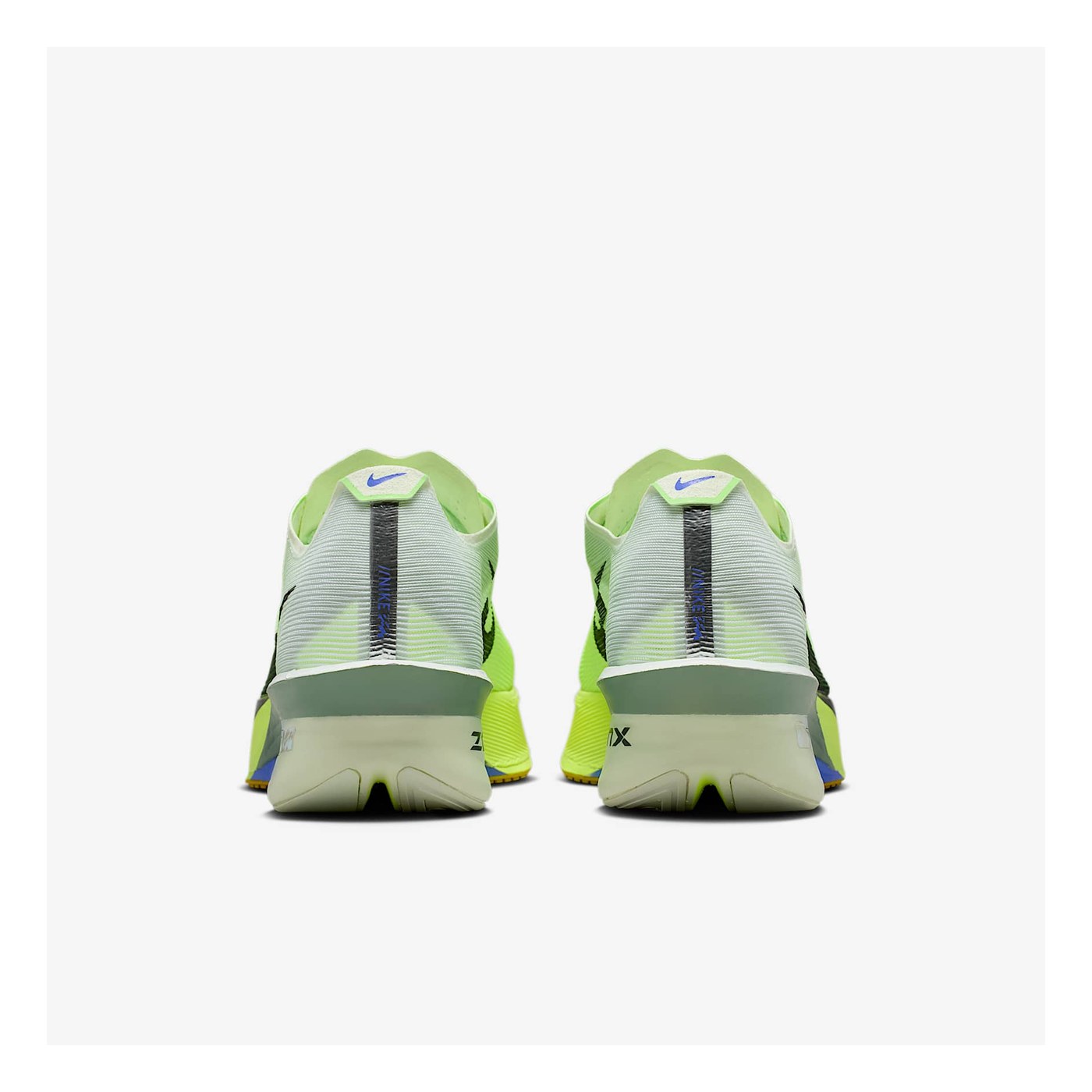
RunMorph score: 9.2 / 10. At €259.99, it's a major investment, but in line with the premium super shoe segment. Buy it if you know why you need it. Look elsewhere if you're still on the fence.
Key takeaways for your next race
- Pure racing shoe: built for the 5K, 10K and half marathon. The marathon is still an option, but the Alphafly 3 is a better fit.
- Record-low weight: 169 g in size 42, one of the lightest super shoes on the market.
- Redesigned Flyplate: 20° angle, pronounced rocker, extra propulsion at hard paces.
- Denser ZoomX foam: snappier than on the V3, better energy return over the distance.
- 6 mm drop: 2 mm lower than the V3, favors a midfoot stride. Not ideal for pure heel strikers.
- Limited lifespan: 200-300 km max. Save it for races and 2-3 key pre-race sessions.
- Target runner: experienced, with a well-built stride and serious time goals.
Frequently asked questions
Is the Nike Vaporfly 4 good for beginners?
No. You won't get the expected benefit at moderate paces, and the carbon plate can raise your injury risk if your stride isn't fully developed yet. Start with a daily trainer like the Nike Pegasus 42 and move up to a super shoe once you have consistent weekly mileage and a few races under your belt.
How durable is the Vaporfly 4 really?
Expect 200 to 300 km of real running. ZoomX foam breaks down fast under sustained effort. That's normal for a racing shoe in this category: you're paying for peak performance over a short window, not for longevity.
Does the Vaporfly 4 run large or small?
It fits true to size, even slightly narrow in the forefoot. If you're unsure, go up half a size, especially if you plan to race a half marathon or marathon in it, when your feet will swell.
What's the difference between the Vaporfly 4 and the Alphafly 3?
The Alphafly 3 is heavier and more cushioned, built for the marathon. The Vaporfly 4 is lighter, more direct and faster at pace, ideal for distances from the 5K to the half marathon. If you're training for a marathon with an ambitious time goal, pick the Alphafly 3. For everything else, pick the Vaporfly 4.
Can you use it for training sessions?
For 2 to 3 key pre-race sessions, yes. No more. Keeping the Vaporfly 4 for goal-pace sessions lets you adapt your stride to the shoe and know exactly how it feels on race day. But use another pair for your easy runs, long runs and short intervals.
Recommended reads
- Maurten Gel 160 review: marathon fueling at 80 g/h
- Nike Pegasus 42: the full RunMorph review
- How to prepare for your first marathon in 16 weeks
- Altra Vanish Carbon 3: 220 g claimed, 232 g measured, the full review
- Half marathon training plan: the complete guide