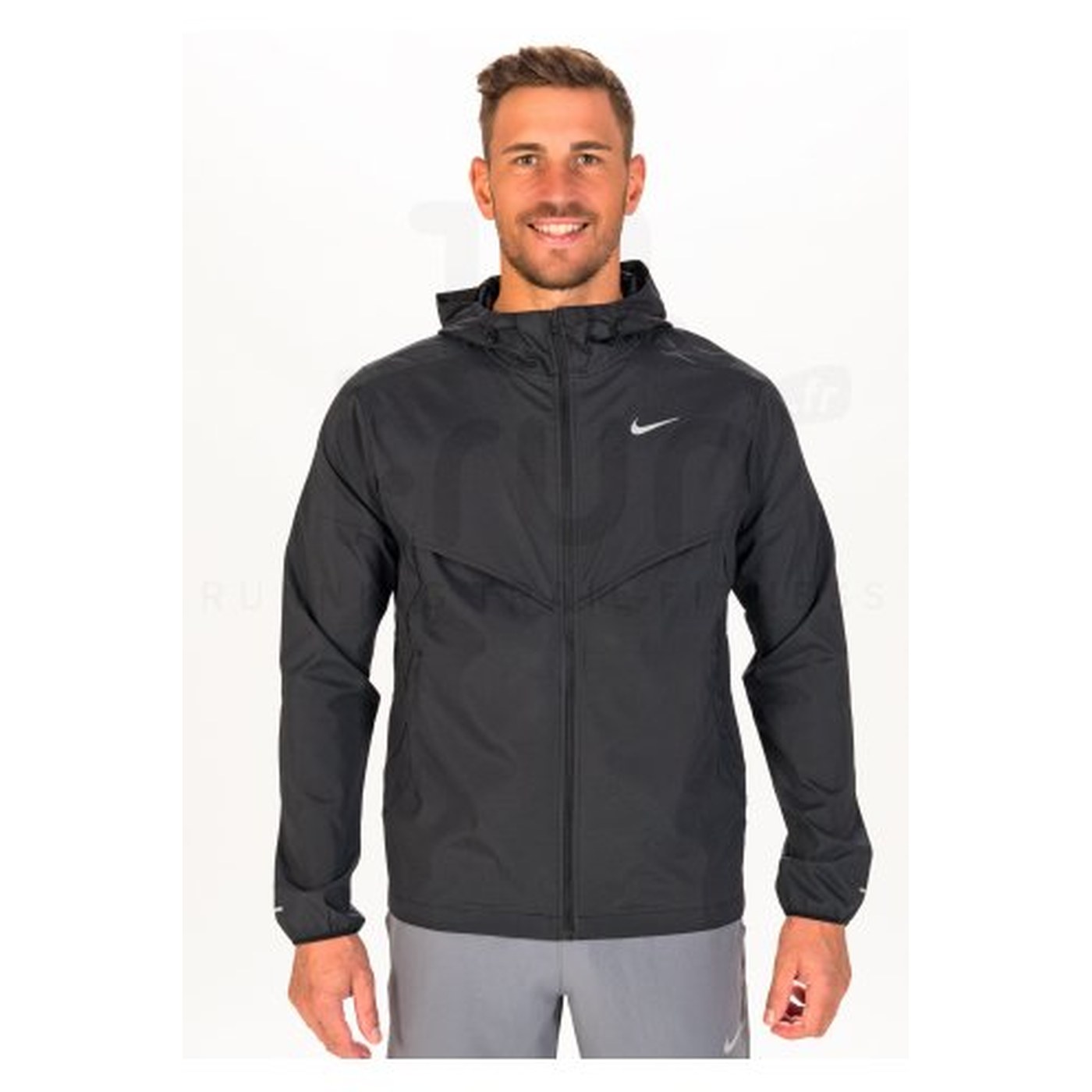
Few names in sportswear carry as much cultural weight as Windrunner. Launched by Nike in the 1980s, worn at the Olympic Games and a streetwear icon long before it returned to the track, the name has made a high-profile comeback in recent seasons in a version designed specifically for running. The result: a jacket in high demand, regularly featured in 2026 roundups alongside more technical benchmarks like the Salomon Bonatti Trail or the Odlo Aegis 2.5L, even though RunMorph's apparel catalog didn't include a single Nike model yet. We cross-checked a full French comparison test against verified feedback from several runners to see whether the hype around the name holds up once the jacket is on your shoulders.
Nike Windrunner Review: Light, Breathable, Not a Rain Jacket
7/10
The essentials in 3 sentences
The Windrunner takes the most iconic name in Nike's wardrobe and brings it to running, with a Repel water-repellent finish, UV protection and a featherweight 200 grams. Feedback converges on one clear strength: lightness, breathability and everyday comfort, praised by the specialist press and by the runners who actually wear it. But let's be blunt: this is a water-repellent windbreaker for spring and fall, not a waterproof jacket for a mountain downpour, and Nike publishes no Schmerber rating, unlike the technical jackets in its catalog.
7/10
An excellent spring and fall jacket, light and breathable, carried by the huge goodwill of the Windrunner name. Its score is held back by the lack of real protection in sustained rain, a deliberate choice rather than a hidden flaw.
Specs
The running Windrunner weighs around 200 grams and relies on a Repel water-repellent finish against rain, backed by a UV treatment for sunny runs. Its lightweight design combines back vents with mesh underarm panels for breathability. The hood is adjustable, the stretch fabric gives you freedom of movement, and the whole jacket packs down into its own pocket. Two zippered pockets and reflective details round out the spec sheet. More than 75% of the fabric is recycled material, part of the brand's Move to Zero program. Suggested retail price is around €110, and French retailers often discount it to between €66 and €77.
What the French comparison test says
The 2026 roundup published by FFL positions the Windrunner as a versatile jacket for urban runners and for weekend trail outings, as long as you stick to spring and fall conditions. The verdict is clear and deserves to be quoted as is rather than watered down: it works in cool, damp or changeable weather, but not in mountain-style downpours. That's a key distinction from the truly waterproof jackets on the market, which all list a precise Schmerber rating, a figure Nike's spec sheet never gives for this model. The test also highlights the jacket's unapologetic style, a criterion that objectively matters to many buyers of this particular product.
What verified customer reviews say
On the product page of French retailer i-Run, the Windrunner holds a 4.9/5 rating from 12 verified reviews, all of them checked before publication. Several detailed reviews confirm the same strengths as the comparison test: a light jacket that's easy to wash, with two outer pockets, two inner pockets and a back pocket that reviewers find very practical, plus a hood that adjusts without any fuss. Another review, posted after fall use at 10-12°C, says the jacket keeps light rain out without leaving you cold, and stays breathable as soon as the sun comes back out. None of the reviews we read report seam problems, water leaks or manufacturing defects, which matches the broadly positive tone of the comparison test. Both sources agree on the same point, rain protection that works but only in moderate conditions, and that consistency strengthens the diagnosis rather than weakening it.
Style versus pure performance: a deliberate trade-off
The Windrunner name carries a strong identity, originally designed for the street and only later adapted to running. That double life shows in the design: the cut is more visually polished than on a purely technical jacket, and the product openly plays a style role at least as much as an extreme performance role. That's not a problem in itself, as long as you know what you're buying. For everyday use and spring and fall runs in the city or on sheltered trails, the Windrunner does the job with real comfort. To take on an exposed trail in wind and driving rain in the mountains, the truly waterproof jackets in the catalog, like the Salomon Bonatti Trail or the Odlo Aegis 2.5L, remain the safer choice.
Comparison: Windrunner vs Salomon Bonatti Trail
| Criterion | Nike Windrunner | Salomon Bonatti Trail |
|---|---|---|
| Protection type | Repel water-repellent, not waterproof | Waterproof, 20,000 Schmerber |
| Weight | 200 g | 195 g |
| Recommended use | Spring/fall, city, sheltered trails | Exposed trails, mountains, all weather |
| Retail price | €110 | €230 |
Both jackets weigh almost exactly the same but target different uses. The Windrunner bets on style, everyday comfort and half the price. The Bonatti Trail aims for total protection on demanding runs in rough conditions. Your choice comes down to terrain: city and spring/fall for one, mountains and all weather for the other.
Strengths
The comparison test and verified customer reviews agree on lightness and breathability. The packable design, which folds into its own pocket, wins unanimous praise. Both sources rate the value for money as good, especially given the frequent discounts that bring the price under €70. The iconic style of the Windrunner name remains a real selling point for part of the audience.
Weaknesses
Because Nike publishes no Schmerber rating, you can't compare it by the numbers with truly waterproof jackets, a limitation the French comparison test explicitly flags. Protection stops at light rain and moderate wind, and doesn't extend to rough mountain conditions. We found no detailed first-hand account of use in extreme conditions among the available customer reviews, which limits how far we can judge the jacket beyond spring and fall.
The RunMorph verdict
The Windrunner delivers on its home turf: spring and fall, everyday use, unapologetic style and a weight you forget about. The French comparison test and verified customer reviews agree on these points without any notable contradiction, which sends a solid signal despite fewer sources than in other categories. It is not, however, a jacket for ultras or for trails exposed to bad weather: for that, head to the truly waterproof models in the catalog. For everything else, the Windrunner lives up to its name.